

When you hear "overseeding," you might just picture someone tossing seed over their yard. In reality, it's the single most important thing you can do for a fescue lawn in North Georgia. It’s how you fill in those thinning patches and build a dense, healthy turf. For fescue, early fall is the absolute sweet spot. The soil is still warm from the summer sun, but the cooler air is perfect for new grass to sprout and dig in its roots before winter arrives.
Your Guide to a Thicker Greener Lawn in North Georgia
Ready to turn that heat-stressed, patchy fescue into a lawn you can’t wait to walk on barefoot? This is your roadmap. If you're a homeowner in Cumming, Alpharetta, or anywhere around here, you know the summer struggle is real. The intense heat and foot traffic can leave even the most cared-for lawns looking tired and thin by September.
This guide will show you how overseeding is the best, most natural way to get that dense, green carpet back. It's more than just a quick fix for bare spots; it's a strategic move to completely rejuvenate your lawn. A thick, healthy lawn naturally chokes out weeds and becomes far more resilient against disease and future stress.
Why Overseeding Is a Game-Changer for Georgia Fescue
Here’s something a lot of people don’t realize: unlike Bermuda grass, fescue doesn’t spread and fill in on its own. When a clump of fescue dies, it’s gone for good, leaving a permanent gap. Overseeding is how we manually introduce new grass to fill those spaces and keep the whole lawn looking lush.
We’re going to walk you through a proven, pet-safe process that’s built specifically for our local climate in Cumming and the surrounding areas. You’ll get the A-to-Z on how to overseed your lawn the right way.
- Timing is Everything: We'll pinpoint why the window from September to mid-October is pure gold for homeowners from Milton all the way up to Dahlonega.
- Prepping Clay Soil: You'll learn the secrets to preparing our notoriously hard red clay so that new seeds can actually make contact with the soil and sprout.
- Nurturing New Growth: We'll give you a simple, straightforward plan for watering and caring for the new seedlings, ensuring they grow strong before the first frost.
The key to a successful overseeding project isn't just spreading seed; it's creating the ideal environment for that seed to germinate and thrive. Proper preparation can be the difference between a lush, green carpet and a patchy, disappointing result.
You can forget the confusing advice and harsh chemicals. This is your complete plan for turning your yard into the envy of the neighborhood, all while using an approach that’s safe for your kids, pets, and our local environment. Let’s get started on building you a healthier, more beautiful lawn.
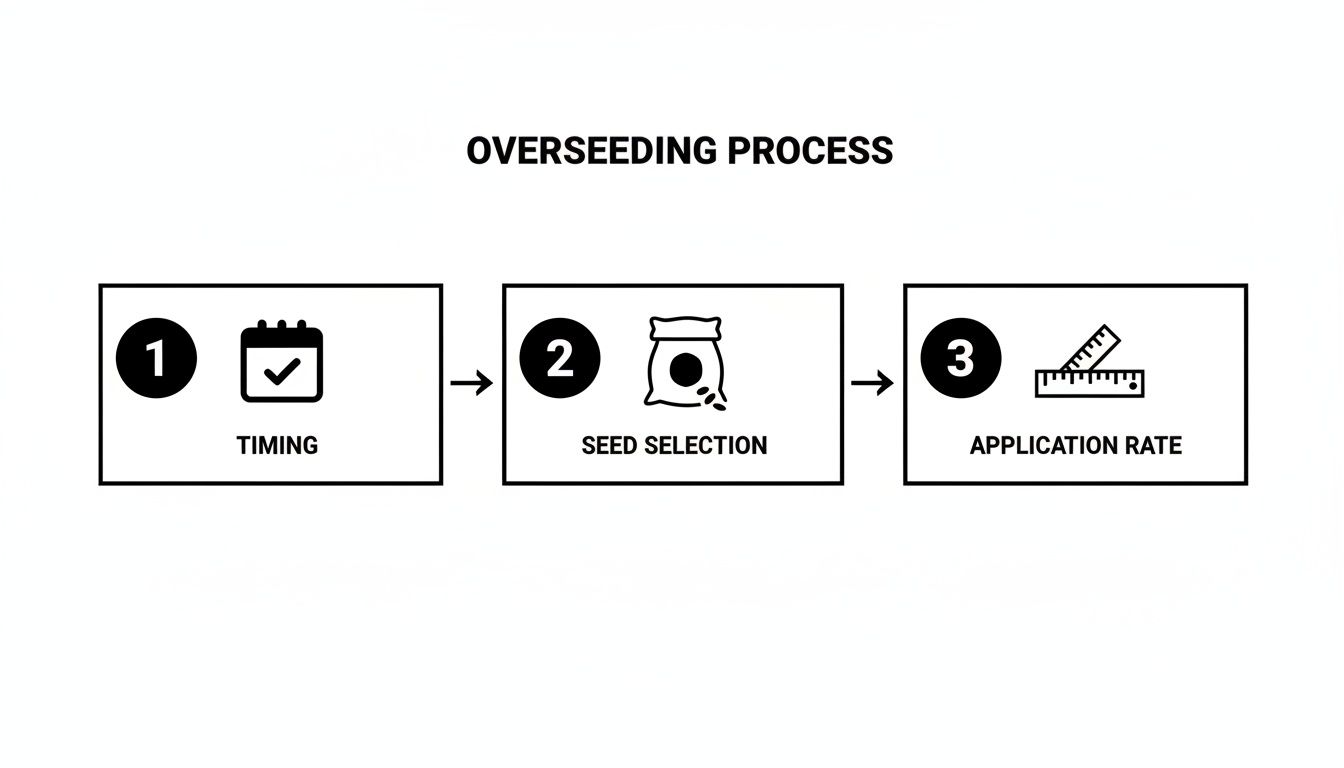
Getting the Timing and Seed Selection Just Right
Successful overseeding in North Georgia starts long before you ever tear open a bag of seed. Getting the timing right and picking the perfect seed for our area is the bedrock of a great lawn. I've seen it time and again—homeowners from Johns Creek to Cumming skip this critical planning stage and end up wondering why their efforts didn't pay off.
Timing is everything, and for our cool-season fescue lawns here in Cumming and Alpharetta, there's a definite sweet spot. The golden window for overseeding opens in early fall, usually running from early September through mid-October. This period gives us the ideal cocktail of conditions for new grass to take hold and thrive.
Why Fall is a Game-Changer for Fescue Lawns
So, what makes autumn the perfect season? It all comes down to soil and air temperature. The ground across Forsyth and Cherokee County is still packed with warmth from our long, humid summers, which is exactly what grass seed craves for quick germination. At the same time, the brutal daytime heat has finally broken, meaning cooler air temperatures put far less stress on those fragile new seedlings as they pop up.
When you overseed in this window, you're giving the new grass a crucial head start. It has several months to dig in its roots and establish a strong foundation before the ground freezes. This prep work is what helps it survive its first punishing Georgia summer the following year. Trying to overseed fescue in the spring almost always ends in frustration; the young grass simply doesn't have the time to mature before the summer heat wave arrives and cooks it.
For anyone with a lawn in Milton, Dahlonea, or the surrounding communities, aiming for that September-October timeframe is the single best move you can make. You’re working with nature’s calendar, not against it, which radically boosts your odds of success.
How to Pick a Winning Grass Seed
Once you have your timing locked in, it's time to choose your seed. Walking into a garden center in Cumming or Alpharetta can feel a bit overwhelming with all the options, but it's pretty simple once you know what to look for. Not all fescue seed is the same, and I can tell you from experience that grabbing the cheapest bag is a surefire way to get a weak, disease-prone lawn.
What you're looking for is a high-quality 'turf-type' tall fescue (TTTF). These are the modern, engineered varieties that are bred for fantastic color, a much softer texture, and way better resistance to drought and disease compared to old-school stuff like Kentucky 31.
Here’s your cheat sheet for reading the seed tag:
- Variety Names: A good blend will list several specific cultivars like 'Rhambler SRP', 'Titanium 2LS', or '4th Millennium SRP'. This diversity is like an insurance policy for your lawn, making it more resilient to whatever nature throws at it.
- Germination Rate: This is a big one. You want to see a rate of 85% or higher. It tells you how much of the seed in that bag is actually alive and ready to grow.
- "Weed Seed" & "Other Crop": These numbers should be practically zero—ideally 0.00%. Paying a bit more for pure seed upfront will save you a world of headache pulling out new weeds later.
- Date Tested: Always check the date. Seed is a living thing, so make sure it was tested within the last year to ensure it’s still viable.
Investing in a premium seed blend pays for itself. For a deep dive into specific varieties that do exceptionally well in our local clay soil, check out our guide on the best grass seed for Georgia. It’ll help you pinpoint a mix that’s built for our unique climate.
Finally, you need to know how much to put down. For overseeding tall fescue, the target is about 3–4 pounds per 1,000 square feet. Other grasses have different requirements; for instance, perennial ryegrass (often used for temporary winter color) needs a much heavier hand at 8–10 pounds for the same area. Following these rates ensures you get a thick, even result without just throwing money away.
North Georgia Overseeding Calendar and Seed Guide
To make it even easier, here’s a quick-reference table that boils down the key timing and seed choices for our area. Think of this as your cheat sheet for a successful fall overseeding project in Cumming and surrounding towns.
| Month | Key Action | Recommended Fescue Type | Why It Works |
|---|---|---|---|
| September | Ideal Overseeding Window Opens | Turf-Type Tall Fescue (TTTF) Blend | Warm soil and cooler air provide perfect germination conditions. |
| October | Last Call for Overseeding | Turf-Type Tall Fescue (TTTF) Blend | Still a great time to seed, giving roots enough time to establish before winter. |
| November | Winter Prep & Leaf Management | N/A | Focus on mowing, watering, and keeping leaves off new seedlings. |
This simple calendar helps align your efforts with the natural cycles here in North Georgia, setting you up for the best possible outcome next spring.
How to Prepare Your Lawn for Maximum Seed Success
If you've ever just scattered grass seed across your lawn and hoped for the best, you’re probably familiar with the disappointing results. Getting seed to sprout and thrive isn't just about spreading it—it's about creating the perfect environment first. This prep work is absolutely non-negotiable for success, especially in the compacted clay soil we deal with from Cumming to Dahlonega.
Think of it like this: you wouldn't paint a wall without cleaning and priming it first, right? The same logic applies to your lawn. Proper prep ensures every single seed makes direct contact with the soil, finds a safe nook to germinate, and gets the sunlight and water it needs to flourish.
Giving Your Lawn the Right Haircut
The first move is simple but surprisingly important: mow your lawn much shorter than usual. For the turf-type tall fescue so common in Alpharetta and Johns Creek, drop your mower deck and aim for a height of about 1.5 to 2 inches.
This short "scalp" does two critical things. It cuts down on competition from the existing grass, giving the tiny new seedlings a real shot at life. More importantly, it lets sunlight hit the soil surface, which helps warm the ground and trigger germination.
Once you’re done mowing, be sure to rake up and bag all the clippings, leaves, and any other debris. You want to start with a clean slate so the seeds can easily find their way to the soil.
The Absolute Game-Changer for Georgia Clay: Aeration
Now for what I consider the single most impactful step you can take: core aeration. Our infamous red clay soil becomes incredibly compacted over the year from foot traffic, heavy rains, and even just regular mowing. This creates a rock-hard layer that makes it nearly impossible for air, water, or new grass seed to penetrate.
Core aeration is the process of pulling up thousands of small plugs of soil, and it's the ultimate remedy for compaction. It’s like hitting a reset button for your soil’s health.
The benefits are immediate and powerful:
- Relieves Compaction: This lets existing grassroots breathe and stretch out, making the whole lawn more resilient.
- Creates Perfect Seed Pockets: Those thousands of little holes are the ideal place for new grass seed to land, giving them fantastic seed-to-soil contact and protecting them from washing away.
- Improves Water and Nutrient Flow: Water can finally soak down to the root zone where it's needed, instead of just running off the surface.
For anyone with a lawn in Cumming or Milton, I’ll say it plainly: core aeration isn't just a suggestion, it's the secret weapon for turning a struggling lawn into a thriving one. Skipping this step is the #1 reason I see overseeding projects fail.
While renting an aerator is an option, it’s a tough, physically demanding job. To get a better feel for what's involved, you can learn more about how to aerate your lawn in our detailed guide. This step is a true game-changer.
The Finishing Touches: Dethatching and Topdressing
With the lawn cut short and aerated, you’re in great shape. But for an A+ seedbed, there are a couple of final touches to consider. First is dethatching. Thatch is that spongy layer of dead grass and organic debris that builds up between the soil and the green grass blades. A little bit is fine, but if it gets over a half-inch thick, it acts like a waterproof mat, blocking seeds and water from reaching the soil. If your lawn feels overly spongy, using a dethatching rake or a power dethatcher before you aerate is a smart move.
Finally, there’s topdressing. This just means spreading a very thin layer—about a quarter-inch—of high-quality organic compost over the lawn after aeration. This practice gives the soil a much-needed boost of organic matter, helps level out minor bumps, and creates a perfect medium to hold moisture around the new seeds, which is absolutely critical during germination.
By taking the time to do this prep work—mowing low, aerating thoroughly, and maybe topdressing—you aren't just overseeding. You're building the foundation for a denser, healthier lawn that will be the envy of your neighborhood in Johns Creek or Alpharetta.
Spreading Seed and Natural Fertilizer The Right Way
You’ve mowed, you’ve aerated—your lawn is officially prepped and ready for the main event. This is where all that hard work starts to pay off. Now it’s time to lay down the seed and give it the healthy, natural food it needs to get growing.
I can't tell you how many lawns in Cumming and Johns Creek I've seen that end up patchy because the seed was just tossed out by hand. You get clumps in one spot and bare patches in another. For that lush, wall-to-wall carpet look, you need consistency, and that means using the right tool for the job: a broadcast spreader.
Mastering the Broadcast Spreader for Even Coverage
A broadcast spreader is designed to fling seed in a wide, even arc as you walk, but there's a pro technique to getting it just right. Don't try to get all the seed down in one pass. The secret is to cut your application rate in half and make two passes.
Here's the method we use that delivers fantastic results every time:
- Calibrate Your Spreader: Look at the seed bag for the manufacturer's recommended setting. It’s a great place to start.
- Divide and Conquer: Fill your spreader with exactly half the amount of seed you need for the area you're working on.
- The First Pass: Start walking your lawn in a straight-line pattern, say, north to south. Make sure you overlap your passes slightly so you don't create "tiger stripes."
- The Second Pass: Once that's done, pour the other half of the seed into your spreader. Now, walk the lawn again, but this time in a perpendicular pattern—east to west.
This crisscross method is the key to foolproof coverage. It completely eliminates gaps and ensures every square inch of soil gets an equal shot at growing thick, healthy grass.
Getting Seeding Rates Right for Tall Fescue
Applying the right amount of seed is a crucial balancing act. If you go too light, your lawn will still be thin. But if you go too heavy, you’re just wasting money and forcing all those new seedlings to fight each other for sunlight, water, and nutrients, which ultimately leads to weaker grass.
For overseeding an existing tall fescue lawn, the sweet spot is 4 to 6 pounds of seed per 1,000 square feet. If you're starting from scratch on a bare area, you’ll want to bump that up to 8 pounds per 1,000 square feet. Do a quick measurement of your lawn's square footage and weigh out your seed to be sure.
Spreading seed is about precision, not guesswork. Taking the time to calibrate your spreader and apply the seed in two perpendicular passes is the single best way to avoid the disappointment of a patchy lawn later on.
Pairing Seed with a Pet-Safe Starter Fertilizer
Getting the seed down is only part of the job. Those tiny seedlings are going to be hungry, and they need an immediate source of food to get going. This is where a quality starter fertilizer comes in, but it’s incredibly important to choose one that’s safe for your kids and pets.
We always recommend an organic starter fertilizer. Unlike the synthetic stuff, a natural fertilizer for grass won't burn the delicate new grass shoots and actually helps build healthier soil for the long run.
When you're looking for an organic starter fertilizer, check the N-P-K ratio (the three numbers on the bag). You want one with a higher middle number, which is Phosphorus. Phosphorus is the nutrient that fuels strong, deep root development—the foundation for a lawn that can handle a hot North Georgia summer. Applying it right along with your seed gives your new grass the perfect kickstart it needs to establish itself quickly and, most importantly, safely.
Your Watering Schedule and First-Year Care Plan
Alright, you've done the hard work of prepping, aerating, and spreading the seed and natural fertilizer. Now comes the part that makes or breaks the entire project. The next few weeks are everything. All that effort can go to waste without a smart, consistent plan for watering and early care.
The goal isn't just to get the seed wet once; it's about creating a perfectly moist environment that tells those seeds it's safe to sprout and helps them through their most delicate stage. This part requires a bit of patience and attention to detail, but it’s the final push that turns a patchy yard into a truly thick, beautiful lawn.
The All-Important Germination Stage: Your Watering Plan
For the first 10 to 21 days after seeding, you have one simple mission: never let the top inch of soil completely dry out. Fescue seed needs constant moisture to germinate. If it dries out for even one hot Georgia afternoon, that seed is likely a goner.
To pull this off, you'll need to forget your normal watering routine of deep, infrequent soaks. Instead, think light and frequent.
- Frequency: Plan on watering your lawn 2 to 3 times every day. A morning, midday, and late afternoon cycle works beautifully for most folks in Cumming or Milton.
- Duration: Keep each session short—just 10 to 15 minutes per sprinkler zone. The aim is to dampen the surface, not saturate the deep soil.
- Keep an Eye Out: Watch for areas that dry out faster, like slopes or spots next to hot pavement. They might need a quick extra spray to stay damp.
You’ll know you’re doing it right when you start to see a faint green fuzz appearing across your lawn. That’s germination! It’s an exciting moment, but your job isn’t done yet.
Shifting Gears: Building Deep Roots for Summer Survival
Once most of the new grass is up and about an inch tall, it's time to pivot your watering strategy. If you keep up the light, frequent sprinkling, you’ll encourage shallow, weak roots that simply can't handle a Milton or Alpharetta summer.
The new goal is to encourage those tiny roots to dig deep into our Georgia clay to find water. To do that, we'll slowly transition to deeper, less frequent watering.
- Cut Back Frequency: Start by watering just once per day, but run the sprinklers longer to let the water soak in deeper.
- Stretch It Out: After a week of that, switch to watering every other day, again making sure it’s a good, deep soak.
- Find Your Rhythm: Over the next few weeks, keep stretching the time between waterings until you're on a mature schedule—about 1 to 2 deep waterings per week, depending on how much rain we're getting.
This transition is absolutely vital. It’s how you train the new grass to build a tough, resilient root system that can withstand drought and heat.
The single biggest mistake I see homeowners make after overseeding is inconsistent watering. A disciplined schedule in that first month is the difference between a thriving lawn and a failed project. It’s the final, crucial step to lock in your success.
The First Mow and Early Lawn Care
Seeing that new grass shoot up is fantastic, but don't get trigger-happy with the mower. Those new seedlings are incredibly tender, and their roots are still shallow. The suction from a mower can literally pull them right out of the ground.
You need to wait until the new grass blades are at least 3.5 to 4 inches tall before even considering that first cut. When the time comes, follow a few simple rules:
- Sharp Blades Only: A dull blade rips and tears at the grass, which is a huge stressor for young plants.
- Mow When It's Dry: Cutting wet grass is a recipe for clumps and can damage the lawn.
- Never Cut More Than One-Third: This is a golden rule of lawn care. Set your mower to its highest setting (around 4 inches for fescue) to avoid stressing the new grass.
During this early growth phase, it's also critical to avoid all herbicides. Weed killers, even the organic ones, can easily kill your new grass seedlings. You'll probably see some weeds pop up with the new grass—that’s perfectly normal. As the turf thickens, it will naturally choke out most of them. This is why regular overseeding is such a great natural weed control strategy. Most homeowners here in Cumming and the surrounding areas find they need to overseed every 1 to 3 years, though high-traffic yards often need it annually to stay dense and weed-free. You can learn more about lawn overseeding frequency from Lawnstarter.com.
What to Budget for Overseeding: DIY vs. Pro
One of the biggest questions we get from homeowners around Cumming and Alpharetta is whether to tackle overseeding themselves or hire a pro. It really boils down to your budget and how you value your time. Let's break down the real-world costs for both paths.
Breaking Down the DIY Costs
Going the DIY route can seem like the more budget-friendly option at first glance, but the costs can add up faster than you might think. You're not just buying a bag of seed; you’re renting equipment and buying supplies for the whole job.
Here’s what your shopping list will likely include:
- Premium Grass Seed: For our area, a 50-pound bag of quality turf-type tall fescue is going to set you back anywhere from $150 to $250. Don't skimp here—good seed is the foundation of a great lawn.
- Core Aerator Rental: This is non-negotiable for our compacted Georgia clay soil. Renting a core aerator in the Cumming area for a half-day typically runs between $75 and $100.
- Starter Fertilizer: To give that new seed a fighting chance, a good organic starter fertilizer will add another $40 to $60 to the bill.
So, when you tally it all up, you’re looking at a bill of $265 to $410 just for the materials and equipment. And that’s before you factor in your own sweat equity and the time spent on a weekend you could be enjoying.
The Value of a Professional Service
Hiring a professional might feel like a splurge, but when you look at the numbers, it often delivers far more value and, frankly, better results. For lawns in communities like Milton and Johns Creek, professional overseeding services typically land somewhere between $0.10 and $0.20 per square foot.
This means a standard 1,000-square-foot lawn could cost between $100 and $200. When you compare that to the DIY supply cost, the professional option suddenly looks very competitive. You can see how this stacks up with national averages by checking out some lawn seeding cost research on Angi.com.
Hiring a pro isn't just about paying someone to spread seed. It's an investment in their expertise, access to commercial-grade equipment that gets the job done right, and the simple peace of mind knowing you'll get the thick, healthy lawn you're after.
Once you account for the time you save and the superior materials and techniques used, the value is undeniable. For many folks here in North Georgia, letting an expert handle the hard work of aeration, seeding, and fertilizing is simply the smartest way to get the lawn they’ve always wanted.
Your Top Overseeding Questions Answered
Homeowners from Cumming to Alpharetta ask us a lot of the same great questions about overseeding every fall. Let's tackle some of the most common ones so you can get started with confidence.
Can I Overseed My Bermuda Lawn in the Fall?
That's a common point of confusion, but this guide is strictly for cool-season grasses like fescue. Bermuda is a warm-season grass, and heading into fall, it's actually getting ready to go dormant for the winter.
Overseeding Bermuda in the fall is a totally different ballgame, usually involving ryegrass just to keep some green color over the winter. Applying fescue seed to a Bermuda lawn in October won't give you the results you're looking for.
How Soon Can My Kids and Pets Play on the New Grass?
Because we're using all-natural, safe products, the lawn is technically safe to walk on right away. The real concern isn't for your family, but for the tiny, fragile new grass seedlings.
To give them the best chance to grow strong, you'll want to limit heavy foot traffic for the first 3 to 4 weeks. Once the new grass is established enough to have been mowed two or three times, it can handle normal play and activity.
What if Weeds Sprout Along with My New Grass?
Don't panic! It's perfectly normal to see some weeds pop up. All that water you're putting down to help the new grass germinate is also great for opportunistic weeds.
The most important thing to remember is to avoid using any chemical weed killers for at least two months after seeding. Those products are designed to kill plants, and they can't tell the difference between a pesky weed and your delicate new fescue shoots.
Your best defense against weeds in the long run is a thick, healthy lawn. As your new grass matures, it will naturally choke out most weeds, creating a dense turf that doesn't leave them any room to grow.
Ready to skip the guesswork and guarantee a lush, green lawn this fall? The experts at Barefoot Organics use professional-grade equipment and pet-safe products to deliver outstanding results for homeowners throughout North Georgia, including Cumming, Alpharetta, Johns Creek, and Milton. Get your free, no-obligation quote today and let us handle the hard work. Learn more at https://barefootorganicsllc.com.