

So, you’ve decided it’s time to tackle that lumpy, bumpy lawn. The basic idea is pretty simple: you figure out what’s causing the unevenness and then fill in the low spots with a leveling mix. For most minor dips and hollows, a process called topdressing—spreading a thin layer of soil, sand, and compost—works wonders to smooth things out without having to tear up your existing grass. If you’re dealing with deeper ruts, you might need to get a bit more hands-on by lifting the sod, adding soil underneath, and then laying the sod back down.
Understanding Your Bumpy North Georgia Lawn
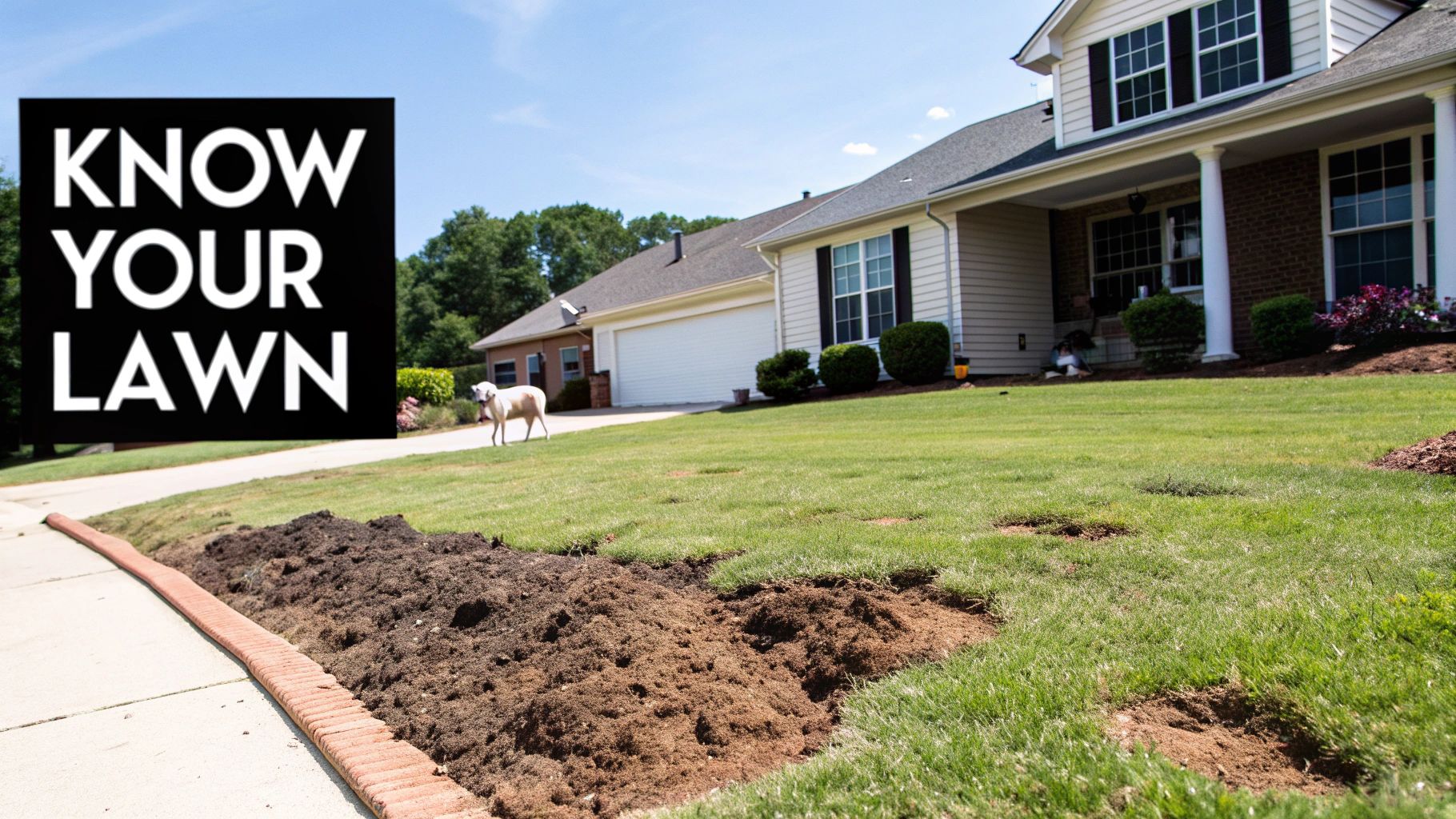
If you're in Cumming, Johns Creek, or anywhere else in Forsyth County, you know the struggle is real. Those bumps and dips are more than just ugly; they’re genuine hazards. A lumpy yard is an open invitation for a twisted ankle, a risky playground for kids, and a death sentence for your mower blades as they scalp the high spots. This constant scalping doesn’t just damage your equipment—it seriously stresses your turf.
The unique character of North Georgia is often to blame. Our heavy red clay soil, coupled with intense summer thunderstorms and the ground’s natural tendency to settle, is the perfect recipe for an uneven lawn. This guide is built to help you face these local challenges head-on with organic, sustainable solutions that actually work.
Why a Level Lawn Matters
Let’s be honest, a smooth lawn is about more than just looking good. It's the foundation of a healthy, usable outdoor space. Homeowners from Alpharetta to Milton quickly realize that a level lawn brings a ton of practical benefits. A flat surface means:
- Better Safety: It gets rid of those sneaky tripping hazards, making the yard a much safer place for kids and pets to run around without you having to worry about falls.
- Healthier Grass: Water and nutrients can spread out evenly instead of pooling in low spots or running off high ones. This leads to much more consistent, robust growth across the board.
- A Cleaner Cut: Your mower can finally do its job properly, cutting the grass at a uniform height. No more scalped patches or uneven growth—just a lush, carpet-like finish.
A bumpy lawn is a common headache for homeowners here in North Georgia. In fact, studies show that up to 40% of residential lawns in humid areas like Forsyth County end up with bumps caused by everything from frost heave to poor drainage.
This problem is so widespread it’s helped create a massive industry. The U.S. lawn care market is already huge, valued to hit an estimated USD 60 billion in 2025, and it’s only expected to grow. You can discover more insights about the growing lawn care market trends to see just how many homeowners are investing in fixing these exact problems.
Here at Barefoot Organics, we’re all about tackling these issues with eco-friendly methods. Instead of relying on quick fixes that can harm your soil in the long run, we champion techniques like topdressing and aeration. These methods build a healthy, resilient foundation for your turf, creating a beautiful, safe, and sustainable lawn that’s built to thrive in our distinct North Georgia climate.
Figuring Out What's Causing Your Uneven Lawn
Before you can even think about how to level a bumpy lawn, you have to play detective. Just grabbing a shovel and throwing some dirt around without understanding the root cause is a recipe for frustration. It’s like putting a bandage on a broken arm—it doesn’t fix the real problem. The approach for a bump from a buried tree root in Milton is totally different than fixing a sunken patch from poor drainage in Dahlonega.
Taking a moment to figure out the "why" behind your lumpy yard ensures all your hard work actually lasts. Here in North Georgia, the culprits are usually pretty predictable, from our infamous red clay to critters that work the night shift.
Common Culprits Behind Bumpy Lawns
Let's walk through the usual suspects you’ll find in yards from Johns Creek to Cumming. Each one leaves its own tell-tale signs.
- Soil Compaction and Settling: Heavy foot traffic, kids playing sports, or simply the immense weight of our dense clay soil can compact it over time. This creates hard high spots and soft low spots. It's especially common in newer subdivisions where the ground is still settling after construction.
- Drainage Problems: After a classic Georgia downpour, do you see puddles that stick around? That standing water is a dead giveaway for low spots where water collects, often killing the grass and causing the soil to sink even further.
- Animal Activity: Moles and voles are notorious for creating tunnels just under the surface, leaving a network of raised ridges and squishy spots. A single mole can create a surprisingly complex and bumpy tunnel system overnight.
- Decomposing Organic Matter: Buried stuff like old tree stumps, large roots, or even construction debris will eventually decompose. As it all breaks down, the soil on top collapses, creating those unexpected dips and depressions in your lawn.
An uneven lawn isn't just an eyesore; it's a real problem for your mower and your wallet. In North America, which dominated 35.1% of the USD 32.3 billion global lawn mower market in 2023, bumpy lawns lead to 22% higher equipment wear. A riding mower scalping high spots can damage its blades twice as fast. Here in Georgia's red clay belts, it’s estimated that 55% of lawns over 5,000 square feet have bumps from organic buildup—that includes earthworms, which can move a whopping 10-20 tons of soil per acre each year. You can read the full research about the lawn equipment market and see just how big this issue is.
Your Essential Toolkit and Materials
Once you have a good idea what's going on, it's time to gather your gear. You don’t need a professional landscaper’s whole setup, but having the right tools makes the job a whole lot easier and more effective.
Essential Tools Checklist:
- Wheelbarrow: An absolute must-have for mixing and hauling your leveling mix.
- Shovel & Garden Rake: You'll need these for moving soil, breaking up clumps, and getting the initial spread done.
- Lawn Leveling Rake: This is the specialty tool—a wide, flat-headed rake that’s perfect for getting that smooth, even finish.
- Push Broom: The stiff bristles are surprisingly great for working the topdressing mix down into the turf without burying the grass blades.
Pro Tip: For larger areas or lawns with serious compaction, renting a core aerator before you start is a game-changer. Aeration opens up the soil, allowing your leveling mix, water, and nutrients to get down where they need to go.
Choosing the Right Organic Topdressing Mix
The "magic ingredient" for leveling your lawn is the topdressing mix. A good one doesn't just fill holes; it actually improves your soil's health. For most North Georgia lawns, from Cumming to Alpharetta, an ideal organic blend is equal parts of three things.
Here’s a look at how to build the perfect mix for our local soil types.
Organic Leveling Mixes for North Georgia Lawns
| Mix Component | Purpose | Best For (Soil Type) |
|---|---|---|
| Screened Topsoil | Provides the bulk and foundation for filling depressions. | All soil types, especially sandy or loamy soils needing structure. |
| Coarse Sand | Improves drainage and prevents the new mix from compacting. | Heavy clay soils that need better aeration and water movement. |
| Organic Compost | Enriches the soil with vital nutrients to boost root growth. | All soil types, particularly nutrient-poor or compacted clay soils. |
This balanced mixture creates a light, nutrient-rich material that fills in the low spots without smothering your existing grass. If you're dealing with that rock-hard clay, understanding how to fix compacted soil with the right amendments is a crucial first step in your prep work.
Practical Techniques for Leveling Your Lawn
Alright, you've figured out why your lawn is lumpy and you've got your materials ready to go. Now for the fun part: getting your hands dirty and reclaiming a smooth, safe yard.
The key is matching the right technique to the right problem. A few shallow dips won't need the same heavy-handed approach as a deep rut left by a delivery truck after a classic Cumming downpour.
We’ll focus on two fantastic, organic-friendly methods. The first, topdressing, is your best friend for widespread but minor unevenness. The second, a more targeted sod-lifting method, is the real solution for those deeper depressions that make you dread mowing.
This simple workflow is a great way to think about your project.
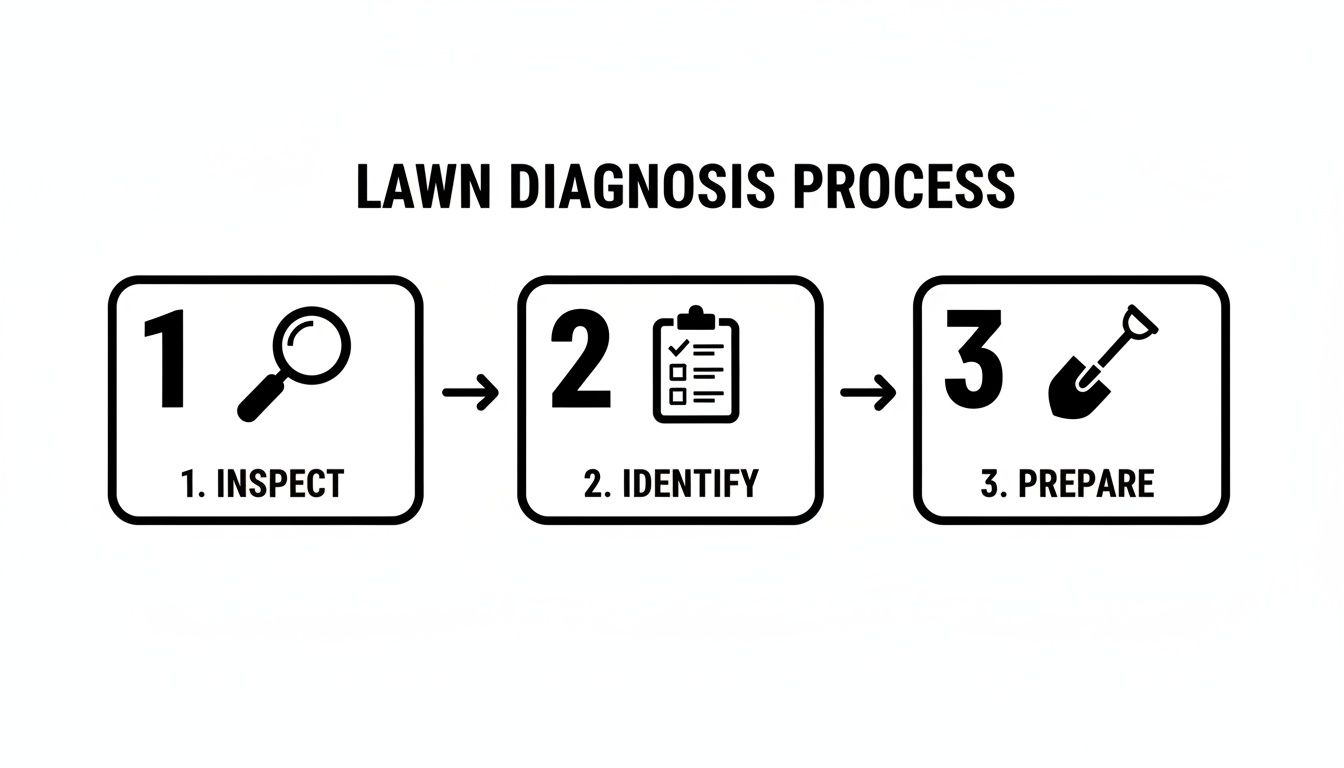
As the visual shows, it’s all about a logical flow: inspect your lawn carefully, identify what’s causing the bumps and how bad they are, and then grab the right tools and materials for the job.
Topdressing for Minor Bumps and Low Spots
Topdressing is the go-to method for most homeowners I work with in places like Alpharetta and Cumming. It’s perfect for lawns with shallow dips—anything less than an inch deep—or a generally bumpy feel.
The goal isn't to bury your grass. Instead, you're gradually filling in the low spots with a thin layer of a leveling mix, allowing the existing grass to grow right up through it. Think of it like smoothing spackle on a wall before you paint. You aren't rebuilding the wall, just perfecting the surface.
This technique is incredibly effective and actually improves your soil health by adding rich, organic matter.
Preparing Your Lawn for Topdressing
A little prep work makes a huge difference. Taking these steps ensures the topdressing mix gets down to the soil where it belongs, instead of just sitting on top of the grass.
- Mow It Short: Cut your grass one or two settings lower than you normally would. This makes the low spots much easier to see and helps you work the mix down to the soil. Just be careful not to scalp the high spots!
- Dethatch and Aerate: If you have a thatch layer thicker than half an inch, now is the perfect time to get rid of it. Following up with core aeration is a game-changer. It pulls up small plugs of soil, relieving compaction and creating channels for the topdressing, water, and nutrients to get in deep. We cover this in detail in our guide on how to aerate your lawn.
- Mark Your Targets: Walk the lawn and pop small flags in the middle of the low spots. You'd be surprised how easy it is to lose track of them once you start spreading soil.
Applying the Leveling Mix
With your lawn prepped, it's time to bring in your organic mix. I find it easiest to shovel the topsoil, sand, and compost blend into a wheelbarrow and dump small piles in and around the areas you marked.
Grab the back of a garden rake or, even better, a specialty leveling rake, and spread the mix across the depressions. You want to fill the low spots until they’re level with the surrounding turf. Don’t sweat it if the grass is still peeking through—that’s exactly what you want.
Key Takeaway: The golden rule of topdressing is to never apply more than a half-inch layer at a time. Anything thicker can smother the grass, killing it and creating a perfect spot for weeds to move in. For deeper spots, just apply a few thin layers over several weeks.
To finish, grab a push broom and gently work the mix down through the grass blades. This settles everything nicely and makes sure the material gets right down to the soil surface.
Fixing Deep Ruts by Lifting Sod
For more serious problems—like a sunken spot over an old tree stump or deep tire ruts in your Forsyth County yard—topdressing isn’t going to be enough. These are usually more than an inch deep and need a more direct fix.
This method involves carefully lifting the existing sod, filling the hole underneath, and then laying the sod right back down. It's more work, no doubt, but it gives you an immediate and impressive result. It's the perfect solution for those isolated but major problem areas.
A Step-by-Step Guide to Sod Repair
Let's say you have a deep, 2-inch depression near your driveway. Here’s how you’d tackle it:
- Cut the Sod: Use a flat spade or sod cutter to slice around the perimeter of the sunken area. If it’s a long rut, cut it into a few manageable squares.
- Lift the Turf: Gently slide the spade under the sod, keeping the blade flat to save as many roots as possible. Lift the section of turf and set it aside in a shady spot.
- Fill the Depression: Add your leveling mix to the hole. Fill it until it's just a little bit higher than the ground around it—this will account for settling.
- Replace and Water: Put the sod back on top of the fresh soil. Press it down firmly so the roots make good contact with their new base. Water it well right away, and keep watering it daily for the first week or two until it takes root again.
While these techniques cover the core of leveling, a truly flat yard often relies on proper grading and drainage. Understanding how to flatten your yard with grading and drainage tips can offer a bigger picture, especially if you think water issues are the root cause. Getting the grading right is crucial for the long-term stability of your lawn.
The Best Time of Year for Lawn Leveling in Georgia
Timing your lawn leveling project here in North Georgia isn't just a suggestion—it’s the secret sauce for getting it right. If you work with your lawn's natural growth cycle, it bounces back fast, turning what could be a stressful job into a seamless upgrade. For homeowners in Cumming, Alpharetta, and Milton, that means scheduling the work when our local warm-season grasses, like Bermuda and Zoysia, are really taking off.
These grasses grow best when the soil is consistently warm. That's when they have the energy to push right through a fresh layer of topdressing and heal up. If you try to level a lawn in the dead of a Georgia summer, you risk scorching the new growth. And if you do it while the grass is dormant in winter, it can't recover, leaving you with bare spots that are a welcome mat for weeds.
The Ideal Windows for Lawn Leveling
For those of us in Forsyth County, two specific windows are perfect for tackling a bumpy lawn. These are the sweet spots that give you a great balance of moderate temperatures and active grass growth.
- Late Spring (May to early June): This is prime time. The last frost is long gone, and your Bermuda or Zoysia is green and growing strong. The warm days and mild nights are exactly what your lawn needs to recover quickly and fill in any thin areas.
- Early Fall (September to early October): Here’s your second chance. The intense summer heat is finally breaking, but the grass hasn't gone dormant yet. The soil is still warm, and your lawn is busy developing its roots—the perfect conditions for establishing a strong foundation before winter.
Timing is everything. Leveling during these active growth periods means your lawn doesn't just survive the process—it thrives. The grass will vigorously grow through the new soil layer, knitting everything together for a smooth, resilient surface.
Why Timing Matters for North Georgia Lawns
Our weather in this region can turn on a dime, which is why working with the seasons is so important. In North Georgia's climate—with its 50+ inches of annual rain—it's common to see soil settle and create significant 2- to 6-inch bumps on an estimated 45% of older lawns. This compaction chokes out roots and can slash a lawn's overall health by 35%.
When you get the timing right, you’re not just smoothing out lumps. You're setting your lawn up for long-term health. For example, we've seen homeowners in Cumming cut their post-service water usage by 20% because a level lawn soaks up water evenly instead of letting it run off. With the global landscaping industry now at USD 315 billion, local expertise in handling these specific conditions is more valuable than ever. You can see just how massive the lawn and garden equipment market has become.
Barefoot Organics serves communities from Cumming to Milton with pet-safe and child-safe protocols, and we always schedule our services during these optimal seasons. To go deeper, check out our guide on the best time to top dress your lawn, which is a perfect partner to the leveling process. When you pick the right time of year, you give your turf the best shot at a beautiful recovery, creating that smooth, safe, and lush green carpet you’re looking for.
Lawn Care and Maintenance After Leveling
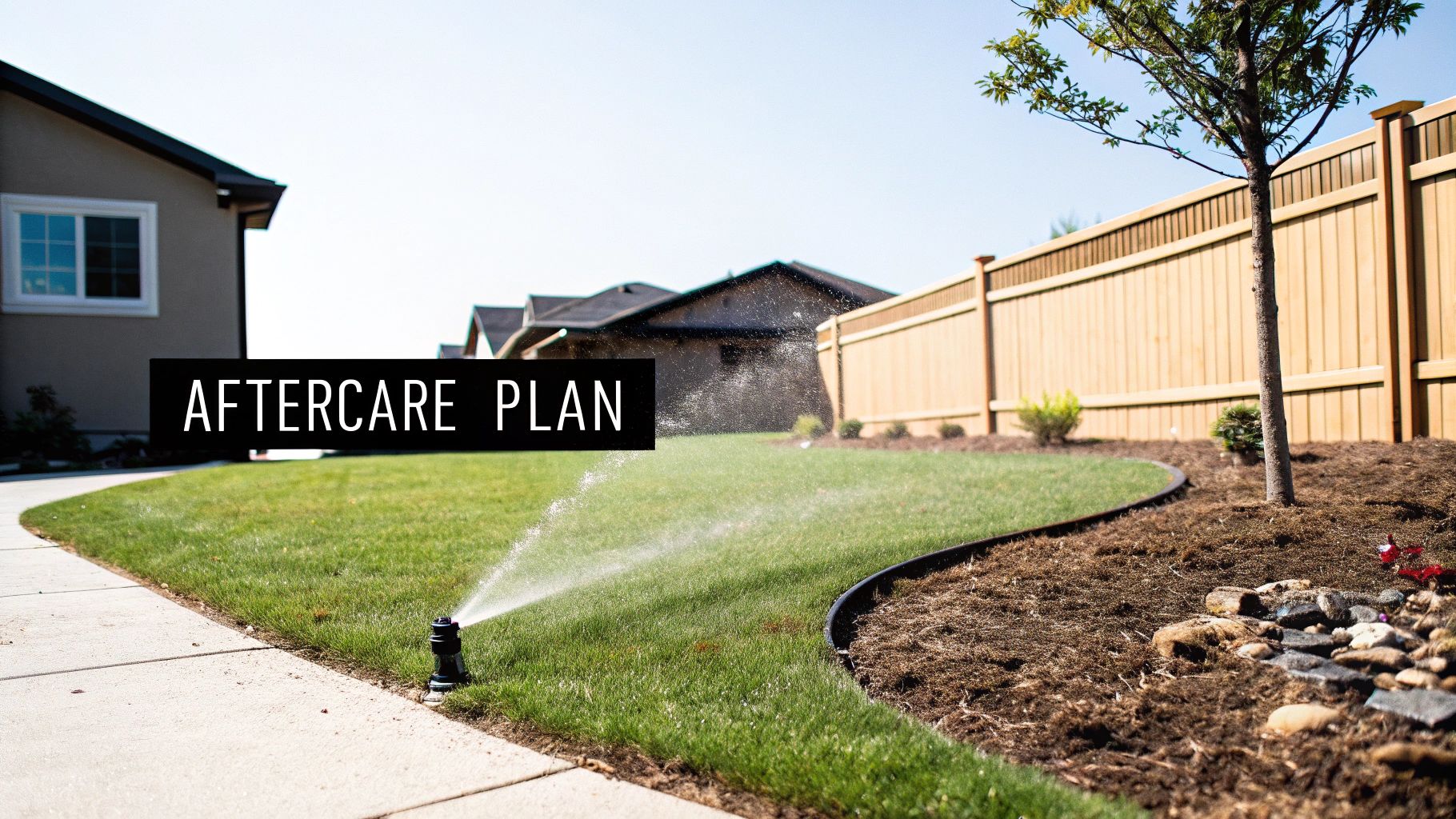
Getting your lawn smooth is a fantastic feeling, but the job isn't quite over yet. Think of the next few weeks as the critical recovery period. This is where all your hard work pays off, transforming that newly leveled ground into a truly resilient and beautiful lawn.
Proper aftercare is all about nurturing the new growth and helping the existing turf bounce back. By focusing on watering, mowing, and some forward-thinking maintenance, you’re not just fixing bumps—you’re building a fundamentally healthier lawn that will be much better at resisting future problems.
Your Immediate Watering Plan
Water is, without a doubt, the most important part of the recovery equation. This is especially true for the new topdressing mix and any grass seed you've put down. Your goal is simple: keep the top layer of soil consistently moist, but never a swampy mess.
For those of us in North Georgia, from Milton to Dahlonega, this means light and frequent watering is the way to go. Instead of one long, deep soak, aim for two or three short watering cycles throughout the day for the first couple of weeks. This approach gives the new seed and soil exactly what they need without washing them away.
Once you see new grass sprouting and getting established (usually after about two weeks), you can ease back into a more typical watering schedule. That generally means a deeper watering of about one inch, once or twice a week, depending on the weather and rainfall.
Overseeding to Fill in the Gaps
No matter how carefully you spread your leveling mix, you'll probably have a few thin or bare spots. That’s perfectly normal, and overseeding is the perfect fix to create that thick, uniform carpet of green you're after.
If you're working with warm-season grasses like Bermuda or Zoysia, which thrive in our Forsyth County climate, the best time to overseed is right when you level the lawn during the growing season. Just scatter a quality seed that matches your existing grass over any sparse areas. A gentle rake-over will ensure good seed-to-soil contact, which is absolutely essential for germination.
Smart Mowing to Protect New Growth
Your mower can either be a huge help or a major setback for a recovering lawn. Mowing too early or cutting too low can seriously stress the tender new grass, even pulling up seedlings before their roots have a chance to grab hold.
Patience is key here. Wait until the new grass in the leveled spots reaches at least 3 to 4 inches high before you even think about its first cut. And when that time comes, always stick to the one-third rule: never remove more than one-third of the grass blade in a single go.
A few quick tips for that first mow:
- Raise the Deck: Set your mower to a higher cutting height than you normally would. You can gradually lower it back to your preferred height over the next few mows.
- Sharpen Those Blades: A sharp blade makes a clean cut, helping the grass heal quickly and reducing the risk of disease. A dull blade just tears and shreds.
- Mix Up Your Pattern: Don't fall into the trap of mowing in the same tracks every time. Varying your pattern prevents you from creating new ruts and compacted areas.
For a clear, week-by-week guide, this schedule breaks down the essential tasks to keep your lawn on the fast track to a full recovery.
Post-Leveling Care Schedule
| Timeframe | Watering Instructions | Mowing Guidelines | Key Observation |
|---|---|---|---|
| Week 1-2 | Lightly water 2-3 times daily to keep topsoil consistently moist. | Do not mow. | Watch for signs of new seed germination and soil settling. |
| Week 3-4 | Reduce to one deep watering every 2-3 days (1 inch total per week). | Mow only if new grass is 3-4 inches tall. Use a high setting. | New grass should be visible and strengthening. Note any remaining thin spots. |
| Week 5-6 | Transition to your regular schedule (1 inch of water, 1-2 times per week). | Continue mowing high. You can gradually lower the deck setting. | The lawn should start looking uniform and well-established. |
| Week 7+ | Maintain a consistent, deep watering schedule. | Resume normal mowing frequency and height, always following the 1/3 rule. | Your lawn is now recovered. Monitor for any new bumps or signs of stress. |
Following this simple plan takes the guesswork out of aftercare and ensures your lawn gets exactly what it needs to thrive after being leveled.
Long-Term Maintenance for a Lasting Level Lawn
Once your lawn is fully recovered and looking great, a smart maintenance routine is your best bet for keeping it that way. The heavy clay soil we have in areas like Milton and Alpharetta is notorious for compacting over time, which is a leading cause of lumpy lawns.
Core aeration is the single best thing you can do to fight this. Aerating your lawn every year or two physically breaks up that compacted soil, which dramatically improves drainage and allows critical air, water, and nutrients to get down to the roots where they're needed most. It’s the secret to maintaining that smooth surface you worked so hard to create.
When to Call a Lawn Leveling Professional
While tackling minor bumps yourself is a great weekend project, some lawn leveling jobs are just too big for a shovel and a wheelbarrow. It's important to know when to wave the white flag and call in the pros. Honestly, it can save you a ton of time, frustration, and even money in the long run.
If your quick fix starts to feel more like a full-blown construction project, that’s your first clue. Homeowners in Cumming, Milton, and Dahlonega often underestimate the sheer physical labor and the mountain of material needed for bigger lawns.
Are you looking at widespread unevenness? Do you have deep ruts crisscrossing a large section of your yard? If you're dealing with depressions deeper than 2-3 inches, a DIY approach is going to get overwhelming fast. This is exactly where professional efficiency and equipment make all the difference.
Signs It's Time for Expert Help
Sometimes, the real problem is lurking beneath the surface. Serious underlying issues often demand specialized know-how and equipment that you just won't find in a typical garage.
You should definitely think about calling a professional if you see any of these red flags:
- Major Drainage Problems: If your Johns Creek yard turns into a small pond every time it rains, you're likely dealing with a serious grading or compaction issue. A simple layer of topdressing won't solve that.
- Extensive Animal Damage: A couple of molehills are manageable. A lawn that looks like a maze of tunnels and mounds, however, needs a more robust solution to get it back in shape.
- Large-Scale Unevenness: When most of your lawn is bumpy, professional-grade equipment can level the entire space with a consistency that’s nearly impossible to achieve by hand.
For severely uneven lawns that require significant soil redistribution beyond simple DIY methods, you might consider engaging professional earthmoving contractors. These specialists handle the heavy lifting of re-grading a landscape to establish a proper foundation.
The Barefoot Organics Advantage in North Georgia
This is precisely where Barefoot Organics can be a lifesaver for folks in the Cumming area and surrounding communities. When you bring us in, you’re not just hiring muscle; you're getting a team with deep, local expertise. We use specialized equipment to get a perfectly even spread every time.
Plus, we source premium organic topdressing mixes specifically blended to work with our region's challenging clay soil.
We take all the guesswork and back-breaking labor out of how to level a bumpy lawn. Our professional leveling services deliver a pristine, healthy, and safe yard, so you can skip the hassle and just enjoy your beautiful, smooth outdoor space.
Your Lawn Leveling Questions, Answered
Embarking on a lawn leveling project naturally brings up a few questions. We get it. Over the years, we've heard just about everything from homeowners in Cumming, Alpharetta, and all over North Georgia. Here are some of the most common ones we tackle.
Should I Just Rent a Lawn Roller to Smash the Bumps Flat?
It's tempting to think a heavy roller is a quick fix, but please, step away from that idea! It’s one of the worst things you can do, especially with our notoriously dense clay soil here in Georgia.
Using a roller heavily compacts the soil. This chokes the life out of your grassroots, stops water from getting where it needs to go, and ironically, can make your lumpiness problems worse down the road. The right way to do it is with core aeration first, then topdressing with a high-quality organic mix. This actually relieves compaction and builds a truly level surface from the ground up.
How Much Topdressing Material Should I Buy?
This is a big one. The golden rule is to never add more than a half-inch of topdressing in a single application. Piling on more will suffocate and kill the grass you're trying to help.
To figure out what you need, measure the square footage of the area. As a benchmark, for every 1,000 square feet, a half-inch layer will require about 1.5 cubic yards of your leveling mix. If you're just filling in a few isolated low spots in your Johns Creek yard, a couple of bags from the garden center might be all you need.
A little pro tip: It's always better to apply a couple of thin layers a few weeks apart rather than one thick, risky layer. Patience really is the secret ingredient for getting this right without damaging your turf.
Will Leveling My Lawn Take Care of My Weed Problem?
While leveling isn't a weed killer, it's a huge step toward winning the war against them. A smooth, even lawn encourages your grass to grow in thicker and healthier.
This dense, thriving turf becomes the ultimate defense, naturally crowding out weeds and blocking them from getting the sunlight and water they need to survive. Once you're done leveling, overseeding any thin or bare spots is crucial. This prevents opportunistic weeds from taking over that freshly prepared soil.
If tackling that lumpy lawn feels like more than you want to handle, we're here to help. Barefoot Organics provides professional, organic leveling and topdressing services to give you the safe, beautiful yard your family deserves. Get your free quote online today!