

Dealing with fire ants is a rite of passage for anyone with a lawn in North Georgia. One wrong step near those familiar, fluffy mounds of red clay, and your peaceful afternoon is shot. It's a constant battle for homeowners everywhere from Cumming and Johns Creek to Alpharetta and Milton.
Those mounds aren't just an eyesore; they're a real hazard for kids, pets, and frankly, anyone who wants to enjoy their yard. But what's the solution? Many of us are (rightfully) hesitant to blanket our lawns with harsh chemicals.
The good news is, you don't have to. You can have a yard that's both safe and ant-free. Effective, natural methods are out there, and they work particularly well in our local environment.
Why Go Natural in North Georgia?
Fire ant control isn't just about what you use—it's about when and how you use it. Our Georgia climate and that dense red clay soil we all know and love (or hate) have a huge impact on how well any treatment works. The beauty of natural solutions is that they often work with our local conditions, not against them.
Take one of the oldest tricks in the book: scalding hot water. It sounds simple, but it can be surprisingly effective. Pouring about 3 gallons of water heated to between 190°F and 212°F right over a mound can wipe out a good portion of the colony.
Depending on the size of the mound and how packed our soil is, this method alone can eliminate 20-60% of colonies on the first try. The key is to do it on a cool, sunny morning when the queen and her workers are closer to the surface, soaking up the warmth. You can dig deeper into effective fire ant treatments and their success rates to see how different methods stack up.
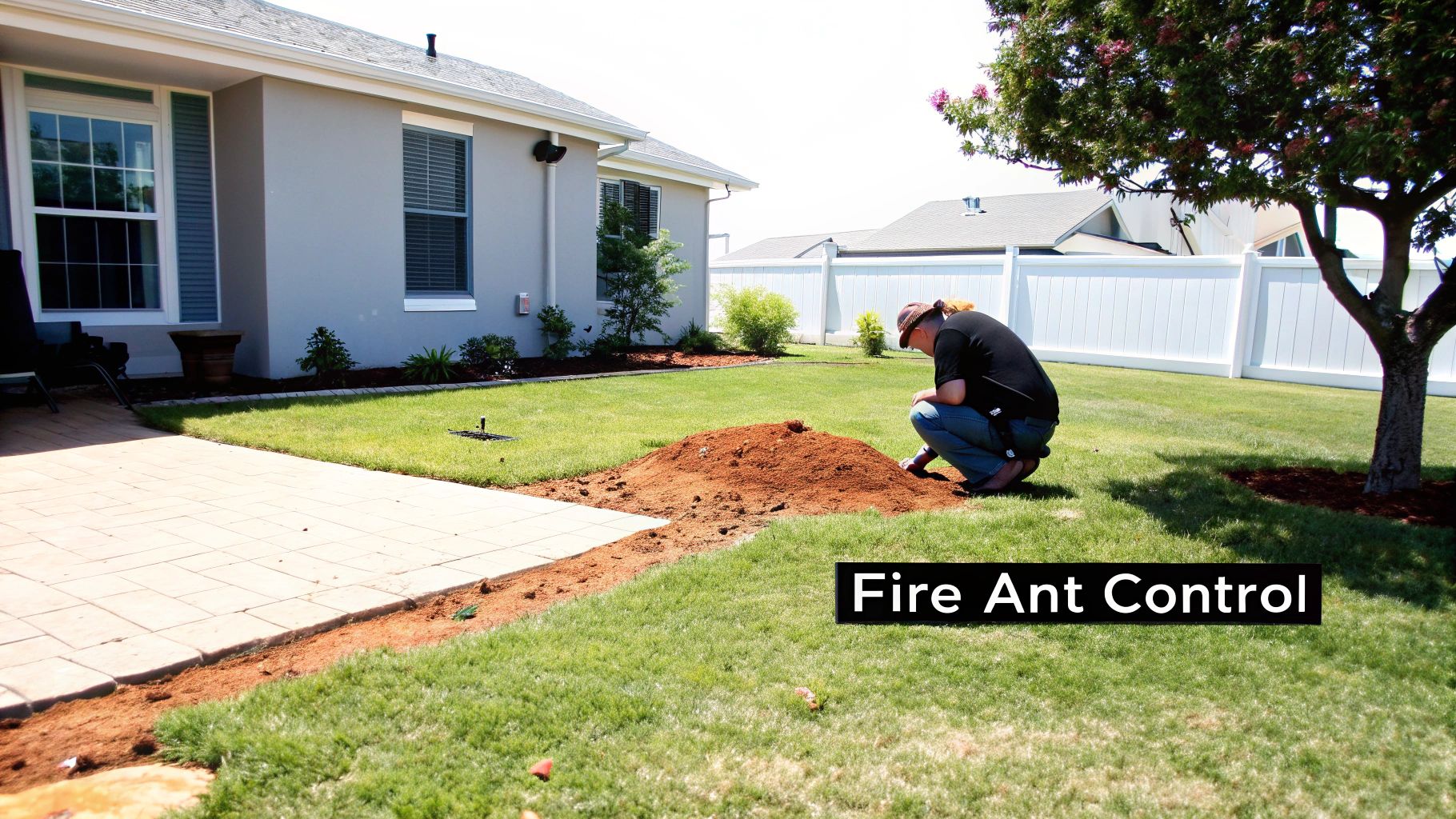
Local Pro Tip: Pay attention to your yard after a good rain in Forsyth County. Fire ants get busy rebuilding, making their mounds much more visible. That's the perfect time to strike, since the colony is active and right near the surface.
This guide will walk you through everything you need to know to take back your yard. We’ll cover a whole range of proven strategies, from quick fixes using stuff you already have in your kitchen to long-term plans to keep them from coming back. Let’s get you to a place where you can walk through your grass barefoot and worry-free.
Comparing Natural Fire Ant Remedies
Here's a quick look at common natural methods, how well they work, and what North Georgia homeowners should consider before trying them.
| Method | Effectiveness | Best For | Safety Note |
|---|---|---|---|
| Boiling Water | Moderate | Single, visible mounds. Quick, non-toxic takedown. | High risk of burns. Will kill grass and any plants it touches. |
| Diatomaceous Earth | Low to Moderate | Prevention around home foundations or garden beds. | Use food-grade DE. Avoid inhaling the dust; wear a mask. |
| Vinegar & Soap Mix | Low | Direct spray on visible ants. Minimal impact on the colony itself. | Can harm plants and alter soil pH. Test in a small area first. |
| Beneficial Nematodes | High (Long-term) | Whole-yard, preventative control. | Requires specific soil moisture and temperature. Not an instant fix. |
While these DIY methods can help manage small infestations, they often require repeated applications and may not eliminate the entire colony, including the queen. For widespread or persistent problems, a more comprehensive approach is usually necessary.
How to Spot Georgia Fire Ants in Your Yard
To get the upper hand on fire ants, you’ve got to understand how they operate. This is the secret weapon for any homeowner in Cumming, Alpharetta, or anywhere else in our neck of the woods. You have to know your enemy before you can win back your backyard.
Across North Georgia, from the neighborhoods of Johns Creek to the greener spaces of Milton, the most common sign of fire ants is their mound. But it's a very particular kind of mound. Unlike typical ant hills, a fire ant mound is a fluffy-looking pile of churned-up soil with no central hole on top. It often looks like someone just disturbed a patch of our famous red clay. You’ll usually spot them in sunny, open spots—right in the middle of your lawn, along the driveway, or popping up in cracks in the sidewalk.
Are You Sure It's Fire Ants?
Before you declare war, you need to be 100% certain you’re dealing with fire ants and not a less hostile native ant. There's a simple, safe way to find out without getting a leg full of stings.
Take a long stick or the edge of a shovel and gently poke the side of the mound. Then, step back fast. If reddish-brown ants boil out of the soil aggressively, you've found your culprit. That immediate, ferocious defense is the classic calling card of a fire ant colony. No other ant around here reacts with that kind of speed and fury.
A single fire ant colony can house up to 250,000 worker ants. When you disturb their home, you're triggering a massive defensive swarm, which is why you rarely get just one sting. Knowing this helps you respect the sheer size of the problem you're tackling.
What’s Really Going On Under Your Lawn
The key to winning this fight is understanding what's happening underground. A fire ant colony is so much more than the mound you see. It's a complex network of tunnels that can stretch 25 feet away from the mound and plunge several feet deep into the Georgia soil.
That mound is just the tip of the iceberg. Think of it as a solar-powered nursery for their eggs and larvae. The whole colony is a highly organized machine with one primary directive: protect the queen at all costs.
Here’s who you’re up against:
- The Queen: She's the heart of the operation, tucked away deep in the nest. Her only job is to lay eggs—sometimes up to 1,500 every single day. If she survives your treatment, the colony will pop right back up.
- Worker Ants: These are the sterile females you see out and about. They're the ones foraging for food, building the mound, and delivering those nasty stings.
- The Brood: This is the next generation—eggs, larvae, and pupae. The workers are constantly shuttling them up and down within the mound, finding the perfect temperature and humidity.
Turning Their Habits Against Them
This is where a little local know-how really pays off. In areas like Cumming and Dahlonega, fire ant activity ebbs and flows with the weather. If you time it right, your natural treatment will be much more effective because you're hitting them when they're most exposed.
Fire ants are smart; they move the queen and their young closer to the surface to absorb the sun's heat. This is your window of opportunity. It brings the most important members of the colony within reach.
The absolute best times to treat a fire ant mound are:
- On a cool, sunny morning. The ants will have moved up into the top of the mound to warm up.
- The day after a good rain. When the ground gets saturated, the colony moves upward to stay dry, making them more vulnerable.
Timing your attack for these moments dramatically increases the odds of your treatment reaching the queen. It's a strategic move that makes a simple remedy far more powerful and will save you a ton of frustration.
Proven DIY Methods for Your Lawn
Alright, time to get your hands dirty—figuratively, of course. When you see a fire ant mound popping up in your Cumming or Milton lawn, you want a fix that's effective but also safe for your family and pets. These DIY methods use items you probably already have to create some potent, natural fire ant killers. Forget what you've heard on the internet; I'll show you exactly how to apply these remedies to get the best results in our Georgia climate.
Timing your treatment is half the battle. This graphic breaks down the two best windows of opportunity for hitting those mounds.

Going after them on a cool, sunny morning or right after a rain shower drastically improves your chances of getting the treatment deep enough to reach the queen.
The Strategic Use of Diatomaceous Earth
Diatomaceous earth (DE) is a fantastic natural tool, but it’s not something you pour directly on the mound to drown it. Think of it less as a direct assault and more as a long-term strategic barrier.
DE is made from the fossilized remains of tiny aquatic organisms. Under a microscope, those particles are incredibly sharp and abrasive. For a soft-bodied insect like a fire ant, walking across a line of DE is like crawling over broken glass. It scratches up their exoskeleton and causes them to dehydrate and die.
To use it the right way:
- Get Food-Grade DE: Always, always use food-grade diatomaceous earth. It's non-toxic if a pet or child accidentally ingests a small amount, but you should still wear a mask when you apply it to avoid breathing in the fine dust.
- Apply When It's Dry: DE is worthless when wet. Putting it down on a damp lawn or right before a classic Georgia downpour is a complete waste of time and money.
- Create a Perimeter: Don't dump it on top of the mound. Instead, lightly sprinkle a thin line of DE around the base of the mound. This forces the worker ants to march right through it as they come and go. You can also use this trick to create protective barriers around your garden beds, patios, or your home’s foundation in Alpharetta.
The goal with DE isn't an instant kill. It’s a slow, steady war of attrition that weakens the colony by taking out its workforce. You should see a noticeable drop in activity within a few days.
The Vinegar and Soap Solution
For a more direct, smack-down approach, a simple mixture of white vinegar and dish soap can be surprisingly powerful. It’s a bit of kitchen chemistry that works because the soap helps break down the ants' waxy outer layer, allowing the acidic vinegar to do its job.
Here’s how to mix and apply it correctly for your Johns Creek yard:
- Get Your Supplies: You’ll need a gallon jug or bucket, plain white vinegar, and a basic liquid dish soap. Avoid anything fancy with bleach or heavy degreasers.
- Mix the Solution: Combine equal parts white vinegar and water. For a one-gallon batch, that means a half-gallon of vinegar and a half-gallon of water.
- Add the Soap: Gently stir in about two tablespoons of dish soap to your gallon of diluted vinegar. Try not to create a giant bubble bath.
- Drench the Mound: Carefully and slowly pour the entire mixture directly into the center of the fire ant mound. You want to completely saturate it so the liquid seeps deep down into all those tunnels.
This is a contact killer, which means it’s most effective on the ants it physically touches. It won't always get the queen on the first try if she's buried deep, but it will absolutely wreck the colony's day and kill a huge number of workers.
One word of caution: this mixture can be tough on your grass and may leave a brown spot. It's best used for mounds in driveway cracks, mulch beds, or parts of the lawn where a small dead patch isn't a huge deal.
Practical Tips for Safe Application
Going to war with a fire ant mound in Cumming or Milton requires a bit of planning. The last thing you want is to end up with your ankles covered in painful stings. The key is to be prepared and act decisively.
How to Treat a Mound Without Getting Swarmed:
- Plan Your Escape Route: Before you even get close, know exactly which way you’re going to back away. Make sure the path is clear of garden hoses, toys, or anything else you could trip over in a hurry.
- Approach from Upwind: Fire ants release alarm pheromones to signal an attack. By standing upwind, you reduce the chance that those signals will drift over to you.
- Pour and Move: Once you start pouring, commit. Douse the mound thoroughly but do it fast, then immediately back away at least 10-15 feet. Don't stick around to admire your work.
- Wear Protective Gear: This is non-negotiable. Always wear closed-toe shoes, socks, and long pants. Tucking your pants into your socks is a pro-level move that gives you an extra layer of protection against any stragglers.
Follow these simple safety tips, and you can confidently apply your natural treatments. These methods are a great first step in taking back your lawn. For a more complete strategy, take a look at our guide on natural pest control for lawns.
Creating a Fire Ant-Resistant Yard
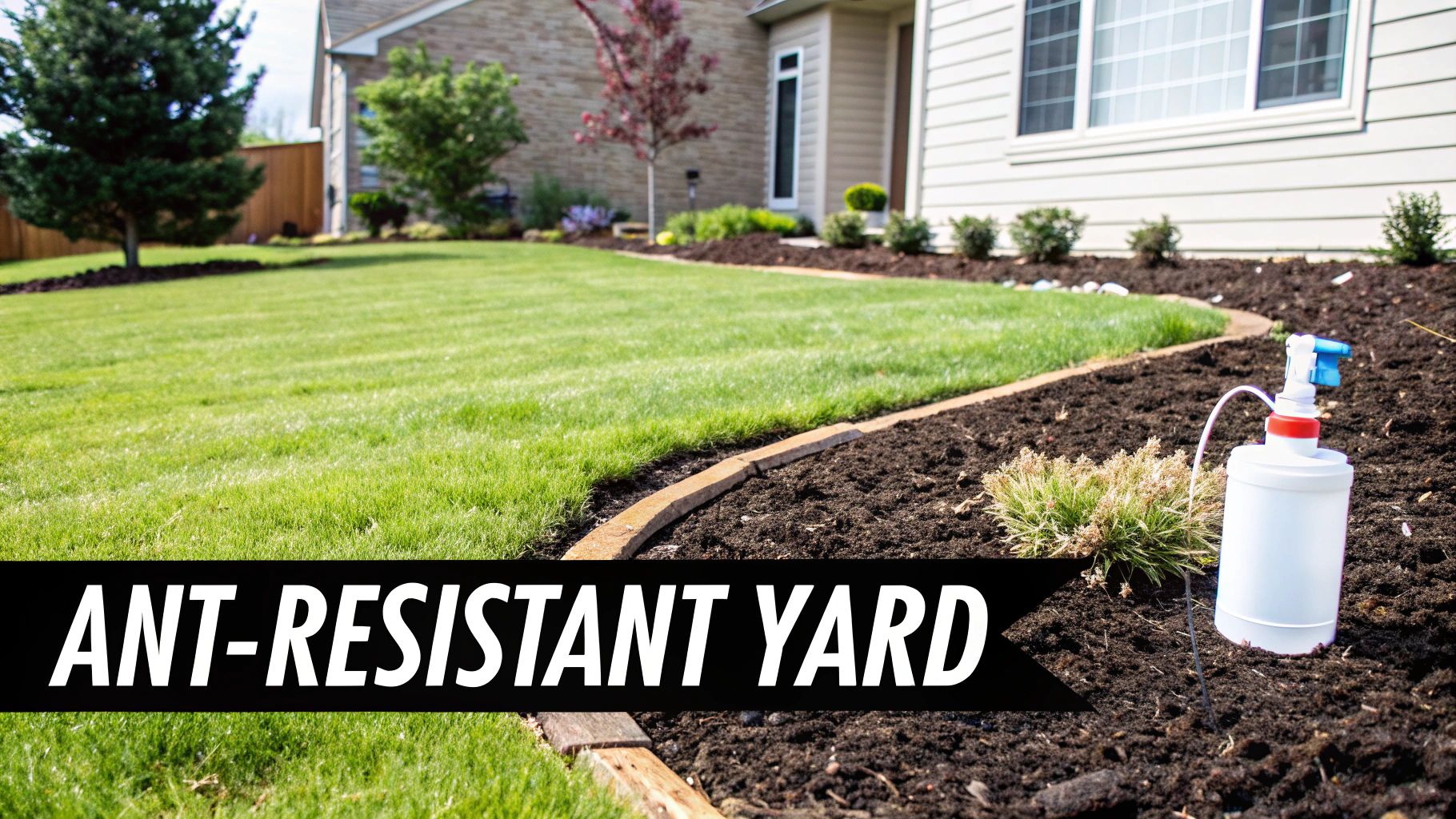
Drenching a fire ant mound is satisfying, no doubt. But any of us here in North Georgia know that's just winning one small battle. The real war is won by making your yard a place where fire ants simply don't want to be.
The goal is to shift your mindset from constantly reacting to new mounds to proactively creating a landscape that naturally repels them. This is about building a long-term defense for your home in Cumming or Milton, not just spot-treating problems as they pop up. It involves smart landscaping and using nature's own army to your advantage.
Landscaping for Fewer Fire Ants
Fire ants are opportunists. They’re always on the lookout for sunny, open areas with easy access to food and water—a perfect description of many lawns across Forsyth County. You can make your property far less attractive with just a few simple adjustments.
A thick, healthy lawn is your absolute best first line of defense. When your turf is dense and thriving, it’s much harder for a new queen to find the bare soil she needs to dig in and start a colony. Consistent mowing, proper watering, and good organic fertilization create a lush carpet that naturally crowds out fire ants.
Your choice of mulch also makes a huge difference. Fire ants love settling down in pine straw and standard wood chips because they hold moisture and insulate their colonies perfectly. Try swapping those out for less inviting options in your garden beds:
- Cedar Mulch: This is a fantastic choice. Cedar contains natural oils that act as a repellent for many insects, including ants.
- Rubber Mulch: Made from recycled tires, it doesn't decompose or offer any organic matter for pests to feed on.
- Pebbles or Gravel: As inorganic ground cover, these materials provide zero food or shelter, making them an excellent fire ant deterrent, especially around your home's foundation or patio areas.
I always tell my clients this: Your yard’s overall health is directly tied to its pest resistance. A stressed, patchy lawn is basically a welcome mat for fire ants. If you focus on improving soil health and grass density, you create an environment where these pests just can't get a foothold.
Introducing Beneficial Nematodes
To really get ahead of fire ants, you sometimes need to call in reinforcements. That’s where beneficial nematodes come in. These are microscopic, worm-like organisms that are the natural predators of countless soil-dwelling pests, including fire ant queens and their larvae. Best of all, they are completely safe for people, pets, and plants.
Think of them as a microscopic army you release into your soil. Once applied, they actively hunt down fire ant colonies and attack them from the inside out. They enter an ant, release a specific bacteria that kills their host, and then reproduce inside the dead pest. A whole new generation of nematodes is then released to continue the cycle.
Application is straightforward. Nematodes usually arrive in a powder or on a sponge, which you simply mix with water. Then, use a hose-end sprayer to apply them across your lawn. The trick is to do this in the evening or on a cloudy day, as UV light can harm them. Give your lawn a good watering before and after you spray to help them move down into the soil where they do their best work.
This isn’t a quick fix like the boiling water drench. It’s a long-term, biological control strategy that takes a few weeks to really get established. But the results are powerful and lasting. As a bonus, these tiny allies also help control other pests. You can see how they work on different pests in our guide on https://www.barefootorganicsllc.com/how-to-get-rid-of-grubs-naturally/, since the same principles apply.
The Power of Biological Control
Using beneficial nematodes taps into a powerful, sustainable approach to managing pests. This isn't just theory; it’s backed by large-scale research. The USDA’s Areawide Fire Ant Project, for example, demonstrated that introducing natural enemies could significantly suppress fire ant populations. In their test areas, they saw numbers drop by up to 80% after several years.
While we can't release the same phorid flies they used, it proves the incredible potential of long-term biological strategies. By exploring options like this and a deeper understanding citrus-based natural solutions, which are often used in natural pesticides, you can build a multi-layered defense. Combining immediate treatments with the lasting protection of nematodes and smart landscaping is the key to an effective, eco-friendly plan.
When It's Time to Call in the Pros
Look, DIY methods are fantastic for tackling a few stray fire ant mounds. If you spot a couple of mounds in your Cumming or Johns Creek lawn, a careful dose of boiling water or diatomaceous earth can often knock them out. I've done it myself plenty of times.
But let's be realistic. There's a tipping point where a determined homeowner is simply outmatched by a full-blown fire ant invasion. Stubbornly trying to fight a massive infestation on your own can lead to a yard that’s a minefield for kids and pets, not to mention a whole lot of wasted weekends and painful stings.
Knowing when to hang up your DIY gloves and call for professional backup is the smartest move you can make.
Signs You're Fighting a Losing Battle
It’s so easy to underestimate a fire ant colony. What you see on the surface is just the tip of the iceberg—the entrance to a massive underground city. If any of these situations sound familiar on your Milton or Alpharetta property, it's a clear signal that the problem has graduated beyond a simple DIY fix.
Here are the dead giveaways that you need an expert:
- You're Playing Whack-a-Mole: You aren't just dealing with one or two mounds. You're seeing ten, twenty, or more popping up across your lawn. Treating them individually at this point is an endless, frustrating game you just can't win.
- They're in Dangerous Spots: Fire ants love to nest in the worst possible places. If you find a mound inside an electrical box, your HVAC unit, or a utility meter, back away and don't touch it. The risk of getting a nasty shock is just too high.
- Someone Has a Severe Allergy: This one is non-negotiable. If anyone in your home is severely allergic to insect stings, the danger of anaphylactic shock is very real. Your family's safety comes first, and a professional can eliminate the threat with precision and control.
- The Mounds Keep Coming Back: You’ve treated the same area multiple times, only for a new mound to appear a few feet away. This is a classic sign the queen is still alive and well deep underground. She's just relocating the colony, a common headache for folks in places like Dahlonega with its tricky, clay-rich soil.
Calling a professional isn't giving up. It's making a smart, strategic decision to protect your family and your property. When the problem gets too big or too dangerous, it’s time to bring in someone with the right gear and expertise.
Finding an Eco-Friendly Pro in North Georgia
Bringing in an expert doesn't mean you have to douse your yard in harsh chemicals. In fact, many top-notch pest control companies in the Cumming area now specialize in the very eco-friendly, family-safe solutions you're looking for. It's all about asking the right questions.
When you're looking for a local company, you want a partner who gets why you want to avoid the nasty stuff. A truly professional, eco-conscious provider will be completely open about their methods.
Here’s what to look for:
- A Focus on Integrated Pest Management (IPM): This is the gold standard. IPM is a smarter approach that focuses on long-term prevention and uses the least-toxic solutions first. It’s about working with nature to control pests, not just blanketing the yard with spray.
- They Offer Low-Impact or Natural Products: Ask them point-blank about their pet-safe and kid-safe options. Many now use highly effective products made from botanical oils and other natural ingredients that are tough on fire ants but gentle on the environment.
- They Give You a Real Plan: A good pro does more than just spot-treat the mounds you point out. They'll walk your entire property, identify problem areas, and lay out a comprehensive plan for both immediate treatment and long-term prevention, customized for the specific challenges of your yard in Forsyth County.
Common Questions About Natural Fire Ant Control
When it comes to tackling fire ants the natural way, it’s only smart to have a few questions. Homeowners I talk to in Cumming, Alpharetta, and Johns Creek are always looking for methods that are effective but also safe for their families and lawns. It's perfectly normal to be cautious.
Let's clear up some of the most common questions we hear all the time. Getting straightforward answers is the first step toward reclaiming your yard with confidence.
Is Boiling Water or Vinegar Really Safe for My Lawn and Pets?
This is, without a doubt, the number one question we get from folks in Milton and Forsyth County. The short answer is yes, they are chemical-free, but you absolutely have to be careful.
Boiling water is lethal to fire ants on contact, but it's just as lethal to everything else. It will instantly kill the grass, flowers, or any other plant it touches, leaving a very noticeable bare patch. Because of this, it’s a tool best reserved for mounds popping up in driveway cracks or isolated spots in the lawn—well away from your prized hydrangeas.
A diluted vinegar solution is a bit gentler, but it can still brown or stress your turf if the concentration is too high. With any of these hands-on treatments, the key is precision. You have to keep pets and children away from the area during and immediately after you apply it. Once the water has cooled or the vinegar has soaked in, the spot is generally safe again. For a deeper dive, our guide on choosing safe pesticides for pets is a great resource for protecting your furry family members.
How Long Until I See Results from Natural Treatments?
Patience is a must when you're going up against a pest as stubborn as the fire ant. The time it takes to see real results can vary quite a bit depending on the method you're using.
- Immediate Impact: Scalding water is the fastest. You’ll see a dramatic stop in ant activity right away, and a single, thorough drenching can often wipe out a small mound for good.
- Slower, Steady Methods: Things like diatomaceous earth and vinegar solutions work more gradually. They need to make physical contact with the ants, so it can take several days to have a real impact on the colony as more workers track through it.
- Long-Term Strategies: Proactive solutions, like introducing beneficial nematodes, are all about playing the long game. You’re building an underground defense force. It can take several weeks, or even a full season, for their population to grow enough to see a significant drop in fire ants across your yard.
The main thing to remember is that an instant fix isn't always a permanent one. If a boiling water treatment doesn't reach the queen deep underground, the colony will eventually rebound. A multi-pronged approach is almost always more successful.
A classic mistake is treating a mound once and walking away, thinking the job is done. Fire ant queens are survival experts. Consistent follow-up, combined with long-term prevention, is the only way to truly get lasting control.
Why Do Fire Ants Keep Returning to My Yard?
It can feel personal when you knock out a mound, only to see a new one pop up a week later. The reality is, fire ants are a deeply established and highly successful pest all over North Georgia, from Cumming to Dahlonega. It’s not just your yard—it’s the entire region.
New fire ant colonies are usually started by a queen after a mating flight. These winged queens can ride the wind for miles before they land, shed their wings, and burrow into the soil to lay their first eggs. A sunny, irrigated lawn in Alpharetta or Johns Creek can look like a five-star resort to them.
This means that even if you eliminate every single mound on your property, a new queen from a few blocks over can fly in and start the whole process over again. This is exactly why a consistent, long-term prevention strategy—like improving your soil health and using beneficial nematodes—is so much more effective than just playing whack-a-mole with new mounds. Continuous management is the only way to keep their numbers down for good.
At Barefoot Organics, we know the specific challenges of keeping a lawn in North Georgia both beautiful and safe. If you're tired of the constant battle with fire ants and want a professional, eco-friendly solution that protects your kids and pets, we’re here to help. Get your free online quote today and see what our natural approach to lawn care can do for you. Visit us at https://barefootorganicsllc.com.