

When it comes to improving clay soil for grass, the approach is pretty straightforward: you need to aerate the soil to break up compaction and then consistently add organic matter to build a better, more porous structure. This one-two punch is the secret to turning that dense, stubborn clay into a foundation where a lush lawn can actually thrive, especially here in the Cumming, GA area.
Transforming Georgia Clay into a Thriving Lawn
If you're a homeowner in North Georgia, you're all too familiar with the struggle. That infamous red clay—whether you're in Cumming, Johns Creek, or the hills of Dahlonega—often feels more like you're trying to grow grass on concrete. It's the source of a lot of frustration for folks in Alpharetta and Milton just wanting a nice lawn.
The core issue with this heavy soil is its structure. The tiny particles that make up clay pack together so tightly that there's barely any room for air or water to get through. This is the root cause of most lawn care headaches in our area.
The Problem with Compacted Clay
Compacted soil creates a hostile environment for grass roots. They can't push through the dense ground, which forces them to grow shallow. A shallow root system means your lawn is much less resilient to our hot, dry summers around Cumming. On top of that, water tends to pool on the surface after a rainstorm instead of soaking in, which can drown the roots and lead to a lot of wasteful runoff.
Here’s what you're up against with Georgia clay:
- Poor Drainage: Water just sits on the lawn, creating muddy patches and depriving roots of the oxygen they need to breathe.
- Shallow Root Growth: Grass can't develop the deep, strong roots it needs to survive stress from heat or drought.
- Nutrient Lock-Up: You can fertilize all you want, but in compacted soil, those vital nutrients have a hard time reaching the root zone where they're actually needed.
The good news is that a beautiful green lawn is completely achievable, even in the heart of Forsyth or Cherokee County. The solution isn't some magic overnight fix, but rather a long-term strategy for fundamentally improving your soil's health.
Think of this guide as your battle-tested game plan for amending clay soil for your grass. We're going to skip the temporary band-aids and focus on creating real, lasting change, walking you through everything from testing your soil to picking the right amendments. This is your roadmap to turning that hard-packed clay into a healthy, fertile base for the lawn you've always wanted.
Diagnosing Your Lawn's Foundation with a Soil Test
Before you run out and buy a single bag of anything, you’ve got to figure out what you’re actually dealing with. That infamous red clay in Johns Creek is a different beast than the soil you'll find up in Dahlonega. Guessing what your lawn needs is the fastest way to waste a lot of time and money on amendments that just don't work.
That's why a soil test is, without a doubt, your most critical first step.
Trying to fix your soil without a test is like a mechanic trying to fix an engine without ever popping the hood. Sure, you might get lucky, but you're far more likely to make things worse. A proper test gives you a scientific, behind-the-scenes look at your lawn's foundation.
For anyone in Milton, Alpharetta, or the surrounding Cumming area, your best bet is the local University of Georgia (UGA) Extension office. They offer incredibly detailed reports that are worlds beyond a simple DIY kit, giving you a clear, actionable game plan tailored to our local conditions.
Decoding Your Soil Test Results
When that report comes back, don't let all the numbers and charts intimidate you. You only need to focus on a few key metrics that really tell the story of your soil's health, especially when it comes to clay.
- Soil pH: This is the big one. It measures your soil's acidity or alkalinity. North Georgia clay is notoriously acidic (meaning it has a low pH), which effectively "locks up" essential nutrients. You can throw down all the fertilizer in the world, but if the pH is off, your grass simply can't absorb it.
- Nutrient Levels (P, K): Your report will show the levels of phosphorus (P) and potassium (K). Deficiencies here directly stunt root development and weaken the grass's overall resilience—two things that are already an uphill battle in dense clay.
- Organic Matter Content: This percentage is your secret weapon. It tells you how much life is in your soil. A higher number means better soil structure, and our long-term goal is always to get this figure moving upward.
A classic scenario we see in Forsyth County is a soil test showing a pH of 5.2, low phosphorus, and organic matter under 2%. This instantly tells us that a standard "weed and feed" isn't the answer. The first priority has to be correcting the pH; otherwise, any other treatment is a waste.
Turning Data into an Action Plan
This is where the real value of the test shines through. Instead of throwing products at a problem, you now have a precise roadmap. An acidic pH points directly to applying lime. Low phosphorus means you need a specific starter fertilizer, not just a generic blend.
Learning how to properly test your soil pH is the first step toward getting this right. You can get more details by reading our guide on how to test soil pH.
Once you have your results, knowing how to interpret them is crucial. For a deeper dive into the science behind it, there's a fantastic guide on mastering soil pH that really breaks it down. This informed approach ensures every dollar you spend directly addresses your lawn's specific needs, setting you up for success right from the start.
Breaking Up Compaction with Core Aeration
Imagine trying to breathe with a heavy weight on your chest. That's exactly what your grass roots are going through in the dense, compacted clay so common across Cumming and Forsyth County. The soil particles are squished together so tightly there’s no room for anything to move—not air, not water, and certainly not nutrients.
This is where core aeration comes in. It’s hands-down the most effective physical thing you can do to improve clay soil for your lawn.
Core aeration isn't just about poking holes. The machine physically pulls small plugs, or "cores," of soil and thatch right out of the ground. This process instantly creates thousands of small channels, relieving the intense pressure on your grass’s root system and letting oxygen, water, and nutrients finally get down deep where they’re needed most.
Why Timing Your Aeration Matters
To get the most out of aeration, you have to time it with your grass's natural growth cycle. Aerating at the wrong time of year can seriously stress out the lawn and roll out the welcome mat for weeds.
For us here in the greater Cumming area, the timing looks like this:
- Warm-Season Grasses: If you have Bermuda or Zoysia—common in sunny lawns from Alpharetta to Johns Creek—the sweet spot for aerating is late spring or early summer. This is their peak growing season, which means they'll recover quickly and immediately start using that newfound breathing room.
- Cool-Season Grasses: For Fescue, a popular choice for shadier yards around Milton and Dahlonega, you'll want to aerate in the fall. The cooler air and moist soil create the perfect conditions for it to heal and establish a strong root system before winter sets in.
Getting the timing right ensures your lawn doesn't just survive the process but is perfectly prepped to thrive afterward.
Think of aeration as opening thousands of tiny doors in your lawn. It’s the essential prep work that ensures all the beneficial amendments you add next—like compost or lime—can actually get down into the soil where they can do their job, instead of just sitting on the surface.
Renting a Machine vs. Hiring a Pro
When it comes to the actual work, homeowners in places like Johns Creek or Milton basically have two paths: rent a core aerator yourself or hire a professional lawn service.
Renting from a local hardware store can save you some money if you're comfortable wrestling with heavy machinery. And I do mean wrestling—those things are heavy, cumbersome, and can be a real workout to maneuver.
Hiring a local service guarantees the job is done right with commercial-grade equipment, saving you a lot of time and a potential trip to the chiropractor. If you're looking for more details on the process, this guide explains how to properly aerate your lawn.
One last tip: after aerating, your lawn will be covered in little soil plugs. Don't rake them up! Just leave them be. They’ll break down on their own in a week or two, returning valuable microbes and nutrients right back to the soil surface.
Picking the Right Amendments to Build Better Soil
Now that you’ve opened up the soil with aeration, it's time to add the good stuff—the ingredients that will transform that dense clay for good. This is where the real magic happens. Think of it like stocking a pantry; you're giving your lawn the long-term nutrition it needs to build a healthy foundation.
Our goal here is simple: boost the organic matter. When you add things like compost, it helps bind those tiny, stubborn clay particles into larger clumps. This process is what creates the all-important pore space for air, water, and, most importantly, healthy grassroots to push through.
Why Organic Matter Is Everything
In the world of North Georgia's heavy clay, organic matter is king. It’s what breathes life back into compacted ground, introducing a universe of beneficial microbes and slowly building that dark, crumbly soil structure every homeowner in Cumming dreams of.
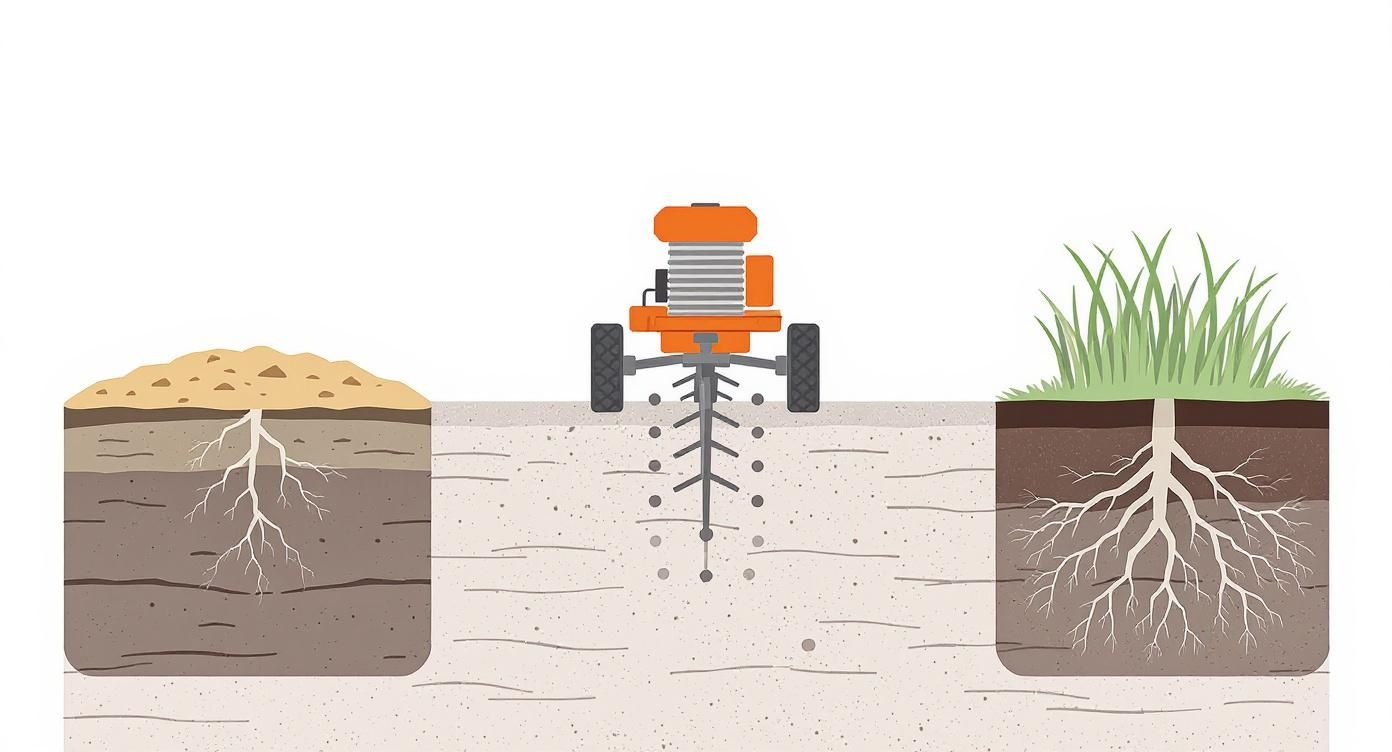
This infographic nails it—the journey from compacted clay to a thriving lawn is powered by the organic amendments you add right after you aerate.
Your number one tool in this fight is compost. It's a powerhouse of nutrients and microorganisms that completely changes the game. It improves soil texture, helps the ground hold onto water (but not too much!), and acts as a slow-release fertilizer for your grass. Spreading a thin layer, maybe a quarter-inch thick, across your lawn after aerating is one of the single best things you can do for your yard.
Other Powerful Soil Fixers for Georgia Lawns
While compost is the all-star, a few other amendments you can find at garden centers around Cumming or Milton can also work wonders. Each one brings something a little different to the table.
- Aged Pine Bark Fines: This stuff is fantastic for physically breaking up heavy clay. The small particles create tiny air pockets and seriously improve drainage without messing with your soil's pH.
- Mushroom Compost: A byproduct of mushroom farming, this amendment is incredibly rich in organic material and nutrients. It's a great choice for lawns that are seriously struggling and need a major boost.
A Quick Word of Warning: Whatever you do, never add sand to clay soil. It’s a common myth that this will "loosen it up." In reality, you’ll end up creating something closer to concrete, making your compaction problem a hundred times worse. Stick with organic matter.
The long-term strategy here is all about building up your soil's organic carbon content. The science backs this up: the ratio of soil organic carbon (SOC) to clay content is a critical factor for soil health and fertility. Getting that balance right is key.
Comparing Top Soil Amendments for Georgia Clay
Choosing the right amendment often comes down to your specific lawn's needs and your budget. This quick comparison should help you decide what's best for your yard in the Johns Creek or Alpharetta area.
| Amendment | Primary Benefit | Typical Application | Cost Level |
|---|---|---|---|
| Compost | All-around soil builder, adds nutrients & microbes | 1/4 inch topdressing annually | Medium |
| Pine Bark Fines | Excellent for improving soil structure & aeration | Mix into topsoil or topdress | Low-Medium |
| Mushroom Compost | Very high in nutrients and organic matter | Use sparingly, mix with other compost | Medium-High |
Ultimately, your soil test is your roadmap. For instance, if your pH is on the acidic side (which is common here), you'll need to add lime along with these organic amendments. We've got a whole guide on that you can check out: https://www.barefootorganicsllc.com/how-to-apply-lime-to-lawn/.
Knowing the why behind these steps makes a huge difference. Understanding a bit about horticulture best practices reinforces how crucial soil science and plant nutrition are to getting the results you want.
Understanding Carbon's Role in Your Soil
When you spread a thin layer of compost or leave the grass clippings on your lawn in Cumming or Alpharetta, you’re doing more than just adding "stuff" to the ground. You're making a direct deposit into your soil's carbon bank. Getting a handle on this simple idea is the key to understanding why fixing clay soil is a long-term project, not an overnight miracle.
Think of soil organic carbon (SOC) as the essential ingredient that rebuilds your lawn's entire foundation from the ground up. The infamous red clay across North Georgia, from Milton to Dahlonega, is naturally made of microscopic, flat particles. When wet, they stick together like a stack of soggy paper, leaving zero room for air or water to move.
How Carbon Literally Builds Better Soil
Adding carbon from organic matter completely changes that dynamic. It kicks off a process called flocculation, which is just a fancy word for getting those tiny clay particles to clump together into larger, more stable aggregates.
This clumping action is what creates the vital pore space your lawn is starving for. These newly formed channels and pockets are a game-changer, allowing:
- Oxygen to finally reach the root zone.
- Water to soak deep into the soil instead of just running off the surface.
- Grass roots to stretch out and grow deeper, making the whole lawn more resilient.
You aren't just putting a band-aid on the clay; you are fundamentally rebuilding its structure from the inside out.
Every time you mulch-mow or topdress with compost, you're feeding the microbial life that does the heavy lifting. This is how you create a sustainable, healthy lawn—by turning dense, compacted clay into a crumbly, fertile foundation.
Research backs this up, showing that grasslands on clay soils naturally store huge amounts of organic carbon. This carbon is what drives soil aggregation, nutrient cycling, and the soil's ability to hold moisture. To keep that system running, you have to maintain a steady input of carbon through amendments. You can dig deeper into this with a global assessment of soil carbon in grasslands.
This perspective changes everything. You're no longer just fighting a constant battle against the clay. Instead, you're actively working with nature to build a healthier, more porous, and life-sustaining soil ecosystem right under your feet.
Long-Term Habits for a Healthy Lawn on Clay
Alright, so you’ve done the heavy lifting—aerating, amending, and getting your lawn on the right track. But here in North Georgia, taming that dense clay soil isn't a "set it and forget it" kind of deal. The real secret to a stunning lawn in areas like Cumming and Johns Creek is shifting your focus from a one-time project to a set of consistent, long-term habits.
Think of it this way: your initial work was the down payment. These ongoing practices are what protect that investment, build equity in your soil, and create a truly resilient turf year after year. A lawn in Cumming or Alpharetta sitting on improved clay simply needs a different playbook than one blessed with naturally perfect loam.
The Power of Annual Topdressing
One of the best things you can do for your lawn is to topdress it with a thin layer of compost every fall. I can't stress this enough. It's like making an annual deposit into your soil's health savings account.
You don't need to go overboard. A light dusting, just a quarter-inch thick, is all it takes to keep feeding the soil microbes and replenishing the organic matter that gets used up over the year. This simple yearly ritual prevents the soil from reverting back to its old, compacted self, keeping those crucial air and water channels open for your grassroots.
Over time, this consistent addition of organic material gradually builds a richer, darker, more resilient topsoil layer. You're not just feeding the grass for one season; you're fundamentally changing the ground it grows in for the better.
Smarter Mowing and Watering for Clay Conditions
Your weekly mowing and watering routine has a huge impact on how well your lawn handles our local clay. A few small tweaks can make all the difference, encouraging the deep, strong root systems that are absolutely essential for punching through dense soil.
Mowing Habits That Build a Better Lawn
-
Mow High: Set that mower blade to one of its highest settings for your specific grass type. Taller grass blades mean deeper roots. Deeper roots are tougher, better able to navigate dense soil, and more effective at finding water and nutrients. It's a simple change with a big payoff.
-
Mulch Your Clippings: Stop bagging your grass clippings! Letting them decompose right on the lawn is nature's way of recycling. They break down fast, returning valuable nitrogen and organic matter directly to the soil where it's needed most. It’s free fertilizer.
Watering for Deep Roots, Not Shallow Puddles
- Water Deeply, Less Often: Forget the daily 10-minute sprinkle. That just encourages shallow, weak roots and wasteful runoff. Instead, give your lawn a good, long soak just once or twice a week. This forces the roots to grow downward in search of moisture, which is exactly what you want. A lawn with deep roots is a lawn that can handle the brutal heat of a Cumming summer.
This whole approach is backed by what we see in nature and in long-term agricultural studies. Practices that consistently add organic matter back into the ground lead to major improvements in clay soil structure and fertility. In fact, research shows that soil organic carbon can continue to build for decades in permanent grasslands, which is a powerful lesson in sustained care. You can dig into the science behind these long-term soil carbon findings to see for yourself.
Ultimately, it’s these small, consistent actions that add up, creating a beautiful, tough lawn that can handle whatever the North Georgia climate throws at it.
Got Questions About Georgia Clay Soil? We've Got Answers.
Homeowners all over North Georgia, from Cumming to Dahlonega, run into the same frustrations with their lawns. When you're dealing with that heavy red clay, knowing what not to do is just as important as knowing what to do. Let's tackle a couple of the questions we hear constantly from our clients in the Cumming area.
"Can I Just Mix Sand into My Clay Soil?"
Please don't do this! It’s an old myth that sounds logical but will actually make your problems worse. Think about what happens when you mix sand with fine clay particles—you essentially create a low-grade concrete right in your yard.
Instead of helping with drainage, this practice leads to even greater compaction. The grass roots will have an impossible time pushing through that dense, brick-like mixture. The real secret to breaking up heavy clay is consistently adding plenty of organic matter, like rich compost.
"How often should I be aerating my lawn in Alpharetta?"
For those of us with the classic compacted clay you find all over Alpharetta and Johns Creek, we always recommend annual core aeration. This is absolutely crucial, especially when you're just starting to turn your soil health around.
After a few years of consistent effort, you'll start to see a real difference in your soil's texture and how well it drains. At that point, you can usually scale back to aerating every other year just to maintain that great structure you've built.
The goal isn't just to keep grass alive; it's to transform the soil into a foundation where grass can truly thrive. While some turf types are tougher than others, improving the soil is always the winning long-term strategy.
Grasses like Tall Fescue and certain varieties of Bermuda have more aggressive root systems, which helps them power through tough clay while you work on building a healthier soil profile over time.
Ready to transform your lawn without all the trial and error? Barefoot Organics offers specialized, natural lawn care programs designed specifically for North Georgia's challenging clay soil in Cumming, Alpharetta, Johns Creek, Milton, and surrounding areas. Get your free online quote today and let us help you build a beautiful, healthy lawn that lasts.