

If you want to grow a beautiful lawn with dogs tearing around, the secret isn't a secret at all: it's about picking a grass that can take a beating and bounce back. For those of us here in North Georgia, especially in communities from Cumming to Dahlonega, that means choosing a tough, resilient variety that can handle both our climate and our four-legged family members.
Choosing the Right Grass for a Dog-Friendly Lawn
For homeowners in Cumming, Alpharetta, and our neighboring communities, the foundation of a great dog-friendly yard starts with the grass itself. Not all turf is created equal, especially when you throw active pets and Georgia’s hot, humid summers into the mix. You're looking for something that can withstand constant paw traffic and won't immediately turn yellow from urine spots.
Your best bet will depend on a few key things: how much sun your yard gets, the amount of foot traffic it sees, and your specific soil. Here in places like Milton and Johns Creek, lawns vary from full sun to partial shade, so that's a big part of the decision.
Top Grass Varieties for North Georgia Dog Owners
When it comes to durability, two types consistently come out on top for our region: Tall Fescue and Zoysia. They're both tough, but they fit different situations specific to the challenges we face in Forsyth and Gwinnett counties.
- Tall Fescue: This cool-season grass is a workhorse. It has a deep root system that helps it stay strong during dry spells and resist wear. A big plus is that it stays green longer into the cooler months, giving you a lush lawn for more of the year.
- Zoysia: As a warm-season grass, Zoysia creates an incredibly dense, almost carpet-like turf that’s fantastic at handling wear and tear. It loves our summer heat and is great at repairing itself, making it perfect for those high-traffic "dog runs."
For many folks I talk to in the Cumming area, the choice between these two powerhouses comes down to the yard's specific conditions. Zoysia is hard to beat for sunny, high-activity areas, while Fescue offers incredible resilience in yards that have a mix of sun and shade.
To help you compare your options at a glance, here’s a quick breakdown of how these grasses stack up for local lawns.
Dog-Tolerant Grass Comparison for North Georgia
| Grass Type | Wear Tolerance | Urine Resistance | Establishment Speed | Best For |
|---|---|---|---|---|
| Zoysia | Excellent | Moderate | Slow | Full sun, high-traffic areas, homeowners wanting a dense turf |
| Tall Fescue | Good | Moderate | Fast | Mixed sun/shade, yards needing quick establishment |
Ultimately, both are solid choices, but this table should help clarify which one is the right fit for your home and your dog.
This decision tree gives you a simple visual for picking the best grass based on how much your dog uses the yard.
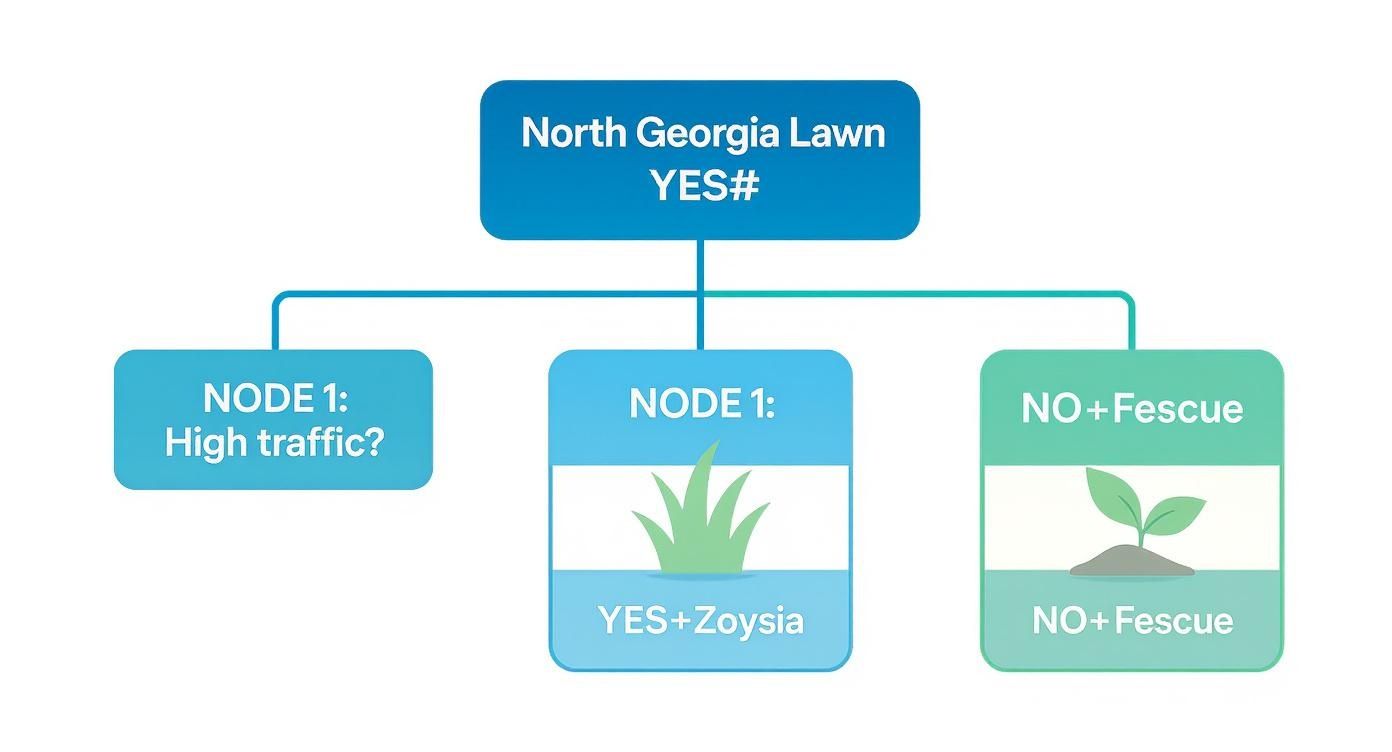
The infographic really simplifies things, pointing toward Zoysia for the most heavily used lawns and Fescue for those that see a bit less action. If you want to get into the nitty-gritty, our guide on pee resistant grass for dogs has even more details to help you nail down the perfect choice.
Building a Resilient Foundation in Clay Soil
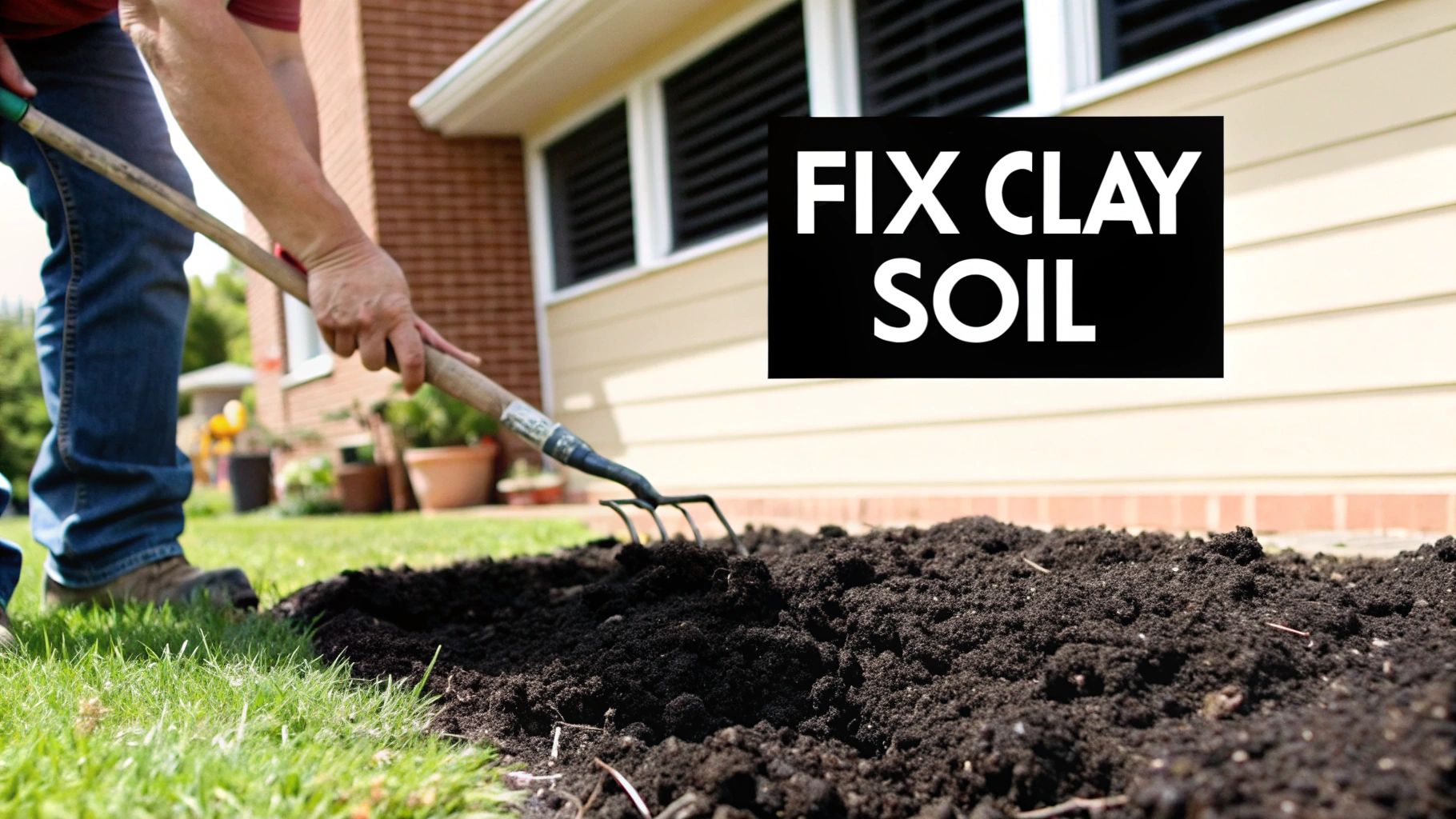
Before you even think about scattering seed, the real secret to a tough, dog-friendly lawn lies underground. If you're in Milton, Dahlonega, or pretty much anywhere in North Georgia, you know exactly what I'm talking about: our infamous red clay. It's dense, gets packed down easily, and can suffocate grass roots, starving them of the air and water they desperately need.
Creating a solid foundation isn't just a suggestion—it's essential if you want a lawn that can handle zoomies and fetch sessions. The goal is to turn that hardpan clay into a thriving, looser base where grass roots can dig in deep and anchor themselves. This prep work is what separates a lawn that gives up after a few weeks from one that bounces back all season long.
Breaking Up and Amending Your Soil
First things first, we need to deal with the compaction. All that foot traffic, mower weight, and paw-pounding turns clay soil into a brick. The best way to fight back is with core aeration. This process pulls out small plugs of soil, opening up channels for air, water, and nutrients to get down to the root zone where they're needed most.
With the lawn opened up, it's the perfect time to add some life back into the soil. I always recommend spreading a generous layer of high-quality organic compost over the entire area. As that compost works its way down, it permanently improves the soil's structure, boosts drainage, and feeds the microbial life that helps grass thrive.
A big mistake I see homeowners in Cumming and Alpharetta make is mixing sand directly into clay, hoping to loosen it up. This often backfires and creates a substance more like concrete. The real fix is adding rich organic material like compost, which gradually transforms the soil's texture for good.
If you want to get into the nitty-gritty, we've put together a full guide on how to improve clay soil for grass that covers these techniques in more detail. Taking these steps gives your new grass the best possible shot at surviving, and even thriving, with your four-legged family members.
Giving Your New Grass a Fighting Chance
Alright, your soil is prepped and ready to go. Now comes the part where we give that new grass the best possible start in life, especially with energetic dogs in the picture. This establishment period is critical, and a little patience now will pay off big time later, giving you a lawn that can actually stand up to daily zoomies.
First things first, let's talk about watering. New seed or sod is thirsty, but you have to strike a delicate balance. The goal is to keep the top inch of soil consistently damp—not a soggy, muddy swamp. This usually means watering lightly a few times a day for the first 1-2 weeks. Think of it as providing a constant source of moisture to encourage those tiny roots to grow deep and strong.
Keep Paws Off the Grass (For Now)
Even a perfectly watered lawn is no match for excited paws when it's just starting out. You absolutely have to create a temporary dog-free zone. This isn't about building Fort Knox; simple, temporary solutions work just fine.
Here are a few easy ways to create a barrier:
- Stake and String: It sounds basic, but a simple stake and string fence creates a clear visual boundary that's surprisingly effective.
- Temporary Garden Fencing: You can pick up lightweight plastic or wire fencing from any hardware store in Cumming or Johns Creek. It's easy to set up and take down.
- Strict Leash Duty: For the first few weeks, make it a rule: no off-leash time on the new grass. This lets you guide your dog away from the most delicate spots.
The magic number here is 3-4 weeks. Giving your new lawn at least that much time to grow without any foot (or paw) traffic is the single best thing you can do. It allows the roots to really anchor in, making the turf much tougher down the road.
This protected growth window is just as vital as all the soil prep you did. If you're working on an existing lawn, combining these methods with a solid maintenance plan is key. For more tips on beefing up your current turf, check out our guide on how to properly aerate and overseed your lawn.
Dealing with Those Dreaded Dog Urine Spots
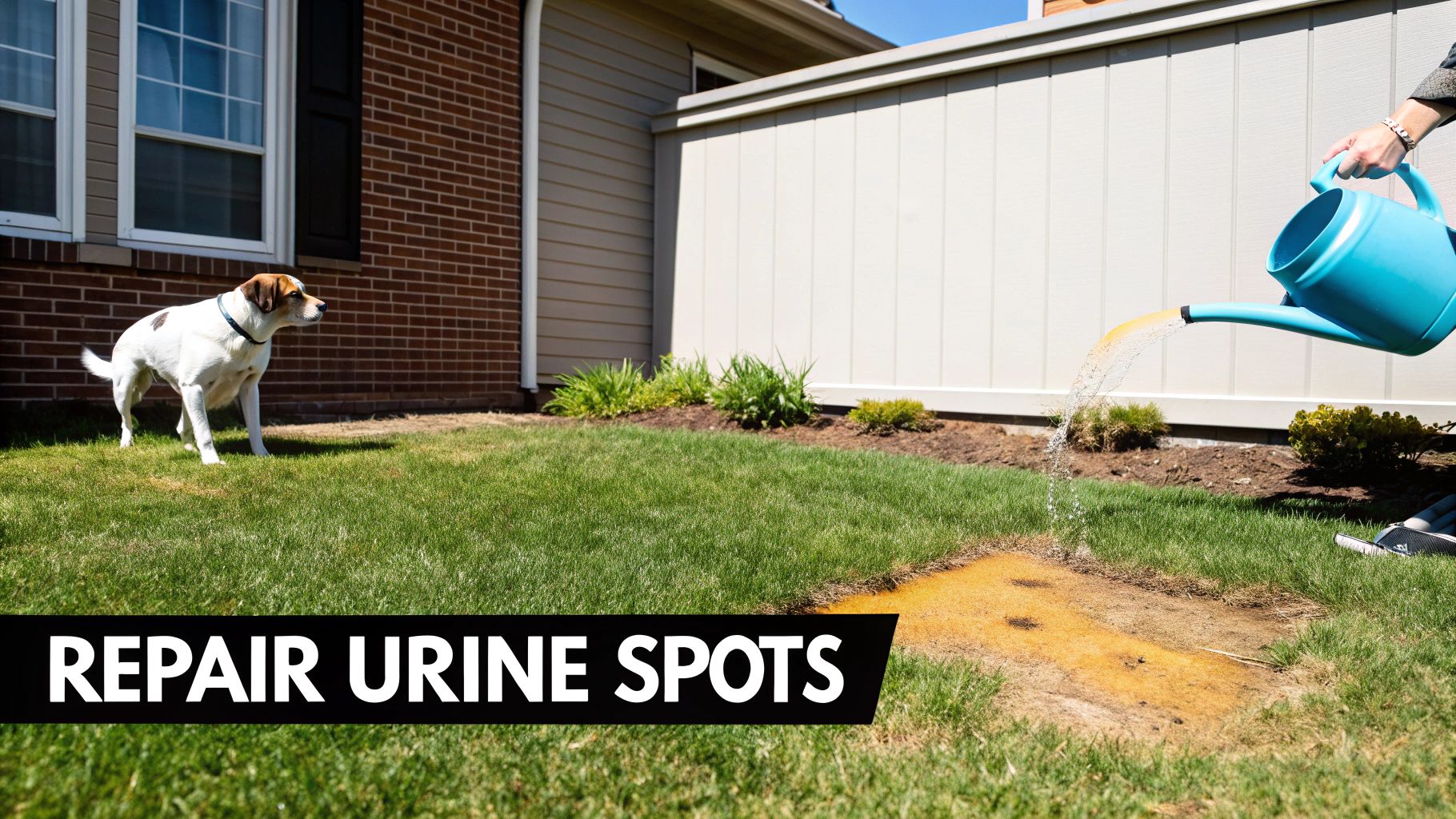
Even with the hardiest turf, every dog owner in Cumming and Alpharetta knows the frustration of finding those tell-tale yellow spots. It's an inevitable part of having a four-legged family member, but understanding what's actually happening to your grass is the first step toward a solution.
The problem boils down to chemistry. The high nitrogen content in dog urine, which comes from them processing protein, is the main issue. It's the same nitrogen found in fertilizer, but this is a case of too much of a good thing. The concentrated dose literally "burns" the grass, killing a small patch right at the root.
How your dog urinates also plays a part. Female dogs, or male dogs that squat, tend to create more concentrated puddles, which leads to more severe damage than males who lift their legs and mark a wider area. If you want to dive deeper into the science, PetMD.com offers a great explanation of these lawn spots.
What to Do the Moment It Happens
If you happen to catch your dog in the act, you've got a golden opportunity to prevent a spot from ever forming. You don't need any fancy products, just quick action with a water hose.
As soon as they're done, thoroughly soak the area with water. The goal is simple: dilute the nitrogen and wash it deeper into the soil, away from the grass blades and roots. A good drenching is often all it takes to stop the burn in its tracks.
The best defense is dilution. I recommend keeping a full watering can or a hose with a spray nozzle right by the back door. If you can make it a quick, easy habit, you’ll prevent most of those yellow circles from ever showing up.
Smart Strategies for Long-Term Lawn Health
While immediate action is great, a few long-term habits can make a huge difference in reducing the frequency and severity of urine damage.
- Hydration is Key: The more water your dog drinks, the more diluted their urine will be. Always have fresh, clean water available, and you might even try adding a splash of water to their meals.
- Create a Designated "Potty Area": This is a game-changer. Train your dog to use one specific, less-seen part of the yard for their business. You can even replace the grass in that spot with mulch or pea gravel to eliminate the problem entirely.
- Keep Your Lawn Strong: A healthy, resilient lawn can bounce back much faster from stress. Regular, proper fertilization and watering for your whole yard, whether you're in Johns Creek or Milton, will give your grass the strength to recover from minor urine exposure.
Your Year-Round Lawn Repair and Maintenance Plan
Keeping a beautiful lawn with dogs running around is less about a one-time fix and more about an ongoing commitment. You have to shift from playing defense against dead spots to a proactive, year-round strategy. A huge part of this is knowing what you're up against—are you fighting a fungus, or is it Fido's fault?
You can usually tell when dog urine is the culprit. The damage pattern is pretty distinct. At first, the grass might look a little gray-green and wilted. Then, often within 24 hours, it turns into a light brown, dead patch.
These spots are typically 3 to 6 inches across and, funny enough, are often surrounded by a super lush, dark green ring of grass. That's from the nitrogen in the urine fertilizing the edges. The K-State Turfgrass and Landscape Research Center has some great insights into how urine impacts different types of grass.
Patching Bare Spots the Easy Way
When you get those inevitable bare spots from zoomies or a favorite potty spot, you don't need a complex fix. I've found the most effective method is to whip up a "seed slurry." It’s simple and works wonders for patching small areas.
- Get a Bucket: Mix together some quality topsoil, your grass seed (Tall Fescue or Zoysia are great choices for our area), and a gentle, pet-safe starter fertilizer.
- Add Water: Stir in water a little at a time until you get a thick paste. Think oatmeal consistency.
- Apply and Smooth It Out: Slather this mix onto the bare patch. Make sure it makes good contact with the soil underneath, and then keep it moist until the new grass sprouts.
This slurry method is a game-changer because it keeps the seed exactly where you put it while giving it all the moisture and nutrients it needs to get going.
I see so many people just toss a handful of dry seed onto hard, packed dirt and hope for the best. The slurry gives those seeds a fighting chance by creating the perfect little incubator, which makes all the difference in getting those patches filled in quickly.
Pet-Safe Lawn Care for North Georgia
Of course, a year-round plan is more than just patching. You have to be mindful of the products you're putting down. Always, always reach for pet-safe fertilizers and weed control.
Look for organic-based fertilizers. They feed the soil and grass slowly, without the harsh chemical blast that can be dangerous for pets who love to roll around and chew on everything.
Finally, managing the root cause is just as important as fixing the symptoms. For a complete approach, understanding how to handle dog waste effectively is a must. This ultimate guide to dog waste disposal systems can help you keep your yard clean, healthy, and looking its best all year.
Common Questions About Dog-Friendly North Georgia Lawns
If you're a dog owner in Cumming or anywhere in Forsyth County, you're not alone in wondering how to keep your lawn looking great. Our infamous red clay soil and humid summers create a unique set of challenges. We get these questions all the time, so here are some quick, practical answers from our experience.
When Is the Best Time to Plant Grass Here?
In North Georgia, timing is absolutely critical for establishing a new lawn. If you're going with a cool-season grass like Tall Fescue, you'll want to plant in the fall, sometime between September and early November. This window gives the grass a long, cool season to put down deep roots before our tough summer heat kicks in.
On the other hand, for warm-season grasses like Zoysia, you should wait until late spring or early summer. You need to be sure the soil has properly warmed up and there's absolutely no chance of a late frost. Planting during these ideal times gives your new turf the best possible start.
What’s the Best Way to Handle Muddy Paws?
Ah, the muddy paw problem. During our rainy seasons, especially in places like Johns Creek and Milton, it can feel like a never-ending battle. Your best long-term defense is a thick, healthy lawn. A dense stand of Zoysia or Fescue simply doesn't leave much bare dirt exposed.
For a more immediate fix, think about creating dedicated pathways using mulch or pavers. We've also seen clients have great success with a "wiping station" right by the back door—a simple setup with a paw-washing tool and a super-absorbent mat can be a real floor-saver.
Here’s a simple trick we often recommend to homeowners from Cumming to Alpharetta: keep your grass cut a little higher during the wetter months, aiming for around 3 to 3.5 inches. The taller grass blades do a surprisingly good job of absorbing extra moisture and acting as a buffer between your dog's paws and the mud underneath.
Do Those Lawn-Saving Supplements for Dogs Actually Work?
You've likely seen them online or in pet stores—chewable treats or water additives that promise to stop lawn burn. While some might slightly change the pH of your dog's urine, the results are usually pretty underwhelming. The real culprit behind those yellow spots is a high concentration of nitrogen, and these supplements don't do much to change that.
A far more effective solution is to train your dog to use a designated potty area. Pick a spot that's out of the main line of sight and cover it with something durable like mulch or pea gravel. It takes consistency and positive reinforcement, but it's a much more reliable strategy than any "miracle" supplement for protecting your beautiful North Georgia lawn.
Ready to build a lawn that both you and your four-legged friend can love? Barefoot Organics offers pet-safe, natural lawn care perfectly suited for the unique climate challenges in Cumming, Alpharetta, and across North Georgia. Grab your free online quote today and let's get started on creating a resilient, beautiful yard together.