

Getting grass to thrive in a shady spot comes down to a few key moves: picking the right seed for low light, prepping our famous North Georgia red clay, and tweaking how you care for it. For folks in areas like Cumming, Johns Creek, and Alpharetta, this almost always points to a shade-tolerant Fescue, not warm-season grasses like Bermuda or Zoysia.
Cracking the Code of a Shady North Georgia Lawn
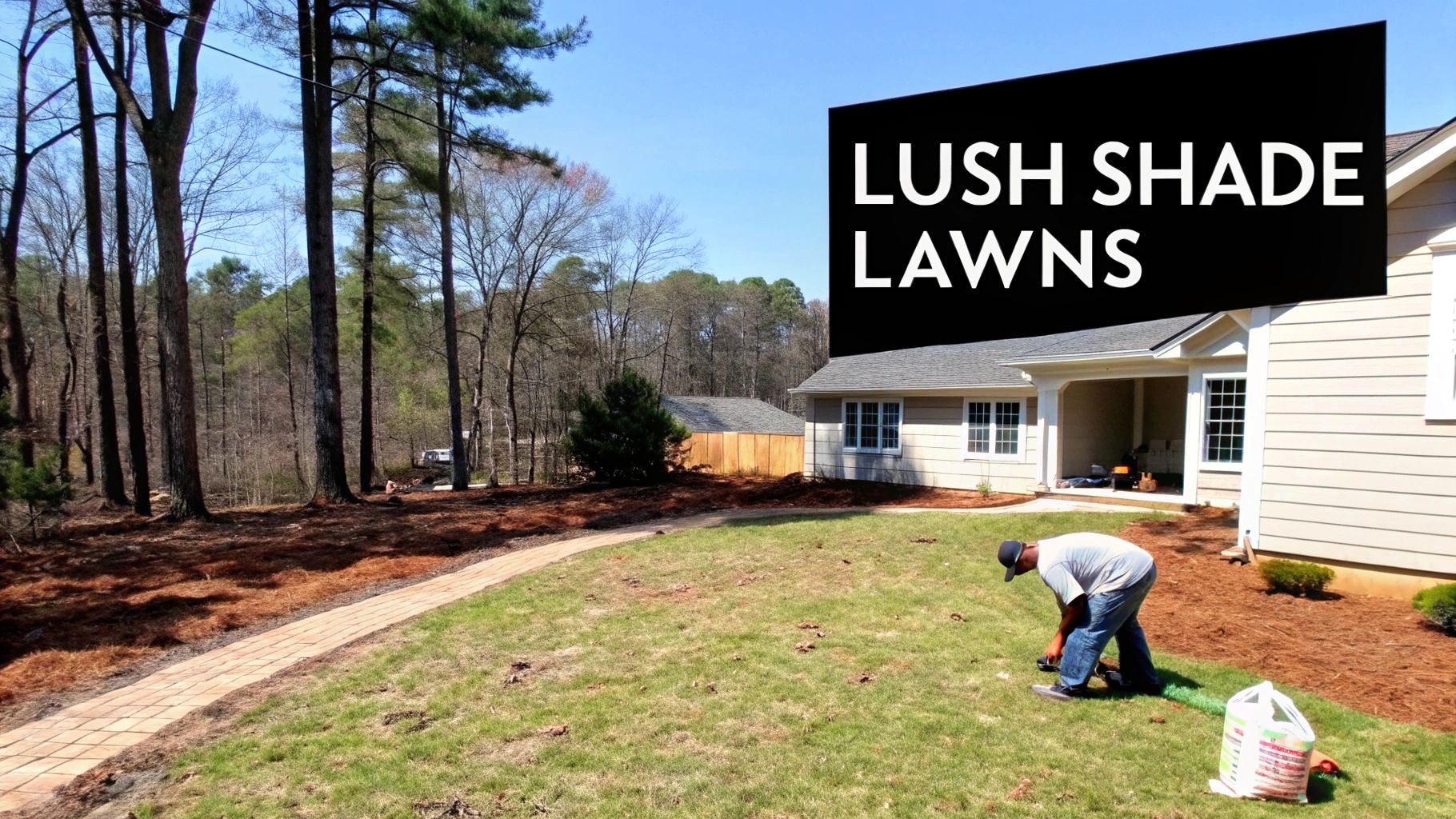
If you live anywhere from Milton up to Dahlonega, you know the deal. Our gorgeous, mature hardwoods and tall pines give us beautiful scenery but can be a real headache for our lawns. That dappled light under a big oak in your Johns Creek backyard or the deep shadow from a stand of pines in Cumming creates a whole different world for your grass.
Grass is a sun worshipper by nature, so it has a tough time in these spots for a few big reasons.
What Makes a Shady Lawn So Tricky?
The most obvious problem is the lack of sunlight, which is basically food for grass through photosynthesis. Without enough light, grass blades get thin and spindly, stretching out desperately to catch any ray they can. This is what causes that patchy, weak-looking turf you see so often in shady yards around Alpharetta.
But it’s not just about the light. Other factors are working against you, too:
- A Battle for Resources: Those big, beautiful trees have massive root systems that are constantly pulling water and nutrients from the soil, leaving very little for your grass.
- Stale, Damp Air: Shaded spots, especially during our humid Georgia summers, don't get much of a breeze. This traps moisture on the grass blades, creating the perfect environment for fungus and disease to take hold.
- Acidic Soil Conditions: As leaves and pine needles from our native trees break down, they can make the soil more acidic over time. This creates a hostile environment where most turfgrasses just can’t thrive.
It all boils down to light. Research shows that once you lose more than 30–50% of the full sun, even the toughest shade-tolerant grasses start to give up. A shady patch in your yard can easily see a 45% drop in usable light, which leads directly to weaker, thinner grass. You can dig deeper into the science behind turfgrass light requirements and how the pros measure it.
To win this battle, you need a smart, local strategy—one that plays by North Georgia's rules. It's less about trying to fight the shade and more about picking the right tools and techniques for the job you've been given.
To make it even simpler, here's a quick rundown of the essential steps for getting a great-looking lawn in the shady parts of your yard.
Quick Guide to Growing Grass in Shade
This table summarizes the most important actions you'll need to take, why they're so crucial in shaded areas, and the best time to tackle them here in North Georgia.
| Key Action | Why It's Critical for Shade | Best Time in North Georgia |
|---|---|---|
| Choose a Shade-Tolerant Fescue | Fescue varieties are cool-season grasses that naturally perform better with less direct sunlight than Bermuda or Zoysia. | Fall (September to November) is ideal for seeding. |
| Improve Your Soil | Compete with tree roots by adding rich compost to help your soil retain moisture and provide essential nutrients. | Amend soil right before you plan to seed. |
| Seed at a Higher Rate | You'll need more seed to compensate for lower germination rates and to create a denser stand of turf from the start. | Seed in the fall to give grass a head start before summer stress. |
| Water Deeply, But Infrequently | Shaded soil stays damp longer. Deep watering encourages strong roots, while allowing the soil to dry out helps prevent fungal disease. | Early morning is best to allow grass blades to dry during the day. |
Following these steps gives your shady lawn its best shot at becoming the lush, green space you're hoping for. It’s all about working with your environment, not against it.
Choosing the Right Grass Seed for Shady Yards
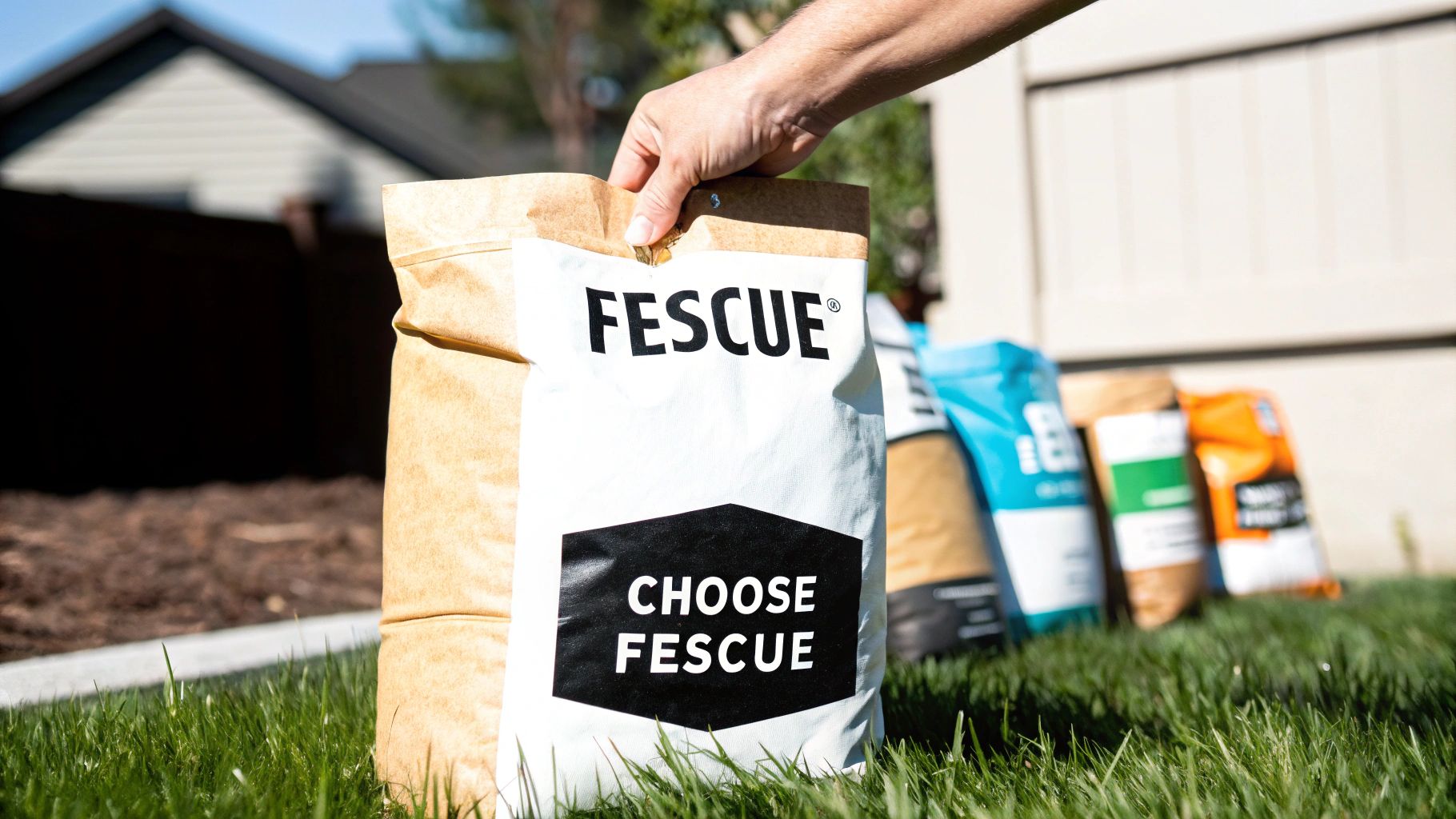
When you walk through a garden center, it’s easy to get overwhelmed by the sheer number of grass seed bags, each one promising a picture-perfect lawn. You’ll see plenty labeled "Sun and Shade" mix, which seems like a no-brainer for yards in Johns Creek or Dahlonega with their beautiful mix of open sky and mature trees.
But here's the hard truth I've learned from years of experience: those generic mixes often fall flat in the spots that need help the most.
The reality for most North Georgia lawns is that success in the shade isn't about a magic mix; it's about choosing the right type of grass. Our go-to warm-season grasses like Bermuda and Zoysia are absolute superstars in the sun. Give them less than 6-8 hours of direct sunlight, though, and they’ll start to thin out, struggle, and eventually give up. They just aren't built for the shade.
The Go-To Grasses for Shaded Georgia Lawns
For those stubborn shady areas, the answer almost always lies with cool-season grasses, specifically Fescues. Unlike their sun-loving cousins, Fescues are genetically wired to handle lower light conditions. They do their best work in the cooler temperatures of spring and fall, which is a perfect match for the environment under a dense tree canopy.
But not all Fescues are the same. When you're in a real battle for grass in the shade, you have to get specific.
- Turf-Type Tall Fescue: Modern blends are the workhorses for many Georgia lawns. They have a respectable tolerance for shade and are also known for being fairly durable and drought-resistant once they get established.
- Fine Fescues: This group is where you'll find the true champions of shade. Varieties like Creeping Red Fescue, Chewings Fescue, and Hard Fescue have a finer blade and can often survive in areas with much less light than Tall Fescue can handle.
The science is clear on this. Agronomic studies consistently show that different grasses have vastly different abilities to cope with reduced light. One USDA study noted that while most grasses suffer under 50% shade, their internal chemistry changes—proving some are simply better equipped for it. You can see for yourself how different grasses respond to shade in these detailed reports.
I've put together this quick comparison to help you see the differences at a glance.
Comparing Shade-Tolerant Grasses for North Georgia
This table breaks down the top cool-season grass types that we see succeed in shaded lawns around the Cumming area, focusing on what makes each one unique.
| Grass Type | Shade Tolerance Level | Drought Resistance | Best Use Case |
|---|---|---|---|
| Tall Fescue | Moderate to Good | Good | Areas with partial or dappled shade (4-6 hours of sun); higher traffic zones. |
| Creeping Red Fescue | Excellent | Moderate | Deeply shaded, low-traffic areas where other grasses fail; under large trees. |
| Chewings Fescue | Excellent | Low to Moderate | Low-maintenance, deeply shaded spots; often mixed with other fine fescues. |
| Hard Fescue | Very Good | Good | Difficult, low-fertility soils in the shade; known for its toughness. |
Choosing from this list gives you a much better chance of success than grabbing a generic bag off the shelf. Each one has its strengths, so think about your specific spot before you buy.
How to Read a Seed Label Like a Pro
To make the right call, you have to learn how to read the analysis tag on the back of the seed bag—that’s where the truth is, not on the flashy marketing on the front. This tag is legally required to list exactly what's inside.
Look for a high percentage of named cultivars, like 'Rebel IV' Tall Fescue or 'Boreal' Creeping Red Fescue. Steer clear of bags with a high percentage of "inert matter" (which is just filler) or, even worse, "weed seed." For a truly challenging shady spot, you want a blend that is mostly Fine Fescues or a premium, shade-tolerant Tall Fescue.
This single decision will have the biggest impact on whether you end up with a lush, green carpet or another year of fighting with patchy dirt. To dive even deeper, check out our complete guide on the best grass seed for Georgia, which can help you match the perfect seed to your yard's unique needs.
Getting Your Soil Ready for Grass Under Trees
Tossing some shade-tolerant grass seed onto that hard, compacted red clay we all know in Forsyth County is a surefire way to get frustrated. It's a classic mistake and probably the number one reason people give up on having a nice lawn in a shady spot. The secret isn't in the seed itself—it's all about building a healthy foundation from the ground up.
Here in North Georgia, we're up against two main culprits. First, you've got our infamous heavy clay soil, which gets even more packed down by hungry tree roots. Then there's the acidic soil, a problem that only gets worse as pine straw and oak leaves break down year after year.
First Things First: Test Your Soil
Before you even think about adding anything to your yard, you absolutely have to know what you’re starting with. A soil test is your roadmap. It completely eliminates the guesswork, telling you exactly what your soil’s pH is and which nutrients are missing.
Grabbing a simple test kit from your local UGA Extension office is the easiest way to do this. The results will spell it out for you, confirming if your soil is too acidic (a common issue under our pines and hardwoods) and telling you precisely how much lime you need to fix it. Trying to grow grass in soil with the wrong pH is an uphill battle you just can't win.
Aeration Isn't Just a Suggestion—It's a Necessity
Picture our North Georgia clay as a solid brick. That’s essentially what happens under trees, where massive root systems are constantly pulling moisture and nutrients out of the ground. Grass roots simply can't muscle their way through that dense layer, so they end up shallow, weak, and doomed to fail.
This is where core aeration comes in. The process literally pulls out small plugs of soil, opening up channels for air, water, and nutrients to finally get down to the root zone where they're needed. When you're trying to get grass to compete with tree roots, aeration is non-negotiable. It’s the only way to physically break up that compaction and give your new grass a real shot at survival.
Amending the soil is the single most effective step you can take to help grass compete with established tree roots. It's about creating an environment so rich and welcoming that new grass roots can thrive instead of just survive.
The Good Stuff: Amending with Compost and Lime
Okay, your soil has been tested and aerated. Now it's time to transform it. This is the part where you fundamentally change the soil's structure to create a five-star home for your turf.
-
Compost: Don't skip this. Spreading a thin layer of rich, organic compost over the aerated ground works miracles. It helps break up that dense clay, allows the soil to hold onto moisture longer (a huge advantage when fighting thirsty trees), and slowly releases essential nutrients.
-
Lime: This is where that soil test really pays off. Based on your results, apply pelletized lime to get the soil's pH into the right range. Most turfgrasses are happiest in a pH between 6.0 and 7.0. Getting the acidity right unlocks nutrients that were already in your soil but were unavailable to the grass.
Following these steps creates a foundation that's nutrient-rich, well-drained, and perfectly balanced. This is the blueprint for learning how to improve soil and giving your new grass the competitive edge it needs. To take it a step further, understanding the benefits of mulching around the base of your trees can also make a big difference in moisture retention and overall soil health.
Getting Your New Shaded Lawn Seeded and Watered
You’ve put in the hard work of getting the soil just right, and now it's time for the exciting part—laying the foundation for your new lawn. When it comes to growing grass under trees in North Georgia, from Cumming to Alpharetta, how and when you put down that seed is everything.
The sweet spot for seeding Tall Fescue and other cool-season grasses around here is definitely in the fall. I always tell homeowners to aim for a window between September and early November. The soil is still holding onto that summer warmth, which gives the seeds a nice boost for germination, but the air is cool enough that the delicate new grass won't get fried. Trying to do this in the spring often ends in disappointment when the summer heat arrives.
How to Seed a Shady Spot the Right Way
Spreading seed in a shady area is a different ballgame than just tossing it across a sunny field. The new grass has to fight for everything—light, water, and nutrients—against established tree roots. You have to give it a fighting chance.
First off, don't be shy with the seed. For those really dark, heavily shaded areas, I recommend using about 25-50% more seed than what the bag suggests for a normal lawn. This approach helps you get a thicker, denser stand of grass from the get-go, which naturally crowds out potential weeds.
Next up, and this is critical: you need excellent seed-to-soil contact. Just throwing seed on the ground, even after aerating, is a recipe for failure. The seed has to be nestled into the soil. I like to use the back of a garden rake to gently work the seed into the top quarter-inch of that beautiful soil you just amended. If you want to go the extra mile, sprinkle a very light dusting of peat moss or high-quality compost over the top. It does wonders for keeping the seed in place and holding in that crucial moisture.
This whole process really starts long before you even open the bag of seed.
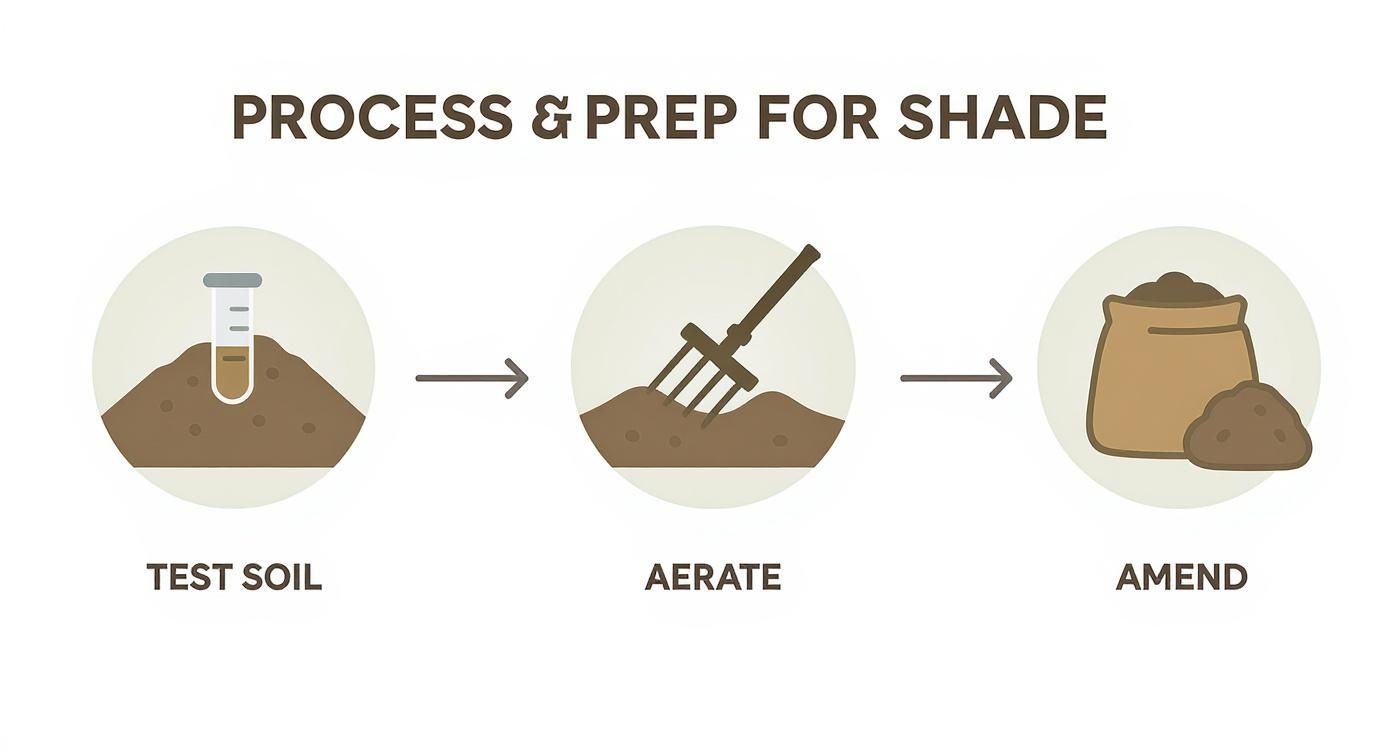
As you can see, testing, aerating, and amending aren't just suggestions; they're the essential first steps to giving your new seed the best possible start in a tough environment.
A Smart Watering Strategy for New Seed
Watering a newly seeded shaded lawn is a delicate dance. You want to keep that top layer of soil consistently moist—think of a wrung-out sponge—but you absolutely cannot let it get soggy. Shady spots don't dry out nearly as fast as sunny ones, and too much water is an open invitation for fungal diseases.
Here’s a simple watering plan that works:
- Start with Light, Frequent Misting: For the first 10-14 days, your job is to keep the seeds from drying out. Water the area two or three times a day, but only for a few minutes each time. You're just trying to keep the surface damp.
- Shift to Deeper, Less Frequent Soaks: Once you see a good amount of green fuzz popping up, it's time to change tactics. Start watering just once a day, but let it run a bit longer. This encourages those brand-new roots to start reaching down into the soil instead of staying at the surface.
- Establish Your Long-Term Routine: After you’ve mowed for the first time, you can transition to a more typical schedule. One or two deep waterings a week should be plenty, but always keep an eye on the weather.
It helps to remember what's happening on a biological level. A grass plant in the shade puts its energy into growing wider, bigger leaves to catch every last ray of sunlight. The trade-off is that its root system is often weaker and shallower. This makes it more prone to stress, which is why that initial watering phase is so vital for building a resilient foundation.
Let the new grass grow until it's about 3 to 4 inches tall before you even think about mowing it. When you do, make sure your mower blade is razor-sharp and stick to the one-third rule—never cut off more than the top third of the grass blade.
Combining these careful seeding and watering techniques with a professional game plan, like our aeration and overseeding services, can truly make the difference between a struggling patch of dirt and a lush, thriving shaded lawn.
Long-Term Care for a Thriving Shaded Lawn
Getting your new shade-tolerant grass to sprout is just the first step. The real challenge—and where the real reward is—comes in the long-term care. Keeping a lawn healthy under the beautiful, mature tree canopies you see all over Milton and Alpharetta requires a totally different approach than caring for a yard that gets full sun all day. Shaded turf is just less resilient, so your maintenance routine needs to be gentle, consistent, and always a step ahead of potential problems.
The single biggest mistake I see homeowners make is with their mower. It’s so tempting to scalp the lawn for that super-neat, manicured look, but for a shaded lawn, that’s the kiss of death.
Mow High to Maximize Sunlight
You absolutely have to set your mower blade to one of its highest settings. I tell my clients in Cumming to aim for a grass height of 3.5 to 4 inches. Think about it: taller grass blades mean more surface area to catch every last speck of sunlight that filters through the trees. That's crucial for photosynthesis, which is how the plant makes its food.
A higher cut also does you another favor by shading the soil. This keeps the ground cooler, holds onto moisture a little longer, and helps choke out pesky weeds.
I always explain it like this: Each blade of grass is a tiny solar panel. When you cut it too short, you’re basically ripping out half its power source. You're making an already tough job—surviving in low light—nearly impossible. The goal here is to give that grass every possible advantage.
Along with mowing high, you've got to rethink how you feed your lawn. Shaded grass simply grows slower and doesn’t need as much food.
Adopt a "Less is More" Fertilizing Strategy
Over-fertilizing a shaded lawn is probably the most common (and wasteful) mistake people make. When you pump a shady area full of high-nitrogen fertilizer, you force a lot of weak, leggy top growth. That flimsy grass becomes a prime target for fungal diseases, which are a massive headache in our humid Georgia climate.
The smarter move is a light application of a slow-release, balanced fertilizer in the fall. This feeds the turf a little bit at a time without overwhelming it. You can add another very light feeding in the spring if it looks like it needs a boost, but always, always err on the side of using less.
- Steer Clear of Quick-Release: These products cause a sudden burst of growth that the weaker root system in shady areas just can't support.
- Prioritize Fall Feeding: This is the most important meal of the year. It helps the grass store energy for the winter and focuses on building stronger roots for the next season.
- Watch for Warning Signs: If your lawn starts looking pale or yellowish, don't just guess. A simple soil test can tell you exactly which nutrients are missing.
Proactive Disease Prevention and Annual Upkeep
Those damp, shady corners of your yard are the perfect breeding ground for lawn diseases like brown patch and dollar spot. The trick is to manage moisture and stay ahead of any issues. Water deeply, but not too often, and always do it in the early morning. This gives the grass blades the entire day to dry off.
Finally, a lush shaded lawn isn't a "set it and forget it" project. It needs a little refresh every year.
- Annual Overseeding: Make it a fall ritual. Spreading new seed in your shaded spots helps fill in thin patches and keeps the lawn dense and vigorous.
- Leaf Patrol: Don't let fallen leaves sit and smother your grass in the autumn. Rake them, blow them, or mulch them with your mower, but get them off the turf so it can still get light and air.
- Tree Root Competition: If you see large tree roots at the surface, they're competing with your grass for water and nutrients. A light topdressing with a mix of quality topsoil and compost can give your grass a bit more breathing room to establish its own roots.
Following this game plan gives you the best defense against the unique challenges of a shady yard, helping you keep it green and healthy for years to come.
Common Questions About Growing Grass in Georgia Shade
Even with the best game plan, trying to get grass to thrive in the shady corners of a North Georgia yard can be a real head-scratcher. Let’s walk through some of the most common issues homeowners from Cumming to Johns Creek run into when their lawns just aren't getting enough sun.
First, let's clear up one of the biggest points of confusion: the term "shade-tolerant." It's a bit of a misnomer because it definitely doesn't mean "no-sun-tolerant." At the end of the day, every blade of grass needs some sunlight to survive.
For the fescue varieties that do best around here, you're looking for areas that get at least 3-4 hours of dappled or filtered sunlight every day. Any spot with less than that—think of the deep, constant shadow cast by your house or a thick grove of pine trees—is going to be an uphill battle for any kind of turf.
Can I Grow Zoysia or Bermuda in Partial Shade?
This is probably the question I hear most often, and it makes sense. Zoysia and Bermuda are fantastic, tough grasses for our hot Georgia summers, so people want to use them everywhere. But the honest truth is that these warm-season grasses are absolute sun-lovers.
You might get away with it for a season in a partially shaded spot in Alpharetta or Milton. It might even look pretty good at first. Over time, though, you'll almost always see that Zoysia or Bermuda start to get thin, weak, and patchy as it starves for light. When you need a reliable, long-term grass for low-light spots, Fescue is simply the better choice for our region.
The constant struggle to grow anything under a stand of Georgia pines is a classic problem. It’s not just one thing; it’s a triple threat of deep shade, acidic soil from the pine straw, and a fierce competition for water with the tree's dense, shallow roots.
Why Does My Grass Always Die Under Pine Trees?
That familiar bare patch of dirt under a beautiful, mature pine tree isn't your fault—it's just a tough spot to grow anything. To have any chance of success, you have to tackle all three problems at once. Fixing just one won't get you very far.
Here’s what your game plan should look like:
- Pruning is Key: You'd be amazed how much more sunlight can hit the ground if you just thin out the lower branches of the pine tree's canopy.
- Get Aggressive with Soil Work: You’ll need to test your soil pH annually and almost certainly add lime to balance out the acidity from the pine needles. It’s also a great idea to topdress with a good layer of compost to give the new grass seed a fighting chance against the tree’s powerful root system.
- Overseed Every Fall: Make it a yearly ritual. Spreading a high-quality, shade-tolerant Fescue blend each autumn is essential to keeping the area from thinning out over the following year.
Dealing with shady spots takes a dedicated and specific approach. If you’re tired of the guesswork and ready to transform those challenging areas of your lawn, Barefoot Organics offers expert, eco-friendly lawn care designed for North Georgia's unique climate. Get your free online quote today and let us help you get the beautiful lawn you've been working toward.