

If you're looking for a natural way to get rid of grubs, the best strategies involve working with your lawn's ecosystem, not against it. Introducing powerhouse helpers like beneficial nematodes or milky spore disease into your soil can knock out a grub population without resorting to harsh chemicals. These methods are completely safe for your lawn, your family, and your pets.
It's not just about adding things, though. Smart, consistent lawn care—like watering deeply but infrequently and mowing at the right height—goes a long way. A healthy, resilient lawn is simply less appealing to the adult beetles looking for a place to lay their eggs.
Your Guide to a Grub-Free North Georgia Lawn
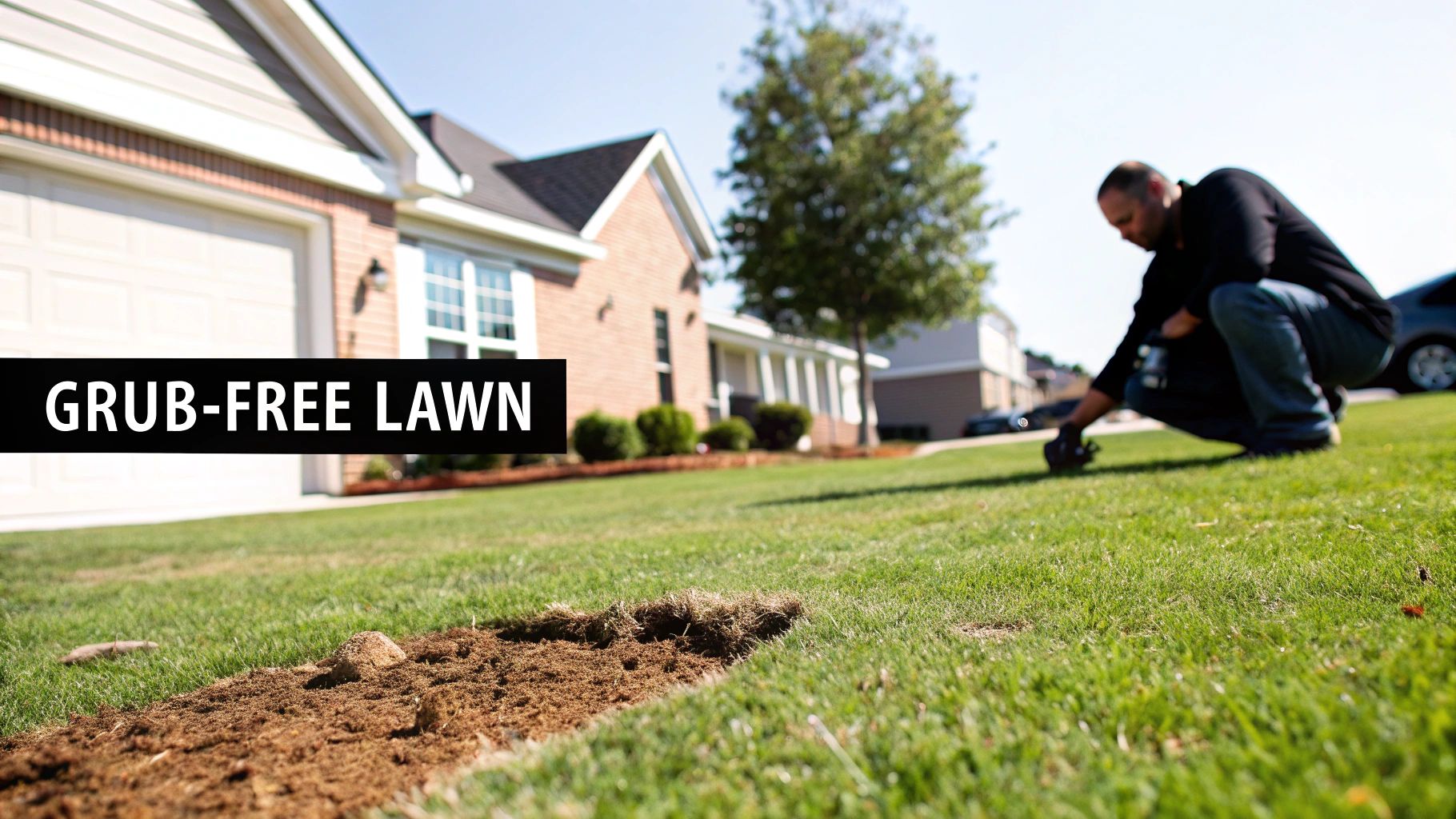
Hello, neighbors in Cumming, Alpharetta, and all across North Georgia. Have you noticed strange brown patches popping up on your lawn? Or maybe the ground feels a little soft and spongy when you walk on it? If so, you could be dealing with a hidden invader. Lawn grubs, those C-shaped larvae of beetles, love to feast on grassroots, causing serious damage that many people mistake for drought stress.
This guide is your local, natural game plan for taking back your yard. We know the specific challenges homeowners face here, from Johns Creek to Milton, and this advice is built for our unique Georgia climate. You don't have to rely on harsh chemicals. We'll show you how to restore your lawn's health the right way.
Why Natural Grub Control Matters in Our Community
Choosing a natural path for grub control is about so much more than just killing a few pests. It’s about creating a healthy, balanced ecosystem right in your own backyard. For families in communities like Dahlonega and Forsyth County, our yards are safe havens for kids and pets, and chemical-free solutions mean everyone can roll around on the grass without a second thought.
Natural methods also build up the health of your soil, which is the true foundation of a great-looking lawn. Unlike chemical pesticides that can wipe out beneficial insects and vital microorganisms, natural solutions like beneficial nematodes work with nature. This creates a stronger, more self-sufficient lawn that can better resist pest problems in the future.
For North Georgia homeowners in Cumming and the surrounding areas, the goal isn't just a green lawn—it's a healthy lawn. Natural grub control protects your soil's delicate biome, ensuring long-term vitality and safety for kids and pets playing outside.
Understanding the Local Threat
Here in our region, from Johns Creek to Dahlonega, the main culprits are the larvae of Japanese beetles and June bugs. They absolutely thrive in our warm, humid summers. The adult beetles show up in early summer to mate, and they seek out well-watered, healthy-looking lawns to lay their eggs. Once those eggs hatch, the tiny grubs get right to work, munching on the tender roots of your grass.
This feeding frenzy hits its peak in the late summer and early fall, which is exactly when you'll start seeing the worst of the damage. Understanding this life cycle is the key to timing your treatments for maximum impact. If you act at the right moment, you can break their cycle and stop a small issue from becoming a full-blown infestation that destroys all your hard work.
Confirming a Grub Problem in Your Georgia Yard
Before we get into how to handle grubs, you have to be absolutely sure they’re the real reason your lawn is struggling. Here in North Georgia, plenty of things can make your grass look stressed and brown, especially that blistering summer heat. It's incredibly common for homeowners from Cumming to Alpharetta to mistake grub damage for drought, a nagging fungal disease, or just plain bad soil.
Getting the diagnosis right is the most important first step. If you treat for the wrong thing, you’re just spinning your wheels while the real problem—the grubs—gets much, much worse. Thankfully, there are a few telltale signs you can look for around your yard, whether you're in Alpharetta or Milton, to know for sure if grubs are the culprit.
Reading the Telltale Signs
One of the first things I tell people to do is simply walk across the suspected bad spots. Does the turf feel weirdly spongy or bouncy under your feet? That’s a huge red flag. Grubs munch away at the grassroots, literally detaching the sod from the soil beneath it. This creates that unsettling, soft feeling.
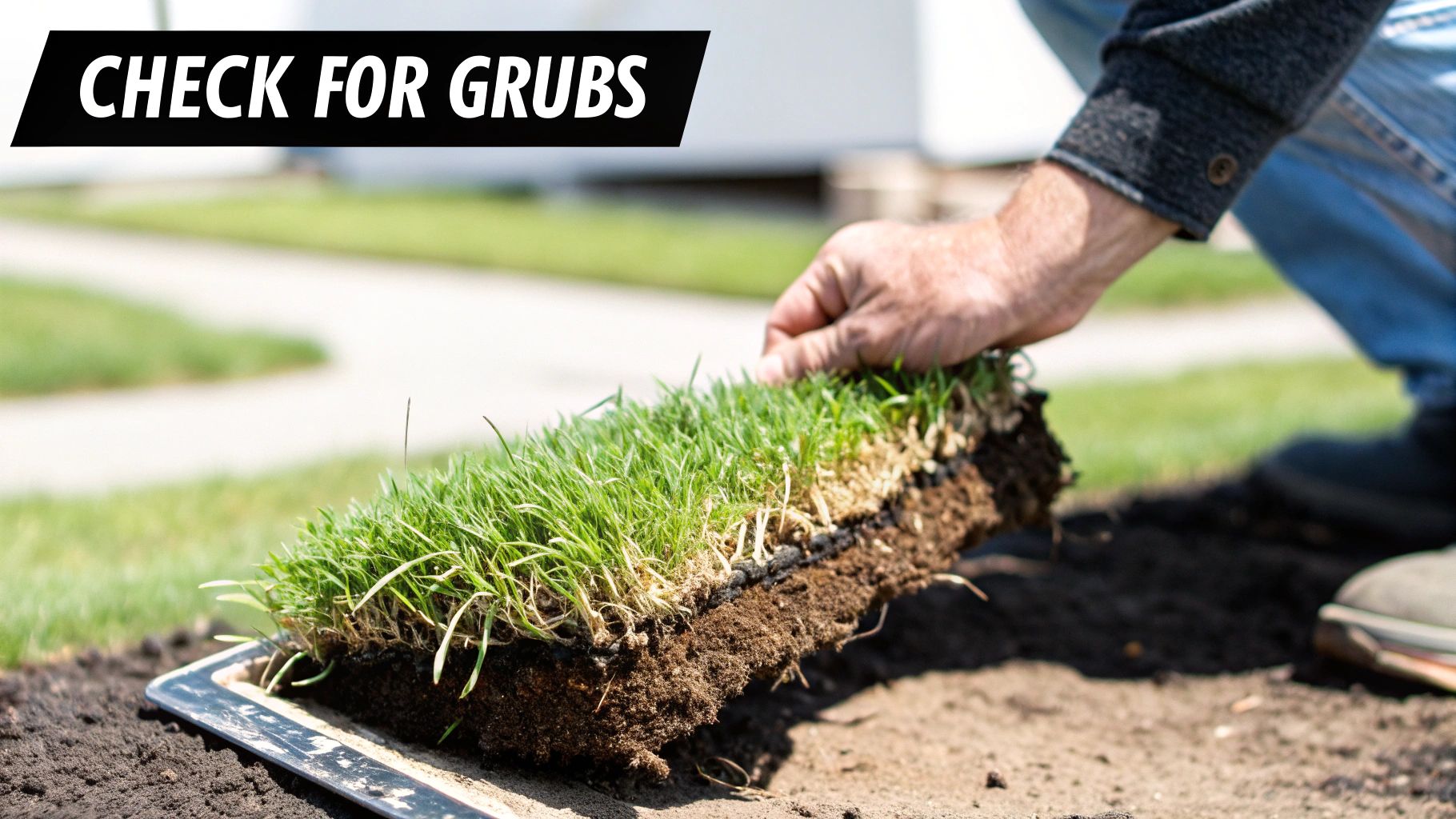
Another dead giveaway is the appearance of random, irregular brown patches. Now, lots of things can cause discoloration. The key difference with grubs is that because they’ve severed the roots, you can often grab a handful of the dead turf and lift it right up. It peels back like a loose piece of carpet. If your grass comes up with no resistance and has no roots anchoring it down, you've almost certainly found grub damage. This is a totally different symptom than what you'd see with most lawn diseases or dry spots, which you can read more about in our guide on what causes brown spots in grass.
Pro Tip: Pay attention to new visitors. If you suddenly have more birds, raccoons, or skunks digging up your yard, it’s not a coincidence. They’re after a tasty, protein-packed meal of grubs, and their digging is often one of the first and most obvious signs of a hidden infestation.
The Definitive Soil Check
Visual clues are great, but the only way to be 100% certain is to get your hands a little dirty and look for the grubs themselves. Don't worry, it's easier than it sounds and gives you undeniable proof.
Here’s how you can do a quick check:
- Pick a spot. Find a place on the edge of a brown patch, right where the dead grass meets the healthier green turf. This transition zone is where grubs are most likely to be actively feeding.
- Cut a sample. Use a spade or a sharp trowel to cut out a square-foot section of sod, going down about three or four inches deep.
- Inspect the soil. Carefully lift that piece of turf and peel it back. Sift through the soil and the root zone just underneath it. You’ll have no trouble spotting those classic white, C-shaped larvae if they’re there.
So, how many is too many? Finding a grub or two is no reason to panic; a healthy lawn can handle a small population just fine. The real damage starts when their numbers climb above 8-10 larvae per square foot. Once you hit that threshold, the turf can’t keep up, and that’s when you see widespread issues. If you’re consistently counting more than ten grubs in your little sample square, it's definitely time to take action.
Using Beneficial Nematodes for Grub Control

One of the most effective natural grub killers is completely invisible to the naked eye. This secret weapon is the beneficial nematode, a microscopic roundworm that lives in healthy soil. Think of them as your lawn's personal security team, programmed to hunt down and eliminate grub larvae right where they hide.
This isn't some futuristic experiment—it's a proven form of biological control. What’s great is that it's entirely safe for people, pets, plants, and important pollinators like bees. Instead of dousing your yard in chemicals, you’re simply introducing a natural predator that stops the grub life cycle dead in its tracks.
How These Microscopic Hunters Work
Beneficial nematodes are so effective because they actively hunt their prey. Once a nematode finds a grub, it enters the grub's body and releases a specific type of bacteria. This bacteria is the real killer, multiplying so fast it kills the grub within 24 to 48 hours.
But it doesn't stop there. The nematodes feed on that bacteria and reproduce inside the dead grub. In a couple of weeks, a whole new generation of hungry nematodes bursts out, ready to search for more grubs. It’s a self-sustaining cycle that turns your soil into a no-go zone for these destructive pests.
For those of us in areas like Dahlonega and Alpharetta, it’s critical to pick the right strain. The most effective type for the Japanese and June beetle grubs we see in North Georgia is Heterorhabditis bacteriophora (Hb). This particular strain is known for being an especially aggressive hunter.
The Right Way to Apply Nematodes for Success
When you're working with living organisms, timing and technique are everything. You can't just toss them on the lawn and expect results. You have to create an environment where they can thrive and get to work.
Here’s how to set them up for success:
- Buy Fresh: Always purchase your nematodes from a reputable supplier that ships them refrigerated. They need to be kept cool to stay alive and effective.
- Time Your Application: Nematodes hate UV light. The best time to apply them is in the very early morning or late evening when the sun is low. An overcast or rainy day is absolutely perfect.
- Water, Water, Water: The soil must be moist for the nematodes to move around. Give your lawn a good soaking before you apply them, and then water again right after to wash them down into the root zone where the grubs are.
The real secret to success with nematodes is moisture. Think of the soil as their highway system—if it's dry, they can't go anywhere. You'll want to keep the soil consistently moist for about a week after application to help them get established and start hunting.
Research has shown time and again that these organisms can significantly reduce major grub species like the Japanese beetle and European chafer. Their success really boils down to proper application and keeping the soil damp enough for them to stay active.
The ideal window for application here in the Cumming, GA, region is from late August to early October. At this time of year, the newly hatched grubs are small, vulnerable, and feeding close to the surface, which makes them easy targets. These tiny allies are a cornerstone of any effective plan for natural pest control for your lawn.
Going for the Long Haul: Long-Term Defense with Milky Spore
If you're playing the long game and want a natural grub control method you can apply once and forget about for years, Milky Spore is your answer. This is a fantastic strategy for homeowners in Milton and Johns Creek who are looking for a sustainable, self-perpetuating solution, especially for the Japanese beetle grubs that cause so much trouble in our area.
Unlike treatments that you have to reapply every single year, Milky Spore works on a completely different principle. It’s not a chemical; it’s a naturally occurring bacterium (Paenibacillus popilliae). Once you introduce it to your soil, it sets up a powerful, long-term cycle of grub control.
How Milky Spore Creates a Self-Sustaining Barrier
Think of Milky Spore as a silent, patient army working beneath your lawn. When a Japanese beetle grub tunnels through the soil and ingests the spores, it gets infected. The bacteria then multiply rapidly inside the grub, eventually killing it.
But here’s where the real magic happens. As that grub decomposes, it releases billions of new spores right back into the soil. This process slowly and steadily builds up a massive colony of these grub-killing bacteria, creating a formidable defense that can protect your lawn for a decade or more.
This biological control is a true "set it and forget it" solution. Once it's established, Milky Spore just keeps working, year after year, keeping Japanese beetle populations down without you having to lift a finger.
The Key to Success Is Patience
The biggest thing to understand about Milky Spore is that it's a marathon, not a sprint. It is not a quick fix for a lawn that's already overrun with grubs. For lawns here in Alpharetta and Cumming, it can take anywhere from one to three years for the spore concentration to build up enough to provide really effective, widespread control.
You’ll likely still see some grub activity during this establishment phase. That's actually a good thing! Each grub that gets infected is doing its part to spread more spores and build up your lawn's long-term immunity. The system works best when there are grubs present to act as hosts.
This bacterium has been a trusted biological control since it was first developed in the mid-20th century, and its persistence is truly remarkable. Research has shown that once it's fully established, Milky Spore can knock back Japanese beetle grub populations by up to 50-60% annually, and that control can last for 10-15 years without any need for reapplication. You can dig deeper into how this works in our guide on how to control grubs naturally at Natural-Alternative.com.
Best Practices for Applying It in North Georgia
Getting the best results from Milky Spore is pretty straightforward. Just follow these simple tips tailored for our local climate:
- Timing is Flexible: You can apply Milky Spore anytime the ground isn’t frozen solid. A spring or summer application is perfect because it gives the spores plenty of time to get established before the next generation of grubs hatches.
- How to Apply: The product usually comes in a powdered form. The classic way to apply it is in a grid pattern, just dropping a small spoonful every few feet across your entire lawn. Using a dispenser tube designed for this purpose makes the job much faster and ensures you get even coverage.
- No Watering Needed: Unlike beneficial nematodes, you don't need to water Milky Spore in right away. Regular rainfall and your normal irrigation schedule will do the job of working it down into the soil.
For homeowners up in Dahlonega who are wondering how to get rid of grubs naturally with a solution that lasts, Milky Spore is a smart, eco-friendly investment in the long-term health of your lawn.
Building a Grub-Resistant Lawn with Smart Habits
While treatments like beneficial nematodes and Milky Spore are fantastic for tackling an active grub problem, the best long-term strategy is to make your lawn a place grubs don't want to call home. Think of it as your first line of defense. For homeowners from Cumming to Johns Creek, simply tweaking your routine can make your yard far less inviting to the adult beetles searching for the perfect spot to lay their eggs.
It all boils down to creating an environment that encourages deep, healthy grassroots rather than the shallow, damp conditions grubs thrive in. These aren't complicated changes; they're simple shifts in your mowing and watering habits that pay huge dividends. The end game is a stronger, more resilient lawn that can naturally push back against future infestations.
Rethink Your Watering Schedule
In our hot Georgia climate, the temptation to give the lawn a quick sprinkle every day is strong. Honestly, it's one of the biggest mistakes I see people make. Adult beetles, especially Japanese beetles, are on the hunt for consistently moist soil to lay their eggs. That daily, shallow watering cycle creates the perfect damp nursery for them right at the surface.
The fix? Switch to a deep and infrequent watering strategy.
Instead of a light misting every evening, water your lawn thoroughly just once or twice a week. You want to deliver about an inch of water each time. This forces the grassroots to grow deeper into the soil in search of moisture, which is exactly what you want.
This method does two things beautifully: it builds a more drought-tolerant lawn from the ground up and allows the top layer of soil to dry out between waterings. That dry surface is a huge deterrent for egg-laying beetles.
Mow Higher for a Healthier Lawn
Here’s another incredibly simple but effective trick: raise your mower blade. So many folks in Alpharetta and Milton scalp their lawns, chasing that super-short, manicured look. But cutting the grass down to the nub puts a ton of stress on the plant and exposes the soil to the sun—creating a warm, welcoming landing pad for beetles.
Your target mowing height should be 3 to 4 inches. Taller grass is a game-changer in the fight against grubs for a few key reasons:
- It creates shade. The longer blades keep the soil surface cooler and less appealing to those egg-laying beetles.
- It encourages deeper roots. Taller grass supports a much more extensive root system, making your lawn stronger and better equipped to handle any minor grub feeding that might happen.
- It hides the soil. A thick, dense canopy of grass is a physical barrier, making it much harder for beetles to even reach the soil.
This one small adjustment costs you nothing and can dramatically cut down on the number of eggs laid in your lawn each summer.
Strengthen Your Turf with Aeration and Overseeding
Compacted soil is a chronic problem for lawns across North Georgia. When soil gets packed down from foot traffic and weather, water and nutrients can't get to the roots. This leads to a weak, shallow-rooted lawn that's an easy meal for grubs. The solution is core aeration, which is just the process of pulling small plugs of soil out of the lawn to relieve that compaction.
Aerating once a year, usually in the fall, is one of the best things you can do for your turf. It opens up the soil, lets it breathe, and gives the roots room to grow. It’s a foundational step in learning how to create healthy soil that can truly sustain itself.
Right after you aerate is the absolute best time to overseed. Spreading new grass seed helps fill in any thin spots and builds a much denser, lusher turf. For our area, I highly recommend choosing a hardy grass variety like tall fescue. It has a naturally deep root system and stands up well to our climate's challenges, making it a far less desirable target for grubs. A thick, healthy stand of grass is the ultimate natural barrier.
Answering Your Natural Grub Control Questions
When you start digging into natural grub control, a lot of practical questions come up. I get it. Homeowners from Cumming to Dahlonega want to be sure they're making smart choices for their lawn, their family, and the local environment. Let's walk through some of the most common questions I hear and get you some clear, straightforward answers.
When Is the Best Time for Grub Treatment in North Georgia?
If there's one thing to get right, it's timing. Seriously. Applying a great natural product at the wrong time of year is just a waste of time and money. The trick is to work with the grub life cycle here in North Georgia, not against it.
For a fast-acting solution like beneficial nematodes, you have a specific window. The absolute best time to apply them is from late summer into early fall—think late August through early October. This is when the new generation of grubs is young, small, and feeding like crazy right near the surface. They're the easiest targets for the nematodes you're about to unleash. Try this in the middle of a scorching July or a cool November, and you just won't get the same results.
Preventative treatments are a different story. Milky Spore, which is your long-game solution for Japanese beetle grubs, is more flexible. You can put it down any time the ground isn't frozen solid. That said, I always recommend applying it in spring or early summer. This gives the bacteria a head start, letting it spread through the soil before the next wave of grubs even hatches.
Key Takeaway for Georgia Lawns: For a quick takedown, hit young grubs with nematodes from late August to early October. For long-term prevention with Milky Spore, a spring or summer application gives it the best chance to get established before peak grub season.
This simple decision tree helps visualize how a few good habits can create a grub-resistant lawn from the ground up.
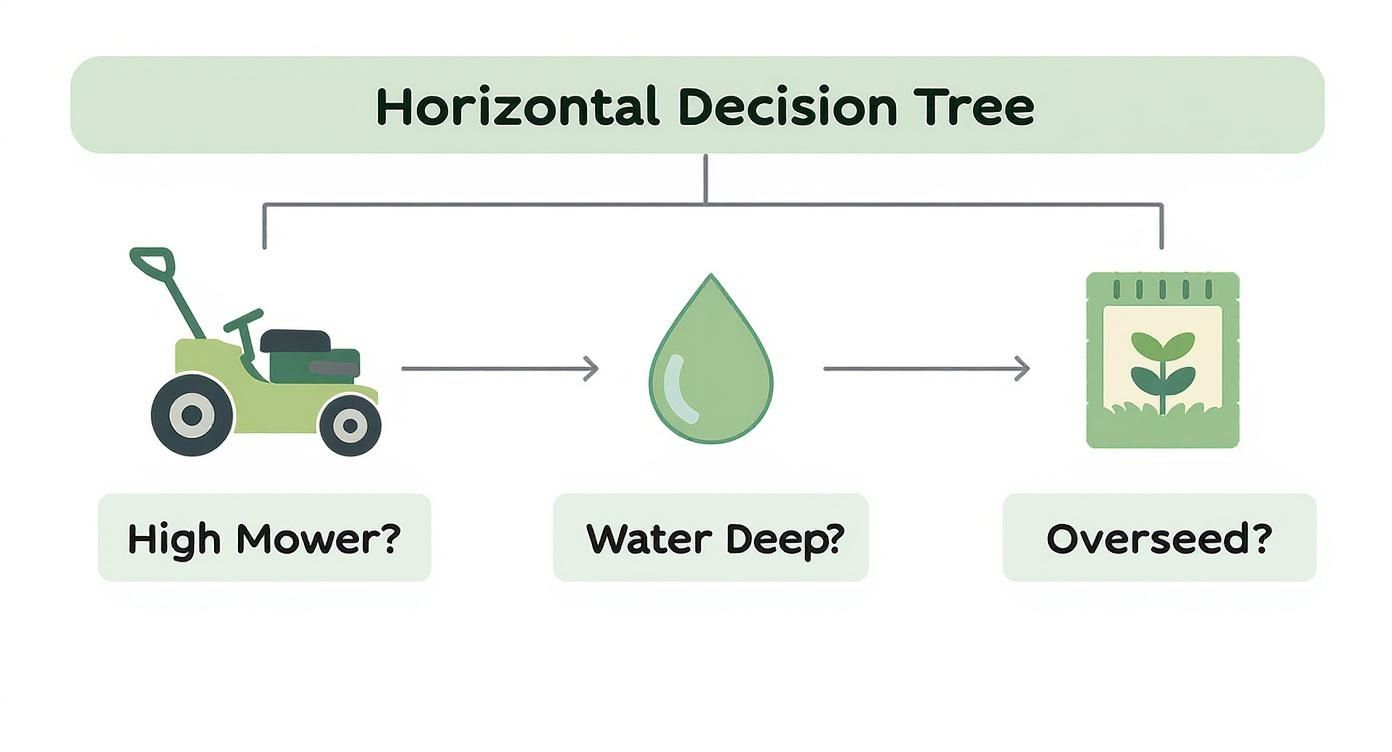
As the graphic shows, basic lawn care—mowing high, watering deeply, and overseeding—is your first line of defense.
Are These Natural Methods Safe for Kids and Pets?
This is usually the first question I get from families in Johns Creek and Milton, and the answer is a big, unequivocal yes. In fact, their safety is the single biggest reason to choose them over traditional chemical pesticides.
Beneficial nematodes and Milky Spore are biological controls. They’re living organisms that have evolved to target a very specific pest. They have zero harmful effects on people, pets (dogs, cats, even backyard chickens), birds, or other wildlife. They also leave beneficial insects like honeybees, ladybugs, and earthworms completely alone.
Unlike with chemical grub killers, there’s no waiting period. Your kids and pets can be back on the lawn immediately after you apply nematodes or Milky Spore. There are no nasty residues, no little warning flags to stick in the yard, and no chemical smells. You're simply adding to your lawn's natural defenses, not dropping a toxin into the soil. It's about having total peace of mind.
How Long Until I See Results from Natural Methods?
A little patience goes a long way when you're working with nature. These treatments are incredibly effective, but they don’t provide the instant "scorched earth" results you’d get from a harsh chemical. Knowing the timeline helps you set the right expectations.
-
Beneficial Nematodes: You should see a real drop in the grub population within a few weeks. The nematodes start working almost immediately, and grubs die within 24-48 hours of being infected. As more nematodes hatch from the dead grubs, the effect snowballs.
-
Milky Spore: This is your long-term investment. It is not a quick fix. It can take one to three years to fully establish in the soil as the spore count builds with each grub that gets infected. It's a slow burn, but once it takes hold, it can protect your lawn for a decade or more.
-
Good Lawn Habits: Things like mowing high and watering deep build resilience over a full season. You'll see your grass get thicker and stronger, making it a much tougher target for pests.
Here’s a quick breakdown:
| Method | Initial Impact | Long-Term Effectiveness |
|---|---|---|
| Beneficial Nematodes | Within 2-3 weeks | Effective for the current season's grubs |
| Milky Spore | 1-3 years to establish | Lasts for 10+ years without reapplication |
| Cultural Practices | Visible within one season | Ongoing, foundational defense |
So, what's right for you? If your Alpharetta yard is being torn up by an active infestation right now, nematodes are your best bet for immediate, natural relief. If you're playing the long game to prevent future Japanese beetle problems, Milky Spore is a fantastic set-it-and-forget-it strategy. For the healthiest lawn, a combination of smart habits and a targeted treatment is always the winning ticket.
At Barefoot Organics, we specialize in creating lush, healthy lawns across North Georgia using methods that are safe for your family and the environment. If you're ready to tackle your grub problem the natural way, let our experts build a plan that's perfect for your property. Get your free online quote and learn more at https://barefootorganicsllc.com.