

So, you think you have a gopher problem. The first step in any effective, natural pest control plan is making absolutely sure you know who you're dealing with. Getting this wrong is one of the biggest mistakes I see homeowners in Cumming, GA and the surrounding areas make, wasting time and money on solutions that just won't work.
Confirming Your Unwanted Guest: Gopher Damage vs. Other Pests
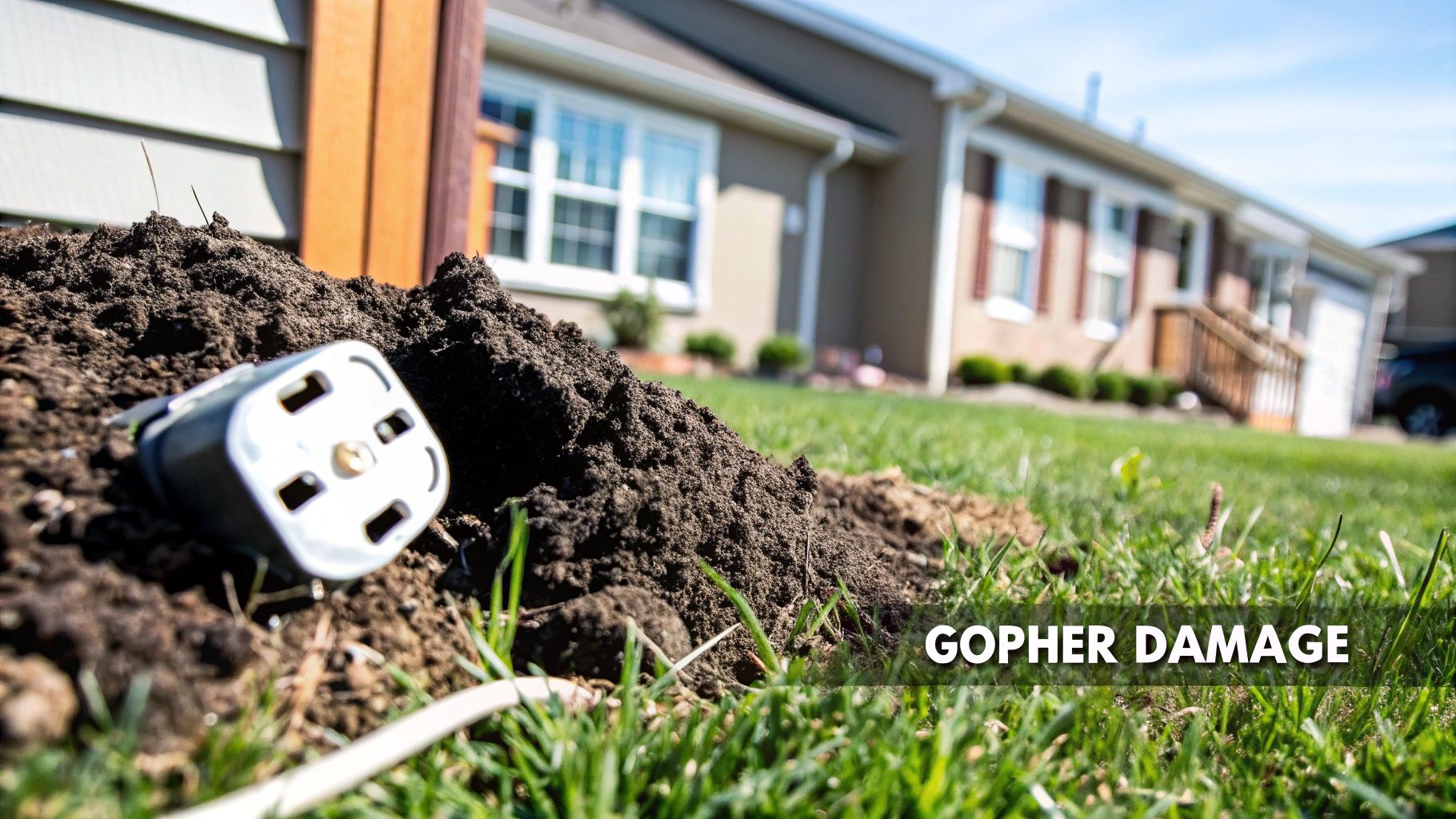
Here in North Georgia, from Cumming to Johns Creek, we have three main culprits when it comes to tearing up lawns: gophers, moles, and voles. Each one leaves a very different calling card, and mistaking one for another is a common and frustrating pitfall.
You might spend weeks setting traps for a mole when it’s actually a vegetarian gopher systematically taking out your prized garden in Milton. Proper identification isn't just a suggestion; it's the most critical first step toward getting your yard back.
Spotting the Signs of a Gopher Invasion
Pocket gophers are hungry herbivores, plain and simple. Their damage is all about their diet—they absolutely love plant roots, bulbs, and tasty tubers. One of the most classic signs of a gopher is a plant that suddenly wilts and dies for no visible reason. Pull on it, and you'll likely find the entire root system has been eaten from below.
It's no tall tale—I had a client in Alpharetta who watched in disbelief as one of their rose bushes was slowly dragged right down into the ground. That’s a gopher for you.
Keep an eye out for these dead giveaways:
- Crescent or Fan-Shaped Mounds: This is the big one. Gophers don't build neat, volcano-shaped mounds. They kick dirt out of their tunnels in one direction, creating a distinct fan or crescent shape with a plugged-up hole off to one side.
- Finely Tilled Soil: The dirt in their mounds looks like it’s been through a sieve. It’s fine and powdery because they dig with their claws and teeth, really grinding it up.
- Missing Plants: If young vegetables or flowers vanish without a trace overnight, it’s a good bet a gopher pulled them down into its burrow for a meal.
- Damaged Underground Lines: These critters will chew through anything in their path. I’ve seen them destroy buried irrigation lines and utility cables, a frequent headache for homeowners in Dahlonega with elaborate landscaping.
Distinguishing Gophers from Moles and Voles
It’s easy to get them mixed up, but once you know what to look for, telling them apart is simple. Moles, for starters, are insectivores. They couldn't care less about your plants; they're hunting for grubs, earthworms, and other bugs in the soil.
Moles are the ones that create those raised, vein-like ridges just under the surface of your lawn as they tunnel around looking for food. Their dirt mounds are conical and volcano-shaped, a world away from a gopher's fan-shaped pile.
Voles are different still. They create a network of above-ground "runways" in the grass, each about one to two inches wide. They’ll chew on the bark of your shrubs and small trees near the ground, but they don’t dig and leave the big, obvious mounds that gophers are famous for.
While mole tunnels are annoying, they aren't eating your garden. In fact, a serious mole problem often points to a grub problem. If you're seeing those little volcano mounds everywhere, you might want to learn how to get rid of grubs naturally and make your lawn less of a buffet for them. Knowing exactly who the enemy is lets you choose the right natural solution for the right problem.
Making Your Yard a Less Welcoming Place
Honestly, the most sustainable way to win the war against gophers isn't about fighting them—it's about making your yard a place they’d rather not be. Instead of just reacting every time a new mound pops up, this approach is all about being proactive. It's about creating a landscape that’s simply unappealing to these digging machines. For anyone living in North Georgia, from Cumming to Dahlonega, that means making some smart changes to your plants, your soil, and even the physical layout of your yard.
Think of it like you're setting clear boundaries. You're not just putting up a temporary "keep out" sign. You're changing the fundamental appeal of your property so gophers decide to find easier, tastier territory somewhere else. This is the real secret to long-term, chemical-free gopher control.
Plant a Gopher-Repellent Garden
One of the best—and most beautiful—ways to discourage gophers is to start planting things they absolutely hate. Gophers are driven by their sense of smell and their appetite, so filling your garden with plants they find disgusting or toxic creates a natural shield around the stuff you actually want to protect.
Luckily, many of these plants do quite well in the clay soil and humid climate we see in places like Alpharetta and Milton. Try adding some of these to your garden beds or along your property lines:
- Castor Bean (Ricinus communis): This is a classic gopher repellent for a reason. They can't stand the plant, and its roots are particularly toxic to them. A few of these can create a powerful "no-go" zone. But here's a serious heads-up: every part of this plant is highly toxic if eaten, so it's a bad choice for yards with curious pets or small children.
- Crown Imperial (Fritillaria imperialis): These flowers are absolutely stunning, with unique bell-shaped blooms. Their secret weapon is the musky, almost skunk-like scent their bulbs give off. You might not notice it, but gophers can't stand it.
- Aromatic Herbs: Strong smells are a major turn-off for gophers. Planting pungent herbs like rosemary, lavender, and mint can really help. A determined gopher might still dig around them to get to your prize-winning tomatoes, but they won't eat the herbs and will often avoid the immediate area.
A rookie mistake I see all the time is planting just one repellent plant and expecting it to protect the whole yard. It doesn't work that way. To be effective, you need to mix these plants throughout your landscaping, creating overlapping zones of protection, especially around your vegetable garden or prized flower beds.
Create Underground Physical Barriers
If you're starting a new landscaping project or planting some valuable trees, physical barriers are, without a doubt, the most bulletproof natural strategy you can use. This means putting something in the ground that gophers simply can't chew through. Yes, it's some work upfront, but it pays off for years.
This is especially critical for homeowners in growing areas like Johns Creek who are putting in new lawns or gardens from the ground up. Protect your investment from day one, and you'll save yourself a world of frustration later.
The gold standard here is gopher wire, which you might also see sold as hardware cloth. It's a tough wire mesh, usually with ½-inch to ¾-inch holes—way too small for a gopher to get through.
How to Put Gopher Wire to Work:
- For New Lawns: Before you lay down sod or spread seed, roll out the gopher wire to cover the entire area. Make sure you overlap the seams by at least six inches and tie them together. Then, add a healthy layer of topsoil before you plant your grass.
- For Root Cages: When you’re planting a new tree, shrub, or even a fancy rose bush, you can build a protective basket out of the wire. Make it big enough for the root ball to grow into. Just place the plant in the wire basket before you put it in the hole, and make sure the top of the wire sticks out a few inches above the ground so gophers can't just climb over it.
Use Your Soil and Water to Your Advantage
Finally, let's talk about the ground itself. Gophers love loose, well-drained soil because it's a dream to dig in. While you can't magically change your North Georgia clay into something else, you can manage the moisture levels. Gophers, like a lot of pests, are drawn to soggy areas that support lots of lush, tasty roots.
Improving the drainage in those constantly damp spots in your yard can make them less attractive. While amending your soil with good organic compost helps its structure, remember that you're also creating a five-star buffet. That's why the best defense is a layered one—combine soil management with physical barriers and repellent plants to create a fortress they won't want to bother with.
The Most Effective Natural Solution: Humane Trapping
So, you’ve tried making your yard less inviting, but a stubborn gopher is still tearing up your lawn. When you see new mounds popping up daily in your Cumming yard, it's time to get a little more direct.
Hands down, the most reliable and immediate natural method for an active gopher problem is humane trapping. It completely avoids harsh chemicals, which is a huge relief for families in Alpharetta and Milton who have kids and pets playing in the yard.
This approach takes a bit of detective work and patience, I won't lie. But once you get the hang of it, you'll have a powerful, non-toxic skill for life. The whole thing hinges on one critical step: finding and accessing the gopher's main tunnel system. If you can nail this part, your success rate will go through the roof.
Finding the Main Gopher Tunnel
First things first, forget about those fresh, fan-shaped mounds of dirt. Those are just the side roads—lateral tunnels a gopher uses to kick out soil. You want the highway.
The main tunnels are where the gopher actually lives and travels. They typically run 4 to 12 inches below the surface, usually connecting two of the most recent mounds.
To find one, you’ll need a gopher probe, but a long screwdriver or even a sturdy piece of rebar works just fine in a pinch.
- Start by locating the newest, freshest dirt mound.
- Look for the sealed "plug" on the crescent-shaped mound. The main tunnel is often on the opposite side of that plug.
- Begin probing the ground about 8-12 inches away from the mound, pushing your tool straight down.
- You'll feel solid resistance from the dirt. Keep probing. When your tool suddenly gives way and drops 2-3 inches with no resistance, you've hit the hollow main tunnel. Bingo.
This is the most important part of the process. Placing a trap in a lateral tunnel is a waste of time and effort—the gopher might never use it again. You have to intercept them on their daily commute.
Choosing the Right Humane Trap
For homeowners in places like Johns Creek or Dahlonega, you've got a few poison-free trap options. The most common and effective are cinch traps and box traps. They each have their pros and cons, and one might be a better fit for your situation than the other.
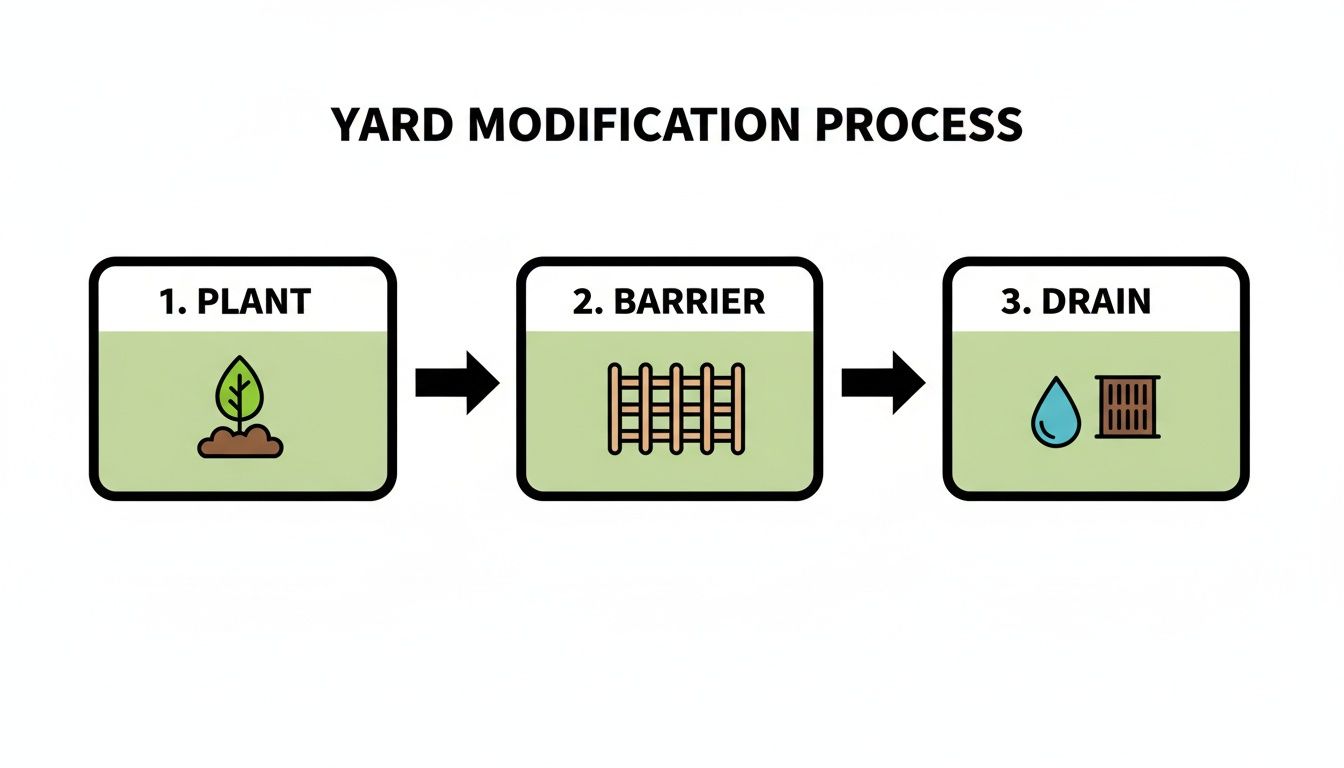
This kind of proactive yard work, as shown in the graphic, is the perfect partner to a trapping strategy. You’re actively removing the current problem while making it harder for the next one to move in.
If you're wondering if trapping is actually effective, the research is on your side. Studies on natural trapping have found that just two intensive trapping sessions, about a week apart, can reduce gopher numbers by a staggering 90%. A third round often clears them out completely. The USDA has even pointed to cinch-loop style traps as being particularly efficient. You can dig into these gopher management findings to see the data for yourself.
To help you decide what to buy, here's a quick rundown of the most common humane traps.
Comparing Humane Gopher Trap Types
| Trap Type | How It Works | Best For | Pros | Cons |
|---|---|---|---|---|
| Cinch Trap | A spring-loaded trap with wire loops (cinches) that closes around the gopher's body when triggered. | High-traffic tunnels where you have a good sense of the gopher's travel path. | Very effective and has a high capture rate. Relatively easy to set once you learn how. | Can be dangerous to set if you're not careful. Not ideal for very sandy or loose soil. |
| Box Trap | A wooden or metal box with a one-way door at each end. The gopher enters and a spring-loaded trigger snaps a bar down. | Situations where you want to confirm the capture easily and keep the process contained. | Safe to set, no exposed springs. Protects the captured gopher from predators before you can dispose of it. | Bulkier and requires a larger excavation to place. Can be more expensive. |
| Live Trap | A cage-style trap that captures the gopher alive and unharmed, allowing for relocation. | Homeowners who prefer a no-kill method and are willing to relocate the animal. | The most humane option. | Relocating gophers is often illegal or regulated, and can just move the problem elsewhere. Lower capture rate. |
Ultimately, the best trap is the one you feel comfortable and safe using. Both cinch and box traps are proven performers.
Setting and Placing Your Traps Safely
You’ve found the tunnel and picked your trap. Now, it's all about placement. The goal is to make the trap a natural part of the tunnel so the gopher runs right into it.
- Excavate the Tunnel: Carefully dig an opening just big enough to slide your trap inside. Don't make it too big.
- Set Traps in Pairs: Gophers can come from either direction. To double your chances, place two traps in the tunnel, one facing each way. This is a pro tip that makes a huge difference.
- Secure Your Traps: This is a step people often forget. Always attach a wire or stake to your trap and anchor it above ground. A captured gopher can pull the trap deep into the burrow system, and you'll never see it again.
Critical Safety Tip: Once the traps are set, cover the hole with a piece of plywood, a bucket, or a large stone. The goal is to block all light from getting into the tunnel. Gophers hate light and drafts in their burrows. If they see any, their first instinct is to plug the hole with dirt, which will trip your trap before they even get to it.
Check your traps every day, first thing in the morning is best. If two or three days go by with no luck, that tunnel is probably abandoned. Pull the traps and move them to a new, active mound. It takes a little practice, but you'll soon get a feel for the most active spots and be able to solve your gopher problem quickly and naturally.
Using Nature's Own Defenses: Predators and Repellents
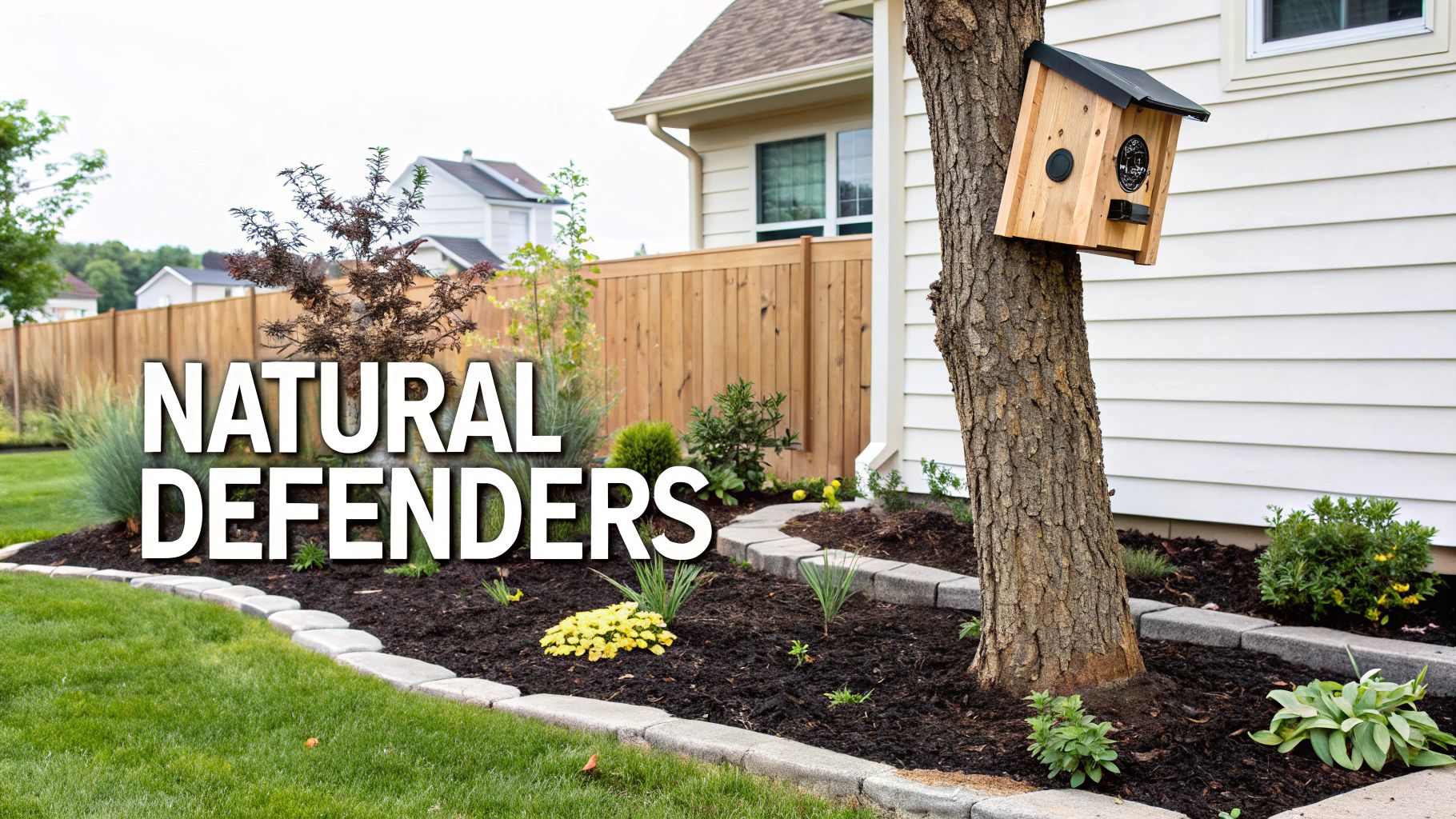
While trapping is a direct, hands-on approach, you can also tip the ecological balance in your favor. It's about transforming your property from a gopher buffet into a place where their natural enemies feel right at home. This strategy works with the local ecosystem here in Cumming, Alpharetta, and across North Georgia, creating a sustainable, long-term defense.
Instead of fighting the battle alone, why not recruit some of the most efficient pest controllers around? We're talking about predators that have been managing rodent populations for millennia. It’s all about working smarter, not harder, and letting nature do some of the heavy lifting.
Inviting Natural Predators to Your Yard
Our region is home to several natural gopher predators, especially birds of prey like owls and hawks. Making your yard a welcoming habitat for them is a fantastic, hands-off way to keep gophers in check. You’re not just solving a pest problem; you’re helping support local wildlife.
The key is to think like a predator. What do they need to feel safe and hunt effectively?
- Install Owl Boxes: A single barn owl family can eat an incredible number of rodents in a season. By installing a sturdy owl nesting box on a tall tree or pole, you can attract these silent hunters to your property, giving them a safe place to raise their young.
- Provide Perches for Hawks: Hawks are visual hunters and need a high vantage point to spot their next meal. Simply leaving a few dead tree limbs (called snags) or installing tall posts can give them the perfect perch to survey your lawn for any gopher activity.
- Avoid Rodenticides at All Costs: This is the most important rule. Using poison baits doesn't solve the root problem and can kill the very predators you’re trying to attract. A poisoned gopher becomes a deadly meal for an owl, hawk, or even the neighborhood cat.
Research from Oklahoma State University Extension shows just how effective this can be. By encouraging barn owl populations with nest boxes, property managers have seen natural gopher attrition rates of 70-85% over several seasons. A single owl pair might catch one or two gophers every single night.
The Honest Truth About Natural Repellents
After predators, your next line of defense is repellents. The market is flooded with products claiming to drive gophers away, but let's be honest—their effectiveness is a mixed bag. For homeowners in Johns Creek and Milton who want real results, it's crucial to understand what works, what doesn't, and why.
Most repellents work by offending a gopher's sense of smell or taste, making an area so unpleasant that they'd rather move next door. When you're looking into nature's defenses, powerful natural pest control solutions like neem oil can also play a role in overall garden health and pest deterrence.
Commercially Available and DIY Repellents
Here’s a practical rundown of some of the most common natural repellent options:
- Castor Oil Granules or Sprays: This is probably the most widely recognized—and effective—natural repellent out there. Gophers hate the taste and smell of castor oil, and it gives them digestive issues. Applying it to your lawn can convince them to pack their bags. Just remember, it's not a permanent fix and needs to be reapplied, especially after heavy rain.
- Peppermint and Rosemary Oil: Gophers have sensitive noses and can't stand strong, pungent smells. You can soak cotton balls in peppermint or rosemary essential oil and stuff them into active tunnels. This works as a temporary deterrent, but it’s a very localized solution and won't protect your entire yard.
- Ultrasonic Stakes: These devices emit vibrations and sounds designed to irritate gophers and drive them away. The theory sounds great, but real-world evidence of their effectiveness is flimsy at best. Gophers often get used to the vibrations and just dig around them.
- Folk Remedies (Pet Waste, etc.): The old-timers' trick of putting dog or cat waste in tunnels is based on the idea that the scent of a predator will scare gophers off. In reality, a gopher's instinct is just to seal off that part of the tunnel and dig a new one. This method is largely a waste of time.
While repellents can help, they really work best as part of a bigger strategy. If you're serious about creating a gopher-free yard, understanding the principles of natural pest control for lawns is key. Combining habitat modification, repellents, and predator encouragement creates layers of protection that are far more effective than any single solution.
When to Call a Local North Georgia Professional
You’ve tried modifying the habitat, you’ve set every humane trap you can find, and you’ve even tried encouraging the local owls to take up residence. But the gopher mounds just keep on coming.
While DIY natural methods can work wonders in many cases, there's a tipping point where a stubborn gopher problem in your Cumming or Alpharetta yard needs a professional touch. Sometimes, what looks like one determined pest is actually a sign of a much larger, well-established colony burrowing just beneath the surface.
Knowing when to call for backup can save you weeks of frustration, protect your landscape from getting completely torn up, and solve the problem for good.
Signs Your Gopher Problem Needs an Expert
It's one thing to handle an occasional visitor, but it's another thing entirely to be in an all-out war for your backyard. If you're in Forsyth County, Cherokee County, or anywhere in between, these are the red flags that signal it's time to bring in the pros.
- It’s Getting Worse, Fast: You dealt with one or two mounds last week, and now there are a dozen new ones. This kind of sudden explosion in activity often means a female has had a litter, and you're now fighting an entire family as they establish new territories.
- Serious Landscape Damage: The gophers aren't just making your lawn lumpy anymore. Their constant tunneling is now causing your patio pavers to sink, shifting retaining walls, or creating dangerous soft spots in the yard where someone could easily twist an ankle.
- Your Traps Are Being Ignored: You've followed all the advice—you found the main tunnels, set traps in pairs, and made sure to block out the light—but you keep coming up empty-handed. Some gophers get what we call "trap shy," and a professional will have different techniques to outsmart them.
- They're Hitting a Utility Line: The moment a gopher chews through a buried irrigation line or a utility cable, the problem has escalated. This goes beyond simple landscaping and requires immediate action before more expensive damage is done.
The Professional Advantage in North Georgia
Calling for help doesn’t mean you have to give up on your commitment to natural, eco-friendly solutions. The right company has access to more advanced tools and integrated strategies that are still completely safe for your family and the local environment.
Should natural methods fall short, understanding the landscape of professional pest control services can be a game-changer. Their biggest advantage is the ability to combine different methods for maximum impact. A key study found that combining trapping with natural fumigation alternatives, like carbon dioxide, led to 91-96% reductions in mounds and holes. This integrated approach is something pros specialize in, delivering results that are tough to get on your own.
When you hire a professional, you're not just paying for them to set a trap. You're investing in their experience—their ability to read the landscape, understand gopher behavior specific to our North Georgia clay soil, and put a comprehensive plan in place that not only solves the problem now but helps keep it from coming back.
A Safe and Sustainable Solution with Barefoot Organics
Here at Barefoot Organics, we get it. Homeowners in Milton and Johns Creek want the gophers gone, but not at the expense of their kids, pets, or the local ecosystem. Our entire approach to gopher control is built around that desire for a safe, effective, and natural solution.
We focus on integrated pest management, which means we always start with the most effective, least impactful methods. We don't just get rid of the gophers you have now; we analyze your whole property to figure out what attracted them in the first place. This allows us to give you long-term recommendations to make your yard a much less inviting place for them in the future.
Our commitment to a healthy lawn ecosystem is at the core of everything we do, from pest control to fertilization. You can learn more about our philosophy in our guide to organic lawn service near me. Choosing Barefoot Organics means choosing a partner who is dedicated to restoring balance to your yard, ensuring it stays beautiful, safe, and gopher-free for years to come.
Common Questions About Natural Gopher Control
When you decide to tackle a gopher problem the natural way, a few questions almost always pop up. I hear them all the time from homeowners across North Georgia, from Cumming to Dahlonega. They're usually wondering about how long it will take, whether the methods are safe for their families, and what the real risks are to their property. Getting straight answers helps you move forward with confidence.
So, let's dig into the most common concerns we hear. Understanding the reality of the situation will help you set the right expectations and choose the best natural approach for your yard.
How Long Does It Take to See Results?
This is the big one, and the honest answer is: it really depends on the method you're using and how bad your gopher problem is. Natural control isn't always a magic wand; it’s more about choosing the right tool for the job.
- Humane Trapping: This is your most direct route. If you correctly identify a main tunnel in your Alpharetta yard and set your traps well, you could be gopher-free in 24 to 48 hours. It's fast and effective when done right.
- Repellents: Think of these as a long game. Products with castor oil or strong-smelling plants are all about making your yard an unpleasant place for a gopher to live. You might notice fewer new mounds within a week, but you have to stay on top of it, especially after it rains.
- Habitat Modification: This is your permanent, preventative strategy. Laying gopher wire before you put down new sod is a one-and-done job that offers lasting protection. Planting repellent species is a seasonal effort, but its effectiveness builds up over time.
The key takeaway is simple: active methods like trapping give you fast results for the gophers you have now. Passive methods like repellents and landscaping changes are what keep new ones from moving in later. Using both together is always the best bet.
Are Natural Repellents Safe for My Pets and Garden?
Absolutely, and honestly, this is one of the best reasons to go natural. For families in Milton and Johns Creek with kids and pets tearing around the yard, dumping harsh chemicals on the lawn just isn't an option.
Natural solutions are designed to work with your local ecosystem, not wage war against it.
- Castor Oil: This is the most common natural repellent for a reason. It’s considered safe for pets, kids, and your plants when you use it as directed. It simply makes the ground taste and smell awful to gophers, encouraging them to pack up and leave without poisoning your soil.
- Repellent Plants: Flowers like Crown Imperial or herbs like rosemary are perfectly safe and can be beautiful additions to your garden. The one major exception here is the Castor Bean plant. While it deters gophers, the beans are highly toxic if eaten and should be avoided completely in yards where pets or small children play.
When you compare this to chemical poisons, it’s a night-and-day difference. Rodenticides are a huge risk, either from a pet eating the bait directly or through secondary poisoning if they catch and eat a sick gopher. Sticking with natural, plant-based options takes that worry off the table.
Can Gophers Damage My Home's Foundation?
I get this question a lot, especially when someone sees a fresh mound pop up just a few feet from their house. It’s a scary thought, but the good news is that a gopher causing direct, serious damage to a solid concrete foundation is incredibly rare. They're built for digging in soil, not chewing through concrete.
The real risk is more indirect. Gophers are landscape vandals—they’ll chew through sprinkler lines, low-voltage wiring, and the root systems of your prize-winning roses. But if you let a large colony run wild right next to your house for a long time, their network of tunnels could eventually compromise the stability of the soil. This can lead to problems with water drainage and erosion right where you don't want it.
Think of it this way: the gopher isn't attacking your foundation, but its work can slowly weaken the ground that supports it. That’s why acting quickly is so important. Dealing with the problem when it’s just a few mounds in the yard keeps it from ever becoming a bigger, more threatening issue.
When DIY just isn't cutting it, or you simply want the peace of mind that comes with professional experience, Barefoot Organics is here to help. We provide safe, effective, and environmentally sound gopher control solutions designed specifically for North Georgia landscapes. Get your free quote today.