

The first step in taking back your lawn from armyworms is knowing what you’re up against. You have to correctly identify the culprits and the damage they’re causing before you can move on to treatment and prevention. Fast action is critical—I’ve seen a healthy lawn in Cumming get completely wiped out in a matter of days by a serious infestation.
Spotting Armyworm Damage in North Georgia Lawns
It’s a homeowner's worst nightmare: one day you have a beautiful green lawn, and the next, it’s covered in ugly, expanding brown patches. When this happens practically overnight in areas like Cumming or Johns Creek, armyworms are a prime suspect. These pests are aptly named; they literally march across your turf in a massive group, chewing through grass blades with incredible speed.
Any good pest control strategy starts with a solid diagnosis. If you mistake armyworms for something else, you’ll waste time and money on treatments that don’t work while the real problem gets worse. Here in North Georgia, from Dahlonega to Alpharetta, it's crucial to tell the difference between armyworm damage and other common lawn woes like drought stress or brown patch fungus.
Telltale Signs of an Armyworm Invasion
So, how can you be sure it’s armyworms chewing up your fescue or Bermuda? The initial signs can be subtle, but they escalate fast. At first, your grass might just look a little ragged, with chewed-up edges on the blades as if mowed with a dull blade.
Before you know it, those subtle hints turn into very obvious brown or yellow patches that seem to grow larger every single day. Unlike drought stress, which usually causes a more uniform browning across the lawn, armyworm damage typically starts in one spot and radiates outward as the caterpillars hunt for fresh grass.
To help you quickly pinpoint the problem, here's a quick guide for spotting an armyworm invasion on your North Georgia property.
Armyworm Invasion Quick Identification Guide For North Georgia
| Symptom | What to Look For | Common North Georgia Location |
|---|---|---|
| Visible Lawn Damage | Grass blades look chewed or ragged. Brown patches expand rapidly, almost overnight. | Sun-exposed areas of Bermuda, Zoysia, or Fescue lawns in Cumming or Alpharetta. |
| Increased Bird Activity | Flocks of birds (starlings, robins) suddenly pecking aggressively at your lawn. | Any residential lawn in Johns Creek or Milton, especially newly sodded or well-fertilized ones. |
| Fuzzy Egg Masses | Small, off-white, cotton-like clumps, each containing hundreds of eggs. | On light-colored surfaces like white vinyl fences, mailboxes, and under house eaves. |
| Actual Caterpillars | Green, brown, or black caterpillars (about 1.5 inches long) with stripes along their sides and an inverted "Y" on their heads. | Hiding at the base of grass blades during the day; active at night or on cloudy days. |
Paying attention to these signs can give you the head start you need to save your turf.
Unusual Activity on Your Property
Your local wildlife often gives you the first clue. If you suddenly notice a bunch of birds—starlings, robins, you name it—pecking intensely at your lawn, they’re not just looking for earthworms. They've likely found an all-you-can-eat armyworm buffet just below the surface. This is one of the most reliable early warnings we see in areas from Alpharetta to Milton and all the way up to Dahlonega.
Another telltale sign is finding their egg masses before they even hatch. The adult moths love laying eggs on smooth, light-colored surfaces. Take a quick look around your property and inspect:
- White vinyl fences or siding
- Mailbox posts and light poles
- The eaves of your home
- Even the leaves of broadleaf weeds
Finding one of these fuzzy, off-white mounds is a clear signal that trouble is on the way. Each one can hold hundreds of future lawn-destroying caterpillars.
Confirming Your Suspicions
Sometimes, brown spots are just that—brown spots. To be absolutely sure you’re dealing with armyworms, you can do a simple "soap flush test."
Just mix two to three tablespoons of lemon-scented dish soap into a gallon of water. Pour it over a small (2×2 foot) section of your lawn where you see damage. The soapy water irritates the caterpillars and forces them to the surface in just a few minutes. If you see more than a handful wiggling around, you’ve got your confirmation. Since many homeowners confuse this damage with other common turf issues, you can learn more about what causes brown spots in grass to better understand the differences.
To put their destructive power in perspective, the fall armyworm—a common species here in Georgia—spread across nearly all of sub-Saharan Africa within just two years of its arrival. By 2024, it had invaded over 70 countries. Once it's established, no country has ever managed to get rid of it completely. This just goes to show why early detection isn’t just a good idea; it’s an absolute necessity. You can find more insights on this billion-dollar problem over at syngenta.com.
Your Immediate Action Plan for Armyworm Control
Okay, you've spotted the signs and you're pretty sure you have an armyworm problem in your Cumming, GA, lawn. Now is the time to act. A delay of just a couple of days can be the difference between a few brown spots and a full-blown recovery project. This is your battle plan, with strategies that work right here in North Georgia, whether you're in Milton, Alpharetta, or anywhere in Forsyth County.
The first move isn't to start spraying—it's to figure out exactly what you're up against. Before you pick a treatment, you need to understand the scale of the invasion. A few caterpillars here and there might not be a red alert, but a heavy infestation demands an immediate response.
Gauge the Severity with the Soapy Water Test
You don't need any fancy gear to figure out how bad the problem really is. The "soapy water test" is a simple, old-school method that homeowners from Johns Creek to Dahlonega have relied on for years. It’s a great way to force the caterpillars to the surface so you can get an accurate headcount.
Here’s how you do it:
- Mix two tablespoons of lemon-scented dish soap into a one-gallon bucket of water.
- Find a spot where you see damage and pour the mixture over a one-square-yard area.
- Now, just wait for about 5-10 minutes. The soap irritates the armyworms and drives them to the surface.
If you count more than five to ten armyworms in that small patch, you've got an infestation that needs to be dealt with right away. If you see fewer, you might be able to let natural predators handle it and hold off on applying any products.
Pro Tip: Armyworms are most active in the late evening and early morning. To get the most accurate count, do your soapy water test just before dusk or right after sunrise.
The signs leading up to this point—brown patches, birds feasting, and egg masses—are all part of a clear progression.
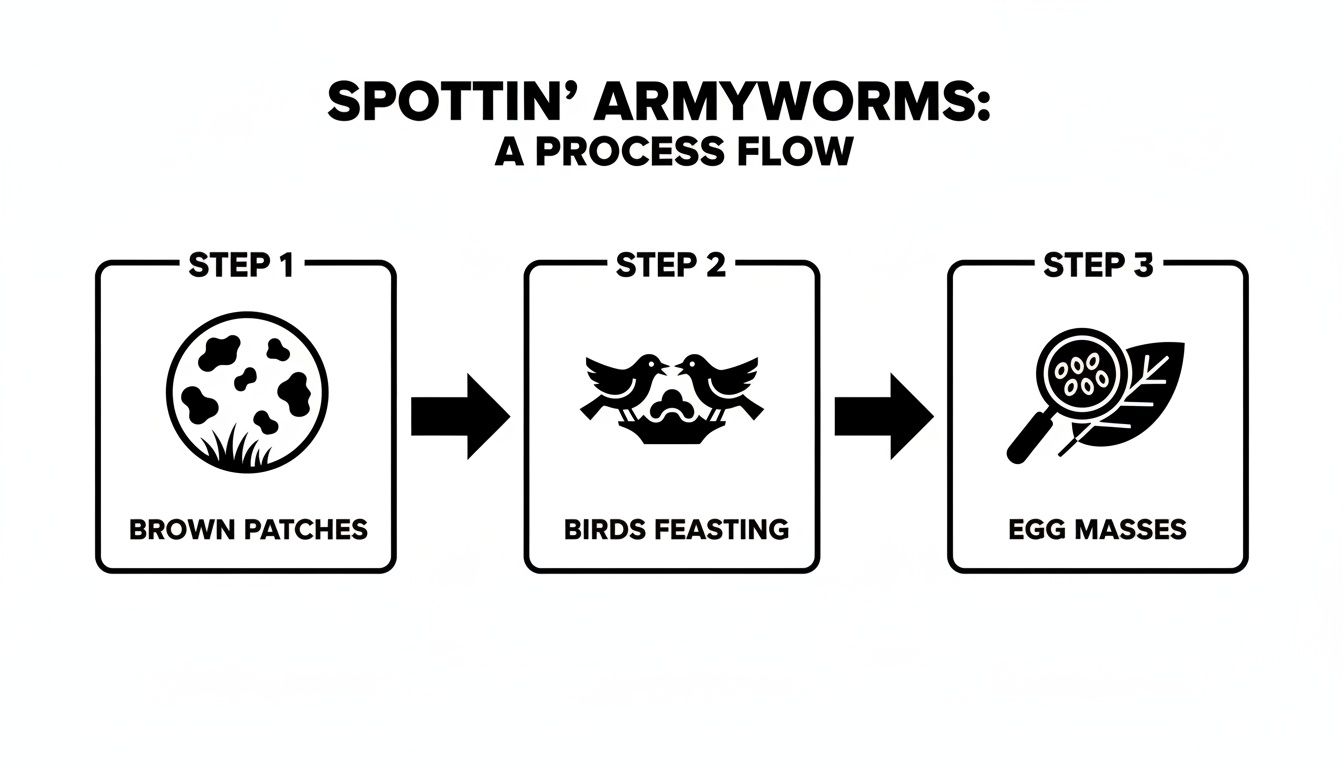
As you can see, what often starts as a few odd-looking brown patches can quickly escalate, often confirmed by an unusual amount of bird activity and, if you look closely, fuzzy egg masses.
Natural and Biological Control Methods
For homeowners in the Cumming area who prefer to avoid harsh chemicals, there are several very effective options out there. These methods are perfect for minor-to-moderate infestations and are much safer for the good guys—like pollinators, pets, and kids playing on the lawn.
One of the best natural defenses is Bacillus thuringiensis (Bt). It's a naturally occurring soil bacterium that messes with a caterpillar's stomach but is completely harmless to people, pets, and beneficial insects. The key is to apply it when the caterpillars are young and actively munching on your grass blades.
Another fantastic organic tool is beneficial nematodes. These are microscopic roundworms that actually hunt down and kill armyworm larvae in the soil. They are totally safe and a great way to break the pest's life cycle from below the surface. Exploring different effective natural pest control methods can really round out your strategy. For a deeper dive, check out our full guide to natural pest control for lawns.
When to Use Targeted Chemical Treatments
Sometimes, the infestation is just too severe. If you see armyworms destroying huge chunks of your turf seemingly overnight, a more aggressive approach might be needed to save your lawn. This is where targeted insecticides come in.
Look for products with active ingredients like bifenthrin or permethrin, which are known to be highly effective against armyworms. But let's be clear: safety is everything when using these products. You have to read and follow the label instructions to the letter.
Here are a few critical safety rules I always follow:
- Apply Late in the Day: The absolute best time to apply any treatment is late afternoon or early evening. This is right before armyworms emerge for their nightly feeding frenzy, ensuring they come into contact with the product when it’s fresh and potent. If you apply it in the morning, the hot Georgia sun can degrade it before the pests are even active.
- Water In If Required: Some granular products need to be watered in to activate. The label will tell you exactly what to do.
- Keep Pets and Family Off the Lawn: Be strict about this. Follow the label's recommendation for how long to stay off the treated area, which is usually until the product has completely dried.
Winning the war against armyworms is all about timing and using the right method for the situation. For instance, integrated pest management research has shown that introducing certain parasitic wasps can destroy 40-60% of armyworm eggs, while neem-based sprays can achieve 60-80% mortality in young larvae. Knowing the science behind it helps. Acting at the right threshold with the right tool is how you get rid of armyworms for good.
Building a Lawn That Armyworms Hate
Successfully wiping out an armyworm invasion feels great, but that's just winning one battle. The real goal is to prevent the next war entirely. This is where your day-to-day lawn care becomes your best defense, turning your yard from an easy target into a resilient fortress that armyworms will happily skip over.
A truly healthy, thriving lawn is naturally resistant to all kinds of stress, including pests. Think of it like a person with a strong immune system; it can fend off problems that would devastate a weaker, stressed-out lawn. For homeowners here in Cumming, Alpharetta, and Johns Creek, this means building good habits that are tailor-made for our local grass types and climate.
Master Your Mowing and Watering Habits
The way you cut and water your grass has a huge say in how inviting it is to pests. Armyworm moths are on the lookout for lush, slightly overgrown grass to lay their eggs, and soggy soil is the perfect nursery for their larvae. You can break this cycle with just a few tweaks to your routine.
Mowing height is absolutely critical for North Georgia's common grasses. Cutting too short stresses the turf, but letting it get too long is basically rolling out the welcome mat.
- For Fescue Lawns: Keep your fescue on the taller side, aiming for a height of 3 to 4 inches. This promotes deeper roots and helps this cool-season grass survive our Cumming and Milton summer heat.
- For Bermuda and Zoysia Lawns: These warm-season grasses thrive when cut shorter, somewhere in the 1.5 to 2.5-inch range.
Watering is the other half of this equation. Ditch the daily light sprinkle. It’s far more effective to water deeply but less frequently. This forces the grass roots to search deeper for moisture, building a stronger, more drought-tolerant plant. One or two deep soakings a week is almost always better than a little bit every day.
Dethatching and Aeration: The Secret Weapons
Hiding between the green blades and the soil is a layer of dead grass, roots, and other organic stuff we call thatch. A little bit is fine, but once it gets thicker than half an inch, it spells trouble. This dense mat becomes a dark, damp, and sheltered hideout for armyworm caterpillars, protecting them from predators and the sun.
Dethatching is simply the process of raking out this excessive layer. For folks in Alpharetta and Milton, the best time is late spring for Bermuda and fall for fescue. It immediately opens things up, letting air, water, and nutrients get down to the roots where they belong.
Following that up with core aeration is the one-two punch. By pulling up small plugs of soil, you relieve compaction and improve drainage.
A lawn choked with thatch and hard, compacted soil is an open invitation for pests. When you dethatch and aerate, you're doing more than just improving your lawn's health—you're evicting armyworms from their favorite safe house.
Fertilize for Strength, Not Just for Show
Good fertilization isn't about forcing rapid, bright green growth. It's about building a powerful foundation of deep, resilient roots. A lawn with a robust root system can handle and bounce back from the surface-level chewing that armyworms do.
I always recommend a balanced, slow-release fertilizer. It provides a steady diet of nutrients without creating a sudden flush of tender new growth, which is like candy to armyworms. The perfect fertilizer plan really comes down to what's going on in your soil, which is why understanding how to improve soil is such a critical piece of the puzzle.
Make Your Yard a Predator's Paradise
Honestly, one of the best long-term strategies is to let nature do the work for you. By inviting armyworms' natural enemies into your yard, you can turn your property into a self-regulating defense system.
It's easier than you might think. A few simple additions can make a huge difference:
- Install Bird Feeders and Birdbaths: Birds are phenomenal armyworm predators. Giving them a reliable source of food and water is like hiring a 24/7 pest control patrol.
- Plant Native Flowers: Planting flowers native to the Cumming area that attract beneficial insects like parasitic wasps and lacewings is a brilliant move. They target armyworm eggs and larvae, stopping an infestation before it can even get started.
When you bring all these proactive practices together, you're building multiple layers of defense. You're not just reacting to a problem; you're creating a healthy, vibrant ecosystem where future invasions are far less likely to happen. It's the most sustainable way to keep your North Georgia lawn looking its best year after year.
When to Call a Lawn Care Pro in the Cumming Area
Tackling a small armyworm problem yourself can feel like a win, but there’s a clear tipping point where a DIY approach just won’t cut it. Knowing when you’ve reached that point is the key to saving your lawn from serious, long-term damage. For homeowners here in Cumming, Johns Creek, and across North Georgia, calling for backup isn't giving up—it's the smartest move you can make to protect your turf.
Sometimes, the sheer number of pests is the deciding factor. If you've done a soap flush test and the ground is practically crawling with armyworms, you're past the point of a simple spot treatment. An army of that size requires a professional response, plain and simple. The same goes for damage; if you're seeing large, brown patches that seem to be merging into one another, the infestation is already out of hand.
Signs It’s Time to Bring in the Experts
Another tell-tale sign is when your own efforts just aren't moving the needle. Maybe you’ve carefully applied a store-bought treatment, followed every instruction to the letter, but the brown spots are still getting bigger. I’ve seen this happen time and again in lawns from Milton to Dahlonega. It usually means the infestation is deeper or more widespread than it looks, or the product simply isn't potent enough for the job.
Here's the inside scoop: Professional lawn care companies in the Cumming area have access to commercial-grade products that are far more effective than anything you can buy at a big-box store. These treatments are designed for rapid knockdown and reliable control—exactly what's needed when your lawn's life hangs in the balance.
It's time to pick up the phone if you notice any of these red flags:
- Widespread Damage: The brown, chewed-up areas now cover more than 25% of your lawn.
- Failed DIY Attempts: You've tried a treatment or two yourself, but the pests are still marching on.
- Rapid Escalation: The dead patches seem to be doubling in size every day or two.
- Lack of Time or Equipment: You just don't have the time to do it right, or you lack the proper spreader or sprayer for even coverage.
The Advantages of Professional Armyworm Control
Hiring a local expert is about so much more than just getting stronger chemicals. It’s about getting their expertise. A seasoned technician can walk your property and immediately tell if you’re dealing with armyworms or something else, like a fungal disease that can look deceptively similar. That correct diagnosis alone can save you a ton of time, money, and frustration.
From there, a pro develops a customized treatment plan. They know the turf types we have here—Bermuda, Zoysia, Fescue—and understand how to treat each one effectively. They’ll nail the timing and application rates to knock out the pests while keeping your family and pets safe. For a wider range of professional help or if you're exploring options in neighboring areas, you might consult local lawn care services in Alpharetta for their expertise.
Investing in Your Lawn’s Future
At the end of the day, calling a professional is an investment in your lawn’s recovery and long-term health. The damage armyworms can inflict, if left to their own devices, is truly staggering. On a global agricultural scale, these pests can wipe out up to 50% of a crop. The integrated pest management (IPM) strategies used to fight them are incredibly sophisticated. For instance, specific biopesticides can achieve 85-95% efficacy, and simple post-harvest tilling can eliminate 90% of the next generation's pupae.
A professional brings that same strategic, science-backed approach to your yard. They don’t just kill the armyworms you have now; they can also provide preventative treatments and lawn health guidance to build a thicker, more resilient turf that’s less likely to be a target next season. It's the most reliable path to getting rid of armyworms for good and helping your lawn bounce back, greener and healthier than ever.
Helping Your Lawn Recover After an Armyworm Attack
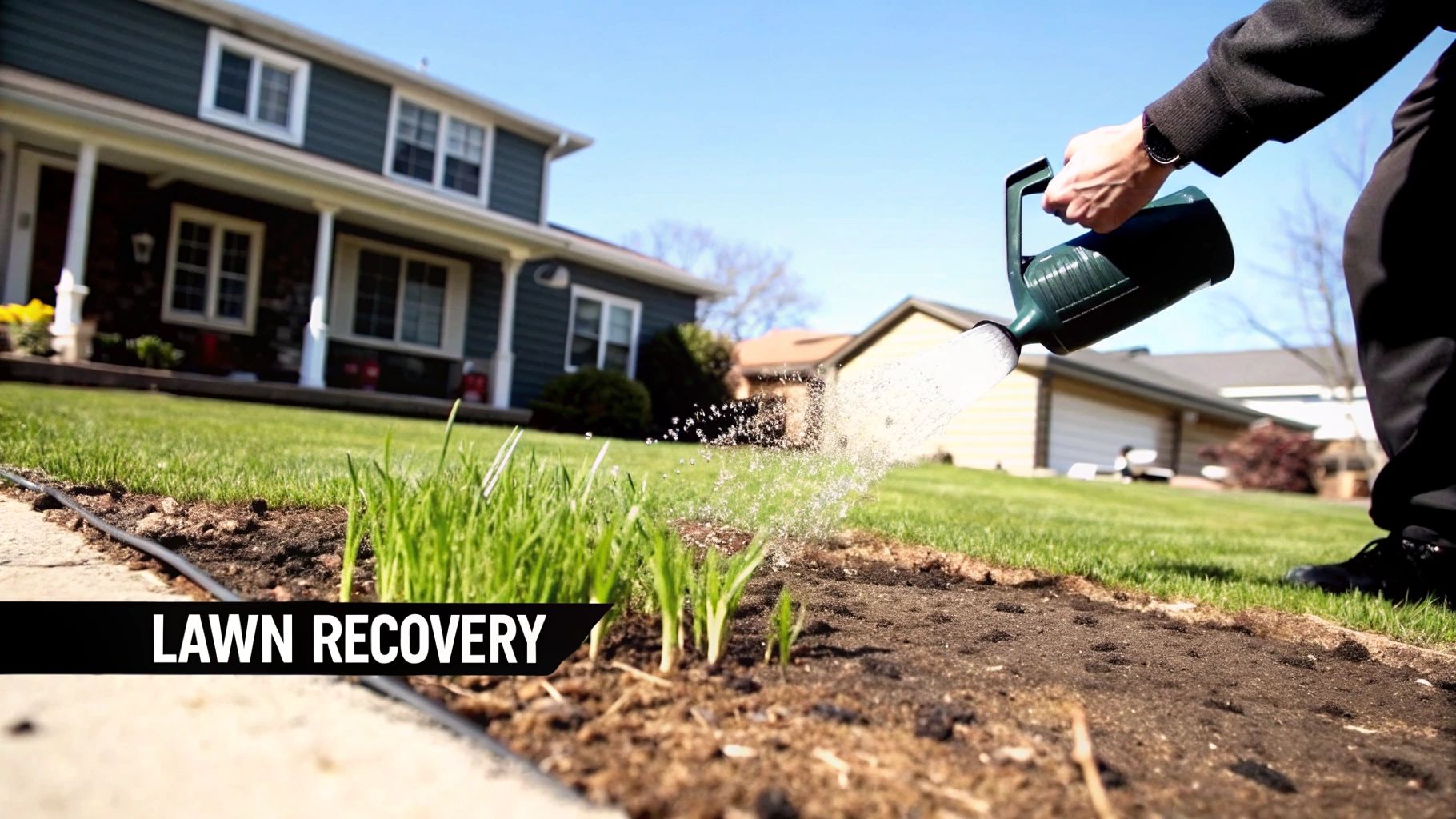
After you've dealt with an armyworm infestation, looking out at the chewed-up, brown turf can be pretty disheartening. But I have some genuinely good news for homeowners here in Cumming and across North Georgia. Armyworms are surface feeders. They munch on the green blades of grass but leave the vital crowns and root systems completely alone.
This is a huge silver lining. Because the core of your grass plant is still alive and well, a full recovery isn't just a possibility—it's what we expect to see with the right care. Your lawn already has the foundation it needs to bounce back; you just need to give it a helping hand.
Kickstarting New Growth with Smart Fertilization
Your lawn is weak after an attack and desperately needs nutrients to rebuild. A balanced, high-quality fertilizer is your first and most important step to get new, green blades growing again. But getting the timing and the type right is everything.
You don't want to fertilize immediately after an insecticide treatment. Give the lawn a chance to start healing on its own for about a week or two. Then, put down a slow-release fertilizer that will provide a steady stream of nitrogen. This is much better than a quick-release product that causes a sudden, weak surge of growth, which can actually attract other pests.
For our warm-season grasses like Bermuda and Zoysia, this late-summer or early-fall feeding is perfectly timed. And for those with fescue in areas like Alpharetta and Milton, it lines up perfectly with the fall growing season—the absolute sweet spot for recovery.
The Right Way to Water for Recovery
A damaged lawn needs water, but it's easy to get this wrong and cause more problems. Watering a little bit every day is a common mistake that can encourage fungal diseases, and a stressed-out lawn is the perfect target for them. The goal is to water deeply and infrequently.
This method forces the grass roots to dig deeper into the soil for moisture, building a much stronger and more resilient plant. I always tell my clients in Cumming and Johns Creek to aim for about one inch of water per week, all in one long session if possible, instead of several short ones. This ensures the water soaks way down into the root zone where it's actually needed.
I've seen it time and time again: a homeowner panics and over-waters a damaged lawn, thinking more water means a faster fix. In reality, they end up with a soggy mess that's a perfect breeding ground for brown patch fungus. Stick to that deep-and-infrequent schedule, and you'll avoid trading one problem for another.
Addressing Bare Patches with Overseeding
If you're left with thin spots or totally bare patches, especially in a fescue lawn, overseeding is a fantastic tool. Fall is hands-down the best time to do this in North Georgia. The air is getting cooler, but the soil is still warm—it's the ideal combination for new seed to germinate and establish strong roots before winter sets in.
Here's a quick recovery checklist to follow:
- Pause: Let the lawn rest for 1-2 weeks after treatment before you do anything.
- Feed: Apply a quality, slow-release fertilizer to give it the fuel it needs.
- Water Deeply: Provide that one inch of water per week to build a strong root system.
- Overseed Fescue: In the fall, rake out the dead stuff and spread good fescue seed in the bare spots.
If you have Bermuda or Zoysia, you can usually skip the overseeding. These grasses are great at spreading and will fill in on their own with proper feeding and watering. It just takes a bit of patience and a strategic approach to guide your lawn from a battleground back to the green oasis you want.
Common Questions About Armyworms in Georgia
Even after you've dealt with an armyworm invasion, it's normal to have a few questions rattling around. We get calls all the time from homeowners across Cumming, Johns Creek, and the rest of North Georgia who are wondering what happens next. Here are the straight-up answers to the questions we hear most often.
Knowing what to expect after an infestation is a huge part of keeping armyworms gone for good. A little bit of knowledge goes a long way in giving you peace of mind and setting the right expectations for your lawn's recovery.
How Long Do Armyworms Stick Around?
This is probably the number one question we're asked, and the answer isn't always what people want to hear: it depends. A single generation of armyworms, from egg to the hungry caterpillar stage, usually only lasts a few weeks. The real headache for us here in Georgia is that we can get hit with multiple generations in one season.
The adult moths can lay hundreds of eggs, kicking off a whole new cycle of damage right when you thought you had it licked. This is especially true during those warm, wet fall months we often see in places like Alpharetta or Milton.
The bottom line is this: you can't just treat once and forget about it. Staying vigilant is your best defense against a second or even third wave of armyworms. Keep an eye on your lawn for any fresh signs of damage.
This frustrating cycle is exactly why a single application might not cut it and why focusing on your lawn's overall health is so important for long-term prevention.
Will My Bermuda or Zoysia Grass Grow Back?
It's easy to panic when you look out and see a brown, chewed-up patch where your beautiful lawn used to be. But I've got some good news for those of you with warm-season grasses: your lawn will almost certainly bounce back.
Grasses like Bermuda and Zoysia are tough. They spread using runners (stolons and rhizomes) that creep along or just below the soil. Armyworms are surface feeders—they only munch on the green blades above the ground, leaving the crucial growth points and root system untouched.
With a solid recovery plan involving the right fertilizer and deep, infrequent watering, your turf has what it needs to send up new green shoots and fill in those bare spots. You just need to give it some time and a little TLC.
Are Armyworms Dangerous to My Kids or Pets?
This is a totally understandable question for any family, whether you're in Cumming or Dahlonega. The armyworm caterpillars themselves are harmless. They don't bite or sting, and they don't carry any diseases that could affect people or pets.
The real risk is from the pesticides used to control them. That's why it is absolutely critical to read and follow the label instructions for any product you apply. You must keep kids and pets off the treated grass for the time specified on the label, which is usually until the spray has completely dried.
This safety concern is a big reason many families choose to go with professional, natural-based treatments. It takes the guesswork out of the equation and ensures the method is tough on pests while being gentle on your loved ones.
Ready to reclaim your lawn without the worry? The expert team at Barefoot Organics specializes in effective, family-safe lawn care solutions designed for our North Georgia climate. We can help you get rid of armyworms and build a healthier, more resilient lawn for the future. Get your free, no-obligation quote today at https://barefootorganicsllc.com.