

Aerating your lawn is all about punching small holes into the soil. It might sound simple, but this process gives your grassroots a fighting chance by letting air, water, and essential nutrients finally break through compacted earth. For those of us dealing with lawns from Cumming to Dahlonega, this means using a core aerator—a machine that pulls up small plugs of our notoriously dense clay soil. It’s hands-down the most effective method for our region and the key to reviving a struggling lawn.
Why Aeration Is Crucial for North Georgia Lawns
Before you even think about renting equipment, let's get into why your lawn in Cumming or Alpharetta is practically begging for this. North Georgia is famous for its dense, red clay. After a long, hot summer full of foot traffic, cookouts, and heavy rains, that clay can get packed down as hard as a brick.
This compaction literally suffocates your grassroots. It forms a nearly impenetrable barrier, blocking water, nutrients, and oxygen from reaching the roots. When that happens, your lawn simply can't thrive, leaving you with weak, patchy, and discolored turf.
Signs Your Georgia Lawn Needs Help
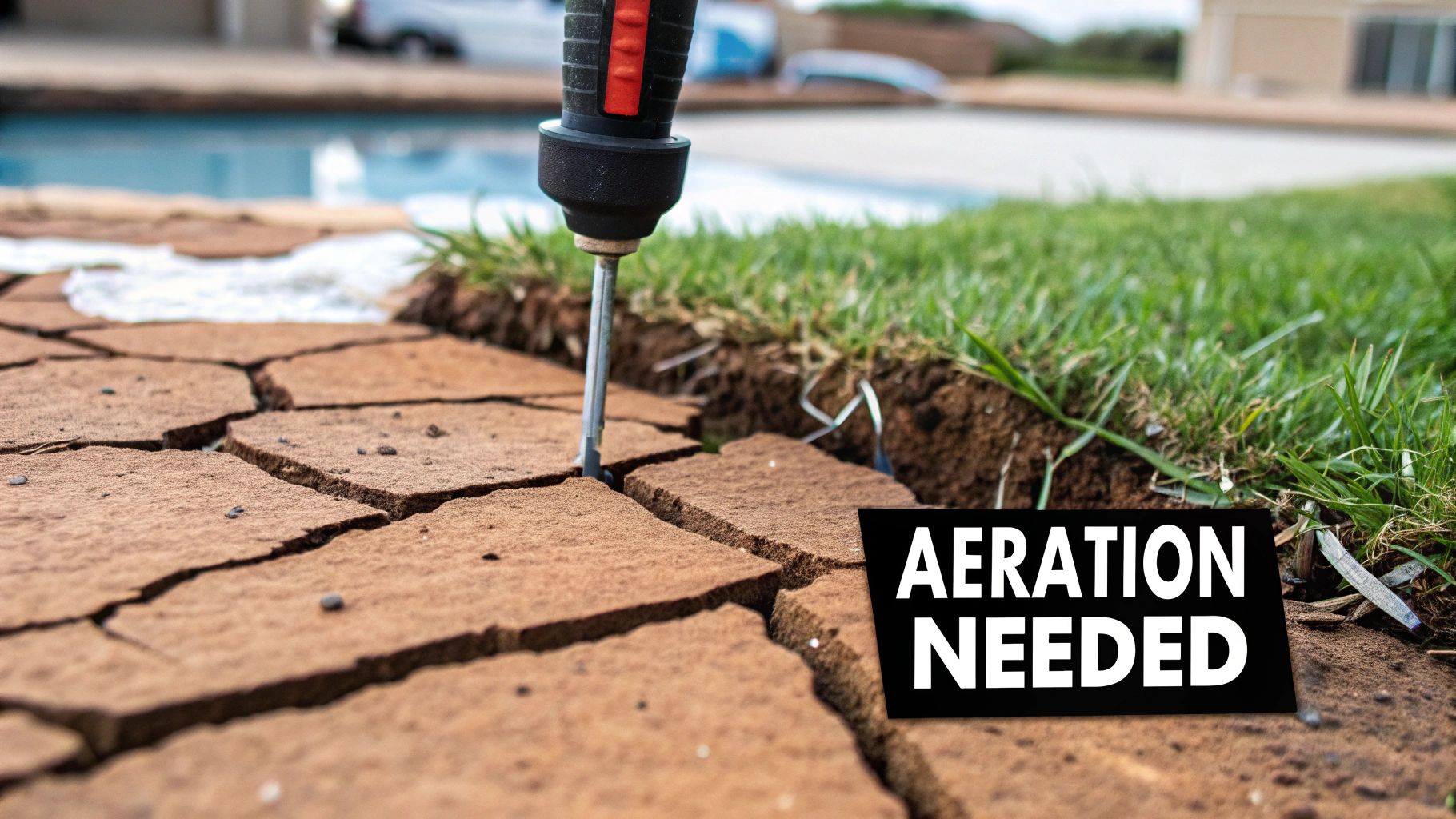
Does this sound familiar? A heavy summer storm rolls through your Johns Creek neighborhood, and hours later, you still have puddles sitting on top of your lawn instead of soaking in. Or maybe the ground feels oddly spongy and thick when you walk on it—a classic sign of excessive thatch buildup. These are tell-tale symptoms of soil compaction.
Here's a quick and easy way to check. Grab a screwdriver and try to push it into your lawn's soil. If you have to fight to get it even a few inches deep, you've got a compaction problem. Your lawn is overdue for aeration.
For our specific soil in areas like Milton and Dahlonega, aeration isn't just another weekend chore. It's the single most powerful way to revive a tired lawn and set it up for long-term health.
Breaking up that hardened clay is everything. Studies have shown that a properly aerated lawn can improve its water infiltration by up to 30%. It also reduces soil compaction by an average of 15-20% after just one treatment. This is a game-changer, especially in the high-traffic residential areas around Milton and Forsyth County. This entire process directly contributes to a robust root system, which is the foundation needed to create healthy soil for your turf.
Choosing The Right Aeration Tools For Your Yard
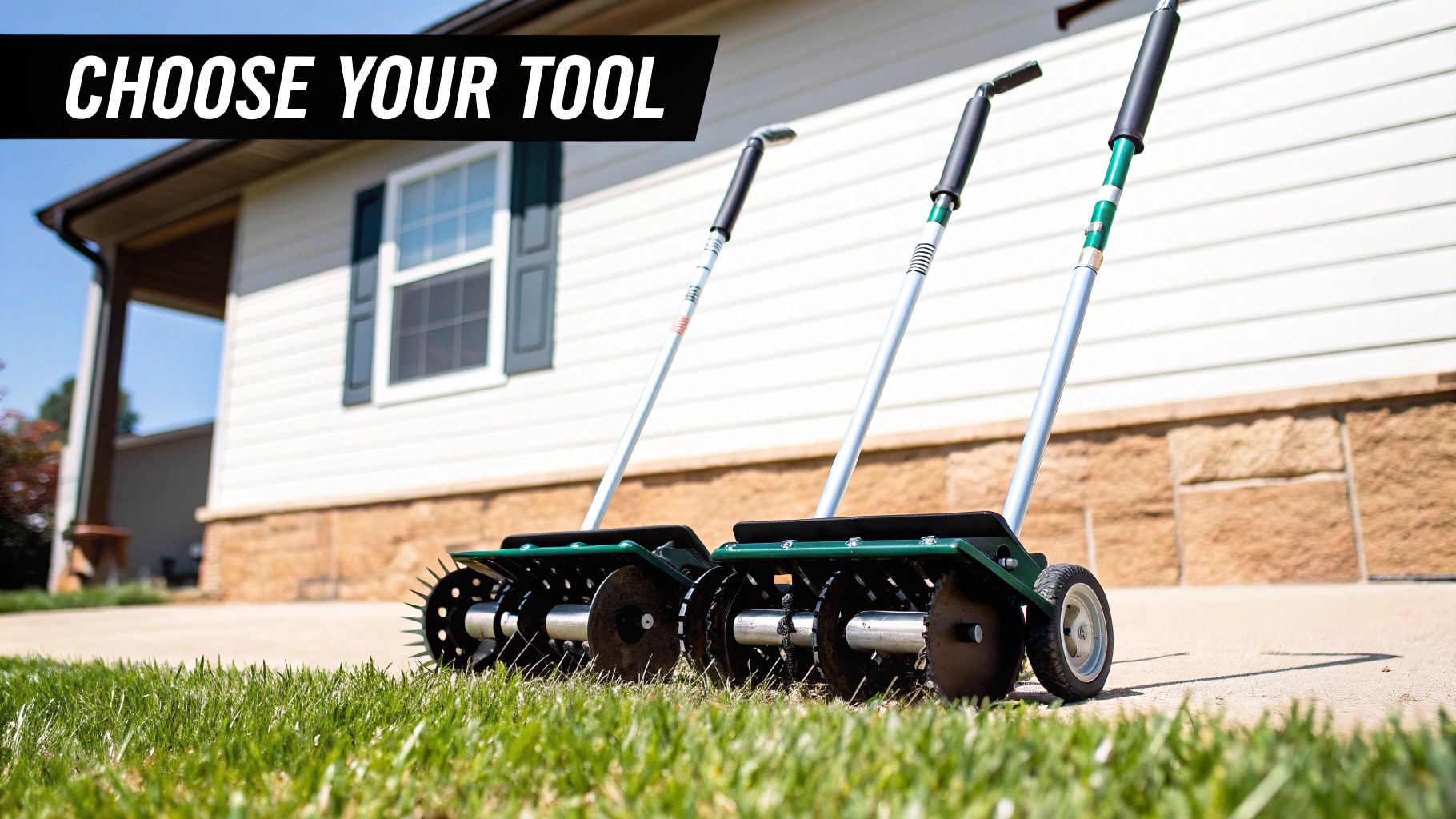
When it's time to aerate your lawn, you'll run into two main methods: spike aeration and core aeration. But for anyone dealing with Georgia's dense, red clay, this isn't much of a choice at all. Our stubborn soil needs a serious solution.
Spike aerators, like those goofy-looking shoes with spikes or a rolling spiker, just poke holes in the ground. On the surface, it seems like a good idea, but in heavy clay, it often does more harm than good. Think about pushing a pencil into a block of modeling clay—the clay just gets mashed down and compacted even tighter around the hole. That's exactly what's happening to your soil in Johns Creek.
The Power Of Core Aeration
This brings us to core aeration, the undisputed champion for our region's lawns. This method uses a machine with hollow tines to physically pull out small plugs (or "cores") of soil and thatch. Instead of just poking holes, it actually removes soil, creating real, lasting space for air, water, and nutrients to get down to the roots where they're needed most.
For North Georgia's compacted soil, from Alpharetta to Dahlonega, core aeration isn't just the best method—it's the only method that truly delivers the results your lawn needs to thrive.
The right tool for the job is a walk-behind core aerator, which is usually gas-powered. While you could buy one, it makes far more sense for most homeowners in Cumming and the surrounding areas to just rent one. A half-day rental from a local equipment shop is typically all you need for a standard suburban yard, and it'll set you back about $60 to $100.
When you go to rent, ask for a self-propelled model. It will save your back. Also, check the tines—you want them to be at least 2-3 inches long to pull up meaningful plugs. You might see manual plug aerators, but trust me, those are only for touching up a tiny problem spot, not for tackling an entire lawn in Milton.
Core Aerator vs Spike Aerator for Georgia Clay
Deciding between core and spike aeration can be confusing, but for our local soil, the choice is clear. This quick table breaks down why pulling plugs is always superior to just poking holes.
| Feature | Core Aeration (Recommended) | Spike Aeration |
|---|---|---|
| Method | Pulls 2-3 inch plugs of soil out | Pokes solid holes into the soil |
| Effect on Clay | Genuinely relieves compaction | Can worsen compaction around holes |
| Best For | All lawn sizes, essential for clay | Small areas with minor compaction |
| Effort | Moderate with a rental machine | High for manual tools, less effective |
Ultimately, renting a proper core aerator for a few hours is a small investment that pays huge dividends for the health and beauty of your lawn. It’s the single most effective way to combat the compaction that plagues Georgia yards.
Finding the Perfect Time to Aerate in Georgia
In lawn care, timing is everything. This is especially true when it comes to aeration. Aerate at the wrong time, and you could actually do more harm than good, stressing your grass and rolling out the welcome mat for weeds.
Here in North Georgia, the secret is to work with your grass type's natural growth cycle. You want to aerate when the turf is growing aggressively, so it can bounce back and heal quickly.
Most lawns around Cumming and Alpharetta are planted with warm-season grasses like Bermuda and Zoysia. These turf types absolutely love the summer heat. For them, the sweet spot for aeration is from late spring to early summer—we’re talking May through July. This is their peak season, which means the plugs you pull will be quickly filled in by strong, new growth.
On the other hand, if you've got shadier spots from Milton over to Dahlonega, you're likely dealing with a cool-season grass like Fescue. The strategy here is completely different. Fescue comes to life in the cooler weather of early fall, so you'll want to schedule your aeration for September or October.
Your Pre-Aeration Checklist
Once you've nailed down the right season, a bit of prep work goes a long way. Getting your lawn ready will make the whole process smoother, safer, and far more effective.
- Soften the Soil: Your goal is moist soil, not a swamp. Give the lawn a good, deep watering a day or two before you plan to aerate. This is key for helping the tines penetrate our dense Georgia clay and pull out nice, clean plugs.
- Mow a Little Shorter: Give the lawn a quick trim, cutting it just a bit shorter than you normally would. This makes it easier to maneuver the machine and lets you see what you’re doing.
- Mark Your Obstacles: This is non-negotiable. Grab some flags and take a walk around your property. Mark every single sprinkler head, valve box, or shallow irrigation line you know of. Hitting one of those can turn a weekend chore into an expensive headache.
Trust me, spending 30 minutes on prep can save you hours of frustration and a potential repair bill. A properly prepped lawn is the foundation for a successful aeration.
Timing is one of the most common questions we get. If you want to dig deeper, you can learn more about the best time to aerate a lawn in our detailed guide. Getting this step right is the first major move toward achieving the healthy, green turf you're after.
Your Guide to a Successful Lawn Aeration
Alright, your lawn is prepped and ready to go. Now for the main event. Let's talk about the process of actually aerating your lawn with a standard walk-behind core aerator—the kind of machine you'd typically rent in places like Cumming or Alpharetta. They're pretty straightforward to handle, but knowing a few techniques can make all the difference.
The best way to approach this is to think of it just like you're mowing. You'll want to make methodical, slightly overlapping passes to make sure you get even coverage across the entire yard. I always recommend making a first pass over the whole lawn in one direction (say, north to south).
For the best results, though, don't stop there. Make a second pass perpendicular to your first one, creating a kind of crosshatch pattern. This is the professional trick to ensuring you hit that sweet spot of 15 to 20 holes per square foot.
The graphic below is a great visual reminder of the simple prep work that really sets you up for success on aeration day.
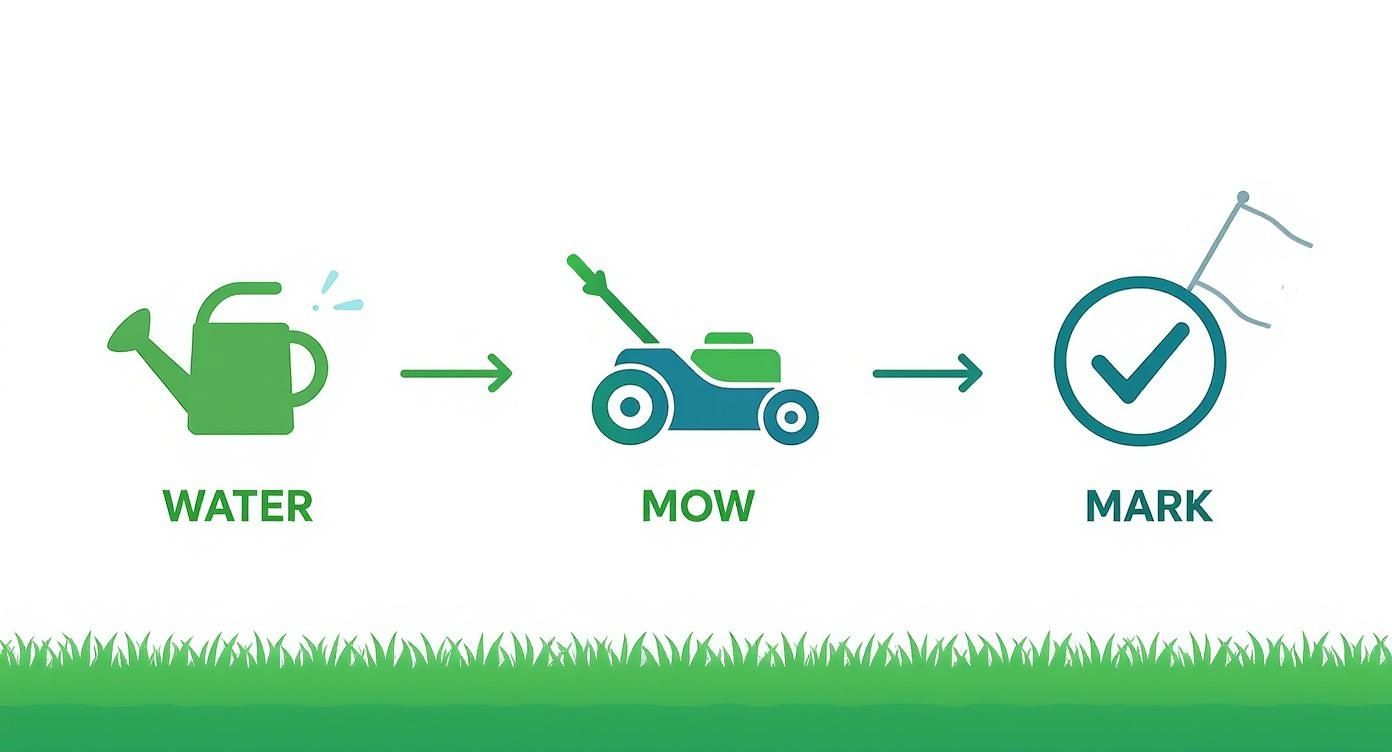
As you can see, it's all about that initial watering, mowing, and marking sprinklers before you even fire up the machine.
Navigating Your Yard Like a Pro
Those core aerators are heavy, and maneuvering one takes a bit of finesse, especially on the slopes we often see around Dahlonega and Forsyth County. When you need to turn, take it slow and make a wide arc. If you try to pivot too sharply, you'll just end up tearing or "scalping" your turf.
On hills, safety and control are paramount. Always run the machine across the slope (horizontally), never straight up and down. This gives you much better stability.
As you work, you'll see thousands of little soil plugs pop out and dot your lawn. It can look a bit messy at first, but here’s a critical piece of advice: leave the plugs on the lawn.
Leaving the soil cores on your lawn is a form of free, natural top dressing. As they break down over the next week or two, they return valuable nutrients and microbes back into the soil, feeding your turf and improving its structure.
Raking them up is a common mistake that essentially throws away one of the biggest benefits of core aeration. The job isn't quite done yet, though. What you do after aerating is just as important. For a truly transformative result, you should follow this up with overseeding. You can explore a deeper dive into how to aerate and overseed your lawn to learn how this one-two punch can dramatically thicken up your turf.
Alright, you’ve done the hard part and punched all those holes in your lawn. But don't kick back just yet—what comes next is where the real magic happens.
Your lawn is now opened up and ready to soak in everything you give it. This is a critical window of opportunity to build up that turf density, fix thinning areas, and set your yard up for long-term success.
Those new holes are the perfect little pockets for seed and fertilizer to settle into, bypassing the thatch layer and getting right down to the soil where they need to be. If you're anywhere in the Cumming or Milton area, this is without a doubt the best time to overseed, especially for Fescue lawns that could use some bulking up before the cool weather sets in.
Time to Feed and Seed
For those of us in North Georgia, you can't go wrong with a high-quality tall fescue blend. It's tough enough to handle our hot summers. When you spread your seed, pair it with a good starter fertilizer that’s high in phosphorus—that's the key nutrient for getting new seedlings to establish strong, deep roots.
Think of it this way: applying seed and fertilizer right after you aerate gives the new grass a protected, perfect little incubator to sprout. It dramatically speeds up recovery and leads to a much thicker lawn.
Your Post-Aeration Watering Plan
Watering is the final piece of the puzzle, and getting it right over the next few weeks will make or break your results. The aim is to keep the soil surface consistently moist for the new seeds without waterlogging your existing turf. It's a bit of a balancing act.
Here’s a simple schedule that works well:
- Week 1: Your main job is to keep the new seed from drying out. Water lightly for about 10-15 minutes per zone, maybe once or twice a day. You're aiming for the top inch of soil to feel like a damp sponge.
- Weeks 2-3: Once you see the new grass sprouting, you can back off on the frequency but water for longer. A deep watering every other day encourages those new roots to chase the moisture down into the soil, building a stronger foundation.
Stick with this game plan, and you'll get the absolute most out of your aeration efforts. You'll be well on your way to having a lawn that makes your Alpharetta neighbors wonder what your secret is.
Answering Your Top Lawn Aeration Questions
Even with the best plan, questions always come up, especially for homeowners here in the Cumming area. Let's walk through some of the most common things people ask, so you can feel confident about aerating your lawn.
How Often Do I Really Need to Aerate My Georgia Lawn?
For lawns sitting on our classic, dense red clay, aerating once a year is your best bet. This is non-negotiable if your yard in Alpharetta or Johns Creek gets a lot of action from kids, pets, or backyard parties. An annual aeration is the only way to consistently fight back against the compaction that our soil is famous for.
Now, if you've got a really mature lawn with healthier, looser soil and not much foot traffic, you might be able to stretch it to every other year. A simple test is to try pushing a screwdriver into the soil—if it’s a struggle, you’re dealing with compaction and it’s time to aerate.
Should I Tackle Weeds Before or After Aerating?
Definitely get a handle on any major weed problems before you aerate. Think about it: aerating punches holes all over your lawn. If it’s full of weeds, you’re basically just helping spread their seeds and root pieces into all that freshly opened soil.
My Advice: Spend some time dealing with the weeds a couple of weeks before you plan to aerate. This way, you’re creating space for your grass to thrive, not inviting weeds to move into prime real estate.
What’s the Deal With All Those Soil Plugs?
This is the question I get the most. My answer is simple: leave the plugs right where they fall. I know, it can look a bit untidy for a week or two, but those little cores of soil are like gold for your lawn. They're packed with nutrients.
As you water and mow, they'll break down and return all that valuable organic matter back into your turf. It's essentially a free, natural top dressing. Raking them up is like throwing away perfectly good fertilizer.
Can I Aerate a New Lawn?
Hold off on this one. A brand-new lawn, whether from seed or sod, is still a baby. Its root system is delicate and needs time to get established. Aerating too early can tear up those young roots and do more harm than good. A good rule of thumb is to give your new lawn a full year to mature before you even think about aerating it.
Tired of wrestling with rental equipment? Barefoot Organics offers professional core aeration specifically designed for the challenges of North Georgia soil. Our team serves Cumming, Johns Creek, Alpharetta, Milton, Dahlonega, and the surrounding communities, giving your lawn the breathing room it needs to truly thrive. Get your free, no-obligation quote today and see what a difference professional care makes.
Learn more at https://barefootorganicsllc.com.