

If you're looking at a patchy, tired-looking lawn in Cumming, GA, you're definitely not alone. The real problem is often hiding right under your feet: that infamous, compacted Georgia red clay. For homeowners in Cumming, hand aeration offers a straightforward, surprisingly effective way to break through that dense soil, finally letting water, air, and nutrients get down to the roots of your grass.
Tired of fighting that hard Georgia clay? Let the pros handle it. The team at Barefoot Organics uses professional-grade core aerators to get deeper, more effective results for homeowners in Cumming, Alpharetta, and all over North Georgia. Call today for a free lawn evaluation!
Why This Matters for Your Cumming Lawn
Here in Cumming and all across Forsyth County, that dense red clay is public enemy number one for a truly healthy lawn. All it takes is a few seasons of kids and pets playing, summer cookouts, and even just weekly mowing to squeeze all the life out of your soil. Once it gets compacted, it’s like trying to grow grass on a concrete slab.
This compaction literally suffocates your lawn, blocking water, air, and vital nutrients from reaching the grassroots of your Fescue or Bermuda. It’s the underlying cause of so many common lawn issues we see in neighborhoods from Milton all the way to Dawsonville.
When your soil is too tight, you'll start to see:
- Weak, thinning turf that just can’t handle our brutal 90+ degree summer days.
- Water that pools or runs off your lawn after a heavy rain because the ground can't absorb it.
- Ugly, patchy spots where the grass has completely given up, a common sight on new construction lawns.
- An open invitation for weeds like crabgrass and clover to move in and take over.
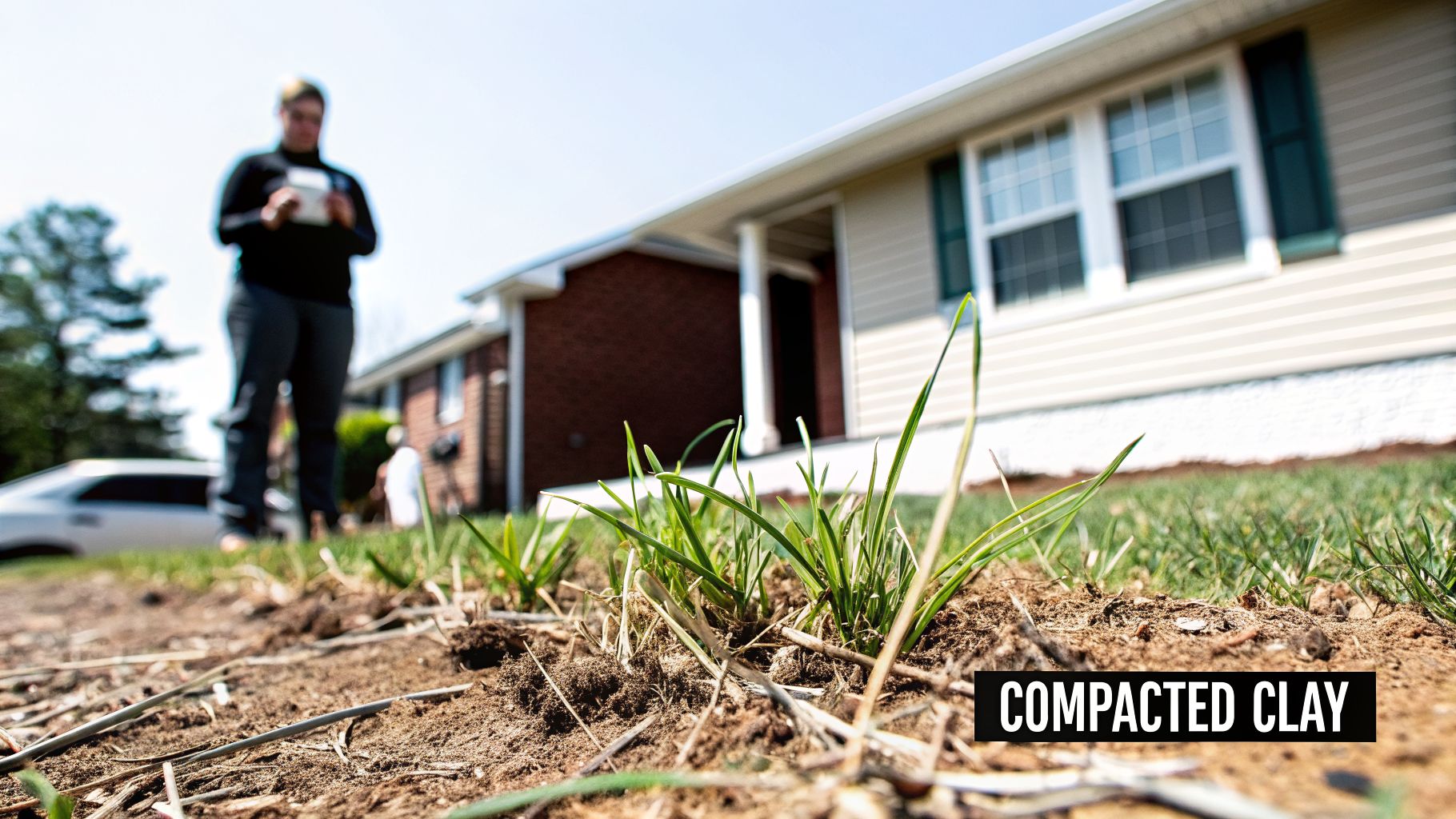
Manual aeration is a rescue mission for your grass roots. By pulling up small plugs of soil, you're opening up pathways for the roots to breathe, expand, and get stronger. This is how you build a resilient lawn that can handle everything our North Georgia climate throws at it, from Suwanee's thick summer humidity to the heavy spring pollen in Johns Creek. A properly aerated lawn naturally becomes a thick, dense mat that crowds out weeds on its own, helping you meet your subdivision's HOA standards.
You can get a deeper look at all the advantages in our guide that explores the benefits of lawn aeration.
Treatment Breakdown: Choosing the Right Hand Aerator in Cumming
When it comes to aerating your lawn by hand, especially on the stubborn red clay we have here in North Georgia, the tool you choose makes all the difference. Get it wrong, and you'll just be wasting a Saturday afternoon. Get it right, and you're on your way to a genuinely healthier lawn.
You've probably seen two main types of manual aerators at the local hardware store: spike aerators and core aerators. Let’s be clear: for the dense soil common from Cumming and Johns Creek all the way to Buford, one of these is the hero, and the other is a villain in disguise.
Spike aerators, like those novelty shoes with spikes on the bottom or even a sturdy garden fork, simply poke holes in the ground. It seems like it should work. The problem is, this method actually compacts the soil around each hole, squeezing that clay even tighter. You're just making the problem worse, which is the last thing a Forsyth County lawn needs.
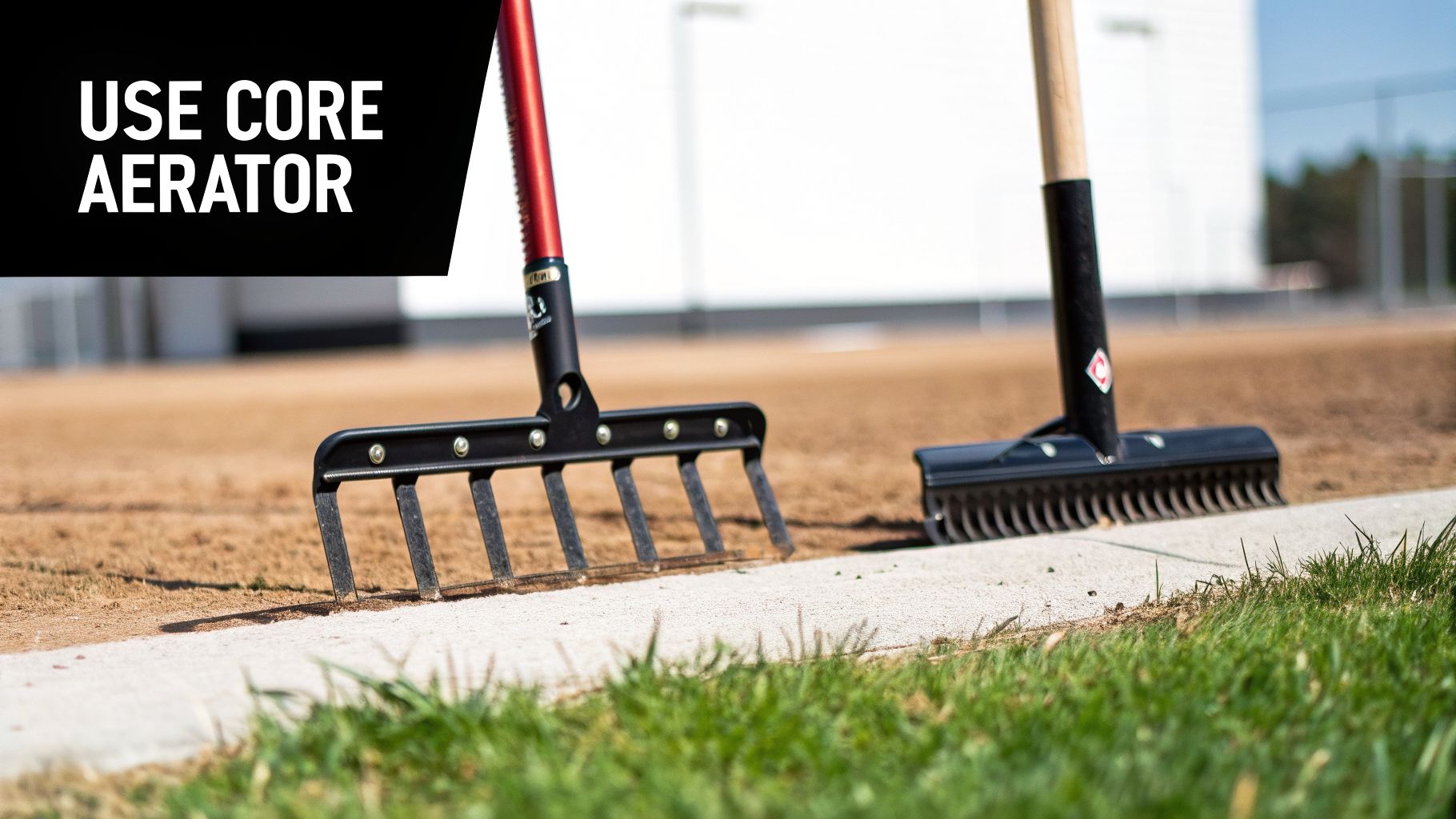
This is why core aeration is the only manual method we ever recommend for lawns in Cumming or anywhere in the North Atlanta area. A manual core aerator has hollow tines that physically pull out small plugs, or "cores," of soil. It’s not just poking holes; it’s removing the compaction, creating real, lasting channels for air, water, and nutrients to get down to the roots where they're needed most.
Spike vs. Core Hand Aerators for Georgia Clay
Choosing the right tool is the first and most critical step. For homeowners in places like Alpharetta or Milton, especially in newer neighborhoods where the topsoil is thin and the ground is packed down from construction, this choice is everything.
The table below breaks down exactly why a core aerator is the only real option for our local clay.
| Feature | Spike Aerator (e.g., Aerator Shoes) | Core/Plug Aerator (Manual Tool) |
|---|---|---|
| Action | Pokes solid holes into the soil. | Pulls 2-4 inch plugs of soil out of the ground. |
| Impact on Clay Soil | Worsens compaction by pressing soil tighter around the hole. | Physically removes compacted soil to create space. |
| Root Benefit | Minimal. Roots struggle to penetrate the newly compacted sides of the hole. | Excellent. Creates open channels for roots to expand and access resources. |
| Best For | Not recommended for the heavy clay soil common in North Georgia. | Ideal for our local clay soil and any lawn with high-traffic areas. |
Simply put, spiking a clay lawn gives you the illusion of progress, but coring is what delivers the deep, foundational benefits your turf actually needs to thrive.
What to Look For in a Hand Core Aerator
Once you’ve decided on a core aerator, don't just grab the cheapest one off the shelf. A flimsy tool will quickly bend, clog, or break when you put it up against our tough soil. Here’s what to inspect before you buy:
- Sturdy Welds: Look at the joints where the foot bar and tines connect to the handle. They should be thick and solid.
- Truly Hollow Tines: Make sure the tines are actually hollow and are at least 2.5 to 3 inches long. Anything shorter won’t pull a deep enough plug to be effective.
- Durable Steel: The tool needs to withstand your full body weight, over and over, without flexing.
- Comfortable Grips: Good grips will save your hands from blisters and make the job much more bearable.
Our Recommendation: Spend a little more on a well-built manual core aerator. It’s a buy-it-once tool that will pay you back season after season with a healthier lawn. If you want to dive deeper into this topic, be sure to read our guide on how to fix compacted soil. Tackling Georgia clay is a battle, but with the right tool, it’s one you can definitely win.
Application Process: A Practical Guide to Hand Aerating Your Lawn
Alright, let's get down to the work. Hand aerating isn't about fancy equipment; it's about putting in a little sweat equity to give your lawn exactly what it needs. Think of this as a neighbor-to-neighbor walkthrough for getting the job done right on your Cumming lawn. We'll cover the simple prep, the best technique for our stubborn Georgia clay, and why seeing those little dirt plugs is a great sign.
When to Aerate Your Lawn in Forsyth County: Timing is Everything
Here in North Georgia, timing is everything. Aerate at the wrong time of year, and you’re just inviting stress and weeds to the party. But if you nail the timing—aerating during your lawn's peak growing season—you're setting it up for a fast recovery and thick, healthy growth. The right time depends entirely on the type of grass you have.
For Warm-Season Grasses (Bermuda & Zoysia):
These are the champions of our hot, humid summers, common in yards across Alpharetta and Sugar Hill. The sweet spot for hand aeration is from late spring into early summer (May through early July). This is when they are growing aggressively and will quickly fill in the holes, building strength to handle the brutal 90+ degree days of a Georgia summer.
For Cool-Season Fescue Lawns:
Fescue hates our summer heat and does most of its growing in the spring and fall. For Fescue, the absolute best time to aerate is in the early fall, usually from September through October. For Fescue lawns in places like Cumming and Canton, there is no single better thing you can do all year than aerating and overseeding in the fall.
Preparing Your Lawn for Aeration
Before you even touch your aerator, a bit of prep work makes all the difference. A day or two before you plan to aerate, give your lawn a good, thorough watering—about an inch is perfect. The goal is soil that's moist and pliable, not a soupy mess. Scheduling your aeration for the day after a decent rainfall is a great trick. Also, be sure to mow your lawn one last time before you start, cutting it down to its normal height.
This simple flow shows you the right order for getting the best results from your efforts.
Getting the lawn ready first makes the actual job of aerating much easier and far more effective. A good manual aerator is crucial, but it's just one piece of the puzzle. Keeping a great-looking lawn requires a full arsenal of quality lawn care tools to handle everything from mowing to fertilizing.
The Right Technique and Post-Aeration Care
With your lawn prepped, start in a corner and work in straight lines. With each step, drive the tines into the ground using your body weight. You’ll know you’re doing it right when you see those little plugs of soil pop out. Slightly overlap each row, and then cover the lawn again in a perpendicular direction for maximum coverage. Give high-traffic areas extra attention.
Afterward, leave the soil plugs on the lawn. They are full of beneficial microorganisms and will break down in a week or two, returning nutrients to the soil.
This is the perfect moment for overseeding (especially for Fescue in the fall) and applying a starter fertilizer. The seeds and nutrients will fall directly into the aeration holes, giving them the best chance to establish and build a thick, healthy lawn.
If all that sounds like a bigger project than you have time for, we can help. Barefoot Organics offers professional core aeration and overseeding services that take the guesswork out of the process. If you want guaranteed results, check out our aerate and overseed program.
Why Choose Barefoot Organics in Cumming
There’s real satisfaction in aerating your own lawn. But for larger properties, severely compacted soil, or homeowners who just don't have the time, calling a pro is the smarter move. At Barefoot Organics, we're your local lawn experts in Cumming, GA, not a big corporate chain. We understand Forsyth County lawns because we treat them every day.
- Local Knowledge: We know how to handle the specific challenges of our area, from the red Georgia clay to the summer heat and high weed pressure common in North Atlanta.
- Professional Equipment: Our commercial-grade aerators pull deeper, more consistent plugs than any hand tool, delivering superior results, especially on tough soil found in new construction neighborhoods around Cumming and Dawsonville.
- Honest, Straightforward Service: We give you direct answers and practical solutions. Our goal is a healthy, weed-free lawn for your family, whether you do the work or we do. We offer organic-based lawn care options that are safe for pets and kids.
Our goal is simple: we want to see your lawn thriving. For homeowners from Alpharetta to Canton, a professional service guarantees you get the best possible results without the back-breaking labor. Give Barefoot Organics a call for a free lawn evaluation.
Cumming Hand Aeration FAQs
We get a lot of questions from homeowners around the Cumming area about tackling aeration on their own. Here are some of the most common ones we hear, with straightforward answers based on our years of experience with North Georgia lawns.
Q: Can I aerate my Bermuda lawn in Cumming during the fall?
A: That's a definite no-go. You want to avoid aerating Bermuda grass in the fall. The sweet spot for Bermuda is late spring or early summer, giving it plenty of time to recover in our North Georgia heat before it goes dormant. Fall is the perfect time for aerating and overseeding Fescue lawns throughout Forsyth County.
Q: What do I do with the soil plugs after core aerating my lawn?
A: Just leave them be! Those little soil cores you pull from your lawn are packed with beneficial microorganisms. They will naturally break down in a week or two, returning valuable nutrients right back into the soil. Once they’re dry, running your mower over them will help them crumble and disappear even faster.
Q: Is it worth it to hand aerate my small HOA lawn near Johns Creek?
A: Absolutely. For the smaller yards common in many Johns Creek and Cumming HOA communities, a manual aerator is a fantastic, budget-friendly choice. It does the same great job of relieving compacted clay soil as a big machine and is a great way to meet—and exceed—community standards for a beautiful lawn.
Q: How often should I aerate my lawn in Forsyth County?
A: For most lawns in Forsyth County with our heavy clay soil and typical foot traffic, aerating once a year is a solid rule of thumb. This is especially true if you see signs like water puddling after rain or thinning grass. Lawns in great shape with minimal compaction can often go two years between aerations.
Q: My lawn is near Suwanee. Is spiking the ground enough for aeration?
A: No, spiking is not effective for the dense clay soil common around Suwanee and the rest of North Georgia. Spiking actually worsens compaction around the holes. You must use a core or plug aerator, which physically removes plugs of soil to relieve compaction and allow air, water, and nutrients to reach the roots.
Tired of fighting that hard Georgia clay? Let the pros handle it. The team at Barefoot Organics uses professional-grade core aerators to get deeper, more effective results for homeowners in Cumming, Alpharetta, and all over North Georgia.