

When you're starting a new lawn, the watering routine is all about frequent, light watering multiple times per day. Your goal is simple: keep that top inch of soil consistently damp, especially for the first two weeks. After that, we’ll start tapering back the frequency and watering for longer periods to encourage those roots to dig deep.
Your Essential North Georgia New Grass Watering Schedule
Getting your watering rhythm right from the get-go is the single most important thing you can do for a new lawn here in Cumming, Alpharetta, or anywhere across North Georgia. Success isn’t about drenching your yard. It’s about giving those tiny, fragile seedlings or new sod roots the consistent, targeted moisture they need to grab hold in our local soil. What your lawn needs changes from week to week as it moves from germination to building long-term strength.
Think about that brand-new lawn you just put in. Whether it's seed or sod, the name of the game is keeping the top 1-2 inches of soil moist but never soggy. This is why you'll often need to water twice a day at first—once in the early morning (think 6-10 AM) and maybe a quick second round in the late afternoon. This timing helps you beat the midday sun's evaporation and avoid the fungal diseases that love to pop up when a lawn stays wet all night. You can find some great additional lawn care research from the folks at Your Green Pal.
This "frequent but light" approach is temporary, but it’s absolutely critical. It stops seeds from drying out and keeps the edges of new sod pieces from shrinking up and turning brown. This is purely an establishment-phase strategy.
The First Four Weeks Are Critical
For the first month, your lawn is incredibly vulnerable. It doesn't matter if you're in Milton dealing with scorching sun or in Dahlonega with a sloped yard—the goal is constant, light moisture. You're basically babysitting the new grass, giving it exactly what it needs to sprout and start putting down roots.
This timeline gives you a great visual for how you’ll transition from those initial frequent, shallow waterings to a more robust, deep-watering schedule as the lawn matures.
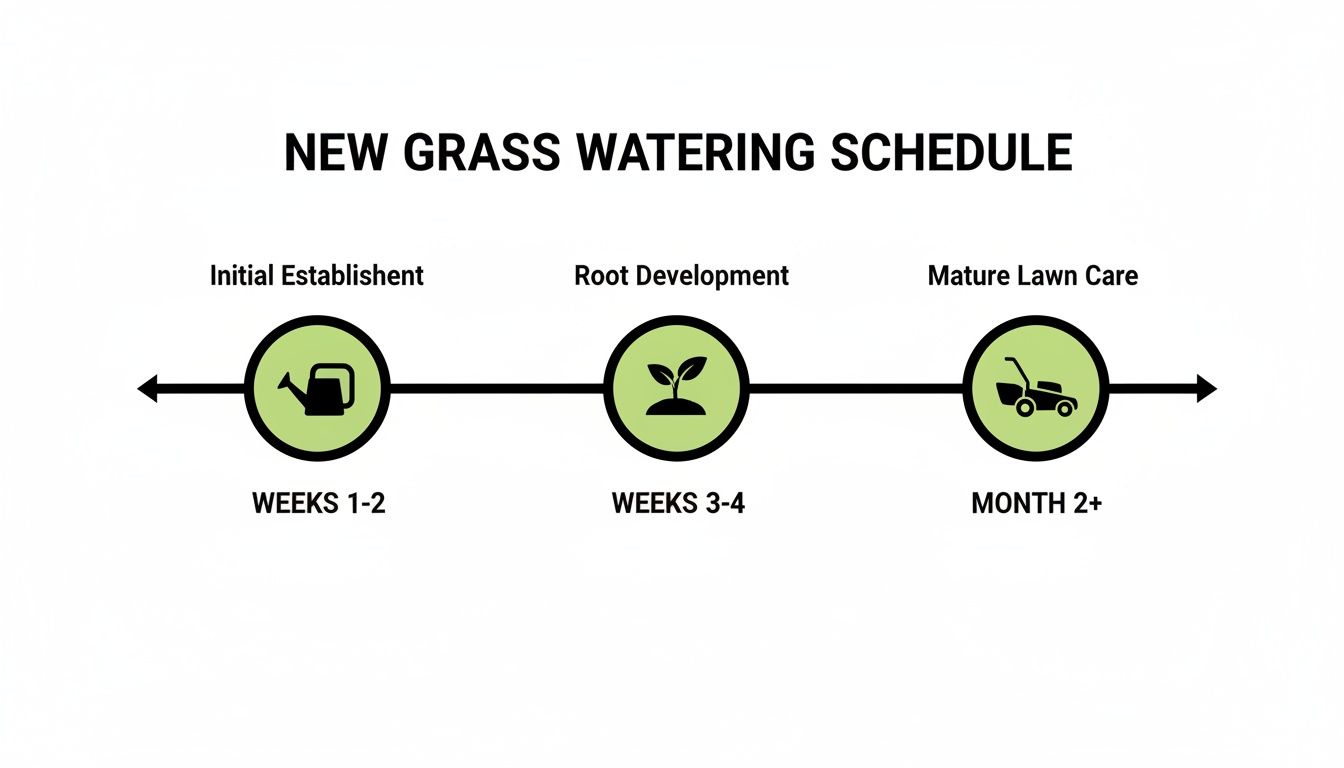
As you can see, it's a clear shift from a high-frequency routine in the beginning to a maintenance-focused approach after about a month.
Your Week-by-Week Watering Plan
To make things easier, I've put together a straightforward schedule designed for our typical North Georgia conditions. This is a solid starting point, but always trust your hands—stick a finger in the soil to check the moisture level and be ready to adjust for a surprise rainstorm or a heatwave.
Pro Tip: With our dense Georgia red clay, it’s crucial to avoid standing water. If you see puddles forming, split your watering time in half. Run the sprinklers for the first half, wait about an hour, then run them for the second half. This little trick gives that heavy clay time to actually absorb the water instead of letting it run off.
Here’s a simple table to guide you through that first critical month.
Week-by-Week Watering Plan for New Grass in North Georgia
Follow this simplified watering plan for the first four weeks, covering both new seed and new sod installations to ensure success.
| Growth Stage | Watering Frequency | Watering Duration (Per Session) | Primary Goal |
|---|---|---|---|
| Week 1 | 2-3 times per day | 5-10 minutes | Keep the top 1-2 inches of soil consistently moist to trigger seed germination and prevent sod from drying out. |
| Week 2 | 1-2 times per day | 10-15 minutes | Maintain moisture as roots begin to sprout and penetrate the soil. Monitor for dry spots, especially on sod seams. |
| Week 3 | Every other day | 15-20 minutes | Begin encouraging deeper root growth by allowing the soil surface to dry slightly between waterings. |
| Week 4 | 2-3 times per week | 20-30 minutes | Transition to a less frequent, deeper watering schedule to build a strong, drought-tolerant root system. |
By sticking to this foundational schedule, you're giving your new grass the best possible shot at establishing a strong, healthy root system. It’s a methodical approach that helps you sidestep the common mistakes of underwatering (which kills new growth) and overwatering (which invites rot and disease in our heavy soil).
Now, let's look at the subtle but important differences between watering new seed versus new sod.
Watering New Seed Versus New Sod in Georgia Soil
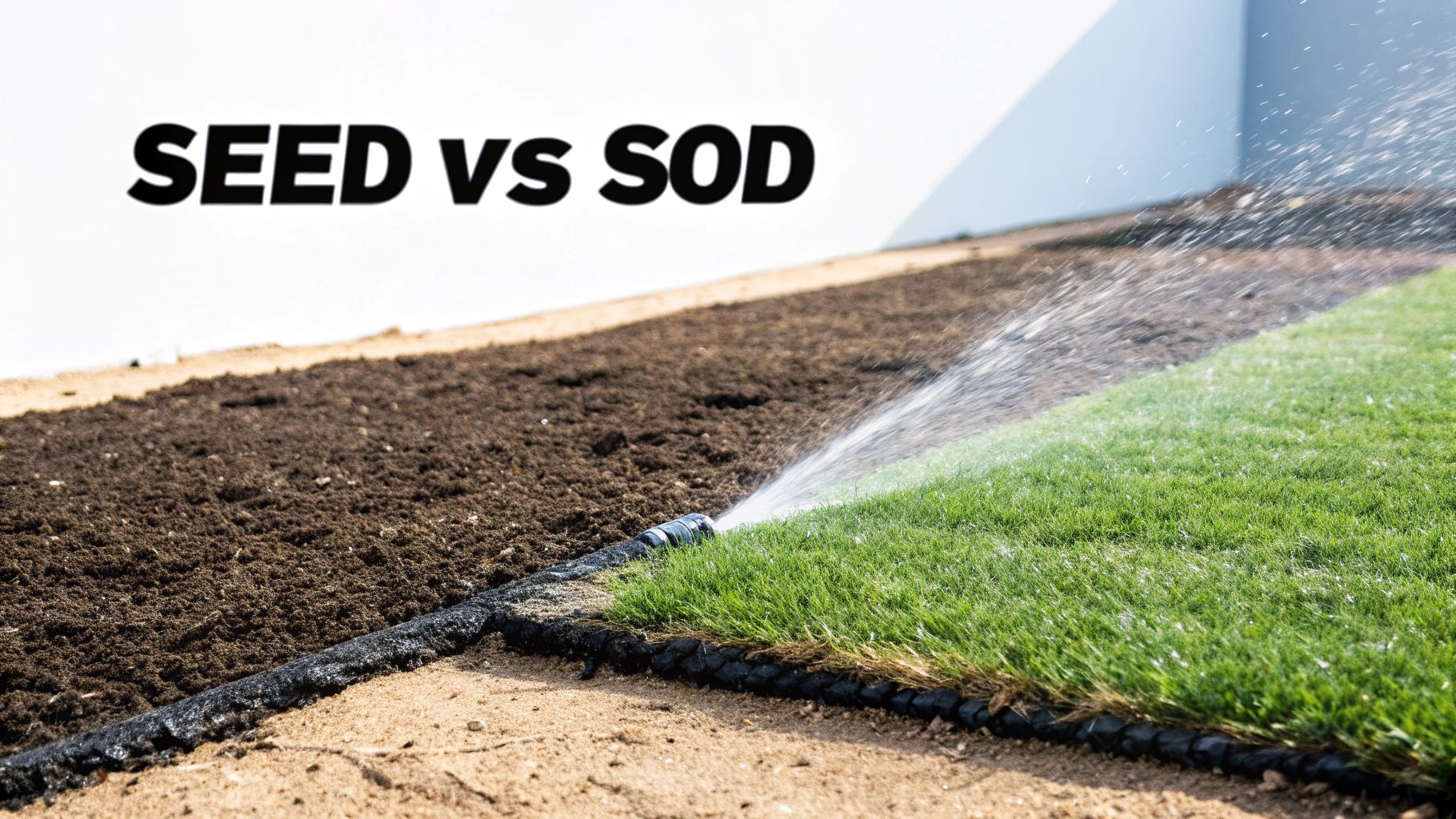
While you're aiming for the same result—a lush, green lawn—getting there with seed versus sod requires two completely different watering playbooks from day one. Both need plenty of water to get established in our classic Georgia clay, but how and how often you water is what makes all the difference. Nailing this is the secret to a thriving new lawn instead of a frustrating, patchy mess.
When you're dealing with a newly seeded lawn in Johns Creek or Milton, your one and only job is to keep the very top layer of soil consistently damp. I'm not talking about deep soaking; think surface-level moisture. A dry seed is a dead seed, plain and simple.
This means you’ll be out there with the sprinkler for short, frequent bursts, sometimes two or even three times a day when the sun is beating down. The idea is to keep that top inch of soil from drying out and forming a crust, but without creating puddles that wash your seeds away. It’s a delicate dance, for sure.
The Seedling Sprint: Frequent Misting
Seeding is all about patience and constant vigilance early on. Those seeds are tiny, exposed, and have no roots to find water on their own.
- Fescue Seed: A go-to for its shade tolerance in North Georgia, Fescue needs that steady moisture to pop. On a typical 90-degree day in Alpharetta, you'll likely need to mist the area in the morning, give it another quick drink around midday, and hit it again in the late afternoon.
- Bermuda Seed: This sun-worshipping grass also needs that persistent surface dampness to get going. Since we usually plant it during the hottest months, keeping the soil from baking in the sun becomes your full-time job.
Remember, the name of the game is frequency over volume. You're just trying to keep the seedbed moist until you see that green fuzz, which can take anywhere from 7 to 21 days.
In Forsyth County, where we're dealing with that heavy red clay, it's incredibly easy for water to pool and float your seeds right into a pile. To avoid this, use a sprinkler that creates a fine mist or just a gentle spray from a hose wand. This keeps the seeds exactly where you put them.
The Sod Soak: Encouraging Deep Roots
Now, watering new sod is a whole different animal. Your goal here is to drench the sod pads so thoroughly that their roots are forced to grow down into your existing soil to find moisture. This calls for a much heavier, more deliberate watering strategy right from the start.
Unlike seed, sod comes with a small root system already intact. You just have to convince those roots to leave their comfort zone and anchor into the ground below. A light misting won't do a thing.
The very first watering you give new sod is, without a doubt, the most critical. You need to lay down enough water to soak completely through the sod and wet the top few inches of soil beneath it. Not sure if you've watered enough? Just lift a corner of one of the sod pieces. If the dirt underneath is still dry, keep watering.
This initial deep soak is non-negotiable. It collapses any air pockets between the sod and the soil, which are absolute death sentences for new roots. For a more detailed breakdown, you can check out our guide on how to water new sod.
Comparing Seed and Sod Watering Needs
While both demand your attention, their schedules and goals couldn't be more different. Here’s a quick look at how their initial watering needs stack up.
| Watering Aspect | New Grass Seed | New Sod |
|---|---|---|
| Primary Goal | Germination | Deep root establishment |
| Watering Style | Frequent, light misting | Infrequent, deep soaking |
| Initial Frequency | 2-3 times per day | 1 time per day (heavily) |
| Watering Depth | Top 1 inch of soil | Through the sod pad and into the top 3-4 inches of soil |
At the end of the day, with seed, you're basically nursing a newborn sprout. With sod, you're convincing a teenager to move into a new house. Keeping that simple difference in mind will guide your watering and get you that beautiful lawn, whether you're seeding a small patch or laying down a whole new yard in the Cumming area.
Adjusting for North Georgia's Weather and Clay Soil
Anyone who’s tried to grow a new lawn here in North Georgia knows a rigid watering schedule just won't cut it. Our weather is famous for its mood swings—think surprise spring heatwaves in Cumming or a week of non-stop rain in Dahlonega. And then there's our infamous red clay soil, which plays by its own set of rules.
The real secret to success isn't just following a chart. It’s about learning to read your own backyard and adjusting on the fly. A lawn in a compact Johns Creek neighborhood will have different needs than one on a sprawling lot in Milton, where the soil can change from one yard to the next. For example, some parts of Alpharetta have sandier soil that dries out fast and needs daily attention. Meanwhile, the silt loams you find in Forsyth might hold water so well you only need to water a couple of times a week. Add in our classic 80-90°F summer highs, which can suck 0.2 inches of water from the soil every single day, and you can see why paying attention is key.
Knowing how to react to both the weather and your soil is what separates a lush, thriving lawn from a patchy, struggling one.
Responding to Our Unpredictable Weather
Here in North Georgia, the weather forecast often feels more like a suggestion than a guarantee. If you just "set it and forget it," your sprinkler timer can quickly become your new lawn's worst enemy.
- Sudden Heatwave: During a hot, dry spell—especially in July and August—you have to bump up the watering. New grass seedlings are incredibly fragile and can shrivel up in just a few hours. This might mean going back to that twice-a-day misting schedule for new seed, even if you’d already started cutting back.
- Heavy Rainfall: A good, deep soaking rain is a gift! Grab a simple rain gauge to see what you got. If it's more than half an inch, you can confidently skip your next watering session, maybe even two. Let the soil tell you when it’s thirsty again.
- Cool, Overcast Days: When it’s cloudy and cool, evaporation slows way down and the ground stays damp much longer. On days like these, always check the soil before turning on the sprinklers. You’ll often find you can easily skip a day, which is a huge help in preventing fungal diseases that thrive in cool, damp conditions.
The Challenge of Georgia's Red Clay
The biggest player in your watering game is the ground right under your feet. Most of North Georgia, from Cumming to Johns Creek, is built on a foundation of heavy, dense red clay, which presents a unique challenge for new lawns.
Clay soil is made of incredibly fine particles packed together. This means it absorbs water very, very slowly, but once it’s wet, it holds on for a long time. For a new lawn, this is a double-edged sword. While an established lawn on clay can be pretty drought-resistant, it’s incredibly easy to drown a new one.
Crucial Takeaway: The single most common mistake I see homeowners make is overwatering new grass on clay soil. The dense structure gets waterlogged in a heartbeat, suffocating the delicate new roots and creating a perfect breeding ground for root rot.
Here’s a simple trick I use all the time: the "screwdriver test." A few hours after you water, grab a long screwdriver and try to push it into the ground.
- Slides in easily 4-6 inches? Perfect. Your watering was deep and effective, getting right down to the root zone where it’s needed.
- Tough to push in? That means the water is just sitting on the surface. You either need to water for a longer duration or try the "cycle and soak" method—water for a short burst, let it soak in for 30 minutes, then water again. This gives that stubborn clay time to absorb the moisture.
Understanding and working with our unique soil is a game-changer. For those who really want to set their lawn up for long-term success, learning how to improve clay soil for grass is a fantastic investment. By keeping one eye on the sky and the other on the ground, you can give your new grass exactly what it needs to thrive in our beautiful but tricky North Georgia landscape.
Spotting Trouble: Is Your New Lawn Too Wet or Too Dry?
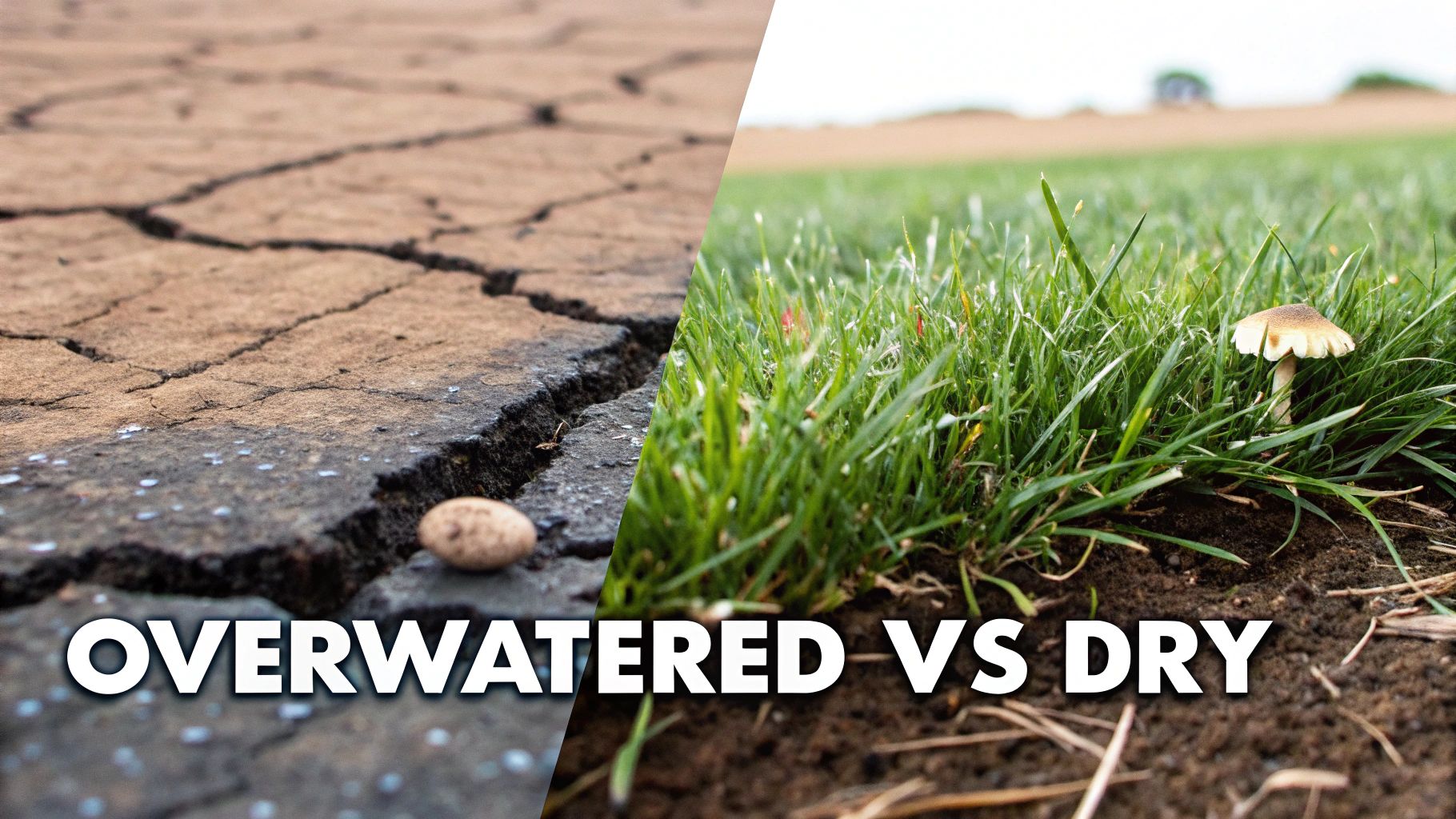
Your new grass is trying to tell you what it needs. You just have to learn its language. Getting watering wrong is the number one reason new lawns fail, but the good news is that the signs are pretty clear once you know what to look for.
Catching these cues early lets you make small adjustments before a minor issue spirals into a major headache. It all comes down to being observant and acting quickly.
Diagnosing an Underwatered Lawn
A thirsty lawn is a stressed lawn. It’s practically screaming for a drink, and if you listen closely, you can hear its cry for help.
One of the first things you'll notice is a color shift. Healthy grass has that vibrant, rich green color we all want. But when it gets thirsty, it takes on a dull, grayish-blue tint. The blades look tired and may even start to fold in half lengthwise to conserve what little water they have left.
Here's an old-school trick that works every time: the footprint test. Simply walk across your new grass and look back. If you can still see your footprints after a few minutes, the grass blades don’t have enough moisture to spring back up.
Keep an eye out for these tell-tale signs:
- Lingering Footprints: Your weight pushes the water out of the grass blades. If they're dehydrated, they can't bounce back.
- Curling Blades: The blades fold up on themselves to reduce their surface area and limit evaporation from the sun and wind.
- Shrinking Sod: In new sod installations, you might see the edges pulling away from each other or from sidewalks and driveways. That’s a clear sign the soil beneath is bone dry.
If you spot these symptoms, the fix is straightforward: water immediately. Give the area a good drink—about a half-inch of water—to rehydrate the soil. Then, take a hard look at your schedule. You probably need to add another short watering cycle during the day, especially if it’s been hot or windy.
Recognizing an Overwatered Lawn
It sounds strange, but you can kill your new lawn with kindness. Overwatering is actually a far more common—and dangerous—problem around here, especially with the heavy clay soil we have in Cumming and Alpharetta.
The most obvious clue is a squishy, waterlogged feeling under your feet long after you've watered. If your lawn feels like a saturated sponge, you're putting down more water than our Georgia clay can handle.
A Quick Tip from the Field: Around Forsyth County, that dense red clay gets waterlogged fast. It suffocates new roots by squeezing out the air pockets they need to breathe and grow. Before you know it, you've rolled out the welcome mat for fungus and root rot.
Here’s what to look for if you suspect you're overdoing it:
- Puddles That Won't Go Away: Standing water an hour after your sprinklers shut off is a major red flag.
- Weed Invasion: Certain weeds, especially the bright green, fast-growing pest known as nutsedge, absolutely love soggy soil. If you see a sudden explosion of it, you're likely overwatering.
- Fungus or Mushrooms: The sudden appearance of mushrooms or discolored patches (like brown patch fungus) means the soil is staying too damp for too long.
- A Sour, Musty Smell: Healthy soil smells earthy and fresh. If you get a whiff of something sour or rotten, it’s a sign of anaerobic conditions where the roots are literally suffocating.
If your lawn is showing these signs, you need to pull back immediately. Cut off the sprinklers for a day or two to give the ground a chance to dry out. When you start back, seriously reduce how long you’re watering. To really dial it in, you can learn how to measure soil moisture and water based on what your lawn actually needs, not just what the clock says.
Making the Switch to a Mature Lawn Watering Routine
That twice-a-day watering schedule you've been following is perfect for getting a new lawn started, but it’s not meant to last forever. Once your grass has put down roots and started to establish itself, it's time to shift gears. We need to move away from keeping the surface constantly damp and start encouraging a deep, resilient root system that can handle a hot North Georgia summer.
The whole point of this transition is to train the roots to grow down, not out. We do this with a simple but powerful principle: deep and infrequent watering. Instead of light daily sprinkles, we’ll start giving the lawn about one full inch of water per week, delivered in just one or two sessions. This practice is what builds a tough, drought-resistant lawn that will thrive from Cumming to Dahlonega.
Knowing When Your Lawn is Ready for a Change
One of the most common questions I get from homeowners is, "When can I stop watering my new grass so much?" The answer isn't a date on the calendar; it's all about watching the lawn itself. You'll know it's time to make the switch when you can check off a few key milestones.
- You've mowed at least twice. A couple of good mows is a clear sign the grass blades are actively growing and getting stronger.
- The roots have taken hold. Give it a gentle tug. For sod, you shouldn't be able to lift a corner easily anymore. For seed, the young grass should feel firmly anchored.
- You're about 4-6 weeks in. This is the general sweet spot for new grass in our region to have developed enough root structure to handle a less frequent watering schedule.
Shifting from that initial daily watering to a deep, infrequent routine is probably the most important thing you can do for the long-term health of your lawn. As lawn care pros will tell you, different growth stages need water at different depths—from the top 1-2 inches for germination, to 4-6 inches for seedlings, and finally 6-8 inches for a mature lawn. Getting this transition right sets your yard up for years of success. You can read more about why this consistency is so vital from the experts at Houseman Services.
The "Deep and Infrequent" Method Explained
The idea is simple: water less often, but for longer. This gives the water time to soak deep into the soil, well past the surface. As the top couple of inches of soil dries out over the next few days, the roots are forced to stretch downward in search of that deep moisture.
This method works especially well in our North Georgia clay soil. While our clay can be slow to absorb water, it holds onto moisture for a long time once saturated. Deep watering creates a reservoir in the root zone that the grass can tap into for days, making it incredibly resilient during dry spells.
So, how much is enough? A good rule of thumb is to provide one inch of water per week. An easy way to measure this is to scatter a few empty tuna cans around your lawn before turning on the sprinklers. Just time how long it takes to fill them to the one-inch mark—that's your new watering duration. For most sprinkler systems here in Forsyth or Cherokee County, this will likely be somewhere between 30 to 60 minutes.
Your New Long-Term Watering Schedule
Once your lawn has proven it’s ready, you can settle into this sustainable routine. This is an excellent starting point for any established lawn in the Milton or Alpharetta area.
Water Just Once or Twice a Week: You can either do one long watering session or split your total time into two (say, 30 minutes on Tuesday and 30 minutes on Saturday). See what your soil seems to handle best without runoff.
Water in the Morning: The absolute best time to water is between 6 AM and 10 AM. This gives the water time to soak in before the sun gets high and starts evaporating it, maximizing every drop.
Let the Soil Dry Out: It’s crucial to let the top layer of soil dry out completely between waterings. This is the "training" part that forces roots deep and also helps prevent common fungal diseases.
By making this critical shift, you aren’t just watering your lawn—you're building a strong foundation for a beautiful, self-sufficient yard that can take whatever a Georgia summer throws at it.
Common Questions About Watering New Grass
Even with the best plan, you're bound to have questions when you're trying to get a new lawn going. We get it. From Cumming to Alpharetta, we hear the same concerns from homeowners all the time. Let's walk through some of the most common questions we get and give you straight-up, practical answers so you can grow your new turf with confidence.
What Is the Best Time of Day to Water New Grass in Cumming, GA?
The absolute best time to water new grass is always in the early morning, ideally between 6 AM and 10 AM. When you water during this cooler window, less of that precious water gets lost to evaporation from the hot sun. This is a game-changer on those sweltering days we get in Johns Creek and Milton.
Watering early also gives the grass blades plenty of time to dry off before nightfall. Why does that matter? Because damp grass overnight is an open invitation for fungal diseases to set up shop. If you’re watering new seed and it needs a second round, aim for late afternoon (around 4-6 PM). That gives it just enough time to get a drink before the sun goes down without sitting wet all night.
Can I Overwater a New Lawn in Georgia's Clay Soil?
You absolutely can. In fact, it's one of the biggest mistakes people make here in Forsyth and surrounding counties, where heavy clay soil is the norm. Clay is made up of tiny particles packed tightly together, which means it drains very, very slowly.
When you dump too much water on it, you’re essentially filling up all the air pockets that new grass roots need to breathe. You can literally drown your new lawn before it has a chance to establish itself. A few dead giveaways of overwatering are a lawn that feels constantly squishy, puddles that stick around long after the sprinklers turn off, or a sudden explosion of mushrooms or weeds like nutsedge.
Here's a key takeaway for anyone with a North Georgia lawn: It's far better to water new seed with several short, light cycles than one long, heavy soak. This approach prevents runoff and keeps the delicate new roots from suffocating in our dense clay.
How Do I Know if My New Sod or Seed Is Getting Enough Water?
Forget the guesswork. A couple of easy "in the field" tests will tell you exactly what’s going on with your soil's moisture, whether you’re in Milton or Dahlonega.
- For New Sod: Carefully lift a corner of one of the sod pieces. You want the soil underneath the sod to feel damp, not just the sod itself. If the ground is dry beneath, the roots have no reason to grow downward to search for water.
- The Screwdriver Test: A few hours after watering, take a long screwdriver and push it into the ground. It should slide in easily about 4-6 inches. If you hit a wall and have to force it, the water isn't getting deep enough.
You can also just look at the grass. A happy, well-watered lawn will have a rich, consistent green color. If the blades start to look a little grayish or begin to wilt, that's your lawn telling you it's thirsty.
Should I Water My New Grass if It Rains?
That really depends on how much it rained. A quick, light shower might feel like a big deal, but it often barely moistens the surface and doesn't do much for the root zone.
The easiest way to know for sure is to stick a simple rain gauge out in the open.
- If you get less than a half-inch of rain: You’ll almost certainly need to run your sprinklers to make up the difference.
- If you get a good, deep soaking of an inch or more: You can confidently skip your next watering session.
When in doubt, always trust the soil over the schedule. Stick your finger in the dirt or use the screwdriver test before you turn on the water. Learning to read your lawn and make these small adjustments is what separates a struggling patch of grass from a truly beautiful, established lawn in our unique Georgia climate.
Ready to build a lawn that's not only beautiful but also safe for your family and the environment? The team at Barefoot Organics specializes in creating healthy, thriving lawns across North Georgia using natural, sustainable methods. Get your free online quote today!