

For homeowners in Cumming, Alpharetta, and all over North Georgia, the secret to a great summer lawn is simple: water deeply, but infrequently. Your target is to give your lawn a total of 1 to 1.5 inches of water each week, but—and this is the important part—split that up into just two or three watering sessions.
Your Essential North Georgia Summer Watering Schedule
Getting through a hot, humid summer in places like Milton or Johns Creek means you have to water smarter, not just more often. The most common mistake I see homeowners in the Cumming area make is giving their lawn a quick, light sprinkle every day. All this does is encourage shallow roots that simply can’t handle the intense Georgia heat and the inevitable dry spells we experience.
Instead, think of it as training your grass to be more resilient. When you water deeply and less often, you’re forcing the roots to grow further down into the soil to find moisture. A lawn with a deep root system is tougher, greener, and far better equipped to survive a drought. This is especially true for the warm-season grasses we have all over Forsyth, Cherokee, and Lumpkin counties.
The Foundation of a Healthy Summer Lawn
A consistent, smart watering plan is your best defense against a brown, crunchy yard. Most established lawns need about 1 to 1.5 inches of water per week to thrive. Remember, that number includes any rain we get from those classic pop-up summer thunderstorms common to the Dahlonega and North Georgia area.
This simple infographic sums up the main goal of summer watering.
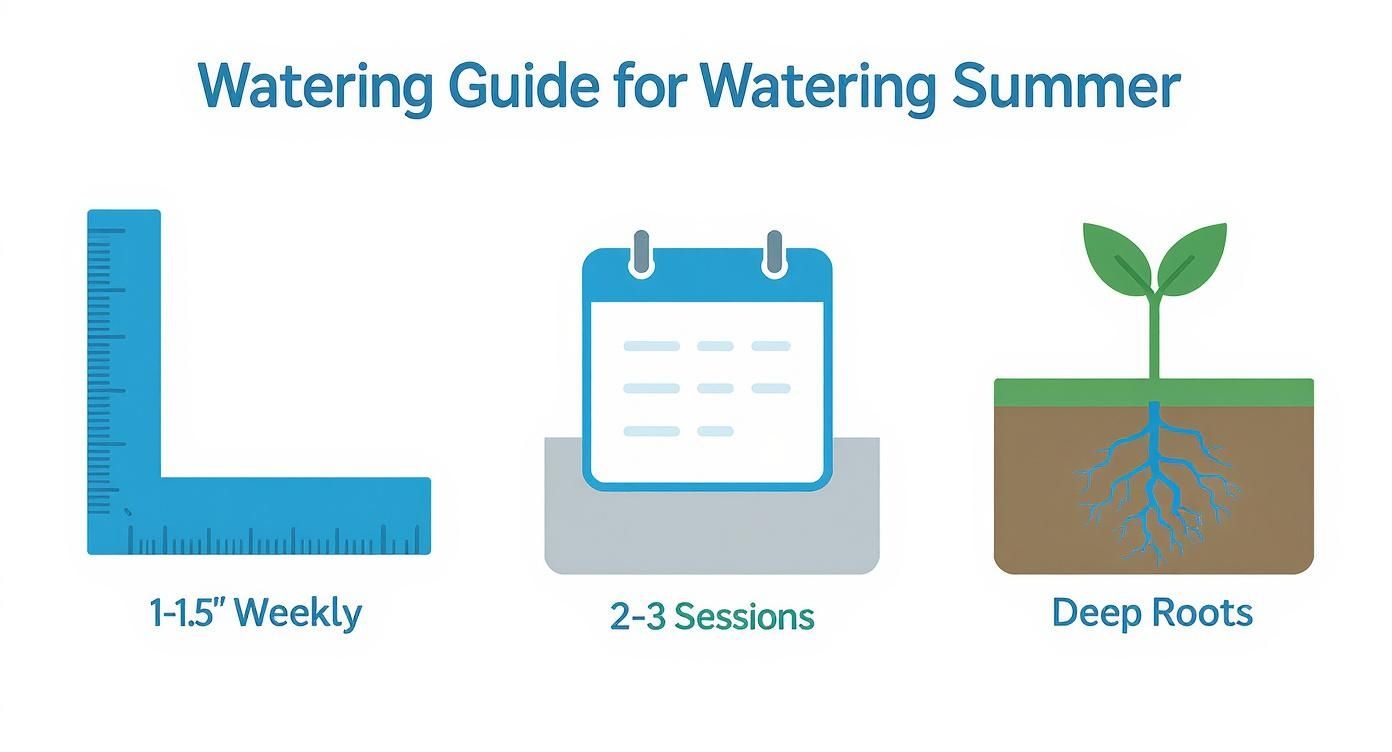
As you can see, it’s the combination of the right amount of water and the right frequency that builds a strong, self-sufficient lawn.
The real objective isn’t just to wet the blades of grass; it’s to saturate the soil 6-8 inches deep. That’s where the roots can tap into a reliable water source, promoting a robust network that can take the summer heat.
To help you put this into practice, here’s a quick reference table tailored for our local conditions around Cumming and Johns Creek.
Quick Guide to Summer Watering in North Georgia
| Condition | Watering Frequency | Key Consideration |
|---|---|---|
| Clay Soil | 1-2 times per week | Clay holds water well but absorbs it slowly. Water deeply to avoid runoff. |
| Sandy Soil | 2-3 times per week | Sandy soil drains quickly, so more frequent sessions are needed to keep roots hydrated. |
| New Sod/Seed | Daily (lightly) for 2 weeks | New grass needs constant moisture near the surface to germinate and establish roots. |
| Established Lawn | 2 times per week | Aim for 1 to 1.5 inches total, adjusting for rain and extreme heat. |
By following this simple framework, you’re setting yourself up for a more sustainable and vibrant landscape. For a more detailed timeline, our lawn care schedule template offers a month-by-month guide to keep your yard in top shape all year long.
Getting to Know Your Lawn
Before you can figure out a summer watering schedule, you need to play detective in your own backyard. It’s simple, really: a tough Bermuda grass lawn in Dahlonega is going to have completely different needs than a delicate Zoysia lawn over in Johns Creek. Pinpointing your grass type is always the first step.
Next up is the big one, at least for anyone in North Georgia: our infamous red clay soil. This dense soil is a bit of a mixed blessing. It’s great at holding onto moisture, but it absorbs water incredibly slowly. If you water too fast, you’ll see most of it running right off into the street before it ever gets a chance to sink down to the roots.
Grass Types and Soil Challenges
The kind of grass you have is a major clue to how thirsty it is. A Fescue lawn, for example, typically needs more frequent attention than a drought-tough Bermuda. Knowing the specific personality of your turf is key to getting your watering strategy right. To get a better handle on this, you can learn more about the best lawn grasses for Georgia and see how your yard’s grass compares.
This local context is everything. While we have our specific challenges here in Cumming and the surrounding area, watering needs vary wildly by region.
- Hot, humid areas like North Georgia often require 1 to 1.5 inches of water each week, usually split into two or three separate waterings.
- Cooler regions, like the Pacific Northwest, might get by perfectly well with just one or two sessions a week.
The real secret is to work with your Georgia clay, not against it. This often means trying a “cycle and soak” method—watering for a short burst, letting it soak in for a bit, and then watering again. This little trick ensures the water actually penetrates deep into the soil.
Your Yard’s Own Little Weather Patterns
Finally, take a look around and you’ll notice your lawn isn’t one big, uniform space. That sun-baked patch right by your driveway in Alpharetta is going to dry out way faster than the cool, shady spot under the big oak trees. These are what we call microclimates.
You’ll want to adjust your watering for these different zones. The sunnier spots might need a little extra attention, while you can probably ease up on the water in those shadier, cooler sections. Taking this targeted approach is how you avoid a patchy mess and get that consistently green lawn you’re after.
The Best Time of Day to Water in Georgia
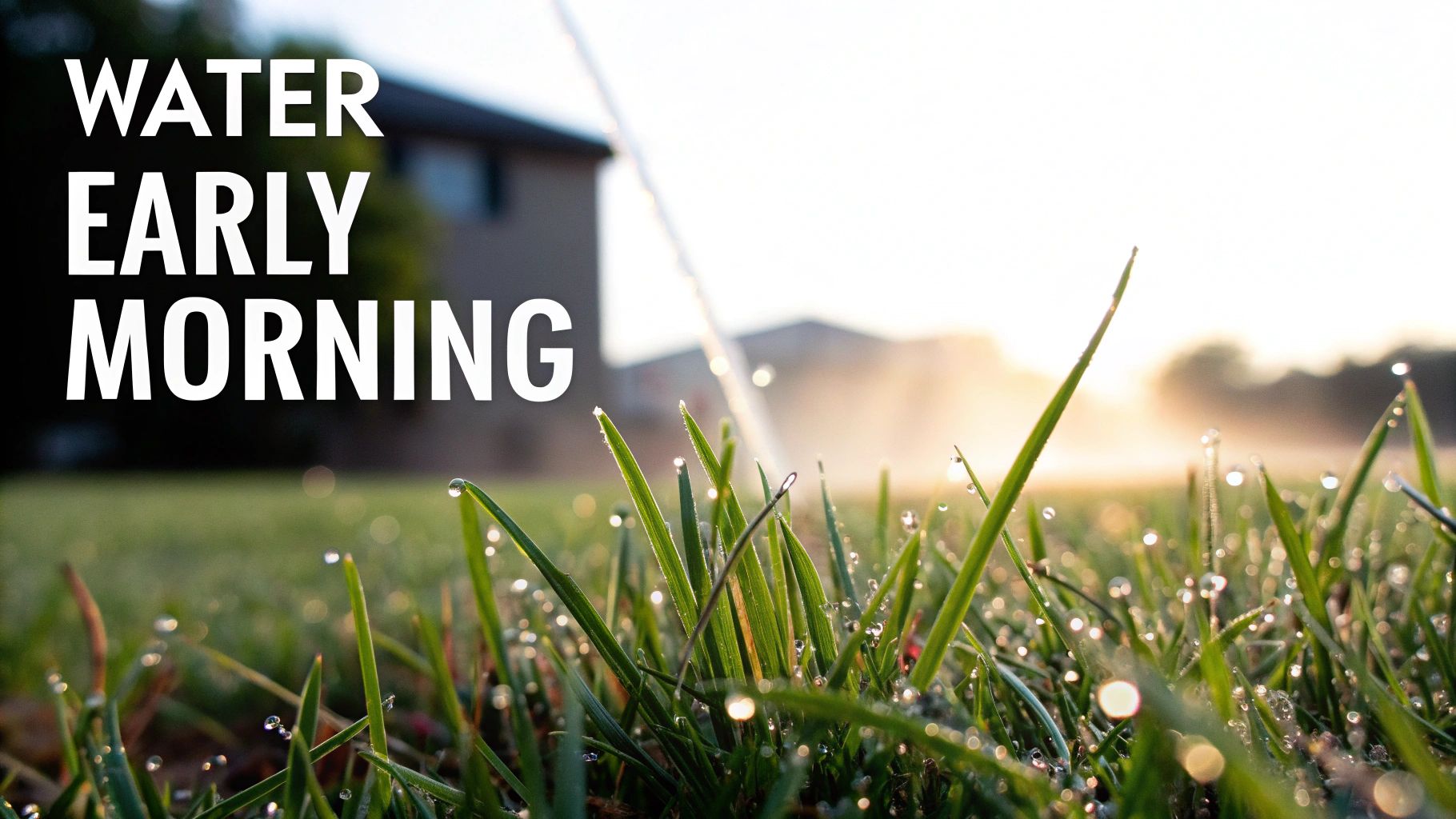
When you water your lawn is just as important as how much water you use. Here in North Georgia, where we deal with some serious sun and humidity, timing really is everything. The hands-down best time to run those sprinklers is early in the morning, ideally between 4 AM and 10 AM.
Watering in this pre-dawn or early morning window gives every drop a chance to soak deep into the soil and get down to the grassroots. The sun is still low, the air is cool, and the wind hasn’t picked up yet. This means you lose far less precious water to evaporation, ensuring your lawn actually gets to use it.
Avoiding Common Timing Mistakes
It’s tempting to water in the evening once the heat of the day subsides, but this is a classic mistake, especially in our humid climate. When you water your lawn at night in areas like Milton or Alpharetta, the grass blades sit wet for hours. That’s an open invitation for trouble.
Brown patch and other nasty fungal diseases absolutely thrive in warm, damp conditions. An evening watering schedule is like rolling out the welcome mat for problems that can ruin a healthy lawn fast.
Watering in the middle of a hot, sunny day is another common misstep. The intense midday sun can cause a huge amount of water—sometimes up to 30% or more—to simply evaporate before it even touches the soil. It’s a waste of water, a waste of money, and it starves your lawn of the deep soak it needs to survive the summer.
Ask any seasoned lawn care pro in the Cumming area, and they’ll tell you the same thing: stick to the early morning schedule. It maximizes water absorption and minimizes waste. You can discover more insights about optimal watering times to see how this approach works in different regions. Set those irrigation timers right, and you’ll be on your way to a healthier, greener lawn all season.
Simple Tests to See if Your Lawn Is Thirsty
Instead of just guessing, you can learn to read the clear signals your lawn sends when it needs a drink. Your grass will tell you exactly when it’s thirsty, long before it starts turning brown and crispy. This really takes the guesswork out of figuring out how often to water your lawn in the summer.
One of the first visual clues is a subtle shift in color. A happy, hydrated lawn has a vibrant green look. But when it starts getting thirsty, the blades will take on a dull, almost bluish-gray tint. You’ll often spot this change first in the hottest parts of your yard, like along the driveway or in spots that get baked by the sun all day.
Quick, Hands-On Moisture Tests
Beyond just looking at the color, there are a couple of incredibly simple, hands-on tests you can do in seconds to check for drought stress.
- The Footprint Test: This is the easiest one, hands down. Just walk across a patch of your lawn and turn around. If the grass blades spring right back up, your lawn has plenty of moisture. If your footprints stay flattened for more than a few minutes, the blades are too dry to recover. It’s definitely time to water.
- The Screwdriver Test: Want to know what’s happening deeper down? Grab a long screwdriver or a similar pointed tool and try to push it 6 to 8 inches into the soil. If it slides in easily, the soil is nice and moist. If you have to fight to get it in, the ground is hard and dry—a clear sign that a deep watering session is overdue.
A common mistake is waiting for the lawn to look visibly stressed before turning on the sprinklers. By using these simple tests, you can step in before the damage happens, keeping your grass consistently healthy all summer long.
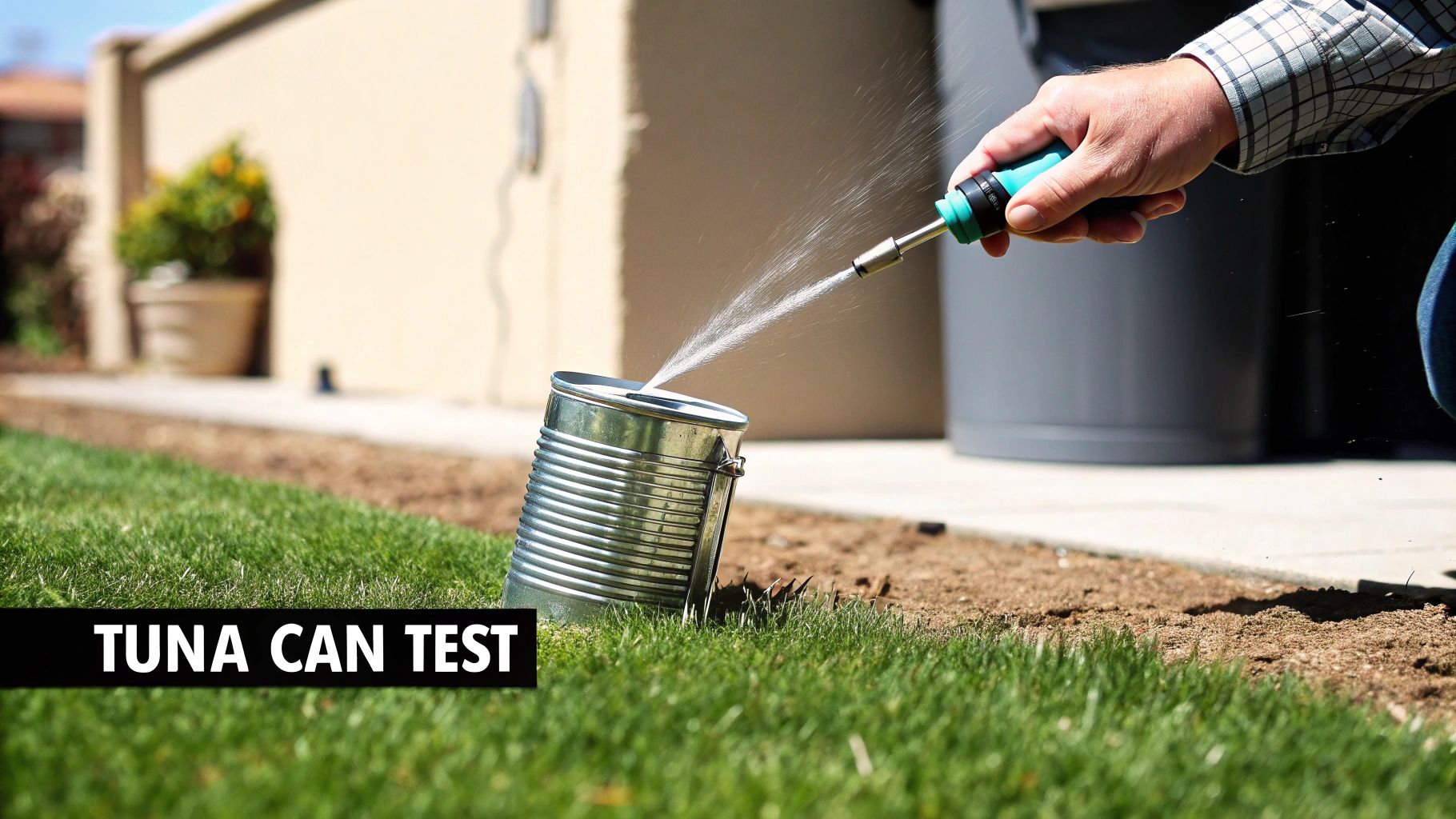
Finally, to make sure your sprinklers are actually doing the job right, give the tuna can test a try. Just place a few empty tuna cans around your lawn and run your sprinklers. Time how long it takes to collect one inch of water in the cans. This gives you a precise measurement, so you’ll know exactly how long to run your system to hit that weekly target of 1 to 1.5 inches.
Signs of Under-Watered vs. Over-Watered Lawns
It’s easy to confuse the signs of a thirsty lawn with one that’s drowning. This table breaks down the key differences to help you make the right call.
| Symptom | Under-Watered Lawn (Thirsty) | Over-Watered Lawn (Drowning) |
|---|---|---|
| Color | Dull, bluish-gray tint | Yellowing or light green blades |
| Feel | Dry, crunchy, or brittle blades | Spongy, soggy ground underfoot |
| Weeds | Crabgrass and other drought-tolerant weeds thrive | Moss, mushrooms, and nutsedge appear |
| Growth | Slow or dormant growth | Shallow root growth, prone to disease |
| Footprints | Footprints linger on the grass | Footprints leave soggy indentations |
| Pests | Chinch bugs and mites may appear | Fungal diseases like brown patch are common |
Knowing these distinctions is crucial. Responding to the wrong problem—like watering a drowning lawn—will only make things worse.
Water Smarter, Not Harder, for a Healthier Lawn
Once you’ve got the basics down, it’s time to start working smarter, not harder. A few key techniques and a little bit of technology can make a world of difference, saving you water, money, and hassle—all while keeping your lawn looking great. This is especially true when dealing with North Georgia’s unpredictable summer weather and our famously stubborn clay soils.
If you’re looking for the single best upgrade for your Cumming or Alpharetta home, it’s a smart irrigation controller. These systems are brilliant. They tap into local weather data and automatically tweak your watering schedule based on recent rainfall and temperature forecasts. That means your sprinklers won’t kick on right after one of those classic afternoon thunderstorms rolls through, which is a massive water saver over the course of a summer.
Fine-Tuning Your System for Peak Performance
Of course, even the most advanced controller can’t help if your sprinklers are watering the sidewalk. A little routine maintenance is absolutely crucial for efficient watering. You’d be amazed how much water is wasted by simple issues like misaligned heads or clogged nozzles, which are notorious for creating those ugly, brown, bone-dry spots.
Just take a few minutes each month to walk your property while the system is running. It can make a huge impact.
- Clean out clogged heads: A paperclip or a small tool is often all you need to clear debris and restore a full, even spray pattern.
- Adjust misaligned sprinklers: Twist the heads so the water hits the grass, not your driveway or patio.
- Look for leaks: A constantly dripping head or a wet spot around a valve is a sure sign of a leak that can waste hundreds of gallons.
Pro Tip: Use the “Cycle and Soak” Method
This technique is a complete game-changer for our dense Georgia red clay. Instead of running your sprinklers for one long 30-minute session, split it up. Try two 15-minute cycles with about an hour in between. This simple change gives that slow-absorbing clay a chance to drink up the first round of water before you add more, dramatically reducing wasteful runoff.
Ultimately, smart watering is just one piece of the puzzle. Achieving a truly beautiful yard requires a holistic approach to effective landscape maintenance.
And if you’re tired of the constant battle for a green lawn, it might be worth exploring a drought-tolerant grass alternative. Making a change like that can permanently slash your yard’s water demands. By combining smart tech with these proven methods, you’ll be well on your way to a lawn that’s not just beautiful, but also efficient and resilient.
Your Georgia Summer Watering Questions Answered
We get a ton of the same questions from homeowners all over North Georgia. Whether you’re dealing with a sudden heatwave in Cumming or wondering what to do after a big thunderstorm rolls through Alpharetta, our local climate can definitely keep you on your toes. Here are some straightforward answers to the most common watering dilemmas.
Should I Water Every Day During a Heatwave?
It’s a natural instinct, but fight the urge. Watering your lawn every single day, even when it’s scorching hot, actually does more harm than good. It encourages the grass to develop shallow, weak roots that simply can’t handle the stress of a Forsyth County summer.
Instead, stick to your deep watering schedule, aiming for two or three times a week. This method forces the roots to grow deeper in search of moisture, which builds a much tougher, more resilient lawn in the long run. If you see widespread wilting, you can add an extra cycle, but the main goal is always deep soil moisture, not just getting the grass blades wet.
The best defense against heat stress is a deep, healthy root system. Daily, shallow watering is a short-term fix that creates long-term weakness.
How Do I Adjust My Sprinklers After It Rains?
This is a big one, especially for anyone with a lawn in Johns Creek or Milton. Your best friend here is a simple rain gauge. If a classic Georgia afternoon thunderstorm drops half an inch of rain, you just subtract that from your weekly 1 to 1.5-inch target.
And if you get a real gully washer that dumps an inch or more? You can confidently skip your next scheduled watering session altogether. For a truly hands-off approach, investing in a rain sensor or a smart controller that adjusts automatically is a game-changer. It’ll pay for itself pretty quickly in water savings and prevent the root rot that comes from overwatering.
My Water Bill Is High, How Can I Be More Efficient?
I hear this all the time from folks in Cumming and Dahlonega. The key is to focus on three things: timing, technique, and tools.
- Timing: Water in the early morning, ideally between 4 AM and 10 AM. This drastically cuts down on how much water is lost to evaporation once the sun gets high and hot.
- Technique: Remember, deep and infrequent is the mantra. It builds those drought-resistant roots and makes sure every drop is actually being used by the plant, not just sitting on the surface.
- Tools: Take a minute to actually watch your sprinklers run. Are they watering the lawn or the driveway? A few simple adjustments can make a huge difference. Upgrading to a modern smart controller that uses real-time weather data is another fantastic way to fine-tune your usage.
Ready to stop guessing and start enjoying a beautiful, healthy lawn without all the hassle? The experts at Barefoot Organics specialize in lawn care solutions built specifically for the unique challenges of our North Georgia climate. Get your free online quote today!