

For those of us with lawns in Cumming, Alpharetta, and across North Georgia, dethatching isn't about following a rigid calendar. It's about paying attention to what your lawn is telling you. The golden rule is this: you should only dethatch your lawn when the thatch layer is thicker than half an inch. This "as-needed" approach is far better for your turf, preventing unnecessary stress and ensuring you get the most out of your efforts.
Your Guide to Dethatching North Georgia Lawns
One of the most common questions I hear from homeowners in places like Johns Creek and Milton is, "How often should I be doing this?" The truth is, there's no single answer, and you certainly don't need to do it every year. It’s all about becoming a good observer of your own yard and understanding what it needs to handle our unique Georgia climate.
Think of thatch as a blanket covering your lawn. A very thin one is actually a good thing—it helps hold in a little moisture and insulates the soil. But when that blanket gets too thick, over that half-inch mark, it starts to smother the grass. It literally chokes off the air, water, and nutrients trying to get down to the roots, which can be devastating during our hot, humid summers in the Cumming area.
An overly thick thatch layer essentially creates a waterproof barrier. This forces grass roots to stay shallow, making them incredibly vulnerable to drought stress and all sorts of diseases. The goal isn't to get rid of thatch completely, just to manage it.
This is exactly why keeping an eye on your lawn is so much more effective than just dethatching on a fixed schedule. Knowing when to check is the first step. Some lawns might need attention every couple of years, while others can go much longer without any issues. How quickly it builds up really depends on your grass type, your soil's health, and how you maintain your yard. The most important thing is to actually measure the thatch before you ever fire up a machine. It's also critical to understand the difference between when to aerate and dethatch your lawn, as they solve different problems.
Dethatching Frequency for Common North Georgia Grasses
If you live in Cumming, Dahlonega, or anywhere in the surrounding area, the type of grass in your yard is the biggest clue as to how often you'll need to check for thatch. Some grasses, especially the aggressive growers like Bermuda, are notorious for building up thatch quickly.
Here’s a quick reference guide to help homeowners in areas like Cumming and Johns Creek know how often to peek at their thatch layer.
Dethatching Frequency for Common North Georgia Grasses
| Grass Type | Common in North GA? | Thatch Buildup Rate | Recommended Dethatching Frequency |
|---|---|---|---|
| Bermuda Grass | Very Common | Fast | Check annually; dethatch every 1-2 years as needed |
| Zoysia Grass | Very Common | Moderate to Fast | Check annually; dethatch every 2-3 years as needed |
| Fescue | Common (in shade) | Slow | Check every 2-3 years; rarely needs dethatching |
| Centipede Grass | Less Common | Slow | Check every 2-3 years; rarely needs dethatching |
Remember, this table is a guide for checking your lawn. The decision to actually dethatch should always be based on that half-inch measurement, not just the calendar.
What Exactly Is Thatch, and Why Should You Care?
If you're a homeowner anywhere from Milton to Alpharetta, you've probably heard the word "thatch" thrown around. It sounds like another piece of confusing lawn care jargon, but getting a handle on it is the first step toward a tough, resilient lawn that can actually stand up to the North Georgia heat.
It’s a common myth that thatch is just a pile of dead grass clippings from mowing. The truth is a bit more complicated.
Thatch is really a dense, tangled mat of organic stuff, both living and dead. It's a mix of grass stems, runners (stolons), underground shoots (rhizomes), and roots that builds up right at the soil line, sandwiched between the green grass blades and the dirt itself. A little bit of thatch isn't just normal; it's actually good for your lawn.
A Good Thing Gone Bad
Think of a thin layer of thatch—less than a half-inch or so—like a light layer of mulch in a garden bed. It helps the soil hold onto moisture, protects it from getting packed down, and even insulates the grass roots from wild temperature swings. That’s a big deal during our unpredictable Georgia seasons. This thin cushion creates a healthy environment for your turf to thrive.
The trouble starts when that layer gets too thick. Once thatch piles up past that critical half-inch mark, all its benefits flip. It goes from a helpful cushion to a destructive, water-blocking barrier that actively harms your lawn. This is when dethatching stops being optional and becomes a necessary rescue mission.
A thick thatch layer is like a waterproof roof on your lawn. It stops water, air, and nutrients from ever reaching the soil, effectively suffocating the roots and setting the stage for all sorts of problems that are easy to misdiagnose.
What Really Causes a Thick Thatch Problem?
It's tempting to point the finger at grass clippings, but they usually break down too fast to be the main issue. The real reasons for a heavy thatch buildup are often tied to our own lawn care habits, especially with the fast-growing grasses we have here in the Cumming area.
Here are the main things that cause thatch to build up too quickly:
- Too Much Fertilizer: Pushing your lawn with too much nitrogen makes the top grow like crazy. The grass pumps out stems and shoots faster than the tiny microbes in the soil can decompose them, leading to a rapid pile-up of organic material.
- Watering the Wrong Way: Light, frequent watering teaches grass roots to stay shallow and grow within the thatch layer instead of reaching deep into the soil. This creates a weak, needy lawn that can't handle drought or fight off disease.
- Compacted Soil: Let's face it, our Georgia clay soil gets packed down easily. Compacted soil doesn't have enough oxygen for the beneficial microorganisms that are supposed to be breaking down thatch. When they can't breathe, they can't work, and the thatch builds up.
- Overusing Pesticides: Some chemical pesticides can wipe out the earthworms and microbes in your soil. Without this natural cleanup crew, the whole decomposition process grinds to a halt, letting thatch accumulate much faster.
At its core, a thick thatch layer is a big red flag that your lawn's ecosystem is out of balance. It's blocking the essentials—air, water, and nutrients—from getting to the soil, which forces the grass roots to stay near the surface. A shallow root system is a recipe for disaster in the hot summers we get from Alpharetta to Dahlonega, creating a stressed-out, thinning lawn. Understanding this is key to seeing why the question of how often should you dethatch your lawn is less about a rigid schedule and more about fixing these root causes.
Signs Your Lawn Needs Dethatching
Alright, so you know what thatch is. But how do you know if it's actually causing a problem on your own lawn here in the Cumming area? The good news is you don't need any special equipment to figure it out. A few simple checks are all it takes to spot a thatch issue before it really starts to damage your turf.
The easiest first step is what I call the "feel test." Just walk across your grass. Does it feel oddly soft and spongy underfoot, almost like you're walking on a thick carpet? That's a telltale sign of a heavy thatch layer. A healthy lawn should feel firm, but a bouncy one means there’s a thick mat of dead stuff getting in the way.
Performing a Quick Thatch Inspection
The spongy feel is a great clue, but to be sure, you'll want to get your hands dirty and take a quick measurement. It’s surprisingly easy and gives you a definite answer.
You just need a small hand trowel or a sturdy knife and a ruler. Here's what to do:
- Cut a Small Wedge: Pick a spot that’s not front-and-center and cut out a small, wedge-shaped slice of your lawn, going down about three inches.
- Lift and Look: Gently pull the sample up so you can see a clear cross-section of the green grass, the soil, and everything in between.
- Identify the Layer: You'll see a distinct layer of brown, fibrous, almost felt-like material sandwiched between the green blades and the dark soil. That's your thatch.
- Measure Its Thickness: Grab your ruler and measure that spongy layer. If it’s more than ½ inch thick, your lawn is officially ready for dethatching.
Once you’re done, just pop the piece of turf right back into its spot and press it down. It’ll heal up in no time, especially if the grass is growing strong.
Other Telltale Clues to Watch For
Besides taking a direct measurement, your lawn will often throw out other distress signals when thatch is getting out of hand. These are especially common in our Georgia climate and are strong hints that your turf is struggling.
- Water Puddling: After it rains or you run the sprinklers, do you see water sitting on the surface instead of soaking in? A thick thatch layer acts like a raincoat, repelling water and keeping it from reaching the roots where it’s needed most.
- Thinning or Patchy Grass: Is your lawn looking a little weak or developing bare spots even though you're feeding it? Thatch could be the culprit, physically blocking nutrients, water, and air from getting down to the soil.
- A Dull, Brownish Color: A lawn choked by thatch often has a lingering brownish or yellow look to it, even right after you’ve fertilized. It's a clear sign the grass is starving and can’t maintain that vibrant green color.
This simple flowchart can help you decide what to do based on what you find.
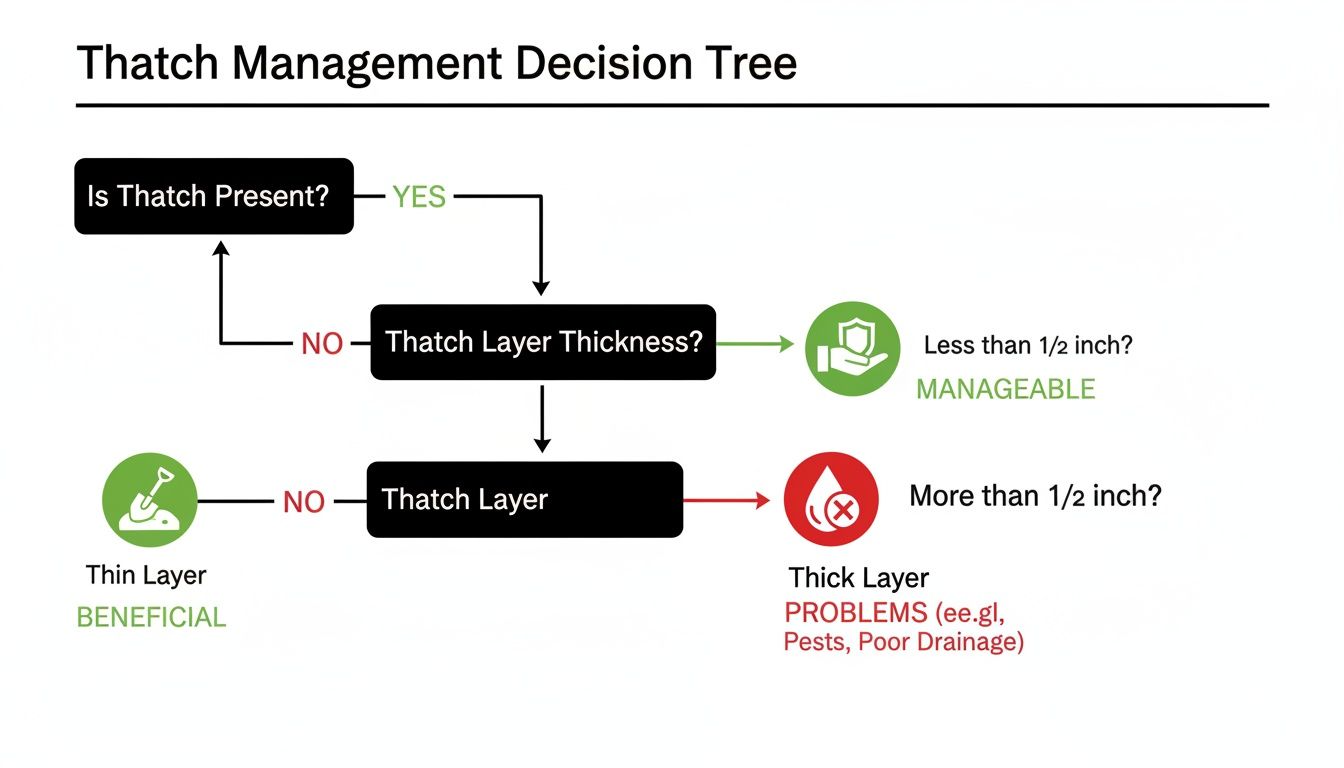
As you can see, a little thatch is normal, but once it gets too thick, it becomes a barrier that causes serious health problems for your lawn.
Experts all agree that the decision to dethatch comes down to thickness, with that critical ½ to ¾ inch mark being the trigger. Once it gets thicker than that, problems like fungus and disease can increase by up to 40% in the warm-season grasses we have here in areas like Johns Creek and Milton. You can find more great advice on professional turf care in this guide to dethatching your lawn.
By combining the feel test with a quick measurement and keeping an eye out for these other visual cues, you can get a really accurate picture of what's going on. It’s all about learning to read your lawn so you only step in when it's truly necessary—that’s the secret to a healthy, resilient lawn in North Georgia.
When to Dethatch Your Bermuda and Zoysia Lawn
For homeowners in Johns Creek, Alpharetta, and right here in the Cumming area, timing is everything. Jumping the gun on a big lawn care job can backfire, and that’s especially true for something as intense as dethatching. It's not just about if you need to do it, but knowing the precise window when your lawn has the strength to bounce back.
Our region is dominated by warm-season grasses like Bermuda and Zoysia, which thrive in our hot summers. These grasses have a distinct life cycle, and smart dethatching means working with that cycle, not against it. Pushing your lawn too hard when it's stressed or dormant is just asking for trouble.
The Peak Season for Dethatching
The absolute best time to dethatch your Bermuda or Zoysia lawn is in the late spring to early summer. This is your sweet spot, typically from May through early July, when the grass is growing like crazy.
Think of your lawn like an athlete getting ready for a big game. You wouldn’t put them through a grueling workout right after they wake up or just before bed. You wait until they’re at their peak. For your lawn, that peak comes after it has fully "greened up" from winter and is soaking up the longer days and warmer temperatures.
When you dethatch during this active growth period, your grass has all the energy it needs to recover quickly. The process is stressful, yes, but its natural drive to grow will kick in, filling in any thin spots and coming back denser than before. That fast recovery is also your best defense against weeds trying to invade the newly exposed soil.
A strong, actively growing lawn can recover from dethatching in just a few weeks. Dethatching a dormant or stressed lawn can cause damage that takes an entire season—or longer—to repair.
Times You Must Avoid Dethatching
Knowing when not to act is just as important. There are two critical periods when you should never dethatch your warm-season grass in North Georgia. The risk of doing long-term damage is just too high.
- Early Spring (During Green-Up): It’s so tempting to get out there as soon as you see that first hint of green. But dethatching while your lawn is just waking up is a huge mistake. It’s using every bit of its stored energy to come out of dormancy and simply can't handle the added stress of a major renovation.
- Late Summer and Fall (Heading into Dormancy): On the flip side, don't dethatch as the season winds down from late August onward. The grass is slowing its growth and getting ready for winter. Weakening it right before the cold hits leaves it vulnerable to winter kill and disease.
Ultimately, the best approach is to read your lawn, not just the calendar. It’s a point backed by data: a survey of homeowners in warm climates found that 44.3% dethatch based on actual need rather than a rigid schedule. You can see more on this needs-based approach from YourGreenPal.com. This shows that smart lawn care is about responding to your lawn’s specific condition.
Seasonal Dethatching Guide for North Georgia Lawns
To make it even clearer, here’s a simple cheat sheet for homeowners in Cumming, GA, and the surrounding areas like Alpharetta and Johns Creek. Think of this table as your quick-glance guide to avoid common dethatching mistakes. If you want to dive even deeper into the "why" behind the timing, check out our full guide on when to dethatch your lawn.
| Season | Warm-Season Grasses (Bermuda/Zoysia) | Why It's Recommended (or Not) |
|---|---|---|
| Spring (Late) | IDEAL: The perfect time, after the lawn is fully green and growing strong. | The grass has maximum energy for a quick and robust recovery. |
| Summer (Early) | IDEAL: Another excellent window while the grass is at its peak growth. | High growth rates ensure the lawn will heal fast and choke out weeds. |
| Fall | AVOID: Do not dethatch. | Dethatching weakens the grass as it prepares for winter dormancy, risking severe damage. |
| Winter | AVOID: Do not dethatch. | The lawn is fully dormant and has no ability to recover from the stress. |
By working with your lawn's natural rhythm, you ensure dethatching is a helping hand, not a harmful one. This patient, strategic approach is the secret to building a resilient, beautiful lawn that can truly thrive in our challenging North Georgia climate.
An Eco-Friendly Guide to Post-Dethatching Recovery
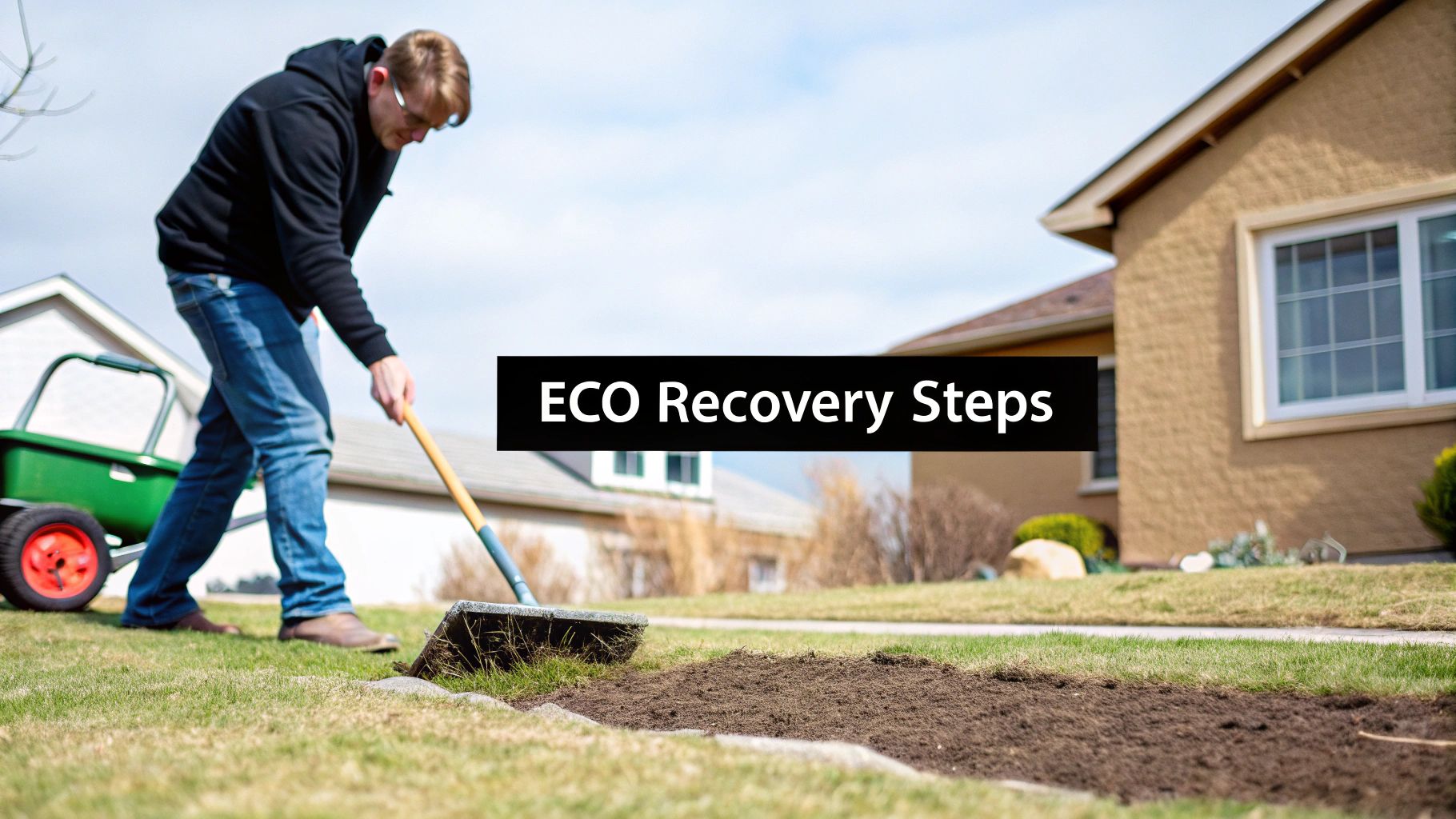
Think of dethatching as major surgery for your lawn. It's an aggressive but often necessary process that leaves your turf looking a bit rough and vulnerable. And just like with any surgery, the recovery is what really dictates the long-term success. If you rush the aftercare or use the wrong methods, you can easily undo all that hard work.
For homeowners from Cumming to Dahlonega, a natural recovery plan isn't just better for the environment—it's the best way to build a resilient lawn that can handle the Georgia climate. This approach heals the turf from the soil up, creating a strong foundation that naturally keeps future thatch in check. The goal here is to help your lawn bounce back thicker, greener, and healthier than before.
Step 1: Start with Core Aeration
As soon as you’ve raked up the last of the debris from dethatching, your very next move should be core aeration. This one-two punch is the gold standard for renovating a lawn in North Georgia, especially when you're dealing with our famously compacted red clay soil.
Dethatching clears off the surface junk, but aeration is what truly opens up the soil underneath. A core aerator pulls out small plugs of soil, creating pathways for air, water, and nutrients to finally break through and get down to the grass roots. This is absolutely critical for encouraging the deep, strong root growth that makes for a drought-tolerant lawn.
For our local soils, the combination is a game-changer. Dethatching removes the suffocating blanket on top, while aeration breaks up the concrete-like soil below. Doing one without the other is like unlocking your front door but leaving the screen door latched.
Step 2: Topdress with Organic Compost
With the soil surface cleared and opened up, you have a perfect window of opportunity to breathe some new life into it. This is where topdressing with a thin layer of high-quality organic compost comes in. Spreading about a quarter-inch of compost across the lawn does so much more than just add a few nutrients.
Good organic compost is packed with beneficial microbes. These tiny organisms are nature's cleanup crew, and their main job is to break down organic matter. By adding them to your lawn, you’re kick-starting the natural cycle that decomposes future thatch, helping to prevent it from building up so quickly again.
Step 3: Apply a Natural, Slow-Release Fertilizer
After the stress of dethatching, your lawn is hungry. But be careful—blasting it with a high-nitrogen synthetic fertilizer is a big mistake. That kind of fertilizer forces weak, rapid top-growth at the expense of the root system, leaving your lawn much more vulnerable to disease and drought.
Instead, now is the perfect time for a natural, slow-release fertilizer. These products feed the soil, which in turn feeds the grass steadily over weeks and months. This encourages balanced growth, focusing the plant's energy on building a robust root system that anchors it firmly. To see what your options are, you can explore the benefits of using a natural fertilizer for grass and see how it supports long-term health.
This gentler approach provides the sustained nutrition your lawn needs to recover properly, without the shock of harsh chemicals.
Step 4: Water Deeply and Consistently
The final piece of the recovery puzzle is watering correctly. Your freshly dethatched and aerated lawn will dry out a little faster at first, so consistent moisture is crucial for helping new grass shoots get established.
The best practice is always to water deeply but less often. Here’s a simple plan to follow:
- Initial Watering: Right after you finish aerating and topdressing, give the lawn a good, deep soak. This helps settle the compost and gets moisture down into the soil.
- First Two Weeks: Water lightly every day or every other day. The goal is just to keep the top inch of soil consistently moist to help any new seeds germinate and support the existing turf's recovery.
- After Two Weeks: You can slowly switch back to your normal schedule of watering deeply once or twice a week. This encourages the grass roots to grow downward in search of moisture, which builds a much stronger and more resilient lawn.
By following these natural recovery steps, you’re doing more than just healing your lawn—you’re actively improving its foundation for years to come.
Still Have Questions About Dethatching? Let's Clear Things Up.
Even after you've decided dethatching is the next step, a few questions always pop up. It’s a pretty intensive process, after all. Homeowners I talk to across Cumming, Alpharetta, and Milton often have the same concerns, from the risks of doing it themselves to the shock of seeing their lawn right after the work is done.
Let's walk through some of the most common questions I hear from folks right here in North Georgia. My goal is to give you clear, practical answers so you can feel confident about the decisions you make for your yard.
Can I Just Dethatch My Lawn Myself?
Look, I get it. Renting a power rake from the local hardware store seems like a great way to save a few bucks. But I've seen this go wrong more times than I can count, especially on the rolling hills and uneven ground we have around the Cumming area.
Those machines are aggressive. That's the whole point. But it's incredibly easy to set the tines too low, and suddenly you're not just pulling up thatch—you're scalping the lawn and ripping out healthy grass roots. It’s a costly mistake that can set your lawn back for the whole season.
Bringing in a professional service isn't just about having the right equipment; it's about the experience. A seasoned pro knows exactly how deep to go for your specific grass, whether it's tough Bermuda or that dense Zoysia carpet. We also understand the critical timing for our local climate, making sure the lawn is strong enough to bounce back quickly. Plus, we see the bigger picture, often pairing dethatching with core aeration and organic topdressing for results that a simple machine rental just can't match.
Is Aeration the Same Thing as Dethatching?
This is a fantastic question, and probably the biggest point of confusion I see. The short answer is no, they are completely different treatments. But they work together beautifully.
Here’s the best way to think about it:
Dethatching is a surface-level cleanup. Imagine combing out a thick, matted layer of fur on a dog. You're physically removing that suffocating blanket of dead material sitting on top of the soil.
Core aeration, on the other hand, deals with what's happening underneath the grass. This is where we pull out small plugs of soil to break up compaction. That’s a huge problem in our dense Georgia clay. Aeration is like opening windows in a stuffy room—it lets air, water, and nutrients finally get down to the roots where they're needed most.
For lawns around here in the Cumming area, I almost always recommend annual aeration as a preventative measure. It creates a healthy soil environment where microbes can break down thatch naturally, meaning you won't need to dethatch as often. Think of dethatching as the corrective surgery and aeration as the healthy lifestyle that helps you avoid it.
Will Dethatching Make My Lawn Look Worse at First?
Yes, and it’s important to be ready for it. There’s no sugarcoating it—immediately after a proper, thorough dethatching, your lawn is going to look a bit beat up. It will seem thin, stressed, and frankly, a little torn up.
But this temporary ugly phase is a necessary evil. A huge amount of gunk has just been ripped out, and the lawn can finally breathe again. It now has access to sunlight, water, and nutrients that were being blocked. With the right aftercare, especially good watering and a quality organic feeding, homeowners in Johns Creek and Milton are always amazed by the turnaround. In just a few weeks, that stressed-out turf transforms into the lush, thick, green lawn they couldn't achieve when it was choking.
How Can I Stop Thatch From Building Up So Fast?
This is the ultimate goal, right? A beautiful, low-maintenance lawn. The key is to fix the underlying causes of thatch, not just treat the symptom every year or two. The best answer to how often should you dethatch your lawn is "as little as possible" by adopting these healthier habits.
Here are the most effective ways to keep thatch in check on North Georgia lawns:
- Rethink Your Fertilizer: Ditch the high-nitrogen synthetic fertilizers that create a surge of weak top growth. Slow-release organic fertilizers are a much better choice because they feed the soil microbes and encourage strong, steady growth.
- Water Smarter: Give your lawn a deep, long drink once or twice a week instead of a light sprinkle every day. This trains the grass roots to grow deeper into the soil, making the whole plant stronger and more resilient.
- Embrace Annual Aeration: This is the single most important thing you can do. Core aerating every year fights our heavy clay soil, improves oxygen flow, and gives those beneficial microbes a perfect environment to do their job—which includes decomposing thatch for you.
- Manage Your Mowing: Leaving your clippings on the lawn (grasscycling) is great, but only if they are mulched into fine pieces. Big, wet clumps of grass will just mat down and add to the thatch layer instead of breaking down and feeding the soil.
When you focus on building healthy soil, you create a balanced ecosystem where thatch simply can't take over.
Ready to stop guessing and start building a healthier, more resilient lawn? The team at Barefoot Organics specializes in natural, effective lawn care solutions tailored for the unique challenges of our North Georgia climate. Get your free online quote today!