

If you're serious about getting a truly healthy lawn here in North Georgia, making your own fertilizer is one of the best moves you can make. It's about more than just saving a few bucks; it's about building a resilient, vibrant lawn from the ground up by feeding the unique red clay soil we all know so well. This approach lets you ditch the generic, one-size-fits-all treatments and give your grass exactly what it needs to handle our hot summers and stubborn pests, whether you're in Cumming, Johns Creek, or Dahlonega.
Why A DIY Approach Is A Game-Changer For Georgia Lawns
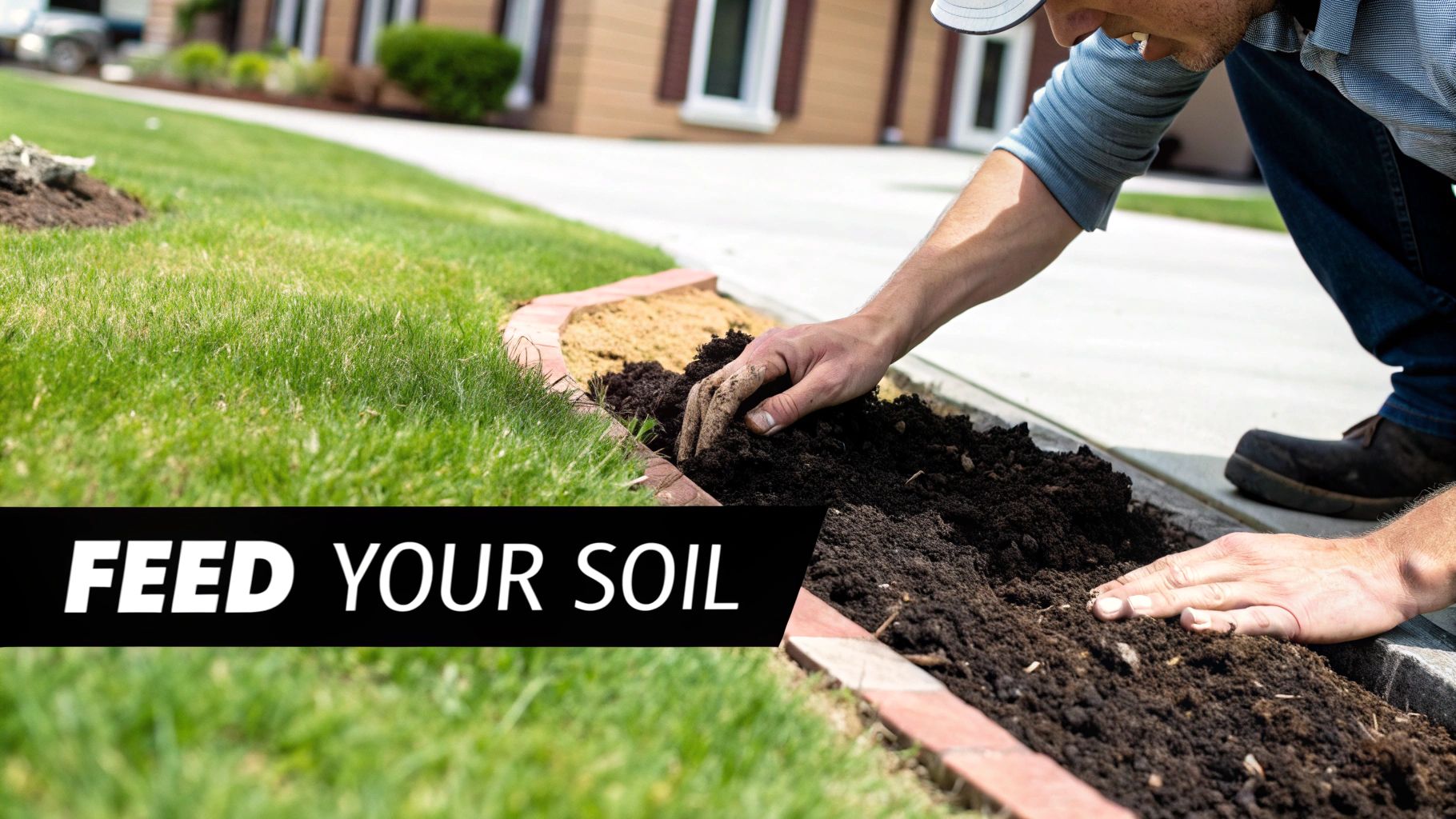
For homeowners anywhere from Cumming to Alpharetta, the quest for that perfect green lawn feels like an annual battle. The real secret isn't just what you spread on top of the grass; it’s what you cultivate in the soil underneath. That’s where a homemade fertilizer recipe transforms from a simple project into a powerful tool for a thriving yard.
Instead of relying on a standard chemical mix, creating your own blend lets you tackle the specific hurdles of our local environment head-on. Georgia's dense red clay is packed with minerals, but it often struggles with compaction. Homemade fertilizers help improve aeration and drainage, giving grass roots the space they need to breathe and soak up nutrients.
The Real-World Benefits For Your North Georgia Yard
Making the switch to a homemade fertilizer offers some major advantages, especially for those of us dealing with the challenges around Johns Creek and Milton:
- Custom-Blended Nutrition: A soil test can tell you exactly what your lawn is missing. With that knowledge, you can create a mix that provides targeted nutrients, avoiding waste and guesswork.
- Building Better Soil: Natural ingredients like compost are food for the beneficial microbes in your soil. Over time, this improves the soil's structure, creating the foundation for a genuinely healthy lawn.
- A Safer Yard for the Whole Family: Let's be honest, this is a big one. Knowing your kids and pets can play on the grass without being exposed to harsh chemicals brings incredible peace of mind.
For many, the move to homemade fertilizer is part of a bigger picture of creating a more natural, chemical-free home. This often leads to an interest in minimizing chemical exposure in other areas of life, too.
The core idea is simple: feed the soil, not just the grass. When you do that, you're building a resilient ecosystem that encourages deeper roots. A lawn with deep roots is far better equipped to handle Georgia's notorious summer droughts and common pests.
North Georgia Homemade Fertilizer Quick Guide
To get you started, here's a quick look at some common ingredients you might use and why they work so well in our local soil.
| Ingredient | Primary Nutrient | Benefit For Georgia Clay Soil |
|---|---|---|
| Compost | Balanced Macro/Micro | Improves soil structure and water retention. |
| Coffee Grounds | Nitrogen, Potassium | Adds organic matter and slightly acidifies alkaline clay. |
| Epsom Salt | Magnesium, Sulfur | Aids in chlorophyll production for greener grass. |
| Kelp Meal | Micronutrients, Growth Hormones | Stimulates root development and enhances stress tolerance. |
This table is just a starting point, but it shows how you can target specific needs to build a stronger, healthier lawn right here in Georgia.
A Smart and Sustainable Choice
This shift isn't just happening in our backyards; it's a nationwide trend. Homeowners across the US now use around 50 million units of organic lawn products every year. Why? Because they work.
Homemade fertilizers can boost microbial activity in the soil by up to 40%, which directly translates to thicker roots and better drought resistance. If you want to explore more about how these natural options work, our guide on choosing the right natural fertilizer for your grass is a great place to start.
Decoding Your North Georgia Soil
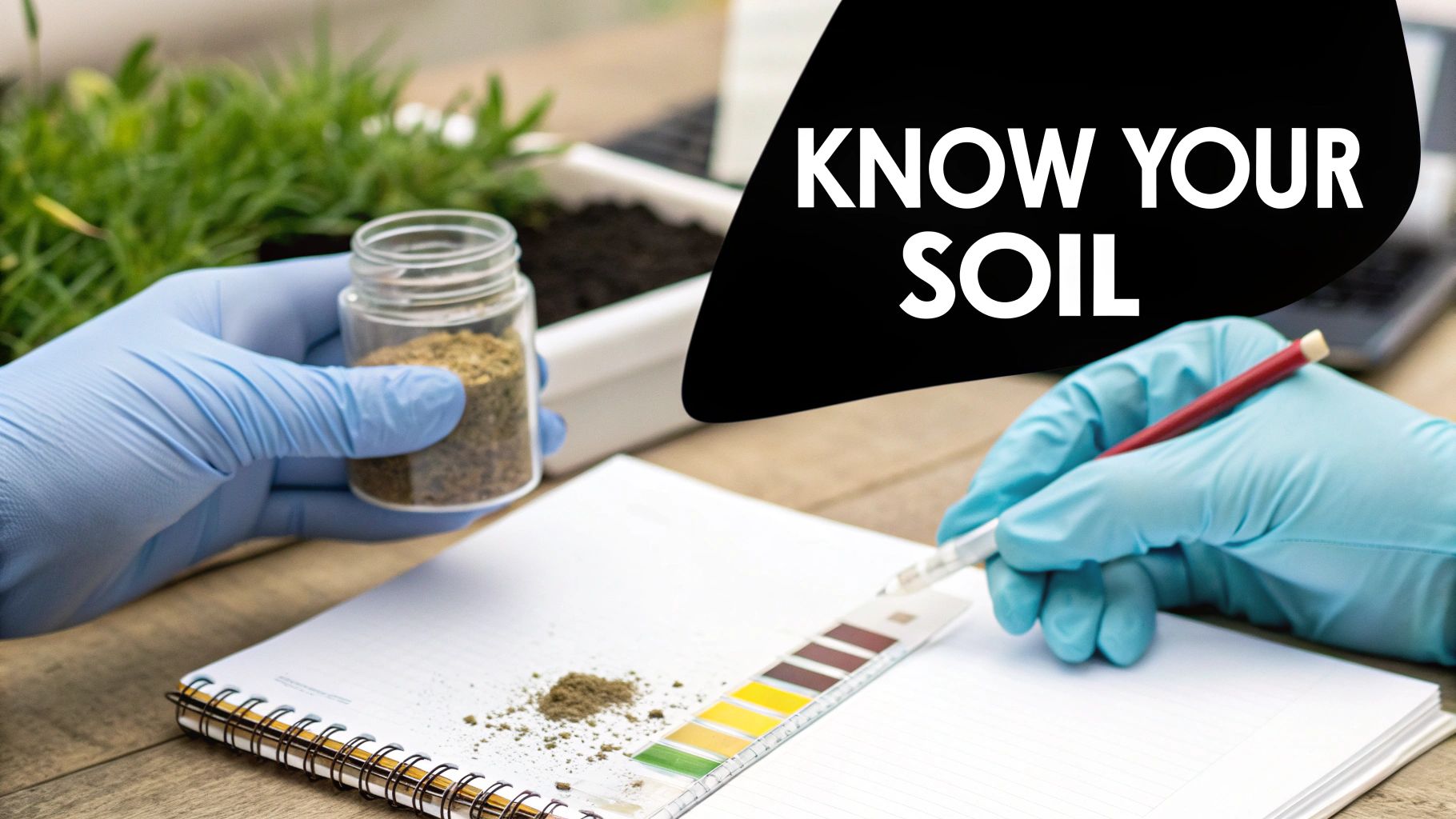
Before you even think about mixing up the perfect homemade fertilizer, you have to play detective with your own yard. The ground under your feet here in North Georgia—whether you're in Johns Creek, Milton, or Dahlonega—has its own unique personality. We're known for that heavy, reddish clay, which is both a blessing and a challenge.
On one hand, our clay soil is packed with minerals, which is a great starting point for any lawn. The downside? That dense structure compacts like crazy, especially after a good downpour. When the soil gets packed that tight, grass roots can't breathe, penetrate, or soak up the water and nutrients they need to really thrive.
Why a Soil Test is Non-Negotiable
Trying to fertilize without a soil test is like driving from Cumming to Alpharetta blindfolded. You might get there eventually, but you'll waste a lot of time and resources. A simple soil test is your roadmap to a healthy lawn, and it tells you two critical things.
- Soil pH Level: Our North Georgia clay is almost always acidic. Grass has a tough time absorbing nutrients if the soil is too acidic (low pH) or too alkaline (high pH). Most turfgrasses are happiest in a slightly acidic to neutral range, right between 6.0 and 7.0.
- Nutrient Deficiencies: The test pinpoints exactly which major nutrients—nitrogen (N), phosphorus (P), and potassium (K)—your lawn is missing. It can also flag shortages in vital micronutrients like magnesium and sulfur.
Armed with this information, you can stop guessing and start creating a homemade fertilizer that gives your lawn exactly what it's craving.
Your soil test results are the single most important tool in your DIY lawn care arsenal. They transform your efforts from guesswork into a targeted strategy, ensuring every ingredient you add serves a specific, beneficial purpose for your lawn.
Obtaining and Understanding Your Soil Report
Getting a professional soil test is easier and cheaper than you probably think. Your local University of Georgia (UGA) Extension office, which serves Forsyth and surrounding counties, offers comprehensive testing for a small fee. This service gives you a detailed report that takes all the mystery out of what's happening underground.
When you get the report, you'll see a full breakdown of your soil's makeup. It might look a little technical at first, but it’s pretty straightforward. The report will show your current pH and the specific levels of key nutrients. For a deeper dive, our guide on how to read soil test results can help you make sense of every detail.
If you'd rather start at home, you can get a solid baseline with some easy DIY soil testing tips. A home kit isn't as precise as a lab analysis, but it's a great first step for checking pH and primary nutrient levels. This basic understanding is often the difference between a struggling yard and a truly vibrant Alpharetta lawn.
Practical Fertilizer Recipes For Georgia Grass Types
Alright, now that you have a good handle on your soil's personality, it’s time to get your hands dirty. We're going to mix up some homemade lawn fertilizers that are perfect for the Fescue, Bermuda, and Zoysia grasses we see all over our North Georgia neighborhoods.
These aren't just random concoctions; they're proven recipes that use simple ingredients to get great results. I'll walk you through three different formulas, each designed for a specific job and time of year. Just remember, each recipe is measured for a standard 1,000 square foot lawn, so you'll want to scale up or down depending on your yard's size.
The Quick Green-Up Compost Tea
When your lawn is just starting to wake up in the spring, it needs a fast-acting pick-me-up. That's where a liquid fertilizer like compost tea comes in. It's a potent brew that gets nutrients absorbed quickly through both the grass blades and the soil. Think of it as an energy shot for a sleepy lawn in Alpharetta.
Here’s how to mix a batch for a 1,000 sq. ft. area:
-
What You'll Need:
- 5 gallons of dechlorinated water (just let tap water sit out for 24 hours to let the chlorine evaporate)
- 1 gallon of rich, finished compost (the good, earthy-smelling stuff)
- 1 tablespoon of unsulfured molasses
-
Mixing It Up:
- First, shovel the compost into a burlap sack or an old pillowcase and tie it off securely.
- Dunk your compost "tea bag" into a 5-gallon bucket of water.
- Stir in the molasses. This is food for the beneficial microorganisms you're trying to brew.
- Let it all steep for 24 to 36 hours, giving it a good stir every now and then to keep it aerated.
- Once it's done brewing, pull out the bag. You'll want to dilute the finished tea with water at a 1:1 ratio before spraying it evenly across your lawn.
The Slow And Steady Dry Mix
For consistent, long-term health, a granular or dry fertilizer is the way to go. This mix is designed to release its nutrients slowly as it breaks down, building up your soil's health over the long haul. It's the perfect choice for keeping your grass happy and fed throughout the main growing season.
It's amazing what you can find in your kitchen to help your lawn. Homeowners are catching on to the fact that things like banana peels add potassium, which can boost growth by up to 25%, and crushed eggshells provide calcium, just like commercial blends. These simple additions also improve soil structure, increasing water retention by 15-20%—a real game-changer for surviving a brutal Milton summer. You can read more about the growing organic fertilizer market to see how popular these methods are becoming.
For a 1,000 sq. ft. application:
-
What You'll Need:
- 1 cubic foot of screened compost
- 1 cup of Epsom salt (magnesium sulfate)
- 2 cups of used coffee grounds (a great source of nitrogen)
-
Putting It Together:
- Dump all your ingredients into a wheelbarrow or onto a large tarp.
- Use a shovel or a rake to mix everything together until it's well-combined.
- Load it into a broadcast spreader on a light setting and walk your lawn, applying it evenly. A light watering afterward helps it all start to settle into the soil.
The Clay Buster Special
If you've got a lawn in the Cumming area, you know the struggle with our infamous compacted red clay. This recipe is more than just a fertilizer; it’s a soil conditioner. The gypsum is the key ingredient here—it works to break up those dense clay particles, which dramatically improves aeration and drainage.
The best time to apply this mix is in the spring or fall, right after you've aerated your lawn.
-
What You'll Need:
- 1 cubic foot of rich, dark compost
- 2 lbs of pelletized gypsum
- 1 lb of kelp meal (packed with micronutrients that stimulate root growth)
-
Application Steps:
- Mix the compost, gypsum, and kelp meal together thoroughly.
- Spread this blend generously across your lawn, especially focusing on the areas right after you’ve pulled plugs with a core aerator.
- Gently rake the mixture across the turf. The goal is to get it to fall into the aeration holes, delivering all that organic goodness deep into the root zone where it can do the most good.
Comparing Homemade Fertilizer Recipes
To help you decide which recipe is right for your lawn's current needs, here’s a quick side-by-side comparison. Each one serves a unique purpose in the yearly lawn care cycle.
| Recipe Name | Application Type | Best Season For North Georgia | Primary Lawn Benefit |
|---|---|---|---|
| Quick Green-Up Compost Tea | Liquid Spray | Early Spring | Fast nutrient delivery for a quick green-up. |
| Slow And Steady Dry Mix | Granular/Dry | Late Spring & Summer | Sustained, slow-release feeding and soil building. |
| The Clay Buster Special | Granular/Top Dressing | Spring & Fall (Post-Aeration) | Breaks up compacted clay and improves soil structure. |
As you can see, having these three recipes in your arsenal allows you to respond to your lawn's needs throughout the year, whether it's waking it up, feeding it for the long haul, or fixing underlying soil issues.
A Seasonal Application Calendar For Your Cumming Lawn
In lawn care, timing is everything. This is especially true here in Georgia, where the seasons can be distinct and, let's be honest, often unpredictable. Slapping down the perfect homemade fertilizer at the wrong moment can do more harm than good, wasting your hard work and even stressing out your grass. To get real results from your DIY blends, you need a calendar that understands the local rhythm of our lawns, from Milton all the way up to Dahlonega.
First thing's first: you absolutely have to know what kind of grass you have. The two main players in our area—cool-season grasses like Fescue and warm-season grasses like Bermuda or Zoysia—have completely opposite feeding schedules. Following the right timeline is the difference between a struggling lawn and a thick, healthy one.
This chart breaks down the key feeding windows for North Georgia lawns and what you should be focused on each season.
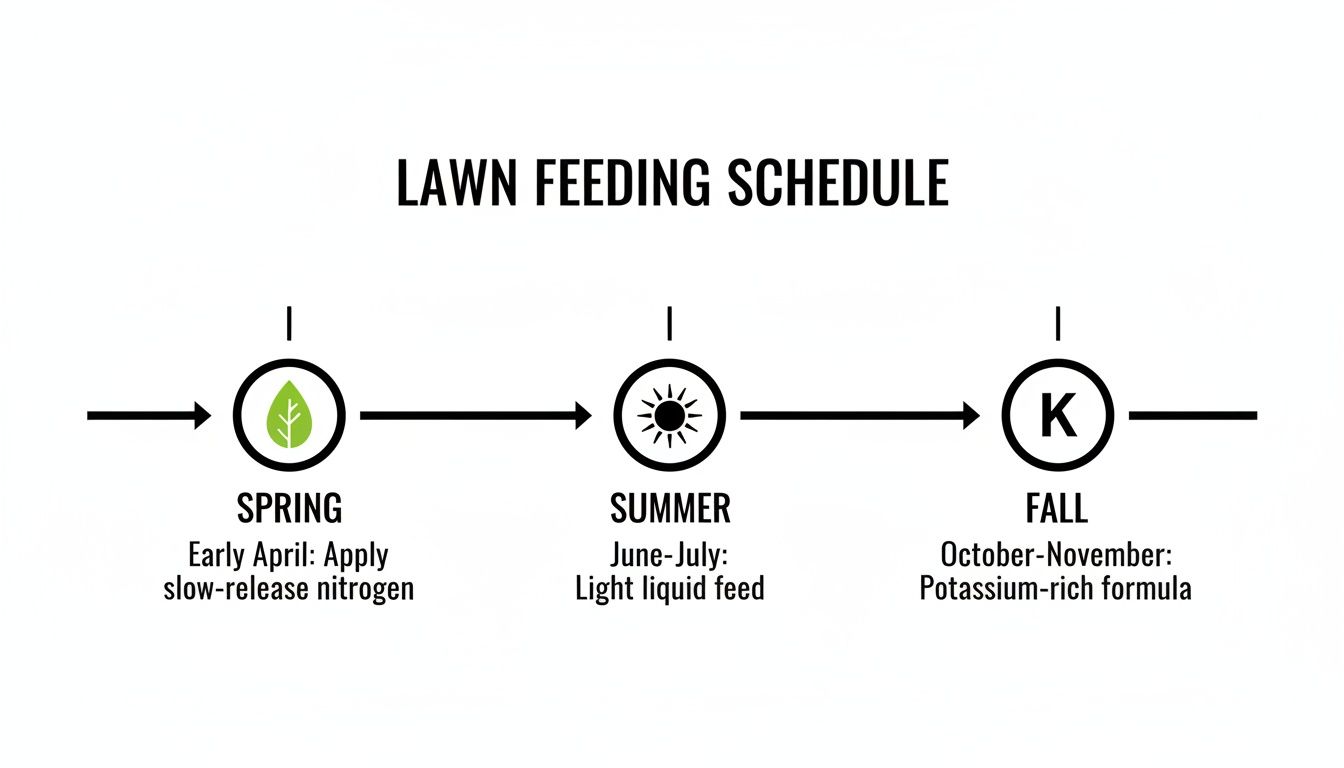
As you can see, spring is all about waking the lawn up and promoting new growth. Summer becomes a game of stress management, and fall is dedicated to building strong roots with potassium to prepare for winter.
Early Spring Feeding: March to April
This is the official kickoff to the growing season for both types of grass, but they wake up on different schedules. The goal here is to give them a boost to support vigorous growth after a long winter nap.
- For Cool-Season Lawns (Fescue): This is a make-or-break feeding window. As soon as the soil temperatures are consistently hitting 55°F, it's time to apply a nitrogen-rich homemade fertilizer, like our "Quick Green-Up Compost Tea." This really encourages that lush, green growth and helps the turf recover from any winter damage.
- For Warm-Season Lawns (Bermuda, Zoysia): You'll want to hold off just a little longer. I've seen too many people in Johns Creek fertilize too early, which only feeds the weeds. Wait until your lawn is at least 50% green and actively growing before you put down that first application.
Late Spring & Early Summer: May to June
As the temperatures start climbing across the area, your game plan shifts from kickstarting growth to sustaining it. For Fescue, this is the last prime time to feed before the summer heat really sets in.
A final, lighter application of a slow-release dry mix in May helps Fescue lawns store up energy for the tough summer months. For Bermuda and Zoysia, though, this is their peak season. You can continue with regular feedings every four to six weeks to promote a thick, dense turf that will naturally choke out any invading weeds.
I see this mistake all the time: fertilizing during a classic Georgia summer drought. When the grass is dormant and stressed from the heat, it can't absorb nutrients properly. You'll just end up burning the lawn and causing some serious damage. Always wait for cooler temps and a good rain before you even think about feeding.
The Summer Caution Period: July to August
For those of us in the Cumming and Alpharetta area, July and August are all about survival, not growth. The intense sun and suffocating humidity put a ton of stress on every type of grass.
During this period, you should avoid applying any nitrogen-heavy fertilizers. Your focus needs to be on proper watering and mowing high to help insulate the soil and protect the roots. If you feel you absolutely must fertilize, use a very light dose of a liquid feed with micronutrients and potassium to help the grass handle the stress a little better.
Fall Fertilization For Winter Prep: September to November
Believe it or not, fall is arguably the single most important fertilization season, especially for our cool-season Fescue lawns. As the temperatures finally start to cool off, these grasses hit a second growth spurt.
- Cool-Season Lawns: Hit them with a potassium-rich fertilizer in September and then again in November. This is all about strengthening the root system and improving the plant's ability to handle the cold. It’s the single best thing you can do to set your lawn up for a healthy start next spring.
- Warm-Season Lawns: Now it's time to wind things down. Your final fertilizer application of the season should be in early September. This gives the grass one last little boost before it starts going dormant for the winter. Fertilizing any later than that can mess with its natural preparation for the cold.
Getting these seasonal nuances right is at the heart of effective lawn care. For a deeper dive into the specifics, our guide on when to properly fertilize your lawn has some great additional insights.
Common Mistakes To Avoid With DIY Fertilizers
Making your own lawn fertilizer is a fantastic way to take control of your yard's health, but it's not without its pitfalls. I've seen even the most careful homeowners make a few common mistakes that can set them back. The good news is, they're all easy to sidestep once you know what to watch for.
The "More is Better" Myth
The single biggest mistake? Over-application. It's a tempting thought process—if a little fertilizer is good, a lot must be great, right? Unfortunately, with fertilizer, too much of a good thing is definitely a bad thing. Piling it on, even with all-natural ingredients, can cause "nutrient burn," which literally scorches your grass and can even damage the roots.
This is where a little bit of simple math saves the day. Before you mix or spread anything, you absolutely must know the square footage of your lawn. Grab a tape measure, find the length and width of each section of your yard, and multiply. Knowing you have a 2,500 square-foot lawn in Alpharetta versus a 10,000 square-foot property in Milton makes all the difference in applying the right amount.
Choosing The Wrong Ingredients For Georgia Soil
Another issue I see all the time here in North Georgia is accidentally making a bad soil problem even worse. Our famous red clay is naturally acidic. If you're not careful, the very ingredients you choose can drop the pH even further, which effectively locks up key nutrients and starves your grass.
A classic example is using too many pine needles or a heavy hand with coffee grounds. Sure, they add organic matter, but they also bring a lot of acidity to the party. If your soil test already came back with a low pH, adding more acidic ingredients is a recipe for a permanently stressed-out lawn. Always, always check your soil test results before you start experimenting with new additions to your blend.
One of the most common frustrations is seeing no change after all your hard work. Don't think of it as a failure—think of it as your lawn sending you a message. Learning to troubleshoot and read those signals is a skill that will pay you back for years.
Troubleshooting Your DIY Fertilizer Efforts
So, what happens when things just don't go as planned? Don't throw in the towel. Put on your detective hat and figure out what your lawn is telling you.
- Is your lawn not greening up? If the grass looks pale or yellowish after you've fed it, you're likely dealing with a micronutrient deficiency. Ingredients like kelp meal or a quick dose of compost tea can often supply those missing trace elements, like iron and manganese, that give grass its rich, deep green color.
- Are new weeds popping up everywhere? This is a classic rookie composting mistake. If you see a sudden weed explosion after applying your mix, your compost pile probably didn't get hot enough to kill off the weed seeds hiding in the organic material. A well-managed compost pile needs to hit 140-160°F to neutralize those pesky seeds.
By sidestepping these common errors and learning how to read the signs, your homemade lawn fertilizer journey in North Georgia will lead straight to a healthier, more beautiful yard.
Common Questions About DIY Lawn Fertilizer
Jumping into homemade lawn fertilizer is exciting, but it's smart to have a few questions. It’s a completely different approach than grabbing a bag off the shelf at the big-box store. To help you get started with confidence, I’ve pulled together the most common questions I hear from homeowners right here in North Georgia.
Is Homemade Lawn Fertilizer Actually Safe For My Pets And Kids?
Yes, absolutely. In fact, this is the number one reason most people make the switch. When you’re working with ingredients from your own kitchen and garden—like compost, Epsom salt, or used coffee grounds—you’re creating a mix that is completely non-toxic.
Unlike chemical fertilizers that come with warnings and require you to keep everyone off the grass for a day or two, you don't have that worry here. The kids and the dog can get right back to playing after you’re done. The only real caveat is to make sure your compost is fully finished. If you use any animal manure in your pile, it needs to have aged properly for at least six months to ensure any potential pathogens are long gone.
How Soon Can I Expect To See Results?
This really boils down to whether you're using a liquid or a dry fertilizer. They work on two totally different timelines.
- Liquid Fertilizers: Think of these as a quick shot of energy for your lawn. A compost tea, for example, delivers nutrients in a form that the grass can absorb almost instantly. You'll often see a noticeable "greening up" effect in just a week or so.
- Dry Fertilizers: These are more of a slow-and-steady approach. A dry, slow-release mix is designed to feed the soil, not just the plant. It can take 4 to 6 weeks to see visible changes in lawn thickness and overall health. The real win with these mixes is the long-term, lasting improvement to your soil’s structure and fertility.
Can I Just Toss Kitchen Scraps On My Cumming, GA Lawn?
While the intention is good, throwing raw food scraps directly onto the lawn isn't the best idea. For one, it can look messy and start to smell. More importantly, it’s like putting out an open invitation for pests like rodents and insects.
The best way to recycle those kitchen scraps into lawn food is to compost them first. Composting breaks everything down into a stable, nutrient-rich soil amendment. For those of us wrestling with the heavy red clay around Cumming, finished compost is a game-changer. It does wonders for improving drainage and soil structure.
I often tell clients in Milton and Johns Creek that composting is the bridge between your kitchen waste and a healthier lawn. It transforms a potential pest problem into a powerful tool that directly tackles our region's specific clay soil challenges.
I Don't Have Time To DIY. What Are My Organic Options?
Life is busy—I get it. Not everyone has the time to maintain a compost pile or mix their own fertilizer. If you're short on time but still want to stick with an organic approach, you have plenty of great options. The market for commercial organic fertilizers has really grown.
When you're shopping, look for products that are OMRI (Organic Materials Review Institute) listed. This seal means the product meets strict organic standards. Brands like Milorganite or Espoma are solid, reliable choices that work by feeding the soil's microbes, just like a homemade mix would.
You might not get the full cost savings of DIY, but you still get the peace of mind that you're building a healthier soil ecosystem without harsh chemicals. You can find these at most local garden centers around Alpharetta and Cumming.
At Barefoot Organics, we know that a beautiful, healthy lawn is the goal, but the safety of your family and our local environment has to come first. If you love the idea of a natural approach but want to skip the guesswork, our team is here to help. We create natural lawn care programs designed specifically for North Georgia's unique challenges. Let us do the work so you can enjoy a lush, green, and safe lawn.
Ready for a lawn you can feel good about? Get your free online quote today!