

Making your own lawn fertilizer is a game-changer for building a truly lush, resilient yard, but what works for a sandy Florida lawn won't do a thing for us here in North Georgia. Our unique conditions, from Cumming all the way up to Dahlonega, demand a smarter, more natural approach. The secret isn't just feeding the grass; it's about building healthy soil from the ground up.
Why North Georgia Lawns Need a Different Approach
Ever struggled with a patchy, weak lawn in Alpharetta or Johns Creek? You're definitely not alone. The problem is almost always right under your feet. Most of us are battling that infamous Georgia red clay—a dense, heavy soil that creates some real headaches for growing healthy turf.
This compact soil makes it incredibly tough for grass roots to dig deep and find the nutrients and water they need to survive. When you spread a typical synthetic fertilizer, a lot of it just sits on the surface. Then, one of our classic Forsyth County downpours hits, and all those chemicals wash away before they can do any good. That runoff doesn't just waste your money; it can pollute our local waterways, including beautiful Lake Lanier.
The Clay Soil Conundrum
Georgia's clay is naturally acidic and usually pretty low in the good stuff—organic matter. While it holds onto moisture, it doesn't drain well, which leads to compacted, waterlogged soil that can literally suffocate grass roots. This is a big problem for popular local grasses like Bermuda and Zoysia, which absolutely need well-aerated soil to develop the deep, drought-resistant roots that help them thrive in our hot summers.
Homemade, organic solutions work completely differently. Instead of a quick, temporary green-up, they focus on fixing the soil itself. Ingredients like compost and leaf mold add critical organic matter that completely changes the game.
- It breaks up heavy clay, which improves the soil's structure and allows air to get in.
- It enhances water retention, meaning less runoff and a lawn that can better handle dry spells.
- It provides slow-release nutrients, feeding your grass steadily over time instead of all at once.
- It encourages beneficial microbial activity, creating a living soil ecosystem that supports strong, healthy roots.
Before you start mixing anything, you have to know what your soil is missing. We can't stress this enough: get a soil test. This simple step is like getting a roadmap; it tells you exactly what your lawn needs so you can create the perfect custom fertilizer blend.
When you work with your soil's natural characteristics instead of fighting against them, you build a foundation for a lawn that doesn't just survive—it thrives. Best of all, this approach is safer for kids and pets and creates a yard that can handle our unpredictable Georgia weather.
The Growing Shift to Natural Solutions
This move away from harsh chemicals isn't just a local fad; it's happening everywhere. Within the home and garden fertilizer market, valued at a massive USD 14.74 billion, there’s a clear and growing demand for sustainable, DIY options.
Homeowners are getting smarter, turning to things like compost teas and simply leaving their grass clippings on the lawn. Believe it or not, this can recycle up to 90% of a household's organic waste back into nutrient-rich food for the yard. This trend is fueling the natural lawn fertilizer sector, which is projected to nearly double from USD 5.5 billion to USD 10.2 billion by 2032. People are making the switch because it works—many eco-conscious homeowners report seeing up to 30% better grass density after going organic.
For those of us working with Georgia's unique soil, certain ingredients are true standouts. Here's a quick look at what works best.
Top Homemade Fertilizer Ingredients for Georgia Clay Soil
| Ingredient | Primary Nutrient Provided | Best For Grass Types | Ideal Application Season |
|---|---|---|---|
| Compost | Balanced N-P-K, micronutrients | All (especially Bermuda, Zoysia) | Spring & Fall |
| Epsom Salt | Magnesium, Sulfur | All grass types, especially if yellowing | Early Spring |
| Coffee Grounds | Nitrogen | Bermuda, Fescue, Zoysia | Spring & Fall |
| Grass Clippings | Nitrogen | All grass types | Throughout the growing season |
| Leaf Mold | Carbon, improves soil structure | All grass types | Fall & Winter (as a top dressing) |
These ingredients are fantastic because they don't just add nutrients; they actively improve the clay soil structure, which is the key to long-term success here in North Georgia.
Practical Homemade Fertilizer Recipes You Can Make Today
Alright, now that you know why your lawn in Cumming or Alpharetta needs a different kind of TLC, it's time to roll up your sleeves. We're not talking about complicated chemistry or pricey bags of store-bought stuff. These are three of my favorite tried-and-true homemade fertilizer recipes, perfect for any North Georgia homeowner ready to build a truly healthy lawn from the ground up.
Each of these recipes uses simple, accessible ingredients to do different jobs—from giving your grass a quick shot of nutrients to building great soil structure for the long haul.
The Compost Tea Brew: A Liquid Powerhouse
Think of compost tea as a supercharged energy drink for your lawn. It’s a liquid concentrate packed with the beneficial microorganisms that our heavy clay soil in Johns Creek and Milton is starving for. While granular fertilizers often just sit on top of that dense clay, this brew soaks right in, delivering food straight to the roots where it’s needed most.
This recipe is fantastic for an early spring boost, right when your Bermuda or Zoysia grass is starting to wake from its winter nap.
Here’s how to brew a potent batch:
- What You’ll Need: A 5-gallon bucket, 2-3 gallons of dechlorinated water (just let tap water sit out for 24 hours), about 2 cups of finished compost, and 1 tablespoon of unsulfured molasses.
- Brewing Process: Fill the bucket with your water. Pop the compost into a porous bag—an old pillowcase or some cheesecloth works great. Sink the bag into the water, stir in the molasses (it's food for the microbes!), and let the whole thing steep for 24 to 36 hours.
- Pro Tip – Aerate: To make your brew even more powerful, drop a small aquarium pump with an air stone into the bucket. The oxygen will kick the beneficial aerobic bacteria into overdrive. You’ll know it’s working when it develops a rich, earthy smell.
When it’s ready, strain the liquid into a backpack or pump sprayer. Dilute it with water at a 1:4 ratio (one part tea to four parts water) and spray it evenly across your lawn. I usually aim for one gallon of the diluted mix to cover about 150-200 square feet.
Grasscycling and Leaf Mold: The Ultimate Slow-Release Soil Builder
This is, hands down, the easiest and one of the most effective ways to make homemade fertilizer. It’s all about using the organic matter your own yard produces. Instead of bagging up grass clippings and hauling away leaves, you let them work for you, feeding the very soil they came from.
If you want to get really sophisticated, you can even find AI-based composting recommendations to fine-tune your process for maximum nutrient output.
It's a simple two-part system:
- Grasscycling: When you mow, just take the bag off your mower. Let the clippings fly! They’re loaded with nitrogen and break down fast, feeding nutrients right back into the soil. Making this one small change can cut your lawn's annual fertilizer needs by up to 25%.
- Making Leaf Mold: In the fall, don’t curse those leaves falling on your Milton property—they’re gold. Rake them into a pile in a back corner of your yard. If you can, run the mower over the pile a few times to shred them; they’ll break down much faster. Let them sit over the winter, and by next year, you’ll have a dark, crumbly, nutrient-rich soil amendment called leaf mold.
Spread a thin layer (about a quarter-inch is plenty) of leaf mold over your lawn in the fall or spring. It’s an incredible soil conditioner that helps break up our heavy clay and improves moisture retention during those scorching Georgia summers.
The Kitchen Scrap Soil Builder: For Targeted Nutrient Boosts
Your kitchen is a treasure trove of ingredients that can help you zero in on specific soil issues. This isn't one single recipe, but more of a toolkit you can use to customize your approach.
- Used Coffee Grounds: A fantastic source of nitrogen, perfect for that spring green-up. They also gently lower the pH of our sometimes-alkaline soils. Just sprinkle them lightly over your lawn before it rains or right before you water.
- Crushed Eggshells: Eggshells are packed with calcium, which is crucial for building strong cell walls in plants. Rinse them out, crush them into a fine powder, and sprinkle them around, paying extra attention to any weak patches.
- Epsom Salt (Magnesium Sulfate): If your grass is looking a little yellow despite getting enough water, it could be low on magnesium. Dissolve two tablespoons of Epsom salt in a gallon of water and spray it on your lawn. It’s a quick fix that helps with chlorophyll production for a deeper green color.
This simple diagram shows the chain reaction we often see in North Georgia: our native clay soil leads to water runoff, which results in weak, shallow grass roots.
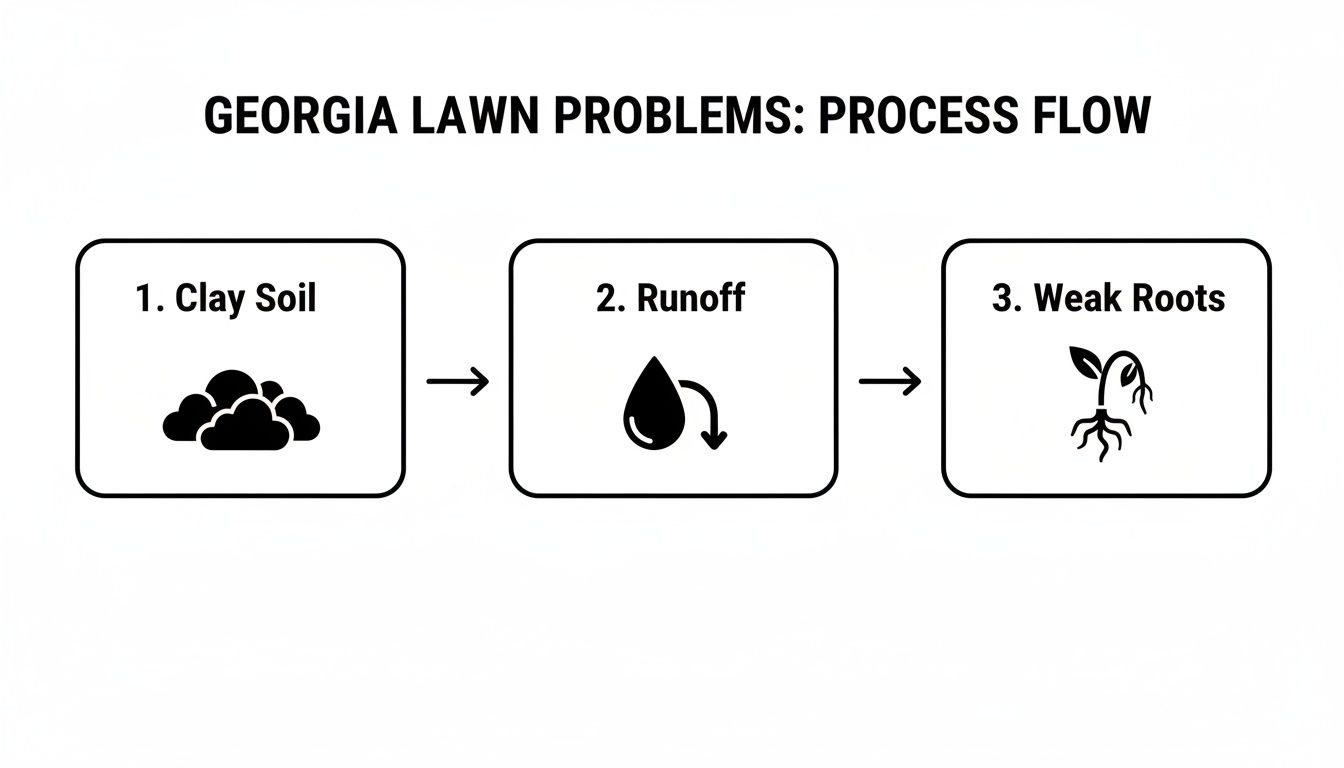
It’s clear that tackling the root of the problem—that heavy clay soil—is the key to breaking this cycle and solving the runoff and poor root health that follow.
A Quick Word of Caution: Never add meat, dairy, or oily foods to your compost pile or directly to your lawn. They can attract pests, create nasty smells, and just make a mess. For the best results, stick to plant-based scraps.
Your North Georgia Lawn Care Calendar
Growing a fantastic lawn here in North Georgia isn’t about one big event; it’s a year-round rhythm. Applying the right homemade fertilizer at the wrong time can actually stress out your grass or, even worse, just end up feeding the weeds you’re trying to get rid of. For those of us in places like Cumming, Milton, or anywhere in Cherokee County, the real secret is working with the seasons.
This isn't about guesswork. It's about knowing what your lawn needs and when it needs it. Our region’s climate, with those hot, sticky summers and cool winters, creates a specific playbook for warm-season grasses like Bermuda and Zoysia. Follow this calendar, and your DIY efforts will absolutely pay off.
Early Spring: The Gentle Wake-Up Call
As Forsyth and Gwinnett counties start to warm up in late March or early April, you'll see your lawn stirring from its winter nap. This is a huge moment, but the trick is to be patient. If you fertilize too early, you're just giving a head start to crabgrass and other weeds before your turf is even ready to compete.
My rule of thumb? Wait until your lawn is about 50% green. The goal here isn't to force a bunch of new growth. You just want to give it a gentle, nutrient-rich meal to help the roots get going as the soil warms up.
- What to Use: A light dose of compost tea is perfect. It's packed with beneficial microbes and nutrients that are easy for the waking grass to absorb without being overwhelmed.
- How to Apply: Get out there in the early morning to apply your compost tea. This gives the grass blades time to soak in the goodness and dry off before the intense afternoon sun hits, which is a great way to sidestep potential fungal problems.
Late Spring & Early Summer: Fueling Peak Growth
From May through June, your lawn in Alpharetta or Johns Creek is hitting its stride. This is prime growing season, and now’s the time to give it the fuel it needs to grow thick and lush. A well-fed lawn at this stage will naturally start to choke out weeds and build the strength it needs for the brutal summer ahead.
This is also the perfect time to fully embrace "grasscycling." Seriously, just leave the clippings on the lawn instead of bagging them. It’s a simple move with a surprisingly big impact.
Grass clippings are the unsung hero of homemade lawn care. The market for organic fertilizers for turfgrass is already valued at USD 192.27 million, and simple, eco-friendly habits like this are a huge driver. We in North America are leading the charge in preferring chemical-free solutions, and it turns out clippings can return 25-30% of the lawn's nitrogen needs. That's enough to cut your need for other fertilizers by up to 40% a year, according to turf management stats. One study even found that grasscycling boosted soil organic matter by 15% in five years and improved water retention by 20%. You can dig into more of these trends over at Data Bridge Market Research.
Late Summer: Surviving The Georgia Heat
July and August are just plain tough on our lawns. The combination of scorching heat and potential drought puts a ton of stress on the grass. The absolute last thing you want to do is push for new growth with a heavy nitrogen feeding. That new, tender grass is incredibly vulnerable to heat and disease.
Your focus should shift to support and stress relief. A very light feeding can help the lawn stay healthy without forcing it to do too much work.
During the peak of summer, back off on heavy fertilizing. Think of it this way: you wouldn't eat a massive Thanksgiving dinner right before running a marathon. Your lawn feels the same way about growing during a heatwave.
Fall: Preparing For The Long Sleep
Once the summer heat finally breaks and those cooler, crisp days of September and October arrive, your lawn gets a second wind. This is, without a doubt, the most important feeding window of the entire year. The goal isn't about green top growth anymore; it’s about sending all that energy down to the roots to prepare for winter.
The nutrients you apply now won't cause a dramatic green-up. Instead, they get stored in the root system, providing the energy reserves your lawn needs to survive the cold and bounce back strong and green next spring.
- What to Use: This is the ideal time for a solid, slow-release fertilizer. A thin top dressing of compost or, my personal favorite, leaf mold is perfect.
- How to Apply: Use a rake to spread a thin, even layer (about a quarter-inch) of your compost or leaf mold across the entire yard. Water it in well afterward to help the nutrients start working their way into the soil.
By sticking to this seasonal calendar, you'll make sure your homemade fertilizers are perfectly timed to your North Georgia lawn's natural life cycle. You’re not just feeding it—you’re building a healthier, more resilient turf year after year.
Advanced Strategies for a Healthier Lawn
So, you've gotten the hang of a few homemade fertilizer recipes and have your application schedule down. That's fantastic. Now, if you're ready to take your lawn from "good" to "the best on the block," it's time to dig a little deeper.
Creating a genuinely resilient lawn here in North Georgia isn't just about feeding it. It’s about building a healthy ecosystem from the ground up, making sure every drop of that compost tea or pinch of Epsom salt you apply actually gets used. These next steps will help you do just that.
Start With a Professional Soil Test
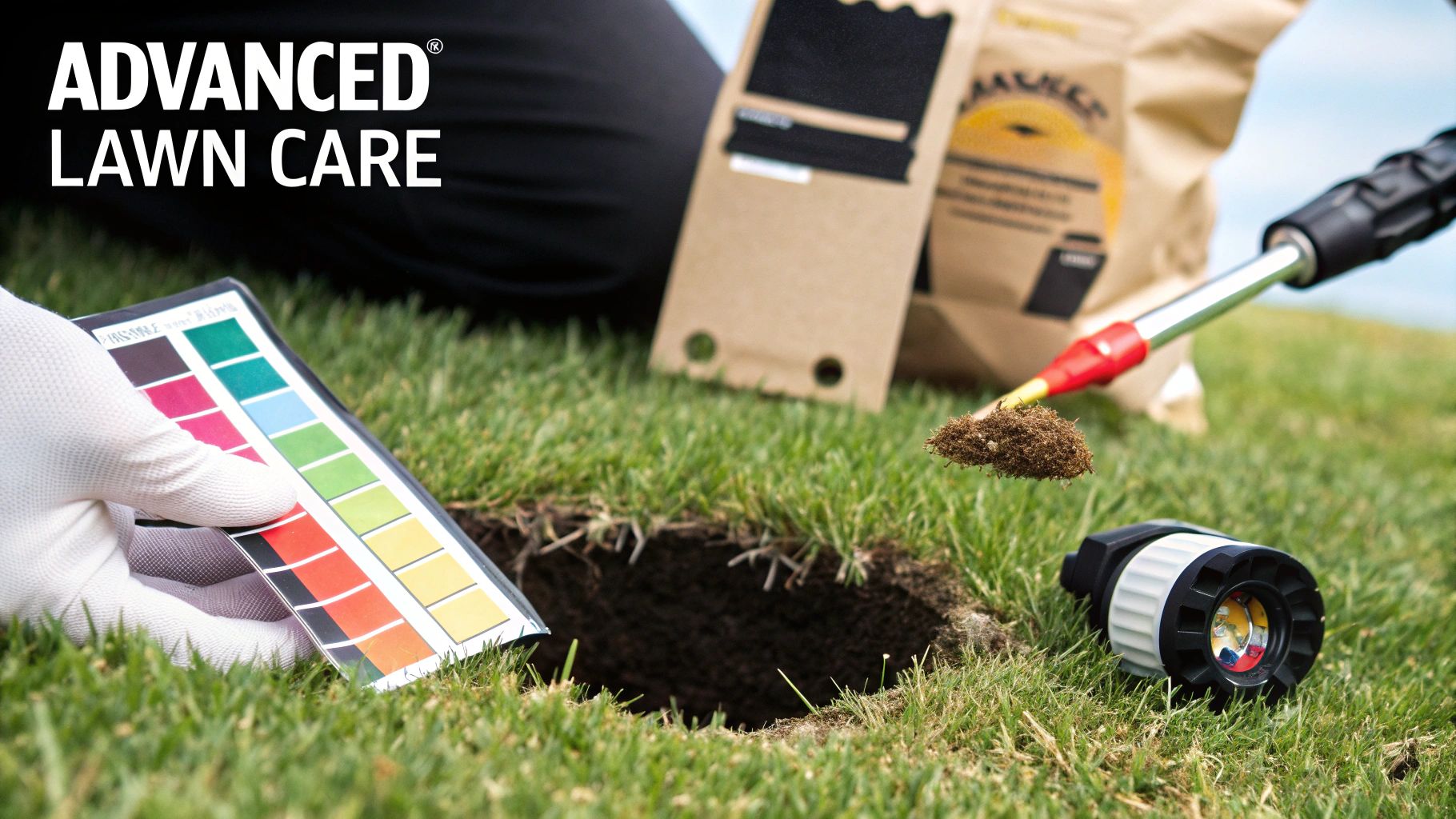
Before you mix another batch of fertilizer, the single best thing you can do for your yard in Milton, Johns Creek, or anywhere nearby is to get a professional soil test. Those little DIY kits are okay for a quick pH check, but a detailed analysis from the UGA Extension office is like getting a complete blood panel for your lawn.
For a small fee, you'll get a scientific roadmap that tells you everything: your exact soil pH, organic matter percentage, and precise levels of key nutrients like phosphorus, potassium, magnesium, and calcium. This report takes all the guesswork out of the equation.
Knowing your soil’s specific deficiencies is the key to customizing your homemade fertilizer approach. You can stop applying things your lawn doesn't need and focus on what will make the biggest impact.
Imagine your test shows your Alpharetta lawn is overloaded with potassium but starving for magnesium. With that insight, you know to ease up on the banana peels and start incorporating more Epsom salt into your routine. It’s all about targeted, effective care.
To help you make sense of your results, here’s a quick guide on what to look for and how your homemade ingredients can help.
Decoding Your Georgia Soil Test for DIY Fertilizing
| Soil Test Finding | What This Means for Your Lawn | Recommended Homemade Additive |
|---|---|---|
| Low pH (Acidic Soil) | Grass struggles to absorb nutrients; moss and certain weeds thrive. | Wood ash (sparingly) |
| High pH (Alkaline Soil) | Iron deficiency can cause yellowing grass (chlorosis). | Coffee grounds, compost |
| Low Phosphorus (P) | Weak, stunted root development; poor overall vigor. | Bone meal (used with caution), compost |
| Low Potassium (K) | Poor stress tolerance; vulnerable to drought, heat, and disease. | Banana peel tea, wood ash |
| Low Magnesium (Mg) | Yellowing between the leaf veins; essential for photosynthesis. | Epsom salt (magnesium sulfate) |
This table is just a starting point, but it shows how a real soil test can guide your DIY fertilizing efforts, making them much more effective.
Maximize Fertilizer Impact With Core Aeration
One of the biggest hurdles we face is our dense Georgia clay soil. Over time, it gets compacted from foot traffic, mowing, and even heavy rain. This squishes the soil particles together, making it nearly impossible for air, water, and—you guessed it—your fertilizer to reach the grass roots.
You could be spraying the most nutrient-rich fertilizer in the world, but if it can't get down to the roots, it’s not doing much good.
The solution is core aeration. This is where a machine pulls up small plugs of soil, creating thousands of little channels into the ground. These holes become direct pathways for your compost tea and other liquid fertilizers to soak deep into the root zone where they're needed most.
Aerating is a game-changer:
- It breaks up compacted soil, giving roots space to breathe and expand.
- It ensures your homemade fertilizers actually get to the root system.
- It dramatically improves water absorption, helping your lawn resist drought.
Time your aeration for the spring or fall, right before a fertilizer application, and you’ll see a massive difference in the results.
Build a Thicker, Weed-Resistant Turf
Here’s a simple truth: a thick, healthy lawn is its own best defense. When grass is dense, there’s simply no room for weeds to get a foothold.
The absolute best time to thicken up your lawn is right after you aerate. By overseeding—spreading fresh grass seed over your existing turf—you can take advantage of all those holes you just created. The seeds will fall into the aerated channels, giving them excellent seed-to-soil contact and a protected spot to germinate.
Your mowing habits also play a huge role. I see so many homeowners in Cumming who scalp their lawns, cutting the grass way too short. This stresses the plant and exposes the soil to the sun, which is basically an open invitation for weeds to pop up.
Try raising your mower blade to one of its highest settings. Taller grass blades develop deeper, stronger roots and create a canopy of shade over the soil, naturally preventing weed seeds from sprouting. To round out your lawn's defenses, consider incorporating effective natural pest control methods to handle any critters without resorting to harsh chemicals.
Knowing When to Call in the Pros for Natural Lawn Care
Making your own organic fertilizer is a fantastic way to connect with your yard and build healthy soil. It’s rewarding, for sure. But let’s be honest, sometimes our best DIY efforts just aren’t enough.
There are certain lawn problems and situations where bringing in an expert is the smartest move you can make. It’s not about giving up; it’s about knowing when a specialist can save you a ton of time, frustration, and money in the long run. Recognizing that moment can be the key to turning a struggling lawn into a truly vibrant one.
For instance, if you've got a large property out in Dahlonega or a busy schedule in Alpharetta, consistently mixing and applying homemade treatments can become a serious chore. This is where a professional service really shines. They have the equipment and high-quality natural products to give your lawn exactly what it needs, precisely when it needs it—a level of targeted care that’s tough to achieve on your own.
Telltale Signs Your Lawn Needs an Expert Eye
Some lawn issues go way beyond a simple nutrient fix. If you’re seeing problems pop up all over your yard, it's often a sign of a deeper, more complex issue that a simple compost tea isn't going to solve. If any of these red flags sound familiar, it’s probably time to call for backup.
- Fungal Diseases Spreading Fast: See those big, expanding circles of brown or dead-looking grass? You could be fighting a serious fungal disease like brown patch, which absolutely loves our humid Georgia climate. These things can take over in a flash and often need specialized organic treatments and a professional diagnosis to get under control.
- A Full-Blown Pest Invasion: A few grubs here and there are normal. But when you’re facing a massive infestation of chinch bugs or armyworms, they can decimate your turf in a matter of weeks. A pro can put together an integrated pest management (IPM) plan that uses natural methods to knock down the bad bugs without harming the good ones, your kids, or your pets.
- Rock-Hard, Compacted Soil: Does water just sit on top of your lawn after it rains? Does the ground feel like concrete? That's severe soil compaction. While regular aeration helps, some of that dense Georgia clay in places like Milton or Johns Creek needs a more aggressive approach with specialized equipment to really break it up and let the roots breathe.
Calling a professional doesn't mean your DIY efforts failed. It means you’re making a strategic decision to bring in a specialist to diagnose and treat a problem that has outgrown the scope of basic home care.
The Power of a Professional Diagnosis
A true natural lawn care pro is more than just a "spray-and-go" technician. Think of them as a lawn detective. They get to the root cause of the problem.
That stubborn yellow patch in your Alpharetta yard might look like it needs nitrogen, but is it really? It could easily be an underlying soil pH imbalance, a hidden drainage issue, or a pest problem you haven't spotted yet.
By correctly identifying the real issue, a professional ensures the right solution is applied from the start. This keeps you from spinning your wheels—and wasting money—on DIY treatments that were never going to work. It’s this kind of long-term, strategic thinking that builds a truly healthy, resilient lawn that actually needs less work over time.
Common Questions About Homemade Lawn Fertilizers
Making the switch from store-bought chemical fertilizers to a DIY approach is a big step, and it's perfectly normal to have a few questions. Homeowners I talk to, from Cumming to Milton, often wonder if they’re doing it right. Let's dig into some of the most common questions to give you the confidence you need to get started.
These answers come from years of hands-on experience caring for lawns right here in North Georgia.
How Long Until I See Results With Homemade Fertilizer?
This is probably the number one question we get. Honestly, it’s all about setting the right expectations from day one. Synthetic fertilizers give you that fast, almost fake-looking green-up, but organic methods are playing a completely different game. We're focused on building healthy soil for the long haul.
You won't see a dramatic change overnight. What you will see are subtle improvements in your lawn's color and texture within about four to six weeks. The real magic happens over a full growing season, whether you're in Forsyth or Cherokee County. As the soil gets healthier and packed with microbial life, you’ll notice a huge difference in your lawn's thickness and its ability to handle our brutal summer heat.
Are These DIY Fertilizers Actually Safe For My Kids And Pets?
Absolutely. In fact, this is one of the main reasons families in Alpharetta and Johns Creek go organic in the first place. The recipes we've shared—using things like compost, grass clippings, and kitchen scraps—are fundamentally non-toxic. They are worlds away from their synthetic chemical cousins.
You can let your kids and pets play on the lawn without that nagging worry in the back of your mind. Still, a little common sense is always a good idea.
- After spraying a liquid fertilizer like compost tea, it's best to let the lawn dry completely before the kids and dogs start rolling around on it. On a sunny day, that's usually just an hour or two.
- Keep your compost pile tidy and don't add meat or dairy scraps, which can attract unwanted critters.
Follow these simple tips, and you'll have a gorgeous green space that's genuinely safe for your whole family to enjoy.
The heart of organic lawn care is working with nature, not fighting against it. This naturally creates a safer yard than one drenched in synthetic chemicals. Your lawn becomes a healthy ecosystem, not a chemistry experiment.
Can I Burn My Lawn With Homemade Fertilizer?
It’s a lot harder to burn your lawn with homemade organic fertilizers, but I wouldn't say it's impossible. Organic options are incredibly forgiving because they release nutrients slowly, not all at once like synthetics. You just don't have that high concentration of chemical salts that scorches the grass.
That said, you still have to be smart about it. Piling on too much of a high-nitrogen source, even a natural one like a thick layer of fresh grass clippings, could cause some yellowing. If it's too thick in one spot, the decomposition process can actually generate heat and stress out the turf.
The key is always balance and moderation. Stick to the recipe ratios we talked about and use properly finished compost. When you apply a thin, even layer of compost or a correctly diluted compost tea, the risk of burning your lawn is practically zero. It's just a gentler, more sustainable way to feed your grass.
If you're dealing with stubborn lawn problems or just want the peace of mind that comes with professional care, Barefoot Organics is here to help. Our natural lawn care programs are built specifically for North Georgia's unique climate, creating healthy, resilient lawns from the soil up. Get a free online quote today and let us bring our expertise to your yard.