

If you live in Cumming, Alpharetta, Johns Creek, Suwanee, or Duluth, you’ve probably seen the same pattern. A hard rain rolls through, parts of the lawn stay slick for days, and the grass in those spots starts thinning out. Then summer hits, the surface bakes hard, cracks show up, and roots still don’t seem to push down the way they should.
That cycle frustrates a lot of North Georgia homeowners because it feels contradictory. The yard stays wet, but the lawn still struggles. You water, fertilize, seed, and mow carefully, yet the grass never looks as healthy as it should.
Most of the time, the problem starts below the surface. In much of North Metro Atlanta, the issue is heavy clay soil, especially our familiar red clay. It’s not bad soil in every sense. It’s difficult soil. There’s a difference. When you understand how it behaves in Forsyth County, North Fulton, East Cobb, and surrounding communities, you can stop fighting it the wrong way and start improving it in a way that lasts.
Is Your Lawn a Victim of Georgia's Heavy Clay Soil?
One of the most common lawn complaints in North Georgia sounds like this: “My yard is muddy after rain, rock hard when dry, and my grass is patchy no matter what I do.” That’s classic clay behavior.
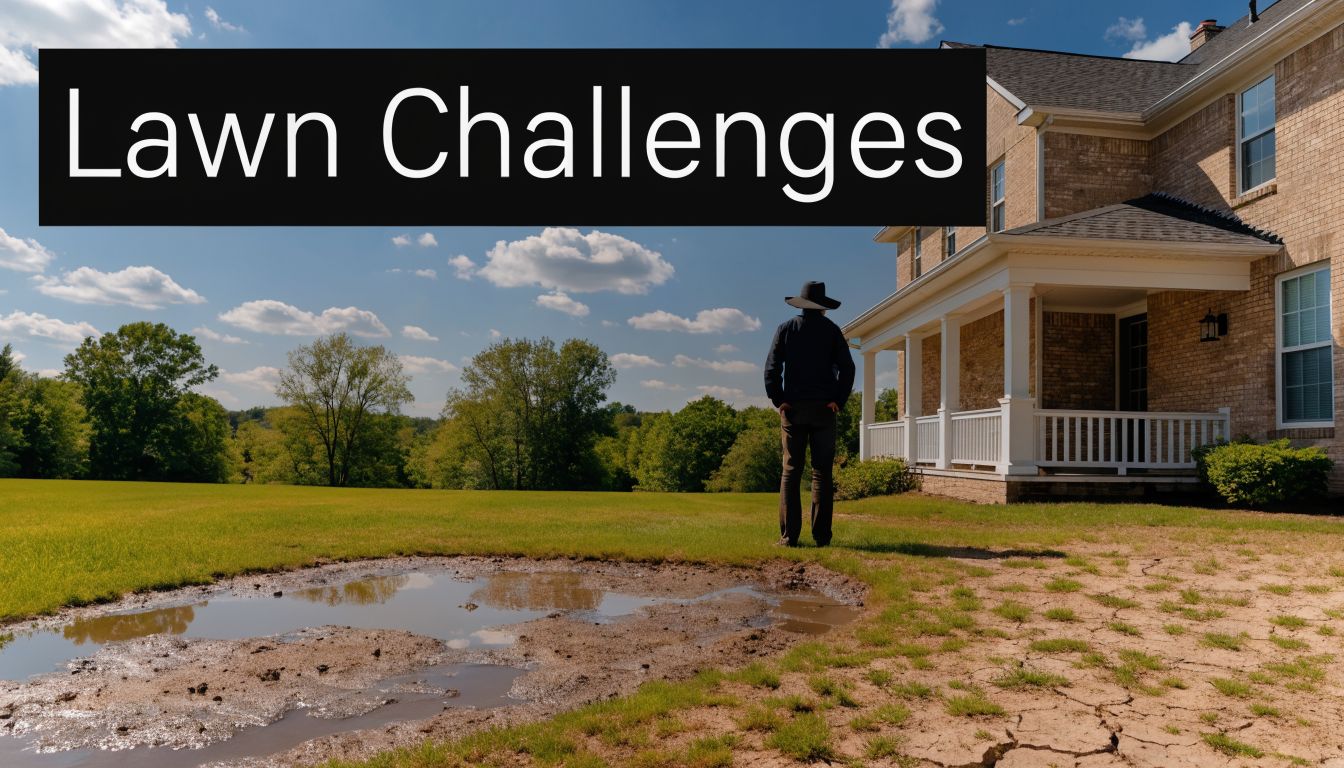
In neighborhoods across Marietta, Milton, Cumming, and Alpharetta, I see the same setup over and over. Builders remove or disturb the original topsoil during construction. What’s left near the surface is often dense, compact subsoil. That means roots hit resistance early, water sits too long, and homeowners end up treating a symptom instead of the cause.
What makes North Georgia clay different
North Georgia’s Piedmont soil is often acidic red clay, sometimes called ultisols. That matters because the issue isn’t only texture. It’s also chemistry. According to Fine Gardening, this red clay commonly has a pH between 4.5 and 6.0, and that acidity can lock up nutrients. The same source notes that exposed compact subsoil often needs lime amendments of 1 to 2 tons per acre along with organic matter to move toward a healthier range for lawn growth (Fine Gardening).
That helps explain why a lawn can be sitting on nutrient-rich clay and still look weak. The nutrients may be present, but the grass can’t access them efficiently.
The frustrating signs homeowners notice first
A clay-heavy yard usually tells on itself:
- Soggy zones after rain that stay soft long after the rest of the lawn dries
- Thin or shallow-rooted turf in high-traffic areas
- Hard, brick-like surface soil during hot stretches
- Poor response to fertilizer even when basic care is consistent
- Ruts and compaction anywhere kids, pets, or mowers repeatedly cross
Heavy clay isn’t a hopeless soil. It’s a soil that demands patience and the right sequence.
The upside most people miss
Clay has a reputation problem. Some of that is deserved. It compacts easily, drains slowly, and becomes a mess when worked wet. But it also holds onto nutrients better than loose, sandy soil. That’s why the right natural lawn care plan can make a dramatic difference over time.
For homeowners who want a lawn that’s safer for kids and pets, the goal usually isn’t to strip the clay out. It’s to open it up, balance it, and build structure so roots can use what’s already there. In North Georgia, that means working with the red clay we have, not wishing for a different soil profile.
How to Identify Heavy Clay and Understand Its Behavior
Before you fix soil, identify it correctly. A lot of homeowners call any sticky or red soil “clay,” but there’s a big difference between somewhat clayey soil and heavy clay soil.
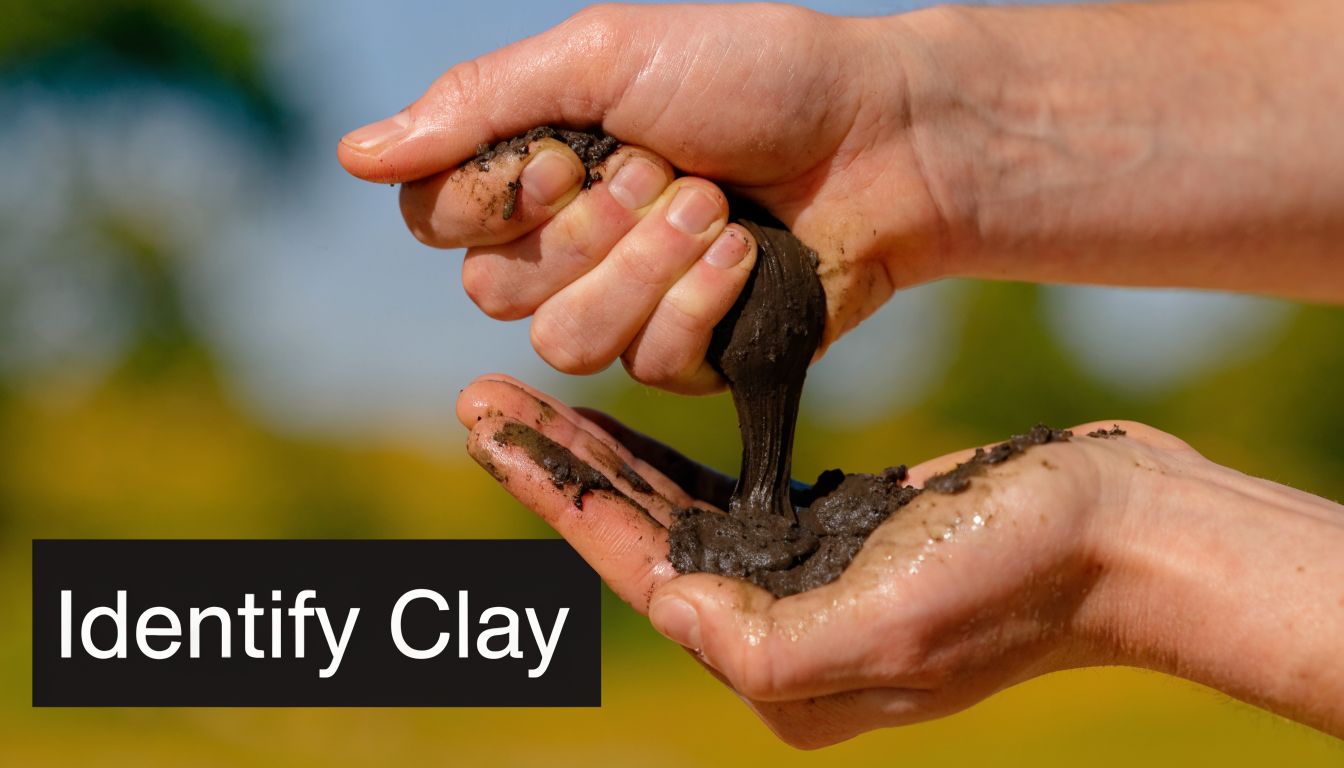
The quickest field check is simple and practical. According to the Royal Horticultural Society, heavy clay soils are defined by more than 40% clay particles, and a moist sample rolled into a sausage shape will form a ribbon 75mm or longer when pressed, showing high clay content (Royal Horticultural Society).
Do the ribbon test in your yard
Use soil from a few inches below the surface, not just loose material sitting on top.
- Moisten the soil until it feels pliable, not muddy.
- Roll it between your hands into a sausage-like strip.
- Press it between thumb and forefinger and let it extend outward.
- Watch the ribbon length and feel. If it stretches into a long ribbon before breaking and feels sticky with resistance, you’re likely dealing with heavy clay.
The feel matters. Heavy clay doesn’t just hold together. It smears.
Use a jar test for a rough visual check
The ribbon test is the better at-home indicator for heavy clay, but a jar test can still help you understand what’s in your soil mix.
- Fill a clear jar partway with soil
- Add water and shake thoroughly
- Let it settle
- Watch the layers form over time
Sand settles first, then silt, then the finest clay particles. This won’t replace a proper lab test, but it gives homeowners a visual sense of why their lawn behaves the way it does.
If you also want to check acidity before adding lime or nutrients, this guide on how to test soil pH is a useful next step.
Why clay acts the way it does
Clay particles are tiny. That creates two opposing effects.
First, the particles pack tightly. Water moves through slowly, air space is limited, and roots struggle when the soil gets compacted. Second, that same fine texture gives clay a lot of surface area, which helps it hold nutrients.
That’s why heavy clay can grow a good lawn once the structure improves.
A useful comparison is container growing. Succulent growers know that drainage is crucial for succulent health because roots fail in persistently wet conditions. Lawns in heavy clay face a similar structural problem, just at a bigger scale and with different plants.
What your lawn symptoms usually mean
Here’s a practical way to read what you’re seeing:
| Lawn symptom | Likely clay-related cause |
|---|---|
| Water pooling on the surface | Poor infiltration through dense soil |
| Grass pulls up easily | Shallow root development |
| Soil sticks to shoes and mower tires | High clay content and excess moisture |
| Surface becomes hard in dry weather | Tight particles shrinking and hardening |
| Turf declines in worn paths | Compaction from traffic |
Don’t diagnose clay by color alone. Diagnose it by feel, drainage pattern, and root resistance.
Once you know you’re dealing with heavy clay soil, the rest of your lawn decisions become clearer. You stop guessing, and you stop wasting time on fixes that sound easy but don’t hold up in Georgia conditions.
Your Year-Round Plan for Reviving a Clay Lawn
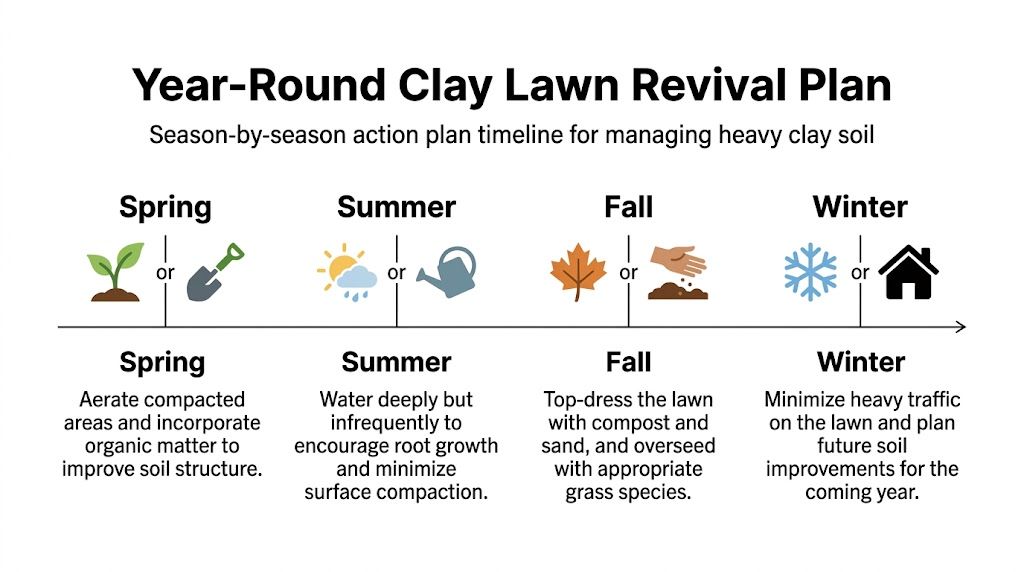
A clay lawn usually gets worse when homeowners react only when it looks bad. The better approach is a steady seasonal rhythm. North Georgia’s weather swings between wet periods, heat, and traffic stress, so timing matters.
One reason this rhythm matters is water behavior. Heavy clay soils can retain up to 50% more water than sandy soils, and the same fine-particle structure that holds moisture also holds nutrients like potassium and calcium. That can reduce fertilizer frequency, but clay still often needs nitrogen and phosphate attention in a lawn program (Hello Gravel).
Fall is the repair season
For most North Georgia clay lawns, fall is the most productive time to do real improvement work.
The soil is usually workable, temperatures are easier on turf, and roots can grow without summer stress. If your lawn has been compacted by kids, pets, mowing, or just years of settling, this is when to relieve that pressure.
Focus on these jobs in fall:
- Core aeration to open the soil and create channels for oxygen, moisture, and root expansion
- Topdressing with organic matter to start improving surface structure
- Overseeding where appropriate if your grass type and lawn plan call for it
- Traffic control so freshly improved ground doesn’t get pounded back down
If you only do one major soil-improvement task in a year, fall is usually the right window.
Winter is for testing and correction
Winter doesn’t look busy above ground, but it’s a smart time for decisions.
This is when homeowners should check soil pH, review drainage trouble spots, and decide whether lime is needed for acidic red clay. Winter is also a good time to look at the shape of the yard itself. Some soggy areas are soil problems. Others are grade and runoff problems that need to be corrected along with the soil work.
A good winter checklist includes:
- Take soil samples from problem zones, not just the best-looking area.
- Mark wet spots after rain so you remember where drainage fails.
- Limit unnecessary traffic on soft ground.
- Plan amendment materials early so spring and fall work isn’t rushed.
A clay lawn improves faster when the homeowner stops treating every weak area the same. Shade, compaction, acidity, and drainage can overlap, but they aren’t identical problems.
Spring needs a lighter hand
Spring makes people want to do everything at once. That’s usually a mistake with clay.
When clay is too wet, aggressive work causes more compaction and smearing. Spring should be about supporting the lawn without tearing up the soil profile. Light topdressing, careful mowing, and sensible fertility are usually more helpful than heavy disturbance.
A simple spring approach works well:
| Spring task | Why it helps |
|---|---|
| Light compost topdressing | Feeds soil life and softens the surface over time |
| Raise mowing discipline | Reduces turf stress while roots strengthen |
| Spot repair thin areas | Improves coverage before weeds exploit gaps |
| Check drainage after storms | Confirms whether fall and winter work helped |
One caution matters here. If the lawn is saturated, stay off it. A mower or repeated foot traffic can undo a lot of progress quickly.
Summer is where discipline pays off
Summer exposes whether your system is improving. Clay can hold water well, but that doesn’t mean frequent shallow watering is a good idea. In fact, it often keeps the surface too wet and encourages weak roots.
The better practice is to water thoroughly and less often, then let the surface breathe between cycles. That pattern encourages roots to chase moisture downward instead of lingering near the top.
Summer priorities should be simple:
- Avoid overwatering
- Watch for runoff
- Keep traffic off stressed areas
- Mow correctly, not too short
- Resist the urge to keep “fixing” with random products
Homeowners in Johns Creek, Roswell, and Forsyth County often run into the same issue in summer. They see hard surface soil and assume the answer is more frequent watering. But if the root zone underneath is already holding moisture, extra watering can make the lawn weaker, not stronger.
The long view matters
Clay lawns reward consistency. They don’t usually reward one-time hero projects.
If you repeat the right tasks at the right times of year, the lawn gradually becomes easier to manage. Water enters better. Roots go deeper. The surface stays more stable. That’s when red clay stops dominating every decision you make in the yard.
Core Techniques for Natural Clay Soil Amendment
Once you know your lawn has heavy clay, the main question becomes practical. What improves it, and what wastes time?
The standard amendment process is straightforward, but it takes patience. For heavy clay, Pennington recommends incorporating 3 to 6 inches of organic compost into the top 10 to 12 inches of soil. The same guidance warns against adding sand because it can worsen compaction, and it notes that meaningful improvement commonly takes 2 to 3 years with annual aeration and consistent organic inputs (Pennington).
Core aeration opens the door
Aeration matters because compacted clay doesn’t leave much room for air, water movement, or root expansion. Pulling cores changes that mechanically.
The goal isn’t to make the lawn look neat that day. The goal is to create openings. Those openings let rainfall move in better, give roots places to grow, and make topdressing more useful because organic matter can settle into the surface instead of just sitting on top.
If you’re comparing methods, this explanation of what core aeration is lays out the difference between true core removal and lighter surface treatments.
Compost helps. Sand usually doesn’t.
Many DIY lawn projects go awry because homeowners see sticky clay and think coarse material will automatically loosen it. In practice, random sand applications usually don’t solve the structural problem in a home lawn.
Organic matter is the better tool because it improves aggregation over time. Compost gives dense soil more crumb structure, supports soil biology, and helps the lawn become more workable season after season.
A simple comparison makes the trade-off clear:
| Amendment choice | Likely result in heavy clay |
|---|---|
| Organic compost | Better structure over time |
| Pine bark or composted leaves | Useful organic matter for gradual improvement |
| Sand added casually | Can make the surface denser and harder to manage |
| Peat moss used as a fix-all | Not the best choice for this problem |
Practical rule: If an amendment doesn’t increase biological activity and improve structure, it usually won’t solve a clay lawn for long.
Topdressing works when it’s repeated
Topdressing isn’t dramatic, which is why many homeowners underestimate it. But repeated thin applications of quality compost can change the upper soil layer steadily.
The key is not to dump on a heavy blanket that smothers turf. A lighter application after aeration is usually more effective because material works down into the openings and integrates naturally with the surface.
That’s also where product quality matters. Fine, finished compost is easier to spread evenly and less likely to create clumps or interfere with turf recovery. One option some North Georgia homeowners use is Compost PLUS from Barefoot Organics, which is intended to add organic matter and improve soil structure in clay-heavy lawns.
Drainage fixes need good judgment
Not every wet area is solved by amendments alone. Some lawns have shape problems, runoff concentration, or low spots that keep collecting water.
When that’s the case, the better approach is often a combination:
- Improve the soil structure
- Relieve compaction
- Redirect or manage runoff
- Protect the area from repeated traffic
Trying to compost your way out of a grading problem usually leads to disappointment.
Biochar is worth watching
For homeowners who want a longer-lasting soil-building approach, biochar is getting more attention in clay management. It’s not a shortcut, and it doesn’t replace compost or aeration. But as part of a broader natural program, it can support structure and microbial activity in a way that fits long-term soil health.
The most important point is still the old one. Clay improves through repeated, sensible inputs and fewer bad decisions. The right work isn’t flashy. It’s consistent.
Planting and Maintaining a Clay-Tolerant Lawn
A lot of frustration with heavy clay starts with the wrong goal. Homeowners try to make a North Georgia lawn behave like it’s growing in loose, perfectly balanced loam. That usually leads to overcorrection, constant product switching, and disappointment.
The smarter goal is to build a lawn that performs well in clay, not in spite of it.
Choose grass that can handle the site
In North Georgia, grass choice should match sun exposure, traffic, and how the soil stays wet or dry through the year. That matters as much as the amendment plan.
Tall fescue often makes sense in many North Metro lawns where shade is part of the equation. Zoysia can also perform well in the right site, especially where homeowners want a dense warm-season lawn and are willing to manage it accordingly. The key is not to force a grass type into a site it doesn’t fit.
If you’re weighing options for your yard, this guide to best lawn grasses is a practical starting point.
Don’t fight clay by removing it
Heavy clay soil often causes many lawn plans to go sideways. People get tired of red clay and want to strip it out, bury it, or replace it entirely. For a typical residential lawn, that’s rarely the best long-term path.
Clay’s strength is water and nutrient holding. Once structure improves, that can help the lawn through dry stretches better than a soil that drains too fast. The smarter move is usually to improve the existing profile and choose turf that can live in it.
That same mindset applies to trees and shrubs. In clay, wider and shallower planting holes usually make more sense than deep, narrow holes. Roots need a path outward more than a pit that holds water.
Long-term care beats one-time rescue efforts
A healthy clay-tolerant lawn usually follows a boring pattern. That’s a good thing.
- Aerate regularly when timing is right for the turf and soil condition
- Topdress with organic matter to keep improving the surface
- Water thoughtfully instead of constantly
- Mow to support root strength
- Avoid working the soil when it’s wet
The lawn starts looking better because the routine gets better.
Biochar can support a more durable soil profile
For homeowners interested in sustainable soil building, biochar is one of the more promising additions to a clay program. Tenth Acre Farm describes biochar as a long-lasting amendment for heavy clay, citing 25% drainage improvement, 30% more fescue root growth, and 20% lower fertilizer needs in Georgia-related findings (Tenth Acre Farm).
Those numbers are encouraging, but the practical takeaway is even simpler. Biochar appears most useful when it’s part of a bigger system that already includes aeration, compost, and sensible maintenance. It’s a support tool, not a magic trick.
If a lawn has the right grass, better structure, and less compaction, maintenance gets easier every season after that.
That’s the shift homeowners need to make. Stop thinking in terms of one permanent “fix.” Start thinking in terms of creating a lawn that’s adapted to this soil and cared for accordingly.
When to Call the Pros for Your North Georgia Lawn
Some clay lawn projects are reasonable DIY work. Others stop being practical once you factor in time, tools, and the cost of doing the wrong thing twice.
If your lawn has a few compacted spots and you enjoy hands-on yard work, you can make progress yourself. But if the yard has widespread compaction, recurring soggy zones, construction-damaged soil, or pH issues layered on top of drainage problems, professional help usually saves time and reduces wasted effort.
Signs the job is bigger than a weekend project
A few situations usually justify calling in someone with the right equipment and local experience:
- The lawn stays patchy year after year even after seeding and fertilizing
- Water stands in the same places after every substantial rain
- The soil is too compacted for roots to establish well
- You’re dealing with post-construction subsoil
- You want a natural plan and don’t want to guess on materials or timing
Professional core aerators pull better plugs than most rental setups, and that matters in dense clay. Material sourcing matters too. So does knowing when a wet lawn should be left alone instead of worked.
Local knowledge matters with red clay
North Georgia clay isn’t generic. A lawn in Forsyth County may have a different combination of slope, acidity, traffic, and compaction than a property in East Cobb or Cherokee County. That’s why local pattern recognition helps.
A contractor who works these soils regularly can usually spot the difference between a fertility issue, a drainage issue, and a compaction issue much faster than trial-and-error DIY.
What professional help should actually deliver
The value isn’t just labor. It’s judgment.
You want someone who can assess the lawn, choose the right window for aeration and topdressing, and avoid the common mistakes that set clay lawns back. That includes overworking wet soil, using the wrong amendment, or applying products without understanding whether the problem is structural, chemical, or both.
If your lawn has reached the point where you’re tired of guessing, bringing in a qualified local service is often the most efficient next step.
Frequently Asked Questions About Georgia Clay Soil
Why can't I just add sand to my heavy clay soil?
Because it usually doesn’t create the loose, friable soil people imagine. In home lawn conditions, sand is often added in the wrong proportion and without enough organic matter to change structure the right way. The result can be a tighter, denser surface that’s harder to manage.
For most North Georgia lawns, compost and repeated aeration are the safer path.
How long will it take to see real improvement?
Usually not overnight. Meaningful change in heavy clay tends to come from repeated work over multiple seasons, not one application or one aeration visit.
If you’re consistent, the lawn usually becomes easier to manage before it becomes perfect. That’s an important distinction. Better infiltration, less surface sealing, and stronger turf response often show up before the soil feels dramatically different by hand.
Is Georgia red clay safe for children and pets?
The clay itself isn’t the issue most families are worried about. What concerns people is usually standing water, muddy mess, or the kinds of harsh inputs used in a rushed lawn rescue.
That’s why many homeowners prefer natural soil-building approaches. Aeration, compost-based topdressing, and pH correction are focused on improving the lawn environment rather than masking a soil problem with heavy chemical use.
Why does my lawn stay wet and still struggle in summer?
Because heavy clay can hold moisture and still restrict roots. A lawn can have water in the soil profile but poor oxygen movement, shallow rooting, and surface compaction. That combination leaves grass weak during heat even when the yard doesn’t seem dry.
This is one of the biggest reasons a clay lawn needs structural improvement, not just more watering.
Should I remove my clay soil and bring in new soil?
For most established residential lawns, no. Full replacement is expensive, disruptive, and often unnecessary. If the site is managed properly, clay can support a strong lawn.
In most cases, it makes more sense to improve the top layer gradually, address compaction, and choose turf and maintenance practices that suit the site.
If your lawn in Cumming, Alpharetta, Johns Creek, Suwanee, Duluth, or the surrounding North Georgia area is stuck in the cycle of soggy spots, compaction, and weak turf, Barefoot Organics can help you build a healthier lawn with natural soil improvement, aeration, and practical clay-focused care. Request a free quote and get a plan that fits your yard instead of fighting the red clay the wrong way.