

By July, a lot of North Georgia lawns tell the same story. The grass looks stressed by lunchtime, the sprinkler has been running, and the yard still feels one step away from patchy brown spots. Homeowners in Cumming, Alpharetta, Johns Creek, and Suwanee usually aren’t ignoring the lawn. They’re often following advice that doesn’t fit this region.
The problem usually isn’t effort. It’s timing, soil, and method. If you want better grass watering times for North Georgia, you have to work with red clay, summer humidity, shade patterns, and the way local turf responds.
Why Your Lawn Watering Strategy Needs a Local Focus
A lawn in North Georgia doesn’t behave like one in coastal Florida or inland California. A lot of online advice does a decent job with broad rules, but broad rules break down fast when your yard has heavy red clay, sticky humidity, and uneven sun exposure from trees and neighboring homes.
That mismatch is why homeowners can water faithfully and still end up with runoff, soggy spots, and weak grass. Existing online guidance often comes from places like Florida, where recommendations commonly suggest ½ to ¾ inch every 2 to 3 days. But North Georgia clay holds water longer and drains poorly, while local summer humidity often sits in the 70 to 90% range in July, changing how fast moisture leaves the lawn and how long the surface stays damp, as noted by Florida watering guidance that highlights those regional differences.
Why generic watering advice fails here
A North Georgia yard usually has two competing issues at once:
- Clay holds water tightly. Water doesn’t always move down quickly, so long sprinkler runs can push water sideways instead of into the root zone.
- Humidity slows surface drying. The lawn may not lose moisture as quickly as homeowners think, especially in shaded neighborhoods around Johns Creek and North Fulton.
- Slopes make things worse. Many lawns in Forsyth County and nearby areas shed water before the soil has time to absorb it.
- Tree cover changes everything. Front yards and backyards on the same property can need very different schedules.
Local rule: In North Georgia, the right watering schedule is rarely “set it and forget it.” It’s measured, adjusted, and tied to soil behavior first.
A soil-first approach works better
Healthy watering starts below the grass blades. If the soil stays compacted, roots stay shallow. If roots stay shallow, the lawn gets dependent on frequent irrigation and declines faster in heat.
That’s why a family-safe lawn program should always think in terms of soil structure, moisture movement, and root depth, not just greener color by the weekend. The goal isn’t to keep the surface wet. The goal is to help water move into the profile where roots can use it.
For North Georgia homeowners, better grass watering times begin with one simple shift. Stop asking what works in general. Start asking what works in this soil, in this humidity, on this property.
The When Morning Watering for Healthier Grass
If you want one firm answer to the question of grass watering times, here it is. Water in the early morning. That’s the best window for lawn health, water efficiency, and disease prevention.
The strongest target is between 6 a.m. and 10 a.m., because that timing limits evaporation and gives the grass time to dry after watering. According to this lawn watering guidance, up to 50% of water can evaporate if it’s applied midday on hot, sunny days, and lawns watered before 10 a.m. show 20 to 30% less fungal incidence than lawns watered in the evening.
Why morning wins
Midday watering sounds convenient, but it wastes water when the sun and heat are strongest. You can run a system for a full cycle and still lose a lot of what you paid for before it reaches the roots.
Evening watering has a different problem. The water stays on the grass too long. In a humid North Georgia summer, that overnight moisture creates ideal conditions for fungal pressure, especially in dense lawns with limited airflow.
Morning avoids both extremes. It gives you:
- Lower evaporation loss than afternoon watering
- A drier leaf surface overnight than evening watering
- Better root-zone uptake before daily heat builds
- A healthier play surface for kids and pets later in the day
Watering early isn’t just about saving water. It changes the disease pressure on the entire lawn.
What homeowners usually get wrong
A lot of people water after work because that’s when they remember. Others run sprinklers at noon because they see the lawn looking stressed and assume it needs a quick cool-down.
That reaction makes sense, but it usually doesn’t solve the underlying problem. A lawn that looks tired in the heat of the day may be responding to temperature, not asking for a poorly timed irrigation cycle.
A better habit is to use your controller or timer so watering happens automatically in the morning window. Then judge the lawn based on how it looks and feels later, not in the hottest stretch of the afternoon.
The practical takeaway
If your schedule only changes in one way, change the clock first. Set watering for early morning and leave afternoon and evening behind. That one move improves efficiency, lowers stress on the turf, and supports a cleaner, safer lawn without adding more product or more complexity.
Deep and Infrequent Watering for Georgia's Clay Soil
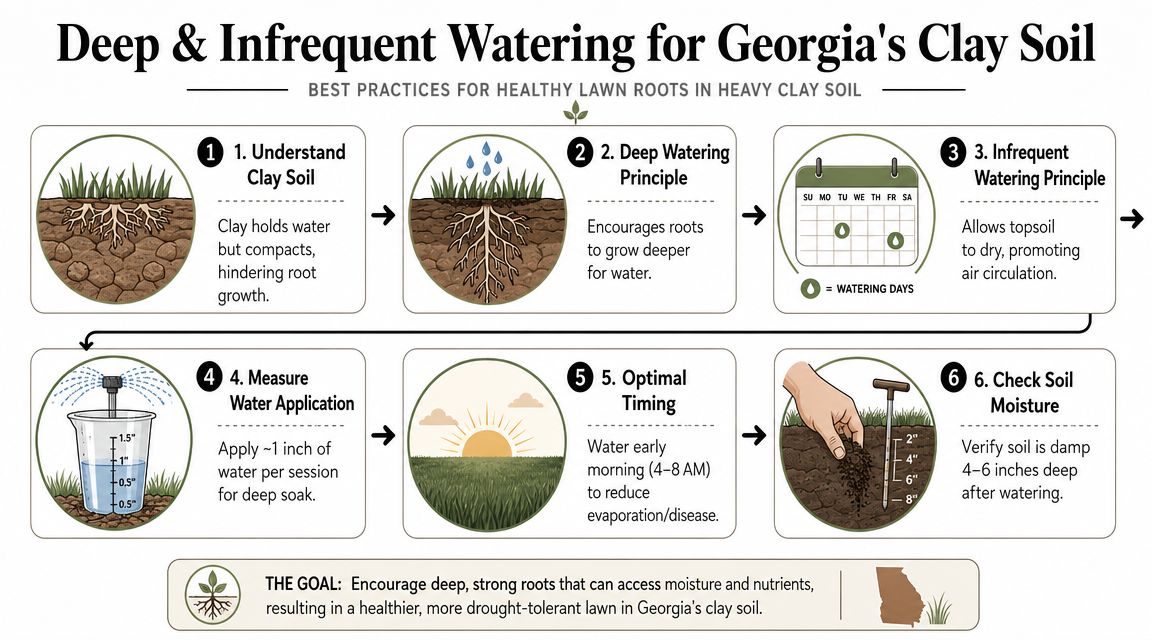
The biggest mistake in North Georgia isn’t always watering too little. It’s watering in a way that trains the lawn to stay weak. Short, frequent cycles keep the surface damp and the roots shallow. Clay soil turns that problem into runoff fast.
The better method is deep and infrequent watering. In practical terms, that means you’re trying to move water down into the soil profile, then letting the lawn use it before you water again.
Why clay changes the method
North Georgia clay-heavy soils have low infiltration rates of 0.2 to 0.5 inches per hour, so they often can’t absorb irrigation as quickly as a sprinkler applies it. That’s why the Cycle and Soak approach matters so much here. According to this clay-soil watering guide, for a 45-minute total runtime, using three 15-minute cycles with 45 to 60 minute soak intervals can reduce shallow rooting by 70% and save 20 to 30% more water than continuous watering.
How Cycle and Soak works
Instead of running one long irrigation block, break the watering into shorter passes. This gives water time to settle into the soil instead of running off onto the driveway, sidewalk, or curb.
A simple pattern looks like this:
Run the zone briefly
Start the zone for the first short cycle. If your total planned runtime is 45 minutes, the first pass is 15 minutes.Stop and wait
Let the lawn sit. That pause allows moisture to move down into the clay profile.Run it again
Come back for the second short cycle.Pause once more
Give the soil another soak window.Finish with the last cycle
Complete the final short run to deliver the full amount without forcing runoff.
The goal is not to make the surface look wet. The goal is to let the soil accept the water.
What this looks like on a real property
This approach helps most on sloped lawns, compacted areas near driveways, and sunny front yards where homeowners tend to overcorrect. If water starts moving downhill before the cycle ends, that’s your sign the zone needs shorter bursts, not more total watering.
If your lawn struggles year after year because the soil stays tight, improving soil structure matters just as much as changing the schedule. Homeowners dealing with compacted red clay can get more context from this guide on fixing heavy clay soil.
What doesn’t work
A few habits almost always create problems in Georgia clay:
- Daily light watering keeps roots near the surface.
- One long uninterrupted cycle often creates puddling and runoff.
- Watering because the calendar says so ignores recent rain, shade, and site conditions.
- Chasing color with more water can lead to softer turf and disease-prone conditions.
Deep and infrequent watering asks for more thought upfront, but it produces a stronger lawn over time. In this region, that trade is worth it.
Adjusting Your Watering Schedule Through the Seasons
A North Georgia lawn shouldn’t get the same watering schedule in April that it gets in late July. Soil temperature, grass type, sunlight, and seasonal growth patterns all change how the lawn uses moisture. The right plan shifts with the season, especially if you’re managing Bermuda or Zoysia in sunny areas and tall fescue in shadier parts of the yard.
Warm-season and cool-season lawns behave differently
Bermuda and Zoysia push hardest in warm weather. They usually need the most attention in summer, then taper off as temperatures cool. Tall fescue behaves differently. It often needs more thoughtful support during warmer stretches because heat and humidity can stress it, especially in shaded lawns where airflow is limited.
That’s why a fixed timer setting causes so many problems. The grass type may change from front yard to back yard, and the season changes what “enough” looks like.
North Georgia Seasonal Watering Guide by Grass Type
| Season | Grass Type | Weekly Water Needed | Watering Frequency |
|---|---|---|---|
| Spring | Bermuda or Zoysia | Usually light supplemental watering, based on rainfall and soil drying | Infrequent, only as needed |
| Spring | Tall fescue | Usually moderate supplemental watering, especially if spring turns dry | Deep watering when the lawn shows need |
| Summer | Bermuda or Zoysia | Around 1 to 1.25 inches per week in summer for warm-season grass in North Georgia conditions, adjusted to site conditions | Usually split across a few early-morning sessions |
| Summer | Tall fescue | Often needs close observation in heat and humidity | Deep, carefully spaced sessions based on stress signs |
| Fall | Bermuda or Zoysia | Reduced from peak summer demand as growth slows | Less frequent than summer |
| Fall | Tall fescue | Steady moisture helps support recovery and rooting | Deep watering as needed |
| Winter | Bermuda or Zoysia | Minimal irrigation once dormant, unless the soil turns very dry | Occasional only if needed |
| Winter | Tall fescue | Light irrigation only when conditions are dry | Occasional only if needed |
Seasonal decisions that matter
- Spring: Don’t rush into heavy watering if the soil is still holding moisture.
- Summer: Grass watering times and method matter most during this season. Morning timing and cycle-based irrigation do the heavy lifting.
- Fall: Keep watering intentional, not automatic. Growth slows, but roots still benefit from consistency.
- Winter: Most lawns need very little. Too much winter watering can create avoidable problems in low-use turf.
A seasonal schedule should be flexible enough to respond to weather, but stable enough that you’re not changing the controller every few days.
In neighborhoods across Forsyth County, North Fulton, and nearby North Metro Atlanta, the best lawn managers aren’t the ones who water most. They’re the ones who adjust with purpose.
Programming Your Sprinkler Controller Like a Pro
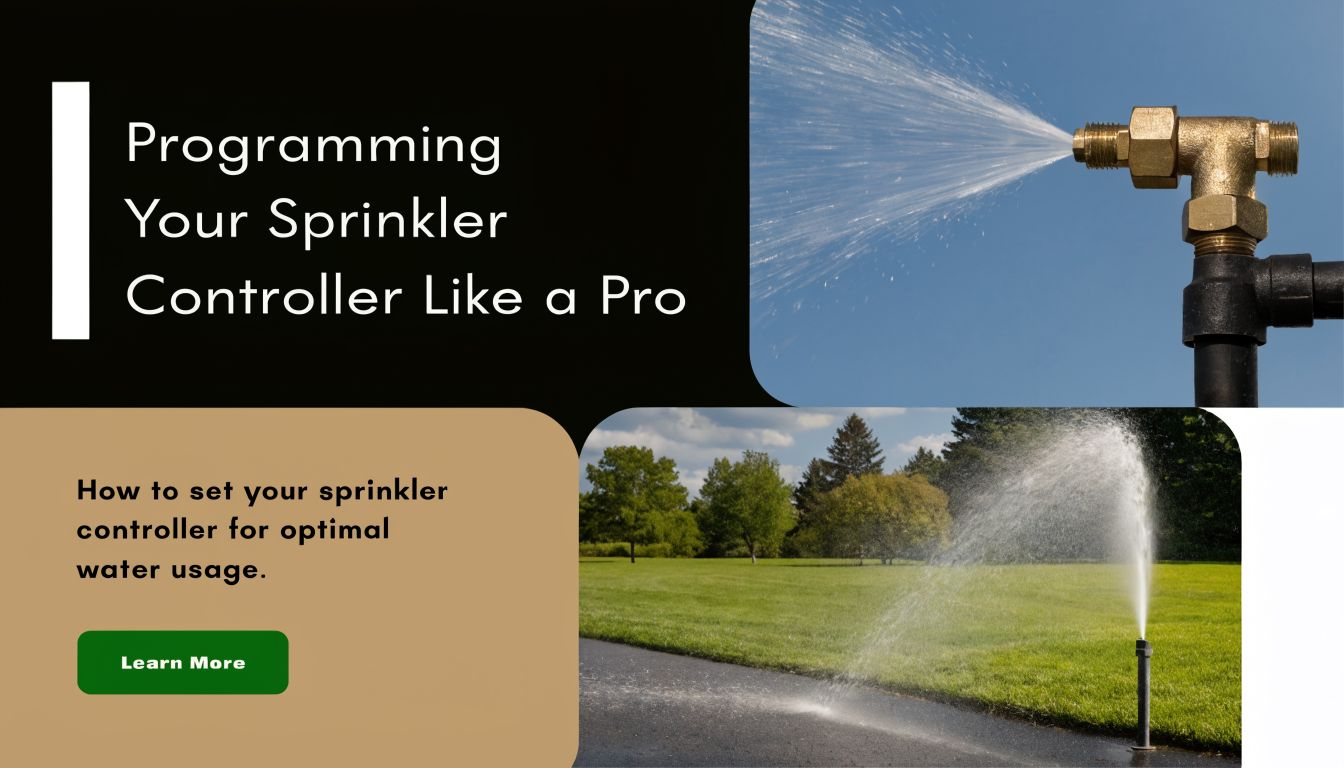
Most homeowners don’t need a more complicated irrigation system. They need a better way to tell the current system what to do. If you can measure output and translate that into minutes per zone, your controller becomes useful instead of guesswork.
Start with a catch can test
Place several straight-sided containers in one zone. Run the system, then measure how much water collected. That tells you the sprinkler’s actual output in inches per hour, which is far more reliable than guessing from the controller screen.
Once you know the output, use the basic formula. Divide the target water amount by the sprinkler output. One example from this runtime guide is dividing 1.5 inches by 0.75 inches per hour to get the runtime. That same source notes Georgia summer evapotranspiration averages 0.2 to 0.25 inches per day, and shaded lawns, such as north-facing properties in Johns Creek, may need up to 50% less water.
Turn inches into minutes
Here’s the practical workflow:
- Measure one zone at a time so you know whether coverage is even.
- Calculate the full runtime from the output rate.
- Split that runtime into cycles if the soil starts shedding water before the zone finishes.
- Adjust for shade and sun exposure instead of giving every zone the same schedule.
A sunny front yard near the street may need a very different program than a shaded backyard under mature trees. Treating all zones equally is one of the fastest ways to overwater half the property.
Mechanical timer or smart controller
A basic outdoor timer can still do the job well if you set it carefully. If you’re using a plug-in timer for hose-end sprinklers, a durable tool can make morning scheduling much easier. For homeowners who want a simple way to Manage outdoor power efficiently, an outdoor mechanical timer can help automate those early watering windows without staying up or waking up to move hoses manually.
Smart controllers add convenience when weather shifts quickly. They’re especially useful for busy homeowners who don’t want to reset schedules every time rain moves through North Metro Atlanta.
A better setup for each zone
If you want a more detailed walkthrough on runtime planning, zone differences, and common sprinkler mistakes, this guide on how long sprinklers should run in each zone is worth reviewing.
Field note: The best controller program is the one matched to real sprinkler output, real sun exposure, and real soil behavior. Not the factory default.
Good irrigation programming isn’t flashy. It’s measured, calm, and specific. That’s what keeps a lawn healthy without turning water into waste.
Is Your Lawn Thirsty or Drowning Common Signs
Most lawns show trouble before they fail. The trick is recognizing what kind of trouble you’re seeing. In North Georgia, homeowners often mistake overwatering symptoms for drought stress and respond by adding more water. That usually makes the lawn worse.
Signs the lawn needs water
Walk across the yard in the afternoon after a stretch of dry weather. If your footprints linger and the grass doesn’t bounce back, the lawn is asking for moisture. You may also notice the color looking duller than usual, with blades that seem less elastic when you brush them by hand.
That kind of stress often shows up first in exposed areas near driveways, sidewalks, and south-facing sections of the lawn. The grass won’t always turn brown immediately. It usually looks tired first.
Signs the lawn is getting too much
Now picture a different yard. The soil feels soft underfoot, some spots stay damp longer than they should, and the lawn never seems to dry out fully. Weed pressure often increases in these areas, and the turf can start looking thin even though it’s getting plenty of water.
That’s the classic North Georgia overwatering pattern. The lawn isn’t drying between cycles, roots stay weak, and the site starts favoring problems instead of healthy turf.
- Too dry often looks springy at first, then tired. Lingering footprints are a useful clue.
- Too wet often feels spongy. The lawn may look lush briefly, then decline from the base.
- Problem areas repeat. If the same corner struggles every summer, the issue is usually irrigation pattern, shade, compaction, or drainage, not bad luck.
If the lawn stays wet on top but never seems stronger, don’t assume it needs more water. Assume the schedule or soil is wrong.
When local watering restrictions tighten in places like Forsyth, Cobb, or Cherokee counties, those diagnostic skills matter even more. You want every permitted watering window to count. If you’re unsure what the soil is doing below the surface, this guide on how to measure soil moisture can help you make better decisions than surface appearance alone.
Your North Georgia Lawn Watering Questions Answered
How often should I water my lawn in summer
For most established North Georgia lawns, the better pattern is deep, spaced-out watering instead of daily light irrigation. The exact schedule depends on grass type, sun exposure, and how quickly your soil accepts water.
Does new sod follow the same schedule as established grass
No. New sod needs closer attention because the root system hasn’t fully anchored into the underlying soil. The goal early on is even moisture without creating a swamp. Once the sod roots in, transition toward the deeper, less frequent pattern used on established turf.
Is evening watering ever okay
It’s still the weaker option in this region. If you absolutely can’t water in the morning, use the earliest possible evening timing and avoid leaving the lawn wet deep into the night. North Georgia humidity makes prolonged leaf wetness a real issue.
What if my front and back yard need different schedules
That’s normal. A sunny Bermuda front yard and a shaded fescue back yard shouldn’t be treated as one zone mentally, even if your controller makes it tempting. Program and monitor them separately whenever possible.
Can healthier soil reduce how much I need to irrigate
Yes. Better soil structure improves how water enters, holds, and moves through the root zone. That means less runoff, more usable moisture, and a lawn that doesn’t panic every time the weather turns hot for a few days.
If your lawn in Cumming, Alpharetta, Johns Creek, Suwanee, Duluth, or the surrounding North Metro Atlanta area needs a smarter, family-safe approach, Barefoot Organics can help you build healthier soil, stronger roots, and a watering strategy that actually fits North Georgia.