

You mow every weekend. The lawn still looks tired by July. One area turns pale, another gets thin, and the spots where the kids run seem to wear out fast no matter how often you water.
That’s a frustrating place to be for homeowners in Cumming, Alpharetta, Johns Creek, Suwanee, and Duluth. Homeowners often assume the problem is fertilizer, bugs, or bad luck. Often, it’s something much simpler. The grass cutting height is off.
A lawn isn’t just a green carpet. It’s a living plant system reacting to heat, humidity, foot traffic, rain swings, mower settings, and soil condition. In North Georgia, where tall fescue struggles through long hot spells and warm-season lawns surge in summer, the height of your cut changes how your grass handles stress.
Get the height right, and the lawn usually looks fuller, holds color better, and competes more naturally. Get it wrong, and you can spend the rest of the season chasing problems that started with the mower.
Why the Perfect Cut Is More Than Just Lawn Deep
A lot of North Georgia homeowners do everything they think they’re supposed to do. They mow on schedule. They keep the yard tidy. They try not to miss a week. But the lawn still looks worn out by midsummer.
That usually happens because the mower is being used like a cleanup tool instead of a plant-care tool. Grass doesn’t respond well to being shaved down over and over, especially during heat and dry spells.
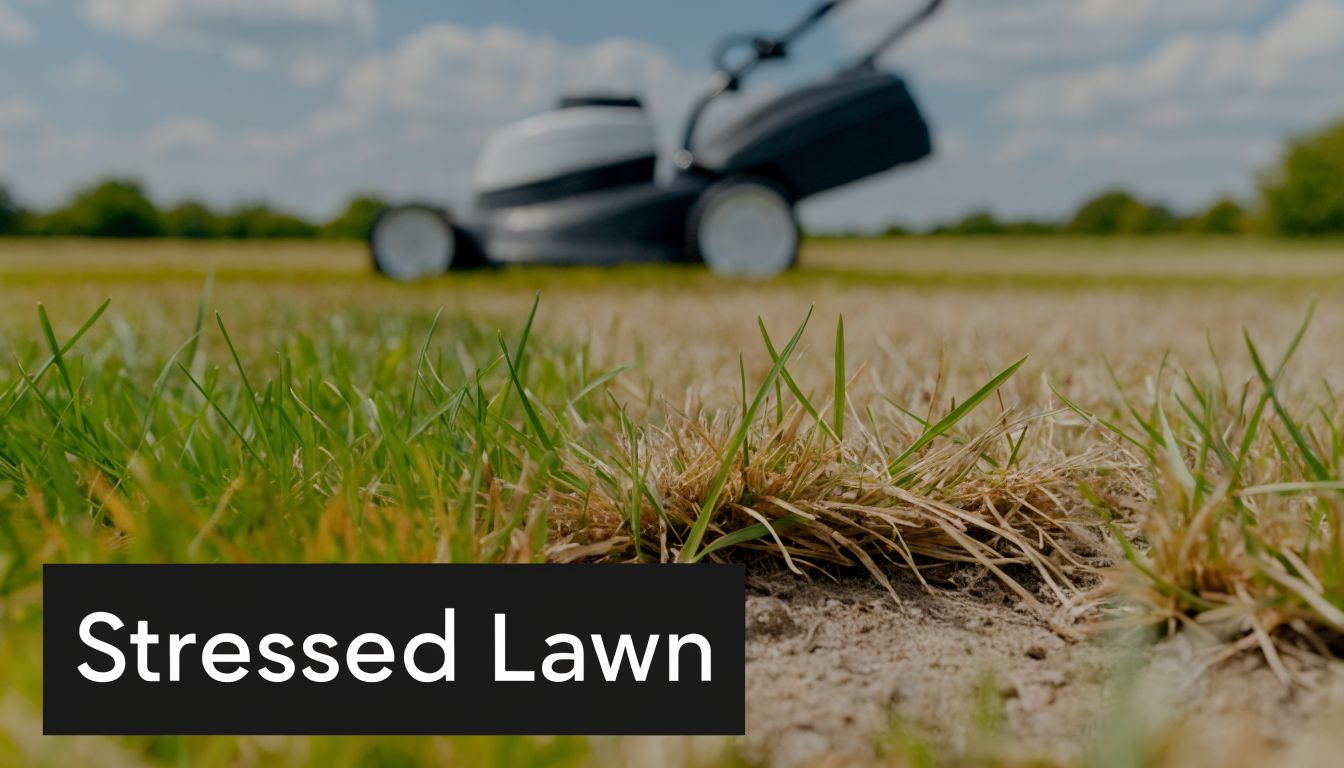
Why effort alone doesn’t fix a stressed lawn
I’ve seen this pattern many times. A family wants a neat-looking yard, so they mow low to “make it last longer.” For a week or two, that seems smart. Then the lawn starts looking dull, thin, or patchy.
The reason is simple. Cutting too short removes too much of the leaf blade your grass uses to gather energy. When that happens, the plant has less top growth to support itself and less cushion against heat.
For homeowners trying to avoid harsh inputs around children and pets, mowing height matters even more. A lawn cut at the right height can do more of its own work. It shades soil better, handles stress better, and doesn’t rely as heavily on rescue treatments after damage is done.
Grass cutting height is one of the few lawn decisions that affects appearance, root strength, moisture retention, and weed pressure at the same time.
A healthier lawn starts with a different mowing mindset
Think of mowing less like trimming a hedge and more like managing a food source for the plant. Every pass removes living tissue. The goal isn’t to cut as much as possible. The goal is to cut just enough to keep the lawn healthy and usable.
That shift changes everything. Instead of asking, “How low can I go before it looks bad?” ask, “What height helps this grass stay strong in North Georgia weather?”
If your lawn tends to look burned out after mowing, you may be dealing with the same issue explained in this guide on cutting grass too short and the damage it causes.
Understanding the One-Third Rule for a Resilient Lawn
If you remember one mowing rule, make it this one. Never remove more than one-third of the grass blade in a single mowing.
That sounds technical, but it’s easy to picture. A light trim feels manageable. A sudden buzz cut feels harsh. Grass reacts the same way.
Why this rule matters so much
The one-third rule is a fundamental principle that dictates never removing more than one-third of the grass blade height in a single mowing. Violating this rule creates significant stress, as lawns mowed at higher heights develop deeper root systems with greater total mass. During summer stress, the consequences become apparent, as closely mowed lawns show visible stress and risk turfgrass loss, according to Sunday’s mowing height guidance.
Grass blades act like solar panels. They capture sunlight and help the plant make energy. When you cut off too much at once, the grass suddenly loses a big part of its food-making system. Then it has to spend stored energy to recover.
That’s where many homeowners get confused. They think mowing low saves time because they won’t have to mow as often. In reality, cutting too low often creates a weaker lawn that struggles more between mows.
A simple example homeowners can use
If your mower is set to 3 inches, don’t wait until the lawn is wildly overgrown. A good target is to mow when the grass reaches about 4 inches, following the example described in Sunday’s chart on mowing height and the one-third rule.
That keeps the cut moderate instead of drastic.
Here’s the basic logic:
- Small trim: The plant keeps most of its leaf blade and recovers smoothly.
- Big chop: The plant loses too much surface area and shifts into stress mode.
- Repeated short mowing: Roots tend to weaken over time because the plant keeps spending energy on emergency regrowth.
Practical rule: If you can see a lot of clippings lying on top of the lawn after mowing, there’s a good chance you removed too much.
What this looks like in real life
The damage from breaking the one-third rule rarely shows up all at once. It usually appears as a pattern.
A lawn may start to:
- lose color after mowing,
- dry out faster in sunny spots,
- thin out on slopes or uneven ground,
- become more vulnerable during summer heat.
That’s why proper grass cutting height fits so well with a natural lawn care approach. When the mower stops stressing the plant, the lawn can spend more energy on roots, density, and recovery instead of survival.
Mowing Heights for Common North Georgia Turf Types
North Georgia lawns aren’t all the same, and mowing them as if they were causes problems. The two big categories are cool-season grasses and warm-season grasses. They grow differently, react to heat differently, and need different grass cutting height targets.
Recommended mowing heights for North Georgia lawns
| Grass Type | Ideal Height (Inches) | Key Tip for North Georgia |
|---|---|---|
| Tall Fescue | 3 to 4 | Keep it taller through summer heat for better stress tolerance |
| Kentucky Bluegrass blends | 3 to 4 | Treat like other cool-season turf and avoid short summer cuts |
| Bermuda | 1.5 | Mow consistently to keep it dense and resilient |
| Zoysia | 1.5 | Stay steady with mowing instead of letting it get shaggy |
| Centipede | Follow local turf guidance for your cultivar | Don’t assume it should be cut like Bermuda or fescue |
| St. Augustine | Follow local turf guidance for your cultivar | Focus on avoiding scalping and uneven cuts |
For homeowners who aren’t sure what’s growing in their yard, this breakdown of common lawn types in North Georgia can help you identify the grass before adjusting your mower.
Tall fescue and other cool-season lawns
Tall fescue is common in neighborhoods across Forsyth County, North Fulton, and nearby communities because people like its rich green look. But fescue and similar cool-season lawns have a hard time with North Georgia summer heat.
For cool-season grasses like tall fescue, maintaining a 3- to 4-inch height in summer is critical for North Georgia’s heat. This taller cut promotes a deeper root system, reduces soil temperatures, and can suppress crabgrass germination by 70-90% without chemicals. Lawns at 4 inches show 25% less drought stress during peak Georgia heat, based on Michigan State guidance on mowing high for weed and grub control.
That’s why I usually tell homeowners to stop thinking of tall grass as lazy mowing. With fescue, a taller canopy is often protective. It shades the soil, helps the lawn hold moisture better, and supports a stronger root system during the hardest stretch of the year.
Why taller fescue often looks better, not worse
Many people worry a taller fescue lawn will look messy. It usually doesn’t, if it’s cut evenly with a sharp blade. In fact, a healthy fescue lawn at the right summer height often looks thicker and more uniform than one cut too short.
A low-cut fescue lawn may look crisp for a day. Then the heat hits, the color fades, and the whole yard starts looking stressed.
A cool-season lawn in North Georgia should be managed for survival first and appearance second. The better surprise is that survival usually improves appearance too.
Bermuda and Zoysia lawns
Bermuda and Zoysia are warm-season grasses. They love heat, spread laterally, and respond well to steady mowing. These lawns don’t want the same tall cut that helps fescue.
Warm-season grasses like Bermuda and Zoysia thrive at a consistent 1.5-inch mowing height. This precise height drives 20-40% higher shoot density, strengthening the lawn against wear from foot traffic and naturally deterring broadleaf weeds without herbicides, according to North Georgia Turf guidance on mowing height.
That “shoot density” point matters for family lawns. Dense turf handles daily life better. Kids running. Dogs cutting corners. Backyard chairs getting moved around. A dense Bermuda or Zoysia lawn bounces back better because the plant is built for that kind of use when it’s mowed correctly.
Centipede and St. Augustine lawns
These grasses show up less often in some North Georgia neighborhoods, but they still matter. The key with both is not to guess based on what your neighbor does.
Centipede and St. Augustine shouldn’t be lumped in with fescue or Bermuda. Their growth habits are different, and they respond poorly when homeowners try to force them into the wrong mowing style. If you have either of these, identify the turf first, then match the mower height to that grass instead of cutting by appearance alone.
A simple rule helps here: if you don’t know the species, don’t copy someone else’s grass cutting height.
Seasonal Adjustments for Year-Round Lawn Vigor
The right mowing height isn’t fixed in stone for every month of the year. North Georgia lawns move through spring growth, summer stress, fall transition, and winter dormancy. Your mowing approach should move with them.
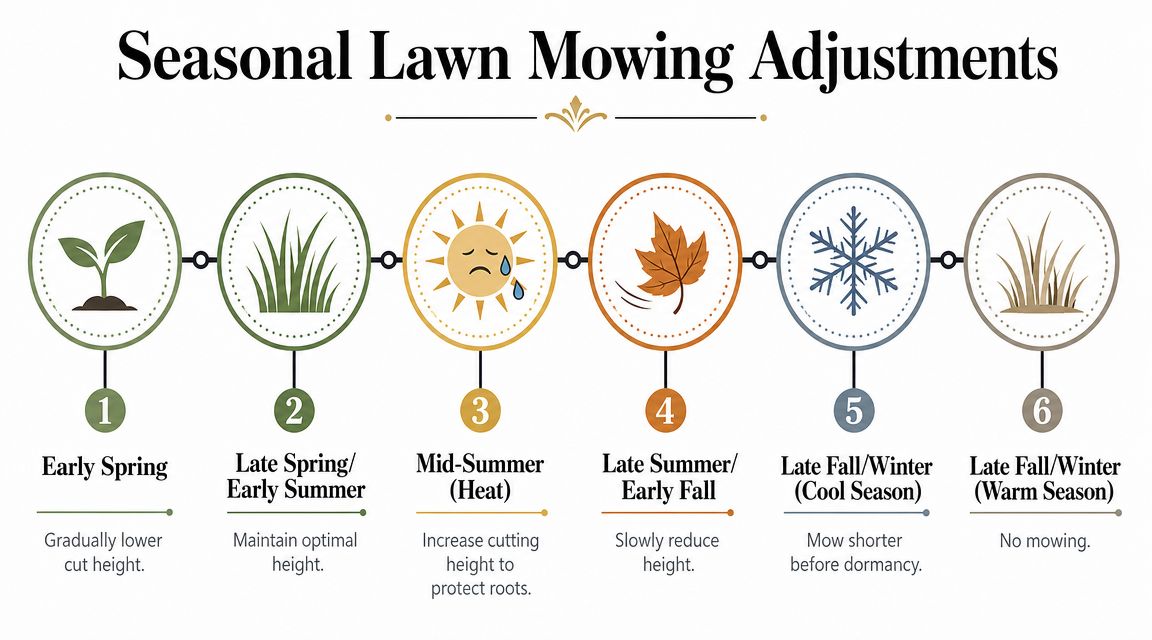
How the calendar changes the cut
In early spring, lawns often wake up unevenly. Some spots green up faster, especially near driveways or sunny areas. That’s not the time to rush into a very low cut. Start by mowing only when growth needs it, and make gradual changes rather than sudden ones.
By late spring and early summer, your target height should be settled. At that point, consistency matters more than dramatic adjustments. Keep the lawn on a regular schedule so you’re trimming growth, not removing a week and a half of excess at once.
Summer is when mowing mistakes get expensive
Summer exposes every weakness in mowing habits. Heat, humidity, and spotty rainfall put pressure on the root system fast. That’s why cool-season lawns usually need more protection overhead, while warm-season lawns need regular maintenance at their preferred range.
Warm-season grasses like Bermuda and Zoysia thrive at a consistent 1.5-inch mowing height. This precise height drives 20-40% higher shoot density, strengthening the lawn against wear from foot traffic and naturally deterring broadleaf weeds without herbicides, which supports a child- and pet-aware, minimal-chemical approach, according to North Georgia Turf’s mowing height recommendations.
For fescue lawns, summer is the season to resist the urge to “clean it up” by cutting lower. Taller growth helps the plant buffer itself from harsh conditions.
Your mower setting should respond to the season your lawn is in, not just the height you prefer to look at from the driveway.
Fall and winter calls for a different mindset
As temperatures begin to ease, grass growth changes again. Fall is a transition season, not a reset button. If you need to lower the cut a bit, do it slowly over multiple mows.
For cool-season lawns, a shorter final cut heading into colder weather can help tidy the turf and reduce matting. For warm-season lawns, mowing eventually slows or stops as dormancy sets in. The goal then is not to force growth, but to avoid unnecessary stress while keeping the lawn clean and even.
A simple seasonal pattern works well:
- Early spring: Ease into mowing as growth returns.
- Late spring: Hold a steady, species-appropriate height.
- Mid-summer: Protect the lawn from stress with the right seasonal setting.
- Early fall: Make only gradual adjustments.
- Late fall and winter: Mow only as needed based on grass type and growth.
Essential Mower and Blade Maintenance for a Clean Cut
The mower deck setting matters, but the machine itself matters too. A well-set mower with a dull blade still damages grass. A sharp blade at the wrong height still causes stress. You need both parts working together.
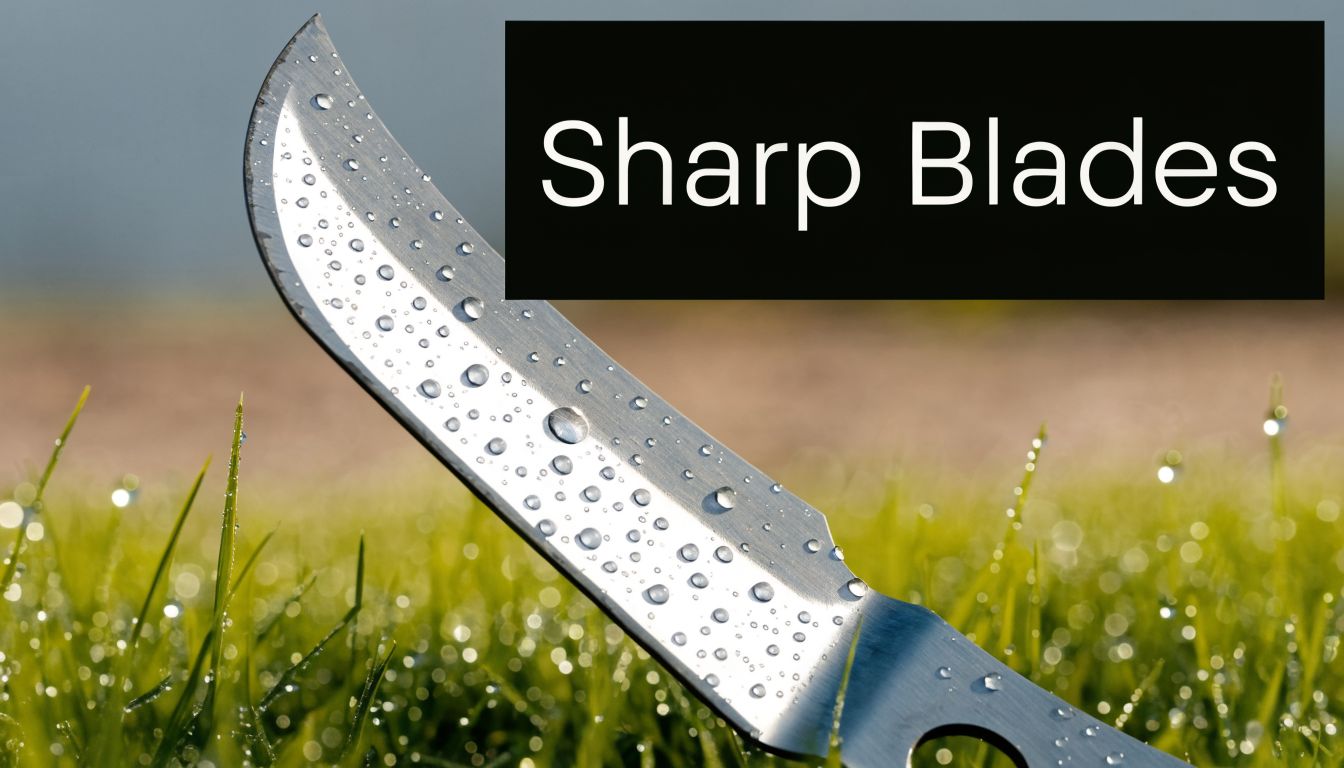
A mower is a cutting tool, not a tearing tool
When the blade is sharp, it slices the grass cleanly. The tip dries neatly and the lawn keeps a more even color. When the blade is dull, it rips the grass instead. That torn edge often turns brown, which makes the whole lawn look rough even if the height is technically correct.
This is one reason homeowners think their fertilizer program isn’t working. The lawn may be getting shredded by the mower.
Don’t trust the wheel setting alone
A common mistake is relying on mower wheel settings instead of measuring from a flat surface to the blade edge. Incorrect settings cause scalping or weak growth. For North Georgia’s sloped properties, robotic mowers can cut 10-20% too low, increasing winter kill. Setting them to a true 3-4 inches is vital for fescue health in areas like Milton and East Cobb, according to Kansas Healthy Yards guidance on mowing at the recommended height.
That’s an important point because many homeowners say, “My mower is on 4.” But the actual cut isn’t always what the lever says it is.
How to measure your true mowing height
Use this simple method:
- Park on a flat surface. A driveway works well.
- Turn the mower off and make it safe. Stability matters.
- Measure from the ground to the blade edge. Don’t measure from the wheel setting label.
- Check more than one side if needed. Uneven decks happen.
- Recheck after adjustments. Especially if you mow on hills or have changed tires or wheels.
If your lawn looks uneven after mowing, the issue may be calibration, not grass health.
Slopes and uneven lawns need extra caution
In Cherokee County, East Cobb, Milton, and many older neighborhoods, lawns aren’t perfectly level. That makes scalping more likely. The high spots get shaved while the lower spots barely get touched.
When that happens, homeowners often lower the deck again to make the yard “look even,” which usually makes things worse. The better move is to keep the setting honest, mow more frequently, and avoid aggressive cuts on bumpy terrain.
How Healthy Soil Supports Perfect Mowing Heights
Good mowing can improve a lawn. Good soil makes that mowing height work.
A lawn with compacted, lifeless soil struggles no matter how carefully you mow it. The grass may still be thin, slow to recover, or quick to dry out because the roots don’t have a healthy place to grow. That’s why mowing and soil care should be treated as partners.
Mowing controls stress above ground
When you keep the proper grass cutting height, you help the plant hold onto leaf area, regulate moisture better, and avoid unnecessary shock. That’s the top side of the equation.
But roots live below that visible layer. If the soil is tight, low in organic matter, or poorly structured, the lawn can’t fully capitalize on better mowing habits. You may be doing the right thing with the mower while the root zone still limits performance.
Soil work gives the lawn something to grow into
Therefore, practices like aeration, compost topdressing, and thoughtful soil improvement make sense. They create space, airflow, and better conditions for root development. The result is a lawn that responds more positively to correct mowing because it has a stronger foundation beneath the surface.
Homeowners who want to understand that foundation better can start with this guide on how to improve soil for a healthier lawn.
A practical way to think about it is this:
- Mowing height protects the factory. The blades keep gathering energy.
- Healthy soil supports the warehouse. Roots have room and resources.
- Together they build resilience. The lawn handles weather and wear more naturally.
Why this matters for families and low-chemical lawn care
Families in Cumming, Johns Creek, and Alpharetta often want the same thing. A lawn that looks good, feels safe, and doesn’t depend on constant corrective treatments.
That’s where a natural approach fits. Proper mowing reduces stress from above. Soil improvement supports growth from below. Barefoot Organics offers services such as aeration, top dressing, and a natural lawn care program built around minimal-chemical lawn management in North Georgia. Those services don’t replace good mowing habits. They support the conditions that make those habits more effective.
A healthy lawn usually isn’t the result of one big product or one perfect weekend. It’s the result of repeated, smaller decisions that stop weakening the grass and start supporting it.
Your North Georgia Mowing Questions Answered
Even when homeowners understand the basics, a few practical questions always come up. These are the ones I hear most often.
Should I bag or mulch grass clippings
In most routine mowing situations, mulching is a good choice because the clippings are small and break down quickly. That usually works best when you’re mowing often enough that you aren’t taking off too much at once.
Bagging makes more sense when the lawn got away from you and the clippings are heavy, wet, or likely to clump. A thick layer of long clippings can smother parts of the turf. If the yard looks blanketed after mowing, bagging or a second cleanup pass is usually the safer move.
What if my grass got way too tall after rain or vacation
Don’t try to fix it in one mow.
That’s where homeowners get into trouble. They come back from a trip, see tall grass, then lower the deck and remove too much all at once. Instead, bring it down gradually over multiple cuts while staying as close as possible to the one-third rule.
If needed, mow once at a higher setting, then come back for another pass later. It takes more time, but it’s much easier on the lawn.
When grass gets overgrown, patience protects the root system better than a dramatic cleanup cut.
Does a sloped yard change the rules
The principles stay the same, but the execution gets trickier. Slopes and uneven ground increase the risk of scalping because the mower deck rides differently over rises and dips.
That means you should pay more attention to actual blade height, mow more regularly, and be careful near ridges, drainage swales, and driveway edges. On hilly lawns, an “average” setting can still cut too low on the high spots.
My lawn looks white or brown right after mowing. Why
Usually, one of three things is happening:
- The blade is dull. Torn tips dry out and discolor.
- The lawn was cut too short. More stem tissue is exposed, and the color looks harsher.
- The cut was uneven. Scalp marks show up as pale or brown streaks.
That doesn’t always mean the lawn is doomed, but it does mean the mower setup needs attention.
How often should I mow
There isn’t one perfect weekly schedule that fits every lawn. Growth changes with rain, temperature, season, and grass type. A fast-growing lawn may need more frequent mowing for a while, while another may slow down and need less.
The better rule is to mow based on growth, not habit. If mowing today would remove too much, you waited too long. If the lawn barely needs a trim, you may be able to wait.
Is the lowest mower setting ever a good idea
For most North Georgia home lawns, no. Very low mowing is a specialty practice and usually belongs to highly managed turf with very specific equipment, conditions, and goals.
Most family lawns need a balance of appearance, durability, and safety. That usually means choosing a realistic grass cutting height for your turf type and sticking with it consistently, rather than chasing a golf-course look that your lawn wasn’t built to handle.
If your lawn in Cumming, Alpharetta, Johns Creek, Roswell, Milton, Marietta, East Cobb, or nearby North Metro Atlanta keeps struggling after every mow, the fix may start with a better plan for height, timing, and soil support. Barefoot Organics provides natural lawn care, aeration, top dressing, and soil-focused services designed for North Georgia lawns and families who want a healthier yard with a minimal-chemical approach.