

If you've noticed a stubborn, vine-like weed with little purple flowers taking over your lawn, you're not just seeing things. This is Creeping Charlie, a major headache for homeowners across Cumming, GA, and the rest of Forsyth County. We see it every day in local lawns, from new construction homes near Dawsonville to established neighborhoods in Johns Creek. Getting rid of it requires a smart plan that weakens the weed while strengthening your turf.
Ready to reclaim your lawn from this aggressive invader? The team at Barefoot Organics has a proven, locally focused strategy for homeowners in the Cumming area. Stop letting Creeping Charlie win. Get Your Free Lawn Evaluation Today!
Why Creeping Charlie is a Major Problem in Cumming
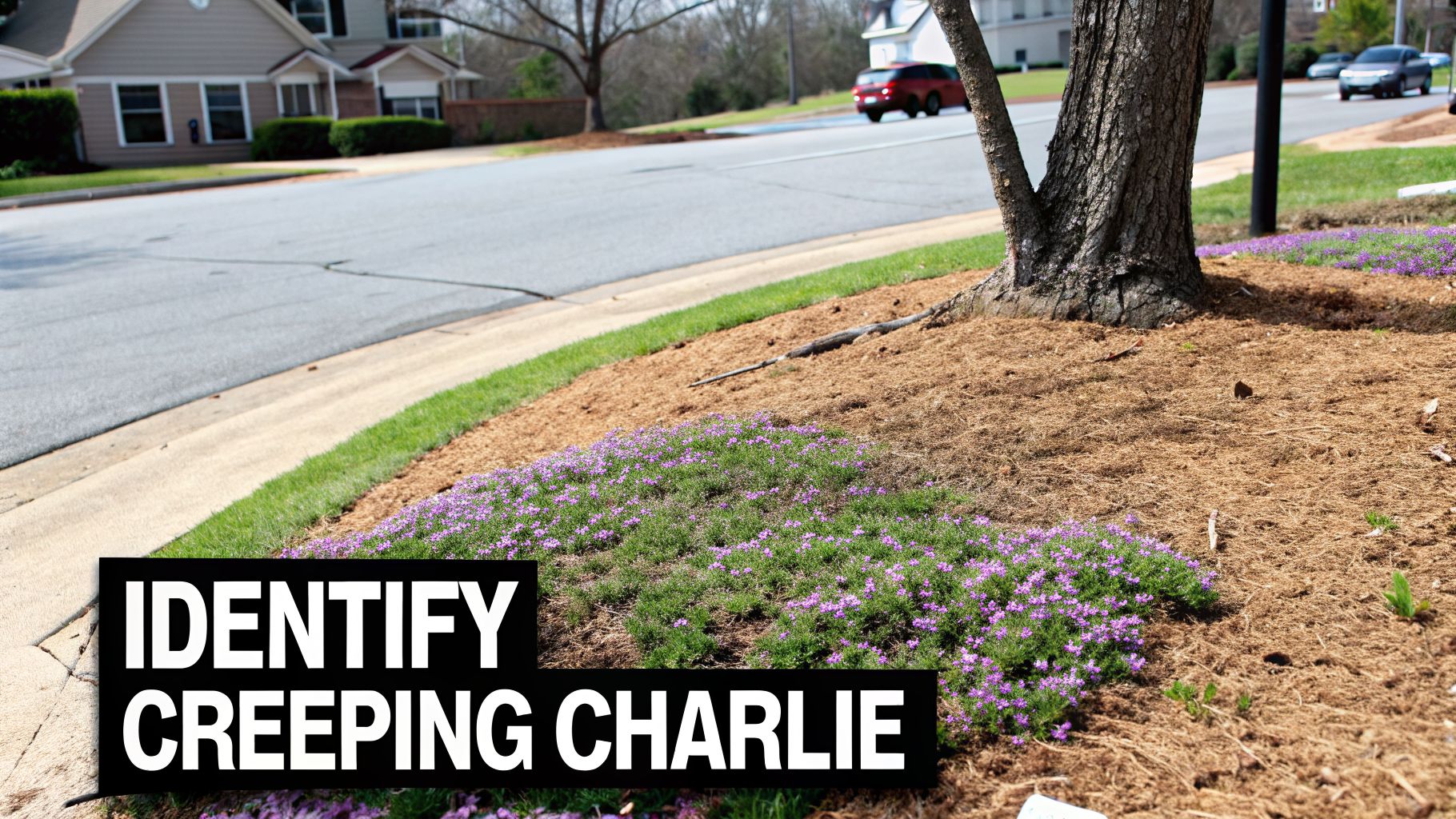
Creeping Charlie (also called ground ivy) absolutely loves the conditions that make our North Georgia lawns struggle. It thrives in the shady, damp areas where your Fescue or Bermuda grass is thin. It takes one look at our humid summers and compacted Georgia clay soil and decides to move right in, choking out your grass and making your lawn look weak and unkempt—a real problem for homeowners trying to meet subdivision HOA standards.
How to Identify This Weed in Your Forsyth County Yard
Before you can fight it, you have to be sure you know what you’re dealing with. We get calls from homeowners in Alpharetta and Milton who think it's something else, but Creeping Charlie has a few distinct tells.
Here’s what to look for:
- Square Stems: Roll a piece of the vine between your fingers. If you feel four distinct edges, that's a classic sign you're dealing with a member of the mint family, which Creeping Charlie is.
- Scalloped Leaves: Its leaves are kidney-shaped with noticeable scalloped, almost ruffled, edges.
- Creeping Growth: The name says it all. It sends out runners (called stolons) that race across the ground, rooting down at every node. This is how it forms a dense, suffocating mat that chokes out your grass.
- Purple Flowers: In the spring, you’ll see those tell-tale clusters of small, purplish-blue, funnel-shaped flowers.
This isn't just a minor annoyance. Creeping Charlie is a tough perennial that laughs at most half-hearted attempts to remove it. Because it can regrow from the tiniest fragment of root or stem left in the soil, hand-pulling anything more than a small patch is often a lesson in frustration.
Expert Insight: In our experience, Creeping Charlie follows a predictable pattern here in Cumming. On Bermuda lawns, we often see it take over during the grass's dormant winter season. For Fescue lawns, it typically invades shady, wet spots where the grass is already thinning out from summer heat stress. It's a story we see repeated in neighborhoods all over Suwanee, Buford, and Sugar Hill.
The Treatment Breakdown for Creeping Charlie
To beat this weed, you have to get your timing right. Its growth and defenses change throughout the year in our North Georgia climate. Planning your attack around its seasonal weaknesses is the key to success. A simple spray-and-pray approach just doesn't work.
Here’s a quick look at what this weed is doing each season, which helps us pinpoint the best times for professional lawn treatments in Cumming.
| Season | Creeping Charlie Activity in North Georgia | Lawn Condition in Cumming | Best Action for Forsyth County Lawns |
|---|---|---|---|
| Spring (Mar-May) | Explodes with new growth, produces purple flowers, and spreads its runners aggressively. | Your Fescue or Bermuda lawn is waking up. The air is thick with that famous Georgia pollen. | A decent time for post-emergent control, but less effective than fall. The weed is sending energy up, not down to the roots. |
| Summer (Jun-Aug) | Growth can slow in the peak 90-degree heat, but it will continue to thrive in any irrigated, shady spots. | Your grass, especially Fescue, is under major heat and drought stress. Crabgrass season is in full swing. | Focus on cultural practices. Mow high, water deeply but not too often, and work on improving air circulation. Don't stress the lawn more. |
| Fall (Sep-Nov) | Begins storing energy in its roots to survive the winter. This is its most vulnerable period. | Cooler nights are reviving your lawn. It’s prime time for Fescue overseeding to repair summer damage. | This is the single best time for professional treatment. The plant actively pulls herbicides down into the root system, resulting in a much more complete kill. |
| Winter (Dec-Feb) | Goes dormant above ground, but the stolons and root systems are very much alive, just waiting for spring. | Your Bermuda is dormant, and Fescue has slowed. Weeds are often easier to spot. | A great time to plan your lawn program for the year ahead. Get on the schedule for early spring pre-emergent to prevent crabgrass and other invaders. |
The big takeaway is that fall offers the best window for effective, long-lasting control. By understanding this cycle, you can stop wasting money on treatments that are doomed to fail.
Our Application Process for North Georgia Lawns
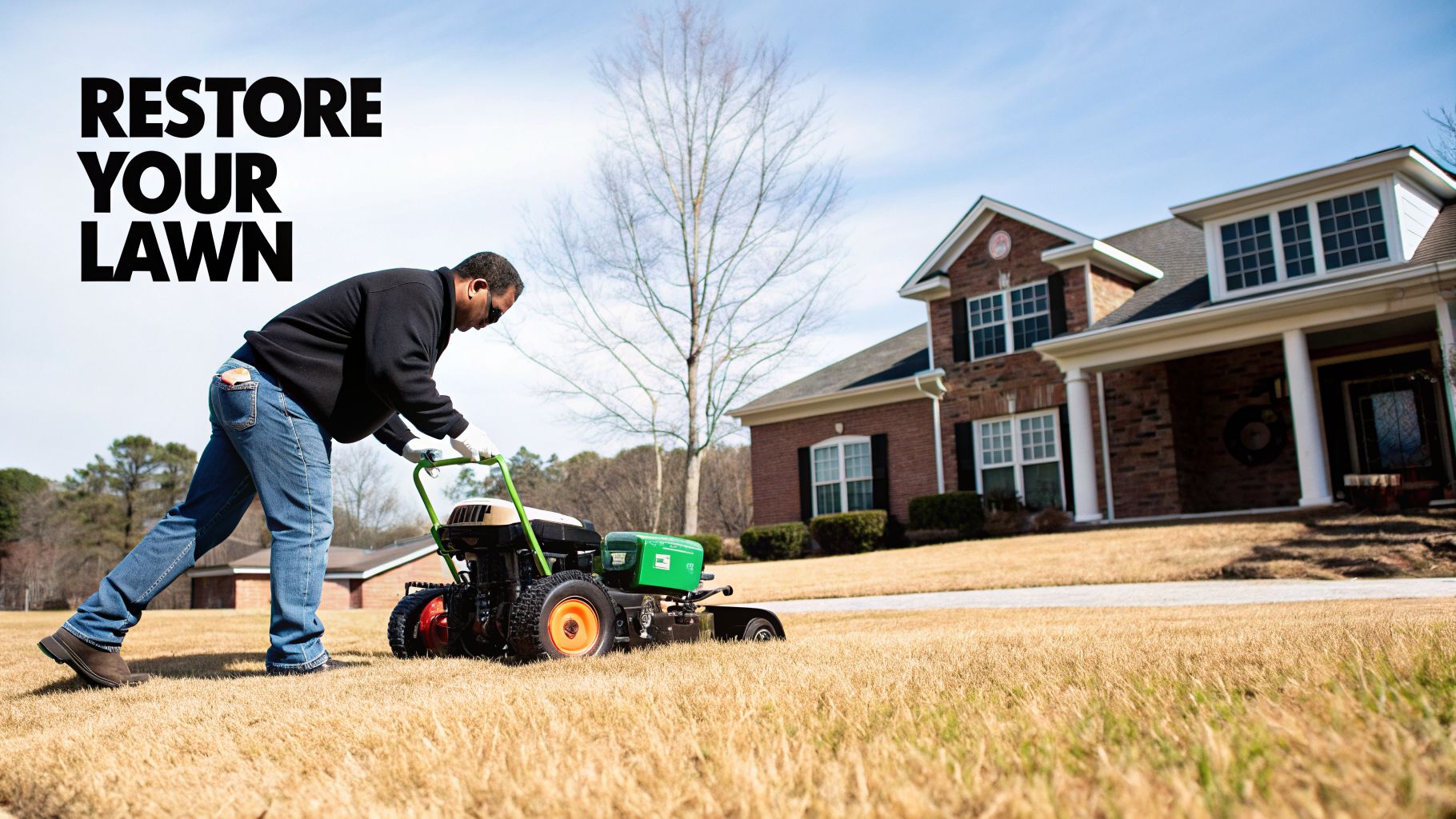
If you're battling Creeping Charlie, you know it's not a weed you can spray once and forget. From our experience across Forsyth County, getting rid of it for good means changing your lawn's environment from the soil up. A truly healthy lawn will choke out weeds on its own, and that's the core of our Barefoot Organics strategy.
It's a holistic approach we've refined over years of working with the specific challenges of our local climate and that infamous red Georgia clay. We start by diagnosing the underlying issues that let this pesky weed get a foothold, whether you're in a sunny Suwanee subdivision or on a more wooded lot in Milton.
Step 1: Improve Your Lawn's Defenses in Cumming
Your best defense against any weed is a thick, thriving stand of turf. Before reaching for any treatment, we first look at the simple cultural practices—mowing and watering—that can make a massive difference.
Mow Higher: We see this all the time with the Fescue lawns so common in Cumming. Set that mower deck higher, aiming for a grass height of 3 to 4 inches. Taller grass blades create a dense canopy that shades out the competition, blocking the sunlight Creeping Charlie needs to spread.
Water Deeper, Less Often: This is absolutely critical during our hot, humid summers. Shallow, frequent watering keeps the soil surface constantly moist, creating a paradise for ground ivy. Instead, water deeply just once or twice a week. This trains your turf's roots to dig deeper for moisture and allows the top layer of soil to dry out, making it less inviting for this weed.
Increase Sunlight and Airflow: Creeping Charlie thrives in the shade. We often see it completely take over shaded areas under mature trees in places like Johns Creek and Alpharetta. Sometimes, the solution is as simple as pruning lower-hanging tree branches to let more sunlight and air reach the turf.
Step 2: Tackle Compacted Georgia Clay Soil
The root of so many lawn problems in North Georgia is our dense, compacted red clay. This heavy soil makes it incredibly tough for grass roots to get the oxygen, water, and nutrients they need. Creeping Charlie, with its shallow roots, has no problem thriving in these exact conditions.
This is why core aeration is a cornerstone of our lawn restoration process. By pulling up small plugs of soil, we break up that compaction and open up channels for air, water, and nutrients to finally reach the root zone. A healthy, deep root system is your lawn's most powerful weapon against weeds.
Step 3: Apply Targeted Post-Emergent Treatments
When you're facing a larger takeover that's creeping across your yard from Buford to Dawsonville, it's time for a more strategic approach. This is where our targeted, effective post-emergent weed controls come into play. We use professional-grade products proven to work on Creeping Charlie, applying them at the right time (like fall) for maximum impact.
We’re your neighbors. We know your kids and pets play on these lawns. Our seasonal lawn programs are designed to be tough on weeds but gentle on your family and our local environment, giving you a beautiful lawn you can actually live on with peace of mind.
Preventing Its Return: A Long-Term Lawn Health Strategy
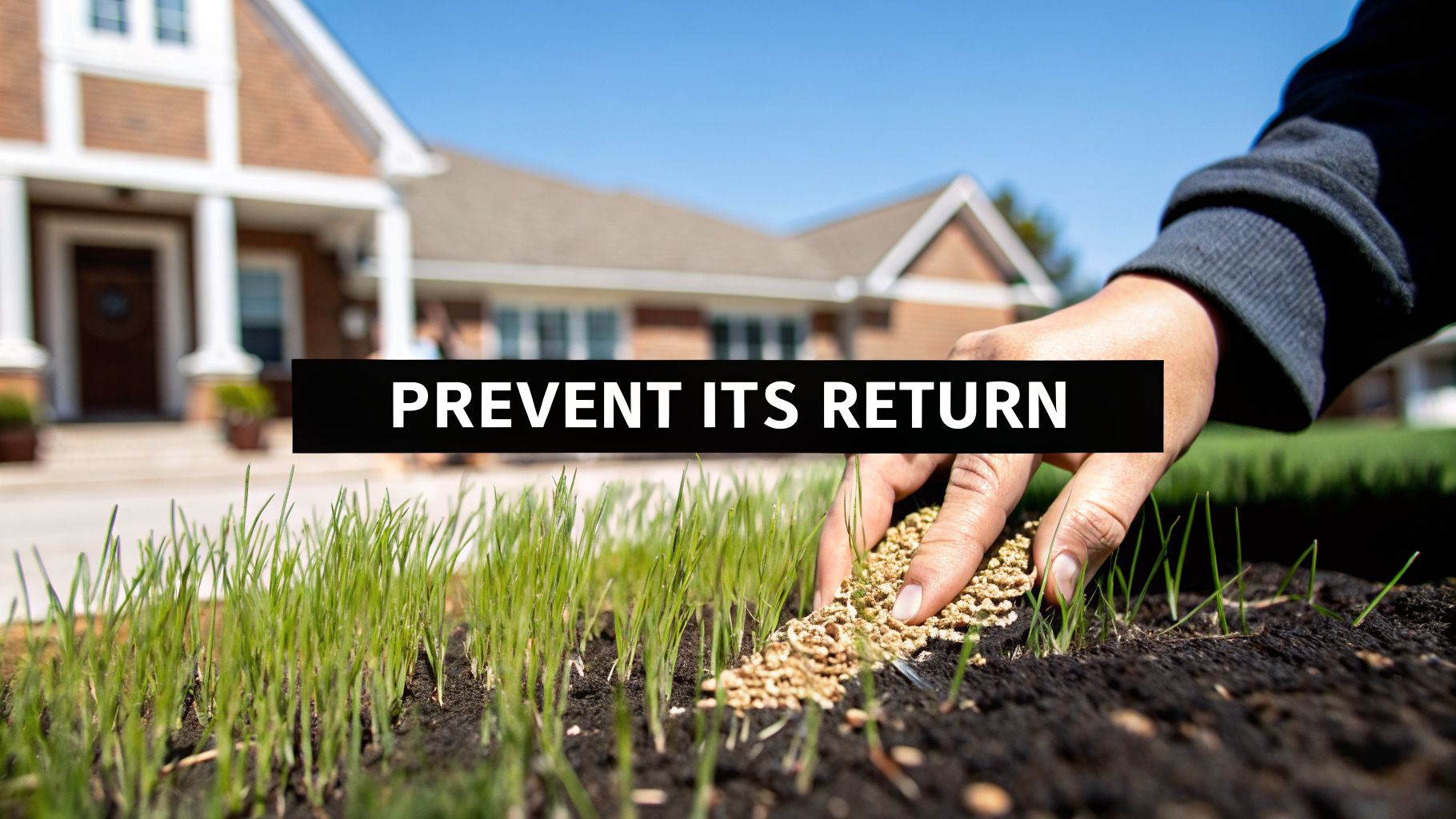
Getting rid of the Creeping Charlie you see is only half the job. The real victory is making sure it doesn't come back. In our corner of North Atlanta, long-term prevention is all about building a thick, healthy lawn that becomes its own best defense. A strong lawn actively out-competes weeds in Georgia for sunlight, water, and nutrients.
The Power of Fall Overseeding for Cumming Fescue Lawns
For the Fescue lawns common across Forsyth County, fall overseeding is the single most important thing you can do. Our tough Georgia summers often leave cool-season grasses thin and worn out by September. This is when Creeping Charlie sees its chance to move in.
Overseeding in the fall repairs that summer damage. It fills in bare spots and dramatically boosts your turf’s density. By spreading fresh, high-quality grass seed, you’re building a green wall that leaves no room for weeds to sprout next spring. It’s the ultimate proactive strategy for any homeowner in Cumming, Alpharetta, or Milton serious about their lawn.
Smart Fertilization to Starve Out Weeds
Creeping Charlie thrives in weak, improperly fertilized lawns. Many generic fertilizer programs dump too much nitrogen, leading to flimsy grass growth while also feeding opportunistic weeds. This is a common problem we fix in new neighborhoods around Dawsonville and Suwanee.
Our approach to fertilization is different because it's customized. Our lawn programs feed your specific grass—Bermuda or Fescue—with exactly what it needs, right when it needs it. By providing balanced nutrition, we encourage strong, deep root growth that builds a resilient lawn, effectively starving Creeping Charlie.
Addressing Root Causes in North Georgia Soil
Lasting prevention means fixing the underlying issues that invited this weed in the first place. We help homeowners from Johns Creek to Canton address these fundamental problems:
- Poor Drainage: We spot the low areas where water pools, creating the damp, soggy soil that Creeping Charlie loves.
- Soil pH Imbalance: Our Georgia clay is often too acidic for grass to thrive. A simple soil test tells us if a lime application is needed to restore balance. For a deeper dive, check out our guide on how to improve your lawn’s soil.
- Heavy Compaction: For our dense clay, regular core aeration isn't just a good idea—it's a necessity. It breaks up compacted soil, allowing your grass roots to finally breathe, drink, and grow deep.
By combining targeted treatments with a long-term strategy to strengthen your turf, we don’t just get rid of Creeping Charlie. We build a lawn that keeps it out for good.
Why Choose Barefoot Organics in Cumming?
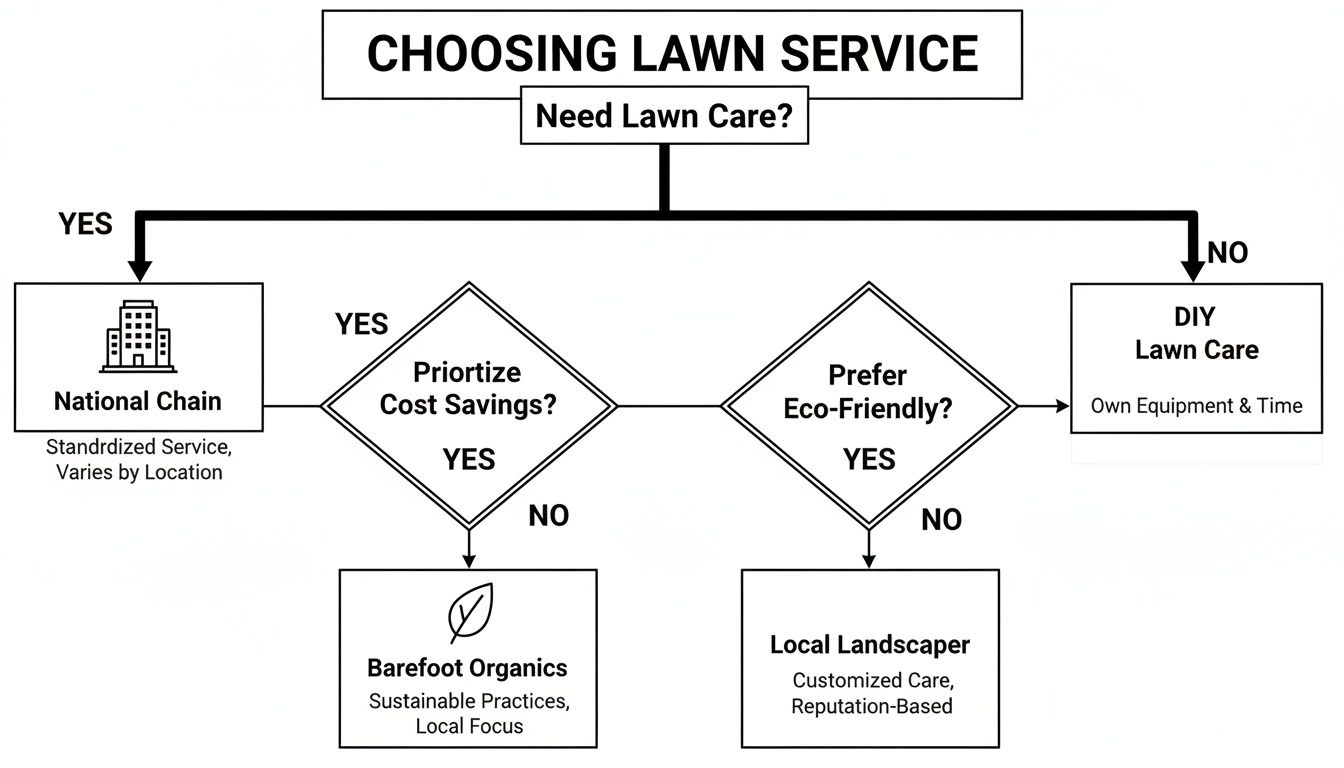
When you’re up against a stubborn weed like Creeping Charlie, you have choices. You can call a big national chain, or you can work with a local expert who actually understands Forsyth County lawns. We’re not a faceless corporation; we live and work right here. We care for lawns in the same family-friendly subdivisions in Suwanee and Sugar Hill you drive through, and we know the needs of the larger properties out in Milton.
We Genuinely Understand North Georgia Lawns
There's a huge difference between a generic treatment and a plan built by people who deal with North Georgia's specific challenges every day. We don't just read about these problems; we live them.
- That Georgia Clay: We know firsthand how our dense red clay compacts over time, choking out grassroots and rolling out the red carpet for weeds. Our entire program is designed to improve this exact type of soil.
- The Summer Gauntlet: That brutal summer heat and humidity is incredibly stressful for Fescue lawns, creating weak spots for Creeping Charlie to invade. Our seasonal lawn programs are built for it.
- Bermuda vs. Fescue: We’d never apply the same product to a tough, sun-loving Bermuda lawn in Johns Creek as we would to a delicate, shaded Fescue yard in Alpharetta. Your grass type dictates our strategy.
When you call Barefoot Organics, you're not getting a call center in another state. You’re talking directly with a lawn expert who works in Forsyth County, gives honest advice, and delivers results you can see.
A Safer Lawn for Your Family in Cumming
Your lawn is where your kids play and your pets run. That's why we are committed to a lawn care philosophy that’s tough on weeds but gentle on your family. Our approach is built on:
- Feeding the Soil First: We lean heavily on high-quality, organic-based fertilizers and soil amendments that build a healthy foundation.
- Precision, Not Blankets: When weeds pop up, we use professional-grade controls targeted only where needed. We never blanket-spray your entire property with chemicals.
- No-Nonsense Communication: We’ll always tell you exactly what we’re applying and any simple precautions to take. No secrets, no jargon.
For homeowners searching for “lawn treatment near me” in communities from Buford to Canton, choosing Barefoot Organics means choosing peace of mind. We don't just solve your weed problem; we build a healthier, more resilient lawn for your family.
Frequently Asked Questions About Creeping Charlie in Cumming, GA
Q: When is the best time to treat Creeping Charlie in Cumming, GA?
A: In Cumming, the absolute best time for professional treatment is in the fall, from late September through November. At this time, the weed is sending energy down to its roots to survive winter. Our post-emergent weed treatments take advantage of this, resulting in a more complete kill compared to spring applications.
Q: Are your weed control treatments safe for my kids and pets?
A: Yes, this is our top priority. We are parents and pet owners, too. Our lawn programs are built around organic-based fertilizers and targeted professional controls that are tough on weeds but gentle on your family. We provide clear, simple instructions after every application so you can enjoy your lawn with peace of mind.
Q: Will Creeping Charlie die off in our hot Georgia summers?
A: Unfortunately, no. While our intense 90-degree heat and humidity can slow its growth, Creeping Charlie is a tough perennial. It almost always bounces back once the cooler, wetter weather of fall arrives, especially in shady or irrigated spots. This resilience is why a consistent, professional lawn program is so important in Forsyth County.
Q: Why does Creeping Charlie keep coming back in my shady yard in Cumming?
A: This is the classic Creeping Charlie problem. It thrives in the exact conditions where grass struggles: shade and damp, compacted soil. If your yard in Cumming, Alpharetta, or Milton has areas with heavy tree cover and our typical Georgia clay soil, you've rolled out the welcome mat. The long-term fix is improving soil health and turf density.
Q: Can I just pull Creeping Charlie out by hand?
A: For a very tiny patch, maybe. But for most lawns in our area, hand-pulling is a frustrating battle you won't win. Every tiny piece of root or stem left behind will resprout, often creating an even bigger patch than before. For any real infestation in Cumming, a professional approach is far more effective.
Q: What is included in your lawn treatment program?
A: Our seasonal lawn programs are comprehensive and customized for your Forsyth County lawn. They include pre- and post-emergent weed control, organic-based fertilization, and soil health amendments. We focus on building a thick, resilient turf that naturally resists weeds like Creeping Charlie, brown patch fungus, and crabgrass.
Don't let Creeping Charlie win another season. For a lawn care partner that understands the unique needs of Cumming and the surrounding North Georgia communities, trust Barefoot Organics. Call us today for a straightforward solution.
Get Your Free Lawn Evaluation Today!