

Meta Title: Easiest Compost Bin in Cumming, GA
Meta Description: Easiest compost bin ideas for Cumming, GA homeowners. Learn simple composting methods that improve clay soil and support a healthier lawn.
Suggested URL Slug: /easiest-compost-bin-cumming-ga/
Internal Link Suggestions:
- /compost/
- /compost-bin-designs-plans/
- /compost-for-lawns/
- /lawn-treatment-cumming-ga/
- /weed-control-cumming-ga/
Schema Recommendations: LocalBusiness, Service, FAQPage
If you live in Cumming, you already know the pattern. Fall leaves pile up fast, summer grass clippings keep coming, and the lawn still struggles because that red Georgia clay stays tight, slick after rain, and hard as a brick during dry spells. A lot of homeowners in Forsyth County are sitting on the exact material that can help fix the soil. They just have not turned it into compost yet.
The easiest compost bin is not the fanciest one. It is the one you will use every week without fuss. For North Georgia yards, simple systems usually beat complicated ones. Compost gives those leaves and clippings a job to do. It helps build better soil under Bermuda and fescue, which matters when Cumming lawns deal with heavy rain, summer humidity, brown patch pressure, armyworms, pollen mess, and long stretches of heat.
If your lawn needs help beyond what a compost pile can solve, get a free lawn evaluation and talk through what your yard in Cumming is dealing with right now.
The Easiest Compost Bin for a Healthy Lawn in Cumming GA
For most homeowners, the easiest compost bin is a holding unit or plastic static bin. These are simple because you add yard waste and kitchen scraps as they build up, and you do not need an elaborate system to get started. The University of Connecticut notes that a holding unit is the easiest and least expensive way to compost, and it works well with non-woody materials like grass clippings, weeds, crop waste, and leaves, which are exactly the materials most Cumming yards produce in bulk (UConn compost bin guidance).
That matters locally.
A homeowner in Cumming might mow a Bermuda lawn through summer, rake oak leaves in fall, and fight compacted clay all year. A simple compost bin turns those routine chores into a soil-building habit. Instead of bagging everything to the curb, you keep the organic matter on-site and return it to the lawn where it helps the most.
What makes a compost bin easy
A bin is easy if it checks four boxes:
- Low setup effort because many homeowners will not build a complex system for a first try
- Low maintenance so it does not become another weekend project
- Tidy appearance for HOA neighborhoods in Cumming, Alpharetta, Milton, and Suwanee
- Useful output for topdressing thin or stressed turf
Plastic static bins fit smaller lots well. A plain holding unit works well if you have a little more room and do not care about a polished look.
Tip: If a compost setup feels like a hobby project, many homeowners quit. If it feels like part of normal yard cleanup, they keep going.
What does not work well for beginners
The biggest mistake is buying a system that looks efficient but is annoying to use. If the opening is too small, turning is awkward, or the bin sits in a soggy corner of the yard, people stop feeding it. In Cumming, that usually means a wet, smelly pile by midsummer.
Start simple. The right compost setup should feel about as routine as pulling weeds or blowing off the driveway.
Why Composting Transforms Cumming Lawns
A lot of Cumming lawn problems start in the soil long before they show up in the grass. You see thin spots, runoff, summer stress, or turf that never quite thickens. Underneath, the usual culprit is tight red clay that seals over after hard rain and bakes hard when the weather turns dry.
Compost helps because it changes how that soil behaves. In North Georgia, that matters more than another quick green-up product. Better soil structure gives roots air, improves how water moves through the ground, and helps the lawn stay more even through our swings between heavy summer storms and hot, dry stretches.
Why North Georgia composting advice has to be local
Generic composting advice often skips the conditions we deal with here. Cumming yards stay humid for long stretches, storms can soak a pile fast, and clay-heavy soil keeps areas wetter than homeowners expect. A compost setup that works fine in a drier climate can turn sour here if it stays too wet or sits in the wrong spot.
That is why simple systems usually win in Forsyth County. Homeowners are more likely to stick with a method that handles leaves, grass clippings, and kitchen scraps without turning into a smelly side project by July.
If you want a broader look at how compost supports soil health, this local resource on compost and lawn improvement is worth reviewing. Homeowners who want layout ideas can also review these compost bin designs and plans for North Georgia yards.
What compost changes in a Cumming lawn
The benefit is not just “better soil.” It shows up in ways you can see from the driveway.
- Clay soil loosens up. Roots push deeper instead of staying shallow near the surface. That usually means better color in summer and less thinning in high-traffic areas.
- Drainage improves. Water moves through the surface instead of sitting on top and sealing the soil. On fescue lawns, that can help reduce the wet conditions that often invite disease pressure.
- Moisture holds more evenly. Bermuda recovers better through July heat, and fescue has a better buffer during hot, dry weeks.
- Soil life improves. The lawn grows more steadily instead of jumping after fertilizer and then fading when stress hits.
That steady growth is what homeowners notice. The lawn feels less fragile.
Where this pays off around Forsyth County
Compost is especially useful in the lawn situations we see all over this area:
| Lawn situation | Visible lawn result |
|---|---|
| New construction soil | Better rooting and less runoff on stripped, compacted lots |
| Cumming fescue lawns in summer | More even moisture, which helps turf hold on longer under heat stress |
| Forsyth County Bermuda lawns | Faster fill-in and better recovery from foot traffic |
| HOA lawns with thin spots | Topdressing works better because the soil underneath starts improving |
Compost will not replace mowing at the right height, weed control, or proper watering. It does make every one of those jobs work better. For North Georgia homeowners chasing a thicker, softer, barefoot-worthy lawn, that soil improvement is usually the missing piece.
Choosing the Easiest Compost Bin for Your Forsyth County Home
The best choice depends on your lot, your tolerance for mess, and whether you want the bin to disappear into the background. A homeowner on a compact HOA lot in Milton usually needs something different than a homeowner on a larger property outside Dawsonville or Canton.
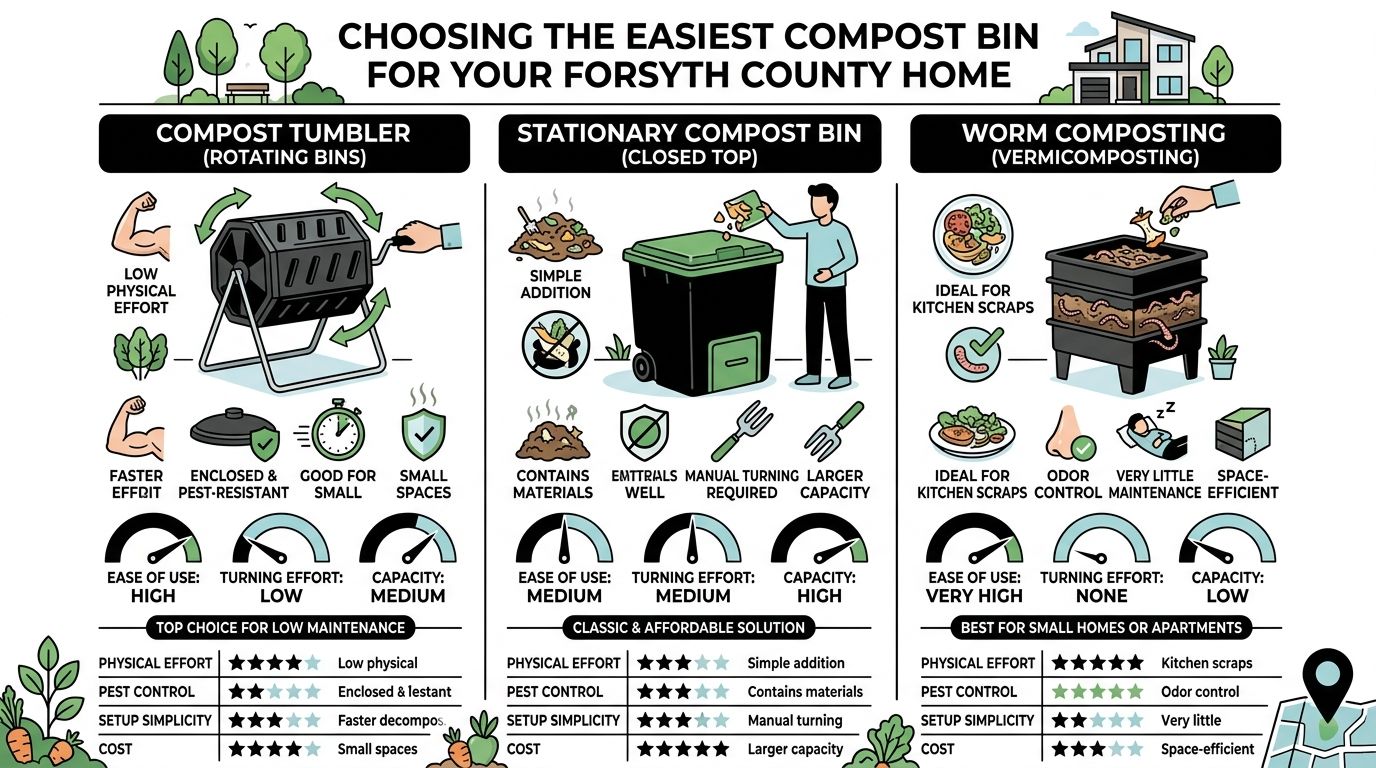
Option one is the plastic static bin
This is the easiest compost bin for a lot of suburban homeowners.
It is neat, contained, and simple to feed. You drop material in the top and remove finished compost from the bottom door when it is ready. It works especially well on neighborhood lots in Cumming, Suwanee, Sugar Hill, and Buford where appearance matters and yard space is limited.
Best fit: HOA neighborhoods, pet owners, small to medium yards
Trade-off: Turning can be awkward if the opening is small
Why it works here: It keeps the pile more contained during wet weather and looks cleaner near the house
Option two is a simple holding unit
This can be as basic as a contained pile made from wire, wood, or another open-sided setup. It is less polished, but very forgiving.
If you have room behind the fence or near a garden edge, this method is hard to beat. It handles leaves, clippings, and garden debris well. It also makes it easier to add bulkier material, which is useful after storm cleanup or a heavy leaf drop.
Best fit: Larger yards in Forsyth County, Dawsonville, or more open properties
Trade-off: Not always HOA-friendly
Why it works here: It is easy to build, easy to access, and forgiving when the pile gets uneven
Option three is the three-bay wire or pallet system
This is still simple in practice, even though it sounds more involved. It works best for homeowners who generate a lot of material and want a steady supply of finished compost for the lawn and beds.
Rodale Institute notes that a 3x3x3 ft bin retains heat well, reaches 130-160°F, breaks down material 40% faster than smaller, colder piles, and can yield 1-2 cubic yards of compost per season (Rodale backyard composting basics).
That is a strong option for larger Cumming lawns that need regular topdressing.
You can look at practical compost bin designs and plans if you want to compare layouts before building one.
A quick comparison for North Atlanta homeowners
| Bin type | Effort | Appearance | Space need | Good for |
|---|---|---|---|---|
| Plastic static bin | Low | Clean | Small | HOA lots, families, beginners |
| Holding unit | Low | Basic | Medium | Larger yards, leaf-heavy properties |
| 3-bay wire or pallet | Moderate to start | Utility look | Larger | Big lawns, gardeners, high volume |
Midway through the decision, many homeowners ask the same question. Which one will I keep using in July when it is humid and I do not feel like fooling with it?
For most Cumming homeowners, the answer is still the plastic static bin. It wins on convenience. The holding unit is a close second if you have more room and fewer appearance concerns.
Key takeaway: The easiest compost bin is not the fastest one. It is the one that matches your property and your patience.
If your goal is a healthier lawn and you want advice on which approach fits your yard, get a free lawn evaluation and ask what will make the biggest difference for your soil first.
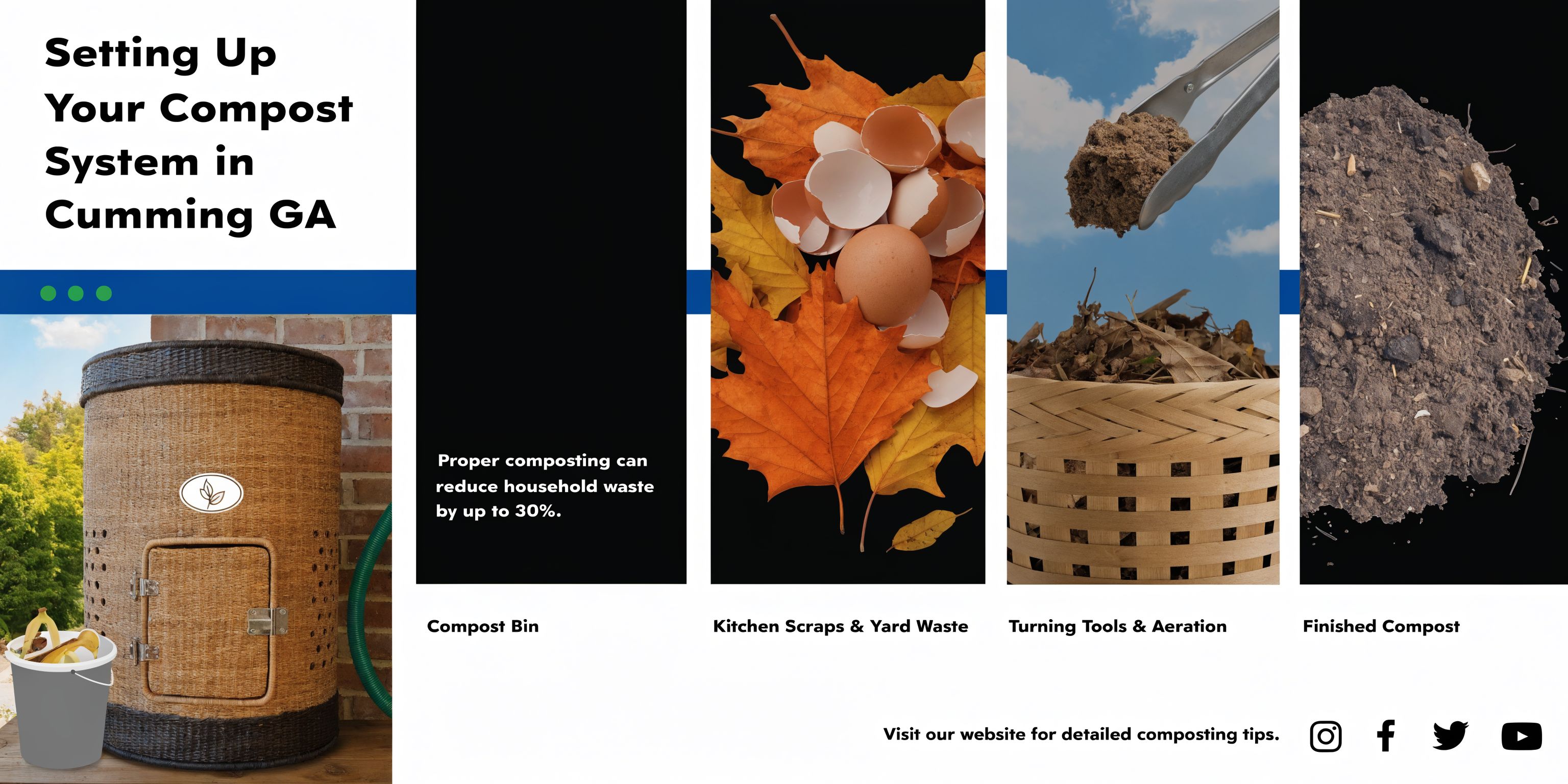
Setting Up Your Compost System in Cumming GA
Set a compost bin in the wrong spot in Cumming, and you will fight it all summer. The usual mistake is tucking it into the lowest back corner where stormwater sits after a hard rain. In our heat and humidity, that turns into a wet, sour pile fast.
Pick the right spot first
Start with a location you can reach without thinking about it. If the bin is too far from the kitchen door or mower path, yard waste and scraps end up in a bag or can instead of the compost.
The best setup for North Georgia usually has four traits:
- Well-drained ground so summer storms do not leave the bin waterlogged
- Easy access from the house, garden, or mower route
- Some afternoon shade to slow drying during hot spells
- A little separation from heavy foot traffic so kids, dogs, and play areas stay clear
For many Forsyth County homes, a side yard fence line, the back corner of a garden bed, or a spot behind the garage works well. The bin stays handy without becoming the first thing you see from the patio.
Start with materials you already have
The easiest compost system uses what your yard already gives you. In Cumming, that usually means leaves in fall, grass clippings through the growing season, pine straw, and kitchen scraps from daily cooking.
Good starter materials include:
- Browns like oak leaves, dry leaves, shredded cardboard, and pine straw
- Greens like grass clippings, vegetable scraps, fruit scraps, and spent garden plants
That mix matters for lawn results. Leaf-heavy compost helps loosen tight clay soil over time, and that is a real benefit in this part of Georgia where compacted soil keeps roots shallow and lawns struggle in summer heat.
Build the pile so it breathes
A simple layered start works better than chasing the perfect recipe. USDA guidance for backyard composting recommends keeping more browns than greens, which is the safer approach in our humid climate because it helps with airflow and odor control (USDA Natural Resources Conservation Service composting basics).
Set it up like this:
- Start with a loose base of leaves, small twigs, or coarse yard trimmings
- Add a thinner layer of greens such as fresh clippings or kitchen scraps
- Cover that layer with browns so wet material is tucked in
- Repeat as new material comes in
Do not pack the pile down. Air is what keeps it from turning into a wet mat.
Use what works in North Georgia
Pine straw is useful here because it is easy to get and helps separate wetter material. Oak leaves are excellent if your neighborhood has mature trees. Grass clippings work well too, but only in thinner layers. A thick dump of fresh clippings will mat together, hold water, and smell by the weekend.
One habit makes startup easier. Keep a small stack of dry leaves, pine straw, or shredded cardboard beside the bin. After mowing or cleaning the kitchen, cover the fresh greens right away. That one step prevents most odor problems before they start.
Keep the setup simple
This should take less than an hour. Place the bin, add the base layer, load the first round of material, and keep your browns nearby.
That is enough to get started well. A clean setup now gives you compost you can use later to topdress thin turf, ease clay compaction, and help your lawn hold moisture better during Cumming's hot summer stretches.
Simple Maintenance and Safety Tips for North Georgia
The easiest compost bin should not demand constant attention. In Cumming, the goal is simple maintenance that keeps the pile from going sour during humid weather and keeps pets from getting into trouble.
A low-effort routine that works
Most homeowners do fine with a routine like this:
- Add material as it is generated instead of stockpiling bags beside the bin
- Cover fresh greens right away with leaves, pine straw, or other browns
- Check moisture after heavy rain because North Georgia storms can soak a pile fast
- Loosen the pile occasionally if it looks packed down or slimy
Monthly turning is enough for many basic systems, especially if you are using a holding unit or static bin and are not chasing speed. If you do not want to turn it much, focus on layering correctly from the start.
What to do during rain and drought
Cumming weather swings. One stretch brings heavy rain, then the next brings dry heat and a lawn that starts showing stress.
Use this quick guide:
| Condition | What to do |
|---|---|
| Pile is soggy | Add dry leaves, pine straw, or shredded cardboard. Open it up a bit for airflow. |
| Pile is dry and inactive | Add a little water while mixing lightly. Aim for damp, not soaked. |
| Pile smells sour | Too many greens or too much water. Add browns and stop adding wet scraps for a few days. |
| Pile draws flies | Bury food scraps under a thicker brown layer. |
Odor and pest control for family yards
This is the part a lot of guides skip. Families in Cumming, East Cobb, Cherokee County, and Gwinnett County want compost that does not invite raccoons, digging dogs, or backyard complaints.
The verified guidance on safety is straightforward. Pet and child safety is a major gap in most composting guides. The ASPCA notes that compost can contain toxins from moldy scraps, and unsecured piles can attract wildlife. Securely lidded bins or tumblers are essential for families in pet-heavy communities like those in Cobb and Cherokee Counties to prevent accidental ingestion or encounters (pet and child compost safety reference).
That means:
- Use a lid if pets roam the yard
- Do not leave food scraps exposed
- Skip meat, dairy, and oily foods in a basic backyard system
- Keep the area clean around the bin so scraps do not end up on the ground
Child and pet safety in Cumming backyards
For homes with kids and dogs, the safest path is a contained bin placed out of the main traffic area. Avoid open piles near swing sets, dog runs, or the gate where pets usually patrol.
Watch for moldy material. If something in the bin looks questionable, cover it and leave it undisturbed. Pets should never have access to active compost.
Safety takeaway: The easiest compost bin for a family is usually the one a child cannot open easily and a dog cannot raid.
Fire ants, snakes, and other unwelcome visitors are less likely to settle in a bin that stays balanced, contained, and not overly wet. Neglected piles create more issues than active, basic systems do.
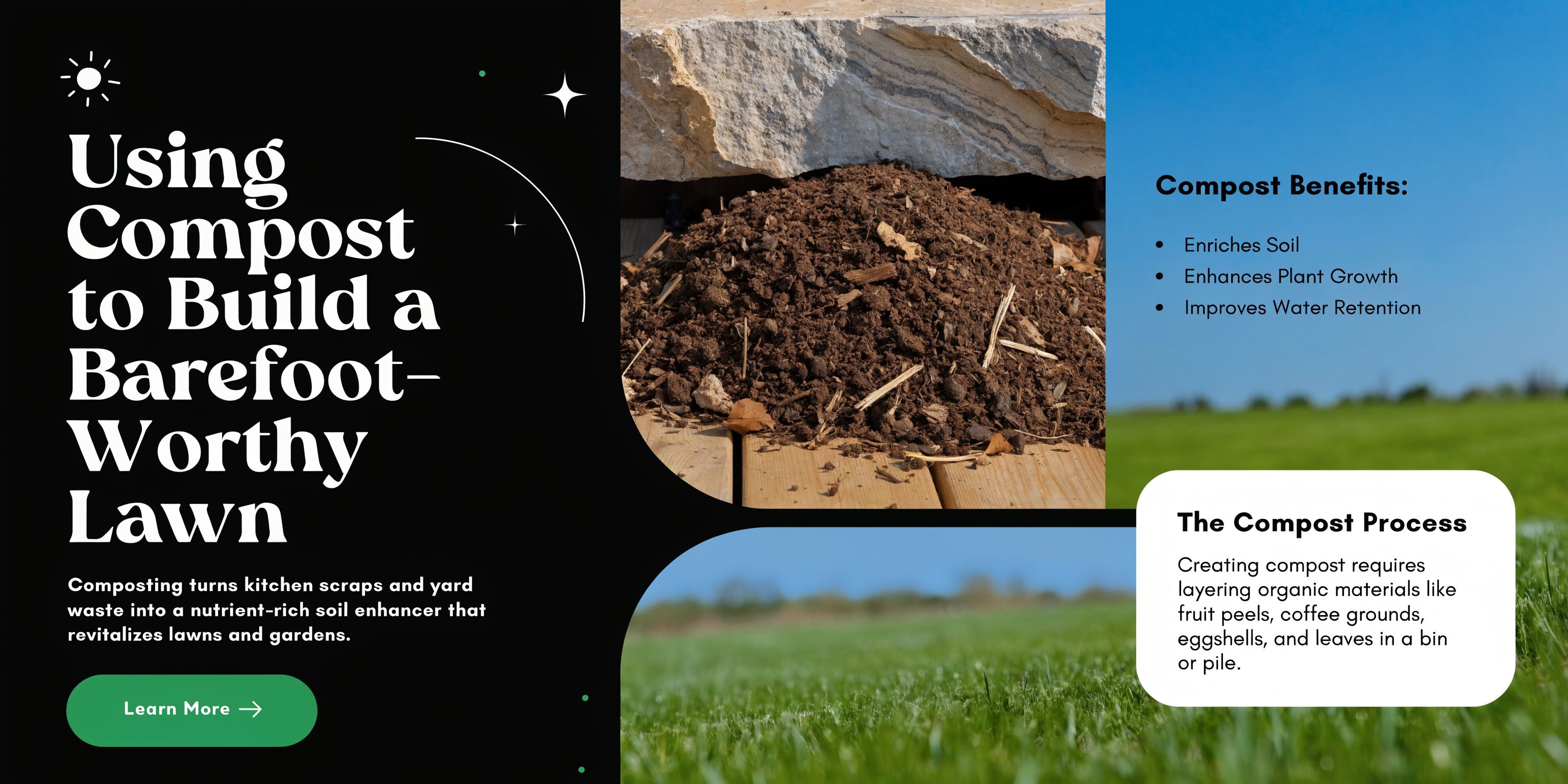
Using Compost to Build a Barefoot-Worthy Lawn
Finished compost should look dark, crumbly, and earthy. It should not look like recognizable kitchen scraps or fresh leaves. Once it reaches that stage, it is ready to go back into the lawn.
Where to use it on a Cumming lawn
Compost works especially well in these spots:
- Thin areas where the soil is weak or compacted
- High-traffic zones where kids or dogs wear the turf down
- New construction lawns with stripped topsoil
- Fall overseeding areas where fescue needs better seed-to-soil conditions
Spread it as a light topdressing, not a heavy blanket. The idea is to feed and improve the soil surface without smothering the grass.
Bermuda and fescue use it differently
Bermuda lawns in Forsyth County usually benefit from compost during active growth when the turf can recover and fill in. Fescue lawns often benefit most around fall overseeding, when building a better surface layer helps seed establish more evenly.
For either lawn type, compost is best treated as a soil-building tool, not a miracle fix. It helps the lawn use water better, handle stress better, and recover with more consistency.
If you want a deeper look at practical lawn use, this page on compost for lawns gives a good local overview.
The true payoff
A barefoot-worthy lawn in Cumming is not just green. It is rooted, resilient, and less reactive to every weather swing. Compost helps create that kind of turf because it improves the ground the lawn lives in.
That is why it pairs well with fertilization, weed control, aeration, and solid mowing practices. Compost handles the foundation. The rest of the lawn program builds on it.
Your Partner in Lawn Health for Cumming and Beyond
Some homeowners want a bin. Others want the absolute minimum effort. The in-ground pit method fits that second group well. The process is simple. Dig a 12-inch hole, add kitchen scraps, and cover them with 4-8 inches of yard waste. This method breaks down waste in 6-12 months and improves the surrounding Georgia clay soil without requiring a purchased bin (in-ground compost pit method).
That kind of no-fuss composting makes sense for some properties in Cumming, Buford, Canton, and across Forsyth County. But compost alone does not solve every lawn issue. If a yard has weed pressure, weak turf, poor fertility, or stress from summer heat, the best results usually come from pairing soil improvement with a complete lawn plan.
For homeowners searching lawn treatment near me, weed control near me, or a practical lawn program in North Atlanta, the goal is not just greener grass for a month. The goal is a lawn that holds up through pollen season, crabgrass season, heavy rain, drought, and the heat that pounds Cumming every summer.
Frequently Asked Questions About Composting in Cumming
Q: What is the easiest compost bin for a small Cumming backyard?
A: For most small yards, a plastic static bin is the easiest choice. It stays tidier than an open pile, fits better in HOA neighborhoods, and handles the leaves and grass clippings most Cumming homeowners already have.
Q: Will composting smell bad in Forsyth County humidity?
A: It can, but usually only if the pile stays too wet or has too many fresh greens. In Cumming, odor problems are often solved by adding more dry leaves or pine straw and keeping food scraps covered.
Q: Is a compost tumbler better than a basic bin?
A: Not always. Tumblers can look neat and keep material contained, but many homeowners find a simple static bin easier to load and maintain. The easiest compost bin is the one you will use consistently without dreading it.
Q: Can I compost safely if I have dogs or kids?
A: Yes, but use a contained system. A securely lidded bin is the safer choice for family yards in Cumming, Johns Creek, and Milton. Keep pets away from active compost, and do not leave food scraps exposed.
Q: What should I put in a compost bin from my Cumming lawn?
A: The easiest materials are leaves, grass clippings, and non-woody garden trimmings. Those materials are common in North Georgia yards and work well in beginner systems when balanced with enough dry browns.
Q: Is compost useful for Bermuda lawns or just fescue?
A: It helps both. Bermuda benefits from stronger soil during active growth and recovery, while fescue benefits from better moisture support and improved soil conditions around fall overseeding in Forsyth County.
Q: Can compost help with clay soil in new construction neighborhoods?
A: Yes. That is one of its best uses. Many Cumming and North Atlanta homes were built on compacted, low-organic soil. Compost helps improve the surface layer so roots, water, and air move more naturally.
Ready for a lawn that feels better underfoot and performs better through the Cumming seasons? Barefoot Organics helps homeowners across Cumming, Forsyth County, Alpharetta, Johns Creek, Suwanee, Milton, Dawsonville, Buford, Sugar Hill, and Canton build healthier lawns from the soil up. If you want honest local guidance on compost, weed control, fertilization, or a full lawn treatment program, call today, request service, or get a free lawn evaluation to start your lawn program.