

The classic green turf has long been a staple of suburban life in areas like Cumming, Alpharetta, and Johns Creek. But with rising water costs and increasing awareness of our environmental impact, many North Georgia homeowners are seeking sustainable, low-maintenance options. The primary challenge lies in our region’s unique climate, where hot, humid summers often lead to drought conditions that stress traditional fescue and Bermuda grasses, demanding constant irrigation and care.
This practical guide is designed to solve that problem. We will explore 10 innovative and beautiful drought tolerant lawn alternatives specifically suited for our local environment. You will discover actionable strategies to transform your yard, whether you live in Forsyth, Cherokee, or north Fulton county.
Instead of fighting the summer heat with your sprinkler system, you’ll learn how to implement water-smart solutions that save you time and money. From vibrant wildflower meadows that support local pollinators to elegant hardscapes perfect for a Milton or Dahlonega property, this list provides clear, step-by-step insights. Each alternative is presented with its unique benefits, maintenance needs, and suitability for the Georgia clay and climate, empowering you to create a resilient and stunning landscape that thrives with less water.
1. Thriving North Georgia Native Grasses and Sedges
Instead of fighting to maintain a thirsty, non-native turf, consider embracing grasses and sedges that have evolved to flourish in North Georgia’s specific climate. Species like Little Bluestem (Schizachyrium scoparium), Switchgrass (Panicum virgatum), and various Carex (sedge) varieties are perfectly adapted to our local rainfall patterns, challenging clay soils, and summer humidity. These plants are excellent drought tolerant lawn alternatives because they develop incredibly deep root systems that seek out subsurface moisture, making them resilient during the dry spells common from Cumming to Dahlonega.
Why Choose Native Grasses?
This approach provides a beautiful, textural alternative to a flat, uniform lawn and creates a vital habitat for local pollinators and birds. Unlike traditional turf, which often requires significant chemical inputs, a native grass landscape supports a healthier local ecosystem. The visual interest changes with the seasons, offering beautiful seed heads in the fall and winter. You can see stunning examples of this concept in the naturalistic landscapes of Milton and Alpharetta or in displays at the Atlanta Botanical Garden.
Getting Started with Native Grasses
- Optimal Planting Time: Plant plugs or seeds in the fall. This allows the root systems to establish during the cooler, wetter months before the stress of summer heat arrives.
- Establishment Care: Water them regularly during their first year to ensure they develop strong roots. Afterward, they will only need supplemental water during periods of extreme, prolonged drought.
- Annual Maintenance: Simply cut the grasses back to about 6 inches in late winter (late February is ideal). This encourages robust new growth in the spring.
- Soil Preparation: While native grasses are tough, they perform best in well-structured soil. Ensuring your soil is healthy will give them a strong start. Find out more about how to create healthy soil for your landscape.
2. Xeriscaping with Hardscape Elements
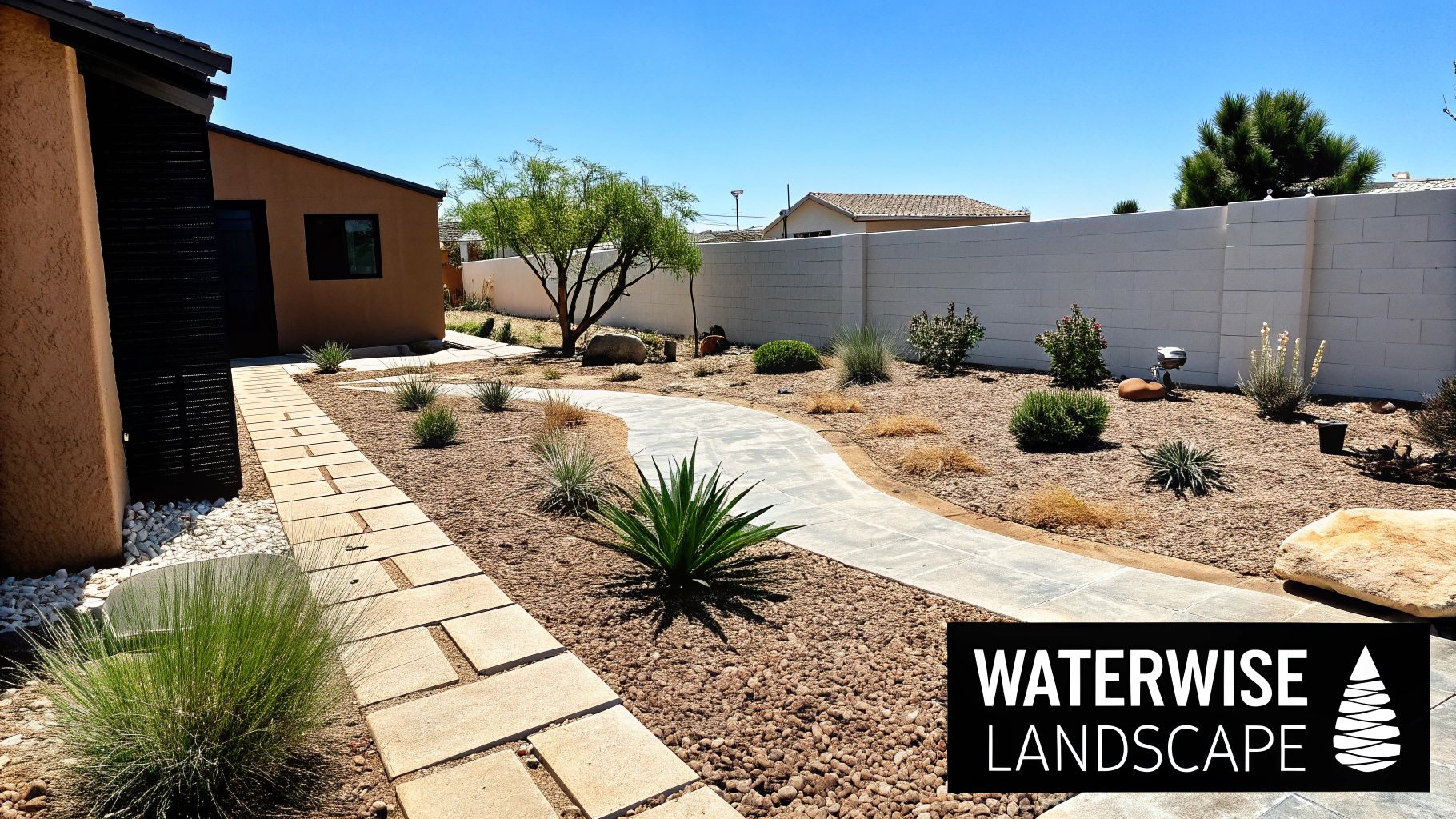
Xeriscaping is a comprehensive design philosophy that minimizes water use by integrating drought-tolerant plants with non-living hardscape features. Instead of a vast, thirsty lawn, this approach creates visual interest using materials like gravel, flagstone paths, and decorative boulders. It’s a fantastic drought tolerant lawn alternative because it strategically reduces the amount of land that needs watering, replacing it with beautiful, functional, and permanent structure.
Why Choose Xeriscaping?
This method drastically cuts down on your water bill and maintenance time, freeing you from the constant cycle of mowing and fertilizing. By combining textures, colors, and elevations, a well-designed xeriscape can transform a plain yard into a sophisticated outdoor living space. You can see this principle at work in modern home designs throughout Johns Creek and Alpharetta, where elegant stone patios and gravel beds are combined with tough, architectural plants to create stunning, low-water landscapes.
Getting Started with Xeriscaping
- Plan Your Zones: Group plants with similar water needs together, a practice known as hydrozoning. This ensures you aren’t overwatering drought-tolerant species to accommodate thirstier ones.
- Use Permeable Materials: Opt for permeable pavers or gravel for walkways and patios. This allows precious rainwater to soak into the ground, reducing runoff and hydrating the soil.
- Apply Deep Mulch: A 3 to 4-inch layer of organic mulch or stone around plants insulates the soil, retains moisture, and suppresses weeds.
- Choose Lighter Colors: Lighter-colored stones and pavers reflect sunlight rather than absorbing it, which helps keep the soil and plant roots cooler during intense summer heat.
3. Clover and Low-Growing Legumes
For a lush, green lawn that requires significantly less water and fertilizer, consider clover and other low-growing legumes. Species like White Clover (Trifolium repens) and Red Clover are fantastic drought tolerant lawn alternatives because their deep taproots can access moisture far below the surface, keeping them green even during dry North Georgia summers. These plants are nitrogen-fixers, meaning they naturally enrich the soil and eliminate the need for synthetic fertilizers, creating a self-sustaining and low-maintenance lawn.
Why Choose Clover?
A clover lawn is a boon for pollinators, providing a vital food source for local bee populations, a benefit increasingly championed by environmental groups. This approach creates a soft, durable surface that is excellent for families in areas like Johns Creek and Milton. Unlike traditional grass, clover stays green through summer heat with minimal input and chokes out common weeds. Its natural fertilizing action also improves the health of surrounding garden beds and trees, contributing to a more robust, integrated landscape.
Getting Started with Clover
- Optimal Planting Time: Broadcast clover seed over your existing lawn or prepared soil in the early spring or fall. Cooler temperatures and consistent moisture help it establish quickly.
- Establishment Care: Keep the soil consistently moist for the first couple of weeks to ensure good germination. Once established, it is exceptionally drought-tolerant.
- Mowing Strategy: Mow less frequently than a traditional lawn, about every 2-3 weeks. This allows the clover to flower, providing maximum benefit to pollinators.
- Herbicide Warning: Avoid broadleaf herbicides, as they will kill clover. Embrace the biodiversity it brings instead of striving for a sterile monoculture.
4. Succulent Ground Covers
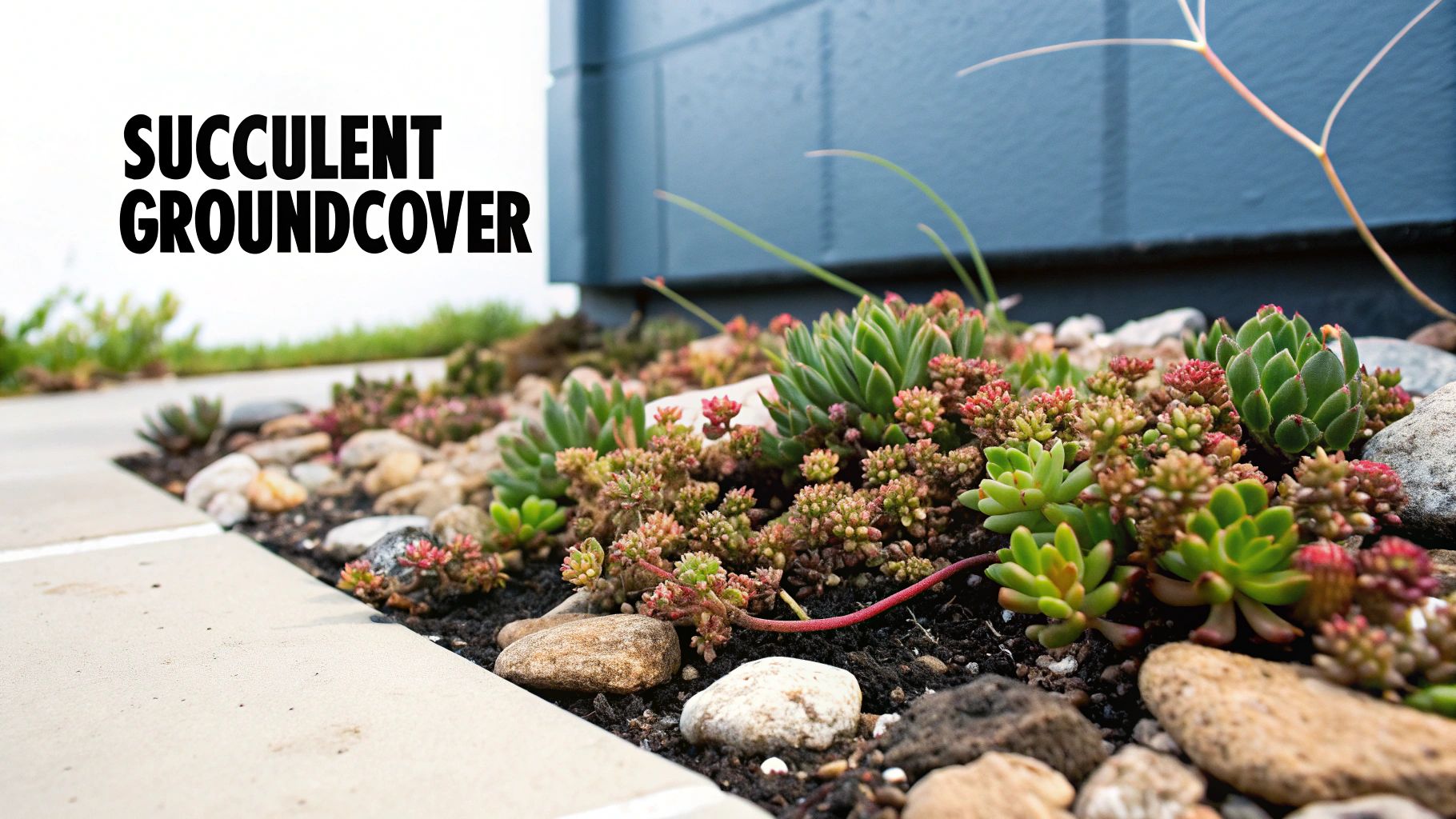
For areas that receive full, baking sun, swapping out turf for succulent ground covers is a brilliant strategy. These plants, such as sedums and delosperma (ice plant), store water in their fleshy leaves and stems, making them naturally resilient to heat and dry spells. Succulent ground covers create a low-profile, living carpet that offers fascinating textures and colors, turning a sun-drenched problem area into a stunning, water-wise feature. This is one of the most effective drought tolerant lawn alternatives for North Georgia’s hot summers and clay soil, provided the drainage is properly addressed.
Why Choose Succulent Ground Covers?
Succulents offer a modern, low-maintenance aesthetic that thrives on neglect once established. They are perfect for rock gardens, pathway borders, or full lawn replacement in sunny spots where traditional grass struggles. The diversity in foliage, from the vibrant yellows of ‘Angelina’ sedum to the cool blues of certain echeveria, allows for creative, tapestry-like designs. This approach is gaining popularity in new developments around Johns Creek and Milton for creating fire-wise and water-conscious landscapes.
Getting Started with Succulent Ground Covers
- Optimal Planting Time: Plant in the spring after the last frost. This gives them the entire growing season to establish before winter dormancy.
- Establishment Care: Water them about once a week for the first month. Afterward, water only when the soil is completely dry to the touch, as overwatering is their biggest threat.
- Annual Maintenance: Minimal upkeep is required. Simply remove any dead leaves or spent flower stalks as needed to maintain a tidy appearance and prevent potential rot.
- Soil Preparation: Excellent drainage is non-negotiable. Heavy North Georgia clay must be amended with grit, sand, or gravel to prevent root rot. Consider creating a slightly raised bed for optimal results.
5. Moss Gardens
For shady areas where traditional turfgrass struggles, a moss garden offers a lush, evergreen, and surprisingly resilient alternative. This ancient landscaping concept, long perfected in Japanese garden design, is gaining popularity as one of the most effective drought tolerant lawn alternatives for North Georgia’s shaded nooks. Mosses require no mowing, fertilizer, or pesticides, and once established, they have very minimal water needs, creating a soft, velvety carpet that thrives in the acidic clay soil common from Johns Creek to Cumming. They absorb moisture and nutrients directly through their leaves from the air, making them incredibly self-sufficient.
Why Choose a Moss Garden?
A moss garden creates a serene, tranquil atmosphere that feels cool and inviting, even during the hottest Georgia summers. Unlike turf, it provides a year-round green that requires virtually no upkeep and actively suppresses weeds once established. This approach is perfect for areas under mature trees or on the north side of a house where other plants fail. It’s a low-impact, ecological choice that provides a unique texture and a deep, vibrant color that you simply can’t get from grass.
Getting Started with a Moss Garden
- Optimal Planting Time: Late spring or early fall is ideal, avoiding the extremes of summer heat and winter cold to allow for gentle establishment.
- Establishment Care: The key to establishing moss is consistent moisture. Mist the area daily for the first 3-4 weeks until the moss has attached itself to the soil. After that, it will only need water during extended dry periods.
- Soil Preparation: Moss prefers acidic soil with a pH between 5.0 and 6.0. Test your soil and amend if necessary. Clear the area completely of all weeds, grass, and debris before you begin planting.
- Installation: You can introduce moss by transplanting sheets from another area or by blending moss fragments with buttermilk or yogurt and painting the mixture onto the desired surface.
6. Pollinator-Friendly Wildflower Meadows
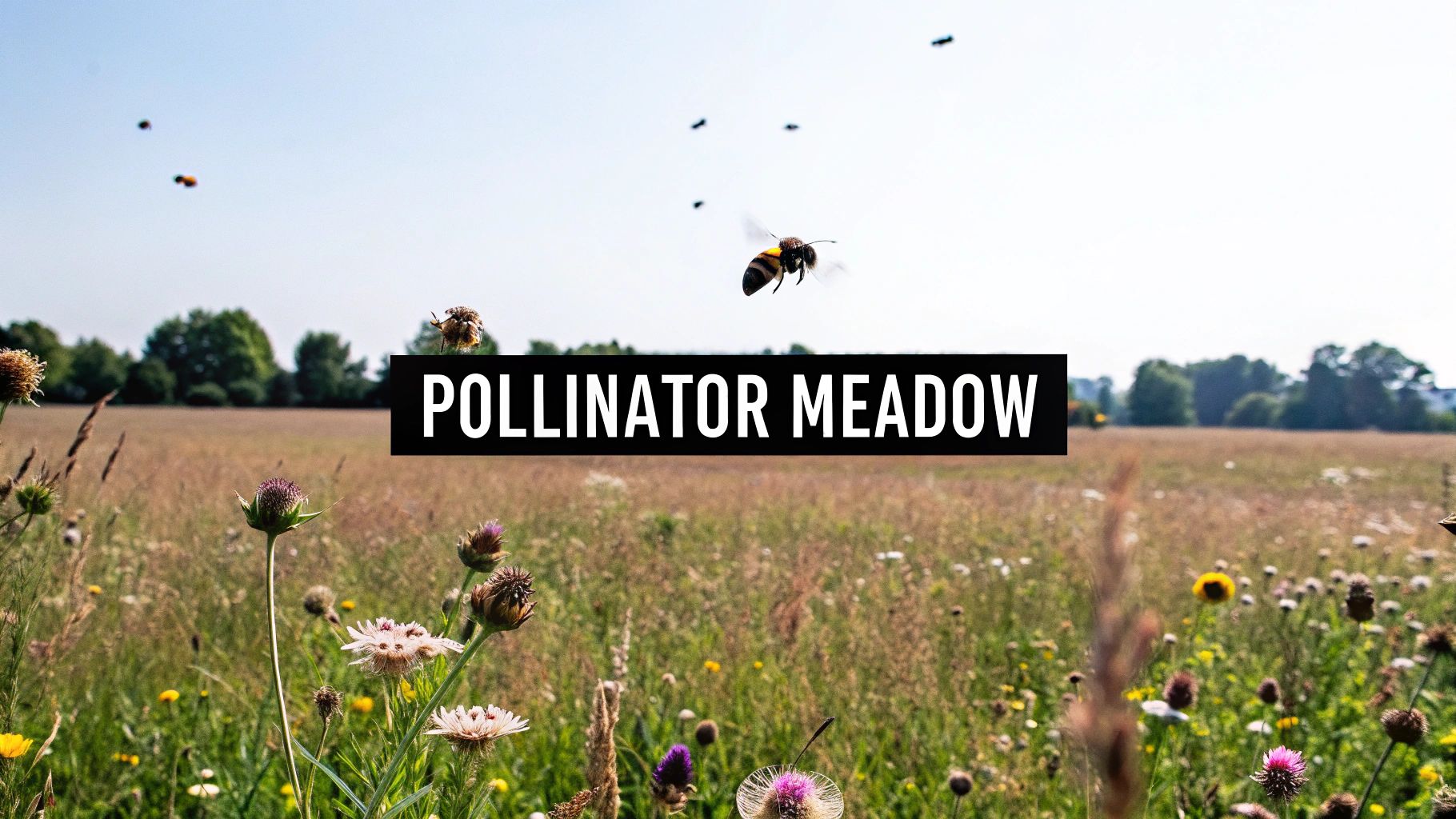
Imagine replacing your high-maintenance lawn with a vibrant, living tapestry of native blooms that buzzes with life. A pollinator-friendly wildflower meadow is a fantastic drought tolerant lawn alternative that transforms a monoculture turf into a dynamic, self-sustaining ecosystem. By using plants native to North Georgia, such as Black-Eyed Susans, Purple Coneflowers, and Butterfly Weed, you create a landscape that is perfectly adapted to our local climate, from the red clay of Johns Creek to the rolling hills near Dahlonega. Once established, these meadows thrive on natural rainfall, eliminating the need for constant irrigation.
Why Choose a Wildflower Meadow?
This approach dramatically reduces lawn care chores like mowing, fertilizing, and watering, while actively supporting declining pollinator populations. A meadow provides crucial food and habitat for bees, butterflies, and beneficial insects that are vital to our local environment. Inspired by successful initiatives like the Xerces Society’s conservation programs, homeowners in communities like Alpharetta and Milton can create beautiful, low-input landscapes that offer changing colors and textures throughout the seasons, contributing to a healthier, more resilient local ecosystem.
Getting Started with a Wildflower Meadow
- Optimal Planting Time: The best time to sow seeds is in the fall. This allows for a natural cold stratification period over winter, which is essential for many native seeds to germinate in the spring. You can learn more about the benefits of fall seeding.
- Establishment Care: Thoroughly remove the existing turf and any weeds to reduce competition. Water the area consistently during the first growing season to help the young plants establish their deep root systems.
- Annual Maintenance: Unlike a lawn, a meadow requires minimal upkeep. Simply mow it once a year in late winter before new spring growth begins, leaving the clippings to enrich the soil.
- Seed Selection: Choose a high-quality seed mix specifically designed for the Southeastern U.S. or Georgia. For a step-by-step guide on creating a vibrant meadow, check out this excellent resource on how to plant wild flower seeds.
7. Ornamental Grasses and Perennials
Instead of a uniform green carpet, consider a “meadow-style” landscape using curated combinations of ornamental grasses and perennials. This approach, championed by designers like Piet Oudolf, uses plants like Feather Reed Grass, Blue Fescue, Coreopsis, and Black-eyed Susans to create a dynamic, textured garden. These combinations are exceptional drought tolerant lawn alternatives because their diverse root structures and natural resilience reduce water needs significantly. Once established, they thrive in the summer heat of Johns Creek and Alpharetta with minimal intervention.
Why Choose a Perennial Meadow?
This style provides four seasons of visual interest, from spring blooms to the sculptural forms of grasses in winter. It creates a rich, layered habitat that is far more beneficial to pollinators and local wildlife than any traditional turf. The aesthetic is modern yet natural, adding significant curb appeal and ecological value. This design philosophy can be seen in public spaces globally and is increasingly popular in contemporary residential landscapes throughout North Georgia, offering a beautiful, low-maintenance alternative to a demanding lawn.
Getting Started with Ornamental Mixes
- Design for Succession: Choose plants with complementary bloom times to ensure there is always something visually interesting happening in your garden bed from spring through fall.
- Plant in Drifts: For a natural, cohesive look, plant in groups or “drifts” of the same species rather than dotting individual plants around. Mix textures and heights for depth.
- Establishment Care: Water new plantings regularly during their first season to encourage deep root growth. Afterward, they will be remarkably self-sufficient.
- Annual Maintenance: Unlike a lawn that needs weekly mowing, this garden only requires one major cleanup. Simply cut back all dead growth in late winter or early spring (late March is perfect) to make way for new life.
8. Groundcover Shrubs and Low-Growing Plants
For a truly permanent and low-maintenance solution, consider replacing sections of your lawn with woody shrubs and resilient groundcovers. Plants like Creeping Juniper (Juniperus horizontalis), Ornamental Germander (Teucrium chamaedrys), and Hardy Ice Plant (Delosperma cooperi) form a living carpet that suppresses weeds and conserves soil moisture. These drought tolerant lawn alternatives offer incredible structure and year-round visual interest, moving beyond a simple flat green space to create a dynamic, multi-layered landscape.
Why Choose Groundcover Shrubs?
This approach provides a robust, long-term alternative that requires almost no water once established, making it ideal for the hot, dry summers often seen from Alpharetta to Johns Creek. It creates a textured, visually appealing area that stands in stark contrast to a uniform turf lawn. The dense growth also provides excellent habitat for beneficial insects and ground-foraging birds while preventing soil erosion on slopes, a common challenge in North Georgia’s hilly terrain. The enduring appeal of this style is evident in modern xeriscapes and Mediterranean-inspired gardens.
Getting Started with Groundcover Shrubs
- Optimal Planting Time: Fall is the best time to plant, allowing the shrubs to establish their deep root systems during the cooler, wetter months before summer stress.
- Establishment Care: Water deeply but infrequently during the first growing season. This encourages roots to grow downward in search of moisture rather than staying near the surface.
- Annual Maintenance: Most groundcover shrubs require minimal care. A light pruning after they finish flowering can help maintain a compact, tidy shape and encourage dense growth.
- Spacing and Mulching: Be sure to space plants according to their mature width to ensure they fill in properly without overcrowding. Apply a thick layer of mulch between new plants to retain moisture and suppress weeds while they grow to cover the area.
9. Permeable Paving and Hardscape-Only Yards
For homeowners seeking the ultimate low-maintenance, zero-water landscape, replacing turfgrass entirely with hardscaping is a powerful solution. This approach involves using permeable paving materials like porous concrete, interlocking pavers, or recycled rubber to create functional and attractive outdoor living spaces. These surfaces allow rainwater to soak into the ground instead of running off, making them one of the most effective drought tolerant lawn alternatives for managing storm water in areas like Cumming and Johns Creek.
Why Choose a Hardscape-Only Yard?
This modern design eliminates the need for mowing, fertilizing, and, most importantly, watering. A thoughtfully designed hardscape transforms a high-maintenance lawn into a versatile patio, courtyard, or entertainment area, expanding your usable living space. It provides a clean, contemporary aesthetic seen in many modern homes from Alpharetta to Milton, and when combined with strategically placed container gardens, it still allows for splashes of color and greenery without the high water demands of a traditional lawn.
Getting Started with Hardscapes
- Choose Permeable Materials: Opt for materials specifically designed for permeability, such as open-graded aggregate, porous asphalt, or pavers set on a sand base, to support healthy groundwater recharge.
- Integrate Greenery: Use large potted plants, raised garden beds, or climbing vines on trellises to soften the look and provide a connection to nature.
- Plan for Cooling: Incorporate shade structures like pergolas or shade sails and choose lighter-colored materials to minimize heat absorption during hot Georgia summers.
- Expert Installation: Proper grading and installation are crucial for effective drainage. For incorporating beautiful and low-maintenance hardscapes into your yard, you might explore options like residential decorative concrete.
10. Turf Alternatives and Low-Maintenance Lawn Blends
For those not ready to completely give up a traditional lawn aesthetic, modern turf alternatives offer a fantastic middle ground. Commercially available drought-tolerant lawn seed blends, often featuring advanced fescue and hybrid bermudagrass varieties, have been specifically engineered for reduced water needs. Companies like DLF and Barenbrug offer mixes that establish deep root systems, making them far more resilient to the hot, dry summers common in areas from Johns Creek to Cumming than standard Kentucky bluegrass or ryegrass. These blends are some of the most practical drought tolerant lawn alternatives available.
Why Choose Low-Maintenance Blends?
This approach allows you to maintain the classic, usable green space that is ideal for children and pets while significantly cutting down on water consumption and maintenance. These improved turfgrasses are selected for their ability to stay greener longer during periods of drought and recover more quickly once rainfall returns. They provide the familiar look and feel of a lawn but with enhanced durability and sustainability, a popular choice for homeowners throughout North Georgia.
Getting Started with Turf Alternatives
- Choose Wisely: Select a blend specifically formulated for the Southeast’s climate (USDA Zones 7b/8a). Look for mixes high in Turf-Type Tall Fescue or coated Zoysia seeds.
- Optimal Planting Time: The best time to overseed an existing lawn or plant a new one with these cool-season blends is in the fall. This gives the seeds time to germinate and establish strong roots before summer.
- Mowing Height: Maintain a taller mowing height of 3 to 4 inches. This encourages deeper root growth, shades the soil to reduce evaporation, and helps the turf withstand drought stress.
- Watering Strategy: Water deeply but infrequently to encourage roots to search for moisture. It is crucial to monitor soil conditions instead of watering on a fixed schedule. For more specific guidance, you can explore the principles of how often to water a lawn in summer.
Drought-Tolerant Lawn Alternatives: 10-Option Comparison
| Option | 🔄 Implementation Complexity | ⚡ Resources & Maintenance | 📊 Expected Outcomes / Impact | 💡 Ideal Use Cases | ⭐ Key Advantages |
|---|---|---|---|---|---|
| Native Grasses and Sedges | Moderate 🔄 — careful species selection; 1–3 yr establishment | Low ⚡ — minimal irrigation/fertilizer after established; occasional overseed | High 📊 — ~50–75% water reduction; improves soil & wildlife | Regional lawns, prairie restorations, low-input yards | Native adaptation, deep roots, strong ecosystem benefits |
| Xeriscaping with Hardscape Elements | High 🔄 — design + installation often requires pros | Moderate ⚡ — low long‑term water, some hardscape upkeep | High 📊 — 50–80% water reduction; durable landscape | Urban courtyards, water‑scarce properties, low‑mow desires | Strong water savings, customizable aesthetics, low mowing |
| Clover and Low‑Growing Legumes | Low–Moderate 🔄 — easy seeding; manage spread | Very Low ⚡ — little water/fertilizer; periodic mowing | Moderate 📊 — very drought‑tolerant; improves soil N & pollinators | Lawns needing pollinator value, low‑cost groundcover | Nitrogen fixation, pollinator support, cost‑effective |
| Succulent Ground Covers | Low–Moderate 🔄 — choose climate‑appropriate species | Very Low ⚡ — minimal watering; needs well‑draining soil | Moderate 📊 — near zero supplemental water; slow fill‑in | Rock gardens, green roofs, dry slopes, containers | Extremely drought‑tolerant, low maintenance, visual texture |
| Moss Gardens | Moderate 🔄 — prep soil, control weeds, manage moisture | Very Low ⚡ — no mowing/fertilizer; needs shade and humidity | Moderate 📊 — minimal inputs in shade; aesthetic soft surface | Shaded yards, Japanese/woodland gardens, serene spaces | No mowing, low inputs, unique soft aesthetic |
| Pollinator‑Friendly Wildflower Meadows | High 🔄 — careful species mix; weed control first year | Low ⚡ — low water after establishment; annual/biennial mowing | High 📊 — strong pollinator support; biodiversity gains | Large open areas, conservation projects, no‑mow policies | Biodiversity boost, seasonal blooms, ecosystem health |
| Ornamental Grasses and Perennials | Moderate 🔄 — design planning for seasons/texture | Low ⚡ — low irrigation once established; periodic division | High 📊 — year‑round interest, wildlife value, reduced water | Decorative borders, public gardens, low‑mow replaces | Dramatic visual impact, low water, extended blooms |
| Groundcover Shrubs & Low‑Growing Plants | Moderate 🔄 — correct spacing & species selection | Low ⚡ — deep infrequent watering first year; little pruning | High 📊 — long‑lived coverage, weed suppression, low water | Slopes, mass plantings, erosion control, formal beds | Durable woody structure, low maintenance, dense cover |
| Permeable Paving & Hardscape‑Only Yards | High 🔄 — engineering for drainage; high install skill | Very Low ⚡ — virtually zero water; occasional cleaning/weeding | Moderate 📊 — zero irrigation; less ecological benefit than plants | Urban courtyards, rooftops, high‑use paved areas | Water‑free, maintenance‑friendly, modern aesthetic |
| Turf Alternatives & Low‑Maintenance Blends | Low–Moderate 🔄 — simple overseeding/installation | Moderate ⚡ — less water than turf but still mowed & watered | Moderate 📊 — ~30–50% water reduction; retains lawn function | Play lawns, transitional yards, homeowners wanting grass | Familiar lawn look, reduced water, compatible with current care |
Choose Your Perfect Lawn Alternative with Barefoot Organics
Moving away from a water-intensive, traditional turf lawn doesn’t mean sacrificing a beautiful, functional, or vibrant outdoor space. As we’ve explored, the options for creating a sustainable landscape in North Georgia are as diverse as the communities we serve, from the rolling hills of Dahlonega to the bustling neighborhoods of Alpharetta. The journey toward a more resilient yard is not about limitation; it’s about embracing a new kind of abundance that respects our local climate and natural resources.
The key takeaway is that there is no single “best” solution. The perfect choice for your property depends entirely on your specific goals, lifestyle, and aesthetic preferences. Each of these drought tolerant lawn alternatives offers a unique set of benefits, transforming your yard from a high-maintenance chore into a thriving ecosystem or a relaxing retreat.
Recapping Your Sustainable Options
Let’s quickly revisit the powerful alternatives you can implement:
- For a classic, playable surface with less water: Consider native grasses like Zoysia or low-maintenance turf blends that are specifically adapted to the hot summers of Johns Creek and Milton.
- To invite nature and support local wildlife: A pollinator-friendly wildflower meadow or a strategically designed garden with ornamental grasses and perennials can turn your yard into a vibrant habitat.
- For minimal maintenance and modern appeal: Xeriscaping, permeable paving, and hardscape-only designs offer a sleek, “set-it-and-forget-it” approach that significantly cuts down on water usage and upkeep.
- To create a soft, green carpet that’s good for the soil: Clover, moss gardens, and other low-growing ground covers provide lush textures that naturally enrich the soil and require far less intervention than traditional grass.
Your Actionable Next Steps
Mastering the transition to a drought-tolerant landscape is one of the most valuable investments you can make in your property and our local environment. It directly reduces your water consumption, minimizes chemical runoff into our watersheds, and saves you time and money on long-term maintenance. The most crucial first step is to assess your property’s unique conditions: sunlight exposure, soil type, and how you use your outdoor space.
From there, you can begin to design a landscape that truly works for you. Start small if you need to. You don’t have to tear out your entire lawn at once. Begin by converting a challenging, sun-baked section of your yard in Cumming into a succulent garden or replacing a shady, patchy area with a lush moss bed. This phased approach allows you to learn and adapt, ensuring your new landscape establishes successfully and brings you joy for years to come. Ultimately, choosing one of these drought tolerant lawn alternatives empowers you to create a beautiful, resilient yard that is in harmony with the North Georgia environment.
Ready to transform your vision into reality? The foundation of any successful landscape, especially a drought-tolerant one, is healthy soil. Let Barefoot Organics provide the expertise needed to prepare your yard for a thriving, beautiful, and sustainable future. Contact us for a free quote to see how our organic soil health programs can ensure your new lawn alternative flourishes from the ground up: Barefoot Organics.