

The iconic green lawn is a staple in communities from Cumming and Alpharetta to Milton and Johns Creek. However, our hot Georgia summers and unpredictable rainfall patterns often lead to soaring water bills and stressed-out turf. The constant cycle of watering, fertilizing, and mowing is demanding on both our resources and our time.
This year, homeowners across Forsyth, Dawson, and North Fulton counties are seeking smarter, more sustainable solutions. A drought tolerant grass alternative isn't just about surviving dry spells; it's about creating a beautiful, resilient landscape that thrives in our specific North Georgia climate with significantly less effort. These options move beyond the high-maintenance monoculture of traditional grass, offering benefits that extend from your water bill to the local ecosystem.
This guide will explore six innovative and practical alternatives to traditional turf, each tailored to provide a lush, green aesthetic without the high water consumption. We will delve into specific, actionable details for each option, covering everything from installation and maintenance to suitability for families with children and pets.
You will learn about:
- Clover: A nitrogen-fixing groundcover that stays green with minimal water.
- Creeping Thyme: A fragrant, flowering alternative that stands up to foot traffic.
- Buffalo Grass: A native warm-season grass that requires very little input.
- Native Sedges: Ornamental grasses that offer texture and ecological value.
- Synthetic Turf: A modern, no-water solution for a consistently perfect look.
- Moss Lawns: A unique, low-maintenance choice for shady areas.
We'll provide the pros, cons, and specific implementation advice you need to choose the best lawn replacement for your property, whether you're in Dahlonega or right here in Cumming.
1. Clover (Trifolium repens – White Dutch Clover)
Once considered a weed, White Dutch Clover is making a significant comeback as a premier drought tolerant grass alternative, especially for homeowners in North Georgia communities like Cumming and Alpharetta. This low-growing perennial legume offers a lush, vibrant green carpet that remains resilient even during the hot, dry summers characteristic of the region.
Unlike traditional turf grasses that go dormant and brown without constant watering, clover has a deep taproot system that can access moisture far below the surface. This trait allows it to stay green with significantly less water once established, making it an ideal choice for a water-wise landscape. It's a soft, durable ground cover that stands up well to foot traffic from children and pets.
Why Choose Clover for Your North Georgia Lawn?
The primary advantage of a clover lawn is its remarkable self-sufficiency. As a legume, clover performs a process called nitrogen fixation, pulling nitrogen from the atmosphere and converting it into a natural fertilizer in the soil. This means you can say goodbye to the regular, costly fertilizer applications required by fescue or Bermuda grass. This natural process not only saves you money but also prevents chemical runoff into local watersheds like Lake Lanier.
Furthermore, its dense growth habit naturally suppresses common lawn weeds. Clover's broad leaves shade the soil, preventing weed seeds from germinating and effectively outcompeting many unwanted plants without the need for herbicides.
This summary box highlights the key benefits that make clover an excellent choice for a low-maintenance, drought-tolerant lawn.

The data clearly shows that a clover lawn is not just eco-friendly but also wallet-friendly, drastically reducing your long-term investment in water, fertilizer, and mowing time.
Practical Implementation Tips
Transitioning to a clover lawn in areas from Johns Creek to Dahlonega is straightforward. You have two main options: a full clover lawn or a blended lawn.
- For a Gradual Transition: Overseed your existing turf with clover seed at a rate of 10-20% of the total seed mix. This creates a polyculture lawn where the clover fills in bare spots and fertilizes the remaining grass.
- For a Full Clover Lawn: Start by removing existing grass and weeds. Rake the soil to loosen it, spread the clover seed (about 1-2 pounds per 1,000 square feet), and lightly cover it with soil.
Pro Tip: The best times to plant clover in North Georgia are early spring (after the last frost) or early fall. Consistent watering is crucial for the first 4-6 weeks to ensure proper germination and establishment. After that, its water needs drop dramatically.
If you prefer a tidier look, you can mow a clover lawn to a height of 3-4 inches. However, many homeowners choose to let it grow to its natural height of 2-8 inches, enjoying the small white flowers that attract beneficial pollinators like bees. For a lawn with fewer flowers and a finer texture, consider planting a micro-clover variety.
2. Creeping Thyme (Thymus serpyllum)
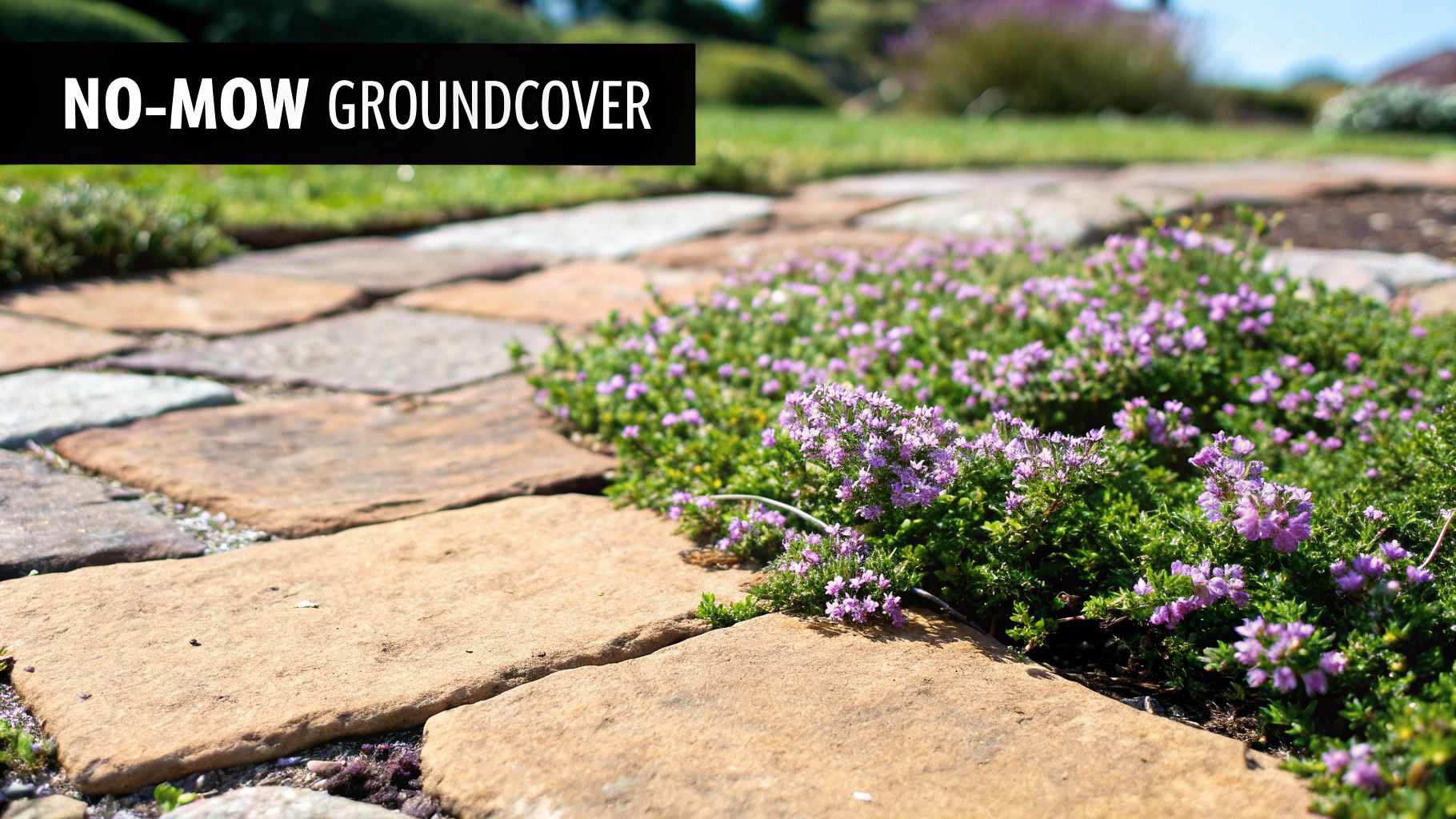
For a truly aromatic and visually stunning drought tolerant grass alternative, Creeping Thyme is an exceptional choice for homeowners from Milton to Johns Creek. This fragrant, mat-forming perennial herb creates a dense, evergreen carpet that is as resilient as it is beautiful. Native to the dry, rocky soils of the Mediterranean, it is perfectly suited for the challenging hot and dry summers of North Georgia.
Unlike a traditional lawn, a Creeping Thyme lawn is a sensory experience. When walked upon, it releases a pleasant herbal fragrance, turning a simple stroll across the yard into a delight. Its ability to thrive in poor, dry soil and full sun makes it a workhorse ground cover that requires minimal intervention once established. The tiny purple, pink, or white flowers that emerge in late spring and early summer add a splash of color and are a magnet for essential pollinators.
Why Choose Creeping Thyme for Your North Georgia Lawn?
The most compelling reason to choose Creeping Thyme is its extreme drought tolerance. After its first year of establishment, it can survive and even thrive with only natural rainfall, a significant advantage in areas facing summer water restrictions. This dramatically reduces water bills and the environmental impact associated with maintaining a conventional turf lawn.
Additionally, its dense, low-growing habit makes it a fantastic weed suppressant. As the thyme fills in, it forms a tight mat that chokes out most common weeds, eliminating the need for chemical herbicides. This natural resilience extends to pests as well; its aromatic oils are a deterrent for many common lawn insects. If you are interested in a more comprehensive approach to lawn care, you can explore natural pest control for lawns here. This makes it an incredibly safe and eco-friendly option for families with children and pets in communities like Alpharetta and Cumming.
This summary highlights the key attributes that make Creeping Thyme a superior choice for a low-water, high-impact landscape.
- Exceptional Drought Tolerance: Thrives in hot, dry conditions with minimal water.
- Low Maintenance: Requires no regular mowing, fertilizing, or aeration.
- Natural Weed and Pest Control: Dense growth and aromatic oils suppress weeds and deter pests.
- Pollinator Friendly: Tiny flowers attract beneficial insects like bees and butterflies.
- Aromatic and Durable: Releases a pleasant scent when walked on and handles light to moderate foot traffic.
The data clearly shows that a Creeping Thyme lawn replaces the high-input demands of traditional turf with a low-maintenance, fragrant, and environmentally beneficial ground cover.
Practical Implementation Tips
Establishing a Creeping Thyme lawn in North Georgia requires some initial patience, but the long-term payoff is immense. The process is best started with plugs or small plants rather than seeds, which can be difficult to germinate.
- Prepare the Area: Start by completely removing all existing grass and weeds. Creeping Thyme needs excellent drainage, so amend heavy clay soils common in the Cumming area with sand and compost to improve soil structure.
- Planting: Space thyme plugs or small plants 6 to 12 inches apart. They will grow and spread to fill in the gaps over time. Using landscape fabric with holes cut for the plants can be highly effective in controlling weeds during the first year.
- Choose the Right Variety: For a dense, lawn-like appearance, select low-growing, mat-forming varieties such as 'Elfin' Thyme or 'Pink Chintz'.
Pro Tip: The ideal times to plant in North Georgia are spring or fall. Water the new plants regularly for the first season to help them establish a strong root system. After the first year, you can rely almost entirely on rainfall. Weed diligently during the establishment phase to prevent competition.
A thyme lawn does not require mowing. However, if you wish to tidy it up or encourage denser growth, you can trim it back lightly with a string trimmer or mower set to a high setting after it has finished flowering.
3. Buffalo Grass (Bouteloua dactyloides)
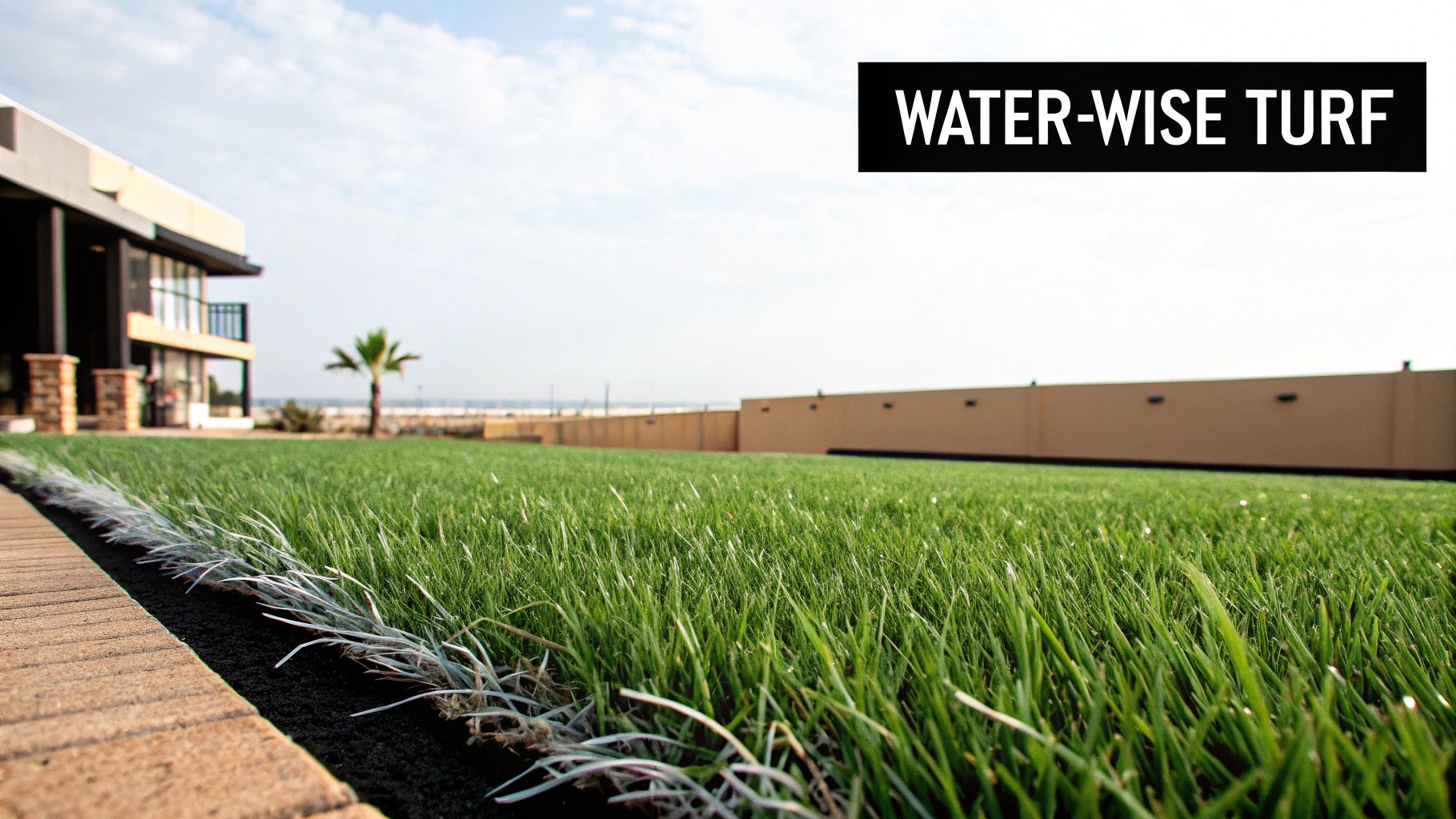
For those who desire the classic look of a turf lawn without the intensive water requirements, Buffalo Grass is a premier drought tolerant grass alternative. As a warm-season perennial native to North America, it is uniquely adapted to survive the harsh heat and drought conditions common in North Georgia, from Milton to Dahlonega. This low-growing grass forms a fine-textured, dense sod that offers a traditional lawn aesthetic while using up to 75% less water than fescue or Bermuda grass.
Unlike thirsty conventional turf, Buffalo Grass evolved on the arid Great Plains, equipping it with an exceptionally deep root system to seek out moisture. During extended drought or in the winter, it enters a dormant state, turning a uniform tan color, but it greens up quickly with the return of rain. This resilience makes it a sustainable choice for homeowners in areas like Cumming and Alpharetta looking to conserve water while maintaining a durable, attractive yard.
Why Choose Buffalo Grass for Your North Georgia Lawn?
The main appeal of Buffalo Grass is its incredible low-maintenance profile once established. It thrives in full sun and requires minimal mowing, often only needing to be cut once a month during its growing season. This slow growth habit means less time behind a mower and more time enjoying your outdoor space.
Furthermore, it flourishes in soils that are less than ideal for other grasses and has very low fertilizer needs. Over-fertilizing, especially with high-nitrogen products, can actually harm Buffalo Grass by encouraging weed competition. If you do need to amend your soil, consider exploring the best organic lawn fertilizer options to provide gentle nutrients without promoting weeds. This low-input requirement not only saves money but also protects local water sources from chemical runoff.
This summary box highlights the key benefits that make Buffalo Grass an excellent choice for a low-maintenance, drought-tolerant lawn.
The data clearly shows that a Buffalo Grass lawn is a practical and environmentally responsible choice, significantly reducing your long-term investment in water, fertilizer, and maintenance time.
Practical Implementation Tips
Establishing a Buffalo Grass lawn in areas from Johns Creek to the foothills requires a specific approach, as it spreads by above-ground stems called stolons.
- Best Planting Method: Planting plugs or sod is the most effective method in Georgia. This should be done in late spring when soil temperatures consistently reach 55-60°F.
- Establishment Care: Water deeply and regularly during the first growing season to encourage strong root development. Once established, its water needs will drop dramatically, often requiring only a deep soaking once a month during dry spells.
- Weed Control is Key: Be vigilant about weed control during the first year. A healthy, dense Buffalo Grass turf will naturally out-compete most weeds in subsequent years.
Pro Tip: Choose improved cultivars like 'Legacy' or 'Prestige' which were developed for better turf density, color, and disease resistance. These modern varieties are far superior to common Buffalo Grass for creating a lawn in our North Georgia climate.
You can mow Buffalo Grass to a height of 2-3 inches for a tidy, manicured appearance. Alternatively, leaving it unmowed creates a soft, natural prairie look that reaches about 4-6 inches tall. Homeowners must be comfortable with its tan dormant color in winter, though this is a small trade-off for its summer resilience and water-saving benefits.
4. Ornamental Native Sedges (Carex species)
For homeowners seeking a more naturalistic, textured lawn, native sedges offer a sophisticated and highly effective drought tolerant grass alternative. While they look like grasses, sedges (from the Carex genus) are distinct plants, often identified by their triangular stems. Many native species, such as Pennsylvania sedge (Carex pensylvanica), are perfectly suited for the North Georgia climate, thriving in conditions from Milton to Dahlonega.
Unlike the uniform carpet of a traditional turf, sedges create a soft, meadow-like effect that flows beautifully in a landscape. They are exceptionally adaptable, with many varieties tolerating both periods of drought and moist soil, as well as shady conditions where turf grasses like fescue struggle. This resilience makes them a fantastic low-maintenance choice for a water-wise yard that supports local ecosystems.
Why Choose Native Sedges for Your North Georgia Lawn?
The primary appeal of a sedge lawn is its ecological benefit and minimal upkeep. Native sedges have evolved to thrive in our local conditions, meaning they require far less water, fertilizer, and mowing than non-native turf. Their dense, fibrous root systems are excellent for stabilizing soil and preventing erosion, a key benefit for properties with slopes. These roots also help build healthy soil structure, which is vital for a resilient landscape.
Furthermore, planting native sedges helps restore local biodiversity. These plants provide essential food and shelter for native insects and birds, contributing to a healthier environment right in your backyard. Instead of a sterile monoculture, a sedge lawn becomes a living part of the local ecosystem, a quality increasingly valued by environmentally conscious homeowners in communities like Johns Creek and Alpharetta.
Practical Implementation Tips
Establishing a sedge lawn is typically done with plugs rather than seeds, which ensures a higher success rate. It requires some patience, but the long-term payoff is an extremely low-maintenance and beautiful landscape.
- Select the Right Species: While many Carex species exist, Pennsylvania sedge (Carex pensylvanica) is a top performer for North Georgia, known for its fine texture and adaptability to dry shade.
- Planting Plugs: Space plant plugs 6-12 inches apart in the fall or early spring. The closer the spacing, the faster your lawn will fill in. Mulch between plugs initially to suppress weeds.
- Soil Preparation: Sedges perform best in well-drained soil. If you have heavy Georgia clay, amending the soil is crucial for success. You can find excellent guidance on how to improve soil for planting on barefootorganicsllc.com.
Pro Tip: Water the plugs regularly during their first growing season to establish strong roots. Once established, their water needs will decrease dramatically, often requiring no supplemental irrigation except in extreme drought conditions.
Most homeowners allow their sedge lawn to grow to its natural, graceful height of about 6-10 inches for a soft, meadowy appearance. If you prefer a more manicured look, you can mow it once or twice a year in the spring or fall to a height of 3-4 inches. This flexibility allows you to customize the look to fit your aesthetic while enjoying the benefits of a truly sustainable ground cover.
5. Synthetic/Artificial Turf
For those seeking the ultimate hands-off, zero-water solution, modern artificial turf has emerged as a compelling drought tolerant grass alternative. While it carries a significant upfront investment, this manufactured ground cover completely eliminates the need for watering, mowing, and fertilizing. For homeowners in North Georgia, from Milton to Dahlonega, it guarantees a perfectly green lawn year-round, regardless of rainfall or seasonal drought conditions.
Today’s synthetic turf is a world away from the plastic-looking astroturf of the past. Advanced products from leading manufacturers feature realistic color variations, varied blade heights, and integrated thatch layers that convincingly replicate the look and feel of a healthy fescue or Bermuda lawn. With sophisticated drainage systems built into the installation, it provides a durable, all-weather surface perfect for high-use areas.
Why Choose Synthetic Turf for Your North Georgia Lawn?
The primary appeal of artificial turf is its unparalleled low-maintenance and resource conservation. Once installed, it requires no irrigation, a crucial benefit during North Georgia's increasingly common summer watering restrictions. This total elimination of water use for landscaping can lead to substantial savings on utility bills and helps conserve precious local water resources, such as Lake Lanier.
Furthermore, synthetic turf does away with the entire cycle of traditional lawn care. There is no need for weekly mowing, seasonal fertilization, or the application of herbicides and pesticides. This not only frees up your weekends but also prevents chemical runoff into local streams and rivers. For families with children and pets, it provides a consistent, mud-free play surface that is always ready for action.
This summary box highlights the key benefits that make synthetic turf an excellent choice for a maintenance-free, drought-proof lawn.
The data clearly demonstrates that while the initial cost is high, the long-term savings in water, equipment, and lawn care products make it a financially sound and eco-conscious decision over its lifespan.
Practical Implementation Tips
Installing artificial turf is a professional-grade project, but understanding the process helps ensure a quality result for your home in areas from Johns Creek to Alpharetta.
- Proper Base Preparation is Key: The most critical step is creating a stable, permeable base. This typically involves excavating 3-4 inches of soil and laying a compacted base of crushed rock or decomposed granite for excellent drainage.
- Choose the Right Product: Request samples and view local installations before deciding. For a realistic residential look, choose a product with a pile height of 1.5 to 2 inches and a mix of green and brown fibers.
- Consider Cooling Infill: North Georgia summers can be hot. Opt for cooling infill materials like zeolite or specially coated sand, which can help reduce the surface temperature of the turf on sunny days.
Pro Tip: Before committing, check with your local municipality or homeowner's association in Cumming or Milton for any specific regulations regarding artificial turf installation. Additionally, inquire about potential local or state rebates for water-wise landscaping, which can help offset the initial cost.
Maintenance is minimal but necessary. A periodic rinse with a hose will wash away dust and pollen, while a monthly brushing with a stiff broom or power rake will keep the synthetic blades standing upright and looking fresh. For pet owners, choosing a pet-safe antimicrobial infill is essential for odor control and hygiene.
6. Moss Lawns (Various Moss Species)
For North Georgia homeowners with shady, damp areas where traditional turf fails to thrive, a moss lawn presents a unique and beautiful drought tolerant grass alternative. Moss creates a lush, velvety, emerald-green carpet that requires no mowing, fertilizing, or chemical treatments. This ancient, non-vascular plant absorbs moisture and nutrients directly through its leaves, making it exceptionally resilient in the right conditions.
While it seems counterintuitive to call a moisture-loving plant drought-tolerant, many native moss species are incredibly resilient. They can enter a dormant state during dry spells, turning brown or gray, but will quickly rehydrate and return to their vibrant green color with the next rainfall. This makes them a perfect fit for the variable climate in areas like Milton and Dahlonega, especially in wooded lots or on the north side of a home.
Why Choose a Moss Lawn for Your North Georgia Property?
The primary appeal of a moss lawn is its near-zero maintenance profile. Once established, it is a self-sustaining ecosystem that thrives on neglect. Moss naturally acidifies the soil, creating an environment where many common lawn weeds cannot compete. This eliminates the need for herbicides and endless weeding, protecting local water sources like the Chattahoochee River from chemical runoff.
Furthermore, moss provides a soft, springy surface that feels wonderful underfoot, reminiscent of a forest floor. It is an excellent choice for ornamental areas, woodland paths, or between paving stones where grass struggles. Esteemed gardens, such as the Portland Japanese Garden, have showcased the serene beauty of moss for centuries, and this ancient practice is now being embraced by eco-conscious homeowners.
Practical Implementation Tips
Establishing a moss lawn in the Appalachian foothills of North Georgia involves encouraging what often wants to grow there naturally. It's more a process of cultivation than aggressive planting.
- Prepare the Site: Clear the desired area of all existing grass, weeds, and debris. Rake the surface to expose bare, compacted soil; moss prefers a firm foundation.
- Test and Amend Soil pH: Most moss species, like the common Sheet Moss (Hypnum imponens), prefer acidic soil with a pH between 5.0 and 6.0. You can lower your soil's pH by adding sulfur or using pine straw as mulch around the area.
- Introduce Moss: You can either transplant patches of native moss from another part of your property or purchase moss from a reputable supplier. Simply press the moss patches firmly onto the prepared soil. There's no need to "plant" it.
- Establishment Care: Mist the area with water daily for the first 3-4 weeks to help the moss attach to the soil. Once established, it will rely on natural rainfall. Promptly remove any fallen leaves to prevent the moss from being smothered.
Pro Tip: To encourage moss to spread to new areas or onto rocks, you can create a "moss slurry." Blend a handful of moss with a cup of buttermilk or plain yogurt and a cup of water until it forms a paintable paste. Brush this mixture onto soil, rocks, or logs where you want moss to grow.
While a moss lawn won't stand up to the heavy foot traffic of a family soccer game, it offers an unparalleled aesthetic for shady, low-traffic zones. It is the ultimate low-input ground cover, turning problematic shady spots into a tranquil, green oasis that perfectly complements the natural beauty of North Georgia.
Drought Tolerant Grass Alternatives Comparison
| Item | Implementation Complexity 🔄 | Resource Requirements ⚡ | Expected Outcomes 📊 | Ideal Use Cases 💡 | Key Advantages ⭐ |
|---|---|---|---|---|---|
| Clover (White Dutch) | Moderate: 4-6 weeks establishment | Low: minimal water, no fertilizer | Dense, soft green carpet; nitrogen fixing | Water-saving lawns; moderate foot traffic | Low water use; self-fertilizing; pollinator-friendly |
| Creeping Thyme | High: 6-12 months to 2 years | Low: almost no water after established | Aromatic, flowering ground cover | Dry, hot climates; ornamental and sensory gardens | Drought resilient; no mowing; fragrant |
| Buffalo Grass | Moderate-high: 1-2 growing seasons | Moderate: some watering during establishment | Traditional grass look; deep roots; dormant in winter | Drought-prone regions; traditional lawn look | Native; low water; self-repairing; drought tolerant |
| Ornamental Native Sedges | High: 1-2 years, plug planting | Moderate-high: plugs, some water | Naturalistic, shade tolerant meadow-like lawn | Shade and erosion-prone areas; naturalistic landscapes | Shade tolerant; native species; low water |
| Synthetic/Artificial Turf | Low: Installed in 1-3 days by professionals | High upfront cost; minimal ongoing | Year-round perfect green, no watering or mowing | High-traffic zones; drought-prone urban areas | Zero water; no maintenance mowing; durable |
| Moss Lawns | High: 1-2 years to establish, up to 5 | Moderate: needs shade and moisture | Velvety, evergreen, shade-loving carpet | Shady, moist, woodland or zen gardens | No mowing; unique aesthetic; low water once established |
Choosing Your Green Path Forward
Moving beyond the traditional, water-intensive lawn is a significant step, but as we've explored, the rewards are immense. The journey toward a more sustainable landscape in North Georgia is not about finding a single, perfect replacement for turfgrass. Instead, it's about embracing a new mindset-one that values resilience, biodiversity, and harmony with our local environment. You now have a practical roadmap featuring six powerful contenders, each offering unique benefits for creating a beautiful, low-maintenance, and eco-conscious yard.
Recapping Your Drought-Tolerant Options
We've covered a diverse range of possibilities, from living groundcovers to innovative synthetic solutions. Let's quickly revisit the key takeaways for each drought tolerant grass alternative:
- Clover: A fantastic, self-fertilizing choice for sunny yards in places like Johns Creek, attracting pollinators and naturally enriching the soil. It's an active, living lawn that gives back.
- Creeping Thyme: Perfect for adding aromatic, durable groundcover to sunny pathways and rock gardens in Alpharetta. It thrives in the heat and releases a pleasant scent when walked upon.
- Buffalo Grass: A true native champion, ideal for homeowners in Cumming seeking a low-mow, deep-rooted lawn that can handle full sun and requires minimal water once established.
- Native Sedges: The ultimate solution for those challenging, shady, or damp spots in your yard where traditional grass fails. They offer texture, movement, and critical habitat for local wildlife.
- Synthetic Turf: A modern, no-water solution for high-traffic areas or families in Milton wanting a consistently green, usable space without the hassle of mowing, fertilizing, or watering.
- Moss Lawns: A magical, emerald-green carpet for shady, acidic soil conditions, perfect for creating a serene, woodland feel in a Dahlonega landscape.
Making the Right Choice for Your North Georgia Home
The best path forward is the one that aligns with your specific property and lifestyle. Don't feel pressured to replace your entire lawn at once. You can start small by converting a difficult-to-mow slope to creeping thyme or replacing a struggling, shady patch with native sedges. The key is to match the plant to the place. Consider your sun exposure, soil type, and how you use your yard. Do you need a durable surface for kids and pets, or are you creating a quiet, decorative space?
Actionable Insight: Begin by observing your yard for a week. Sketch a simple map and note which areas get full sun, partial shade, and have heavy foot traffic. This simple exercise will be your most valuable tool in selecting the right groundcover.
Embracing a more naturalistic yard also means rethinking your approach to pest management. A diverse landscape with native plants often creates a healthier ecosystem that can naturally manage pests. For homeowners committing to a more sustainable lifestyle, understanding green pest control is another crucial step in creating an eco-friendly living space that works with nature, not against it. This holistic approach ensures your entire property, from the soil up, is a safe and thriving environment.
Ultimately, choosing a drought tolerant grass alternative is about reclaiming your time, conserving precious water resources, and building a landscape that truly flourishes in the unique climate of North Georgia. You're not just planting a new groundcover; you are cultivating a more resilient, beautiful, and sustainable future, one patch of green at a time.
Ready to build the foundation for a thriving, drought-tolerant landscape? At Barefoot Organics, we specialize in the soil science that helps these alternatives establish and flourish. Our organic lawn care programs focus on creating healthy, living soil, giving your new clover, sedge, or buffalo grass lawn the best possible start. Contact Barefoot Organics today for a free quote and let us help you create a beautiful, sustainable yard that's safe for your family and the environment.