

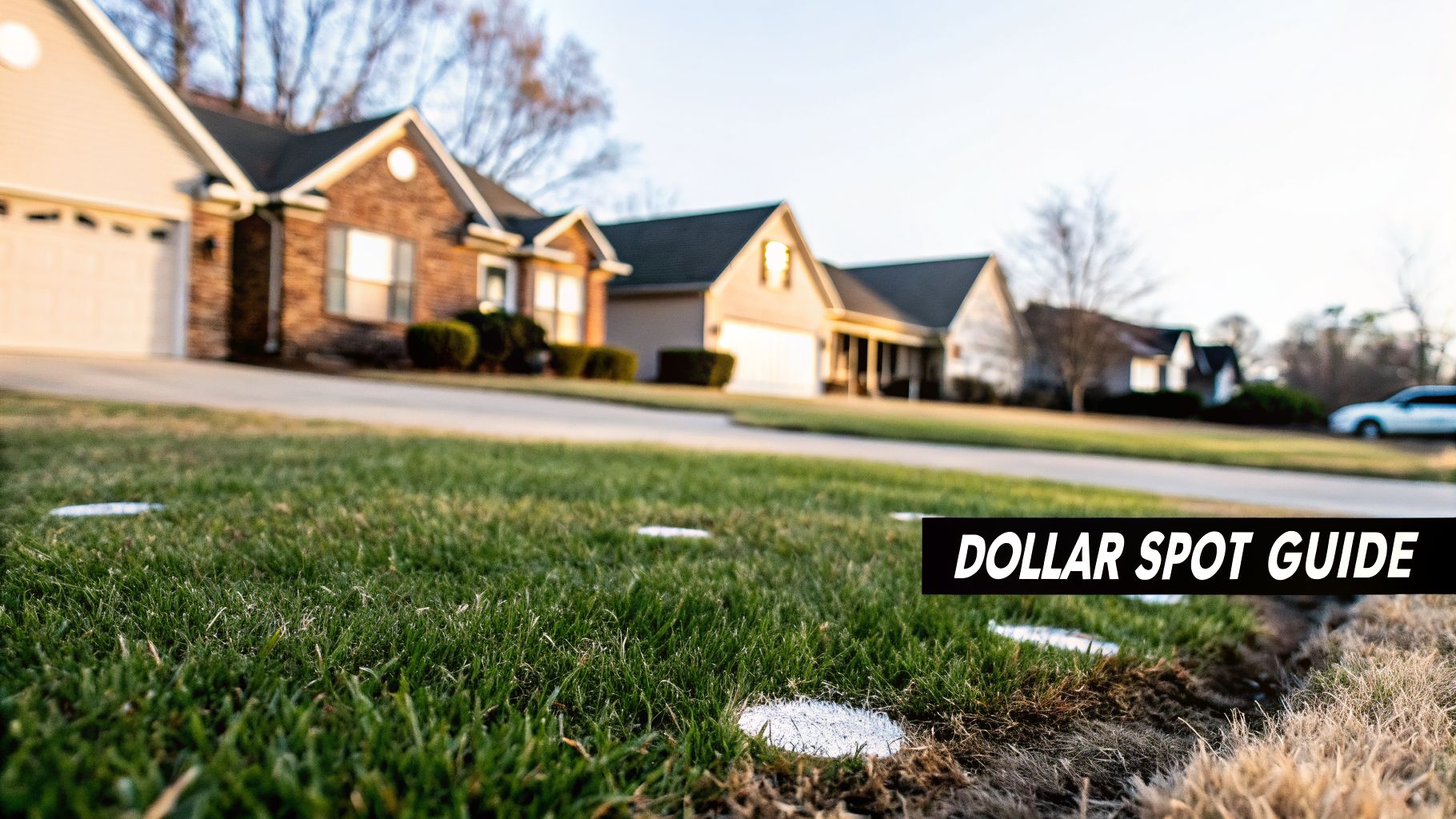
Have you spotted small, bleached-out circles popping up on your lawn in Cumming, GA? You’re almost certainly looking at dollar spot fungus, a frustrating lawn disease that absolutely loves our humid North Georgia climate. This isn't just a cosmetic problem; it's a huge red flag that your lawn is stressed out. For homeowners all across Forsyth County, from Alpharetta to Dawsonville, these silver dollar-sized spots can quickly merge into large, ugly dead patches, pointing to a deeper issue right under your feet. At Barefoot Organics, we stop dollar spot by treating the real problem: your soil health.
Ready to get your healthy lawn back? Call Barefoot Organics today for a free lawn evaluation!
Why This Matters for Lawns in Cumming, GA
If you’ve noticed those distinct, straw-colored circles appearing on your grass, you're in good company. Countless homeowners in Cumming and the surrounding North Atlanta suburbs battle this very issue every spring and fall. These spots are the classic calling card of dollar spot fungus, a disease that can make an otherwise beautiful lawn look patchy and uncared for. It earns its name from the silver dollar-sized patches it creates, which can ruin your lawn's uniform green carpet and become a real headache for anyone trying to meet subdivision HOA standards.
What Is Dollar Spot Fungus?
Simply put, dollar spot is a fungal disease caused by the pathogen Clarireedia homoeocarpa. It doesn't attack the roots of your grass. Instead, it infects the leaf blades themselves, creating unique tan lesions that often have a reddish-brown border. Think of it like a skin rash on your lawn—a surface-level infection that can cause widespread damage if you don't address the underlying cause.
If you’re out early on a humid Cumming morning, you might even spot a faint, cobweb-like fuzz covering the affected areas before the dew burns off. That web-like growth is called mycelium, and seeing it is a dead giveaway that the fungus is active and spreading.
Why It's a Problem for Cumming and Forsyth County Lawns
Our local climate in Forsyth County practically rolls out the welcome mat for this fungus. The combination of hot, humid days followed by cooler nights creates the perfect storm for it to take hold. We see it pop up most often in:
- Bermuda and Fescue Lawns: Both of these popular grass types, common in subdivisions from Suwanee to Milton, are quite susceptible.
- Nutrient-Deficient Soil: A lawn that’s hungry for nitrogen is far more vulnerable to a dollar spot invasion.
- Compacted Georgia Clay: That dense red Georgia clay soil we all know and love in Cumming can trap moisture right at the surface, giving fungus the damp environment it needs to thrive.
For homeowners in communities like Johns Creek or Canton, an outbreak can spread like wildfire. The fungus easily hitches a ride on lawnmower wheels, shoes, and even garden hoses, moving from one yard to the next without you even realizing it.
Local Insight: Dollar spot isn't just a random nuisance; it's a direct indicator of your lawn's health. It often reveals underlying issues like improper watering, soil compaction, or a lack of essential nutrients—all common challenges for lawns in North Georgia.
Why Dollar Spot Thrives in Cumming, GA and North Georgia
If you’ve ever wondered why dollar spot fungus seems to pop up on your Cumming lawn out of nowhere, you just need to look at our local North Georgia weather. It’s not a case of bad luck; the disease is the predictable result of a perfect storm of environmental conditions we see every spring and fall right here in Forsyth County.
Think about a classic May or October day in our area: the temperature climbs into the 80s, only to dip back into the cool 50s or 60s overnight. That temperature swing creates a heavy morning dew that leaves every blade of grass drenched. For the Clarireedia fungus behind dollar spot, this is basically a five-star resort, giving it all the prolonged moisture it needs to infect your turf.
The Perfect Environment for Fungus
That cycle of warm days followed by cool, damp nights is the number one thing that triggers dollar spot outbreaks. The fungus is most active and aggressive when daytime temperatures hover between 59°F and 86°F—a range we often sit in for weeks on end during the spring and fall. Lawns all across Alpharetta and Johns Creek face these exact conditions, making this a widespread threat.
When you factor in our infamous Georgia red clay, the problem only gets worse. Clay soil is dense and compacts easily, which means poor drainage. So, after a heavy rain or a run of the sprinklers, that moisture doesn't soak in. It just sits at the surface, keeping the base of the grass damp and creating an ideal breeding ground for fungus to take hold.
Nutrient-Poor Soil Creates a Weak Target
Dollar spot is what you’d call an opportunistic pathogen. It specifically goes after lawns that are already weak and stressed, and its absolute favorite target is turf suffering from low nitrogen levels. Nitrogen is the single most important nutrient for strong, green growth. When your lawn is starved of it, its ability to fend off disease—and recover from it—is seriously compromised.
This is a really common problem in a lot of North Georgia neighborhoods, especially in a few key situations:
- New Construction Lawns: In new communities popping up around Dawsonville and Canton, the nutrient-rich topsoil is often scraped away during construction, leaving behind poor-quality subsoil.
- Unfertilized Lawns: Any lawn that isn’t getting a regular, balanced diet of nutrients will eventually become nitrogen-deficient, making it an easy mark for disease.
- Sandy Soil Areas: In parts of our region with sandier soil, nitrogen has a tendency to wash right through after heavy rainfall.
The end result is a lawn that can't defend itself. The little bleached-out circles of dollar spot appear and just don't grow back in, because the grass doesn't have the fuel it needs to repair the damage.
On a global scale, dollar spot fungus is actually considered the most economically significant turfgrass disease out there. For homeowners in Cumming and Forsyth County, that’s not just a random fact—it underscores how serious this threat is to our warm-season Bermuda and Zoysia lawns, which are prime targets thanks to our prolonged humidity. You can read more about its impact on Wikipedia and see why it's a top concern for turf managers everywhere.
Why Both Bermuda and Fescue Lawns are at Risk
It doesn’t matter what kind of grass you have in your yard; you’re not immune to dollar spot. Both warm-season grasses like Bermuda and cool-season types like Fescue are highly susceptible, especially when they’re stressed. A Forsyth County Fescue lawn struggling through our 90-degree summer heat, for example, becomes an easy meal for the fungus.
A Bermuda lawn in a Buford or Sugar Hill HOA that hasn't been properly fertilized is just as vulnerable as a Fescue lawn tucked away in the shadier parts of Milton. The fungus doesn’t play favorites; it just looks for an opportunity.
This is exactly why a one-size-fits-all approach to lawn care simply doesn't work in our area. At Barefoot Organics, our entire strategy is built from the ground up—literally. By fixing nutrient deficiencies and improving the soil itself, we help you build a lawn that’s naturally resilient and a whole lot less inviting to diseases like dollar spot.
Don't let our Georgia climate give fungus the upper hand. Call Barefoot Organics today to get a free lawn evaluation and start building a healthier, more resilient lawn.
Treatment Breakdown: How We Tackle Dollar Spot
Becoming a lawn disease detective is easier than you might think. When you spot those frustrating brown circles popping up on your Cumming lawn, a few key signs will help you confidently diagnose dollar spot and tell it apart from other common issues. The best time to play detective is early in the morning, while the dew is still heavy on the grass.
What you’re looking for are distinct, straw-colored circles, usually about the size of an old silver dollar—hence the name. These patches often look a bit sunken and feel dry and brittle, almost like straw. If you catch it at the right time in the damp morning air, you might also notice a faint, cobweb-like growth blanketing the infected spots. This is the fungal mycelium, a dead giveaway of an active infection that typically vanishes as the North Georgia sun dries up the morning dew.
Getting a Closer Look at the Damage
To be absolutely sure you're dealing with dollar spot, you need to inspect an individual blade of grass. Don't grab one from the completely dead center of a patch; instead, pick a blade from the edge where the disease is just starting to take hold.
Look closely, and you should find the classic calling card of dollar spot: a distinctive "hourglass-shaped" lesion. These lesions are tan or light brown in the middle and framed by a darker, reddish-brown border. This unique hourglass shape, where the lesion looks "pinched" in the center, is what definitively separates dollar spot from other turf diseases we see all over Forsyth County.
How Dollar Spot Spreads Through Cumming Neighborhoods
Understanding how this fungus travels is crucial to stopping a small issue from taking over your yard—and your neighbors'. Unlike many other fungi that release spores into the air, dollar spot mycelium spreads mechanically. It quite literally hitches a ride on anything moving across your lawn.
Common culprits for spreading dollar spot fungus include:
- Your lawnmower's wheels and blades
- The soles of your shoes
- A garden hose being dragged across the grass
- Water runoff after a heavy rain shower
This is exactly why we often see it move so fast through HOA communities in Suwanee, Milton, and Alpharetta. One lawn can easily pass the fungus to the next, especially when a lawn service uses the same mower on multiple properties without cleaning it in between.
This flowchart breaks down the environmental risks we constantly monitor for here in North Georgia that can trigger a dollar spot outbreak.
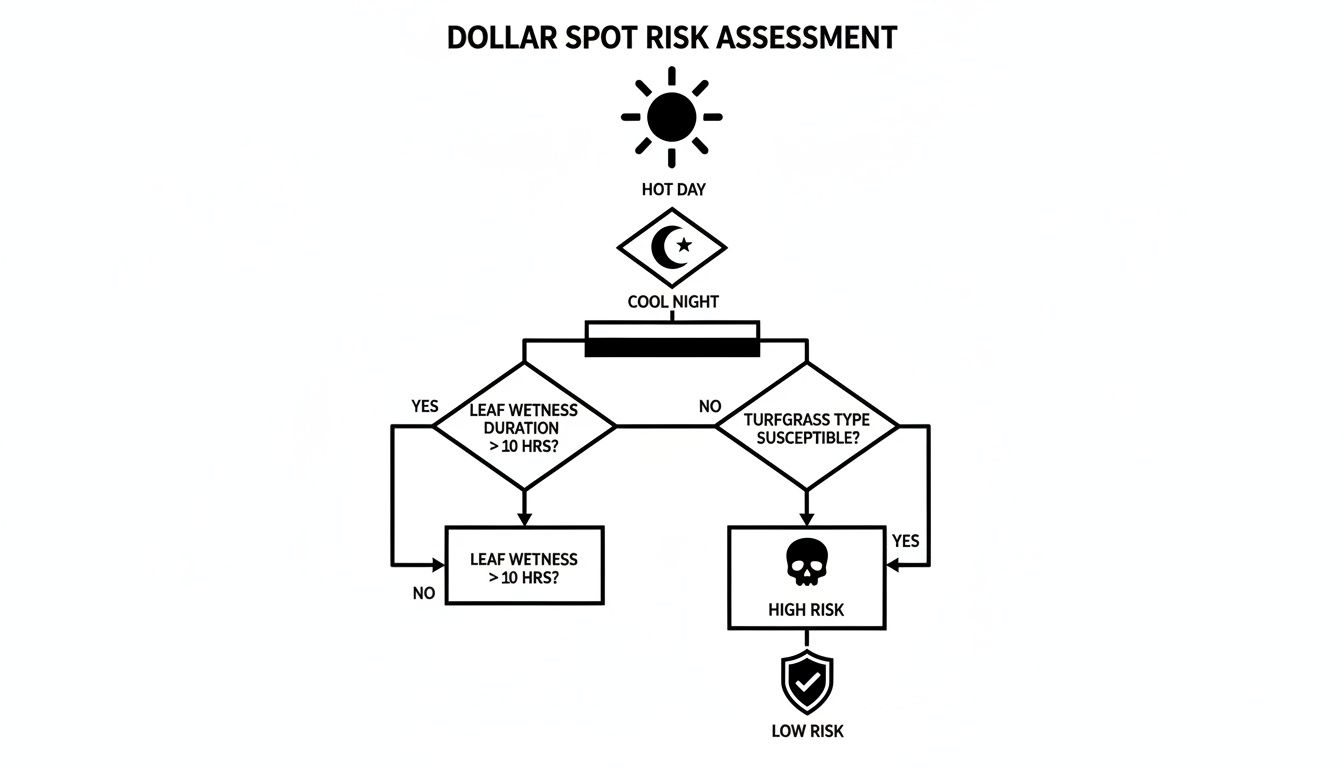
That combination of hot days followed by cool nights, which creates heavy morning dew, is the perfect storm for lawns from Canton to Johns Creek.
Distinguishing Dollar Spot From Other Lawn Problems
It’s incredibly easy to misdiagnose lawn problems. A homeowner in Buford might see brown spots and assume it’s just drought, while someone in Sugar Hill might confuse dollar spot with the much larger brown patch fungus. Getting the diagnosis right from the start is the most important step toward an effective treatment.
To make it easier, here's a quick comparison of the usual suspects we see in the Cumming and Forsyth County area.
Dollar Spot vs Other Cumming Lawn Problems
| Symptom | Dollar Spot Fungus | Brown Patch Fungus | Drought Stress |
|---|---|---|---|
| Spot Size | Small, coin-sized (1-4 inches) | Large, irregular patches (1-3 feet) | Widespread, not in distinct spots |
| Color | Bleached, straw-colored | Brown, often with a dark "smoke ring" | Bluish-gray tint, then uniformly brown |
| Blade Lesion | Tan, hourglass shape with a dark border | Irregular, dark-bordered lesions | No lesions; entire blade withers |
| Morning Sign | White, cobweb-like mycelium | No mycelium on individual spots | Entire lawn feels dry and crunchy |
Getting the diagnosis right saves you time, money, and the health of your lawn. If you're ever unsure what causes brown spots in grass, that guide can offer some extra clarity. The key is to act quickly and correctly once you know what you're up against.
Our Application Process for Cumming Lawns
When we see a lawn in Cumming plagued by dollar spot, we know the real fight isn't with the fungus you see on the grass blades. The true problem lies deeper, down in the soil itself. That’s why our approach is so different from quick-fix chemical sprays. We work to heal your lawn from the ground up, because we know from experience that healthy, living soil is the foundation of a truly disease-resistant lawn.
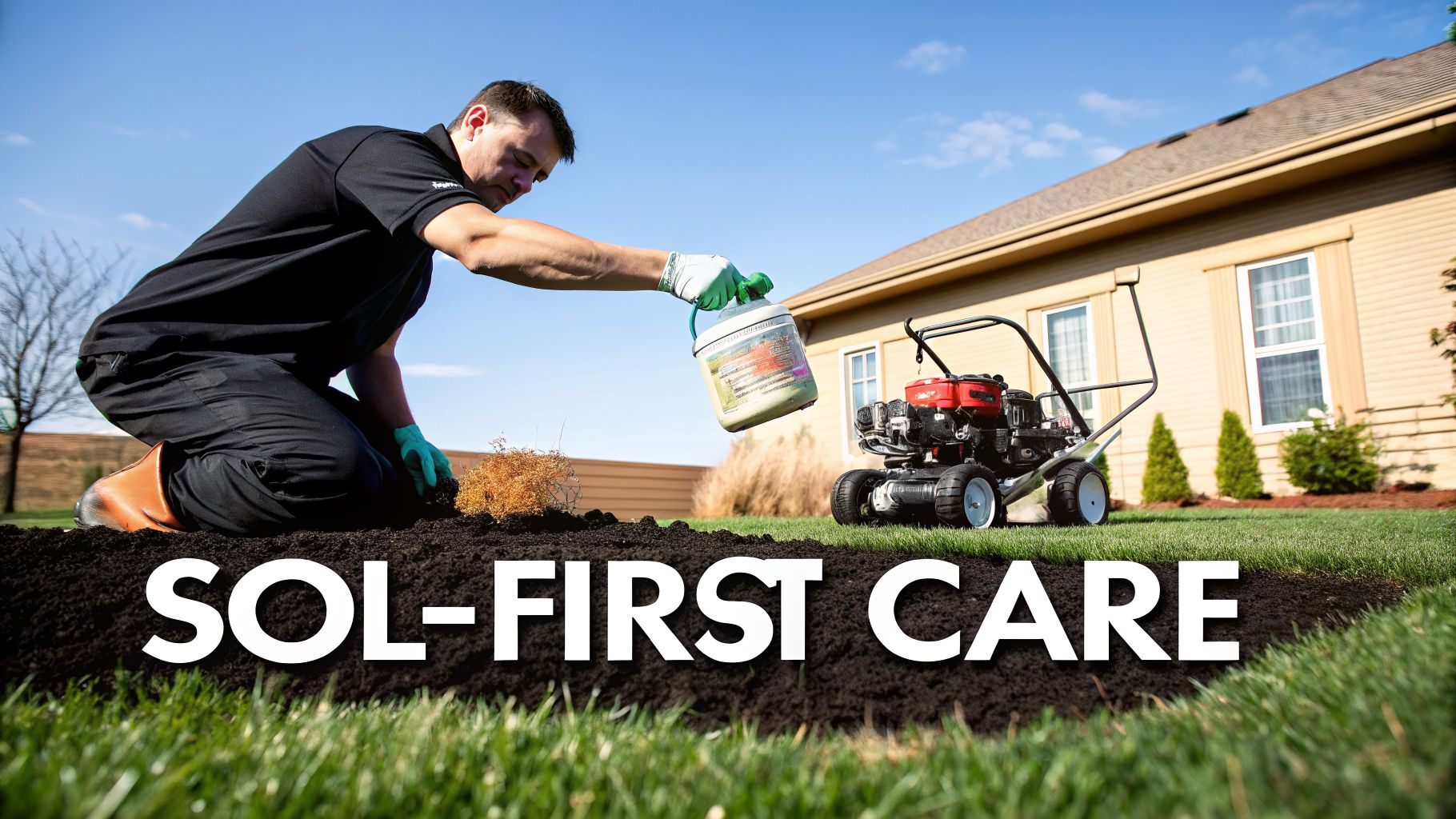
Our process is all about building strength. We start by figuring out exactly what your soil is lacking and then give it what it needs—custom-blended nutrients, better airflow through aeration, and targeted, safe treatments. The goal isn't just to make the spots disappear for a few weeks. It's to build a lawn in Buford or Sugar Hill that’s strong enough to shrug off North Georgia's intense disease pressure for good.
It All Starts With Your Soil
Before a single product is applied, our first move is always to understand the "why" behind your dollar spot outbreak. In Cumming and across Forsyth County, the answer is almost always poor soil health. Whether it's from years of harsh chemical use, neglect, or the nutrient-stripped subsoil left behind by new construction, your lawn is likely starving and unable to put up a fight.
Our lawn experts perform a hands-on evaluation of your soil, looking for the classic culprits:
- Nutrient Gaps: We’re specifically checking for low nitrogen, the main weakness dollar spot loves to exploit.
- Compaction Issues: We gauge how dense your Georgia clay is. Tightly packed soil chokes out roots and prevents proper drainage.
- Thatch Overload: A thick thatch layer acts like a damp blanket, creating the perfect humid hideout for fungal diseases to thrive.
This diagnosis is everything. It lets us create a tailored plan that fixes the root cause instead of just spraying the symptoms.
Targeted Care for Lasting Health
With a clear picture of your soil’s condition, we can get to work with a program designed for safety and long-term results.
Feeding the Lawn to Fight the Fungus
Think of it like this: a hungry, weakened lawn can't defend itself. Our main tool against dollar spot is a custom-blended, organic-based fertilizer that’s packed with the right nutrients. By delivering a slow, steady diet of nitrogen, we give your grass the energy it needs to outgrow the damage and build stronger, more resilient blades. It’s a much healthier approach than a jolt of synthetic nitrogen, which often causes weak, flimsy growth that’s even more prone to disease.
Giving Roots Room to Breathe with Core Aeration
For lawns in Johns Creek, Milton, and Alpharetta dealing with our infamous compacted red clay, core aeration is a total game-changer. By pulling up small plugs of soil, we create channels for air, water, and nutrients to get deep into the root zone where they’re needed most. This simple mechanical process breaks the cycle of surface moisture that dollar spot loves, letting your lawn's roots finally breathe and grow deep.
Safe and Effective Fungus Control
When there's an active infection, we step in with professional-grade products that stop the fungus without putting your family or pets at risk. Our organic-based options work by disrupting the fungus's life cycle, not by scorching your lawn with harsh chemicals. We focus on building a healthy soil ecosystem where beneficial microbes can help keep disease in check naturally. You can dive deeper into our philosophy and see why it works so well in our area in our guide on how to treat lawn fungus naturally.
A Quick Note on Safety: We know your lawn is where your kids and pets play. It’s their space. That’s why we’re committed to using the safest, most effective products available and will always be upfront about what we’re applying and why.
Building a Resilient Lawn for the Long Haul
Our work isn't finished once the dollar spot is gone. The final—and most important—phase is building a lawn that’s tough enough to stand up to future attacks on its own. This means consistent, proactive care that's timed perfectly for North Georgia’s unique seasons.
We adapt our year-round program to give your lawn exactly what it needs, when it needs it. From pre-emergent applications in the spring to vital nutrients before the summer heat arrives, this steady care ensures your lawn never becomes weak and vulnerable again. For homeowners from Dawsonville to Canton, this means fewer headaches and a gorgeous, healthy lawn you can be proud of, year after year.
Ready for a lawn care program that actually works for your Cumming property? Call Barefoot Organics today to get your free lawn evaluation!
Smart Prevention for Forsyth County Lawns
While we can definitely help you tackle an active dollar spot problem, the real secret to a healthy lawn is making sure the fungus never gets a foothold in the first place. The best approach is always prevention.
Think of it like building up your lawn’s own immune system. These aren't complicated, back-breaking chores. They’re simple, common-sense adjustments to your regular routine that make your grass an unwelcome place for fungus, especially given the specific pressures we face here in North Georgia.
Water Early in the Morning: The absolute best time to run your sprinklers is between 4 AM and 8 AM. This works with the natural dew cycle. The morning sun then quickly dries the grass, robbing the fungus of the dampness it desperately needs to spread.
Water Deeply, Not Daily: Forget the light, daily sprinkle. Give your lawn a deep, thorough soaking just once or twice a week. This trains the roots to grow deeper into our Georgia clay soil and allows the surface to completely dry out between waterings.
Mow at the Right Height: For Fescue lawns, aim for 3.5 to 4 inches. For Bermuda & Zoysia, keep it between 1.5 and 2.5 inches. Never cut off more than one-third of the blade at once. This reduces stress and builds stronger turf.
Reduce Thatch and Soil Compaction: Core aeration is the single best way to break up thatch and compacted clay soil. This allows vital air, water, and nutrients to finally reach the roots. To see just how much of a difference it can make, check out our guide on the benefits of aerating your lawn.
Why Choose Barefoot Organics in Cumming
When you spot those tell-tale brown circles on your lawn in Cumming, you’ve got a choice. You can go with a big national chain that treats your yard like just another number on a long route, or you can partner with a local expert who actually understands what our North Georgia lawns are up against.
We're not some faceless company. We're your Forsyth County neighbors, and we get it. We know the unique frustration of battling dense Georgia red clay and see firsthand how our thick summer humidity rolls out the welcome mat for diseases like dollar spot. That firsthand, local knowledge is everything.
Your Local Lawn Health Experts in Cumming, GA
Our approach is simple: a healthy lawn starts with healthy soil. We don't just blast your turf with harsh chemical fungicides that offer a quick, temporary fix while damaging the living ecosystem beneath the surface. Instead, our organic-based programs get to the real heart of the problem, which is often a soil that’s weak or lacking key nutrients.
We’ve spent years bringing fungus-plagued, struggling lawns back to life in neighborhoods all across the area. From new homes in Dawsonville to established yards in Johns Creek and Alpharetta, our process is always focused on what truly works here.
- We give you honest, straightforward advice. No corporate-speak, just real talk about what your lawn needs.
- We use products that are safe for your family. Our treatments are designed to be effective without putting your kids or pets at risk.
- We deliver long-term health, not a short-term chemical green-up.
It's important that homeowners in Cumming and Forsyth County can find us when they need a real solution for issues like dollar spot. That’s why we make sure we’re visible in searches by using effective local SEO for home services. We want to be easy to find when our neighbors need help.
Our Promise: We treat your lawn with the same care and attention we give our own. We understand the high HOA standards in communities from Milton to Suwanee and know exactly how to deliver a lawn you can be proud of.
You deserve a lawn care partner who speaks your language. We’ve seen what works—and what absolutely doesn’t—on lawns from Buford to Sugar Hill and Canton. Let us put that local experience to work for you and show you what a difference a neighborly touch can make.
Cumming Dollar Spot Fungus FAQs
We get a lot of the same questions about dollar spot from homeowners all over the Cumming area. It's a frustrating problem, for sure. Here are some straight answers based on our experience treating lawns here in North Georgia.
Q: When is dollar spot fungus most active in Cumming, GA?
A: In Cumming and throughout Forsyth County, dollar spot is most active in spring and fall. The combination of warm days (60-85°F) and cool, damp nights creates the heavy morning dew this fungus needs to thrive. A lawn low on nitrogen during these periods is an especially easy target for an outbreak.
Q: Can I get rid of dollar spot fungus myself?
A: While proper watering and mowing help with prevention, eliminating an active infection is tough. The real issue is often compacted Georgia clay soil and low nutrient levels, which require professional treatment. Without correcting the underlying soil health with core aeration and proper fertilization, the fungus will likely return year after year.
Q: Is your dollar spot treatment safe for my kids and pets?
A: Absolutely. Our entire approach at Barefoot Organics is built on using effective, organic-based products that are safe for your family and our local Cumming environment. We focus on building soil health to create a naturally resilient lawn, reducing the need for harsh chemicals and giving you total peace of mind.
Q: Does dollar spot affect both Bermuda and Fescue lawns in Forsyth County?
A: Yes, it's an equal-opportunity disease. We see it on all common North Georgia grass types, including Bermuda, Zoysia, and Fescue lawns across Forsyth County. No grass type is immune, especially when stressed from our summer heat, low nutrients, or improper mowing. We treat it in subdivisions from Alpharetta to Dawsonville.
Q: How do I get a quote for lawn treatment near me?
A: Getting a professional lawn evaluation is easy and free. If you live in Cumming, Alpharetta, Suwanee, Johns Creek, or surrounding North Atlanta communities, just call us or fill out our online request form. A Barefoot Organics expert will visit your property, diagnose the issue, and provide a clear, no-obligation plan to fix it.
Ready to stop seeing fungus and start seeing a healthy, green lawn? Barefoot Organics is here to help homeowners in Cumming and Forsyth County. Call us today to schedule your free, no-obligation lawn evaluation!