

A lot of North Georgia homeowners know this scene too well. The lawn looks healthy from the patio, then you walk closer and see scattered yellow circles, a few brown patches, and maybe one spot that looks like it got torched overnight. If you live in Cumming, Alpharetta, Johns Creek, Suwanee, or Duluth, and you’ve got a dog you adore, that frustration feels personal. You want a yard your family can use, and you don’t want to fix it with harsh products you wouldn’t want around kids or pets.
Dog urine spots on lawn repair gets talked about like it’s a mystery. It isn’t. The damage has a cause, the repair has a process, and the best long-term results come from working with your grass type and your soil, especially in North Georgia where red clay and mixed sun patterns complicate every lawn problem.
Your Guide to a Spotless Lawn in Pet-Friendly North Georgia
The first attempt typically involves whatever a neighbor recommended. Spray some water. Throw down seed. Add a “neutralizer.” Maybe even sprinkle baking soda because somebody online said it fixes acidity. Then the patch comes back, or the new seed never thickens, or the lawn ends up with a different problem than the one you started with.
That’s why a local approach matters.
A dog spot in a shady Tall Fescue lawn in Johns Creek doesn’t behave the same way as a spot in a sunny Bermuda lawn in Forsyth County. Zoysia has its own habits. North Georgia soil adds another layer. Red clay holds tightly, drains unevenly, and gets compacted fast where dogs run the same routes every day. If you only patch the surface, the problem usually returns.
Homeowners who get the best results usually stop thinking in terms of “spot treatment only.” They treat the damage, but they also improve the soil underneath so the lawn can recover better next time. That’s the difference between a yard that stays in repair mode and a yard that becomes resilient.
For readers dealing with active damage right now, this practical guide to growing grass with dogs in the yard is also worth saving. It lines up with the same pet-safe mindset most families want.
Healthy lawns tolerate stress better. Pet activity is one stress. Compaction, weak roots, poor soil structure, and thin turf are the others that usually make the spots look worse.
Why Dog Urine Damages Lawns The Nitrogen Burn Truth
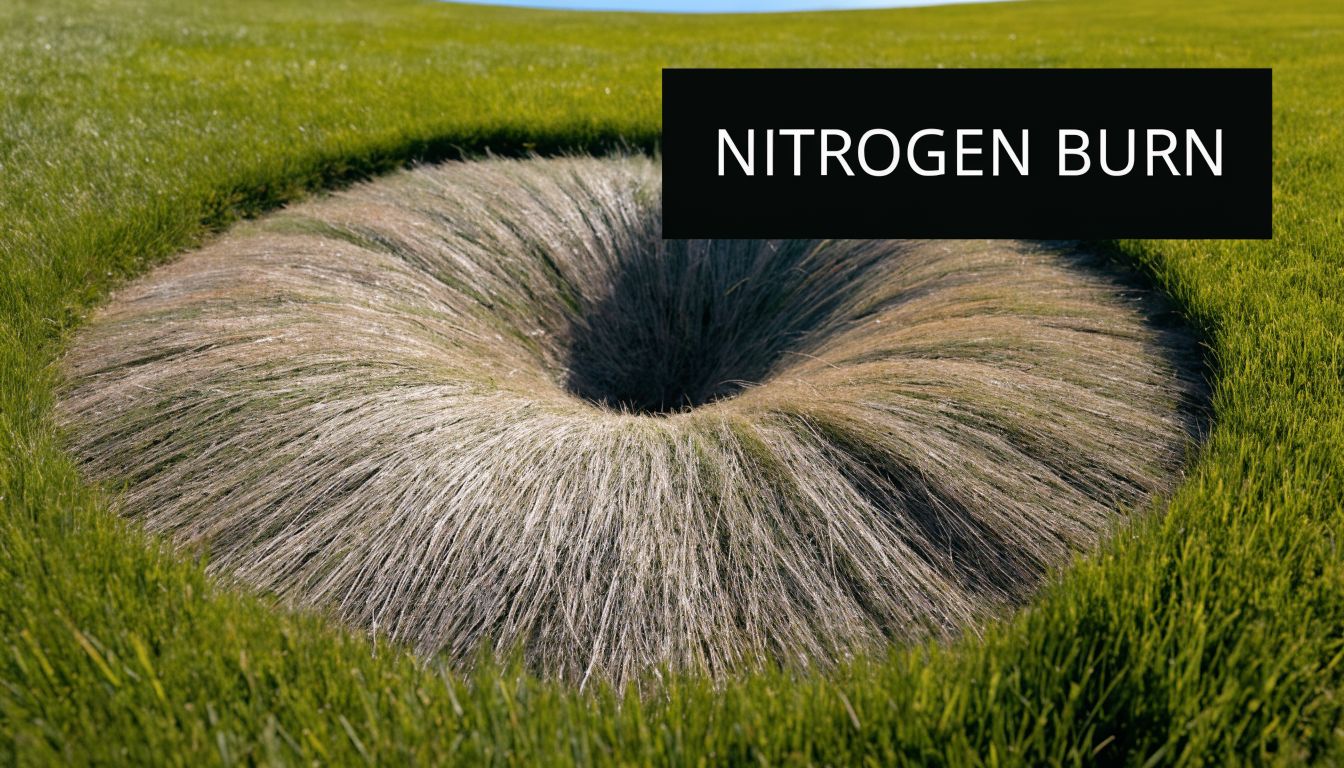
A dog uses the same patch near the patio for three days in a row, and by the weekend you have a brown circle with a dark green edge. In North Georgia, I see that pattern all the time on client lawns. It gets blamed on soil acidity, but the usual problem is a concentrated dose of nitrogen landing in one small area.
According to PetMD’s explanation of why dog pee ruins grass, urine can overload a tight section of turf fast enough to leave either a dark green flush or a burned, straw-colored spot, especially when the urine stays concentrated in one place. That is why random “neutralizers” rarely solve the underlying problem.
What the ring pattern is telling you
Dog urine damage usually has a clear shape. The center takes the heaviest hit, while the outer edge gets a lighter dose that can act more like fertilizer.
That creates a pattern homeowners can learn to read:
- Dark green outer ring means the grass around the edge received a diluted nitrogen feeding.
- Yellow or brown center means the grass in the middle was overloaded and the blades and crowns were damaged.
- Clean circular outline points toward urine more often than insects, mower injury, or uneven sprinkler coverage.
- Repeat spots in the same area usually trace back to a favorite potty route, not a mystery lawn disease.
The approach to repair depends on the specific cause. Fungus, grubs, dry soil, and dog urine do not get treated the same way.
Which dogs leave the clearest spots
Female dogs and male dogs that squat tend to cause the most visible lawn spotting because the urine lands in a concentrated pool. Dogs that lift a leg often spread it across more area, so the turf may show less obvious burn.
Diet plays a role too. Higher-protein food can lead to stronger urine, but pet owners should be careful here. I do not recommend changing a dog’s food to save grass unless a veterinarian says it makes sense for the dog’s health. The safer lawn approach is to work on dilution, soil condition, and turf recovery.
Practical rule: If the spot shows up fast, looks round, and has a green halo around a dead center, treat it as urine burn first.
How North Georgia lawns respond
The same urine spot looks different depending on the grass type and the soil under it.
Tall Fescue usually shows the damage fastest. Its color contrast makes the yellowing easy to spot, and fescue also struggles when urine burn and summer heat stack up together.
Bermuda recovers faster during active growth, but repeated hits in the same place can still thin it out, especially where dogs also wear the area down with traffic.
Zoysia often hides early injury better than fescue. Then the area starts to thin once the same section gets hit over and over.
Georgia red clay adds another layer. It can hold nutrients tightly, drain unevenly, and stay compacted near fences, gates, and patio exits where dogs travel every day. So the lawn is often dealing with more than urine alone. It is dealing with concentrated nitrogen, limited air in the root zone, and shallow recovery in compacted soil.
That is why a pet-safe, organic approach works better over time. A lawn with better soil structure, more active biology, and stronger roots can handle stress with less visible damage.
Immediate First Aid for Fresh Dog Urine Spots
You let the dog out after breakfast, look back an hour later, and see a fresh wet circle near the patio. That is the easiest dog spot you will deal with all week. On North Georgia lawns, quick action matters more than any lawn product.
The goal is simple. Dilute the urine before the salts and concentrated nitrogen sit in the crown and upper root zone, especially in red clay soil that does not always drain evenly.
What to do right away
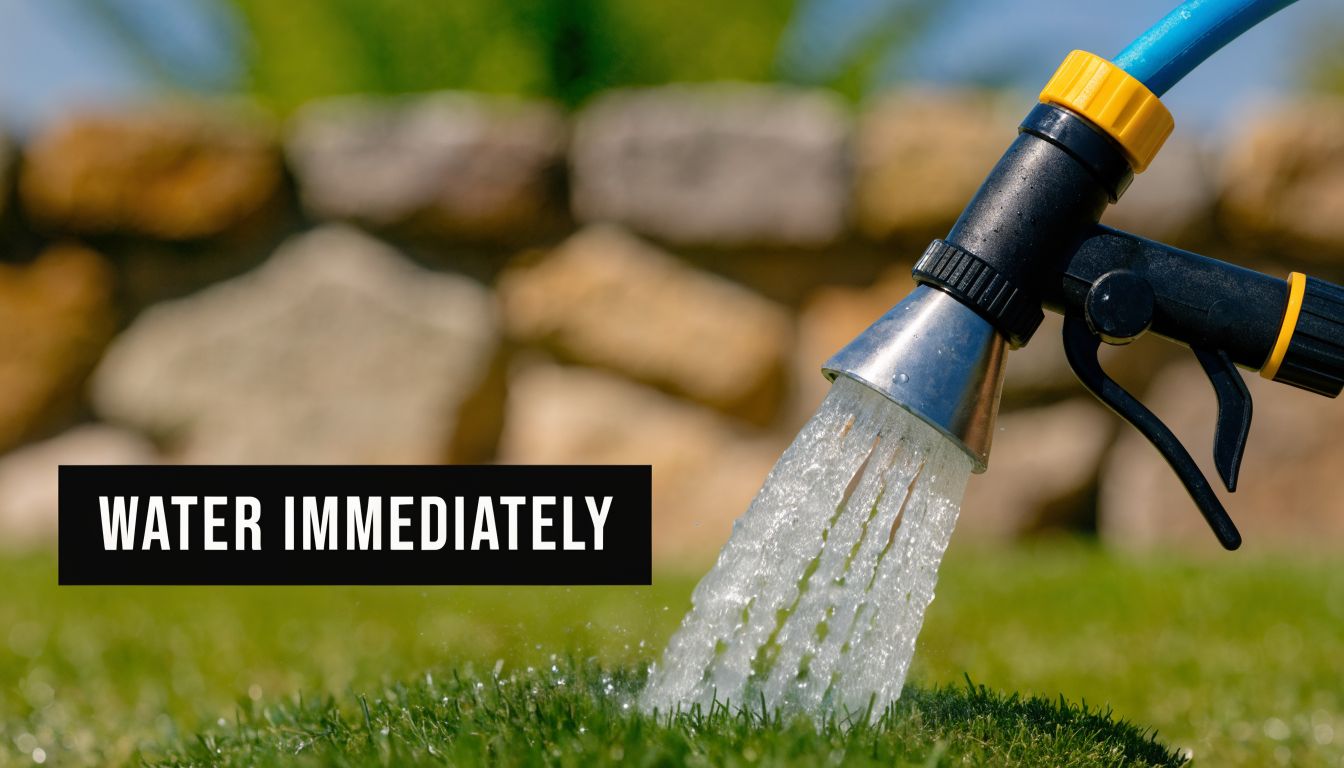
Flush the spot as soon as you find it. Use enough water to soak the area where the urine landed and a small ring around it. A slow, steady rinse works better than a hard spray that beats up the turf or shifts soil on thin spots.
Use this routine:
- Water the center first. That is where the urine concentration is highest.
- Expand a few inches past the visible spot. Urine spreads wider than many homeowners expect.
- Let the water sink in. North Georgia clay can shed water if applied too fast, so give it a moment and repeat if needed.
- Check back later the same day. If the area still looks wilted or darker than the surrounding grass, water it again.
A hose is best, but a watering can or bucket works if that is what you have nearby. What matters is dilution, not the tool.
Grass type changes the response
Fresh urine spots do not behave the same way on every lawn.
Tall Fescue benefits the most from a quick flush because it often shows injury fast, especially in warm weather.
Bermuda usually has a better chance to grow through light damage during active summer growth, but repeated hits in one place still leave thin patches.
Zoysia can look fine at first, then start to yellow days later if the same area keeps getting used.
That is one reason I tell North Georgia clients not to judge the spot after one afternoon. Watch it for several days.
What helps and what makes it worse
Fresh spots respond best to water and patience. Skip the quick-fix products.
Avoid these common mistakes:
- Baking soda. It adds more salt stress to a lawn that is already under stress.
- Dish soap. It does not neutralize urine and can irritate turf.
- Gypsum or lime without a soil test. Georgia clay already has its own chemistry issues. Adding amendments blindly creates new ones.
- Fertilizer over the spot. The grass does not need more nitrogen there.
- Digging it up too early. If the crown is still alive, the grass may recover without patching.
I also do not recommend homemade remedies with vinegar, peroxide, or other pantry mixes. Pet-safe lawn care should still respect the soil.
If you find the spot later
A spot found later the same day is still worth treating. If the grass looks dull, matted, or slightly yellow, flush it well and leave it alone for a few days. Many spots that look bad on day one never turn into dead patches if they are rinsed promptly.
If the center turns straw-colored and crisp, the grass in that area is usually gone. At that point, shift from first aid to repair. If you need the next step, this guide on how to fix bare spots in a lawn will help you rebuild the area the right way.
On client lawns in Alpharetta, Cumming, and Suwanee, the spots that become long-term eyesores are usually the ones nobody watered the first day. Early action is safer, cheaper, and much easier on the lawn.
Repairing and Reseeding Damaged Lawn Patches
Once a spot has gone fully brown and crispy, treat it like a small renovation job. Dead turf will not green back up. The goal is to rebuild that patch so it roots into the surrounding lawn instead of sitting there as a thin, weedy weak point.
On North Georgia lawns, the extra challenge is our soil. Red clay holds water hard, dries hard, and compacts fast. If you only toss seed over a urine spot, the patch usually comes back thin because the soil under it was never corrected.
Clear out the dead patch first
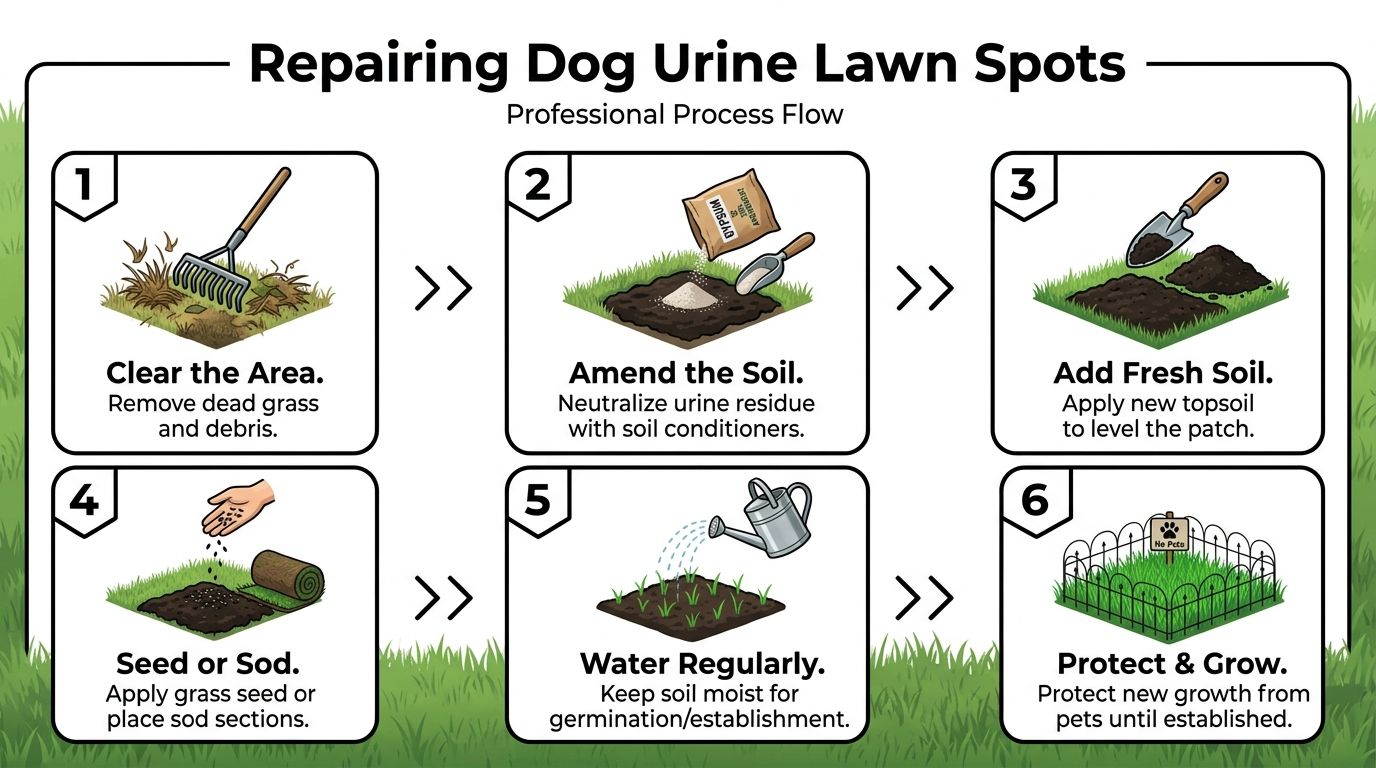
Start by raking out the dead grass, loose thatch, and any crusted surface layer. A hand rake is usually enough for small spots. I like to open the top of the patch just enough to expose soil and remove anything that blocks seed contact.
Do not gouge a hole in the yard. The target is a clean, shallow repair area that can accept water, compost, and seed or sod.
If the spot is still partly green around the edges, keep that living grass. It helps the repair blend faster.
Fix the soil before you add grass
This is the step many homeowners skip. It is also the reason many repaired spots fail.
Use a hand cultivator, a garden fork, or a small hand aerator to loosen the top few inches without turning the area into powder. In Georgia clay, the goal is to create pore space so water can soak in and roots can push down. If the spot puddles after a light watering, spend more time loosening and less time seeding.
For repeated dog spots, I prefer compost over random bagged additives. Compost improves structure, helps moderate moisture swings, and feeds soil life. Spread a light layer, then work it into the loosened surface so the patch sits level with the rest of the lawn.
One caution. Do not start throwing lime, gypsum, or fertilizer at every urine spot. Without a soil test, that is guessing, and guessing is how a small patch repair turns into a larger chemistry problem.
Match the repair to your grass type
North Georgia lawns usually fall into one of three repair paths.
| Grass Type | Best Repair Approach | Best Timing in North Georgia |
|---|---|---|
| Tall Fescue | Rake out the dead area, loosen soil, add compost, reseed with a matching fescue blend, and keep evenly moist | Fall is best. Early spring can work on small patches if weather cooperates |
| Bermuda | Clean the patch, loosen the soil, topdress lightly, and let active turf spread back in or patch with matching sod | Late spring through summer during active growth |
| Zoysia | Remove dead material, improve soil, then use plugs or sod if you want a quicker cosmetic fix | Late spring through summer |
Repairing Tall Fescue spots
Tall Fescue is the easiest of the three to patch from seed, which is one reason so many pet owners in North Georgia stick with it in shady and mixed-sun yards.
Use a quality Tall Fescue blend that matches the existing lawn as closely as possible. Spread it lightly and evenly. Heavy seeding looks productive, but crowded seedlings compete with each other and come in weak. Cover the seed with a thin layer of compost or screened soil so it stays moist without being buried.
If your yard has several problem areas beyond dog damage, this guide on how to fix bare spots in a lawn will help you handle the broader repair work.
Repairing Bermuda and Zoysia spots
Warm-season lawns take a different approach. Bermuda can often fill small spots on its own during active growth if the soil is corrected and the area is protected from repeat traffic. For larger scars, patching with matching sod gives a cleaner result.
Zoysia is slower to close in. That is the trade-off. It can make a beautiful lawn, but urine spots and traffic damage tend to linger longer. If appearance matters and the spot is larger than a few inches, plugs or sod are usually the better call.
In both grasses, prep matters more than the patching material. Healthy soil underneath makes the repair hold.
Water for establishment, not for mud
New seed and fresh plugs need consistent moisture. The surface should stay damp while roots are forming, especially in sunny areas and on slopes. Once the patch has started to establish, back off and water more thoroughly, less often.
A simple rhythm works well:
- Light watering often enough to keep the top layer from drying out
- Closer monitoring during hot afternoons on exposed sites
- A gradual shift to deeper watering as roots develop
If you keep the patch soggy, roots stay shallow and disease pressure goes up. If it dries out during establishment, germination stalls and the repair gets patchy.
Protect the area from repeat damage
Even a well-repaired spot can fail if the dog returns to it every day. Put up a few stakes with ribbon, use a small temporary barrier, or leash-walk your dog to a different area for a couple of weeks. That short break gives the lawn time to anchor.
Good repair work also pairs well with acting swiftly on pet waste removal, since cleaner turf has less overall stress and fewer secondary issues in damaged zones.
A straightforward weekend repair plan
For most small urine spots, this order works well:
- Rake out dead grass and surface debris.
- Loosen the soil so water can enter.
- Mix in a light layer of compost.
- Seed, plug, or sod based on your grass type.
- Cover lightly if you seeded.
- Water consistently until established.
- Keep dogs, mower wheels, and foot traffic off the patch.
That is how you get a repair that blends into the lawn, especially in North Georgia clay.
Smart Prevention Strategies for a Spot-Free Lawn
You walk outside with coffee, the dog has already made a few rounds, and the lawn looks fine. Three days later, the same favorite corners start showing yellow rings and thin patches. That pattern is common on North Georgia lawns, especially where red clay stays tight, water runs off, and one area gets used over and over.
Prevention works best when it fits real life. Pet owners are not trying to turn the yard into a showroom. They want grass that holds up, a routine the dog can follow, and methods that are safe for pets, kids, and the soil.
Build prevention around your dog’s routine
The lawns that stay in better shape usually have one thing in common. The dog’s bathroom pattern is predictable enough that the homeowner can manage it.
Set up the yard so your dog is more likely to use a specific area. For many homes, that means a mulch or gravel potty zone off to the side, or a less visible strip near a fence line. That approach protects the main turf and cuts down on random damage across the yard.
A few habits help without making the routine complicated:
- Use one preferred potty area: This matters a lot in small Fescue lawns where repeated urine in the same visible zone stands out fast.
- Rinse high-use spots if you are already outside: A brief hose-down lowers concentration before the clay locks residue near the surface.
- Spread out traffic: Bermuda and Zoysia can recover from some wear in warm weather, but one compacted turn-around spot will still thin out.
- Stay consistent with cleanup: Along with urine management, acting swiftly on pet waste removal helps keep the yard cleaner and reduces extra stress on the turf.
Encourage better hydration
More diluted urine is usually less harsh on grass. Owners cannot control every part of that, but they can make water easier to access through the day.
Simple changes tend to work better than gimmicks:
- Keep fresh water in more than one spot
- Wash bowls often
- Add moisture to meals if your vet approves
- Watch for dogs that come in from heat and do not drink enough on their own
I tell clients not to expect hydration alone to solve the issue. It helps reduce severity. It does not correct compacted soil, weak turf, or a dog using the same square feet every day.
Improve the soil so the lawn can recover
This is the part generic lawn advice often skips. In North Georgia, dog spot prevention is tied to soil structure as much as urine concentration.
Red clay tends to seal over, hold compaction, and drain unevenly. Fescue struggles fastest under those conditions, especially in heat. Bermuda and Zoysia are tougher, but even they decline when the surface stays hard and roots cannot move deeper. A lawn with better pore space, steadier moisture, and balanced pH rebounds faster and shows less severe burn.
According to Sod Solutions’ dog pee spot repair guidance, annual soil testing and dolomitic lime at 50 lbs/1000 sq ft can help move soil into the 6.0 to 7.0 range when needed, and recovery can improve by 30% or more when pH correction is paired with natural aeration and topdressing.
That lines up with what I see on Georgia properties. Lawns with compost topdressing, better infiltration, and less surface sealing hold up better than lawns that only get spot treatments after damage shows up.
What a good natural program should include:
- Yearly soil testing, especially on older lawns with a history of repeated spots
- Core aeration when clay is tight
- Light compost topdressing to improve structure and microbial activity
- Targeted lime only when the soil test supports it
- Organic fertility that feeds steady growth instead of pushing soft, stressed turf
Be careful with quick-fix products
Chews, tablets, powders, and spray neutralizers get marketed hard to pet owners. Some are harmless. Some help a little. Few solve the full problem on their own.
Be cautious with any product that skips over the basics:
- Grass type
- Clay compaction
- Soil pH
- Traffic
- Shade
- Seasonal growth pattern
That matters in North Georgia because prevention looks different on each lawn. A shady Fescue backyard in Alpharetta needs a different plan than a sunny Bermuda lawn in Roswell. Zoysia sits somewhere in the middle and often benefits from keeping one potty area off the denser showpiece sections.
One prevention plan that works in real life
For many families in Roswell, Milton, and North Fulton, a workable routine looks like this:
- Train one part of the yard as the regular potty area
- Rinse that zone as needed, especially in hot weather
- Keep water available so urine stays less concentrated
- Test soil once a year and correct pH only if needed
- Aerate and topdress to help red clay absorb water and support roots
- Watch thin areas early before they turn into permanent habit spots
Homeowners who want a local, pet-safe prevention framework can also review this guide on how to protect lawn from dog urine.
When to Call a Natural Lawn Care Professional
You patch one spot, then another. A month later, the same yard still has thin areas, hard clay, and bare circles that never seem to close in. At that point, the dog urine is only part of the problem.
In North Georgia, I usually tell homeowners to look past the visible burn mark and pay attention to how the whole lawn is functioning. If the soil stays tight, water runs off instead of soaking in, or roots never seem to grab, DIY patching turns into a cycle of seed, straw, and disappointment. That shows up differently by grass type. Fescue may keep thinning around the damaged area. Bermuda and Zoysia may sit open longer than they should during active growth, especially where red clay is compacted by traffic.
Signs the issue is bigger than a few pet spots
A professional evaluation makes sense when the lawn has stopped responding to basic repair work, especially if more than one factor is working against you.
Common signs include:
- Scattered burn spots across several parts of the yard
- Red clay soil that feels hard underfoot or resists a hand trowel
- Bare patches that return after reseeding or plugging
- Standing water, runoff, or soggy pockets after rain
- Thinning in dog run paths, not just in potty areas
- Weak regrowth even during the right season for your grass type
Those cases usually need more than seed and water. They need the soil opened up, the surface leveled, and the root zone given a better environment to recover.
What a good natural program should actually include
A solid natural lawn care plan should match the grass, the season, and the soil conditions on your property. On North Georgia lawns, that often means correcting compaction first, because red clay can hold nutrients and still be a poor rooting environment if it stays dense.
Ask whether the service includes:
- Core aeration to relieve compaction and improve water movement
- Topdressing with quality compost or soil-building material
- Pet-safe amendments that support recovery without harsh inputs
- Soil testing or pH review before anyone recommends lime or other corrections
- A repair plan designed for Fescue, Bermuda, or Zoysia
- Seasonal timing that fits North Georgia growth patterns
I would also ask how they handle expectations. A good pro should tell you when a lawn can be repaired in place and when an area needs a fuller reset. They should also explain what you still need to do at home, especially watering, traffic control, and keeping dogs off fresh repairs long enough for roots to establish.
Good professional help gives damaged turf a real chance to recover by fixing the soil conditions that keep causing the same spots.
That matters for families with kids and pets in the yard every day. Safe products matter, but so does building a lawn that can handle repeat use without breaking down.
If your lawn in Cumming, Alpharetta, Johns Creek, Roswell, East Cobb, or nearby North Georgia communities keeps struggling with dog spots, compaction, or weak regrowth, Barefoot Organics can help you rebuild the soil the right way. Their natural lawn care approach is designed for Georgia conditions, with pet-safe services like aeration, topdressing, and soil-focused treatment plans that support a healthier, more resilient lawn over time.