

For those of us in North Georgia, a lush, green lawn is more than just a pretty sight—it’s our dog’s favorite playground. But here's the catch: many of the go-to weed killers on the market are packed with harsh chemicals that can be a real threat to our four-legged friends. That's why choosing a dog safe lawn weed killer isn't just a good idea; it’s a crucial part of keeping your pet healthy while you maintain a beautiful yard in communities like Cumming, Alpharetta, and Johns Creek.
Why Your North Georgia Lawn Needs a Pet-First Approach
From Cumming all the way to Alpharetta, keeping a lawn vibrant and weed-free is a constant battle. Our warm, humid climate is a paradise for stubborn weeds, but it also means our dogs are outside all the time, rolling around and getting up close and personal with whatever we spray on the grass. This is where the typical approach to weed control just doesn't cut it for dog owners.
Standard herbicides often leave behind chemicals that linger on grass blades and in the soil long after you've put the sprayer away. Think about how your dog interacts with the lawn—they roll in it, chase toys across it, and maybe even take a nap in a sunny spot. Those normal dog behaviors suddenly become risky, making them incredibly vulnerable to what's on the lawn.
The Hidden Dangers for Your Dog
It's tempting to grab a product that promises a perfectly green, weed-free lawn without a second thought. But the danger to our pets is real and increasingly well-documented. Vets in the Cumming area are seeing more health issues linked to conventional lawn chemicals, and for good reason. Dogs are especially susceptible to ingredients like glyphosate because their world revolves around being on the ground.
Think about it: they roll in the grass, then lick their fur clean. This means they're not just getting chemicals on their skin, but they're also ingesting them. There are documented cases of symptoms ranging from vomiting to serious chemical burns that land a pet in the emergency vet clinic. These incidents really underscore how serious this can be. If you want to dig deeper, you can get more details on how these chemicals affect pets and see the findings for yourself.
For homeowners in places like Milton and Johns Creek, the reality is stark: a standard chemical treatment doesn't just kill weeds—it introduces potential toxins directly into your dog's living space. Switching to a dog-safe weed killer isn't being overly cautious; it's just responsible pet ownership.
North Georgia's Unique Challenges
The specific quirks of our region, from the heavy red clay in Dahlonega to the sprawling suburban lawns in Alpharetta, throw a few extra curveballs our way.
- Persistent Weeds: Our climate is a breeding ground for aggressive weeds like crabgrass and nutsedge. It’s easy to feel pressured into reaching for the strongest chemical you can find.
- Soil Composition: That famous red clay soil, common from Cumming to Milton, can hold onto chemicals for a surprisingly long time, extending the period of potential exposure for your pet.
- Frequent Rain: While our famous Georgia rain can wash away some chemicals, it can also leave behind a sticky residue on the grass that easily gets on your dog’s paws and fur.
Ultimately, creating a safe yard for your dog requires a slight shift in how we think about lawn care. It’s about putting your pet’s well-being ahead of the quest for a flawless, golf-course-perfect lawn. A pet-first approach is about building a lawn that’s healthy and resilient enough to fight off weeds on its own, which means you’ll need to intervene less. And when you do need to treat it, you can feel confident you’re using something that keeps everyone safe.
Choosing the Right Dog Safe Weed Killer
Walking down the aisle of a Johns Creek or Milton garden center, you're hit with a wall of "pet-friendly" and "natural" weed killers. It can feel a little overwhelming. How do you know what’s just clever marketing and what will actually knock out those stubborn Georgia weeds without putting your dog at risk?
The secret is to ignore the flashy front label and turn the bottle around. It’s all about the active ingredients.
I’ve seen it a hundred times: a homeowner in Cumming tries a product their cousin in Ohio swears by, only to find it does absolutely nothing to the crabgrass taking over their own backyard. Our heavy clay soil and specific weed profile here in North Georgia mean we have to be a bit more strategic.
Decoding Natural Ingredients
When a product is labeled "organic" or "natural," it usually relies on a handful of core ingredients. These are popular because they work and then break down quickly, so you don't have to worry about nasty chemicals lingering in your soil for weeks.
Here are the most common ones you'll see:
- Vinegar (Acetic Acid): This is a "contact" herbicide. Think of it like a burn—it kills whatever green part of the plant it touches. It's fantastic for spot-treating a stubborn dandelion popping through a crack in a Dahlonega driveway, but be careful—it’ll fry your Bermuda grass just as fast.
- Citrus Oils (d-Limonene): Works a lot like vinegar. It strips the protective waxy layer off a weed's leaves, causing the plant to dry out and die. It's fast, effective for spot treatments, but again, it’s non-selective.
- Corn Gluten Meal: This one is different. It’s a pre-emergent, which means it stops weed seeds from ever sprouting. You apply it before weeds show up. It’s a long-game strategy for a healthier lawn and is completely harmless to dogs.
It’s one thing to know the ingredients, but it’s just as important to think about how our dogs interact with the lawn in the first place.

As you can see, it's not just about what they might accidentally eat. It’s also about what they absorb through their paws and what gets on their fur when they roll around.
Let's dig a bit deeper into the most common ingredients you'll find on the shelf.
Comparing Common Dog Safe Weed Killer Ingredients
This table breaks down some popular pet-friendly active ingredients, what they're good for here in North Georgia, and what you need to keep in mind.
| Ingredient Type | How It Works | Best For… | Considerations in North Georgia Climate |
|---|---|---|---|
| Acetic Acid (Vinegar) | A contact herbicide that desiccates (dries out) the plant leaves it touches. | Spot-treating individual weeds on hardscapes like patios, driveways, or mulch beds in areas like Cumming. | Most effective on hot, sunny days. May require multiple applications for tough perennial weeds with deep roots. |
| Citrus-Based Oils (d-Limonene) | Strips the waxy cuticle from leaves, causing rapid dehydration and plant death. | Young, broadleaf weeds in non-lawn areas. Works very quickly on contact. | Can be less effective on grassy weeds like crabgrass. Best applied when no rain is forecast for 24 hours. |
| Corn Gluten Meal | A pre-emergent that inhibits root formation in germinating seeds. Also adds nitrogen to the soil. | Preventing crabgrass, dandelions, and other annual weeds from ever sprouting. Applied in early spring and fall. | Timing is everything in areas like Alpharetta and Milton. It must be applied before weed seeds germinate. It won't kill existing weeds. |
| Iron-Based (FeHEDTA) | Selectively targets broadleaf weeds by causing them to absorb excess iron, leading to cell death. | Killing clover, dandelions, and plantain directly in the lawn without harming the grass. | Works best in cooler, moist conditions of spring and fall. High summer heat can reduce its effectiveness. |
Each ingredient has its place, and often, a combination of a pre-emergent like corn gluten meal and a selective spot treatment is the most effective approach for a full season of control.
Making an Informed Choice
This shift toward safer products isn't just a passing fad. Over the past decade, more and more studies have connected traditional herbicides—especially those with chemicals like glyphosate and 2,4-D—to serious health problems in dogs, including certain cancers. That’s what’s fueling the demand for alternatives that homeowners in Alpharetta and Cumming can feel good about using.
When you're at the store, look for the OMRI (Organic Materials Review Institute) seal on the label. This certification means the product is approved for organic gardening and is a much more reliable indicator of safety than vague marketing terms like "eco-friendly" or "all-natural."
Ultimately, the best choice really comes down to your lawn, your weeds, and your goals.
For some, the maintenance can feel like too much. If you're weighing all your options, you might even consider alternatives like artificial grass. This an ultimate guide to artificial turf for dogs is a great resource that walks through the pros and cons. But if you're set on keeping a beautiful, natural lawn, our guide on safe pesticides for pets offers even more tips specifically for North Georgia homeowners.
Your Seasonal Guide to Pet-Friendly Weed Control

When it comes to North Georgia lawn care, timing is everything. You can have the perfect dog safe lawn weed killer, but if you apply it at the wrong time of year, you’re just wasting time and money. The unique rhythm of our seasons, from the crisp winters in Dahlonega to the humid summers in Cumming, is what really dictates the best strategy for keeping weeds out while keeping your pets safe.
I've found that a proactive, seasonal approach is way more effective than scrambling to fight a full-blown weed invasion in July. When you sync up your lawn care with the local climate, you can stop weeds before they even get a foothold. This means fewer treatments are needed overall, and your yard stays a safe, fun place for your dog all year long. Think of it as your lawn's annual game plan.
Late Winter to Early Spring: The Pre-Emergent Push
This is, without a doubt, the most critical window for us North Georgia homeowners. Before you even see the Forsythia bushes burst into their iconic yellow bloom, it’s time to get a jump on prevention. This is prime time for applying a pre-emergent herbicide, and a natural option like corn gluten meal is a great choice.
The whole point here is to create a barrier that stops weed seeds, especially that dreaded crabgrass, from ever germinating. The real secret is watching the soil temperature, not just the calendar. You want to get your pre-emergent down when the soil consistently hits around 55°F. For those of us in Alpharetta and Milton, this sweet spot is usually from late February to mid-March.
A few tips from experience for this phase:
- Water It In: Most granular pre-emergents need about a half-inch of water to activate. A light watering right after you spread it pushes the product into the soil where it can do its job.
- Don't Aerate After: Whatever you do, hold off on aerating your lawn after applying a pre-emergent. Punching holes in the soil will break the protective barrier you just worked so hard to create.
- Wait to Seed: Pre-emergents aren't smart; they can't tell the difference between a weed seed and a grass seed. You'll need to wait at least a few weeks after application before you think about overseeding.
Spring and Summer: Targeted Post-Emergent Action
Once that Georgia heat really kicks in, any weeds that managed to sneak past your pre-emergent defense will start popping up. Now's the time for targeted, post-emergent action. From April through August, your job is to spot-treat the weeds you can see with a selective, pet-friendly product.
Remember, the goal isn't to blanket-spray your entire lawn. Just focus on the problem areas. This minimizes the amount of product you're using and keeps your lawn healthier and safer for your dog.
Iron-based herbicides are fantastic for this time of year because they nail broadleaf weeds like clover and dandelions without hurting your Bermuda or Zoysia grass. Just be sure to apply them on a calm, dry day when temperatures are below 85°F, which helps avoid stressing your lawn. I always find the morning is the best time; it gives the product all day to work before the evening dew rolls in.
Fall: The Final Stand
Just because the temperatures in Johns Creek and Cumming start to cool down doesn't mean your lawn care is over. Autumn is a golden opportunity to control perennial broadleaf weeds. These pesky plants are busy sending nutrients down to their roots to hunker down for winter, which means they’ll also pull post-emergent herbicides deep into their root system.
This makes fall applications incredibly effective for getting rid of them for good. One final spot treatment in September or October can dramatically cut down on the number of weeds you’ll see next spring. It's also a great time to put down a second round of corn gluten meal to head off winter annuals like henbit and chickweed. Following this seasonal roadmap really sets you up for success, giving you a beautiful yard and a happy, healthy dog.
Building a Weed-Resistant Lawn Naturally
The best dog safe lawn weed killer isn't something you buy in a bottle. It's a thick, thriving lawn that simply crowds out weeds before they can even start. If you're a homeowner in Cumming or anywhere in North Georgia, the real secret is to stop constantly fighting weeds and start proactively building a turf that can defend itself.
Think of a resilient lawn as a fortress; weeds can't find a weak spot to break through. This approach not only cuts down on how often you need to reach for even the safest products but also creates a much tougher playground for your four-legged friend. It’s all about working with your lawn's natural abilities.
Mow Higher for Better Weed Control
One of the simplest, most effective changes you can make is just raising your mower blade. When you let your Bermuda or Zoysia grass grow a bit taller—aim for 3 to 4 inches—you create a dense canopy that shades the soil. This simple adjustment blocks the sunlight that many weed seeds, especially pesky crabgrass, need to sprout.
Taller grass also means deeper roots. And deeper roots make your lawn more resilient during dry spells and better at sourcing its own nutrients, outcompeting weeds for resources. It’s a small change that delivers a huge payoff.
Mowing high essentially creates a living mulch that smothers weeds. It’s a free, easy technique that lets your lawn do the hard work for you and is a core principle behind most natural weed control methods.
Smart Watering and Aeration are Key
How you water matters just as much as how you mow. Instead of light, frequent sprinklings, give your lawn a deep soaking less often. This simple practice trains the grass roots to grow further down into the soil to find moisture, which makes the whole plant stronger.
- Water Deeply: Give your lawn about one inch of water per week, all in a single session if possible. This ensures the water gets down deep into our notorious North Georgia clay.
- Water in the Morning: Always water early in the day. You’ll lose less to evaporation, and it helps prevent fungal diseases that love to pop up in damp, cool overnight conditions.
Speaking of our clay soil, it gets compacted easily here in places like Alpharetta and Dahlonega, which can literally suffocate grass roots. That’s where core aeration comes in. Doing this once a year in the spring is a game-changer. It pulls up small plugs of soil, allowing air, water, and nutrients to finally reach the root zone. A well-aerated lawn is a healthy lawn, and a healthy lawn is your best defense against weeds.
Choose the Right Grass for North Georgia
At the end of the day, you have to start with the right foundation. Planting a grass variety that’s built for our local climate gives you a huge head start.
For the sunny lawns common across the Cumming area, Bermuda grass and Zoysia grass are fantastic choices. They are both warm-season grasses that absolutely love our summer heat and humidity. Because they spread with runners, they naturally form a dense, thick turf that is incredibly good at choking out weeds while being tough enough to handle an active dog’s daily zoomies.
Lawn Treatment Safety Protocols for Dog Owners
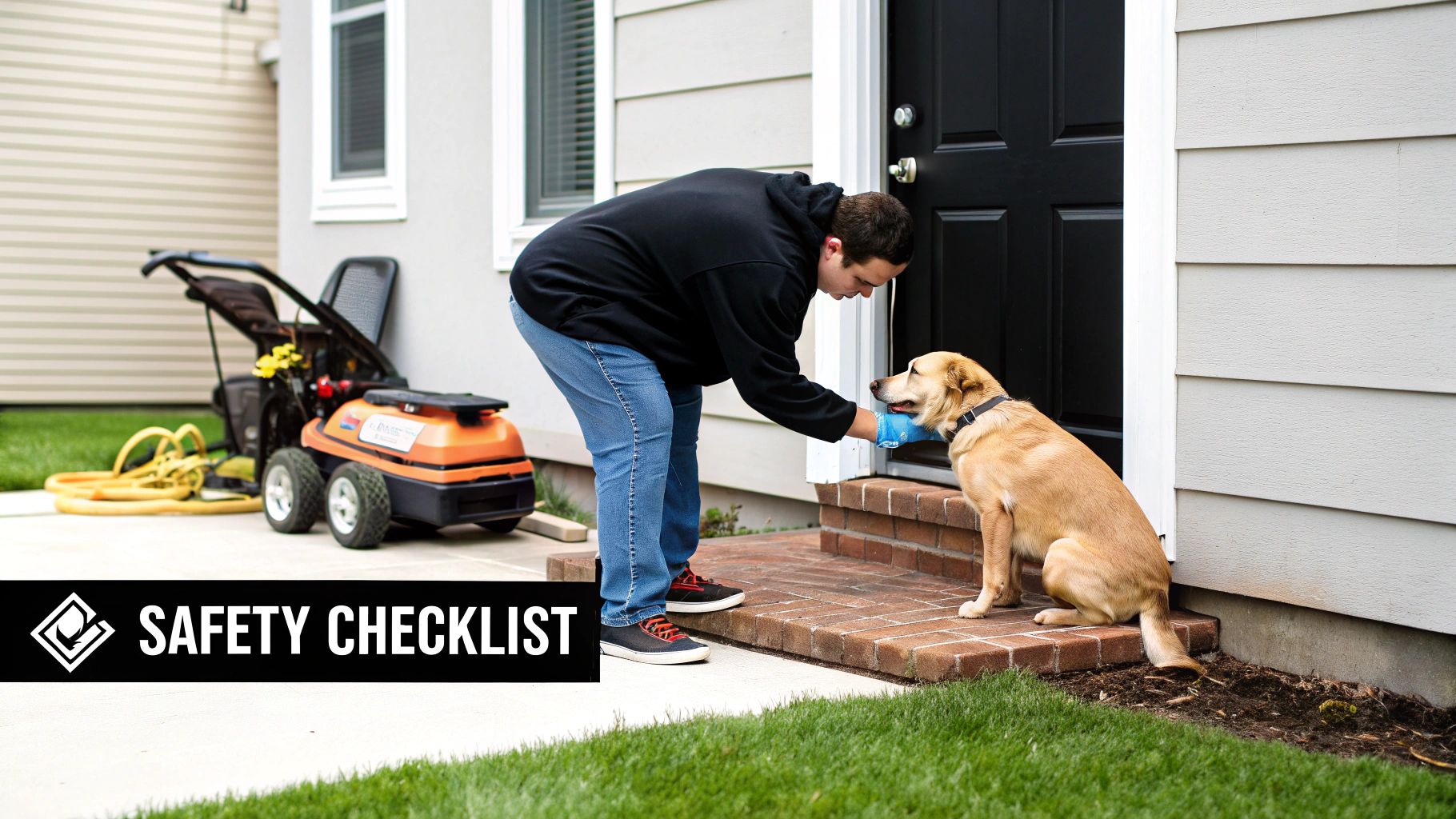
Choosing a dog-safe weed killer is a great start, but it's only half the battle. How you actually apply and handle the treatment is just as important for keeping your best friend safe. Even with the mildest products, a few simple safety steps can give homeowners in Cumming, Alpharetta, and beyond total peace of mind.
The golden rule? Always read the product label. Seriously, don't just skim it. This isn't just fine print; it's your roadmap to a safe application. It will tell you the exact application rates and, most critically, the re-entry time—that's how long you need to wait before letting pets and people back onto the lawn.
A Simple Plan: Before, During, and After
Think of your safety routine in three simple phases. The main goal is to keep your dog securely and happily inside while the product is being applied and while it dries.
- Before You Spray: Take a few minutes to walk the yard. Pick up any dog toys, food bowls, or chew bones left outside. Anything your pet might lick or put in their mouth should be brought inside.
- During Application: This part is non-negotiable—your dog stays indoors. This completely prevents them from walking through wet chemicals or accidentally getting hit with overspray.
- After Application: Follow that re-entry time on the label to the letter. Once the lawn is completely dry and the specified time has passed, it’s usually safe for your dog to go back out and play.
Here's a pro tip I always share with clients in Cumming and Milton: for the first day or two after a treatment, keep a damp cloth by the door. When your dog comes inside, give their paws and belly a quick wipe. It’s a simple trick that removes any lingering residue they might have picked up.
Storing Products and Watching Your Pet
Proper storage is a safety step that's easy to forget but absolutely crucial. All your lawn care products, even the natural ones, should be stored in their original containers. Keep them in a secure spot, like a locked cabinet or a high shelf in the garage, where curious pets can't possibly reach them.
It's also smart to brush up on general pet safety measures and know what to look for after any lawn treatment. Keep an eye on your dog for any out-of-the-ordinary behavior, like excessive drooling, unusual tiredness, or irritated skin. While a reaction is highly unlikely with a truly pet-safe product, being observant means you can act fast if something seems off. Our comprehensive guide to pet-safe lawn treatment offers more detailed advice specifically for North Georgia lawns and pets.
The growing demand for these products shows a real shift in what homeowners care about. The global market for pet-safe weed killers was valued at around $1.2 billion in 2024 and is expected to climb to $3.1 billion by 2033, all thanks to dedicated pet owners like you. You can read more about this trend at marketintelo.com.
Common Questions About Dog-Safe Lawn Care
Even with the best plan, questions always pop up. Let's tackle some of the most common ones we hear from homeowners across Cumming, Johns Creek, and Milton who want to keep their lawns beautiful and their furry friends safe.
How Long Until My Dog Can Go on the Lawn?
This is, without a doubt, the number one question we get asked. The definitive answer is always printed right on the product label, so start there.
As a solid rule of thumb for liquid treatments, wait until the product is completely dry before letting your dog back out. On a hot Alpharetta afternoon, this might only take a few hours. If it's cooler or more humid, it’s best to give it a full 24 hours to be on the safe side.
Are Natural Weed Killers Strong Enough for Georgia Weeds?
It's a fair question. Many people wonder if organic options can stand up to our stubborn Southern weeds. The good news is that many natural products, especially those with iron-based ingredients, are surprisingly effective on broadleaf weeds like clover and dandelions.
The tradeoff is that they often require more frequent applications than synthetic chemicals. They can also struggle against tough grassy weeds like crabgrass. That’s where a smart, long-term strategy really pays off.
For persistent weed problems here in North Georgia, prevention is your best weapon. Applying a pre-emergent like corn gluten meal in late winter can stop many weeds from ever sprouting in the first place.
What About Those DIY Weed Killer Recipes?
You've probably seen them online—recipes using vinegar, salt, and dish soap. While these can work, you need to be extremely careful where you spray them.
These homemade solutions are non-selective, which is a technical way of saying they kill everything they touch. That includes your prized Bermuda or Zoysia grass. It’s best to save these mixes for spot-treating weeds in sidewalk cracks or mulch beds where you don't have to worry about collateral damage to your turf.
What’s the Single Best Strategy for a Pet-Friendly, Weed-Free Lawn?
Here's the secret: the most powerful weed control isn't found in a bottle. It's all about building a healthy, robust lawn that can fend for itself.
A thick, thriving lawn is the ultimate weed barrier. Here’s how you get there:
- Mow high. Taller grass blades shade the soil, preventing weed seeds from getting the sunlight they need to germinate.
- Water deep. Watering less often but more deeply encourages your grass to grow deep, strong roots.
- Aerate your soil. Our dense Georgia clay gets compacted easily. Annual aeration gives the roots room to breathe and grow.
When your turf is dense and resilient, it naturally chokes out weeds, meaning you'll need to reach for any kind of weed killer far less often.
Ready to create a beautiful, lush lawn that's also a safe playground for your pets? The team at Barefoot Organics specializes in natural lawn care programs designed for the unique challenges of North Georgia. Get your free online quote today!