

For those of us in Cumming, Johns Creek, and Alpharetta, having a beautiful green lawn and a happy dog can feel like mutually exclusive goals. But they don't have to be. The secret is picking the right dog resistant grass—something tough, quick to recover, and safe for your best friend. For our North Georgia climate, that usually means hardy, self-repairing varieties like Bermuda and Zoysia.
Why Your North Georgia Lawn Needs a Dog-Proof Strategy
Trying to keep a healthy lawn while your dog lives their best life on it often feels like a losing battle. We've all seen it. The muddy paw prints tracked through the house after a Milton rainstorm, the unmistakable yellow urine spots dotting a yard in Dahlonega—it's a familiar struggle for pet owners around here. These aren't just little annoyances; they're symptoms of a frustrating cycle of damage and repair that costs time and money.
The heart of the issue is that most common turf grasses just weren't designed to handle the kind of stress a dog dishes out every single day. The damage usually comes from a few key sources:
- Foot Traffic: Think about the path your dog wears into the lawn running the fenceline, or the spot where they love to sunbathe. That constant traffic compacts the soil and literally shreds the grass blades.
- Urine Burn: Dog urine is loaded with nitrogen. While a little bit can fertilize, a concentrated dose acts like a chemical burn, killing the grass and creating those classic brown spots often haloed by a ring of dark green grass.
- Digging and Play: Whether they're after a squirrel or just digging to dig, a determined dog can tear up a patch of lawn in minutes, leaving you with a muddy pit.
The Growing Demand for Durable Lawns
This constant tug-of-war is exactly why so many homeowners are searching for better, more durable lawn solutions. It’s such a widespread problem that the market for pet-friendly landscaping is booming. In fact, projections show the artificial grass market hitting $4.53 billion worldwide by 2025, and dog-resistant turf is a huge piece of that pie.
This trend is especially strong in fast-growing suburbs across Forsyth County, where families are tired of fighting a losing battle. It makes sense when you see the numbers: veterinary surveys show 35% of U.S. dogs cause lawn damage yearly, and those pesky urine spots? They affect a staggering 80% of dog owners.
For so many of us in the Cumming community, this isn't just about curb appeal. It's about creating an outdoor space that’s functional, safe, and genuinely enjoyable for the whole family—four-legged members included. The goal isn't just to patch up damage; it's to build a resilient lawn from the soil up.
Moving Beyond Constant Lawn Repairs
The good news? A gorgeous, dog-friendly yard in places like Dahlonega or Alpharetta is completely achievable. It just takes a smart approach, starting with the right grass and backed by pet-safe maintenance. Instead of constantly reacting to damage, you can build a lawn that proactively stands up to your dog's daily adventures.
This guide will walk you through exactly how to do that. We'll get into the best dog resistant grass types for our specific North Georgia climate, from tough-as-nails Zoysia to hardy Tall Fescue blends. We’ll also cover the organic maintenance practices that help build a strong lawn without harsh chemicals.
For a deeper dive into creating a safe yard, check out our detailed guide on pet-safe lawn care. Getting these fundamentals right is the first step toward a lawn both you and your dog will absolutely love.
Choosing the Right Grass for a Dog-Friendly Yard
Picking the right grass is hands-down the most important decision you'll make when trying to create a yard that can stand up to a dog. For those of us here in North Georgia—whether you're in Milton, Alpharetta, or Dahlonega—it's not about finding some magical, indestructible turf. It’s about being smart and matching the right grass species to our local climate, your specific yard, and, of course, your dog's antics.
The two biggest villains in this story are high-traffic wear from constant running and playing, and the concentrated nitrogen in dog urine that leaves behind those all-too-familiar yellow spots. A truly dog-resistant grass has to be a champion in both arenas. It needs to be tough enough to handle the daily zoomies and have a growth habit that helps it bounce back quickly from pee burns.
Warm-Season Grasses: The Recovery Champions
If your yard in Cumming or Johns Creek gets blasted with sun all day, warm-season grasses are almost always your best bet. These varieties absolutely love our hot Georgia summers and have a fantastic, built-in ability to repair themselves.
-
Bermuda Grass: Known for its take-no-prisoners growth habit, Bermuda is a top contender. It spreads aggressively using both above-ground runners (stolons) and below-ground ones (rhizomes). This interconnected network lets it creep back into bare spots caused by digging or urine damage. It's built for active, high-energy dogs. The trade-off? It absolutely needs at least 6-8 hours of direct sun and will turn brown and go dormant over the winter.
-
Zoysia Grass: A homeowner favorite for its dense, almost carpet-like feel, Zoysia is another warm-season powerhouse. It grows a bit slower than Bermuda, but that density is its secret weapon, making it incredibly tough and great at choking out weeds. Some people find that its thick turf even discourages their dogs from digging. Just like Bermuda, Zoysia uses runners to repair itself and handles foot traffic like a pro, but it also needs a good amount of sun to really thrive.
The real magic of these grasses is how they regenerate. Instead of just giving up when damaged, their network of runners actively works to reclaim beat-up territory. That makes them a fantastic choice for any lawn that sees a lot of action.
Cool-Season Grasses: The Shade-Tolerant Alternative
Let's be realistic—not every yard in Forsyth or Dawson County is a wide-open, sun-drenched field. If you've got mature trees or other shady spots, a cool-season grass like Tall Fescue is going to be your go-to.
Tall Fescue is what we call a "bunch-type" grass. It grows in clumps and doesn't send out runners like Bermuda or Zoysia, which means it can't repair itself. If you get a bare patch, you'll need to reseed it. But don't count it out! Modern Turf-Type Tall Fescue blends have been bred for impressively deep root systems and better drought tolerance, making them surprisingly resilient.
Its number one advantage is its ability to handle shade. If your lawn gets less than six hours of direct sunlight, Tall Fescue will likely give you the best results. Plus, it stays green deeper into the cooler months, giving you a longer-lasting green lawn than its warm-season cousins. To get a better handle on how urine impacts different grasses, you can check out our detailed guide on pee-resistant grass options for Georgia lawns.
Making the Right Choice for Your Yard
At the end of the day, the "best" dog-resistant grass is the one that fits your yard. A family in a sunny, new subdivision in Alpharetta will probably have great luck with Zoysia. But a homeowner with a wooded lot over in Milton is going to need the shade tolerance of Tall Fescue.
This quick decision tree can help you visualize the most common lawn problems we see with dog owners here in the Cumming area.
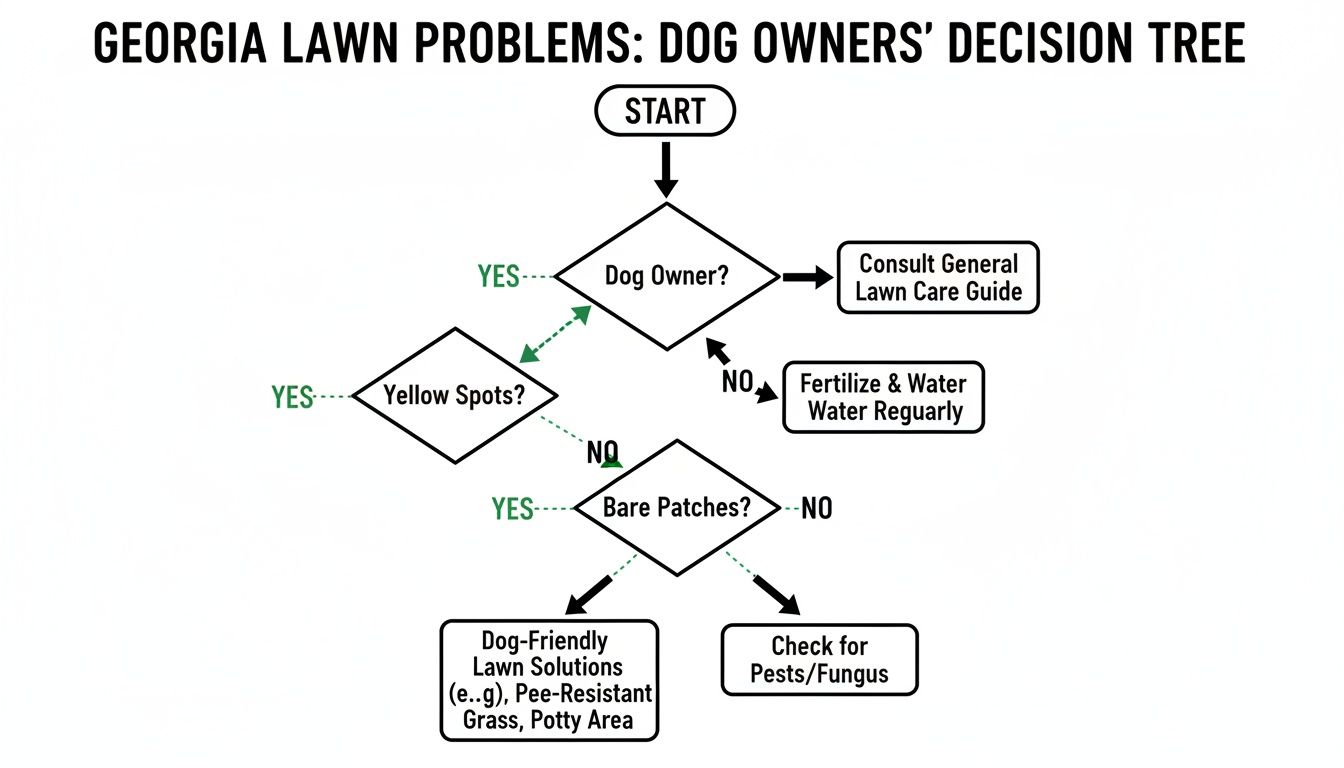
As you can see, whether you’re fighting yellow spots, bare patches, or a bit of both, the solution always starts with figuring out the root cause. That's the critical first step before you ever pick up a shovel or buy a bag of seed.
Building a Resilient Lawn from the Soil Up
You can't have a great lawn without great soil. It’s that simple. Especially here in North Georgia, where our dogs are tearing through the yard, the real secret to a lawn that can take a beating lies right under your feet. Before you even think about what kind of grass to buy, you need to get your hands dirty and focus on the foundation.
For homeowners from Cumming to Alpharetta, this is the step that makes or breaks a pet-friendly yard.
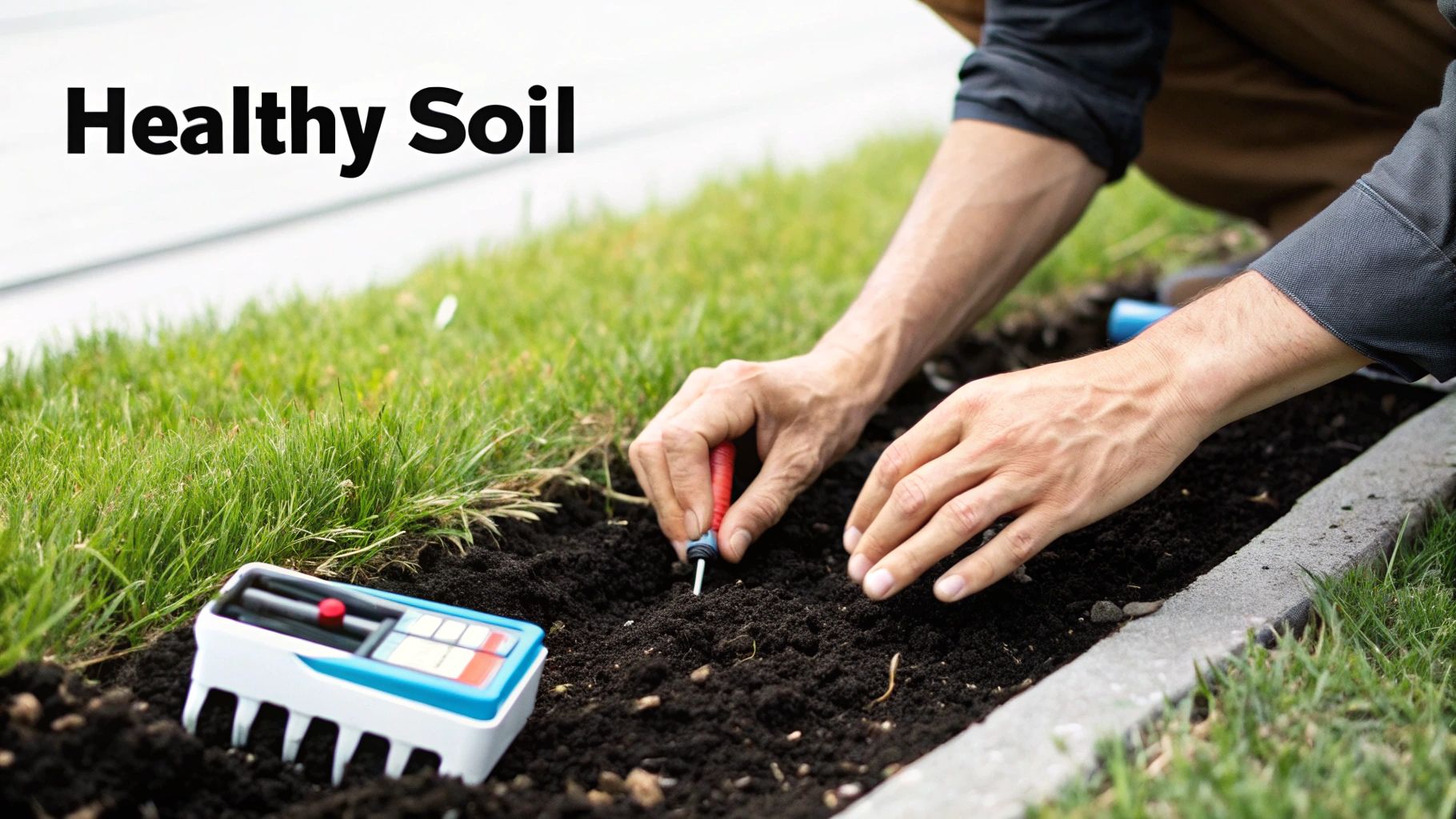
Before laying a single piece of sod or scattering a handful of seed, you absolutely have to know what you’re working with. A simple soil test is the single most important thing you can do. It tells you everything—pH, nutrient levels, the works—and takes all the guesswork out of the equation. It's basically a health report for your yard, and it's essential for anyone fighting our infamous North Georgia red clay.
Why a Soil Test Is Your First Move
Think of a soil test as the roadmap for your lawn. It shows you exactly where you're starting so you can plot a course to a lush, green, dog-proof paradise. North Georgia's native clay soil is usually acidic and pretty low in organic matter, creating a tough environment for grass roots to really take hold.
A test will pinpoint these issues, telling you exactly what your soil is crying out for. Without that info, you’re just throwing money away on fertilizers that might not even be right for your lawn, all while it continues to struggle.
This isn't just a niche concern anymore. The demand for durable pet-friendly lawns is exploding, with the market projected to hit $350 million globally by 2025. Homeowners in places like Milton are tired of watching their lawns fail under the pressure of pets and our local weather. With over 50 inches of rain a year, our yards can turn into muddy swamps in no time—a problem that dog urine only makes worse. You can explore the research on pet lawn systems to see just how big this trend is.
Amending the Soil for Pet-Proof Durability
Once you have your soil test results in hand, the real fun begins. For most of us in this area, building a strong foundation means tackling two major issues that our furry friends amplify: compaction and poor drainage.
Relieving Compaction with Aeration
All that running, jumping, and chasing compacts the soil over time, squeezing out the air and making it nearly impossible for water and nutrients to reach the grassroots. The fix? Core aeration. This process pulls small plugs of soil from the lawn, opening up channels that let the roots breathe and grow deeper. Deeper roots mean a much more resilient lawn.
Improving Drainage with Organic Matter
Our heavy clay soil is notorious for poor drainage, leading to soggy spots and weak, shallow roots. The best way to combat this is by amending the soil with high-quality organic matter, like compost. Spreading a layer of compost right after aerating—a service called topdressing—is the perfect one-two punch.
Working organic material into the soil helps in a few key ways:
- It breaks up the dense clay, improving soil structure.
- It boosts drainage, so you don't have puddles after every rainstorm.
- It feeds the beneficial microbes that create a living, healthy soil ecosystem.
We've got a whole guide on these techniques. For a deeper dive, check out our tips on how to improve soil for a healthier Georgia lawn.
Seeding or Sodding for Deep Root Growth
With your soil prepped and ready, it's finally time to plant your grass. Whether you go with seed or sod, the immediate goal is the same: encourage deep, strong root growth right from the start.
If you're seeding, make sure you get good seed-to-soil contact by lightly raking it in. Then, keep it consistently moist—not soaked—until the new grass is well-established. For sod, lay the pieces tightly together and give them a deep, thorough watering to encourage those new roots to dive down into the healthy soil you’ve built.
A proactive approach to soil health isn't a one-time fix; it's the start of a long-term strategy. By building your lawn from the ground up, you create a naturally stronger, more resilient turf that can better withstand the daily pressures of life with a dog.
Organic Lawn Care for Homes with Pets
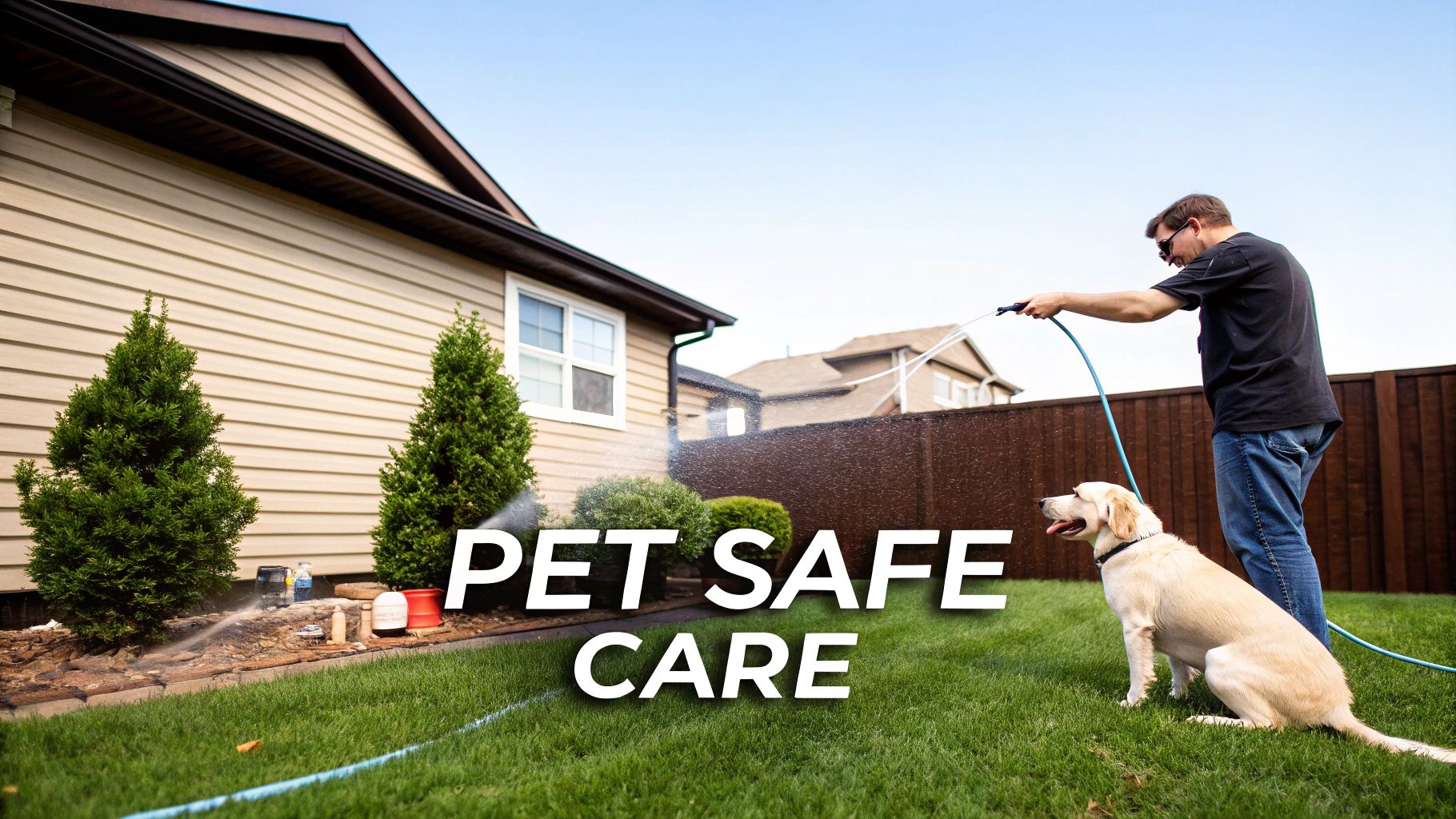
Once you've put in the work to establish your dog resistant grass, the game shifts to keeping it healthy and tough. For homeowners here in communities like Dahlonega and Milton, that means leaning into a pet-safe, organic strategy. A truly resilient lawn is a living ecosystem, and the key to a safe outdoor space for your family and pets is to keep it strong without dousing it in harsh chemicals.
At Barefoot Organics, our entire philosophy is built on this principle. We strengthen the lawn from the soil up, helping it naturally withstand the daily stress of dog life. It’s a proactive approach that focuses on building healthier turf that can bounce back from just about anything your furry friend throws at it.
Practical Tips for Managing Dog Urine Spots
Let's be honest—even the toughest turf can get scorched by the concentrated nitrogen in dog urine. While durable grasses like Bermuda and Zoysia recover much faster, a few simple habits can dramatically reduce the damage from the get-go.
One of the best things you can do is train your dog to use a specific potty area. This could be a mulched or gravel spot tucked away in a less visible part of your yard, whether you're in Alpharetta or Milton. It definitely takes some patience, but it saves the rest of your lawn from those tell-tale yellow spots.
If you happen to catch your dog in the act on the main lawn, the best defense is dilution, and fast. Keep a watering can or a hose nearby and completely drench the spot as soon as they’re done. This simple step flushes the excess nitrogen through the soil before it has a chance to burn the grass blades.
The goal isn't to eliminate every single spot, but to reduce their frequency and severity. A combination of a strong, healthy lawn and proactive habits makes a world of difference in keeping your yard looking its best.
The Power of Pet-Safe Organic Fertilizers
Feeding your lawn is critical, but when you have pets, what you feed it matters just as much. Traditional synthetic fertilizers often contain chemicals that can be harmful if your curious pup ingests them. For families in Johns Creek and Cumming, this makes a pet-safe organic approach pretty much non-negotiable.
Organic fertilizers just work differently. Instead of giving the grass a quick, artificial jolt, they feed the soil itself. This process builds a rich, living foundation by nourishing all the beneficial microorganisms that support strong, deep root systems.
Here’s why this is so much better for a dog-friendly yard:
- Safety First: Organic products come from natural sources, so you can have peace of mind when your dog is rolling around on the grass right after a treatment.
- Stronger Roots: Healthy soil promotes deep, robust root growth. This makes your grass more drought-tolerant and helps it recover faster from paw traffic.
- Reduced Burn Risk: Because organic fertilizers release nutrients slowly, they reduce the risk of over-fertilizing and make the turf less susceptible to urine burn in the first place.
This growing focus on pet-safe outdoor spaces is part of a much larger trend. In fact, the global pet-friendly artificial grass market was valued at an incredible $3.5 billion in 2023, with North America leading the way. This boom really highlights the demand from pet owners in places like Forsyth County who are actively seeking durable, low-maintenance, and safe yard solutions for their families. You can learn more about this homeowner shift by exploring the market analytics on this trend.
Adjusting Your Mowing and Watering Habits
You'd be surprised how much of an impact a few simple tweaks to your lawn care routine can make. These aren't complicated changes, but they directly support a tougher, more dog-resistant turf.
Mow Higher
Set your mower blades a notch or two higher. Taller grass blades mean deeper roots. Keeping your lawn a bit longer (around 3-4 inches for Fescue, for example) helps shade the soil, retain moisture, and creates a denser turf that stands up better to all that running and playing.
Water Deeper, Less Often
Stop with the light, daily watering. Instead, aim for deep, infrequent soakings. This encourages the grass roots to grow downward in search of water, which creates a stronger, more drought-resistant lawn. A well-hydrated lawn is also far better equipped to dilute and process the nitrogen from dog urine.
As you think about organic care for your furry friends outdoors, don't forget to extend that mindfulness inside. Exploring options for safe carpet cleaning for pets ensures a healthy living space from the yard all the way to the living room. By embracing these natural practices, you're not just fixing problems—you're building a healthier, safer, and more beautiful environment for everyone to enjoy.
Your Year-Round Game Plan for a Dog-Friendly Georgia Lawn
Keeping a lush, dog-resistant lawn here in North Georgia isn’t a one-and-done deal. It’s a year-round commitment that shifts with the seasons. A lawn that’s thriving in Alpharetta in May needs a completely different kind of care than one in Dahlonega come October.
Think of it like this: by syncing your lawn care with Georgia’s unique seasonal rhythms, you're building a stronger, more resilient turf. A little consistent effort goes a long way in fighting off those notorious urine spots and the constant wear-and-tear from your furry family members.
Spring: Waking Up and Getting to Work
When your lawn starts shaking off its winter nap, it's all about recovery and kickstarting new growth. For those of us in places like Cumming and Johns Creek, March and April are the perfect window to give your grass a solid head start before the summer heat really kicks in.
- Breathe New Life into the Soil: Your dog’s winter zoomies probably compacted the soil pretty good. Core aeration is the single most important thing you can do right now. It loosens everything up, allowing crucial air, water, and nutrients to get down to the grassroots where they're needed most.
- Feed It Right: Now’s the time to put down a high-quality, pet-safe organic fertilizer. This isn't about a quick, chemical jolt; it's about slow-release nutrition that feeds the soil itself, promoting steady, healthy growth without any risk to your pets.
- Get Ahead of Weeds: Tackle any winter weeds that have made an appearance. You want to get them out before they start competing with your grass for resources.
Summer: Surviving the Stress
Let’s be honest, Georgia summers are brutal. The heat and humidity put a ton of stress on your lawn, and when you add an active dog to the mix, it's a real test of survival. From June through August, your goal is simple: help your turf hang on and conserve its energy.
A huge tip here is to raise your mowing height to 3-4 inches. I know the temptation is to cut it short, but taller grass blades shade the soil. This simple change helps it hold onto precious moisture and keeps the roots from baking, which in turn encourages them to grow deeper and tougher.
When you do water, do it deeply and not too often. A good long soak in the early morning is much better than a light sprinkle every day. This trains the roots to dig deeper for moisture, building a more drought-tolerant lawn that can handle the stress.
We see this all the time in Alpharetta and Cumming—homeowners over-watering in the summer out of panic. That's a recipe for shallow roots and fungal diseases. It's far better to give your lawn one or two deep drinks a week than a little sip every day.
Fall: Time to Repair and Rebuild
Autumn is the prime time for grass in our region. As the temperatures finally cool down in September and October, your lawn is ready to grow and repair itself. This is your window to fix any damage from the summer and bulk up the turf for the coming winter.
- Fill in the Gaps: Got some thin or bare spots from a summer full of fetch? Fall is the absolute best time to overseed. The cooler air and consistent moisture create the perfect environment for new grass seed to take root and get established before the first frost.
- Add Some Organic Goodness: Right after aerating, spread a thin layer of rich, organic compost. This process, called topdressing, is like a superfood smoothie for your soil. It improves the structure and introduces beneficial microbes that are the foundation of a truly healthy lawn.
- One Last Meal: Give the lawn a final feeding with a good organic fertilizer. This helps the grass store up energy in its roots to survive the winter, setting it up for a quick and healthy green-up next spring.
Winter: A Well-Deserved Rest
Even when your warm-season grass goes dormant and turns that familiar shade of brown, it still needs a little attention. Keep fallen leaves and debris raked up so they don't smother the turf and create a welcome mat for disease.
Most importantly, try to keep heavy traffic—from both two-legged and four-legged family members—to a minimum. The dormant crowns of the grass plants are fragile and can be easily crushed, which will hurt your lawn's comeback in the spring.
Here's a quick cheat sheet to help you keep track of your main tasks throughout the year.
Seasonal Lawn Care Checklist for Pet Owners
This simple guide breaks down the key lawn care jobs for each season in North Georgia, helping you maintain a healthy, dog-resistant yard year-round.
| Season | Primary Focus | Key Action Items |
|---|---|---|
| Spring | Growth & Recovery | – Core aerate to relieve soil compaction. – Apply a pet-safe organic fertilizer. – Spot-treat for any emerging weeds. |
| Summer | Stress Management | – Raise mower height to 3-4 inches. – Water deeply but infrequently (early morning). – Monitor for signs of pests or disease. |
| Fall | Repair & Preparation | – Overseed bare or thin patches. – Topdress with organic compost after aeration. – Apply a final round of organic fertilizer. |
| Winter | Protection & Dormancy | – Remove fallen leaves and debris. – Minimize heavy foot traffic. – Plan for the upcoming spring season. |
Following this seasonal rhythm doesn't just make for a prettier lawn; it builds a stronger, more resilient ecosystem from the soil up. That’s the real secret to having a great-looking yard that can actually stand up to the rigors of life with a dog.
Common Questions About Dog-Resistant Lawns
Even with the best plan, every homeowner with a dog has questions. I've heard just about all of them from our clients across Cumming, Alpharetta, and Forsyth County. Let's tackle some of the most common concerns I hear about keeping a great-looking lawn with a four-legged friend around.
Can I Completely Stop Dog Urine Spots on My Lawn?
Honestly, preventing every single spot is a tall order, but you can absolutely get them under control. A healthy, resilient lawn is always going to be your first line of defense.
The single most effective tactic is to train your dog to use one specific spot, maybe a mulched area or a small patch of pea gravel, away from your main lawn. This contains the issue right away.
For those times when accidents happen elsewhere, the key is speed. Keep a watering can or your hose handy and drench the spot immediately. This dilutes the nitrogen before it has a chance to burn the grass blades. Choosing tough, spreading grasses like Zoysia and Bermuda also makes a huge difference here in North Georgia; their runners actively grow back into damaged areas, helping them self-repair far better than a clump-forming grass like Fescue.
My Dog Is a Digger. What Can I Do?
Ah, the backyard excavator. This is usually driven by boredom or instinct, so the solution is often two-pronged: addressing your dog's behavior and protecting your lawn.
First, make sure your dog is getting enough exercise and mental stimulation. A tired dog is a good dog, and puzzle toys or an extra walk can work wonders.
On the lawn side of things, a super dense turf like Zoysia can make digging physically harder and less rewarding. A great trick I've seen work time and again is to create a "digging box" for them—a designated sandbox or an area with loose soil where they're allowed to dig. For a stubborn spot they keep returning to, you can bury chicken wire just under the sod. It's harmless to them, but they won't like the feel of it on their claws.
A key takeaway for many homeowners in Milton and Alpharetta is that digging is often a solvable behavioral issue. A tired, mentally stimulated dog is much less likely to excavate your beautiful lawn.
Is Artificial Turf a Good Option for Dogs in the Georgia Heat?
Artificial turf has come a long way and can be a fantastic, durable choice, especially for small yards or dedicated dog runs in places like Johns Creek. The new pet-friendly turfs have incredible drainage systems built right in, so they handle urine without becoming a soggy, smelly mess.
The main drawback? That synthetic material gets hot. I mean, really hot, especially under the full Georgia summer sun. It can be uncomfortable, and even dangerous, for your dog's paws.
A hybrid approach is often the perfect compromise. Keep your main yard in natural grass for that cool, soft feel, and install a smaller section of high-quality artificial turf for the potty area or the path they race along the fence. You get the durability exactly where you need it most.
What's the Deal with Dogs Eating Grass?
This is one I hear all the time! People worry it means their dog is sick, but it's usually just a normal, instinctive behavior. If you want to dive deeper into the reasons why dogs eat grass, there's a lot of great information out there.
The most important thing from a lawn care perspective is knowing what they're eating. When your lawn is treated with pet-safe, organic products, you don't have to panic when your pup decides to graze. It gives you peace of mind.
Ready to reclaim your lawn and create a beautiful, durable space that you and your pets can enjoy together? Barefoot Organics specializes in pet-safe, natural lawn care solutions designed for our unique North Georgia climate. We revive lawns stressed by pet traffic and urine spots through services like core aeration, organic topdressing, and customized nutrient plans. Let us help you build a healthier, greener, and safer yard today. Get your free quote by visiting us at https://barefootorganicsllc.com.