

When the chill sets in around Cumming, GA, a common question pops up: Does grass even grow in the winter? The simple answer is no—at least, not in the way we see it explode with growth in the spring. Instead, your lawn in areas like Johns Creek and Alpharetta hits the pause button, entering a state of dormancy to survive the cold.
What's Really Happening to Your North Georgia Lawn in Winter?
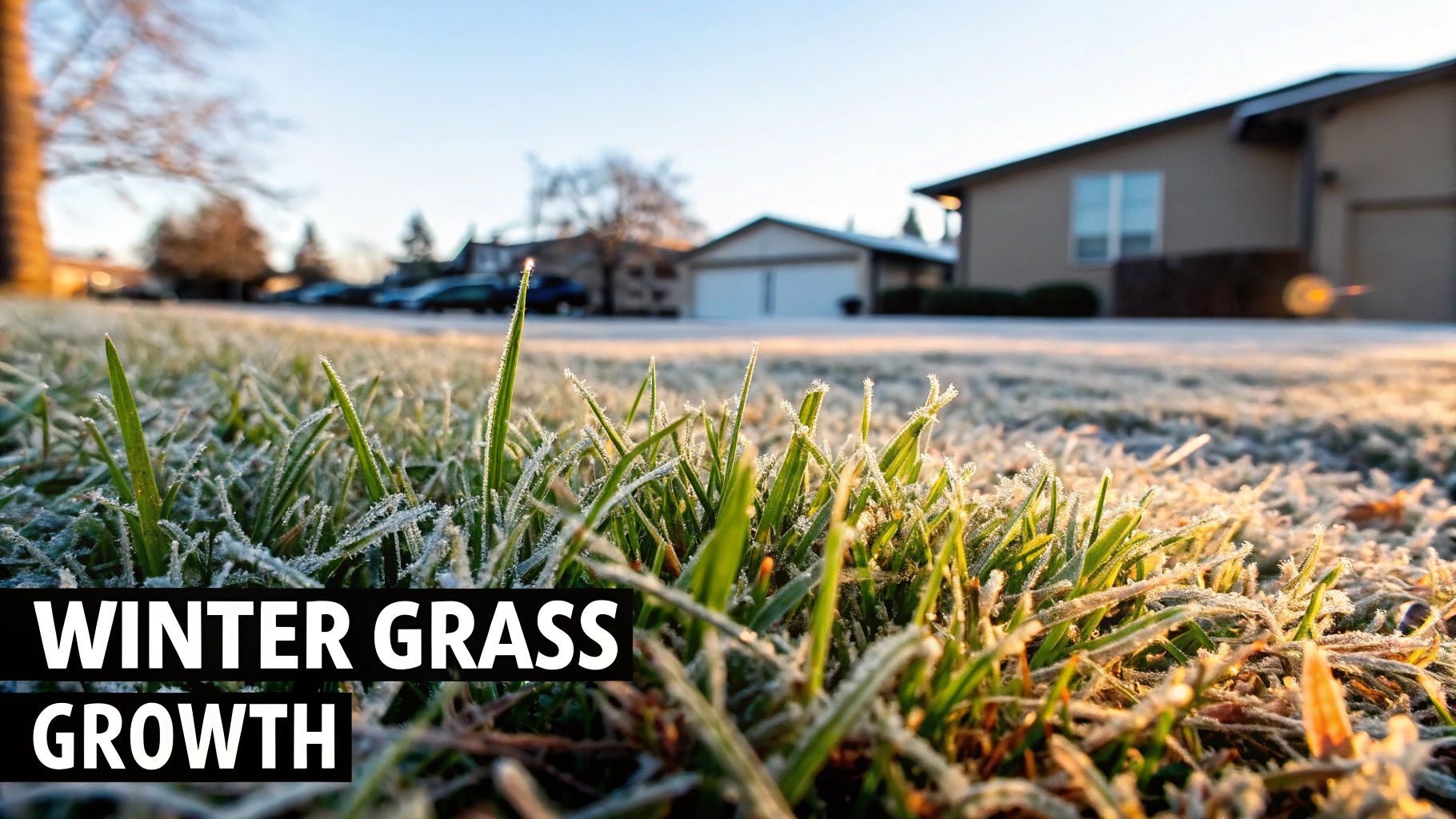
Think of winter dormancy as your lawn’s version of hibernation. It’s a completely natural and healthy response to plunging temperatures and shorter daylight hours. Rather than pushing out new green blades, the grass shifts all its energy toward one simple goal: survival.
This slowdown is a direct reaction to the cold. Once the soil temperature in our North Georgia clay drops below 40°F, grass growth pretty much grinds to a halt. The grass isn't dying; it's just smartly conserving its resources until things warm up again in the spring.
A Shift in Focus Below the Surface
While the blades above ground might look brown and lifeless in your Milton yard, there’s still important work happening in the root system. During those milder winter spells we often get, from Johns Creek all the way up to Dahlonega, the roots are quietly taking in any available moisture and nutrients.
They're essentially stocking the pantry for a big spring comeback. This underground prep work is why a brown lawn is a resting lawn, not a dead one.
Of course, for homeowners who can't stand the look of a brown lawn, there are ways to sidestep this natural cycle, like maintaining a flawlessly green lawn even in chilly winters with high-quality turf. But for a natural lawn, understanding this dormant phase is the first step to smart winter care.
Winter Status of Common North Georgia Grasses
To give you a better idea of what to expect, here’s a quick look at how the most popular grass types in the Cumming, GA area handle a typical winter.
| Grass Type | Winter Appearance | Main Winter Job |
|---|---|---|
| Bermuda | Fully dormant, tan/brown color | Storing energy in its deep roots |
| Zoysia | Fully dormant, light brown/straw color | Protecting its dense root system |
| Fescue | Semi-dormant, may stay green but won't grow | Root development, staying healthy |
As you can see, warm-season grasses like Bermuda and Zoysia will go completely brown. Fescue, on the other hand, is a cool-season grass, so it often keeps some green color through our mild winters, even if it isn't actively growing.
Your Lawn Isn't Dying, It's Hibernating

Ever look out at your once-lush lawn in Johns Creek or Milton and wonder why it looks so tired and brown as the temperatures drop? It’s a common concern, but don't panic. This isn't a sign you've done something wrong; it's a brilliant survival tactic called dormancy.
Think of it as your lawn’s version of hibernation. Just like a bear hunkers down for the winter, your grass enters a resting state to survive the cold, dry conditions common in our area. It stops trying to grow lush green blades—which would just get zapped by frost anyway—and instead powers down its visible growth to conserve precious energy.
This natural shutdown isn't triggered by a single cold snap. The real signal for your lawn to get ready for its long winter nap comes from deep within the ground.
Soil Temperature Is the Real On/Off Switch
While we notice the crisp winter air, your grass pays more attention to the soil temperature. Once the ground consistently stays below 45-50°F, the plant’s internal clock knows winter is here to stay. That's the real trigger for dormancy in most turf types you'll find around Cumming, Alpharetta, and Johns Creek.
This temperature drop tells the grass to stop pushing energy up into its blades and start sending it down to the roots. By redirecting resources below ground, the plant protects its most vital parts, ensuring it has everything it needs to survive until spring.
A brown, dormant lawn isn't a dead lawn—it's a smart, resilient one. It’s patiently storing up energy, ready to burst back to life when the warmth of spring returns to Alpharetta.
Understanding this cycle is key. That tan color isn't a cause for alarm; it's just a sign your lawn is doing exactly what it's supposed to do. Playing the long game is the secret to a healthy, thriving yard year after year.
Cool-Season vs. Warm-Season Grass: The Great Divide
Ever drive around North Georgia in December and wonder why one lawn in Dahlonega is lush and green while your neighbor's in Cumming is a shade of sleepy tan? It’s not necessarily a sign of a healthy versus an unhealthy lawn. Instead, it comes down to the fundamental difference between cool-season and warm-season grasses.
Getting a handle on this is the first step to understanding what your lawn is doing—or not doing—during the winter months.
Think of these two grass types as having completely opposite internal clocks. Their growth cycles are wired differently, which dictates exactly how they react when the temperatures drop across our region, from Milton to Dahlonega.
The Summer Lovers: Warm-Season Grasses
Most of the lawns you see in places like Alpharetta and Milton are warm-season varieties, like Bermuda and Zoysia. As their name suggests, they absolutely love the summer heat. They grow like crazy from late spring through the dog days of August, soaking up the sun.
But as soon as that first real frost hits, they hit the snooze button. To protect themselves and conserve energy for next year, they go into a deep dormancy. That tan or brown color is perfectly natural—it’s just your lawn taking a long winter's nap.
The Winter Warriors: Cool-Season Grasses
On the flip side, you have the cool-season grasses, with Fescue being the most common hero in our area. These grasses work on a reverse schedule. Their peak growing seasons are actually in the spring and, more importantly, the fall, when temperatures are milder.
While their growth slows way down in the dead of winter, they often hang onto their green color. This gives the illusion of a year-round active lawn. That fall growth spurt is absolutely vital for a healthy Fescue lawn, which is why knowing the right way to approach seeding in the fall can make or break its winter appearance.
As the soil gets colder, the growth rates for these grasses change dramatically.
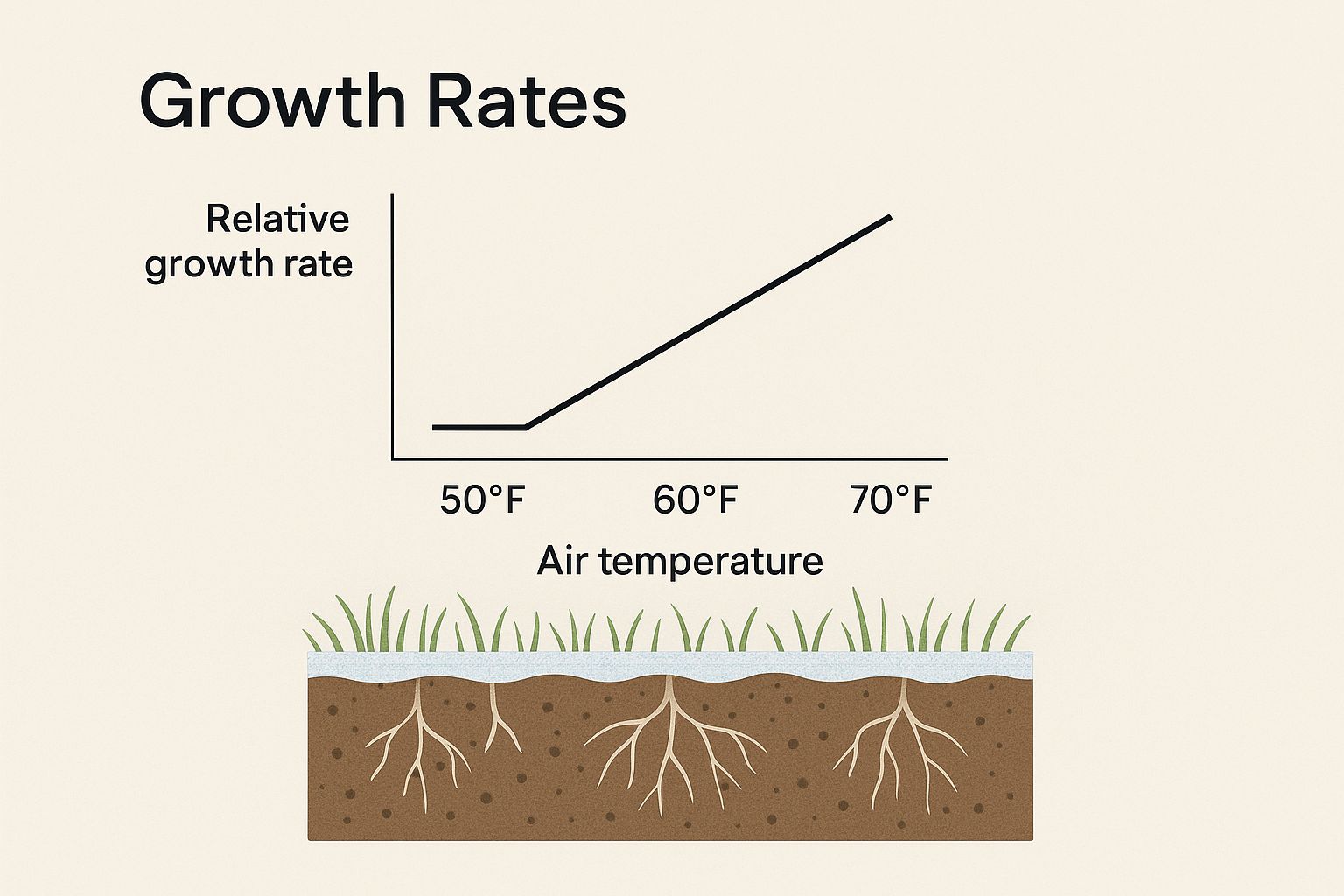
You can see how the cool-season roots try to hang on, while the warm-season grass just shuts down completely until things warm up again.
Comparing How Local Grasses Handle Winter
To make it even clearer, here’s a quick side-by-side look at how grasses common in the Cumming area behave when winter arrives.
| Characteristic | Cool-Season Grass (Fescue) | Warm-Season Grass (Bermuda, Zoysia) |
|---|---|---|
| Winter Color | Stays mostly green, though may fade slightly. | Turns tan or brown after the first hard frost. |
| Growth Period | Primarily fall and spring. Minimal in winter. | Vigorous in late spring and summer. |
| Winter State | Semi-dormant; root activity continues. | Fully dormant; all growth stops. |
| Recovery | Greens up quickly as spring temps rise. | Greens up later in spring when soil is warm. |
This comparison really highlights that a brown Zoysia lawn in Johns Creek isn't a dead lawn—it's just sleeping. It’s following its natural programming, and you can bet it's getting ready for a strong comeback next spring.
The Secret Growth Happening Below the Surface
You might look out at your lawn in Cumming on a frosty morning and think it’s gone to sleep for the winter. But just because the top growth has stopped doesn't mean the work is done. There's a whole world of activity happening right under your feet.
Even when the air is chilly, your lawn’s root system is still on the job. Think of the roots as the plant's battery pack, slowly charging up all winter. During those milder days we often get in North Georgia, the roots are busy absorbing moisture and pulling in any available nutrients from the soil. This quiet, unseen effort is what sets the stage for a spectacular spring comeback.
The Power of a Well-Stocked Pantry
Knowing about this underground activity makes it clear why that late fall fertilization is so important. You're essentially stocking the pantry for the roots, giving them a steady source of fuel to draw from all winter long. When spring arrives, they'll have all the energy they need for that first big push of growth. A healthy, nutrient-rich soil is what makes this whole process possible, and you can learn more about how to improve the soil in your Georgia lawn to really give your grass an edge.
This hidden root growth isn't just a theory. Even during milder winters, grass channels most of its energy into belowground growth rather than visible blades, prioritizing resource conservation for the cold months ahead.
Studies have confirmed this survival strategy. During warmer winter periods, a grass plant will direct the majority of its energy into expanding its root mass instead of pushing out new green shoots. It's all about building a strong foundation to survive the cold. You can dig deeper into the science by exploring the findings on grassland productivity during winter on bg.copernicus.org.
This below-surface development is your lawn’s best-kept secret. By taking care of the roots now, you’re guaranteeing a healthier, more resilient lawn when the weather in Alpharetta and Milton finally warms up.
A North Georgian's Guide to Winter Lawn Care
Okay, so you understand your lawn is taking a long winter's nap. What now? Knowing how to properly tuck it in for the season is the difference between a sluggish spring start and a vibrant green comeback. For homeowners anywhere from Cumming to Dahlonega, a few key steps can make all the difference. Think of winter care less as active gardening and more as smart protection.
It all begins with the last mow of the season. For those of us with warm-season grasses like Bermuda or Zoysia, you'll want to gradually lower your mower blade for the last couple of cuts in the fall. The goal is to get it down to about 1.5 to 2 inches. This "scalping" helps clear out some of that dead thatch and sets your lawn up for a much cleaner green-up next year.
If you have a Fescue lawn in Alpharetta, however, you'll do the exact opposite. Keep your mowing height on the taller side, somewhere around 2.5 to 3 inches. That extra length acts as a natural blanket, helping to insulate the base of the plant against the biting cold.
What to Do (and What to Avoid) This Winter
Once your grass has gone dormant, your job shifts from lawn manager to lawn guardian. Your goal is simply to protect your turf until it's ready to wake up. Here’s a quick rundown of what that looks like for your lawn in Cumming or Johns Creek.
Your Winter Lawn Checklist:
- Get the Leaves Up: Don't let a thick, soggy blanket of leaves smother your grass. It blocks what little sunlight is available and traps moisture, creating a perfect environment for fungal diseases to take hold. Rake them, blow them, or mulch them—just don't leave them sitting there.
- Water Wisely: Even dormant grass gets thirsty, especially during the dry winter spells we often see. You don't need to water often, but a good, deep soak about once a month will do wonders if we haven't had any decent rain.
- Keep Off the Grass: Dormant grass blades are fragile and can snap easily underfoot. Heavy traffic compacts the soil and crushes the crown of the grass plants, which can leave you with dead, patchy spots come springtime. Stick to the pathways as much as you can.
Leaving leaves on your lawn isn't just about looks. That matted layer essentially suffocates the grass, blocking sunlight and creating a damp, disease-friendly environment that you'll be fighting against in the spring.
Sticking to these simple tips for your property in Alpharetta or Milton is all it takes. You're not trying to force your grass to grow when it doesn't want to. Instead, you're setting the stage for a healthy, powerful return when the warmth finally signals it's time to wake up.
Answering Your North Georgia Winter Lawn Questions
Even when you know the basics of dormancy, seeing your lawn change during the winter can bring up a lot of questions. From Cumming to Alpharetta, and all over North Georgia, we hear the same concerns from homeowners every year. Let's tackle some of the most common ones so you can feel confident heading into the colder months.
Why Does My Fescue Lawn Look Weak in Winter?
This is something we see all the time in the Johns Creek area. Fescue is a cool-season grass, so it stays green, but its growth rate grinds to a near halt once the soil temperature drops below 40°F. It simply isn't focused on getting thicker or repairing itself when it's that cold.
Think of it as the grass hunkering down for survival. The best way to handle this is to prepare ahead of time. A solid fall overseeding and fertilizing plan gives your Fescue the density and deep roots it needs to push through a Milton winter and come out strong in the spring.
Should I Fertilize My Dormant Bermuda Lawn?
Definitely not. Fertilizing warm-season grasses like Bermuda or Zoysia while they're dormant is one of the worst things you can do for your lawn in Cumming. The grass is essentially asleep and can't absorb any of the nutrients.
So where does all that fertilizer go? It becomes a five-star buffet for aggressive winter weeds, giving them the fuel they need to take over your lawn. Worse, a late-season nitrogen application can fool the grass into putting out new, tender growth that the first hard frost will immediately kill. It's best to hold off on fertilizer until late spring when your lawn is actively growing and ready for a meal.
What Can I Do About All the Winter Weeds?
Ah, the winter weeds. Intruders like Poa annua (annual bluegrass) and henbit are famous for crashing the party in North Georgia lawns. They absolutely love the cold and take full advantage of your warm-season turf being dormant and unable to fight back.
While you can pull them or spot-treat them as they pop up, prevention is your best weapon. Applying a pre-emergent herbicide in the fall creates an invisible barrier in the soil that stops these weed seeds from sprouting in the first place. A good first step is learning to identify the common winter weeds that affect Georgia lawns so you know what you're up against in Dahlonega and beyond.
Ready to give your lawn the professional, eco-friendly care it deserves next season? Barefoot Organics specializes in natural lawn care solutions for homeowners in Cumming, Alpharetta, Johns Creek and the surrounding areas. We create healthy, resilient turf ready to handle whatever a Georgia winter throws at it. Get your free online quote today and prepare for your best lawn ever.