

For homeowners everywhere from Cumming to Dahlonega, a beautiful green lawn is a point of pride. But what about our pets? It often feels like you have to make a tough choice between a pest-free yard and keeping your four-legged family members safe.
The good news is, you don't have to choose. The simple answer is yes, you can find a bug killer for lawns safe for pets. These modern solutions are a world away from the harsh chemicals of the past, relying on natural ingredients to get the job done without putting your animals at risk.
Protecting Your Lawn and Pets in North Georgia
For families in Alpharetta, Johns Creek, and Milton, finding that sweet spot between a healthy lawn and a safe playground for pets and kids is a huge priority. The old-school approach of just spraying everything with powerful, synthetic chemicals is not only outdated but comes with a lot of unnecessary risks.
Today, the focus has shifted to a much smarter, safer strategy. It's all about a concept called Integrated Pest Management (IPM). Think of IPM less as a specific product and more as a complete game plan for your yard. Instead of just reaching for the strongest chemical on the shelf, IPM is about understanding our local North Georgia environment and using the least toxic, most effective methods for long-term control. It's about building a healthy lawn that can naturally fend off pests on its own.
A Safer Approach to Pest Control
You really can have the best of both worlds. A whole range of effective, pet-friendly options are available that work with nature, not against it. Our comprehensive guide to pet-safe lawn care dives much deeper into these methods, giving you the peace of mind you deserve.
This isn't just a local trend, either. Homeowners across the country are demanding better, safer solutions for their yards.
The global market for pet-friendly lawn care products was valued at approximately USD 1.26 billion in 2024 and is projected to reach about USD 2.93 billion by 2033. This explosion in growth shows a massive shift in how people think about the potential dangers of traditional lawn chemicals.
What Pet-Friendly Solutions Will We Cover?
Throughout this guide, we’ll get into the nitty-gritty of specific bug killers that are not only safe for pets but are also proven to work against the common pests we see right here in the Cumming, GA area and surrounding communities. You can finally feel confident knowing there are powerful, natural alternatives out there.
We'll be exploring a few key categories of these solutions:
- Botanical Oils: These are powerful, concentrated extracts from plants like cedarwood and neem. They're fantastic at disrupting an insect's life cycle without posing a threat to mammals.
- Beneficial Microorganisms: Think of these as your lawn's microscopic security team. They live in the soil and target specific pests, like grubs, before they ever have a chance to do serious damage.
- Cultural Practices: Sometimes the best defense is a good offense. These are simple, smart lawn care habits that make your yard a much less attractive place for pests to begin with.
To give you a clearer picture, here’s a quick breakdown of the main types of pet-safe pest control you'll find.
Quick Guide to Pet-Safe Pest Control Methods
| Control Type | Common Examples | How It Works | Best For |
|---|---|---|---|
| Botanical | Neem oil, Cedarwood oil, Peppermint oil | Uses plant-based compounds to repel, disrupt feeding, or interfere with insect nervous systems. | Surface-feeding insects like fleas, ticks, mosquitoes, and ants. |
| Biological | Beneficial Nematodes, Milky Spore | Introduces natural predators or pathogens that specifically target and eliminate pest insects. | Sub-surface pests like grubs and Japanese beetle larvae. |
| Mineral | Diatomaceous Earth (food-grade) | A fine powder made of fossilized algae that physically damages the exoskeleton of insects, causing dehydration. | Crawling insects like ants, slugs, and beetles in targeted areas. |
| Cultural | Proper Mowing & Watering, Dethatching | Creates a strong, resilient lawn that naturally outcompetes weeds and resists pest infestations. | Overall, long-term prevention and lawn health. |
As you can see, there's a specific tool for nearly every job. The key is understanding which one to use and when for the best, and safest, results.
Identifying Common Lawn Pests in the Cumming Area
If you want to choose the right pet-safe bug killer for your lawn, you first need to put on your detective hat. Different pests cause different kinds of damage, and what kills one bug might not even bother another. For those of us in Cumming, Alpharetta, and the surrounding North Georgia communities, figuring out who the invader is becomes the most important first step.
Our humid climate, combined with popular grass types like fescue and Bermuda, basically rolls out the welcome mat for a whole cast of critters. Knowing what to look for will save you a ton of time, money, and frustration. It’s the real difference between a targeted, effective treatment and just taking a wild guess.
The Most Common Culprits in North Georgia Lawns
Most of the lawn damage we see around here comes from just a handful of persistent pests. Each one leaves its own calling card. Let's run down the usual suspects you're likely to find in your yard, whether you're in Milton or Dahlonega.
- Grubs: Think of these C-shaped, white larvae as the underground enemy of your lawn. They chew on grassroots, which cuts off the turf's access to water and nutrients. The first clue is usually spongy-feeling turf and weird brown patches that stay brown no matter how much you water them.
- Chinch Bugs: These guys are tiny and tough to see, but they do big damage. They suck the juices right out of your grass blades, injecting a toxin that makes the grass turn yellow, then brown, and die. You’ll often see their handiwork in the sunniest, most drought-stressed parts of your lawn, especially during the peak heat of a Johns Creek summer.
- Armyworms: Just like their name suggests, these pests move in large groups and can mow down an entire lawn in a matter of days. They chew on the grass blades, leaving the turf looking ragged and torn or creating huge bare spots that seem to pop up overnight.
- Fire Ants: A notorious problem here in Georgia, fire ants build those big, ugly mounds and deliver a nasty sting to anyone—human or pet—who gets too close. While they don’t eat the grass, their massive mounds can smother the turf and make your yard a no-go zone.
- Fleas and Ticks: More than just an itchy nuisance, these pests are a direct health threat to your pets and family. A big part of protecting your lawn and your pets is understanding ectoparasites and how they thrive in our environment.
This simple chart helps show the thought process, from spotting a problem to picking a safe solution.
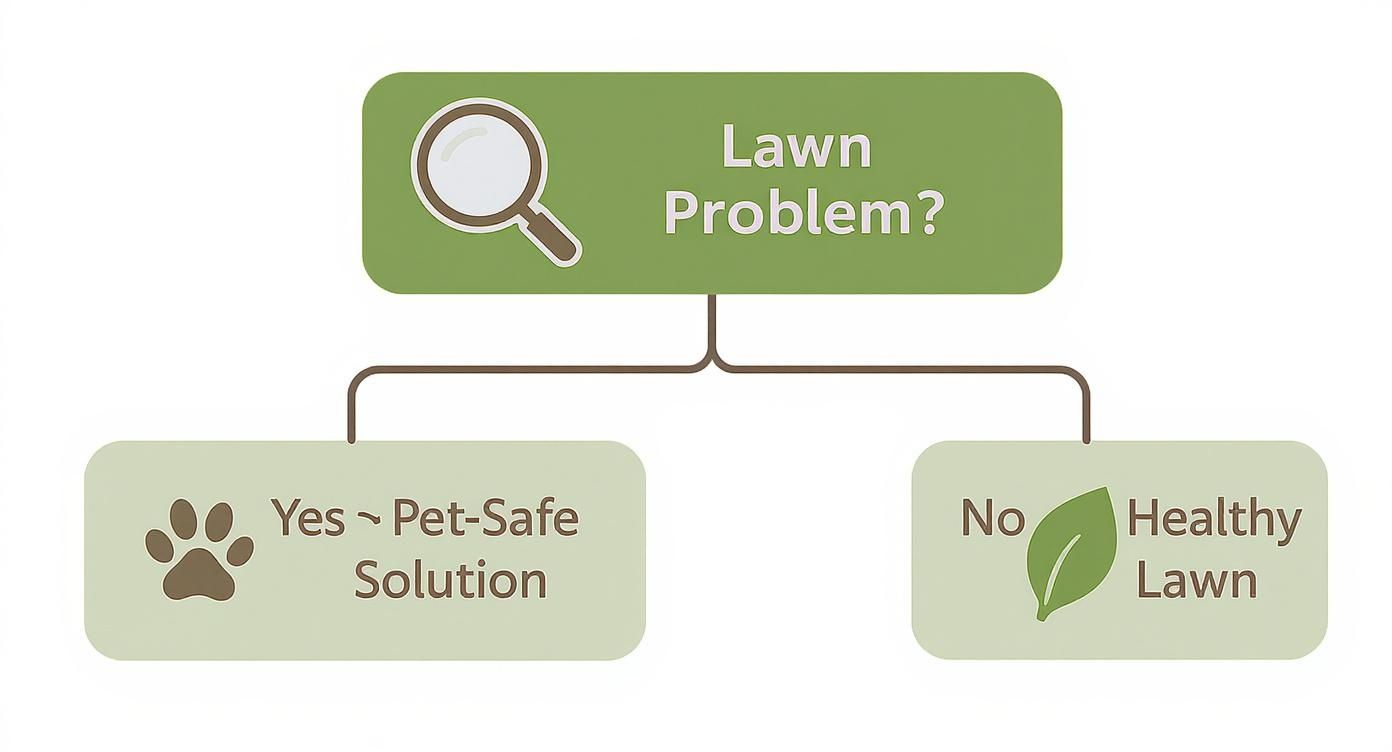
The main point is clear: once you've confirmed a pest problem, the next move for any pet owner should always be toward a non-toxic, safe solution.
Simple Diagnostic Tricks for Homeowners
You don't need a degree in entomology to figure out what's bugging your lawn. A couple of easy tests can help you pinpoint the culprit and pick the best bug killer for lawns safe for pets.
One of the most trusted methods is the "tug test." If you think you have grubs, just grab a handful of the damaged grass and give it a pull. If it rolls up like a piece of carpet with no roots holding it down, you've almost certainly got grubs.
For surface feeders like chinch bugs or armyworms, you can try a "flotation test." Take a large coffee can, cut both ends off, and push it a few inches into the soil right at the edge of a damaged spot. Fill the can with soapy water and wait about 10 minutes. Any insects living on the surface will float to the top, confirming they're there before you start treating.
When it comes to fleas and ticks, you often need a more specialized game plan. Our guide to yard treatment for ticks and fleas provides strategies specifically for North Georgia lawns.
By getting the ID right, you can choose a targeted treatment that actually works—all while keeping your four-legged family members safe. It’s this kind of local knowledge that helps you solve the problem correctly the first time.
How Pet-Friendly Bug Killers Actually Work
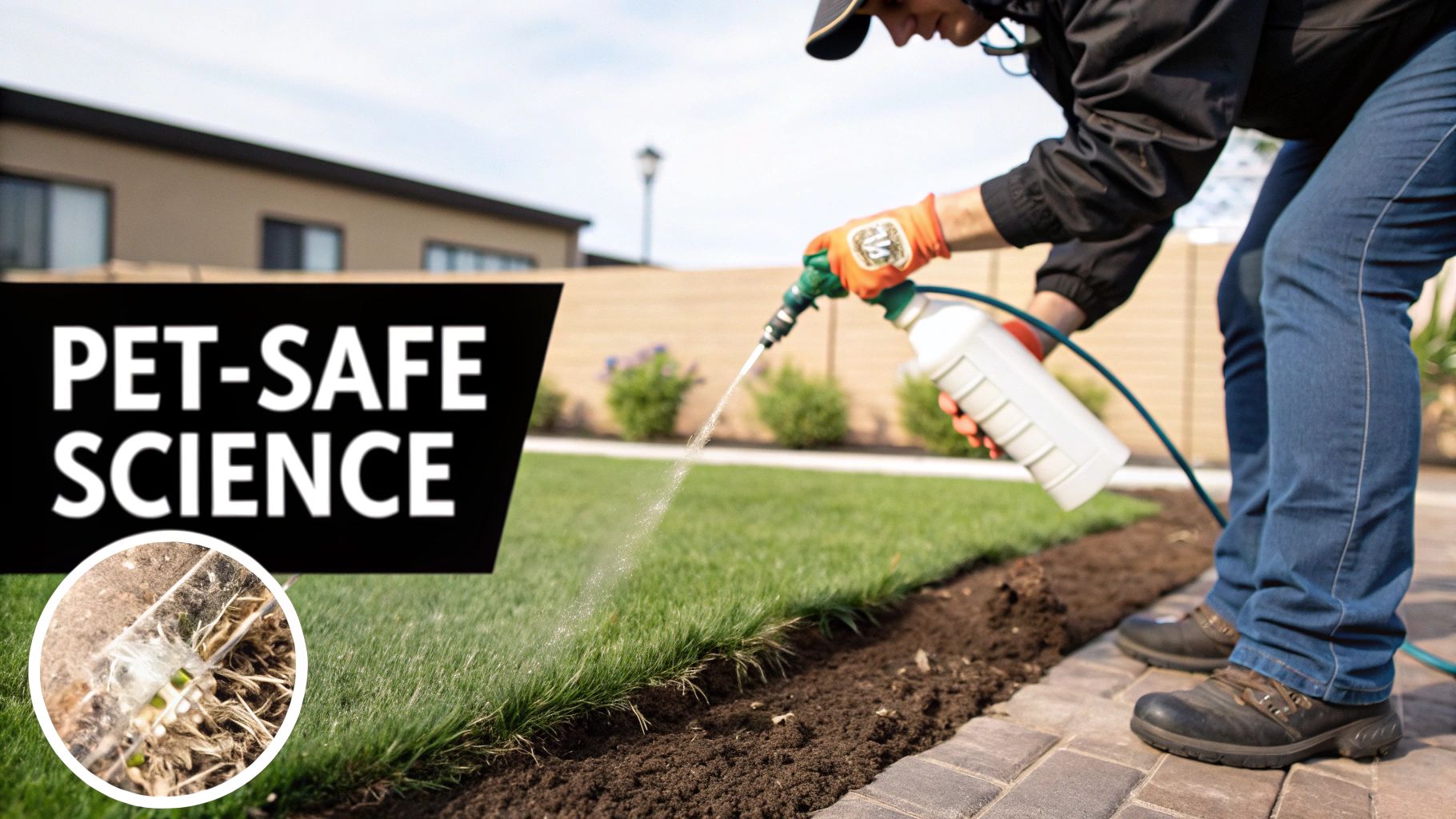
When you hear "bug killer," it's easy to picture harsh, synthetic chemicals. But a true bug killer for lawns safe for pets operates on a completely different playbook. Instead of relying on brute chemical force, these modern solutions harness nature's own ingenuity to target specific pests without putting your furry friends in Cumming, GA, at risk.
So, let's pull back the curtain and see how these smarter, safer products get the job done. They generally fall into three categories, each using a unique and fascinating mechanism to control unwanted insects while keeping your lawn a safe playground for your family.
Botanical Solutions: Nature's Own Defense System
The most common type of pet-safe pest control comes straight from the plant kingdom. Think of botanical solutions as your lawn's personal bodyguards, using compounds that plants have spent millennia developing to defend themselves. They don't use overwhelming toxicity; they use clever, targeted strategies.
Two of the heavy hitters in this category are neem oil and cedarwood oil.
- Neem Oil: Sourced from the neem tree, this oil is a master of disruption. When insects like aphids or armyworms ingest it, the oil messes with their hormonal system. This completely stops them from feeding, mating, and maturing—effectively ending their life cycle without a potent poison.
- Cedarwood Oil: This essential oil is a powerful repellent. The scent is pleasant to us but totally overwhelming and disorienting to pests like fleas, ticks, and mosquitoes. It blocks their octopamine neurotransmitters, which are vital for their movement and metabolism, causing them to either flee the area or perish.
The best part? Mammals like our dogs, cats, and us don't have octopamine receptors, so these oils are harmless. It’s a perfect example of targeting the pest's unique biology.
Biological Controls: The Microscopic Security Team
Moving from plants to other living organisms, biological controls are one of the most effective and fascinating approaches out there. This strategy is all about introducing natural predators or pathogens into your lawn's ecosystem that only go after specific pests. It’s like hiring a microscopic security force that's programmed to ignore your pets and family.
Two fantastic examples for North Georgia lawns are beneficial nematodes and milky spore.
Beneficial Nematodes are microscopic roundworms that live in the soil. Don't let the word "worm" scare you; these are the good guys. They actively hunt down and destroy soil-dwelling pests like the grubs that chew up grassroots in Alpharetta lawns. They enter the grub, release a specific type of bacteria that is lethal only to that insect, and then move on to the next target.
Milky Spore is a naturally occurring bacterium that is the archenemy of Japanese beetle grubs. Once you apply it to the lawn, the grubs ingest the spores while they feed. The bacteria then multiply inside the grub, eliminating it from the inside out. As the grub decomposes, it releases billions of new spores back into the soil, providing natural protection for years to come.
These biological agents are completely harmless to pets, people, and beneficial insects like earthworms and pollinators. They offer a highly targeted solution that gets to the root of the problem.
Mineral-Based Products: A Physical Approach
The last category uses minerals mined directly from the earth to control pests through physical, rather than chemical, means. This is a crucial distinction. These products don't poison insects; they use their physical properties to wipe them out, making them exceptionally safe to use around pets.
The most well-known mineral-based insecticide is diatomaceous earth (DE). This is a fine powder made from the fossilized remains of tiny aquatic organisms called diatoms.
Under a microscope, DE particles look like shards of broken glass. To a soft-bodied insect like an ant, slug, or flea, crawling through DE is like crawling through razors. It scratches their waxy outer layer, causing them to dehydrate and die.
Because it works physically, insects can't build up a resistance to it. To your dog running through the yard in Johns Creek, it's just harmless dust. It's just important to always use food-grade DE to ensure it's free of any additives. You can dive deeper into these and other methods in our detailed guide on safe pesticides for pets.
This shift toward natural solutions isn't just a niche trend; it's a major movement in lawn care. The growing demand for plant-based and biopesticides has created a market for products that can offer 80% to 90% effectiveness with a much lower environmental impact. By understanding how these clever mechanisms work, you can feel confident choosing a solution that truly protects both your lawn and your beloved pets.
Safe Application Practices to Protect Your Family
Picking a bug killer for lawns safe for pets is a great start, but it's only half the battle. The real key to keeping your family safe in Cumming, GA, is how you apply it. Even the safest product on the market can cause problems if it isn't used correctly.
It’s a bit like cooking. You can buy the best organic ingredients, but if you don't follow the recipe, you're not going to get the healthy, delicious meal you were hoping for. The same idea holds true for lawn care—proper application is your recipe for a safe and successful outcome.
So, even when we're using natural solutions, we need to stick to some best practices. These simple, commonsense steps make sure the treatment targets the pests and leaves your loved ones completely unaffected.
The Cardinal Rule: Read the Label
Before you do a single thing, read the entire product label. This isn't just boring fine print; it's your instruction manual, and it contains everything you need to know for that specific product.
The label will tell you critical information, like:
- The correct application rate (how much to use for your lawn's size).
- Whether you need to water it into the soil after you apply it.
- Specific re-entry times for pets and children to safely go back on the lawn.
Skipping the label is like trying to drive from Alpharetta to Dahlonega without a map. You might get there eventually, but you’re bound to make a few wrong turns. Always follow the manufacturer’s directions to the letter.
Timing Your Application for Maximum Safety
One of the easiest ways to guarantee safety is to apply treatments when your kids and pets are inside. Plan for a time when you know the yard will be empty for a few hours, like early in the morning or right before you head out for the day.
This simple bit of planning eliminates any chance of direct contact while the product is wet, which is when exposure risk is highest. It gives the treatment plenty of time to dry, settle in, and get to work without any curious paws getting in the way.
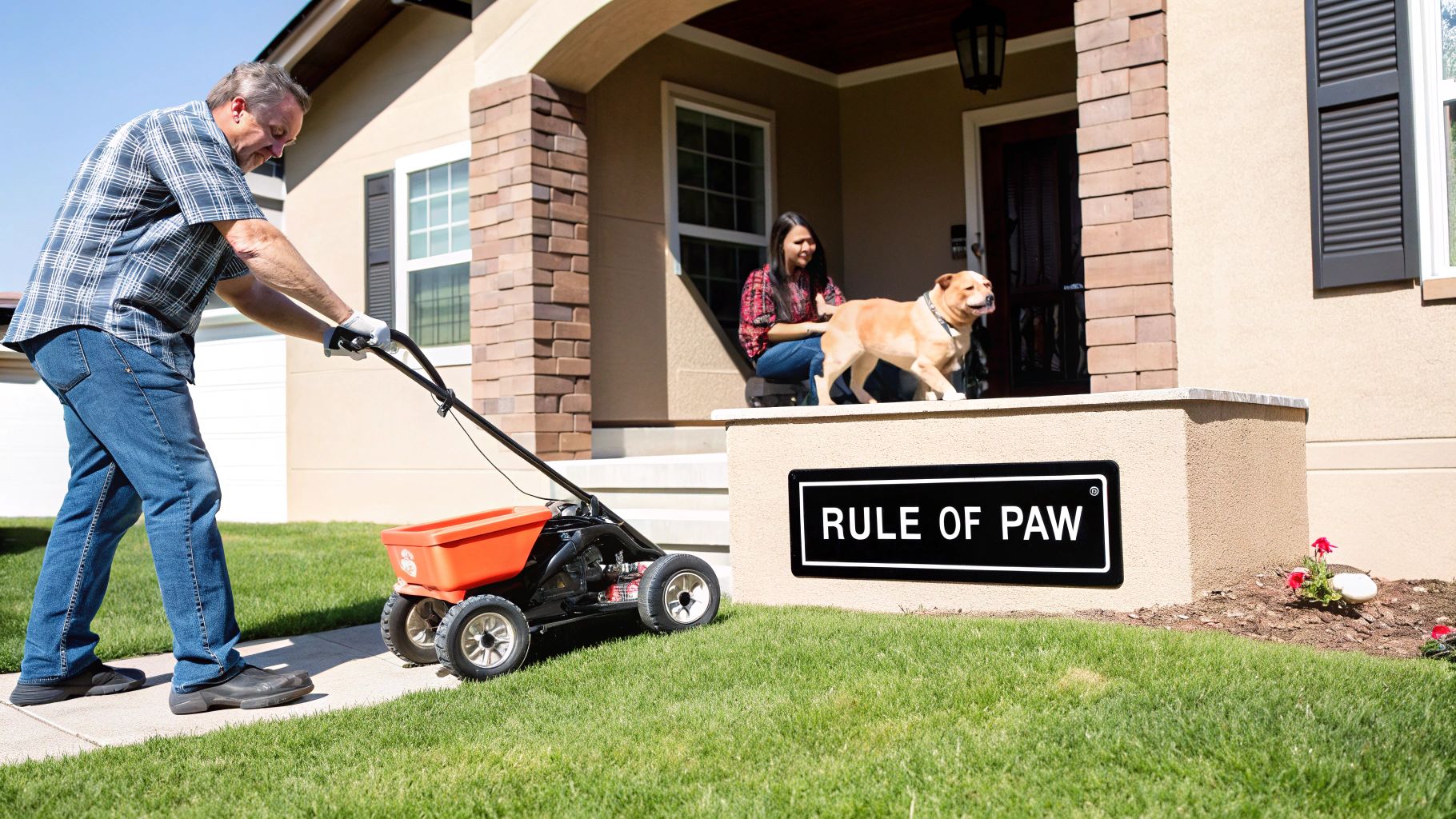
A good rule of thumb for almost any lawn treatment, natural or synthetic, is to keep pets off the grass until it's completely dry. This common-sense precaution, sometimes called the 'Rule of Paw,' dramatically lowers the risk of your pet licking the product off their paws or getting it on their skin.
Waiting for the lawn to dry is a must. Depending on the humidity and sunlight in your Johns Creek yard, this can take anywhere from a few hours to a whole day. To be on the safe side, it’s a good idea to wait at least 24 hours.
The Role of Proper Watering
For many granular pest control products, watering the lawn right after you apply them is a crucial step. This does more than just activate the treatment; it's a huge safety measure.
Watering-in accomplishes two important things:
- It Washes the Product Off Grass Blades: This gets the granules off the surface, where paws and little feet can touch them, and moves them down into the soil.
- It Helps with Absorption: Moving the product into the root zone puts it right where soil-dwelling pests like grubs are, making it far more effective.
By following this step, you’re putting the pest control exactly where it needs to be to work and taking it away from where your pets play. It’s a win-win for both safety and effectiveness.
Why Local Expertise Matters for North Georgia Lawns
When it comes to finding a pet-safe bug killer for your lawn, grabbing just any bag or bottle off the shelf at a big-box store is a recipe for disappointment. Here in North Georgia, our local environment is a whole different ballgame. From the classic red clay soil around Cumming to the specific grass types that flourish in Alpharetta, a one-size-fits-all solution just doesn't work.
This is where a local expert becomes your lawn’s best friend. A lawn care pro who actually lives and works here understands the nuances that generic brands can't account for. They know the seasonal pest cycles in Forsyth County, the unique humidity challenges in Johns Creek, and the soil makeup in Milton. This kind of hands-on knowledge is the key to creating a plan that works with our local environment, not against it.
Beyond Just Spraying: An IPM Strategy for Georgia Lawns
At Barefoot Organics, our approach goes way beyond simply spraying for bugs when you see them. We build long-term lawn health using a strategy called Integrated Pest Management (IPM). Think of it as a complete wellness plan for your yard. Instead of just reacting to problems, IPM is all about creating an environment where pests don't want to show up in the first place.
This means we look at every single factor that makes your property unique:
- Soil Health: We start by analyzing your soil to see what it needs. Amending it properly creates a strong foundation that naturally helps keep pests away.
- Grass Type: Whether you’ve got Fescue or Bermuda, we customize our strategy to boost its own natural defenses.
- Local Pest Pressure: We know to watch for armyworms during those dry spells or grubs in the late spring, allowing us to apply preventative, pet-safe measures at just the right moment.
This whole philosophy is about building a self-sustaining ecosystem right in your own backyard. A truly healthy lawn with deep, strong roots and balanced soil is naturally less attractive to pests, which means less need for constant treatments down the line.
Your Partner in Pet-Safe Lawn Care
When you team up with a local expert, you're not just buying a service—you’re getting a partner who is genuinely invested in the health of your family and our local ecosystem. As you look for the right company, understanding how local pest control companies market their services can help you spot the true experts who prioritize education and sustainable methods.
This shift toward smarter, safer solutions is happening all over the country. The U.S. pest control market is on track to hit USD 6.01 billion by 2033. A big part of that growth is the increasing adoption of biopesticides and biological agents, which are projected to grow at a rate of 5.1% each year. It’s clear that homeowners are demanding treatments that are gentler on the environment and safer for their families.
Choosing Barefoot Organics means you're investing in a team that knows North Georgia lawns like the back of our hand. We bring the local expertise needed to handle your pest problems effectively, all while making sure your yard stays a beautiful, safe place for your kids and pets to play.
Your Questions Answered: Pet-Safe Lawn Care FAQs
Even when you've done your homework, a few questions always pop up. When it comes to the safety of your family and pets here in Cumming and Alpharetta, getting the details right brings genuine peace of mind. Here are the straightforward answers to the questions we hear most often.
Are “Natural” Bug Killers Really 100% Risk-Free for My Dog or Cat?
This is a common and important question. While worlds safer than harsh synthetic chemicals, “pet-safe” doesn’t mean “edible.” Think of it like a houseplant—some are non-toxic, but you still wouldn't want your dog making a meal of it.
The single most important safety rule is to keep your pets off the lawn until the treatment has completely dried. This simple step prevents them from licking the product off their paws and avoids any potential skin irritation. Always follow the product label's re-entry instructions to the letter; it's your best guide for when the yard is ready for playtime.
How Often Will My Lawn Need to Be Treated Here in the Cumming Area?
There’s no magic number for pest treatments in North Georgia. The right frequency really depends on which pest we're dealing with, its specific life cycle, and what our local weather is doing. Timing is everything when using a bug killer for lawns safe for pets.
For instance, we apply preventative grub treatments in late spring or early summer to target them before they can hatch and cause damage. On the flip side, we might need to treat for armyworms during the hottest, driest parts of a Milton summer when they're at their peak. A professional eye can help map out the perfect treatment schedule for your lawn’s unique situation.
What's the Difference Between a Repellent and a Pesticide?
This gets right to the core of how these treatments work, and it's a great distinction to understand.
A repellent is like a "No Trespassing" sign for bugs. Ingredients like cedarwood or peppermint oil create a scent or taste that pests can't stand, encouraging them to pack up and leave without directly harming them. A pesticide, however, is designed to actively eliminate an existing pest population.
Many of the best pet-safe products, like beneficial nematodes or diatomaceous earth, are technically pesticides. The key is that they are highly targeted to specific insects and are non-toxic to mammals, birds, and fish, so they get rid of the problem without posing a risk to your furry family members.
Can I Use These Pet-Safe Treatments Near My Vegetable Garden?
Yes, you absolutely can! In fact, this is one of the biggest perks of going organic. Many pet-safe products are also garden-safe. Solutions like neem oil or ladybugs are just as effective at protecting your tomatoes as they are at protecting your turfgrass.
The crucial detail here is to only use products that are specifically labeled for use on edible plants. Be sure to double-check the instructions for any pre-harvest interval—that’s the required waiting period between spraying and picking your veggies—to ensure everything is completely safe to eat.
Ready to get a gorgeous, pest-free lawn in North Georgia without putting your pets at risk? Give Barefoot Organics a call today for a free quote. Let us show you how our natural, expert-led approach can give you the best yard on the block, worry-free.
Find out more at https://barefootorganicsllc.com.