

For homeowners in Cumming, Alpharetta, and all across North Georgia, seeing crabgrass creep into an otherwise beautiful lawn is a frustrating rite of spring. But the best way to stop crabgrass isn't a single magic bullet product. It's a smart, year-round strategy that focuses on one simple goal: building a lawn that's too healthy and thick for weeds to even get a foothold.
This proactive approach combines proven turf care practices with precise timing, giving you the safest, most effective results without a constant battle.
Your Year-Round Plan for a Crabgrass-Free Lawn
A resilient, crabgrass-free lawn doesn’t happen by accident, especially with our challenging Georgia climate. From the heavy clay soil in Milton to the sun-drenched yards of Johns Creek, consistency is everything. Following a seasonal plan ensures you’re taking the right actions at exactly the right time, preventing problems before they ever start.
This guide breaks down the essential steps for building dense, healthy turf that naturally crowds out invasive weeds like crabgrass. It’s a method that’s safer for families and pets and reduces the need for harsh chemical interventions down the road. Let's get your lawn on the right track.
The Foundation of Weed Prevention
Your number one defense against any weed is a healthy lawn. Period.
When your grass is thick, lush, and vigorous, it literally leaves no room—or sunlight—for crabgrass seeds to sprout. The most powerful strategies all center on strengthening your turf.
- Proper Mowing: Cutting your grass too short is one of the biggest invitations you can give to weeds. Mowing at the correct height for your specific grass type is a simple but incredibly powerful deterrent.
- Deep Watering: Watering deeply but less frequently encourages deep, strong root growth. This makes your lawn far more resilient during dry spells and much better at competing with weeds.
- Strategic Fertilization: Feeding your lawn at the right times, especially in the fall, builds the energy reserves it needs to come out swinging next spring, choking out weeds before they have a chance.
The most sustainable crabgrass control isn't about what you spray, but about the health of the lawn you grow. A dense, thriving turf is the ultimate natural weed barrier, creating an environment where crabgrass simply can't compete.
This timeline gives you a great visual of the key focus for each season here in North Georgia.
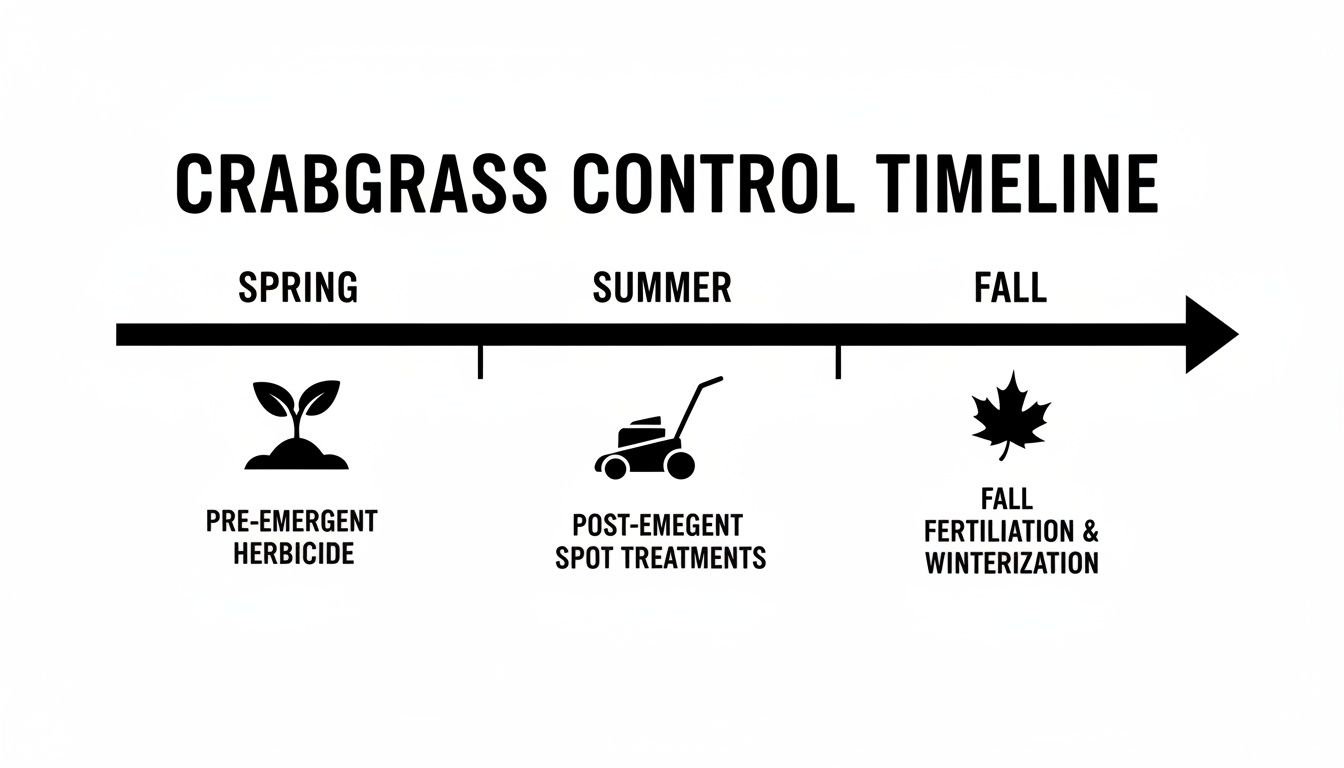
As you can see, prevention in the spring, careful maintenance in the summer, and strengthening your lawn in the fall are the pillars of truly effective crabgrass management.
To help you stay on track, we’ve put together a handy table summarizing the key tasks for each season.
Seasonal Crabgrass Control at a Glance for North Georgia
| Season | Primary Goal | Key Actions |
|---|---|---|
| Spring | Prevention | Apply pre-emergent herbicide, promote early green-up, and start proper mowing habits. |
| Summer | Maintenance & Spot Treatment | Mow high, water deeply, and spot-treat any breakthrough crabgrass before it seeds. |
| Fall | Strengthening & Recovery | Aerate and overseed to thicken turf, fertilize to build strong roots for next year. |
This seasonal rhythm is the secret to getting ahead of the problem.
By following a structured approach like this, you shift from constantly reacting to weeds to proactively preventing them. This not only saves you a ton of time and frustration but also builds a healthier soil ecosystem for lasting success. For a more detailed planner, you can use our helpful North Georgia lawn care schedule template to keep your yard on track all year long.
Building Your First Line of Defense With Healthy Turf
Before you even think about reaching for a bag of weed killer, let's talk about the most powerful secret weapon in North Georgia lawn care: your grass itself. The absolute best way to stop crabgrass is to grow a lawn so thick and healthy that weeds simply have nowhere to sprout.
Think of your turf as a living, breathing shield. When it's dense and thriving, it shades the soil, hogs all the nutrients, and physically crowds out opportunistic weeds like crabgrass long before they ever see the sun.
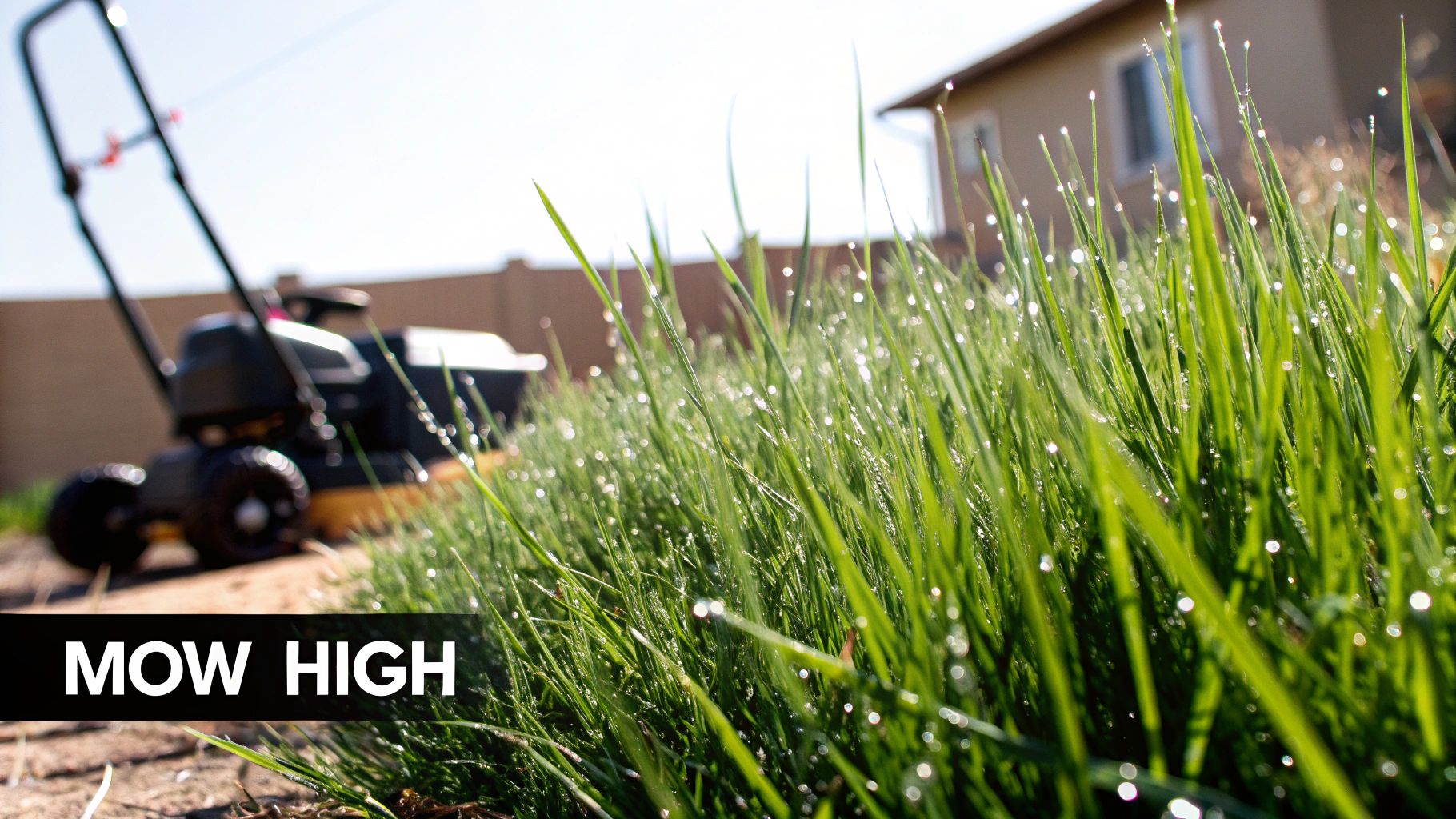
This isn’t about waging a constant war. It’s about creating an environment where the battle is already won. For homeowners from Cumming all the way to Dahlonega, focusing on these fundamental cultural practices is the most effective, long-term solution you can have.
Mow High, Let It Grow
One of the most common mistakes I see in neighborhoods all across Alpharetta and Johns Creek is mowing the lawn way too short. I get it—that tight, golf-course look is appealing, but you're essentially rolling out the welcome mat for crabgrass.
When you scalp your lawn, you expose the soil to the very sunlight that crabgrass seeds need to germinate. So, what’s the fix? Raise your mower deck. It's a simple adjustment, and it's probably the single most effective natural weed deterrent you have at your disposal.
A taller canopy of grass blades creates shade, which keeps the soil surface cooler and darker—exactly the conditions crabgrass hates. Study after study has shown that the best crabgrass preventer isn't a chemical, but a tall, dense stand of grass. In fact, research from Rutgers University and other programs has found that proper mowing alone can eliminate up to 80% of crabgrass and other weeds just by blocking sunlight.
For our specific area, from Cumming to Dahlonega, here are the mowing heights you should be aiming for:
- Tall Fescue: This is the go-to cool-season grass around here. You want to keep it at a height of 3.5 to 4 inches. That taller cut is absolutely crucial for its health during our brutal summers and provides maximum shade to block out those pesky weed seeds.
- Bermuda & Zoysia: These warm-season grasses can be kept shorter, but you still need to avoid scalping them. A height of 1.5 to 2.5 inches will keep them dense enough to stay competitive against weeds.
Rethink Your Fertilization Schedule
The gut reaction for so many homeowners in Milton and Cumming is to douse their lawn with fertilizer as soon as the first warm spring day hits. Unfortunately, this often does more harm than good. A big jolt of nitrogen in early spring forces weak, leggy blade growth and does very little for the roots.
Even worse, you’re serving up a gourmet meal for newly germinating crabgrass, giving it the exact fuel it needs to outrun your desirable turf.
The goal of fertilization isn't just to get a green lawn; it's to build a resilient, self-sustaining plant from the roots up. A fall-focused feeding schedule is the key to doing that right here in North Georgia.
When you fertilize in the fall, you're helping your lawn store energy in its root system all winter long. That stored energy is what allows it to green up naturally and vigorously in the spring, building a thick canopy before crabgrass has a chance to get started.
This approach develops deep, robust roots that are much better equipped to handle the heat and drought stress of a Georgia summer. It makes your lawn a much tougher place for weeds to invade. It’s a proactive strategy that builds strength from below, ensuring your grass—not the weeds—wins the race for resources every single year.
Mastering Pre-Emergent Timing in Our North Georgia Climate
While a thick, healthy lawn is always your best defense, the single most powerful tool in your arsenal against crabgrass is a perfectly timed pre-emergent treatment. This isn't just about spraying a product; it’s about creating an invisible shield in your soil that stops crabgrass seeds from ever sprouting. For those of us here in North Georgia, from Cumming to Alpharetta, getting this timing right is the whole ballgame.
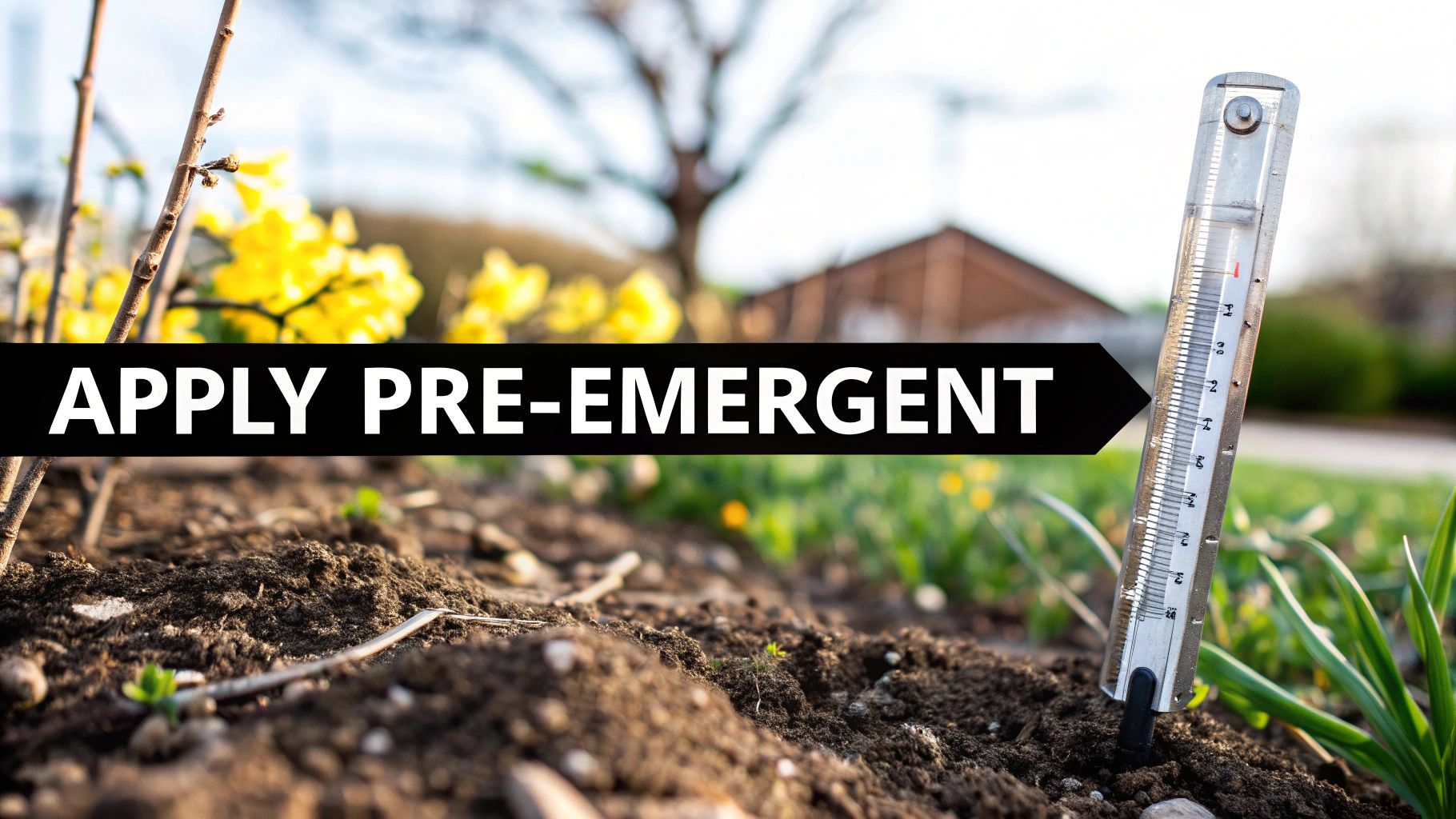
Forget circling a date on the calendar. That's a rookie mistake. The real trigger is soil temperature. Crabgrass patiently waits until the soil hits a consistent 55-60°F for a few days in a row, and then it explodes. Go too early, and your protective barrier degrades before the real germination rush begins. Go too late, and you’ve already lost the battle.
Let Nature Be Your Guide
So, how do you know when the soil is ready without constantly poking a thermometer in the ground? Just look around. For generations, savvy gardeners and lawn pros in our area have relied on a beautiful, foolproof indicator: the forsythia bush.
When those brilliant yellow flowers start popping on forsythia bushes all over Johns Creek and Milton, that’s your cue. It’s nature’s way of screaming that soil temperatures are squarely in that optimal zone. This is a far more reliable signal than any date because it automatically adjusts for whether we're having an early, warm spring or a late, cold one.
Pay attention to the classic signs. The moment you see forsythia in full bloom, your soil is ready. This is the critical moment to apply your pre-emergent and establish that protective barrier before crabgrass awakens.
Of course, timing is part of a bigger picture. If you're also planning on feeding your lawn, it’s crucial to understand the best time to weed and feed your lawn to make sure one treatment doesn't undermine the other.
The Pro-Level Strategy: Split Applications
For many lawns here in Forsyth and Gwinnett Counties—especially those that seem to be crabgrass magnets—a single spring application often isn't enough. Our long, sweltering summers mean crabgrass gets a second (and sometimes third) chance to germinate long after that initial barrier has weakened.
This is where we bring in a professional tactic called a "split application." It's hands-down the best way to get season-long control.
Instead of one heavy-handed dose, we split the total amount into two lighter, targeted treatments.
- The First Round: This goes down during that initial forsythia window, usually late February to mid-March in areas like Cumming and Johns Creek, to knock out the first wave of crabgrass.
- The Second Round: We follow up about 6 to 8 weeks later. This application reinforces the barrier, keeping it strong right through the summer heat when your fescue or Bermuda is most stressed.
This one-two punch ensures your lawn is protected through the entire germination season. Research from turfgrass experts at Penn State Extension backs this up, confirming that for areas like ours with intense weed pressure, two well-timed applications are often necessary for real success. As they point out, applying too early is a major risk, as the product can break down before late-sprouting crabgrass even gets going. You can get more details from the full turfgrass research.
This split approach is absolutely vital for lawns with thin patches or areas recovering from disease, as those spots are prime real estate for a crabgrass invasion. By maintaining that consistent shield, you give your good grass the breathing room it needs to thicken up and crowd out weeds for good.
What to Do When Crabgrass Pokes Through Anyway
Even with a perfectly timed pre-emergent application, a few stubborn crabgrass plants always seem to find a way to pop up. If you live in areas like Cumming or Alpharetta, you've definitely seen this happen along the hot edges of your driveway or in those thin, stressed-out patches of turf.
Don't panic. The trick is to act quickly and smartly with a targeted approach that gets rid of the weed without hurting your lawn. We're talking precision here, not a full-scale chemical assault. When you spot that unmistakable, coarse-bladed weed, your success boils down to how fast you get to it.
The Make-or-Break Window for Post-Emergent Control
As soon as you can see crabgrass, a clock starts ticking. Hitting it when it's young and small is way more effective and takes a lot less effort. The sweet spot is before the plant develops more than 3 to 5 tillers—those are the little side shoots that branch out from the main stem. At this early stage, the plant is weak and easy to kill.
If you wait until mid-summer, when you've got sprawling mats of crabgrass taking over, you're fighting a losing battle. By then, the plants are mature, tough, and have probably already dropped thousands of seeds to start next year’s invasion. Trying to kill them at that point usually means using harsh products that can seriously stress or damage your good grass right in the peak of a Georgia summer.
I see it all the time: a homeowner in Cumming or Milton ignores a few small crabgrass sprouts in May, only to find themselves staring at a widespread infestation by July. The lesson is simple—a little bit of effort early on saves you a massive headache later. Be decisive when the problem is small.
Your Tactical Options for Breakthrough Weeds
When you spot those early invaders, you have a couple of fantastic, low-impact ways to deal with them. What you choose really just depends on how many you see and what you're comfortable with. The goal is always the same: minimal intervention to protect the health of your lawn and the safety of your family and pets.
First Up: Good Old-Fashioned Hand-Pulling
For just a few scattered plants, especially in your garden beds or along walkways in places like Johns Creek or Milton, you really can't beat pulling them by hand. It’s organic, precise, and frankly, pretty satisfying.
- Wait for the Rain: The absolute best time to pull weeds is after a good, soaking rain. When our famous clay soil is soft and moist, the entire root system slides out much more easily.
- Get Low and Grab the Base: Don’t just yank the leaves. You have to get a firm grip on the plant right where it meets the soil and pull with steady pressure. The goal is to get the whole root, because any piece left behind can potentially regrow.
- A Little Leverage Helps: A simple weeding fork or even an old screwdriver can be your best friend. Use it to loosen the soil around the base of the crabgrass before you pull.
Next: Smart Spot-Treating
If you're dealing with a patch of young crabgrass that's a bit too much to pull by hand, spot-treating with a post-emergent herbicide is the logical next step. This isn't about drenching your entire yard; it's about carefully targeting only the weeds.
It’s crucial to understand that with post-emergents, timing is everything. University research shows time and again that these products work best on very young plants. Once crabgrass gets past that 3-5 tiller stage, it becomes much harder to control and often takes multiple applications, which costs more and increases the risk of harming your lawn.
In fact, turfgrass experts often advise against even trying to spray for it after mid-July because the plants are just too big and resilient. You can read more about this crucial timing from Purdue University Extension's findings. For homeowners in Alpharetta and Johns Creek, this means staying vigilant in late spring and early summer. A quick spot treatment in May can prevent a major takeover in August, keeping your lawn healthy and saving you from having to use more aggressive chemicals later.
The Fall Playbook for Next Year's Success
While everyone focuses on fighting crabgrass in the spring and summer, the real secret to winning that war is forged in the fall. For homeowners in Cumming, Alpharetta, and across North Georgia, the work you put in as the weather cools is the single most important investment you can make for a lush, weed-free lawn next year. This is your chance to go on offense.
Summer is brutal on our lawns. The heat, dry spells, and heavy foot traffic all lead to compacted soil and thin, tired grass—basically a welcome mat for opportunistic weeds. Your fall playbook is all about reversing that damage and setting the stage for a vigorous comeback.
Why Aeration Is a Game-Changer for Georgia Clay
If you live anywhere from Milton to Dahlonega, you know our dense, red clay soil all too well. Over the summer, it gets baked by the sun and packed down until it's almost as hard as concrete. This compaction suffocates your grassroots, blocking them from the air, water, and nutrients they desperately need.
This is where core aeration saves the day. It’s not just a fancy lawn service; it's a critical reset button for your soil. A core aerator pulls up small plugs, creating thousands of channels that go deep into the root zone.
The process immediately relieves that crushing compaction, giving your turf's roots room to breathe and stretch out. Suddenly, fall rain can soak in deep instead of running off, and fertilizers can actually get to the roots where they do the most good. For our clay-heavy region, annual fall aeration is non-negotiable for building a truly resilient lawn.
Seize the Opportunity to Overseed
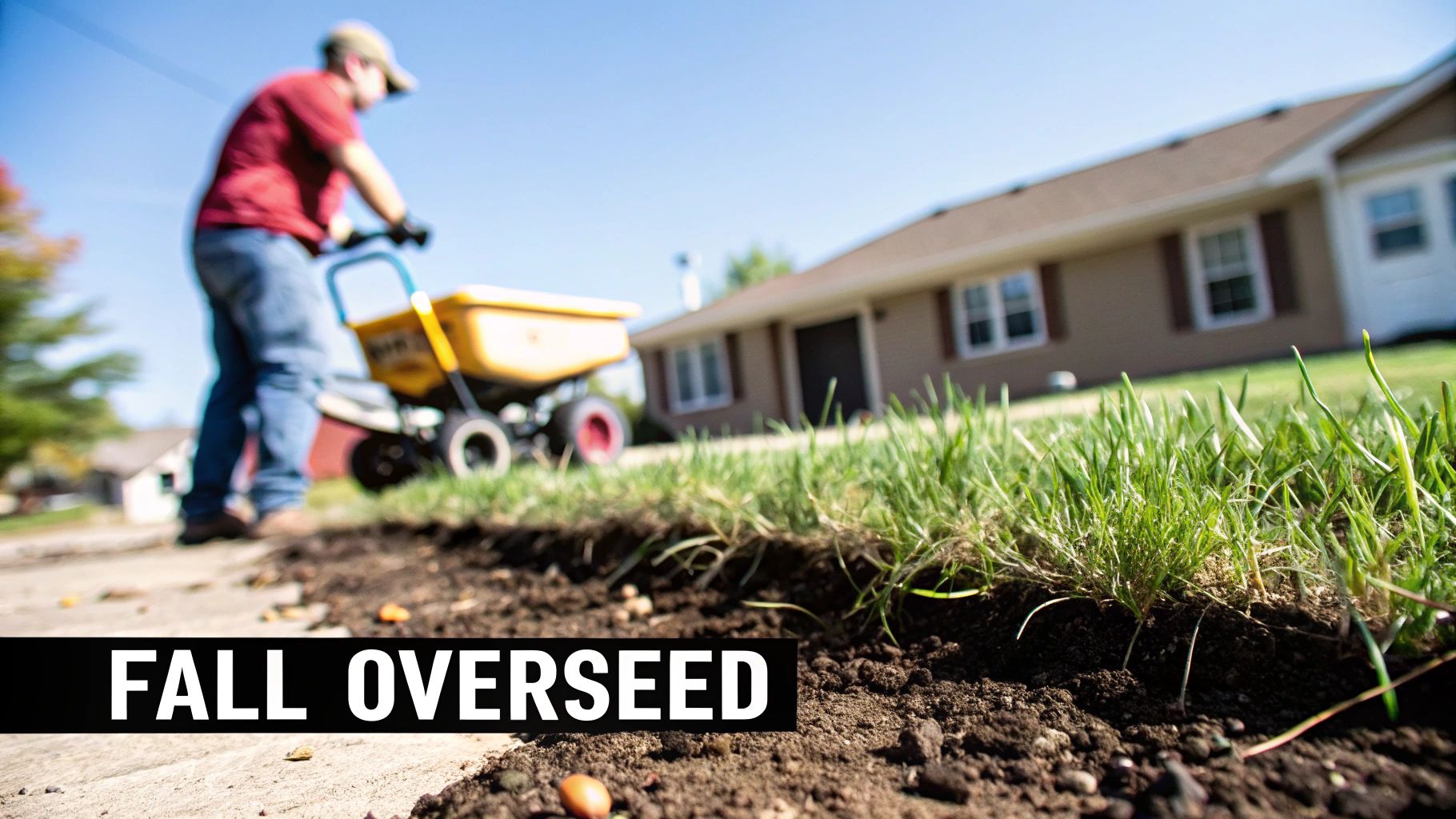
Right after you aerate is a golden opportunity. Those thousands of holes are the perfect little seedbeds for introducing new grass seed, a practice we call overseeding. Think of it as proactively slamming the door on next year’s crabgrass.
Every thin patch in your lawn is a vacancy sign for weeds. Overseeding fills those gaps with strong, healthy turf, creating a dense canopy that shades the soil and leaves no room for crabgrass to sprout next spring. It is the absolute best defense against a future invasion.
After a long summer, your lawn has weak spots. Fall aeration and overseeding is the one-two punch that repairs summer damage and builds a thicker, more competitive turf that will choke out crabgrass next spring.
For most of North Georgia, from Johns Creek to Dahlonega, a high-quality Tall Fescue blend is an excellent choice for cool-season lawns. Today's cultivars are far more heat and drought-tolerant than the older varieties, making them a great fit for our climate. Getting the right seed and technique is key, and you can find our detailed guidance for seeding your lawn in the fall, which covers everything you need to know.
The Right Way to Water Your New Seed
Once the seed is down, proper watering is the final, crucial piece of the puzzle. The goal is to keep the top inch of soil consistently moist but never soggy.
This usually means light, frequent watering—often once or twice a day—for the first couple of weeks. You're not trying to soak the ground yet; you're just keeping those delicate seeds damp enough to sprout. Here’s a simple schedule that works:
- Weeks 1-2: Water lightly one or two times a day. The key is to keep the seedbed consistently moist.
- Weeks 3-4: As the new grass appears, start watering more deeply but less often. This encourages the roots to grow downward in search of moisture.
- After the First Mow: Once the grass is tall enough for its first cut, you can switch back to your normal deep-and-infrequent watering schedule.
This fall playbook—aeration, overseeding, and smart watering—is the ultimate long-term strategy. It shifts the focus from just treating the symptoms to building a fundamentally healthier lawn that resists weeds all on its own.
When to Bring in a Lawn Care Pro
Taking care of your own lawn is one of the most satisfying parts of homeownership, but sometimes, you just hit a wall. That's especially true with a stubborn weed like crabgrass. Knowing when to call for backup is a smart move for any homeowner here in North Georgia, whether you're in Cumming, Dahlonega, or anywhere in between. Bringing in a professional lawn service can be a total game-changer, saving you time, frustration, and honestly, money in the long run.
Sometimes, despite your best efforts, the problem is just too big to tackle on your own. If you’ve nailed the timing on your pre-emergent applications for a few seasons and are still losing the battle, that’s a huge red flag. It often points to a deeper issue that's making your lawn a perfect home for weeds, like severe soil compaction or a major nutrient imbalance.
Signs It’s Time for Expert Help
Think about calling in a professional if you find yourself in one of these situations. It's something we see all the time with homeowners from Alpharetta to Milton who just need that extra bit of specialized knowledge to finally get ahead of a persistent weed problem.
- The Infestation is Out of Control: When crabgrass has taken over more than a third of your lawn, hand-pulling is a lost cause and spot-treating is like trying to put out a forest fire with a water pistol. A pro can properly assess the scale of the invasion and create a real recovery plan.
- You're Out of Time: Let's be real, a solid seasonal lawn plan takes consistent effort. If your schedule is too packed for timely applications, aeration, and overseeding, a service can take that mental load off your plate and manage the calendar for you.
- Your Best Efforts Aren't Working: You've followed all the steps. You've done the research. Yet, crabgrass continues to march across your turf. It's not a failure on your part; it's just a sign that you need a different strategy.
A specialist from a company like Barefoot Organics won't just spray the weeds you can see; they'll diagnose the reason the weeds are there in the first place. This usually starts with professional soil testing to get a clear picture of exactly what your lawn is crying out for. They also have access to professional-grade natural products and, just as importantly, the experience to apply them with precision. This ensures the best way to stop crabgrass is also the most sustainable.
By focusing on fixing the underlying soil health, a professional service delivers a long-term solution, not just a temporary fix. They build a resilient, healthy lawn that naturally resists weeds, giving you beautiful results without all the guesswork.
Your Top Crabgrass Questions Answered
Even the best-laid plans can leave you with questions. Let's tackle some of the most common ones we hear from homeowners around North Georgia, from Cumming to Johns Creek, who are trying to get the upper hand on this stubborn weed.
Can I Get Rid of Crabgrass Permanently?
Short answer: Yes, you absolutely can. The trick is to stop thinking about killing weeds and start focusing on building a lawn that's too strong for them to grow in the first place.
You can't magically vaporize every last crabgrass seed hiding in your soil. But you can create an environment where those seeds never see the light of day. This is a long-term strategy built on improving your soil and creating a thick, dense turf.
By consistently aerating and overseeding in the fall and mowing high all season, you're systematically crowding crabgrass out. After a few seasons, your yard essentially becomes a fortress that weeds can't penetrate.
The real goal isn't just a dead weed; it's a living, thriving lawn that acts as its own permanent defense system. A thick canopy of turf is the most powerful and sustainable crabgrass barrier there is.
Is It Too Late for Pre-Emergent in North Georgia?
This all boils down to soil temperature. Crabgrass seeds start to wake up and germinate when the soil consistently stays between 55-60°F. Here in the Alpharetta and Milton area, that sweet spot usually hits somewhere between late February and mid-March.
If you’ve missed that window, don't throw in the towel. A late application might still catch some of the straggler seeds that germinate later in the spring, but its overall impact will be reduced.
Missed the window? Don't panic. Immediately shift your focus to two key actions:
- Be vigilant with spot-treatments. Hit any young crabgrass sprouts the second you spot them, before they can get established.
- Double down on your fall strategy. A robust aeration and overseeding plan in the autumn is your best bet for preventing next year's invasion.
Do Organic Crabgrass Killers Actually Work?
They sure do, but you have to understand how they work. They're not a one-and-done silver bullet like some harsh chemicals.
Natural pre-emergents, like corn gluten meal, work by inhibiting root development in sprouting seeds. Their effectiveness really builds up over time, so you'll see better results after a few seasons of consistent use.
Organic post-emergent sprays—the ones you apply to weeds you can see—typically work by burning down the plant's foliage on contact. They're most effective on tiny, young crabgrass plants and often require a couple of applications. For the best results here in our Georgia climate, a smart, integrated program is the way to go, combining healthy lawn habits with the minimal, targeted use of the safest products available.
Ready to end the annual crabgrass fight and build a lawn that's both beautiful and resilient? The experts at Barefoot Organics develop customized, natural lawn care plans that solve the root cause of weed problems for homeowners across North Georgia. Get your free quote online today!