

A summer evening in a North Georgia backyard should be easy. The grill’s going, the kids are in the grass, and you’ve finally got enough shade to sit outside for a while. Then the whining starts around your ears, ankles, and porch light. A few minutes later, everyone’s swatting and heading back inside.
That’s usually the point when homeowners start looking for the best way to repel mosquitoes from yard spaces without drenching everything in harsh chemicals. In Cumming, Alpharetta, Johns Creek, Suwanee, and across Forsyth County, the challenge is worse because warm temperatures, humidity, summer rain, and dense planted beds all give mosquitoes exactly what they want.
The good news is that mosquito control in Georgia isn’t mysterious. The most effective approach is practical. You remove breeding water, reduce shady resting spots, and add a few targeted tools where they make sense. The bad news is that many popular fixes don’t do much on their own. A candle on the table won’t solve a drainage problem in the side yard. A spray treatment won’t hold up if gutters stay clogged and pots keep filling after every storm.
For families who care about children, pets, pollinators, and overall yard health, the answer usually isn’t one product. It’s a layered plan built around prevention first. That’s also where the importance of organic lawn care is often underestimated. In North Georgia, soil compaction, clay-heavy ground, and low areas that stay wet can keep mosquito pressure high even when the yard looks tidy at a glance.
If you want your patio, lawn, and garden to stay usable through mosquito season, start with the methods below. These are the options that make sense in real residential yards, including the trade-offs.
1. Natural Mosquito Dunks and Bits (Bacillus thuringiensis israelensis)
BTI is one of the few mosquito products I recommend without much hesitation for family yards. It works on mosquito larvae in water, not on everything else flying through the environment. That matters when you’re trying to cut mosquito pressure without creating new problems for beneficial insects.
If you have water you can’t reasonably dump, BTI belongs in the conversation.
Where BTI fits best
Think about the places that keep holding water no matter how careful you are. Rain barrels in Johns Creek. Decorative fountains in Alpharetta. A low drainage box behind the fence in Cumming. Those are common problem spots.
The strongest use case is simple: treat unavoidable water, and remove the rest.
The Wondercide background piece included in your research points to an underserved but important local angle. In Georgia’s humid, clay-heavy yards, BTI paired with drainage-focused lawn practices can cut mosquito hotspots more effectively than essential oils alone, especially once rain and wind enter the equation: Wondercide mosquito-proof yard article.
Practical rule: If water stays in place long enough for larvae to develop, either dump it or treat it.
BTI dunks and bits are especially useful in:
- Rain barrels: Good for homeowners storing irrigation water.
- Ornamental water features: Helpful where dumping isn’t realistic.
- Drainage pockets: Useful in collection points that stay wet after storms.
What homeowners get wrong
The mistake is using BTI as a substitute for cleanup. It isn’t. If the yard is full of saucers, toys, clogged corrugated pipe ends, or buckets behind the shed, treatable water is only part of the problem.
Use BTI after you’ve already done a water pass through the property. In a North Georgia yard, that usually means checking hidden spots after every good rain. The shaded side yard and back fence line often matter more than the visible patio.
For eco-conscious homeowners, this method lines up well with a lower-chemical approach because it targets the breeding stage directly instead of chasing adults after they’re already in the yard.
2. Native Plant Landscaping with Mosquito-Repelling Flora

A lot of mosquito plant advice gets oversold. No border of herbs is going to seal off your property from mosquitoes. Still, planting strategy matters when it improves airflow, reduces damp hiding places, and supports the predators that already belong in the local ecosystem.
That’s the more honest way to think about “mosquito-repelling plants.”
What actually helps
In North Georgia, the best yard design choices do two things at once. They reduce mosquito habitat and make the yard healthier overall.
Aromatic plants like mint, basil, lavender, and marigolds can make more sense near patios and walkways than out in random beds where no one spends time. But the bigger win often comes from the structure of the yard. Rain gardens that move water properly. Beds that aren’t packed too tightly. Plants spaced for airflow instead of wall-to-wall shade.
The local angle matters here. In Milton, Forsyth County, and Gwinnett neighborhoods, heavy clay soil often keeps moisture near the surface. That moisture combines with dense shrubs and overgrown borders to create cool daytime shelter for adult mosquitoes.
What this looks like in a real yard
A practical planting plan might include:
- Layered native beds: Support birds and dragonflies without turning the bed into a damp thicket.
- Aromatic patio edges: Put lavender, basil, or mint where people sit and walk.
- Rain-managing features: Use grading and plant choice together so runoff doesn’t stall in low areas.
A landscape that stays wet and stagnant will outproduce any benefit from “repellent plants.”
If you’re trying to find the best way to repel mosquitoes from yard areas naturally, this method works best as support, not as the main defense. It’s worth doing because it improves the whole property. It just shouldn’t be mistaken for a stand-alone fix.
3. Mosquito-Eating Fish Stocking (Gambusia and Koi)
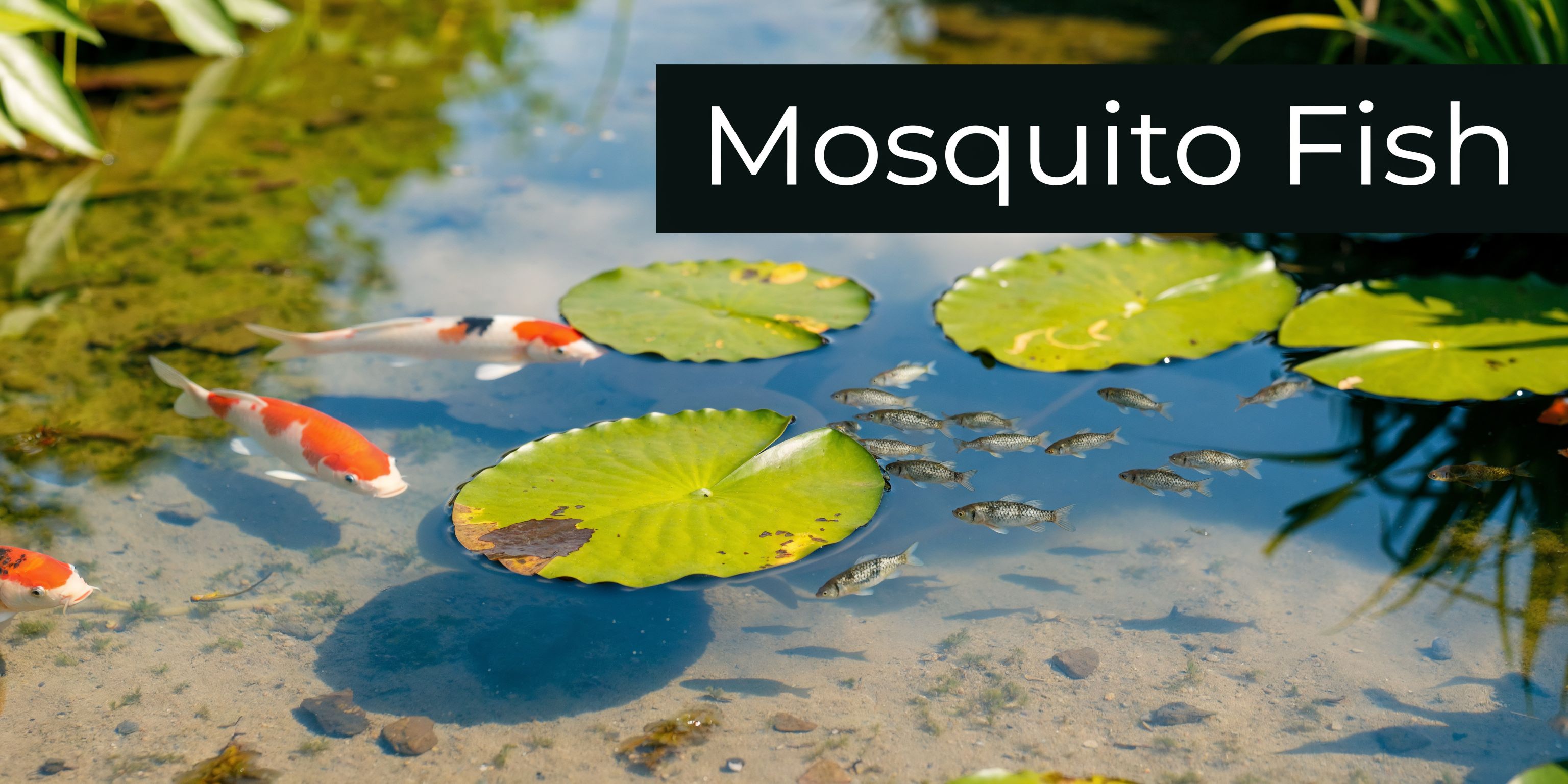
For permanent water features, fish can be a smart biological control. They’re not relevant to every property, but if you have a backyard pond or a substantial ornamental basin, they can help keep larvae from turning into adults.
This is one of those methods that makes sense only when the water feature itself is staying.
Best use cases for fish
Koi and mosquito-eating fish are most useful in established ponds where the homeowner already plans to maintain water quality. In Alpharetta and East Cobb, that often means decorative pond setups near patios or garden focal points. In larger properties, it may be a retention-style feature that’s part of the grounds.
Fish make less sense in temporary water, neglected containers, or anything that regularly dries out. Those spots should be emptied, cleaned, or treated another way.
A fish-based approach works best when the pond has:
- Circulation: Moving water helps reduce mosquito breeding.
- Shade balance: Too much debris and overgrowth can still create trouble.
- Basic maintenance: Filtration, cleanup, and routine observation matter.
Trade-offs to know first
This isn’t a drop-in solution. Fish need a suitable environment, and that means upkeep. Poorly maintained ponds can still become mosquito contributors around the margins, especially where leaf litter, shallow edges, or dead zones collect.
There’s also a common mistake with rain barrels and small containers. Homeowners sometimes try to turn a mosquito problem into a fish project when the easier answer is to screen the barrel or use BTI.
If you already enjoy water gardening, fish can be part of a sustainable control plan. If you don’t want to maintain a water feature, don’t create one just for mosquito control. That usually adds complexity instead of reducing it.
4. Proper Yard Drainage and Elimination of Standing Water
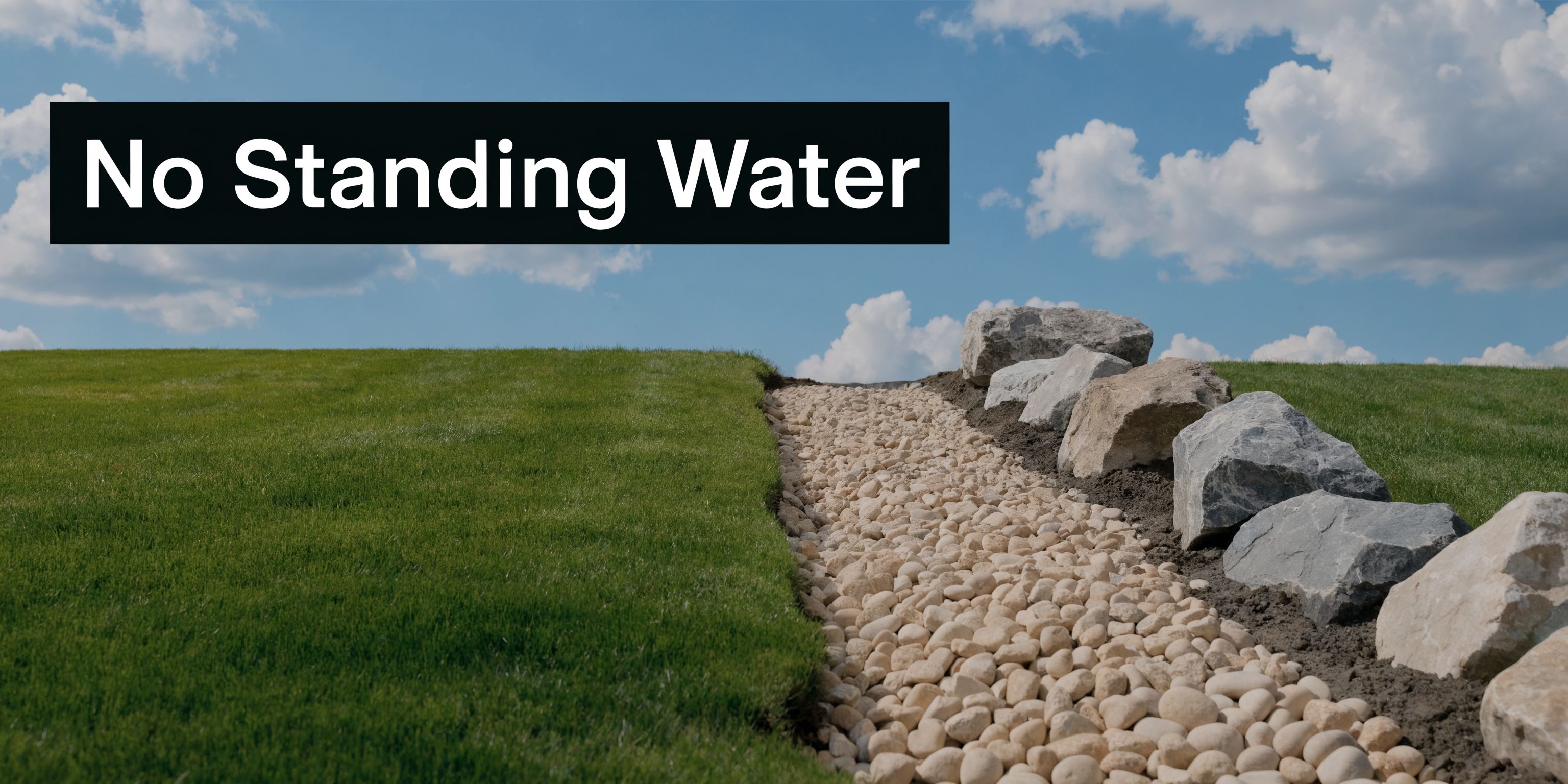
For a homeowner asking for the single best way to repel mosquitoes from yard conditions in North Georgia, I begin with this approach. Not sprays. Not candles. Not a decorative patio gadget. Water control.
Mosquitoes breed in stagnant or slow-moving water, and eliminating that water is the foundational move. According to the verified data provided, source reduction can prevent up to 90% of mosquito populations from developing, and weekly yard checks in residential areas reduced breeding sites by over 80%: CBS News on science-backed mosquito yard control.
Why this matters more in Georgia
North Georgia yards are full of hidden water traps. Clogged gutters in wooded neighborhoods. Low spots after summer downpours. Plant trays behind containers. Corrugated drain outlets buried in mulch. A birdbath that gets forgotten for a week.
Warm weather makes this worse fast. In our climate, a small amount of overlooked water can turn into a breeding site before most homeowners realize it.
That’s why I treat drainage and standing water as the base layer of any serious mosquito plan. If that layer fails, every other method has to work harder.
For homeowners dealing with recurring mosquito pressure, this guide on getting rid of mosquitoes in your yard is worth reviewing alongside your lawn and drainage conditions.
What to check around the property
Walk the yard after rain and look for repeat offenders:
- Gutters and downspouts: Water should move, not sit.
- Low lawn areas: If puddles linger, grade or drainage may need work.
- Containers and toys: Dump them or store them dry.
- Bed edges and dense shade: Moist pockets often hide there.
- Birdbaths and pet bowls: Refresh them often.
Don’t judge mosquito risk by what you can see from the patio. The problem is usually breeding behind the house, along the fence, or in drainage transitions.
This is the least glamorous tactic, but it produces the most reliable result.
5. Essential Oil-Based Natural Repellents (Eucalyptus, Citronella, Lavender)
Essential oils have a place in mosquito control. They just don’t deserve the hype they often get online. In real yards, they’re best for short-range help around people, not for solving a property-wide infestation.
That distinction keeps expectations realistic.
Where they work well
For a patio dinner in Roswell or a short evening outside in Milton, a well-chosen essential-oil product can be useful. This is especially true when you want a lower-chemical option for a seating area, porch, or entry point.
Common options include citronella, lavender, peppermint, and lemon eucalyptus-based products. If you use them on skin or around family gathering areas, follow product directions carefully and don’t assume “natural” means “use as much as you want.”
These products fit best in moments like:
- Patio use: During dinner, reading, or casual outdoor time.
- Short event windows: Before guests arrive or while kids are outside.
- Layered protection: Alongside drainage correction, fans, or trapping.
Where they fall short
Wind, rain, and open yard size all reduce their usefulness. That’s the part many homeowners learn the hard way. A candle or diffuser may smell strong near the table and still do very little ten feet away in a humid backyard.
That’s why I wouldn’t rely on essential oils as the main answer for a mosquito-heavy property. They’re support tools.
If you’re considering a broader natural-control approach, Barefoot Organics also discusses yard treatment strategies here: killing mosquitoes in yard.
Use these products for comfort and short-term deterrence. Don’t use them to avoid dealing with drainage, lawn density, or recurring breeding sites.
6. Physical Barriers: Screening and Mosquito Netting
Physical exclusion doesn’t reduce the mosquito population in the yard, but it does something many other methods can’t. It creates a predictable bite-free zone.
For families who want to use their porch every evening, that can be worth a lot.
Best places to install barriers
In Cumming, Johns Creek, and Forsyth County, screened porches and covered patios are often the most practical mosquito upgrade because they protect the exact area where people sit. If you have a deck, gazebo, or outdoor dining space you use regularly, screening often outperforms lighter-touch repellent methods for day-to-day comfort.
Good screening also helps with flies and other nuisance insects, which makes it more valuable than a mosquito-only purchase.
A quality setup usually comes down to details:
- Tight edge sealing: Gaps ruin the whole point.
- Durable mesh: Especially in storm-prone and pollen-heavy conditions.
- Routine inspection: Tears near doors and corners happen.
If you’re enclosing windows or porch openings, professionally fitted window fly screens can help create a cleaner barrier than temporary mesh fixes.
The main trade-off
Screening protects a defined space. It doesn’t solve the breeding source elsewhere in the yard. So if the children are running in the lawn and mosquitoes are rising from a wet side area, a screened porch won’t fix that broader issue.
Still, for homeowners who entertain often or want one dependable refuge, physical barriers are one of the most straightforward investments you can make. No scent. No drift. No timing required. Just a properly enclosed outdoor room that works every evening you use it.
7. Targeted Yard Misting Systems with Natural Insecticides
Misting systems sit in a gray area for a lot of eco-conscious homeowners. They can reduce mosquito pressure, but they require more caution than source reduction, airflow, or exclusion. If you’re considering one, it helps to be honest about what problem you’re solving.
These systems are usually better for larger properties, yards with dense planting, or homes where mosquito pressure stays high even after cleanup and drainage work.
When misting makes sense
In mature Alpharetta or Marietta properties with dense hedges, layered shrub beds, and large outdoor living areas, mosquitoes often rest deep in shaded vegetation during the day. That makes broad comfort more difficult to achieve with candles or patio-only repellents.
A targeted misting system can be programmed around those hiding zones and timed for mosquito activity periods. Used carefully, it may support a broader plan.
Scenarios where homeowners usually consider misting:
- Large entertaining spaces: Multiple seating zones and pool areas.
- Dense perimeter planting: Shrub lines and wooded transitions.
- High seasonal pressure: Especially after repeated summer rainfall.
Why I don’t treat this as the first move
Adult-focused control has limits. The verified data provided notes that adulticides offer only brief relief and kill less than half of adult mosquitoes because many rest in shaded vegetation where sprays don’t fully reach. That’s exactly why I’d rather see homeowners fix water and habitat problems first.
If your yard still breeds mosquitoes, any adult treatment is doing cleanup after the problem has already started.
For some properties, a misting system can still earn its place. But it should follow assessment, not replace it. If the lawn drains poorly, gutters hold water, and dense beds never dry out, spraying the air around the symptoms won’t be the most efficient path.
8. Mosquito-Attracting Traps and CO2 Baited Devices
If you want a non-spray tool that targets adult mosquitoes, CO2-based traps are one of the more serious options. They work by mimicking what mosquitoes seek out in the first place: breath cues, scent cues, and warmth.
That’s very different from novelty bug gadgets that mostly catch random insects.
What good traps can do
The verified data provided states that CO2 traps can reduce yard populations by up to 90% over several weeks in larger lots, while Rutgers research on lethal ovitrap deployment showed biting pressure reductions ranging from 50% to 80% depending on placement density and community use: Mosquito Magnet landscaping and trap guidance.
That makes traps useful for homeowners who want active mosquito reduction without relying entirely on yard sprays.
Placement matters. A trap usually works better away from the exact seating area you’re trying to protect. You want it intercepting and attracting mosquitoes, not pulling them directly onto the patio.
The real-world fit in North Georgia
CO2 traps are often a better fit for:
- Larger suburban lots: More room for proper placement.
- Backyards near woods or water: Higher incoming mosquito pressure.
- Homeowners committed to maintenance: Nets, attractants, and placement need attention.
The trade-off is cost, setup, and patience. A trap isn’t instant. It works over time, and it works best when the rest of the property isn’t full of standing water.
If your yard is small and the main issue is a clogged gutter and wet toy bin behind the playset, buy less equipment and fix the breeding source first. If you’ve already done that and still have pressure from surrounding conditions, traps become much more compelling.
9. Beneficial Nematodes for Soil-Dwelling Mosquito Control
This is a less familiar option, and that’s partly because it’s easy to misuse. Beneficial nematodes are not a universal mosquito answer. They’re part of a soil-health and moisture-management strategy, which means they make the most sense in lawns where wet, compacted conditions keep supporting pest pressure around the ground layer.
In North Georgia, that’s not rare.
Why soil health belongs in mosquito control
Compacted clay soil holds water near the surface, especially in shaded areas and depressions. Add a thick layer of thatch, weak airflow, and poor grading, and you get a yard that stays damp longer than it should. That moisture supports more than turf problems. It also makes the environment friendlier to mosquitoes.
The verified data provided notes that combining water removal with mowing grass under 2 inches tall reduced harborage substantially, and that local organic-lawn strategies increasingly connect drainage improvement with mosquito deterrence in humid Georgia conditions.
That’s where nematodes become interesting. They aren’t a replacement for aeration, topdressing, or drainage correction. They fit into that broader program.
Best expectations for homeowners
Use this method if you’re already improving the lawn’s physical condition. Think spring aeration in Cumming, topdressing in Milton, or a program to open dense, compacted soil and improve water movement.
Nematodes make the most sense when paired with:
- Aeration: Helps relieve compaction.
- Topdressing: Supports better infiltration and soil structure.
- Moisture correction: Reduces lingering wet pockets.
Don’t expect a dramatic visible result from nematodes alone. This is a background method. It supports a less mosquito-friendly lawn ecosystem, but its effect is subtle, working only as part of a bigger correction.
10. Integrated Pest Management (IPM) Approach with Professional Consultation
The best yards for mosquito control rarely rely on one tactic. They stack methods in the right order. That’s IPM in practice. First remove breeding conditions. Then reduce shelter. Then add targeted controls where the property still needs help.
That’s the most durable approach for North Georgia homeowners because every yard is a little different. A shaded Johns Creek property with creek-adjacent moisture needs a different plan than a sunnier Suwanee lot with a drainage problem behind the fence line.
What a real IPM plan looks like
Consumer Reports field testing found that an oscillating fan reduced mosquito landings by 45% to 65% near seated individuals, outperforming citronella candles and a geraniol diffuser in large outdoor-area testing: Consumer Reports mosquito control comparison.
That’s a good example of how IPM works. A fan won’t solve breeding. But on a corrected property, it can make the seating area much more comfortable without adding chemicals to the whole yard.
A practical IPM stack might include:
- Source reduction first: Containers, gutters, drainage, low spots.
- Habitat reduction next: Mowing, pruning, thinning dense borders.
- Targeted tools after that: BTI, traps, fans, screening, or limited treatments.
For homeowners trying to align mosquito control with a lower-chemical lawn program, natural pest control for lawns is the right framework. If you want a broader outside perspective on the concept itself, this explanation of Integrated Pest Management (IPM) gives a useful overview.
Why professional eyes can help
One reason homeowners get stuck is that they treat what annoys them, not what feeds the infestation. They’ll buy patio products while missing the gutter elbow, the French drain outlet, the nursery pots behind the shed, or the dense back-corner bed that stays wet all week.
A good consultation changes that. It connects lawn care, drainage, shade management, and mosquito control into one workable plan.
10-Way Yard Mosquito Control Comparison
| Solution | 🔄 Implementation complexity | ⚡ Resource requirements | 📊 Expected outcomes | Ideal use cases | ⭐ Key advantages | 💡 Tips |
|---|---|---|---|---|---|---|
| Natural Mosquito Dunks & Bits (BTi) | Low, simple direct application to standing water | Low, inexpensive product, periodic reapplication | High larval kill; no adult control | Bird baths, rain barrels, retention ponds | ⭐⭐⭐ Targets larvae only; safe for fish, pets, non-target insects | 💡 Apply early spring; reapply every 2–3 weeks; break dunks to treat multiple sources |
| Native Plant Landscaping | Medium, requires design and planning | Low–Medium, plants, installation, occasional landscaping services | Long-term reduction in mosquito habitat; ecosystem benefits | Whole-yard designs, rain gardens, pollinator borders | ⭐⭐ Supports predators, improves drainage, low maintenance once established | 💡 Use native aromatic species; install rain gardens; allow time to establish |
| Mosquito-Eating Fish (Gambusia, Koi) | Medium, requires proper pond setup and maintenance | Medium, fish purchase, aeration/filtration, ongoing care | Continuous larval control in permanent water features | Permanent ponds and large water features | ⭐⭐⭐ Self-sustaining, chemical-free, aesthetic addition | 💡 Stock ~1 gambusia/100 gallons; ensure aeration and check local stocking rules |
| Proper Yard Drainage & Elimination of Standing Water | Medium–High, may need grading or professional work | Medium–High, drainage systems, excavation, design | Very high prevention; addresses root cause of breeding | Entire property, low-lying or poorly drained yards | ⭐⭐⭐ Most cost-effective long-term; no chemicals; improves property health | 💡 Inspect after rain, clean gutters monthly, extend downspouts 4–6 ft |
| Essential Oil-Based Natural Repellents (OLE, citronella, lavender) | Low, easy topical or repellent-device application | Low, purchase of oils, sprays, diffusers; frequent reapplication | Short-duration personal protection (minutes–hours) | Decks, patios, personal protection during outdoor activity | ⭐⭐ DEET-free, pleasant scent, multiple delivery options | 💡 Prefer EPA-registered OLE products; reapply every ~2 hours; dilute before skin use |
| Physical Barriers: Screening & Mosquito Netting | Medium, professional installation recommended | Medium, materials and installation cost; durable long-term | Very high protection for enclosed spaces; blocks adults | Screened porches, gazebos, patios | ⭐⭐⭐ Most reliable to eliminate contact; low ongoing maintenance | 💡 Use 1/16-inch mesh, seal all edges, inspect/clean quarterly |
| Targeted Yard Misting Systems (natural insecticides) | High, professional design, installation and calibration | High, upfront cost ($2.5k+), ongoing refills and maintenance | High, consistent adult control when maintained properly | Large yards, frequent outdoor entertaining, estates | ⭐⭐ Automated, programmable zone coverage; professional-grade results | 💡 Schedule at dusk/dawn, use organic-certified pyrethrin/botanical formulas |
| Mosquito Traps & CO2 Baited Devices | Medium, placement and periodic maintenance | Medium, equipment cost ($300–$1,500+), power/CO2 supply | Moderate reduction of adult populations; useful for monitoring | Monitoring and reducing adults around living areas | ⭐⭐ Non-toxic, provides species/population data | 💡 Place 20–40 ft from living areas in shade; run during evening; empty weekly |
| Beneficial Nematodes for Soil-Dwelling Control | Medium, timing and moisture-sensitive application | Low–Medium, nematode purchase; may coordinate with aeration | Gradual reduction of pupae; supports soil health over weeks | Lawns with moist soil zones; coupled with aeration services | ⭐⭐ Chemical-free, compatible with soil improvement programs | 💡 Apply in spring with adequate soil moisture; keep soil moist 1–2 weeks; reapply annually |
| Integrated Pest Management (IPM) with Professional Consultation | High, assessment, coordination of multiple methods | Medium–High, professional fees, combined resources | Highest long-term effectiveness; adaptive and documented | Properties seeking comprehensive, sustainable control | ⭐⭐⭐ Tailored, multi-method strategy; reduces reliance on single method | 💡 Start with professional assessment; prioritize eliminating standing water and document results |
Your Mosquito-Free Yard Starts with a Smart Plan
A mosquito-resistant yard in North Georgia doesn’t come from one magic fix. It comes from sequence and discipline. The homeowners who get the best results usually do the boring things first. They inspect after rain. They stop water from sitting. They clean gutters before they clog badly. They thin overgrown beds. They keep the lawn from turning into a shaded resting zone. Then they add selective tools that match the property.
That order matters.
If your yard still has standing water, most adult-control products are working uphill. If your property has dense, damp shelter near the patio, a candle or diffuser won’t carry the load. If you’ve already corrected those issues and mosquitoes are still coming in from surrounding woods, neighboring water, or a larger property footprint, then traps, screening, fans, BTI, and selective treatments start making more sense.
That’s the practical answer to the question homeowners usually ask. The best way to repel mosquitoes from yard areas is to make the yard less suitable for them in the first place, then protect the places where people spend time.
For North Georgia properties, I’d prioritize the work like this:
- Remove or treat breeding water.
- Fix drainage and compaction where water lingers.
- Reduce dense resting habitat in turf and ornamentals.
- Protect gathering areas with fans or screening.
- Add traps, BTI, or targeted treatment only where needed.
That approach fits family yards better because it focuses on prevention instead of constant reaction. It also fits organic lawn care better because healthy soil, better drainage, and smarter plant management support mosquito reduction without treating the whole yard as a chemical problem.
There are trade-offs with every option. Essential oils are convenient but limited outdoors. Misting systems can help on certain properties but shouldn’t replace habitat correction. Fish work only where permanent water features are already being maintained. Traps can be effective, but they need proper placement and patience. Screening is excellent, but only for enclosed spaces. BTI is one of the safest tools for standing water, but it doesn’t excuse ignoring the rest of the yard.
That’s why integrated planning wins.
For homeowners in Cumming, Alpharetta, Johns Creek, Roswell, Marietta, Forsyth County, East Cobb, Gwinnett County, and nearby North Metro Atlanta communities, the smartest next step is a property-specific assessment. Look at where water collects, where shade stays dense, how the lawn drains, and which zones people use most often. Once you know that, the right combination becomes much clearer.
Barefoot Organics is one relevant option for homeowners who want mosquito control to align with a natural lawn care strategy. Their focus on soil health, aeration, topdressing, and lower-chemical lawn practices fits the way many North Georgia families want to manage outdoor spaces.
A better lawn and fewer mosquitoes often start with the same fixes. Better drainage. Better airflow. Fewer wet hiding spots. Smarter targeted controls. That’s how you turn a yard back into a place people want to use in summer.
If you want a mosquito control plan that works with your lawn instead of against it, contact Barefoot Organics. They work with North Georgia homeowners to evaluate drainage, habitat, and natural lawn care conditions so you can build a yard that’s healthier, safer for families and pets, and less welcoming to mosquitoes.