

Let’s be honest—keeping a fescue lawn looking great after a brutal North Georgia summer is a tough fight. The best way to overseed a lawn isn’t about just tossing some seed out and hoping for the best. It’s a strategic process that hinges on getting the timing right, properly prepping the soil, and choosing a seed blend that can actually handle our Cumming, GA climate.
Doing it right is the single most effective way to undo summer’s damage and build a thick, healthy lawn that can stand up to the heat next year.
Your Guide to a Thriving North Georgia Lawn
If you live anywhere from Cumming to Alpharetta, Milton, or Dahlonega, you know the look: those frustrating thin spots and bare patches that show up like clockwork by late summer. Our hot, humid weather just puts incredible stress on cool-season grasses like fescue, causing them to thin out and lose that deep green color.
The good news? There’s a proven fix. Overseeding is the key to turning that tired, patchy yard into a dense, resilient turf that looks fantastic.
This guide is a practical playbook, built from years of hands-on experience with lawns right here in the Cumming area. This isn’t generic, one-size-fits-all advice. We’ll walk you through the entire process, focusing on what really matters in North Georgia:
- Pinpointing that perfect window in the fall to get started.
- Dealing with our compacted, heavy clay soil to give new seed a fighting chance.
- Selecting the right kind of heat-tolerant fescue that won’t give up next summer.
This isn’t just a local trend; it’s a core practice driving a huge part of the lawn care world. The global grass seed market was valued at around USD 4.8 billion in 2024, and North America makes up about 36% of that. That growth is fueled by people like us using overseeding to maintain the estimated 40-50 million acres of residential lawns in the U.S. If you’re interested, you can learn more about the grass seed market growth.
For homeowners in communities from Roswell to Johns Creek, overseeding does more than just fix your own lawn—it boosts the whole neighborhood’s aesthetic. A healthy lawn enhances curb appeal and property value for everyone.
For those in neighborhoods with shared green spaces, understanding broader HOA common area maintenance strategies can be a great complement to your own efforts, helping keep all the green areas looking their best. Let’s get you the confidence and the know-how to achieve outstanding results.
When it comes to overseeding, timing isn’t just a factor—it’s the whole ballgame. This is especially true for getting that lush, green fescue lawn we all want here in North Georgia. Nail the timing, and you’re giving your new grass a serious head start. Get it wrong, and you’ve just thrown down a very expensive bird feeder.

For the fescue lawns common from Cumming to Alpharetta and Milton, the absolute sweet spot is early fall. We’re talking about that perfect window from late September through October.
This is when a magical combination of conditions comes together. The ground is still holding onto plenty of summer warmth, which is exactly what seeds need to pop. At the same time, the oppressive daytime heat has finally broken, meaning those tender new grass shoots won’t get scorched the minute they emerge.
Giving Your New Grass a Fighting Chance
Overseeding in the fall gives you another massive leg up: way less competition. Those aggressive summer weeds like crabgrass are on their way out, finishing their life cycle. This clears the field, so your new fescue can put down roots without having to battle for every drop of water and inch of sunlight.
A word of caution from experience: Trying to throw down seed in the peak heat of a Johns Creek or Dahlonega August is a recipe for disaster. The sun will bake the seeds before they even have a chance. On the flip side, if you wait too long and push into November, you’re gambling against an early frost that can kill off your entire investment before the roots take hold.
Think of it this way: your new grass needs a solid few months to really get established before it faces its first big test—a Georgia summer. Planting in the fall gives it the entire mild winter and cool spring to develop the deep, tough root system it needs to survive the heat and drought to come.
Let the Soil Tell You When It’s Ready
Instead of just circling a date on the calendar, learn to read the cues from your lawn itself. Grass seed has a “happy place” for germination, and that’s when soil temperatures are holding steady between 50 and 65 degrees Fahrenheit.
You can grab a simple soil thermometer for a precise reading. But if you want a reliable rule of thumb I’ve used for years, start thinking about overseeding when the daytime air temperatures are consistently hanging out in the mid-70s.
To make things even easier, I’ve put together a simple timeline to help you plan your project. This calendar is built specifically for the climate in Cumming and surrounding areas.
North Georgia Fescue Overseeding Calendar
| Timeframe | Key Task | Why It’s Important |
|---|---|---|
| Late Aug / Early Sept | Perform Soil Test & Weed Control | Fixes any pH issues and knocks out weeds before they can choke out new grass. |
| Mid-to-Late September | Mow Low, Dethatch & Aerate | This is the crucial prep work that ensures your seed makes direct contact with the soil. |
| Late Sept / Early Oct | Apply Seed & Starter Fertilizer | This is go-time! The soil is warm, the air is cool—perfect for germination. |
| October – November | Consistent Watering | Keeps new seeds and seedlings moist until they’re established, right up to the first frost. |
Following this schedule takes the guesswork out of the process and puts you on the fast track to a thicker, healthier lawn next spring.
Preparing Your Lawn for Maximum Seed Contact
Getting new grass to take hold in North Georgia is all about creating the perfect runway for your seeds. If you just toss seeds over your existing lawn, you’re pretty much throwing money away. For overseeding to really work, you have to clear the path so every single seed can make direct contact with the soil.
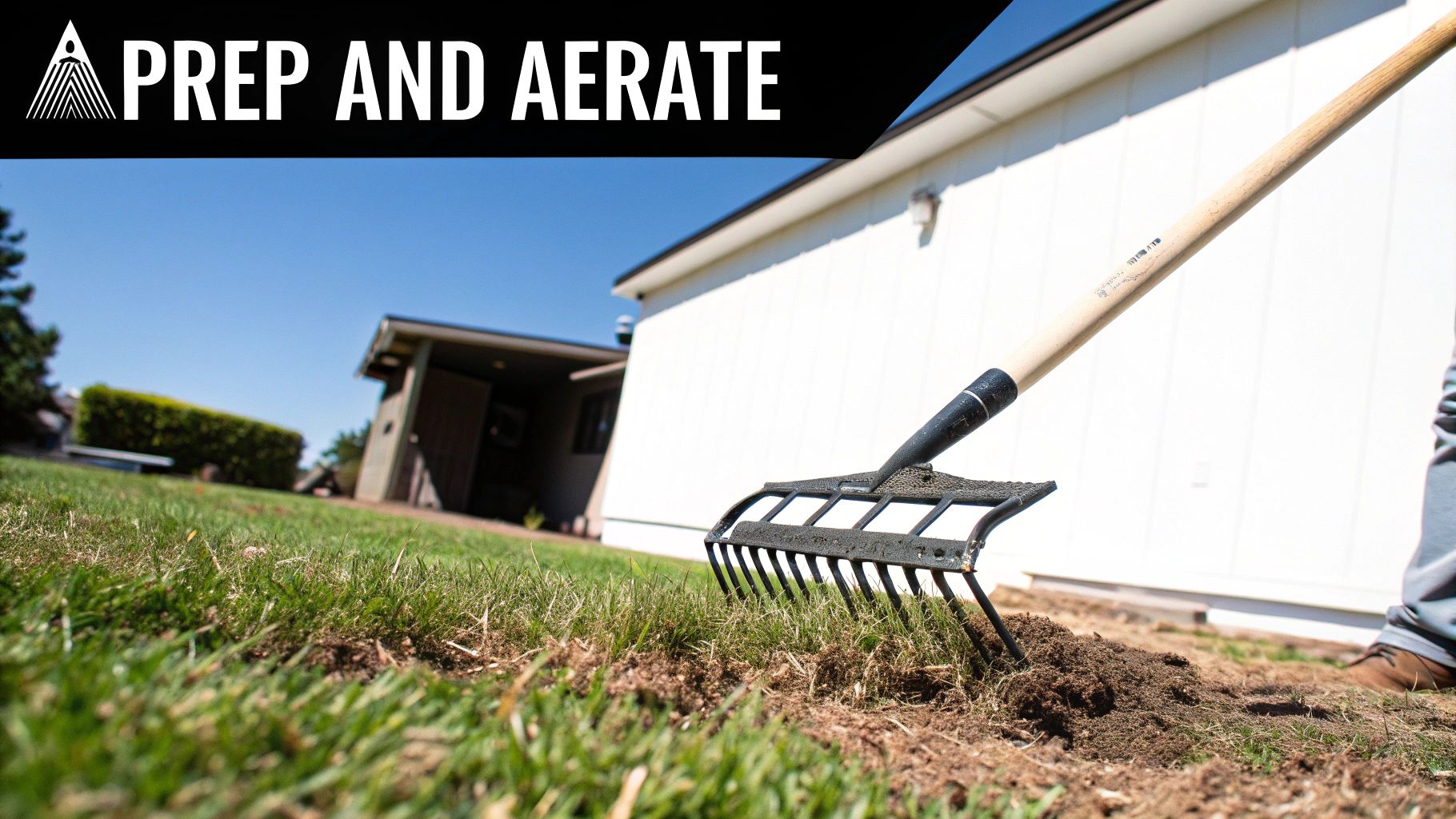
This prep work is non-negotiable, especially with the heavy, compacted red clay we see all over Forsyth County and surrounding areas. Think of it as a three-part process that ensures your investment pays off with a thick, healthy stand of fescue.
Start with a Lower Mow
First things first, give your lawn a haircut—but shorter than usual. Drop your mower deck to one of its lower settings and aim for a height of about 1.5 to 2 inches. This simple adjustment accomplishes two critical things.
It lets sunlight hit the soil surface, warming it up and encouraging germination. It also cuts back the competition from your established grass, giving the new seedlings a fighting chance at the sun and water they desperately need to sprout. Make sure to bag the clippings; leaving them on the lawn just creates another obstacle between your seed and the soil.
Remove Suffocating Thatch
Next up is dealing with thatch. That’s the spongy layer of dead stems and roots that gets tangled up between the green grass and the soil itself. A little bit is okay, but on many lawns from Alpharetta to Milton, it can turn into a thick, water-blocking mat.
If your thatch layer is more than a half-inch thick, it will stop seeds from ever reaching the dirt. For smaller patches, a stiff garden rake will do the trick, but for larger yards, you’ll save yourself a lot of backache by renting a power dethatcher. Peeling this layer off is like taking the lid off the soil, which instantly improves your chances for great seed contact.
Creating direct seed-to-soil contact isn’t just a suggestion; it is the single most important factor determining your overseeding success. Without it, germination rates can plummet by over 70%, as seeds are left stranded on top of thatch and old grass.
The Critical Step of Core Aeration
The final—and arguably most important—prep step for our region is core aeration. Our clay soil gets incredibly hard and compacted over the summer from all the heat, rain, and foot traffic. This dense soil makes it nearly impossible for new, delicate roots to push through.
Core aeration is the answer. The machine pulls up small plugs of soil, leaving thousands of little holes all over your lawn. These holes are a game-changer:
- They break up soil compaction, giving new roots room to spread out.
- They create perfect little pockets for seeds to fall into, protecting them from birds and helping them stay moist.
- They dramatically improve how air, water, and nutrients get down into the root zone.
This process is absolutely essential if you’re serious about getting a better lawn. For a closer look at the mechanics and benefits, you can get more details on how to properly aerate your lawn to really maximize your results. Taking the time to do this prep work is what separates a frustrating failure from a successful overseeding project.
Choosing the Right Seed for the Georgia Climate
You’ve done the grunt work of getting your lawn ready, so don’t stumble at the finish line. I’ve seen it countless times: a homeowner in Cumming or Johns Creek walks into a big-box store and grabs the biggest, cheapest bag of seed they can find. This is easily one of the most common—and costly—mistakes you can make.
Not all grass seed is created equal, and for our unique North Georgia climate, making the right choice is everything.
Around here, what you really need is a high-quality turf-type tall fescue (TTTF) blend. Forget the fescue you might remember from your grandfather’s lawn; today’s cultivars are specifically bred to handle the heat and drought we get. They grow incredibly deep root systems, which is their secret weapon for surviving a brutal Georgia summer and staying green all year.
How to Read a Seed Label Like a Pro
When you’re standing in the aisle looking at different bags, the seed analysis tag is your best friend. Ignore the flashy marketing on the front and flip it over to find the real details.
Here’s what I always look for:
- Weed Seed: This number needs to be 0.00%. Anything else, and you’re literally paying to plant weeds in your beautiful, prepped lawn.
- Other Crop Seed: Keep this as low as you can find, ideally under 0.50%. This tells you how much unwanted grass (like annual ryegrass) is mixed in.
- Germination Rate: You want this to be high, 85% or higher is the benchmark. It’s a direct measure of how much of that seed will actually sprout.
Paying a bit more for a certified, “weed-free” blend from a trusted source isn’t just spending money—it’s an investment that will pay you back for seasons to come. Getting these details right is the foundation of successful turf management. There’s a reason the professional turf grass seed market, valued at USD 2.5 billion in 2025, is built on selecting these superior seeds for high-performance lawns.
Give Your New Seed the Best First Meal
With the perfect seed in hand, it’s time to think about its first meal. New grass seedlings have completely different nutritional needs than an established lawn. This is where a starter fertilizer comes in, a step that’s often skipped but absolutely critical for success.
A good starter fertilizer is packed with phosphorus, the nutrient that fuels strong root development. For new grass trying to punch through our heavy clay soil, strong roots are non-negotiable.
Another trick of the trade is to top-dress with a very thin layer of organic compost. Spreading just a quarter-inch of compost over your newly sown seed does a few fantastic things: it helps keep the seed moist, prevents it from washing away, and enriches the soil with organic matter.
This one-two punch of starter fertilizer and compost creates the perfect little nursery for your seedlings to get established quickly and thrive. For a deeper dive into finding the perfect variety for our area, you can read our guide on the best grass seed for Georgia.
While the specifics are for our region, the fundamental principles of selecting appropriate grass varieties based on climate and soil apply no matter where you live. Broadening your understanding of why certain plants work in certain environments can make you a much better gardener overall.
Getting Seed on the Ground and Giving It What It Needs
Your lawn is prepped and ready to go. Now comes the part that makes all the difference: applying the seed. This is where your attention to detail really shines, turning a patchy yard into a seamless carpet of green. The goal here is an even, consistent spread.
The best way to overseed a lawn is with a broadcast (or rotary) spreader. Trying to do it by hand is a recipe for a patchy, uneven mess. Here’s a pro tip to avoid those amateur-looking stripes: divide your seed in half. Walk your first pass north-to-south, then cover the lawn again walking east-to-west with the second half. This simple crisscross pattern is the secret to getting that perfect, uniform coverage.
The First Two Weeks: It’s All About Water
Once the seed is down, the most critical part of the entire process kicks off. All that prep work can go to waste in a hurry without the right watering strategy. Those tiny seeds need constant moisture to germinate—there are no shortcuts here.
For the first 10 to 14 days, your job is to keep the top inch of soil damp at all times, almost like a wrung-out sponge. This doesn’t mean soaking the ground. Think light and frequent.
- How often? You’ll need to water 2-3 times per day.
- How long? Short bursts of 5-10 minutes per zone are perfect.
- When? Early morning and mid-afternoon are ideal to keep the hot Georgia sun from undoing your work.
This infographic breaks down the essential elements of a successful overseeding job, from choosing the right seed to giving it the right food.
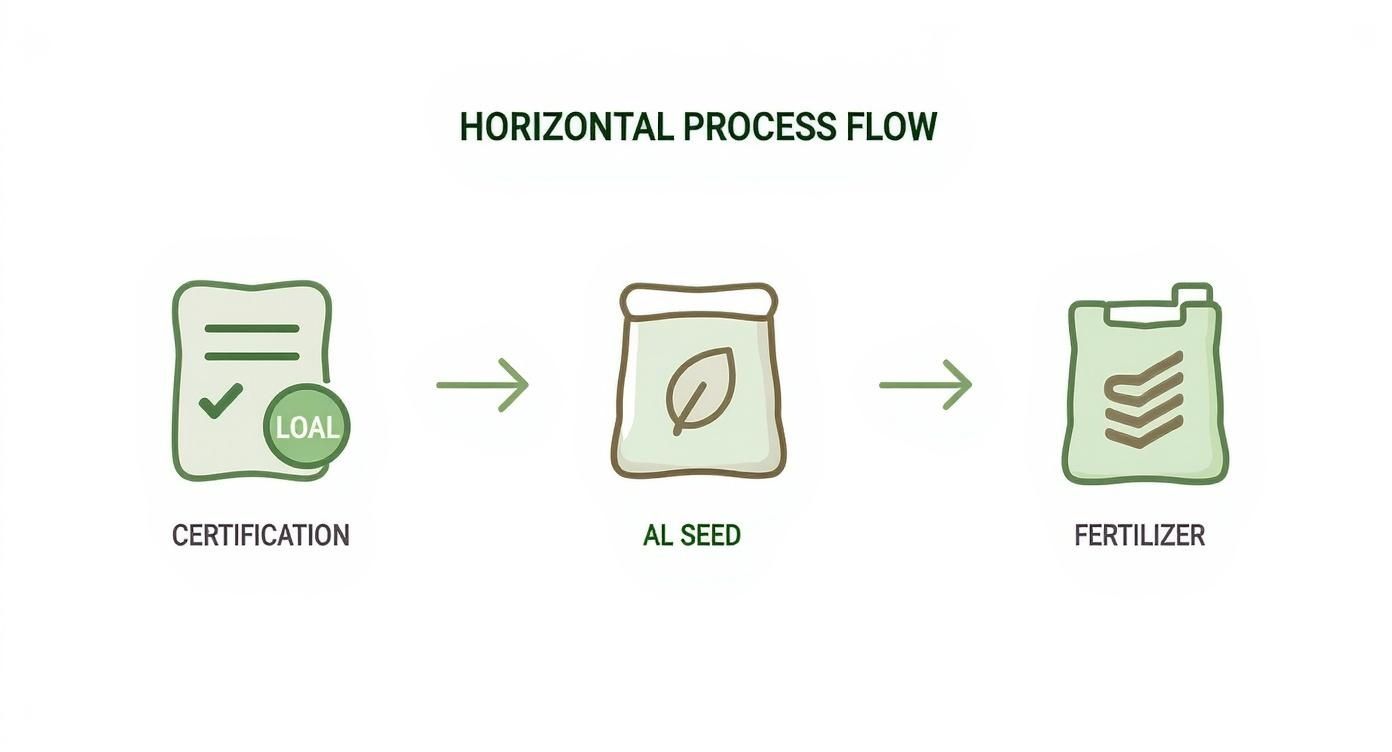
As you can see, a great lawn isn’t about one magic step. It’s about combining quality inputs, like certified seed and the right fertilizer, to get the job done right.
From Sprouts to Strong Turf: Long-Term Care
Once you see that satisfying green fuzz popping up everywhere, it’s time to change gears with your watering. The goal shifts from germination to encouraging deep, strong roots that will anchor your lawn for the long haul and help it survive a North Georgia summer.
Start watering less often but for longer periods. You’re essentially training the new roots to dig deeper for moisture. This is how you build a resilient, more drought-tolerant lawn instead of a weak, needy one.
Keep off the grass! This is one of the easiest rules to follow, but so many people forget it. For at least the first three weeks, keep foot traffic from people and pets to an absolute minimum. Those new seedlings are incredibly delicate and can be crushed or pulled up before they even have a chance to get established.
Hold off on that first mow. It’s tempting, I know, but you need to let the new grass reach at least 3 to 4 inches high. When you finally do make that first cut, make sure your mower blade is razor-sharp—a dull blade will tear the new grass, not cut it. Set your mower deck high and never remove more than a third of the grass blade. This first mow is a big step in helping the new fescue thicken up for a lush, dense lawn.
Don’t Make These Common Overseeding Mistakes
Even with the best intentions, a few simple missteps can derail your entire overseeding project. After years of helping folks with their lawns in Cumming, Johns Creek, and Alpharetta, I’ve seen the same frustrating mistakes trip people up time and time again.
The most common error? Hands down, it’s picking the wrong type of grass seed. I’ve seen homeowners grab a bag of Kentucky Bluegrass just because the name sounds appealing, but that’s a surefire recipe for disappointment in our Georgia heat. It simply can’t handle our summers and will be a stressed-out, brown mess by July.
Another huge one is skipping core aeration. Our dense, red clay soil gets incredibly compacted. Tossing seed on top of it is like trying to grow a garden on a brick patio—it just won’t work. The seed needs to nestle into the soil to germinate, and without aeration, it’s left sitting on the surface, exposed and unable to root.
But the mistake that truly wastes the most time and money is applying weed killer too close to seeding. Whether it’s a pre-emergent or a post-emergent herbicide, these products will stop your expensive new grass seed from ever sprouting. All that hard work, gone in a flash.
With the turf grass seed market projected to hit USD 3,500 million by 2025, it’s obvious that people are willing to invest in a beautiful lawn. Don’t let that investment go to waste by falling for these preventable traps. A little bit of know-how goes a long way.
Clearing Up Your Top Overseeding Questions
Even with the best game plan, a few questions always pop up once you get your hands dirty. Let’s run through some of the most common ones we hear from folks around Cumming and Alpharetta to make sure you’re feeling confident.
Why Can’t I Just Throw Seed on Top of My Lawn?
This is probably the number one question I get. People wonder if all that prep work—the mowing, the dethatching, the aerating—is really worth it. The answer is a resounding yes.
Just tossing grass seed onto an unprepared lawn is like trying to grow a garden on a parking lot. It just won’t work. The seed gets tangled up in the existing grass and thatch, never actually touching the soil it needs to sprout. For germination to happen, you absolutely must have good seed-to-soil contact.
How Quickly Will I See New Grass?
You’ll need a little patience, but the payoff comes pretty fast. If you’re watering correctly, you should see a faint green haze across your lawn in about 7 to 14 days. In perfect conditions, some fescue types can even pop up in as little as five days.
Don’t worry if it looks a little patchy at first. Different seeds in a blend will sprout at slightly different times, so it’s normal for the growth to seem uneven initially.
The single most important thing to remember is this: moisture is everything for the first two weeks. If a seed starts to germinate and then dries out, it’s dead. There’s no coming back from that.
When Can I Put Down Weed Killer Again?
This is a crucial one, and getting the timing wrong can wipe out all your hard work. Applying herbicides too early will kill your delicate new grass seedlings right along with the weeds.
A good, safe benchmark is to wait until you’ve mowed the new grass at least three to four times. Each mow encourages the blades to mature and thicken, building up the strength to withstand a weed control application. For a detailed guide on that first mow, check out our article on how long after overseeding you can mow. Giving the new turf that time to establish itself is non-negotiable.
Ready to skip the guesswork and get the lush, healthy lawn you’ve always wanted? Let the experts at Barefoot Organics handle the hard work for you. We provide professional, natural lawn care services tailored for the Cumming, GA area’s unique climate. Get your free quote online today!