

Hey there, North Georgia homeowners. If you're staring out at your yard wondering where those strange brown patches or discolored spots came from, you're not alone. What you're likely seeing is lawn fungus, and our hot, humid summers here in places like Cumming and Alpharetta create the perfect storm for it.
The good news is, you can absolutely get it under control. The best treatment for grass fungus isn't just about spraying a product and hoping for the best; it’s a holistic approach that combines smarter lawn care habits with targeted, natural solutions.
Getting to the Root of North Georgia Lawn Fungus
Think of this as your field guide to beating lawn fungus for good. We'll walk through how to identify the common culprits like brown patch and dollar spot, and then build a plan that’s both effective and safe for your family and pets. The goal is to build a resilient lawn from the soil up, focusing on long-term health so you can get back to enjoying that barefoot-worthy yard.
Here’s the thing about fungus: it's not just bad luck. It's a symptom that something in your lawn’s environment is out of balance. For a disease to take hold, it needs three things: a vulnerable plant (your grass), the right weather conditions, and the pathogen itself. It’s often called the "disease triangle," and our entire strategy is built around breaking that cycle.
Why Your Georgia Lawn is a Prime Target
Living anywhere from Milton to Johns Creek means dealing with a climate that fungi absolutely love. The combination of high humidity, warm nights, and those classic summer downpours keeps grass blades wet for long stretches. This moisture is an open invitation for fungal spores to germinate and spread like wildfire.
On top of that, the heavy clay soil so common in Forsyth County can be a real challenge. It holds onto water and gets compacted easily, suffocating the roots and creating the exact damp, low-oxygen environment where fungus thrives.
Fungus is an opportunist. It takes advantage of a stressed lawn. By strengthening your grass and improving soil health, you're not just treating the symptoms—you're removing the opportunity for fungus to take hold in the first place.
This is why understanding our local challenges is step one. Instead of just reacting to brown patches after they appear, we’re going to focus on creating a lawn that naturally fights off disease. It often comes down to simple tweaks in how you water, mow, and feed your soil.
Common Fungi in Your Neighborhood
Before you can treat the problem, you need to know what you’re looking at. Homeowners from Cumming all the way up to Dahlonega tend to battle the same handful of diseases. Each one looks a little different and pops up under slightly different conditions, but catching them early is always the key.
Here’s a quick reference table to help you play detective with your lawn.
Common North Georgia Lawn Fungi at a Glance
| Fungus Name | Appearance | Common Season | Lawn Type Affected |
|---|---|---|---|
| Brown Patch | Circular, brown or yellow patches from a few inches to several feet in diameter, often with a grayish "smoke ring" on the edge. | Late spring through summer, during hot, humid weather. | Tall Fescue, Zoysia, Bermuda |
| Dollar Spot | Small, silver-dollar-sized, bleached-out or straw-colored spots that can merge into larger, irregular dead areas. | Early summer to fall, especially when nights are cool and days are warm with heavy dew. | Bermuda, Zoysia |
| Red Thread | Patches of grass that appear scorched or ragged, with distinct pinkish-red, thread-like strands on the grass blades. | Spring and fall, during cool, wet weather. | Fescue, Ryegrass |
| Pythium Blight | Appears as greasy, water-soaked patches that can quickly turn brown and collapse, often with a cotton-like growth in the morning. | Hot, humid periods with excessive moisture or poor drainage. | All grass types, especially new seedlings. |
Learning to spot these signs is the first, most critical step in taking back your lawn. Once you know what you're up against, you can build an effective plan of attack.
Identifying the Fungal Culprit in Your Georgia Yard
Before you can treat a lawn fungus, you have to play detective. Knowing exactly what you’re up against is the single most important step, because the wrong strategy won't just fail—it can make things worse. Our humid, sticky weather from Alpharetta to Dahlonega is basically a five-star resort for several types of lawn diseases, and each one leaves its own calling card.
Getting the diagnosis right isn't just for show; it's entirely practical. I've seen countless homeowners waste time and money on the wrong product, all while the real fungus happily spreads. A few minutes of careful observation now can save you a world of frustration down the road.
To get started, just take a close look at your lawn. This simple chart is a great way to begin your initial assessment.
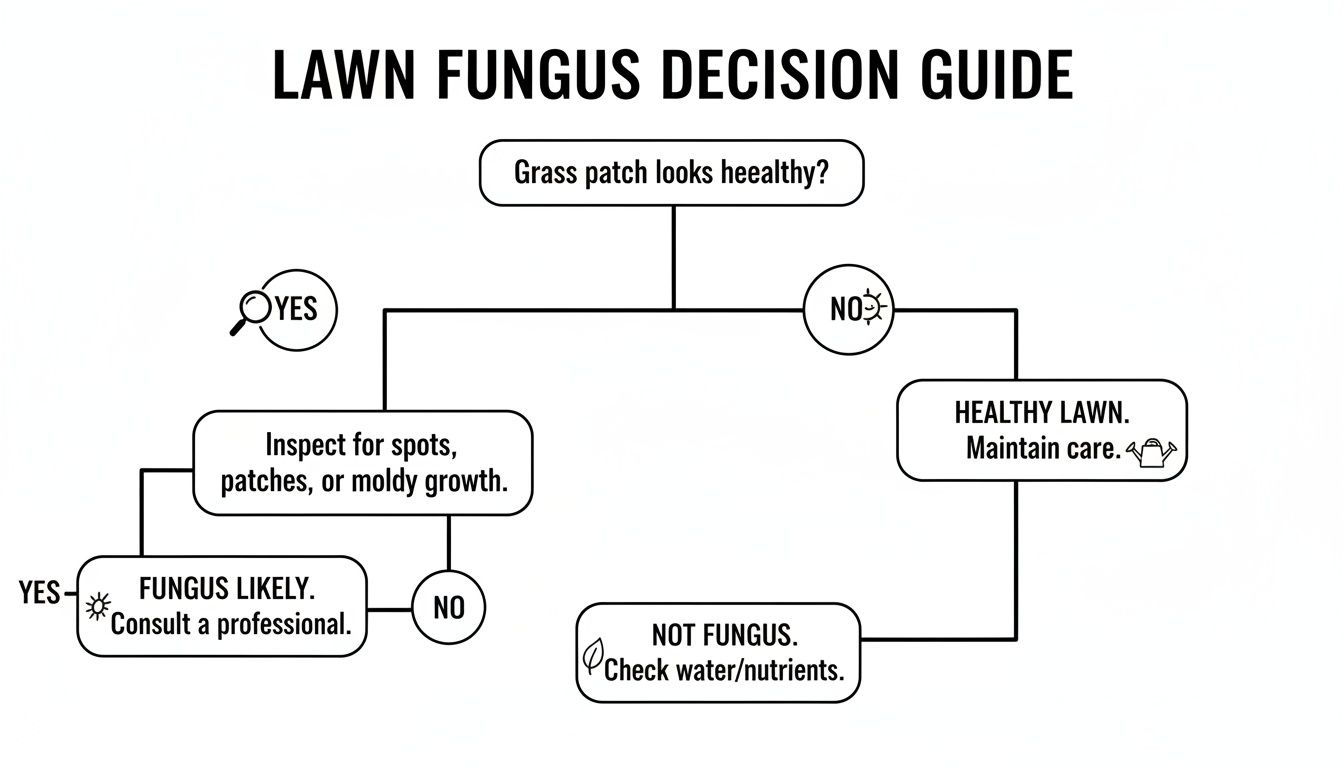
Think of this as a starting point. It helps you quickly sort through the possibilities and zero in on what to look for next.
North Georgia's Most Wanted Fungi
Let's dig into the common culprits we see wreaking havoc in yards across Forsyth County and the surrounding areas. Knowing what to look for is the key to a fast, effective comeback.
Brown Patch
This is, without a doubt, the most frequent visitor during our hot and steamy summers. Brown patch shows up as roughly circular areas of yellow-brown, dying grass. These patches can be small at first but can expand to several feet across.
The dead giveaway? Look for a grayish, smoky ring around the edge of the patch, especially when there's morning dew. That "smoke ring" is the active front of the fungal attack. It really takes off when nighttime temperatures stay above 68°F and the air is thick with humidity.
Dollar Spot
If you're seeing small, bleached-out spots about the size of a silver dollar scattered around, you're probably looking at dollar spot. The spots are straw-colored and, if left unchecked, can merge into larger, sunken, and funky-shaped dead areas.
Get down on your hands and knees in the morning and look closely at the grass blades. You might spot fine, cobweb-like threads—that's the mycelium—stretching between the infected blades. This disease loves to pick on lawns that are under-fertilized and struggling with drought stress.
Red Thread
Just like the name says, red thread is easily identified by the unique pinkish-red, thread-like strands that seem to bind the grass blades together. From a distance, your lawn will have these ragged, almost scorched-looking patches that give off a distinct pink or reddish hue.
This fungus tends to pop up during the cooler, wet weather of spring and fall, especially in lawns around Milton that are low on nitrogen.
Pythium Blight
Also known as "grease spot," Pythium blight is the one you really have to watch out for—it moves fast and is incredibly destructive. It starts as small, water-soaked, dark spots that feel greasy or even slimy to the touch. These spots can blow up in size overnight, turning brown as the grass blades collapse.
When it's humid, you might see a white, cottony growth on the affected areas in the morning. Pythium thrives in soggy, poorly drained soil, which makes it a major threat during our summer downpours. Spotting this one early is critical; it can wipe out a lawn in a matter of days. You can learn more about the different culprits in our guide about what causes brown spots in grass.
Understanding the subtle differences between these diseases is your first line of defense. Brown patch loves heat, while red thread prefers cooler temps. Dollar spot points to nutrient issues, and Pythium signals a serious moisture problem.
The Challenge of Fungicide Resistance
Once you have a good idea of what you’re dealing with, picking a treatment seems easy, right? Not so fast. A growing headache in the lawn care world is fungicide resistance. Using the same chemical treatments over and over, or using them incorrectly, can lead to the fungus evolving to resist them.
This isn’t just a theory; it’s a documented problem. Research has confirmed cases all over North America where common fungi no longer respond to certain fungicides that used to work perfectly. That’s why rotating products and, more importantly, focusing on cultural controls is more critical than ever for keeping your lawn healthy for the long haul.
Building Your Lawn's Natural Defenses Against Fungus
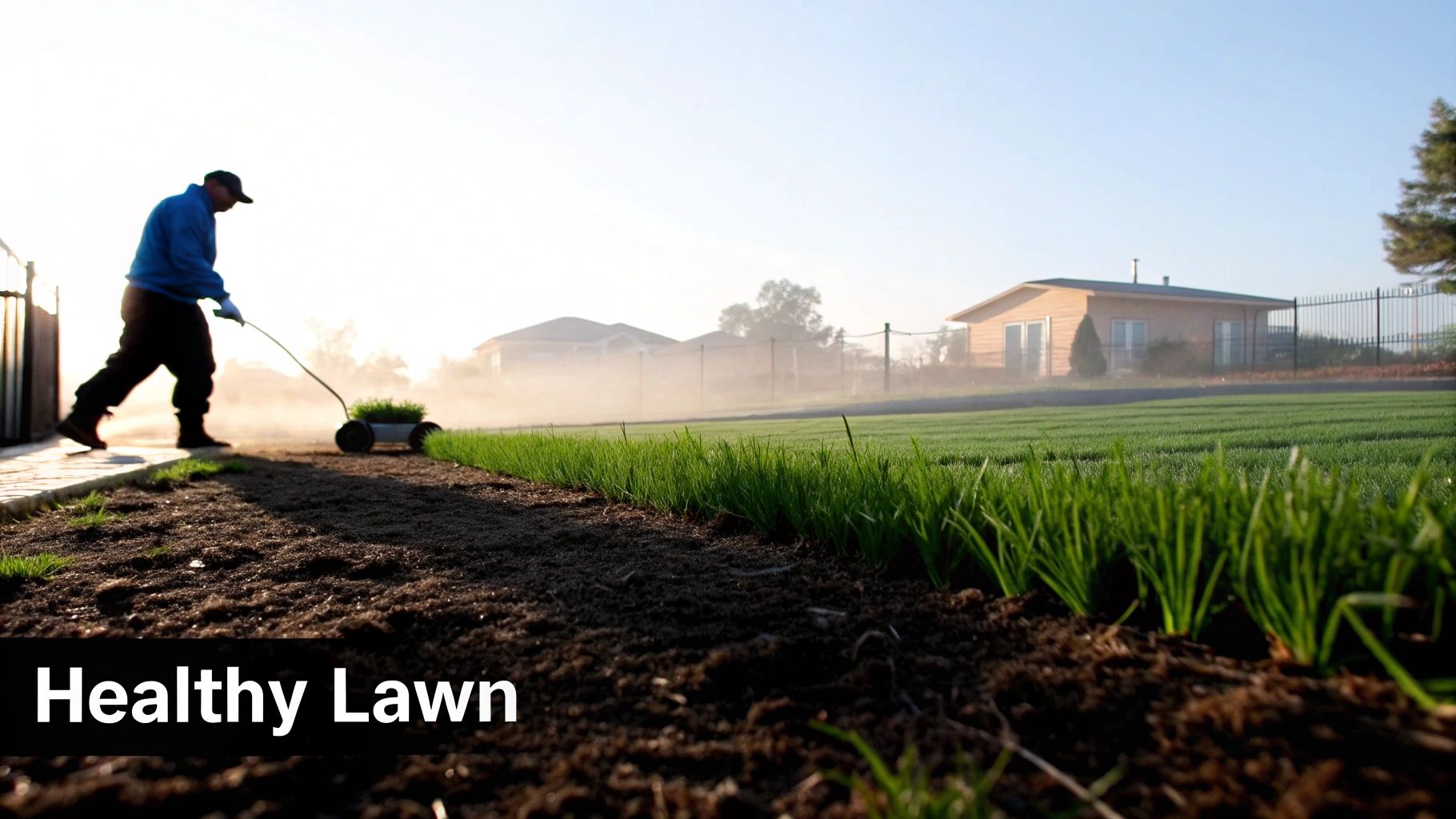
Here’s a secret from the pros: the most powerful weapon you have against grass fungus isn't found in a bottle. It’s the strength and vitality of your lawn itself. A proactive approach is always better than reacting to a problem, especially when it comes to keeping your yard free of fungal disease.
Building up your lawn's natural defenses is all about creating an environment where fungus simply can't get a foothold. This is the absolute cornerstone of any effective, long-term organic treatment plan. By focusing on a few foundational practices, you can shift the balance of power in your favor and prevent most issues before they start.
Adjust Your Mowing Habits for Stronger Grass
How you mow has a direct impact on your lawn's ability to fight off disease. I see it all the time around Cumming and Alpharetta—homeowners unknowingly weaken their grass by cutting it too short. This is probably the single biggest mistake you can make with our warm-season turf types.
When you "scalp" the lawn, you're doing a lot more than just giving it a haircut. You're stripping the grass of its ability to photosynthesize and produce the energy it needs to thrive. This stress makes the grass incredibly vulnerable to any opportunistic fungi lurking nearby.
For our North Georgia lawns, stick to these general height guidelines:
- Bermuda Grass: Keep it between 1.5 and 2.5 inches. Any shorter, and you're just exposing the soil and stems to brutal heat stress.
- Zoysia Grass: Aim for a height of 1.5 to 3 inches. This gives it plenty of blade to support a deep, robust root system.
- Tall Fescue: This one needs to stay taller, right around 2.5 to 3.5 inches, especially when the summer heat kicks in.
Mowing tall encourages deeper roots. Deeper roots can access more water and nutrients from deep in the soil, creating a healthier, more drought-tolerant lawn that is naturally more resistant to fungal diseases.
Also, do yourself a favor and keep those mower blades sharp. Dull blades don't cut the grass; they tear it. Those ragged, shredded edges are wide-open invitations for fungal spores to move in and infect the plant. A clean cut, on the other hand, heals quickly and wards off infection.
Water Smarter, Not Harder
Watering is another area where small, smart changes yield huge results. The goal is simple: give your lawn the moisture it needs without creating the constantly damp conditions that fungi absolutely love.
Water deeply and infrequently. Forget giving the lawn a light sprinkle every day. A good, deep soaking encourages roots to grow further down into the soil in search of moisture, making the whole plant tougher. Aim for about 1 inch of water per week, and be sure to count any rainfall you get.
Timing is everything. The absolute best time to water your lawn is in the early morning, between 4 a.m. and 9 a.m. This gives the grass blades all day to dry out in the sun. Watering in the evening is a recipe for disaster; it leaves the blades wet all night, creating a perfect humid incubator for fungal growth, especially during those warm summer nights in Johns Creek.
Break Up Compacted Clay Soil with Aeration
Anyone living in North Georgia knows all about our infamous heavy red clay soil. From Cumming to Milton, this stuff is notorious for compacting, which suffocates grass roots and creates a mess of drainage problems.
When soil gets packed down, it chokes off the flow of water, air, and nutrients to the root zone. This leads to shallow roots and soggy patches where diseases like Pythium blight and brown patch can run wild. The single best fix for this is core aeration.
This process, where we pull small plugs of soil out of the lawn, works wonders:
- It immediately relieves soil compaction, allowing roots to breathe and grow deeper.
- It dramatically improves drainage, getting rid of the soggy conditions that fungus needs.
- It helps fertilizers and other soil treatments actually get down to the roots where they're needed.
For most lawns in our area, aerating once a year is a complete game-changer. It’s a fundamental step in building a truly healthy, fungus-resistant yard from the ground up. If you want to dive deeper into this vital process, we've got a ton of information in our article on how to fix compacted soil.
Trying Natural and Targeted Fungus Treatments
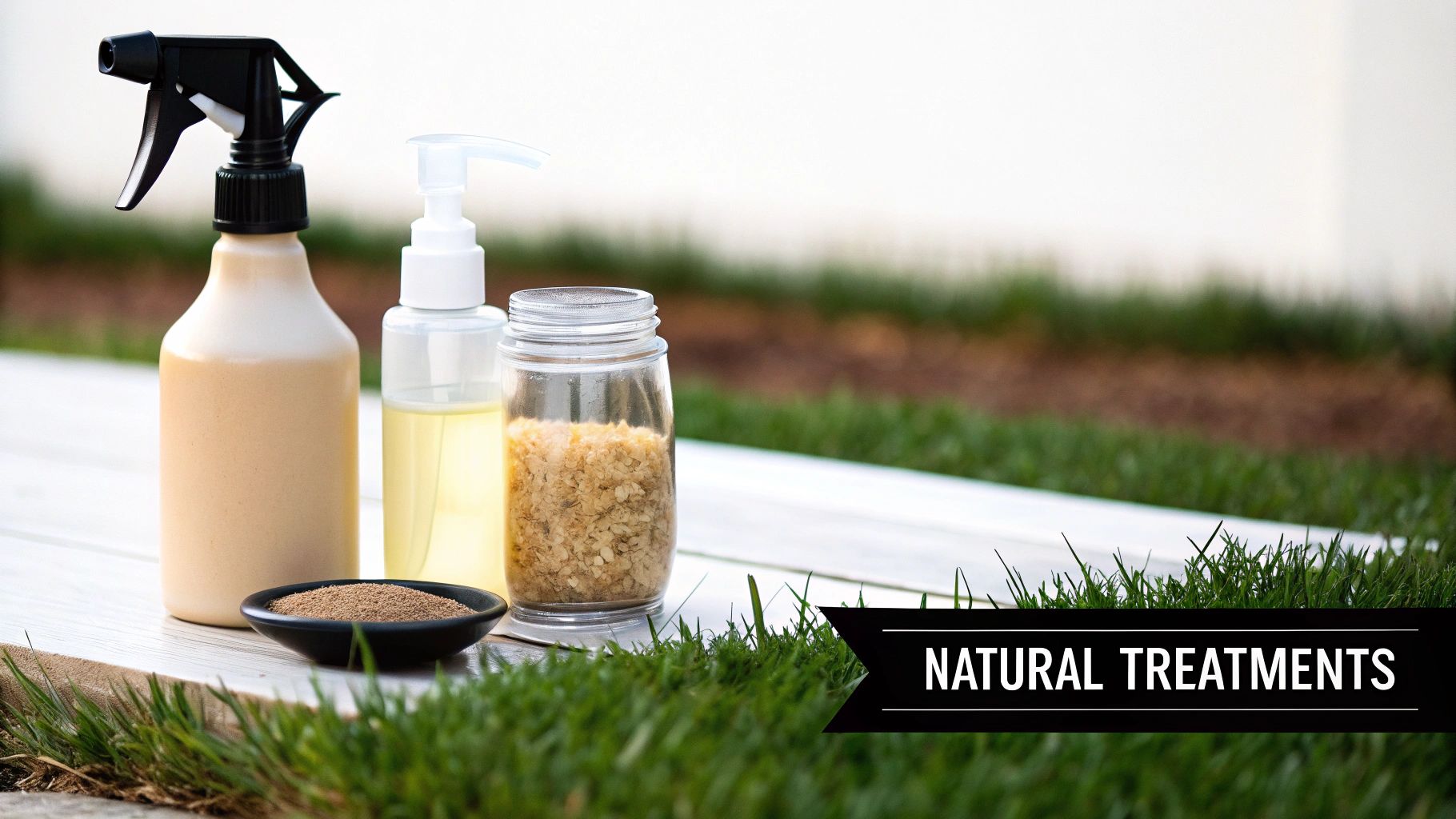
So, you’ve dialed in your watering and mowing habits, but a stubborn fungal patch is still hanging around. When your best cultural practices aren't enough to kick an active outbreak, it’s time to move on to specific treatments.
The good news is you have several great options that don’t involve reaching for harsh synthetic chemicals right off the bat. For those of us in Cumming and Alpharetta who want to be more eco-conscious, natural remedies can be a surprisingly effective first line of defense. They work by messing with the fungal life cycle and making the grass blades an unfriendly place for disease to thrive.
These solutions aren't just safer for your kids and pets; they also help build a healthier soil microbiome, which is your lawn's best long-term defense. The goal is to manage the current problem without wiping out all the beneficial organisms that keep your soil healthy.
Going the Natural Route for Your Lawn
Natural treatments are my first recommendation for minor to moderate fungal issues. They're gentle on the local ecosystem and can be very effective when you apply them correctly and consistently.
Here are a few of the go-to natural options that I’ve seen work well in our North Georgia climate:
- Neem Oil: This stuff is a true multitasker. Sourced from neem tree seeds, this oil is a fantastic natural fungicide. It essentially stops the fungus from growing and reproducing. Just mix it with water and a tiny drop of mild soap (this helps it stick to the grass) and spray it directly on the affected spots.
- Horticultural Cornmeal: This isn't what you have in your pantry. Horticultural cornmeal is thought to encourage the growth of good microbes in the soil that can out-compete and suppress harmful fungi like brown patch. Think of it as a soil amendment that boosts your turf's overall health from the ground up.
- Potassium Bicarbonate: A close cousin to baking soda, this compound changes the pH on the surface of the grass, creating an environment where fungal spores simply can't germinate. It’s a great contact solution that can stop a problem in its tracks.
The real secret to making natural treatments work is to act fast and stay consistent. Apply them the moment you see signs of disease, and be prepared to reapply after a heavy rain. They work best as part of a whole strategy, not as a single cure for a severe infection.
When to Bring in Targeted Fungicides
For more aggressive or widespread infections, sometimes a more direct approach is needed to save your lawn. This is where targeted fungicides come into play, but it’s absolutely critical to understand what you’re using and why calling a professional is often the smartest, safest move.
It’s no surprise that the global market for lawn disease control is growing—it's projected to hit $1,620 million by 2025. A big reason for this is our changing climate, which is creating the warmer, wetter conditions that fungal pathogens love. For homeowners in North Georgia, knowing this helps explain why sometimes you need to integrate targeted treatments with your natural approach to keep your lawn healthy.
Understanding the Different Types of Fungicides
Not all fungicides are the same. They generally fall into two main categories, and knowing the difference is key to getting the job done right.
- Contact Fungicides: These products work right on the surface of the grass blade. They form a protective barrier that kills the fungus on contact but doesn't get absorbed into the plant itself. Think of it like an antiseptic for your lawn. They work well but need to be reapplied after it rains or you mow.
- Systemic Fungicides: These are absorbed by the grass and move through the plant's tissues, giving it protection from the inside out. This provides longer-lasting control and can actually help cure a plant that's already infected.
A professional will know which type—or maybe a combination of both—is the right call for the specific fungus you’re dealing with. For instance, a fast-moving disease like Pythium blight demands a totally different strategy than a slow-creeper like red thread.
Proper application is also non-negotiable. Using the wrong product, the wrong amount, or the wrong equipment can lead to disappointing results, wasted money, and even environmental harm. At Barefoot Organics, we specialize in choosing and applying the most effective, low-impact products to solve fungus problems safely. You can see more about how we handle it in our lawn fungicide treatment services.
When a Fungus Problem Needs Professional Help
So you’ve tweaked your mowing height, dialed in your watering routine, and maybe even tried a few home remedies. Still, those stubborn brown patches in your Cumming lawn are relentlessly spreading. It’s a frustrating spot to be in, and one that many North Georgia homeowners know all too well.
While being proactive and hands-on is the cornerstone of great lawn care, some fungal problems can get out of hand. They can become too widespread, too aggressive, or just plain confusing to tackle on your own.
Knowing when to call in the pros is key to saving your lawn from serious, long-term damage. If you’re seeing spots that seem to double in size overnight, or your treatments aren't making a dent, it’s time. It's not about giving up; it’s about making a smart, strategic move to protect your investment.
Recognizing the Signs You Need an Expert
It's tempting to fall into the "I'll just give it one more week" mindset. But aggressive fungi, like the notorious Pythium blight, won’t wait for you. Knowing when you've hit that tipping point can save you from a costly and drawn-out recovery.
Here are the tell-tale signs that it's time to bring in a professional lawn care service:
- The Spread is Out of Control: The diseased areas are growing fast, merging into bigger dead zones no matter what you do.
- Your Treatments Aren't Working: You’ve applied a product (whether it's natural or from a big-box store) a couple of times, and the fungus is still winning.
- You're Not Sure What You're Fighting: You can't confidently tell if you're dealing with brown patch, dollar spot, or something else entirely. A wrong diagnosis means the wrong treatment, which is a waste of time and money.
- It's a Yearly Problem: The same issue pops up in the same spots every single year. This points to a deeper, unresolved problem in your soil or overall lawn environment.
A professional lawn analysis is more than just a glance at the grass. Experts dig deeper, looking at soil composition, thatch buildup, drainage issues, and sun exposure to figure out why the disease is happening in the first place. That’s how you get a real, long-term solution.
The Professional Approach to Fungus Control
When you call a service like Barefoot Organics, you’re not just ordering a spray. You’re getting a systematic, diagnostic approach built for the specific challenges we face in lawns from Alpharetta to Milton. It’s a thorough process that ensures we nail down the right treatment for your grass fungus.
First, an expert comes out to perform a comprehensive analysis. This means correctly identifying the specific fungus and, just as importantly, figuring out the underlying conditions that allowed it to thrive. They’ll check for things like compacted soil, nutrient imbalances, and excessive thatch—all common culprits in our heavy clay soil.
From that analysis, a customized treatment plan is developed. This isn't a one-size-fits-all spray. It’s a prescription tailored to what your lawn needs, and it might include a combination of tactics:
- Targeted Fungicide Application: Using professional-grade products that are proven to work on the specific fungus identified, all applied at the precise rate and time for maximum impact.
- Soil Amendments: Recommending treatments to balance soil pH or add key nutrients that help your grass build up its own natural defenses.
- Core Aeration: Suggesting aeration to break up compacted soil. This simple step improves air and water flow to the roots, making the entire environment less friendly for fungi.
The sheer scale of the fungicide market, which is projected to hit $25.67 billion by 2034, shows just how critical effective disease management is worldwide. This growth underscores the value of proven solutions, especially for homeowners who care about their property's appearance and value. For those of us across North Georgia, professional help ensures these powerful tools are used correctly and safely. You can read more about fungicide market trends at Fortune Business Insights.
Ultimately, bringing in a professional gives you peace of mind. You know the problem is being handled correctly, safely, and effectively—protecting your family, pets, and the local Johns Creek ecosystem while bringing your lawn back to life.
Got Questions About Lawn Fungus? We've Got Answers.
Even with a solid plan in place, it's natural to have questions. I’ve talked to homeowners from Cumming to Alpharetta, and many of you run into the same hurdles. Let's walk through some of the most common questions I hear and get you some clear, practical answers straight from the field.
Remember, fixing the immediate problem is just step one. The real win is building a lawn that’s tough enough to fight off these problems on its own next season.
Can I Stop Lawn Fungus from Coming Back Every Year?
Yes, you absolutely can, and that should be the ultimate goal. Playing defense is always smarter—and less stressful—than constantly reacting to new outbreaks. The key is to fix the underlying issues in your yard that invite fungus to set up shop in the first place.
This all comes down to consistent, smart lawn care practices. For our local lawns here in areas like Milton and Johns Creek, that means:
- Watering Smarter, Not Harder: Give your lawn a deep drink, but not too often. Always water in the early morning so the blades have all day to dry out.
- Mowing at the Right Height: Don't scalp your lawn! Keeping your Bermuda or Zoysia at its ideal height is crucial for reducing stress.
- Annual Aeration: Our heavy clay soil is a major culprit. Core aeration is a non-negotiable yearly task to break up compaction, letting air and water get to the roots where they belong.
A lawn care program that prioritizes soil health is your best long-term strategy. Healthy soil grows stronger grass with deeper roots, and that's a lawn that can naturally fend for itself.
Are Professional Lawn Treatments Safe for My Kids and Pets?
This is the most important question, and the answer should always be a resounding yes. Modern, responsible lawn care has shifted dramatically. The focus is now on using natural and organic-based products to build up the soil's health, which in turn strengthens the grass. When your lawn is truly healthy, the need for harsh chemical intervention plummets.
Of course, sometimes a severe outbreak calls for a more targeted fungicide. In those rare cases, a true professional will choose the lowest-impact product available and apply it with precision, following every safety guideline to the letter.
Your peace of mind is what matters most. Always ask for full transparency about what's being applied to your lawn. A reputable company will happily explain everything and give you clear instructions on when it's safe for your family and pets to get back to enjoying the yard.
How Long Does It Take to Get Rid of Brown Patch?
This really depends on a few things: how bad the infection is, what kind of fungus you're dealing with, and the overall health of your lawn to begin with. Once a proper treatment is applied, you can expect the fungus to stop spreading within a week or two.
But here’s the thing—the grass that’s already brown and damaged won’t magically spring back to life. Real recovery happens as the healthy grass around it starts growing and filling in those bare spots. With good watering and the right nutrients to encourage that new growth, you should see a big difference within 3 to 6 weeks.
For those really stubborn, large patches you might see in a Dahlonega yard, combining a fall aeration and overseeding with your treatment can seriously speed up the healing process.
Why Does My Lawn Get Fungus When My Neighbor’s Doesn’t?
Ah, the classic question! It can be baffling to see your lawn struggling when the one right next door looks perfectly fine. Fungal outbreaks can be incredibly localized, often boiling down to tiny "micro-climates" and conditions unique to your specific property.
It's usually a combination of subtle factors:
- Drainage Issues: You might have a low spot in your yard that holds onto water just a little too long after it rains.
- A Bit More Shade: That beautiful oak tree might be casting just enough shade to keep a section of your lawn damp for most of the day.
- Compacted Soil: Your soil could be more compacted than your neighbor's, leading to stressed, weaker roots that are prime targets for disease.
- Cultural Habits: Small differences in how you mow or when you water can make a huge impact over the course of a season.
This is where a professional eye helps. We can spot these specific vulnerabilities on your property and build a plan that addresses why your lawn is susceptible, even if your neighbor's isn't.
Stop guessing and start solving your lawn fungus problems for good. The team at Barefoot Organics has the local expertise to diagnose your specific issue and create a safe, effective treatment plan for your North Georgia lawn. Get your free, no-obligation quote today and take the first step toward a healthier, fungus-free yard.