

For homeowners here in North Georgia, the secret to a lush, green lawn isn't complicated—it's all about timing. The absolute best times to fertilize warm-season grasses like Bermuda and Zoysia are in the late spring, throughout the summer, and into the early fall. Think of the window from about mid-April through September as the prime feeding season.
This schedule is designed to work with your lawn's natural growth cycle, giving it the fuel it needs right when it's ready to use it.
Your North Georgia Lawn Fertilization Schedule
When you live in places like Cumming, Alpharetta, or Johns Creek, timing your fertilizer application isn't just a friendly suggestion; it's the bedrock of a healthy lawn. Think of your grass like an athlete. You give it fuel during its active season for peak performance and provide nutrients in the off-season to help it recover and build strength for the next year.
Getting the timing wrong can do more than just waste your money and effort. It can actually stress the grass and, even worse, give a boost to the weeds you're trying to fight. The entire goal is to sync up with your lawn's natural rhythm, which for our warm-season grasses, means consistent nutrition when they're actively growing.
At-a-Glance Fertilization Timeline
Knowing what your lawn needs from one season to the next makes the whole process feel less like a chore and more like a simple routine. Here’s a quick look at when to focus your efforts.

This visual guide breaks it down into three critical windows: a spring application to wake the grass up, summer feedings to keep it going through the heat, and a final fall treatment to get it ready for winter. It's a simple progression that builds a stronger, more beautiful lawn season after season.
To make it even clearer, here’s a simple table outlining the fertilization plan we follow for warm-season grasses common in our area.
Seasonal Fertilization Schedule for North Georgia Lawns
| Season | Optimal Timing | Key Objective | Barefoot Organics Focus |
|---|---|---|---|
| Spring | Mid-April to May | Wake up the lawn after dormancy and encourage strong root development. | Applying the first round of balanced, slow-release fertilizer to kickstart healthy green-up. |
| Summer | June to August | Sustain vigorous growth, maintain deep color, and increase stress tolerance. | Multiple applications to provide consistent nutrients during peak heat and high-traffic periods. |
| Fall | September to Early October | Prepare the lawn for winter dormancy by strengthening roots and storing energy. | A final feeding to help the grass recover from summer stress and build resilience for the cold months. |
This schedule ensures your lawn gets exactly what it needs, right when it can make the most of it.
The best lawn care is always proactive, not reactive. By feeding your lawn on a consistent schedule, you stop problems like thinning turf and weed takeovers before they ever get a chance to start, keeping your lawn in Milton or Dahlonega looking its absolute best.
For those who want to dive deeper or get professional help, the Landscaping Lawn Care industry offers a wealth of knowledge and services. A solid fertilization plan is a huge part of the puzzle, but there's more to it. You can see how all the pieces fit together by checking out our lawn care schedule template. It’s a great resource for building a year-round plan tailored to your yard's specific needs.
The First Spring Application for a Strong Green-Up
That first hint of green after a long, brown winter is a sight we all love to see here in Forsyth County. It’s nature’s way of saying warm weather is finally on its way back. But seeing those first green shoots and immediately grabbing the fertilizer is one of the biggest mistakes a homeowner can make. A little patience right now will pay you back all summer long.
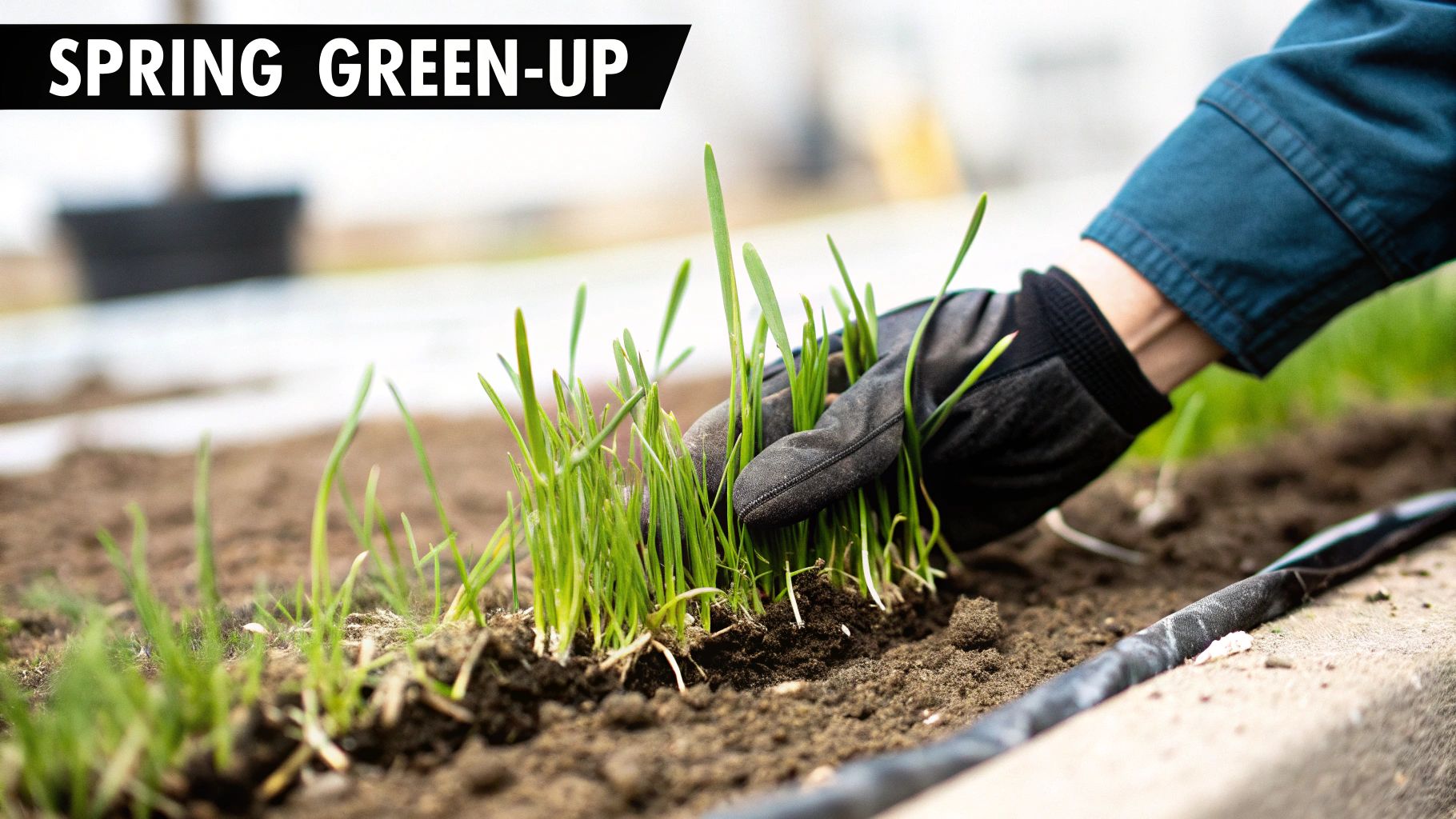
The impulse to fertilize is completely understandable—you want to give your waking lawn a boost. The problem is, feeding it too early actually works against your grass’s natural rhythm. You might get a quick burst of green on top, but it comes at a huge cost: a weak, shallow root system that’s totally unprepared for the brutal Georgia summer heat we know is coming to Cumming and Alpharetta.
Understanding Spring Root Decline
So, why is fertilizing too soon such a bad idea? It comes down to a natural process called spring root decline. As your warm-season grass wakes up from dormancy, it puts all its energy into pushing out those new green blades. To fuel this, it actually sheds a good portion of its old, inefficient roots from last year.
This is a totally normal and healthy part of the cycle. Think of it like a tree dropping old leaves to make way for new growth. The grass is trimming the fat to build a stronger foundation for the season ahead.
Jumping in with fertilizer during this delicate phase is like trying to force-feed an athlete who is still in the middle of their warm-up stretches. The grass simply isn't ready to use those nutrients for building deep roots. Instead, all that nitrogen just forces weak top growth, leaving the foundation of the plant neglected.
When you fertilize a semi-dormant lawn, you’re essentially telling it to sprint before it has even learned to walk. This creates a lawn that looks great for a few weeks but is incredibly vulnerable to drought, disease, and insect damage as soon as summer stress hits.
Watching for the Right Cues
If the first sign of green isn't the signal, what is? The best times to fertilize lawns are dictated by nature itself, not just the date on the calendar. Your lawn will give you clear signs when it’s genuinely ready for its first meal of the season.
The most reliable indicator is soil temperature. Your lawn’s roots won’t really start absorbing nutrients until the soil consistently hits 55-65°F. Here in areas like Johns Creek and Milton, that usually happens around mid-April, but it can shift depending on the weather each year. A simple soil thermometer is a cheap and incredibly valuable tool for any serious homeowner.
Beyond temperature, look for consistent, widespread greening. Don’t get tricked by a few random green patches. You need to wait until at least 50% of your lawn has woken up and is actively growing. This ensures the entire turf is ready to put that fertilizer to good use. For more tips on application, you can read our detailed guide on how to fertilize a lawn.
The Mid-April Magic Window
In North Georgia, timing is everything. Our spring green-up typically runs from late March through early May, but there’s a critical process at play. During what’s known as spring root decline, research from agricultural centers shows that 40-50% of old roots can die off. Fertilizing too early, while this is happening, means up to 30% of the nutrients are wasted on pushing weak leaf growth.
By waiting for the soil to warm up to that crucial 55-65°F mark, you ensure the fertilizer supports the entire plant—roots and all.
This strategic patience sets your lawn up to not just survive the summer but to actually thrive in it. By waiting for that mid-April window, you give your turf the chance to build the deep, resilient root system it needs to find water during dry spells and fend off pests and diseases. It’s a single decision in the spring that pays dividends all year long.
Fueling Summer Growth for a Resilient Lawn
Summer in North Georgia, from Cumming to Milton, is prime time for our warm-season lawns. With the intense heat, thick humidity, and those inevitable dry spells, your grass is working overtime. This is its peak growing season, and just like an engine running at full throttle, it needs a steady supply of fuel to keep going without sputtering out.
Think of summer fertilizing less like a single, massive meal and more like providing consistent energy throughout the day. It's tempting to hit your lawn with a heavy dose of fertilizer in June for that instant green-up, but that often creates a "boom and bust" cycle. The grass shoots up too fast, gets weak, and becomes an easy target for drought and disease right when summer stress is at its worst.
Sustaining Health Through the Heat
A much smarter strategy, especially for our common Bermuda and Zoysia lawns, is to provide several lighter feedings throughout the summer. This approach delivers a constant, manageable stream of nutrients that the grass can actually absorb and use. It’s the difference between letting your lawn gorge on junk food and giving it a balanced, healthy diet. You get steady growth, deep color, and a far more resilient plant.
This method is a lifesaver in places like Cumming and Johns Creek, where just keeping a lawn looking good through July and August is a real battle. The goal isn’t just about surface-level green; it's about building strength from the roots up, giving your lawn the backbone it needs to handle a classic Georgia summer.
The Power of Slow-Release Organic Fertilizers
To pull off this steady feeding, the type of fertilizer you use is everything. This is where slow-release organic fertilizers really prove their worth. Unlike the fast-acting synthetic products that can easily scorch a lawn in the summer heat, organic options break down gradually. Think of it like a time-release capsule—microorganisms in the soil slowly digest the organic matter, releasing nutrients at a pace the grass can absorb naturally.
This process gives you a powerful one-two punch:
- Prevents Lawn Burn: You avoid that sudden, overwhelming jolt of nitrogen that often creates those ugly brown, dead patches.
- Improves Soil Health: You’re not just feeding the grass; you’re feeding the soil itself. The organic matter boosts the beneficial microbes, improving soil structure over time and helping it hold onto moisture more effectively.
This slow-and-steady approach is the secret to a vibrant lawn that doesn’t just survive the hottest months but actually thrives. It ensures your turf has the resources it needs without being pushed into weak, flimsy growth.
A summer lawn care strategy built on slow-release organic fertilizer doesn't just feed the grass; it nurtures the entire soil ecosystem. This creates a stronger, more self-sufficient lawn that is better equipped to handle the stresses of heat and drought in Alpharetta and Milton.
Timing Your Summer Applications
For lawns here in North Georgia, the summer fertilization calendar is all about supporting the natural growth cycle of warm-season grasses. With Bermuda and Zoysia ruling the roost, timing is everything. After that first spring feeding around mid-April when the grass wakes up, a good summer plan is what carries it through. Regional research from southern agricultural centers backs up this multi-application approach; for instance, bermudagrass often needs 3-5 applications between April and August, with each one delivering about 1 lb of nitrogen per 1,000 sq ft. You can dig into more regional fertilization schedules from LawnStarter to see how the data lines up.
For most homeowners, two key applications get the job done for summer:
- Early Summer (June): This feeding keeps the vigorous growth from late spring going strong, making sure the lawn has plenty of energy as the heat really starts to climb.
- Late Summer (August): This dose helps the lawn recover from the peak stress of mid-summer and start preparing for the fall, keeping it dense and healthy as the season begins to shift.
By sticking to this schedule with the right kind of product, you’re giving your lawn the fuel it needs to perform at its best and stay a beautiful, resilient part of your landscape all summer long.
Preparing for Winter With Fall Fertilization
While spring’s vibrant green tends to get all the glory, any seasoned lawn care pro in the Cumming area will tell you a little secret: the final fertilization of the year might just be the most important one. That early fall application is a true game-changer for your lawn’s health all year round. It’s not about squeezing out one last burst of growth; it's about setting your turf up for success through the long, cold months ahead.
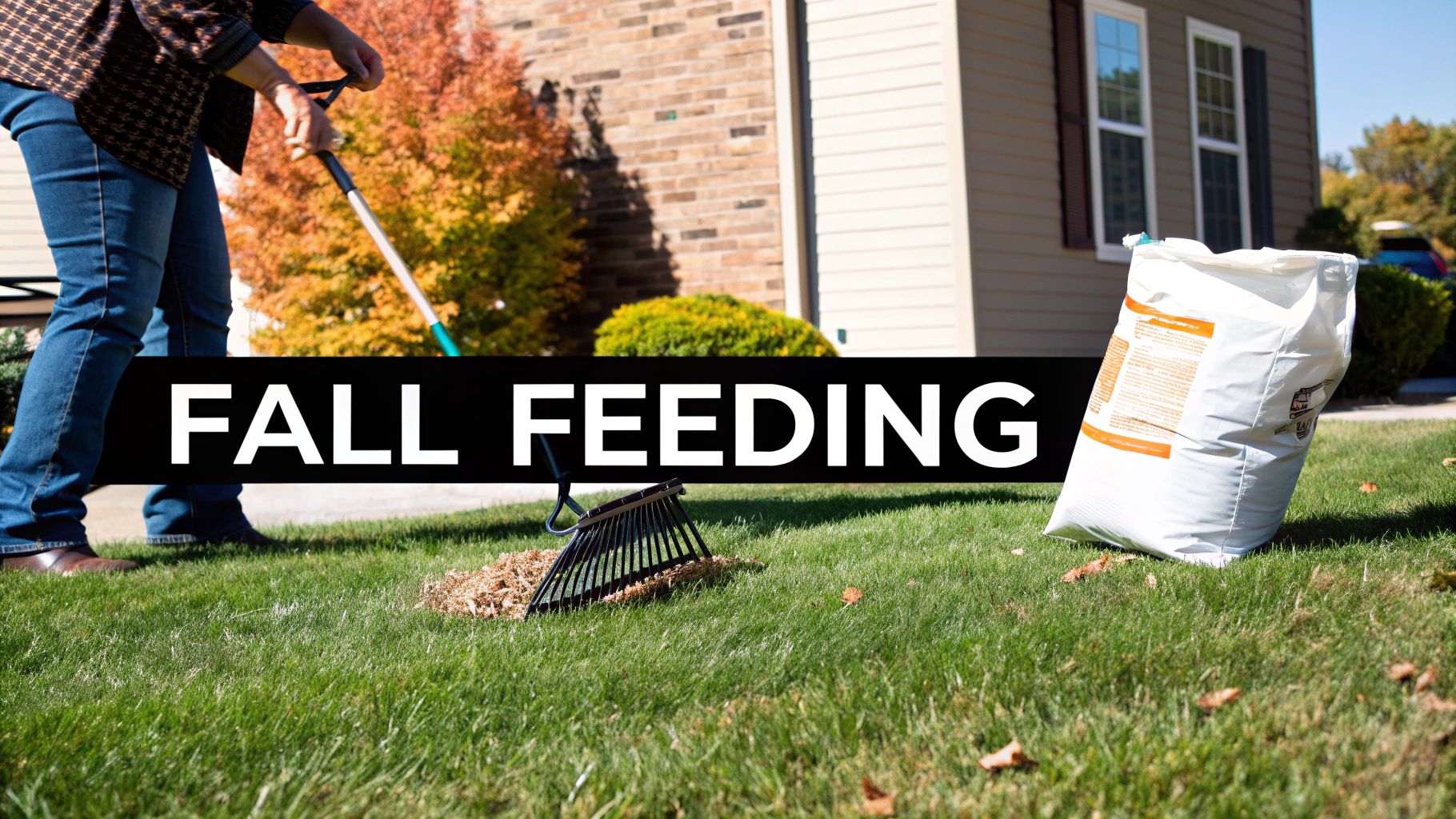
This feeding is fundamentally different from the ones you do in spring and summer. Think of it like packing a winter pantry for your lawn. The goal is to give it essential nutrients that the grass pulls down into its root system, creating a bank of energy to live on while it's dormant.
This single act of proactive care is what lays the groundwork for a dramatic, healthy return next spring. It’s the best way to ensure your lawn has the reserves it needs to not only survive the winter but bounce back with serious vigor.
Why Fall Feeding Is So Critical
That stored energy from a fall application does more than just help your lawn make it through the winter; it gives it a massive head start when the weather warms up again. This is the fuel that powers a quicker, healthier, and more uniform green-up in the spring. It’s like giving a runner a nutritious meal the night before a big race.
For homeowners in Alpharetta and Milton, this strategy is particularly effective at minimizing two major headaches:
- Winter Damage: Lawns with deep, well-fed roots are far more resilient against cold snaps and unexpected frosts. This improved cold hardiness means less dead, stressed-out grass to deal with come spring.
- Spring Dead Spot: This frustrating fungal disease often shows up as ugly brown patches when Bermuda and Zoysia lawns wake up from dormancy. A well-nourished lawn is simply stronger and less susceptible to this common issue.
The benefits don't stop there, either. A strong root system developed in the fall also boosts the lawn's drought tolerance for the following summer, making it better equipped to handle Georgia's intense heat.
The best times to fertilize lawns aren't just about getting immediate green. A September or early October feeding is a long-term investment in your lawn's resilience, ensuring it has the strength to endure winter and thrive the following year.
The Science of Winter Preparation
The power of fall fertilization is backed by solid horticultural science. Timing is everything. Pinpointing the application between early September and mid-October is key for North Georgia areas like Cumming and Dahlonega. This window allows the grass to absorb the nutrients before it goes fully dormant for the winter.
In fact, historical data from agricultural research centers confirms that a single September dose can rival the impact of three spring applications when it comes to promoting vigor. When you apply 1 lb of nitrogen per 1,000 sq ft, studies show the roots can store 25-35% more carbohydrates. That’s a huge deal, as it's directly linked to slashing spring dead patches by as much as 50%—vital in places like Forsyth and Dawson counties where variable frosts can wreak havoc. You can discover more about these findings from LSU.
This winter prep is a cornerstone of any proactive lawn care plan. For a deeper look into the specific products that work best for this crucial application, you might be interested in our guide on the best lawn winterizing fertilizer. Ultimately, this final feeding ensures your lawn doesn’t just go to sleep for the winter—it goes into a period of rest and recovery, ready to wake up stronger than ever.
Common Fertilization Mistakes to Avoid in Georgia
Knowing when to fertilize your lawn is a huge step in the right direction. But knowing what not to do? That’s what separates a decent yard from a truly stunning one. Here in North Georgia, from Dahlonega down to Milton, we see well-meaning homeowners make simple mistakes that end up undermining all their hard work.
Think of it like baking a cake. You can have the best ingredients in the world, but if you measure the flour wrong or keep opening the oven door, the results will be a flop. Fertilizing works the same way—a few key missteps can keep you from getting that lush, healthy lawn you're aiming for.
Applying Nutrients at the Wrong Time
Timing is everything in lawn care. This isn't just a catchy phrase; it's the golden rule. Your lawn's needs shift dramatically with the seasons, and putting down fertilizer when the grass can't actually use it is a waste of time and money.
Two timing errors are especially common around here:
- Fertilizing Dormant Grass in Winter: Your warm-season Bermuda or Zoysia is basically hibernating from late fall through early spring. Feeding it then is like serving a five-course meal to someone who’s fast asleep. The grass won’t touch it, but winter weeds will feast on it, or it will just wash away into local streams.
- Fertilizing Too Early in Spring: We’ve all been there. You see that first hint of green and get excited. But jumping the gun and fertilizing before soil temperatures are consistently above 55-65°F forces weak, leafy growth. This short-circuits root development, leaving your lawn vulnerable when the summer heat arrives.
The fix is simple: patience. Wait for your lawn to be actively and widely growing—usually around mid-April in the Alpharetta area—before you even think about that first application.
Using the Wrong Product or Amount
Not all fertilizer bags are created equal. Using the wrong kind, or just piling on too much, can cause some serious headaches. It’s easy to fall into the "more is better" trap, but over-fertilizing is a fast track to a stressed-out, unhappy lawn.
Quick-release synthetic fertilizers, in particular, can easily cause fertilizer burn, especially in the peak of a Georgia summer. The high concentration of nitrogen salts literally pulls moisture right out of the grass blades, leaving behind those ugly yellow and brown scorch marks.
Applying too much fertilizer is one of the quickest ways to damage your turf. It’s far better to under-apply and add more later than to over-apply and spend the season trying to undo the damage.
Always, always read the label. Take a few minutes to measure your lawn's square footage so you can apply the correct rate. Even better, choosing a slow-release organic product feeds your lawn steadily over time, which dramatically reduces the risk of burn and builds healthier soil for the long haul.
Uneven Application and Poor Technique
How you put the fertilizer down is just as critical as what you’re putting down. If your application is uneven, you’ll end up with a patchy, streaky lawn—think bright green stripes next to pale, hungry-looking sections. This is almost guaranteed to happen if you try to spread it by hand.
The solution is to use a properly calibrated broadcast or drop spreader. It’s the only way to get uniform coverage across the entire lawn, ensuring every square foot gets the consistent nutrition it needs to thrive.
Common Fertilization Errors and Solutions
It's easy to make a wrong turn when trying to get a beautiful lawn, but these mistakes are just as easy to correct. Here’s a quick summary of the most frequent slip-ups we see and how to get back on track.
| Common Mistake | Why It's Harmful | The Barefoot Organics Solution |
|---|---|---|
| Winter Fertilizing | Feeds weeds and wastes nutrients, as the dormant grass cannot absorb them. | Wait until the lawn is fully green and actively growing in mid-to-late spring. |
| Using Too Much Fertilizer | Causes fertilizer burn, stresses the grass, and can lead to nutrient runoff. | Measure your lawn and follow product instructions precisely. Use slow-release organic options. |
| Uneven Spreading | Creates a patchy, striped appearance with overfed and underfed areas. | Use a quality spreader and walk in a consistent pattern to ensure even coverage. |
By sidestepping these common pitfalls, you make sure every application is working for your lawn, not against it. This mindful approach helps you build a healthier, more resilient turf that can handle anything a Georgia season decides to throw at it.
A Few Common Questions About Lawn Fertilization
Even with the best plan in hand, you'll probably still have a few questions when you're trying to get that perfect lawn. It’s totally normal. Here are some of the things homeowners in Cumming and Alpharetta ask us all the time, along with some straight-to-the-point answers.
What About New Sod? Does It Follow the Same Schedule?
Not at first, no. Think of new sod like a patient recovering from surgery—its entire root system has been cut off and needs time to heal. It's best to wait a good 4-6 weeks after laying it down before you even think about fertilizing. This gives those new roots a fighting chance to get established in the soil.
If you're starting from seed instead, you'll want to use a special "starter" fertilizer right when you plant. These are high in phosphorus, which is the key nutrient for kickstarting strong root growth. Once your new grass is up and you've mowed it three or four times, you can ease it into the regular seasonal feeding schedule.
Should I Water Before or After I Fertilize?
This is a great question, and the answer is actually both!
Lightly watering your lawn a day or two before you apply fertilizer helps soften up the soil, especially if it’s been dry. This primes it to accept the nutrients. Then, after you've spread a granular organic fertilizer, you absolutely must water it in thoroughly. This is what activates the product, rinses it off the grass blades, and gets it down to the soil where the magic happens.
Just try to avoid fertilizing right before a big downpour is expected. A heavy rain can easily wash all those valuable nutrients right out of your yard.
Think of it this way: watering after you fertilize is like rinsing a dish. You're moving the fertilizer from the surface (the grass blades) down into the soil. A good, deep watering makes sure the nutrients get delivered directly to the roots instead of just sitting on top.
How Can I Be Sure I'm Using the Right Amount of Fertilizer?
Getting the amount right is probably the single most important part of the job. Overdoing it is a classic mistake that can scorch your lawn and create harmful runoff. The key is to always read the product label, which will give you an application rate, usually in pounds per 1,000 square feet.
To get this right, you first need to know the square footage of your lawn. This is where a lot of people just guess. A professional service takes that guesswork completely out of the equation by using properly calibrated spreaders to ensure every part of your lawn gets the precise amount it needs.
Is the Lawn Safe for My Kids and Pets After Fertilizing?
For families in Johns Creek and Milton, this is non-negotiable, and the answer really hinges on what you're putting down. With a lot of synthetic chemical fertilizers, the standard advice is to keep kids and pets off the grass for anywhere from 24 to 72 hours.
This is one of the biggest benefits of an organic-based program. The products are designed from the ground up to be safe for your family and the local ecosystem. Once an organic product is watered in and the lawn has had a chance to dry, it’s generally safe for everyone to get back to playing.
Ready to take the guesswork out of lawn care and get a beautiful, family-safe lawn without the hassle? The team at Barefoot Organics provides expert, natural lawn care services designed specifically for North Georgia's unique climate. Get your free online quote today!