

When it comes to top dressing your lawn in North Georgia, timing is everything. Get it right, and you’ll see incredible results. Get it wrong, and you could do more harm than good. The golden rule is simple: top dress your lawn during its peak growing season.
For the popular warm-season grasses like Bermuda and Zoysia that thrive in our hot summers from Cumming to Alpharetta, this means late spring to early summer. For cool-season grasses like Fescue, common in the shadier yards of Milton and Dahlonega, you’ll want to wait until the weather cools down in early fall. This ensures the grass is strong and ready to put the new nutrients to work immediately.
The Right Season for Top Dressing Your North Georgia Lawn
Think of top dressing like giving your lawn a powerful vitamin boost. You wouldn't take a supplement when you're asleep, right? You want to give it to your grass when it’s wide awake and actively growing. Applying it while the grass is dormant can suffocate the turf and invite weeds to take over.
So, the very first step for anyone in Cumming, Johns Creek, or Alpharetta is to know what kind of grass you have. That single piece of information dictates your entire schedule.
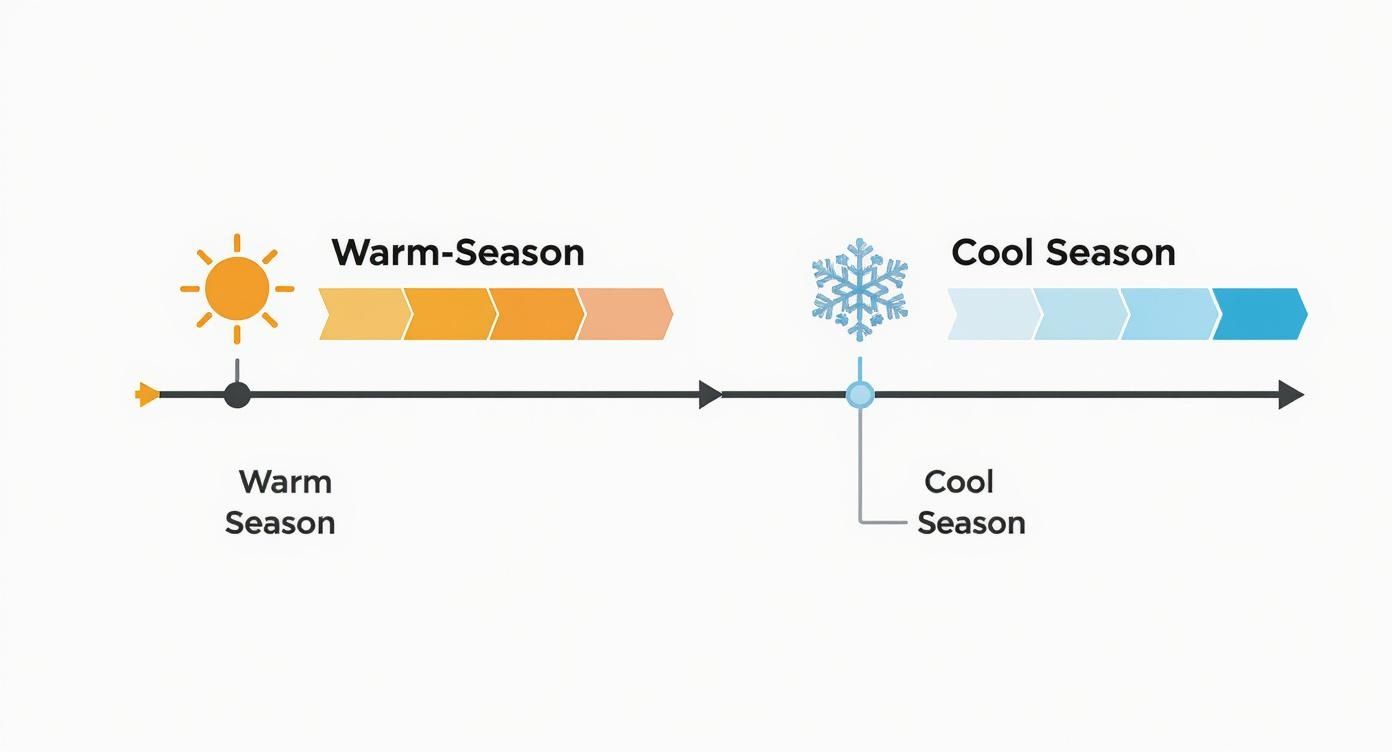
This visual really breaks it down. You can clearly see the two main windows for success: summer for the sun-loving grasses and fall for the cool-weather types.
Why Timing Is So Critical
The logic here is pretty straightforward. Your lawn needs to be growing vigorously to actually pull in and use the new layer of organic material. It's not just sitting on top; it needs to integrate into the soil.
The science backs this up, too. When soil temperatures hit around 55°F in the spring, the grass kicks into high gear, opening up that perfect window. In fact, homeowners who top dress during these peak growth times see up to 60-70% better integration of the material compared to those who try it off-season. If you want to dive deeper, you can find more great info on the importance of seasonal timing.
Top dressing isn't just dumping dirt on your lawn. It's a strategic process that rebuilds your soil from the top down. By applying a carefully selected mix of materials like compost and sand, you're improving soil structure, breaking down thatch, and smoothing out those bumpy spots all at once.
This single application can solve a host of common lawn issues we see all over Milton and Dahlonega, from our heavy, compacted clay soil to poor water retention during those scorching Georgia summers.
To help you plan, here's a quick look at the best times to top dress the most common lawns in our area.
Quick Guide to Top Dressing Seasons in North Georgia
| Grass Type | Primary Season | Ideal Months |
|---|---|---|
| Bermuda | Warm-Season | May – July |
| Zoysia | Warm-Season | May – July |
| Fescue | Cool-Season | September – October |
Ultimately, getting the timing right unlocks all the benefits you’re after. It’s the key to making the whole effort worthwhile.
When you nail the timing, you’ll see:
- Improved Nutrient Absorption: The grass immediately soaks up the good stuff, fueling stronger, greener growth.
- Better Water Retention: Amended soil acts like a sponge, holding moisture longer and making your lawn more drought-tolerant.
- Deeper Root Systems: Healthier soil encourages roots to dig deep, creating a more resilient and robust turf for the long haul.
Why Top Dressing Is a Game-Changer for Georgia Lawns
Think of top dressing less as a typical lawn treatment and more like rebuilding the foundation of your lawn from the top down. Instead of just chasing symptoms like brown spots or weak growth, you're fixing the root cause: the soil itself. For homeowners anywhere from Dahlonega to Milton, this is one of the most powerful things you can do for your grass.
The process is pretty straightforward. We spread a thin, even layer of a specific organic mix—usually a blend of high-quality compost and sand—right over the top of your existing lawn. This isn't just a layer of new dirt; it's a carefully chosen material designed to improve the soil you already have.
Tackling North Georgia's Toughest Lawn Problems
Let's be honest, the biggest challenge for many of us in Forsyth County and the surrounding areas is our native soil. That infamous Georgia red clay is dense, gets rock-hard when dry, and holds way too much water when wet. It makes life tough for grass roots trying to grow deep and strong.
Top dressing goes right after this core problem.
The key is using a top dressing mix with a similar texture to your existing soil. Adding a completely different material, like pure sand on top of heavy clay, can create a distinct layer that actually blocks air and water from moving through. The goal is to amend, not replace.
When you add the right organic material, it slowly works its way down into that compacted clay. It breaks up the dense structure, creating a lighter, more workable soil. This instantly improves drainage—no more soggy spots that breed fungus—and gives the roots the oxygen and space they need to thrive.
This one service tackles a whole list of common lawn headaches:
-
It Eats Thatch for Lunch: Thatch is that layer of dead grass and roots that builds up and can slowly suffocate your lawn. The healthy microbes in a good compost mix see thatch as a feast, breaking it down and turning it back into valuable nutrients for your soil.
-
Smooths Out Bumps and Dips: Over time, lawns get lumpy. Little low spots from winter freezes, worm activity, or just heavy foot traffic are easily filled in by top dressing. A level lawn doesn't just look better—it makes mowing much cleaner and more effective.
-
Helps Your Lawn Beat the Heat: We all know how hot and dry summers can get in Alpharetta and Johns Creek. The organic matter in top dressing acts like a natural sponge, holding moisture right at the root zone where it’s needed most. This means you can water less often and your lawn will be far more resilient during dry spells.
-
Unlocks Nutrients: A healthy, loose soil structure allows your grass to actually use the fertilizer you apply. The nutrients get to the roots instead of washing away. You get way more bang for your buck from every application, building a stronger, more self-sufficient lawn.
Ultimately, top dressing is a long-term investment in your soil's health. It creates a lawn that's naturally more drought-tolerant, better at fighting off weeds, and less prone to disease. It’s the secret to getting that truly lush, green carpet you're after.
When to Top Dress Your Warm-Season Lawn
For most of us here in Cumming, Alpharetta, and around Forsyth County, our lawns are rocking warm-season grasses like Bermuda and Zoysia. These are the turf types that absolutely thrive in our hot Georgia summers, and understanding their natural rhythm is the secret to getting top dressing right.
Unlike cool-season grasses, these varieties do all their heavy lifting—growing, spreading, and getting thick—when the sun is blazing.
This one simple fact sets the entire schedule. The prime time to top dress your Bermuda or Zoysia lawn is during its peak growing season, which for us is from late spring through early summer. Think of this as your lawn's high-energy phase.
You'll want to circle May, June, and early July on your calendar. During this window, the grass is growing like a teenager, making it strong enough to handle the top dressing application and immediately start using all that good organic material.
How to Know Your Lawn is Ready
Forget the calendar for a second and just look at your grass. It will give you some pretty clear signals when it's ready for a top dressing treatment. You're looking for signs that it's in full-on growth mode.
Here's what to watch for:
- A Deep, Rich Green: When your lawn is at its peak, it has a vibrant, healthy green color. This tells you it’s photosynthesizing efficiently and is full of life.
- You're Mowing More Often: Is the mower coming out more frequently? That’s a great sign. It means the blades are actively pushing up new growth.
- You Can See Runners Spreading: Both Bermuda and Zoysia spread through above-ground runners called stolons. In peak season, you can often spot these new runners creeping across bare spots or along edges.
Top dressing during this active growth spurt is the key to building up your lawn's defenses against the brutal summer heat that's just around the corner. The fresh layer of organic matter helps the soil hold on to precious moisture and provides a slow, steady food source to keep the turf strong. For more on getting your lawn ready, check out our guide to essential summer lawn care in Georgia.
The Big Mistake: Fall Top Dressing
I get it. It’s tempting to look at a struggling Bermuda lawn in the fall and think a layer of top dressing will "fix it" before winter. But this is one of the worst things you can do. As the days get shorter and cooler, your warm-season grass is starting to wind down and prepare for dormancy.
Applying top dressing in the fall is like putting a wet blanket on someone trying to go to sleep. It can smother the dormant grass, trap moisture right at the crown, and create the perfect conditions for rot and fungal diseases. Even worse, that fresh soil is an open invitation for every winter weed in the neighborhood to sprout while your lawn is asleep.
By waiting for that late-spring window, you’re working with your lawn's natural cycle, not against it. This timing gives the grass the energy it needs to grow through the new material, resulting in a healthier, denser turf that can naturally crowd out weeds all on its own.
The Ideal Window for Cool-Season Grasses
While Bermuda and Zoysia soak up the sun in most North Georgia yards, many of us with beautiful, mature trees rely on cool-season grasses like Fescue to thrive in the shade. These grasses are on a completely different clock than their warm-season cousins, which means we need to flip the script on timing. For Fescue, the absolute best time to top dress is in the fall, right when it's hitting its stride.
The sweet spot is from September to October. After a long, hot summer, the ground finally starts to cool off, and that's the signal for Fescue to wake up and get to work. It pours all its energy into growing deep roots and recovering from any summer damage, making this the perfect time to give it a boost.

A good fall top dressing sets your lawn up for success all winter long. The organic material acts like a light blanket, insulating the roots while slowly feeding the soil. Your grass will store those nutrients and use them for a powerful green-up when spring finally arrives.
The Science Behind Fall Top Dressing
So, why fall? Cool-season grasses are happiest and grow best when soil temperatures hover between 50-65°F. This is their peak performance zone. Applying top dressing in the fall works with this natural growth cycle, giving the grass exactly what it needs to build a robust root system before it goes dormant for the winter.
This isn't just a local trick; it's a fundamental principle for cool-season turf everywhere. The timing is everything because the grass is active and ready to use the new material right away. You can dig deeper into the advantages of top dressing and see why getting this window right is so important.
Creating the Perfect Seedbed for Overseeding
For anyone with a Fescue lawn in areas like Milton or Dahlonega, you know that summer can leave behind some thin or bare patches. That's why fall is also prime time for overseeding. And here’s the key: top dressing and overseeding are a dynamic duo that should always go hand-in-hand for cool-season grass.
Think of top dressing as creating the perfect garden bed for your new grass seed. The thin layer of compost and sand provides a moist, nutrient-rich, and protective environment that dramatically increases germination rates and helps new seedlings establish strong roots before winter.
This combination is so effective because it tackles several key challenges at once:
- Seed-to-Soil Contact: The top dressing material ensures every seed is nestled firmly against the soil, which is non-negotiable for germination.
- Moisture Retention: That organic layer acts like a sponge, holding precious moisture right where the seeds need it most so they don’t dry out.
- Protection: It provides just enough cover to shield the new seed from being washed away by a heavy rain or becoming a snack for hungry birds.
When you top dress and overseed together, you’re not just amending the soil; you’re actively rebuilding and thickening your entire lawn. This one-two punch in the fall is the secret to a Fescue lawn that comes out of winter looking dense, green, and healthier than ever. While you could do a light touch-up in the spring, the fall application delivers the biggest bang for your buck.
Combining Aeration and Top Dressing for Best Results
Think of top dressing like applying a really good moisturizer. For it to truly sink in and do its job, your pores need to be open. For your lawn, that's where core aeration comes in. It’s the essential first step that opens up your lawn’s "pores," making it the perfect partner for a top dressing application.
This powerful one-two punch is a non-negotiable strategy for really turning a lawn around here in Cumming and across North Georgia.
Aeration is the process of pulling up small plugs of soil, which creates thousands of tiny holes that go straight to the root zone. When you immediately follow up with top dressing, that fantastic, nutrient-rich material doesn't just sit on the surface. It falls right into those channels, delivering organic goodness deep into the compacted Georgia clay where it’s needed most.

This combo simply fast-tracks all the benefits of top dressing. It takes a great lawn care practice and makes it truly exceptional.
The Power of the One-Two Punch
Doing these two services together isn't just a "nice to have"—it's a strategic play that fundamentally changes your soil for the better. The results are both immediate and long-lasting, especially for homeowners in places like Alpharetta and Johns Creek who are constantly fighting against dense, heavy clay.
Here’s a breakdown of what this dynamic duo really accomplishes:
- Supercharges Thatch Breakdown: Aeration physically breaks up that thick layer of thatch, while the top dressing adds beneficial microbes that get to work decomposing it even faster.
- Improves Drainage Instantly: All those new channels, now filled with loose organic compost, give rainwater a place to go. This means less puddling and wasteful runoff.
- Encourages Deeper Root Growth: Grass roots will always seek the path of least resistance. The soft, nutrient-filled aeration holes practically invite the roots to grow downward, building a stronger, more drought-resistant lawn.
When you aerate first, you’re creating physical pathways for the top dressing to amend the soil profile from the inside out. It’s the difference between just laying a blanket on your lawn versus actually tucking it in around the roots.
Deciding when to tackle this project follows the exact same rules as top dressing on its own: always during your grass's peak growing season. Getting the timing right ensures your turf bounces back quickly and you get the most bang for your buck. For a closer look at the ideal timing for your specific grass, check out our guide on the best time to aerate your lawn in Georgia.
Ultimately, pairing these two services guarantees your investment of time and money delivers the most dramatic and lasting improvement possible for your lawn.
Choosing and Applying Your Top Dressing Mix
Alright, you've got the timing down. Now for the fun part: getting your hands dirty. Picking the right top dressing material and getting it on the lawn correctly are where the real magic happens, whether you're in Cumming, Johns Creek, or anywhere in between. Remember, we're not just throwing down a layer of dirt. We're strategically adding ingredients that will fix the soil you already have.
The Best Mix for North Georgia Clay
Here in North Georgia, we're blessed with a lot of things, but our heavy clay soil isn't always one of them. It gets rock-hard and compacted, making it tough for grassroots to thrive.
The solution? A balanced mix of high-quality, screened compost and coarse sand. Think of this as the perfect recipe to improve your soil. The compost is like a superfood, pumping your soil full of organic matter and beneficial microbes. The sand acts like a construction worker, breaking up those dense clay particles to improve drainage and let the soil breathe. This one-two punch is the foundation of a healthy lawn, and it's key to learning how to create healthy soil in your own backyard.
How to Apply Top Dressing Like a Pro
Applying top dressing is pretty straightforward, but a little precision goes a long way. The biggest mistake people make is putting down too much, which can do more harm than good.
The golden rule is to apply a thin, even layer—about 1/4 to 1/2 inch deep. You want just enough material to work its way down to the soil surface and into any aeration holes, but not so much that it smothers the grass.
If you lay it on too thick, you'll block sunlight and choke out your turf, which is the exact opposite of what you're trying to accomplish.

Here's a simple process to get it right every time:
- Prep the Lawn: First, mow your lawn one setting lower than you normally would and make sure to bag the clippings. If you just aerated, don't worry about the little soil plugs—just leave them be. They'll break down nicely under the new top dressing.
- Make Small Piles: Grab your wheelbarrow and shovel. Drop small, manageable piles of your top dressing mix every few feet across the lawn. This little trick makes spreading it evenly a whole lot easier than trying to work from one giant pile.
- Spread It Out: Take the back of a sturdy garden rake or a leveling lute and gently work the material across the grass. Your goal is a thin, consistent layer where you can still see the tips of the grass blades peeking through.
- Water It In: Give the lawn a light watering right after you're done. This does three things: it helps the mix settle down to the soil, rinses it off the grass blades, and wakes up all those good microbes in the compost.
That’s all there is to it. Follow these steps, and you'll be giving your soil exactly what it needs to build a stronger, healthier lawn.
A Few More Common Questions About Top Dressing in Georgia
Even the best-laid plans can leave you with a few "what ifs." It's totally normal. In fact, we get these questions all the time from folks across North Georgia, from Cumming all the way up to Dahlonega. Getting these finer points right is often what separates a good result from a great one.
Here are a few of the most common things we're asked.
Can I Top Dress My Lawn More Than Once a Year?
For most lawns around here, one solid application during the peak growing season is all you need. It gets the job done without overdoing it.
But if you're wrestling with a particularly lumpy yard or trying to fix seriously compacted, clay-heavy soil, a second light application can be helpful. For a Fescue lawn, that would mean once in the spring and again in the fall. If you have Bermuda or Zoysia, you could apply two light layers over the summer.
The golden rule is to never lay down more than 1/2 inch of material at one time. If you pile it on too thick, you risk smothering your grass. That cuts off sunlight and air, stressing the turf and basically rolling out the welcome mat for disease.
Is Top Dressing the Same as Just Adding Topsoil?
That's a great question, and the answer is no—they're completely different things. Think of top dressing as a targeted soil amendment, a specific blend of sand and rich compost designed to improve what you already have.
On the other hand, just dumping a heavy layer of generic topsoil on your lawn is a bad idea. It often creates a distinct layer that messes with drainage and doesn't mix well, leaving you with more problems than you started with.
Should I Water My Lawn After Top Dressing?
Absolutely. Watering right after you finish spreading the top dressing is a critical final step.
A good, light watering helps the material settle down between the grass blades and work its way into the aeration holes. It also activates all the good microbial life in the compost. After that initial watering, just go back to your lawn's regular schedule.
What's the Best Time of Day to Apply Top Dressing?
Aim for the morning. It's usually cooler, and the wind is calm, which makes spreading much easier.
Applying it in the morning gives the material plenty of time to settle in before the midday sun gets too intense. It also means you can water it in properly without half of it evaporating away.
Ready to give your lawn the professional care it deserves without the guesswork? Barefoot Organics offers expert aeration and top dressing services tailored specifically for North Georgia's unique soil and climate. Let us help you build a healthier, more resilient lawn from the ground up.