

When it comes to lawn care in North Georgia, timing really is everything. I've seen countless homeowners in Cumming and the surrounding areas wonder, "When is the absolute best time to aerate my lawn?" The answer isn't a single date on the calendar—it all comes down to the type of grass you have growing in your yard.
For warm-season grasses like Bermuda or Zoysia, common in our sunny neighborhoods, you'll want to target late spring to early summer. But if you have a cool-season grass like Fescue, often found in the shadier parts of North Georgia, the sweet spot is actually in the late summer or early fall.
Your Quick Guide to North Georgia Lawn Aeration

Here in places like Cumming, Alpharetta, and Johns Creek, aerating at just the right moment is what separates a good lawn from a great one. Get it right, and your grass will recover in no time, stronger and healthier than before. Get it wrong, and you could be opening the door for a weed invasion or putting your turf under unnecessary stress.
The secret is simple: schedule the job during your lawn’s peak growing season.
Think of aeration like opening up the windows to let your lawn take a deep, refreshing breath. For the warm-season grasses that love our Georgia heat, that breath is most effective when the grass is already growing like crazy. This energetic growth helps it quickly heal and fill in the holes left by the aerator, leading to a much thicker, more resilient turf.
The Two Seasons of North Georgia Lawns
The first question you have to answer is whether your lawn is a cool-season or warm-season variety. This single piece of information dictates your entire aeration schedule.
-
Cool-Season Grasses (Fescue): Fescue is a popular choice, especially for shadier yards around Milton and Dahlonega. It does its best growing when temperatures are mild, meaning spring and fall are its power seasons. Because of this, the ideal time to aerate is from late August to early October.
-
Warm-Season Grasses (Bermuda, Zoysia): These are the sun-worshippers that cover most North Georgia lawns. They thrive in the heat and do most of their growing during the hottest part of the year. For Bermuda and Zoysia, you'll want to aerate sometime between March and June.
As you can see, the timing is directly tied to the grass's natural life cycle. You're working with its growth spurt, not against it. This simple strategy is the foundation of successful aeration and helps you build a yard that can handle whatever our Georgia climate throws at it. You can dive deeper into how grass type influences aeration schedules on Landzie's blog.
North Georgia Aeration Schedule At-a-Glance
To make it even simpler, here’s a quick reference guide for the most common grass types we see in the Cumming and Alpharetta areas.
| Grass Type (Examples) | Peak Growing Season | Best Aeration Window |
|---|---|---|
| Bermuda, Zoysia, Centipede | Summer | Late Spring – Early Summer (March–June) |
| Fescue (Tall Fescue) | Spring & Fall | Late Summer – Early Fall (August–October) |
This table should help you pinpoint the perfect time to give your lawn the boost it needs. Planning your aeration around these key windows will give your grass the best possible chance to thrive.
Why Aeration Is a Game-Changer for Georgia Clay Soil
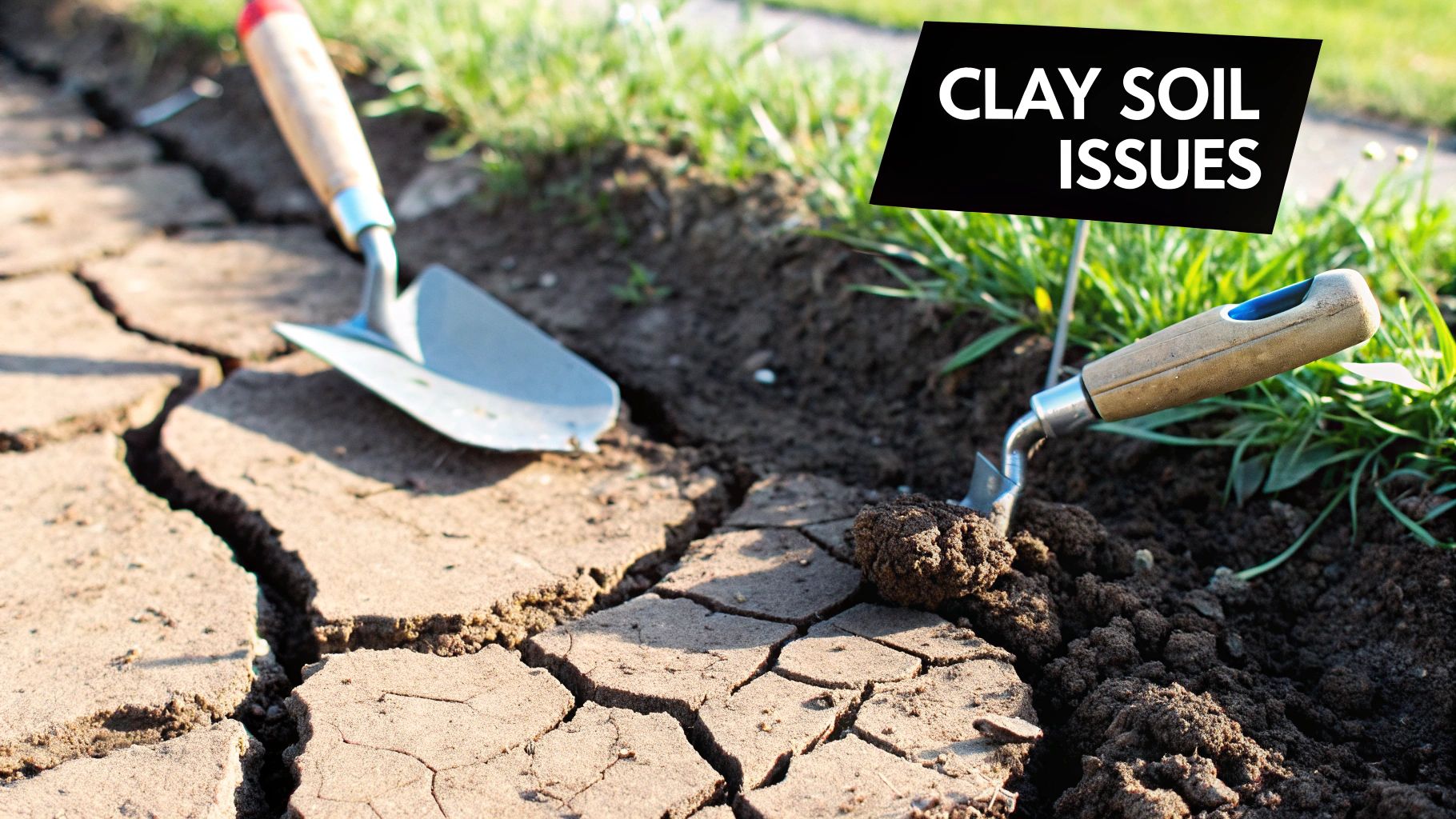
If you have a lawn anywhere from Cumming to Dahlonega, you know all about our infamous red Georgia clay. It’s beautiful in the landscape, but it can be absolutely brutal for grass. Over time, that clay soil gets packed down so tightly it becomes a hard, almost impenetrable barrier that grass roots just can't push through.
Think of it like a hardened, dried-out sponge. When it rains, water doesn't soak in. Instead, it pools on top or just runs right off, taking all those expensive nutrients from your last fertilizer treatment along with it. This problem gets even worse with our intense summer heat and the constant foot traffic from kids and pets.
That compaction is literally suffocating your lawn. Grass roots need oxygen just as much as water and nutrients. When the soil is squeezed tight, there's no room for any of it to get down to the root zone. The result is a weak, thinning lawn that’s an easy target for drought, disease, and pests.
Breaking Through the Barrier
This is where core aeration truly shines. The process involves pulling out small plugs—or cores—of soil from your lawn, creating thousands of tiny channels that fracture the compacted clay. It’s the equivalent of giving your lawn’s root system a massive sigh of relief and plenty of room to breathe, stretch, and grow.
These new pathways are lifelines, allowing air, water, and nutrients to finally get down to the roots where they’re desperately needed. For a North Georgia lawn, the results aren't just noticeable; they're essential.
Core aeration directly tackles the biggest challenge we face with our native soil. It is hands-down the most effective way to relieve compaction, improve water absorption during our heavy downpours, and make sure your fertilizer is actually feeding the grass instead of just washing down the driveway.
The difference it makes is huge. Clay-heavy soils simply require more intervention, and studies show that regular aeration can improve water absorption by up to 30%. That’s a massive advantage during our hot, dry summers.
The Lasting Benefits of Aeration
Aerating your Georgia clay isn't a quick, one-and-done fix. It's a foundational practice that sets your lawn up for long-term success. By consistently breaking up that compaction, you’re encouraging a deep, robust root system that can handle drought and heat stress far better.
Here’s what you can expect to see:
- Improved Water and Nutrient Uptake: Water and fertilizer finally reach deep into the root zone.
- Stronger Root Systems: Roots have the space to grow deeper and stronger, building a more resilient lawn.
- Reduced Puddling and Runoff: Heavy rain soaks into the ground instead of creating a soupy mess on the surface.
- Enhanced Thatch Breakdown: Aeration introduces microorganisms that help decompose the thick layer of dead grass suffocating your turf.
Ultimately, aeration is a powerful first step in a complete lawn care strategy. To build on this, our guide on how to improve soil provides more tips for creating the ideal environment for your grass. For an even deeper dive, you can also explore other effective ways to improve clay soil from other experts in the field.
Hitting the Sweet Spot: When to Aerate Warm-Season Grasses
For the sun-worshipping Bermuda and Zoysia lawns common from Cumming to Milton, timing your aeration is absolutely critical. These grasses are true warm-season varieties, meaning they do their best work in the heat. Their most vigorous growth spurt happens from late spring through early summer.
That’s your golden window.
Think of it this way: aerating during this peak growth period is like giving your lawn a shot of adrenaline right when it's ready for a marathon. The grass is actively sending out runners and has all the energy it needs to heal quickly, filling in the holes from the aerator with dense, healthy new turf. It’s not just about fixing compaction; it’s about building a stronger lawn.
By scheduling your aeration between May and July, you're working with your lawn's natural rhythm, not against it. This smart timing helps the turf bounce back fast and strong, creating a resilient lawn that can handle the summer heat and prepare for its eventual winter nap.
Is It Time? Signs Your Lawn is Crying Out for Help
Not sure if your Bermuda or Zoysia really needs it? Your lawn will send up some pretty clear distress signals when the soil gets too packed down. Keep an eye out for these clues, especially after a classic Georgia downpour.
- Puddles That Won't Go Away: If water sits on top of your lawn for hours after it rains instead of soaking in, that's a big red flag. It means the soil is too dense for the water to find a way through.
- Rock-Hard Ground: Grab a screwdriver and try pushing it into moist soil. If you hit a wall of resistance after just an inch or two, you’re dealing with compaction.
- Patchy, Thinning Turf: Is your lawn looking a little sad and sparse, even though you’re watering and fertilizing correctly? Compacted soil is often the secret villain, strangling the roots.
The most important thing to remember for warm-season grasses is this: only aerate when they are actively and aggressively growing. Hitting a dormant or stressed lawn can cause serious damage and roll out the welcome mat for weeds. That late spring to early summer window isn't just a suggestion—it's essential for getting the results you want.
This infographic gives a quick visual breakdown of the best timing for North Georgia's favorite warm-season grasses.
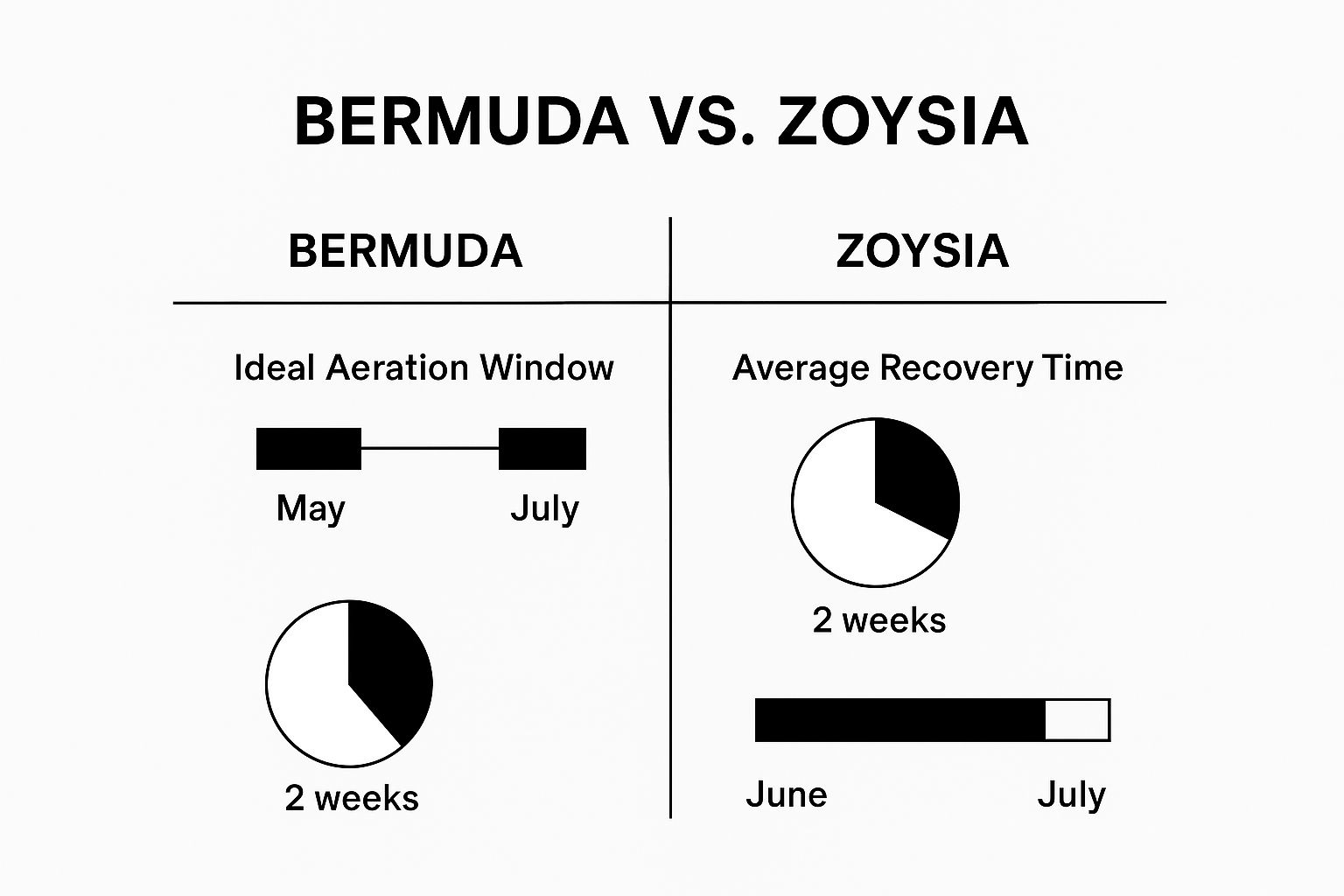
As you can see, both grasses love a summer aeration. Zoysia tends to get going a little later than Bermuda, which narrows its ideal window slightly. Still, when aerated during this prime time, both will recover beautifully, usually within just a couple of weeks.
Mastering Aeration for Cool-Season Fescue Lawns
If you've got a Fescue lawn in the shaded yards of Cumming or Dahlonega, you know it's a different beast than the Bermuda and Zoysia found in sunnier spots. Fescue is a cool-season grass, a distinction that completely changes the rulebook for lawn care, especially when it comes to the best time to aerate a lawn.
While sun-loving grasses are at their peak in the summer heat, Fescue truly comes alive when the temperatures are mild. This gives it two primary growth windows: one in the spring, and a much more important one in the fall. You might be tempted to aerate in the spring, but trust me, fall is the undisputed champion season for Fescue.
Aerating in the fall lines up perfectly with the grass's most vigorous root-building phase. This allows it to bounce back from the process incredibly fast, all while packing on the strength it needs to get through the coming winter.
Why Fall is the Golden Season for Fescue
For North Georgia lawns, the sweet spot for Fescue aeration is between September and October. The timing here is strategic. The soil is still warm from the summer, which encourages new growth, but the oppressive summer heat has finally broken. This gives the grass a chance to recover without all that extra stress.
Timing your aeration for this window pays off in a few big ways:
- Peak Recovery: Your lawn is in active growth mode, so it will heal the aeration holes quickly and efficiently.
- Fewer Weeds: A big problem with spring aeration is that you're practically rolling out the welcome mat for summer weeds like crabgrass. A fall aeration gives your Fescue a head start before winter weeds even think about showing up.
- Winter Prep: The deeper, stronger roots your lawn develops after a fall aeration are its best defense against the cold of a Georgia winter.
But this isn't just about punching holes to relieve soil compaction. It's about setting the table for the most critical task for any Fescue lawn: overseeding.
For a Fescue lawn, aeration and overseeding are a perfect partnership. The holes created by the aerator provide the ideal seed-to-soil contact necessary for high germination rates, leading to a thicker, lusher lawn the following spring.
The Dangers of Summer Aeration for Fescue
Whatever you do, avoid aerating Fescue during the summer. It’s a critical mistake. The intense Georgia heat already puts cool-season grasses under a ton of stress. Punching holes in the lawn when it's already struggling is a recipe for disaster.
You risk causing serious damage, inviting aggressive diseases, and creating ugly brown patches that are a nightmare to fix.
The whole point of aeration is to support your lawn's natural growth cycle, not fight against it. By waiting for the cooler, calmer weather of fall, you give your Fescue its best shot at becoming the dense, green carpet you want.
To get the full picture, you can learn more about the benefits of seeding in the fall, a process that truly completes the strategy. This one-two punch of aeration followed by overseeding is the real secret to a stunning Fescue lawn year after year, from Alpharetta to Milton.
How to Prepare Your Lawn for a Perfect Aeration
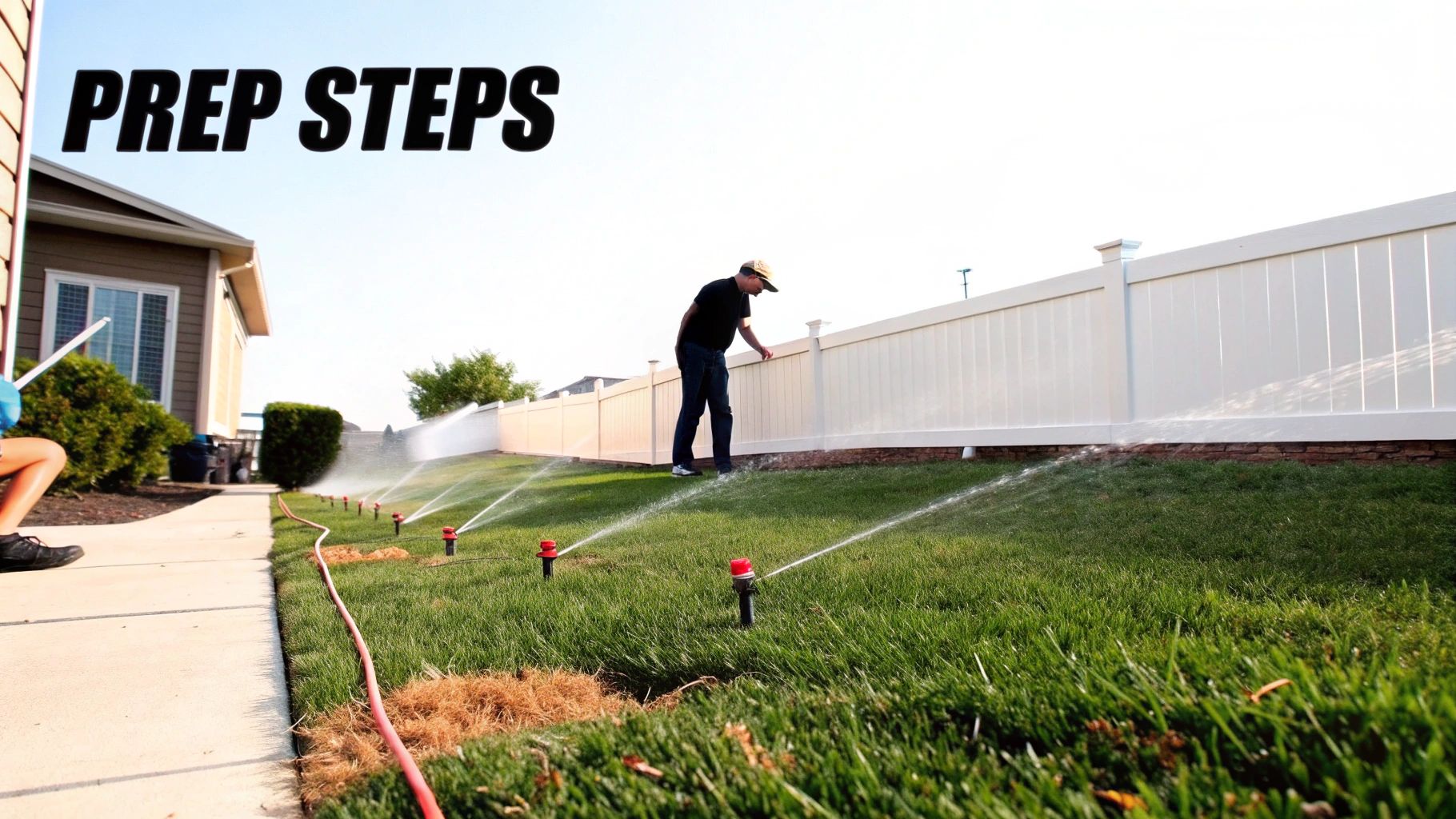
Knowing when to aerate is only half the battle. The other half—the part that really guarantees a great result—is the prep work.
Just a few simple steps before, during, and after aeration can make a world of difference. It's what separates a quick, successful recovery from a lawn that struggles to bounce back. Think of it like painting a room; you wouldn't just slap paint on a dirty wall, right? The prep work is what makes the final product look professional.
What to Do Before You Aerate
Proper groundwork ensures the aerator can penetrate deep into our tough Georgia soil without hitting any surprises. Before you fire up the machine or your lawn service arrives, run through this quick checklist.
- Mark All Obstacles: Take a walk around your property and use small flags to mark anything hiding in the grass. This means sprinkler heads, valve boxes, shallow cable lines, or invisible dog fences. Aerator tines are unforgiving and will do some serious damage to these systems, leading to a headache and an expensive repair bill.
- Mow Your Lawn: A day or two beforehand, give the lawn a cut at its normal height. Shorter grass makes it much easier to maneuver the machine and helps the tines plunge deep into the soil without getting tangled up.
- Water Thoroughly: This is the most important step, hands down. Give your lawn a good, deep soaking one to two days before you aerate. The goal is soil that's moist and pliable, but not a swampy mess. This is especially critical in our region, as it helps the aerator pull clean, deep plugs out of that dense red clay.
Pro Tip: A well-watered lawn is key. If the ground is rock-hard and dry, the tines will just bounce off the surface. If it's a mud pit, you'll just make a mess. A good rule of thumb is the "screwdriver test"—if you can easily push a screwdriver a few inches into the soil, it's just right.
During and After Aeration
With the prep work out of the way, the process itself is pretty straightforward. One thing to keep in mind is to make a few extra passes on high-traffic areas. That path the kids have worn from the patio to the swing set? That's a perfect spot for some extra attention.
After the machine is put away, your work is almost done. The key is knowing what to do next—and what not to do.
- Leave the Plugs: It might be tempting to rake up all those little soil cores, but don't do it! These plugs are full of beneficial microbes. As they break down over the next week or two, they'll release valuable nutrients back into your turf. A few good rainfalls or mowing cycles and they'll vanish on their own.
- Fertilize and Seed: Now is the perfect time to feed your lawn or put down new seed. Those freshly-punched holes are a direct pathway for nutrients and seeds to get right down into the soil where they're needed most. A soil test can help pinpoint exactly what your lawn is craving; you can learn how to test soil pH to get a clearer picture.
- Water Consistently: For the next couple of weeks, keep the soil lightly moist, especially if you overseeded. This helps the existing grass heal up and gives those new seedlings the steady drink they need to germinate and thrive.
Got Questions About Aerating Your North Georgia Lawn?
Even after you've decided to aerate, a few questions always seem to pop up. Homeowners from Cumming to Alpharetta run into the same hurdles, mostly because our red clay and specific climate present unique challenges.
Getting these common questions answered upfront can be the difference between a good result and a great one. Let's walk through the questions we hear most often from our neighbors right here in North Georgia.
Can I Aerate My Georgia Lawn in Both Spring and Fall?
This is a big one, and the answer depends entirely on what kind of grass you have. It seems logical that aerating twice a year would be twice as good, but doing it at the wrong time can actually hurt your lawn. The golden rule is simple: only aerate when your grass is actively growing.
If you have Fescue, a cool-season grass, you should only aerate in the fall. Tearing up the turf in the spring just rolls out the welcome mat for aggressive summer weeds and puts your lawn under major stress right before the heat kicks in.
For warm-season grasses like Bermuda or Zoysia, the perfect window is late spring or early summer. Aerating them in the fall is a terrible idea. It weakens the turf right when it’s trying to store up energy for winter, leaving it vulnerable to cold damage. Stick to one well-timed aeration per year.
How Often Should I Aerate Lawn with Heavy Clay Soil?
With North Georgia's famous dense red clay, annual core aeration is the best starting point for most lawns in the Cumming area. Clay soil gets compacted just by looking at it, and a yearly aeration is the single most effective way to fight back.
That said, some lawns need it more. If your yard in Milton or Johns Creek is the neighborhood hub for kids, dogs, and backyard barbecues, all that foot traffic is squeezing the life out of your soil much faster.
You can check for compaction with the "screwdriver test." When your soil is a bit damp, try shoving a regular screwdriver into the ground. If you have to fight to get it in more than a couple of inches, your soil is too compacted and is screaming for aeration.
For those high-traffic lawns, aerating every year is non-negotiable. For most typical suburban lawns, once a year will do the trick just fine.
Should I Rake Up the Soil Plugs After Aerating?
It's tempting to clean up the little dirt plugs left all over your lawn, but please, resist the urge! You should absolutely leave them right where they fall. They might look a little messy for a week or so, but those cores are basically a free, all-natural top-dressing for your lawn.
Each plug is full of beneficial microbes from deeper in the soil. As they break down, they release valuable nutrients and organic matter right back onto the surface.
Think of it as a mini-compost treatment. A few good waterings and a couple of mows later, they'll crumble and vanish back into the thatch layer, enriching your soil as they go.
Is It Better to Hire a Pro or Rent an Aerator in the Cumming Area?
This really boils down to your budget, your free time, and how much you value the results. Renting a core aerator is certainly an option if you don't mind wrestling with heavy machinery. But let's be clear—these things are heavy, awkward, and can be a real handful, especially on the rolling hills we have around here in North Georgia.
Hiring a professional lawn service in the Cumming area usually makes more sense. Pros bring commercial-grade aerators that are much heavier and more powerful than the rental units. That extra weight allows the tines to pull deeper, more consistent plugs from our tough clay soil, giving you a much better result.
For landscaping companies that offer aeration, being found by homeowners searching for help is crucial. Understanding the ins and outs of local SEO services for landscaping and lawn care businesses is how they connect with customers. For most people, though, the superior results, safety, and sheer convenience of hiring a professional deliver the best value for their lawn in the long run.
Ready to give your lawn the air it needs to breathe? At Barefoot Organics, we use top-of-the-line equipment to ensure deep, effective core aeration for your North Georgia lawn. Let our experts handle the hard work. Get your free online quote today!