

If you're a homeowner in Cumming, GA, finding the best lawn winterizing fertilizer comes down to one simple rule: high potassium, low nitrogen. This specific blend is the key to strengthening the roots of grasses like Bermuda, Zoysia, and Fescue, giving them the resilience they need to survive North Georgia winters and bounce back beautifully in the spring.
Why Winterizing Your North Georgia Lawn Is Crucial
For those of us from Cumming to Dahlonega, that last bit of fall lawn care can feel like just another chore to check off before winter arrives. But applying a winterizing fertilizer is so much more than that—it’s a smart investment in your lawn’s health for the next year. This isn't just about helping your grass survive; it's about preparing it for a lush, green comeback.
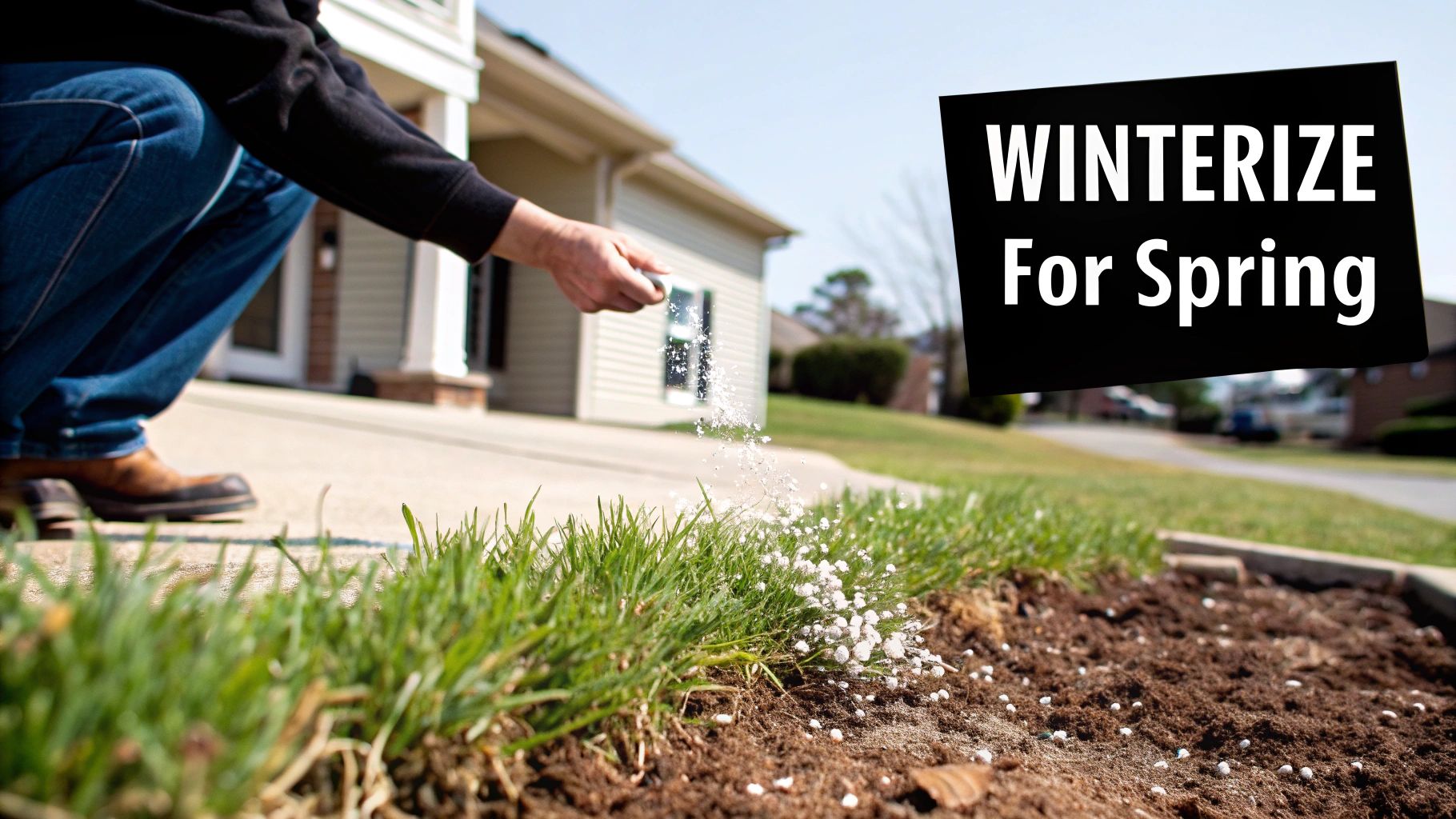
The whole point of winterizing is to shift your lawn’s focus from growing new blades to developing a strong root system. A good winterizer formula, packed with potassium, is what makes this happen.
- Strengthens Root Systems: It pushes roots to grow deeper and stronger, which is crucial for handling our region's unpredictable cold snaps.
- Enhances Disease Resistance: A healthier turf with robust roots is naturally better at fending off common winter lawn diseases like snow mold.
- Promotes Rapid Spring Green-Up: All those nutrients stored in the roots over winter fuel a quick, vibrant burst of growth as soon as temperatures rise.
Thriving in North Georgia's Unique Conditions
Lawns in Alpharetta, Milton, and Johns Creek deal with some unique challenges, from our famous red clay soil to those wild temperature swings in the fall. Generic, one-size-fits-all lawn advice just doesn't cut it here. Our heavy clay can get compacted easily, making it tough for water and nutrients to get down to the roots where they’re needed most.
A targeted winter fertilizer application cuts through this problem by delivering a concentrated dose of nutrients right where they count. It preps our popular local grasses—Bermuda, Zoysia, and Fescue—by helping them stock up on essential carbohydrates. This stored energy is what they’ll use to endure freezing temperatures and fend off stubborn winter weeds trying to move in.
Think of winterizing as stocking the pantry for your lawn. Even when the top growth goes dormant and looks like it's sleeping, the root system is actively absorbing and storing nutrients. It’s making sure it has everything it needs to thrive once the growing season returns.
This proactive approach is catching on everywhere. The global lawn fertilizer market is expected to grow to over $60 billion by 2033, with North America driving much of that demand. This shows a growing awareness that smart, seasonal care like winterization is the secret to a healthy lawn.
From Seasonal Chore to Long-Term Investment
At the end of the day, winterizing changes how you look at fall lawn care. It’s not just a reactive task; it’s a proactive strategy. It's the step that ensures all the time, money, and effort you poured into your lawn during spring and summer doesn’t go to waste. Understanding the value of winterizing is part of a bigger picture of protecting your entire landscape, much like the broader strategies for weather-proofing your yard for winter. By giving your grass a solid, nutrient-rich foundation before it goes dormant, you’re guaranteeing a healthier, more resilient lawn that will boost your home's curb appeal year after year.
Getting to Know Your Fertilizer Label This Fall
Walking down the fertilizer aisle can feel like a pop quiz you didn't study for. All those bags with confusing numbers and jargon can be a lot to take in. For homeowners in Johns Creek and Milton, figuring out these labels is the first real step toward picking the right winterizing fertilizer for your lawn.
The good news is you can ignore most of the noise and focus on the three big numbers on the front of the bag: the NPK ratio.
These three numbers tell you the percentage of Nitrogen (N), Phosphorus (P), and Potassium (K)—always in that order. Each one does something different, and what your lawn needs in the fall is completely different from its spring appetite. That’s precisely why a dedicated winterizer formula is so effective for lawns here in North Georgia.
Why Fall NPK Ratios are a Different Ballgame
In the spring, it's all about that lush, green top growth, and high nitrogen is the fuel for that. But pushing a high-nitrogen fertilizer in the fall is one of the biggest mistakes you can make. It forces out tender new grass blades right when the first frost is about to hit Cumming, setting your lawn up for serious damage.
A real winterizer flips the script, shifting the focus from the leaves to the roots. The recipe is simple: lower the nitrogen and crank up the potassium. This blend is a clear signal to your grass, telling it to stop trying to grow tall and start banking energy deep in its root system for the cold months. That stored energy is what gets it through the winter and powers a fast green-up next spring.
The NPK ratio on a winterizer isn't just a set of numbers; it's a direct instruction manual for your lawn. It signals a shift from outward growth to inward strength, preparing it for dormancy and resilience against winter stress.
What the Numbers Mean for North Georgia Grasses
So, what should you actually look for on the bag? You might see a ratio like 13-25-12. This simply means the fertilizer contains 13% nitrogen, 25% phosphorus, and 12% potassium.
The potassium (K) is the real star of the show in a fall blend. It's the key to improving cold hardiness, strengthening the plant's cell walls, and boosting its ability to fight off winter diseases. The phosphorus (P) is all about promoting deep, robust root development—exactly where you want your lawn’s energy to go in the fall.
Here’s a look at how those ideal NPK ratios break down for the most common turf types in our area.
Winterizer NPK Ratios for North Georgia Grasses
While a soil test is the best way to get a truly customized plan, this table gives you a solid starting point for understanding what your grass needs.
| Grass Type | Ideal Nitrogen (N) | Ideal Phosphorus (P) | Ideal Potassium (K) | Primary Goal |
|---|---|---|---|---|
| Bermuda/Zoysia | Lower (6-10%) | Higher (10-25%) | Higher (10-20%) | Maximize root storage before dormancy. |
| Fescue | Moderate (10-15%) | Moderate (10-15%) | Higher (15-25%) | Fuel root growth during its active season. |
Knowing what these ratios mean gives you the confidence to choose the right product off the shelf or to have a more informed conversation with your lawn care professional.
Of course, the most accurate approach is always a soil test. To get the most precise data for your yard, our guide on how to read soil test results can help you make sense of the findings. This way, you’re not just guessing—you’re giving your lawn exactly what it needs to thrive through winter and beyond.
Slow-Release vs. Quick-Release Fertilizer for Winter
When it comes to winterizing your lawn, picking between a slow-release or quick-release fertilizer isn't a minor detail—it's a strategic decision. The right choice for your Cumming home hinges entirely on what your lawn needs right now and what you want it to look like next spring. This goes way beyond how fast the granules dissolve; it affects everything from long-term root health to our local environment.
Let's walk through a couple of real-world North Georgia scenarios.
When a Quick-Release Fertilizer Makes Sense
Imagine the forecast for Forsyth County suddenly calls for an early, hard frost. Your lawn looks a little weak, the color is off, and you're worried it's not ready. This is one of the few times a quick-release fertilizer might be the right tactical move. It dissolves almost instantly, hitting the grass with a rapid surge of potassium and other nutrients. Think of it as a last-minute energy shot to help strengthen cell walls and boost cold tolerance before temperatures plummet.
But for most winter applications, this "fast and furious" approach has some serious drawbacks. Quick-release products are notorious for nutrient leaching. A single heavy rain can wash a good portion of the fertilizer right past the roots and into the storm drains, which is not only a waste of money but also contributes to nutrient runoff in local watersheds like Lake Lanier.
The Smarter Choice for Season-Long Health
Now, let's picture the more typical situation. It's mid-October, and you have weeks of cool weather ahead to prepare your lawn for dormancy. In this case, a slow-release fertilizer is hands-down the champion. These formulas are engineered to be a nutrient savings account for your lawn, delivering a steady, controlled diet over months instead of dumping it all at once.
This is all about feeding the roots for long-term resilience, not forcing a final burst of top growth.
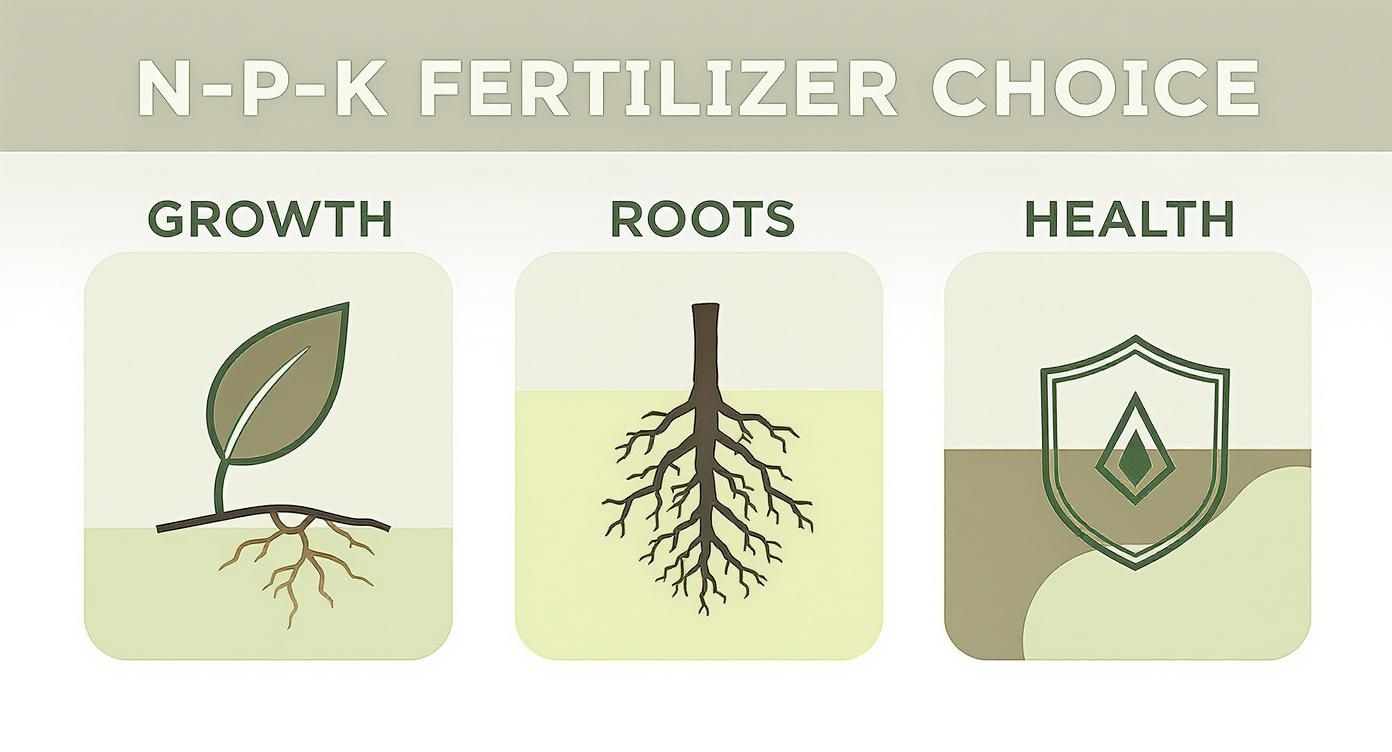
As the infographic highlights, potassium (K) is the star player for winter health and root development—the very things slow-release formulas are built to support over the long haul.
Modern slow-release granules often have special coatings that break down gradually with changes in soil temperature and moisture. This smart technology ensures nutrients are released at a pace the grass can actually absorb, which drastically reduces waste and environmental harm. It's the "set it and forget it" method that keeps feeding your lawn's roots all winter, even when you can't see anything happening on the surface.
The Long-Term Impact on Your Soil and Water
For environmentally-conscious homeowners in Alpharetta and Johns Creek, the technology behind controlled-release granules is a huge win. By metering out nutrients slowly, they significantly cut down the risk of nutrient pollution. This is a core principle of modern organic lawn care: feed the soil ecosystem for sustained health, not just the plant.
There's a reason the market for these products is booming. Valued at $2.3 billion in 2018, the controlled-release fertilizer industry is on track to hit $5.89 billion by 2032. This shift shows a growing appreciation for their efficiency, particularly for winterizing, as they provide nutrition when biological activity slows down. You can find more insights about the benefits of controlled-release fertilizers and their market trends.
Choosing a slow-release winterizer is an investment in both your lawn and the local environment. It prevents the boom-and-bust cycle of quick-release chemicals, leading to more resilient turf and cleaner waterways.
Let's break it down based on common situations:
- The Emergency Boost: For a weak lawn facing an imminent frost, a quick-release formula can deliver a fast jolt of potassium. Consider it a short-term fix for a specific problem.
- Consistent, All-Winter Health: A slow-release organic fertilizer is the superior choice. It steadily nourishes the soil and roots from fall into early spring, setting the stage for a thick, healthy lawn.
- Protecting Lake Lanier: Slow-release is the only responsible option. It minimizes nutrient runoff and helps protect our local water quality.
- Smarter Value: While the bag might cost a bit more upfront, slow-release products give you more for your money. You lose far less to runoff, so more of what you pay for actually feeds your grass.
At the end of the day, while quick-release products have a very specific, limited use, a high-quality slow-release winterizer is the best lawn winterizing fertilizer for nearly every North Georgia homeowner. It perfectly aligns with the real goal of winterization: building a deep, powerful root system that will pay off big time next spring.
Choosing Between Organic and Synthetic Winterizers
If you've got kids and pets running around your yard in Alpharetta or Dahlonega, the ‘organic vs. synthetic’ debate for winterizers is about more than just lawn care philosophy. It’s a practical decision that affects your soil’s long-term health, your family's safety, and how resilient your grass will be next spring. The two approaches couldn't be more different in how they work.
Synthetic fertilizers are like giving your lawn a quick energy drink—a direct, immediate shot of nutrients. Organics, on the other hand, are like a slow-cooked, wholesome meal for the soil itself, building up a strong foundation that feeds the grass naturally.
The Immediate Impact of Synthetic Fertilizers
Synthetic winterizers are engineered for one thing: speed. They deliver nutrients in a form that grass roots can absorb right away. If you're looking at a struggling lawn and want a fast green-up or a quick dose of potassium before the first frost hits, synthetics will get the job done.
But that speed comes at a price. Because these nutrients are water-soluble, they are easily washed away. One heavy autumn rain in Milton can send those chemicals right past the root zone. Not only is that a waste of money, but it can also contribute to nutrient runoff into our local streams and lakes. They feed the plant, but they do almost nothing to improve our dense North Georgia clay soil.
The Long-Term Benefits of Organic Winterizers
Organic fertilizers operate on a completely different timeline. They’re made from natural ingredients like bone meal, composted manure, or feather meal, which need to be broken down by microbes in the soil. Only then are the nutrients released for the grass to use. This creates a slow, steady feeding that supports deep root growth all winter.
It’s all about building a healthier foundation for the future. For our region, the payoff is huge:
- Improved Soil Structure: Organic matter is the single best thing you can add to North Georgia clay. It breaks up that dense, compacted soil, improving airflow and giving roots room to stretch out.
- Enhanced Water Retention: Soil rich in organic matter acts like a sponge, holding onto moisture far better. This makes your lawn much tougher during those inevitable dry spells.
- Reduced Future Inputs: When you foster a living, thriving soil ecosystem, you're building a lawn that can better defend itself. A healthy lawn naturally crowds out weeds and resists disease, meaning you'll need fewer chemical treatments down the road.
The core difference is really about what you're feeding. Synthetics feed the plant. Organics feed the entire soil food web, creating a self-sufficient system that results in a stronger, more resilient lawn year after year.
A Practical Comparison for North Georgia Homeowners
Deciding on the right winterizer means weighing what you need right now against your long-term goals for your lawn. For families in Johns Creek and Cumming, safety alone is often the deciding factor.
| Feature | Synthetic Winterizer | Organic Winterizer |
|---|---|---|
| Nutrient Delivery | Fast and direct to the plant. | Slow and steady; feeds the soil first. |
| Safety | Requires a 24-72 hour waiting period for kids and pets. | Safe for immediate use after application. |
| Soil Impact | Minimal long-term benefit to soil structure. | Builds soil health and improves clay structure. |
| Environmental Risk | Higher risk of nutrient runoff and leaching. | Low risk of runoff; nutrients are bound in organic matter. |
| Best Use Case | A quick fix for a nutrient-deficient lawn before a frost. | Building a resilient, low-maintenance lawn for the long term. |
With fertilizer prices in 2025 on the rise again due to global market shifts, getting the most out of every application is critical. The current economy means every dollar spent on your lawn has to deliver real value. To make a smart investment, it helps to explore valuable fertilizer market insights and understand the factors at play.
Ultimately, while synthetics can give you a short-term visual boost, an organic approach provides lasting value by improving your soil—and the soil is the true foundation of a great lawn. If you're looking to make the switch, you can learn more about finding the best organic lawn fertilizer for your yard's specific needs. This commitment to soil health ensures your lawn doesn't just survive the winter but comes back stronger and healthier for years to come.
DIY vs. Hiring a Pro: Who Should Handle Your Winterizer?
Choosing between tackling your lawn's winter prep yourself or calling in a professional is a big decision for any North Georgia homeowner. It’s the classic trade-off: time and effort versus money and expertise. At first glance, the DIY route looks like a great way to save a buck, but the real cost isn't just what you pay for a bag of fertilizer at the hardware store.
Think about it. Once you add up the price of a decent spreader, the value of your weekend time, and the very real risk of messing it up, the math starts to change. A patchy application can leave your lawn looking striped and uneven come spring. Worse, using the wrong product is like throwing money away—or could even damage the grass you’ve worked so hard on all summer.
The Realities of Going It Alone
Doing it yourself puts you in the driver's seat. You decide when to buy the fertilizer and when to apply it. But that freedom comes with a lot of responsibility and requires a good bit of know-how.
To get it right in places like Cumming or Alpharetta, you really need to nail a few key things:
- Picking the Right Product: You have to know your grass type inside and out to choose a fertilizer with the ideal NPK ratio for fall feeding.
- Getting the Timing Just Right: Put it down too early, and you'll get a flush of growth that won't survive the first frost. Too late, and the roots won't have time to absorb the nutrients. You’ll be constantly checking soil temperatures and weather forecasts, which is a real gamble with our unpredictable fall weather.
- Calibrating Your Spreader: This is a step many people skip, but it's crucial. You need to set your spreader correctly for your lawn's size and the specific product you're using to get that nice, even coverage.
The biggest pitfall for the DIYer is what you don't know. A seasoned pro can see things an untrained eye will almost always miss.
A professional service isn't just spreading fertilizer; they're reading your lawn. They can spot underlying issues like an imbalanced soil pH, the first signs of brown patch fungus, or hidden grubs that will completely undermine the effectiveness of any winterizer you put down.
The Advantage of Professional Expertise
When you bring in a service like Barefoot Organics, winterizing stops being a chore and becomes a targeted, strategic treatment. The number one benefit is expertise that’s fine-tuned for our unique local conditions, from the heavy clay soil in Milton to the specific fescue and Bermuda varieties common in Johns Creek. A professional plan is based on science, not a shot in the dark.
Most quality services start with a soil test. This gives them a detailed blueprint of exactly what your lawn is hungry for. You're not just getting a generic, one-size-fits-all winterizer; you're getting a precise formula designed to fix your lawn's specific deficiencies.
Let’s break down how the two approaches really stack up:
| Decision Factor | The DIY Approach | A Professional Service |
|---|---|---|
| Cost | Lower upfront cost for the bag, but don't forget equipment, your time, and the potential cost of fixing mistakes. | Higher initial investment, but it delivers predictable results and better long-term value for your lawn's health. |
| Effectiveness | Your results are entirely dependent on your own research, timing, and how well you apply the product. | Highly effective, thanks to soil testing, custom-blended products, and technicians who do this every day. |
| Convenience | You're responsible for everything—the research, shopping, application, and cleanup. | A completely hands-off, "set it and forget it" experience. The service is scheduled and done for you. |
| Expertise | Limited to what you can learn from Google and product labels. | Direct access to trained technicians who know our local soil, grass types, and climate challenges intimately. |
In the end, it really boils down to what you value most. If you've got the time, genuinely enjoy lawn work, and are up for the research, the DIY route can be a satisfying project. But for homeowners who want guaranteed results and the peace of mind that comes with expert analysis, a professional service is the clear winner. It's the best way to ensure your lawn gets exactly what it needs to survive the winter and bounce back lush and green next spring.
Building a Complete Fall Lawn Care Strategy
Getting a truly stunning lawn in Cumming, GA, takes more than just one bag of winterizer fertilizer. While the right nutrients are a big deal, a successful winterization plan is really a complete strategy. It’s about combining key services that work together, creating a foundation so strong that a simple DIY approach just can't compete.
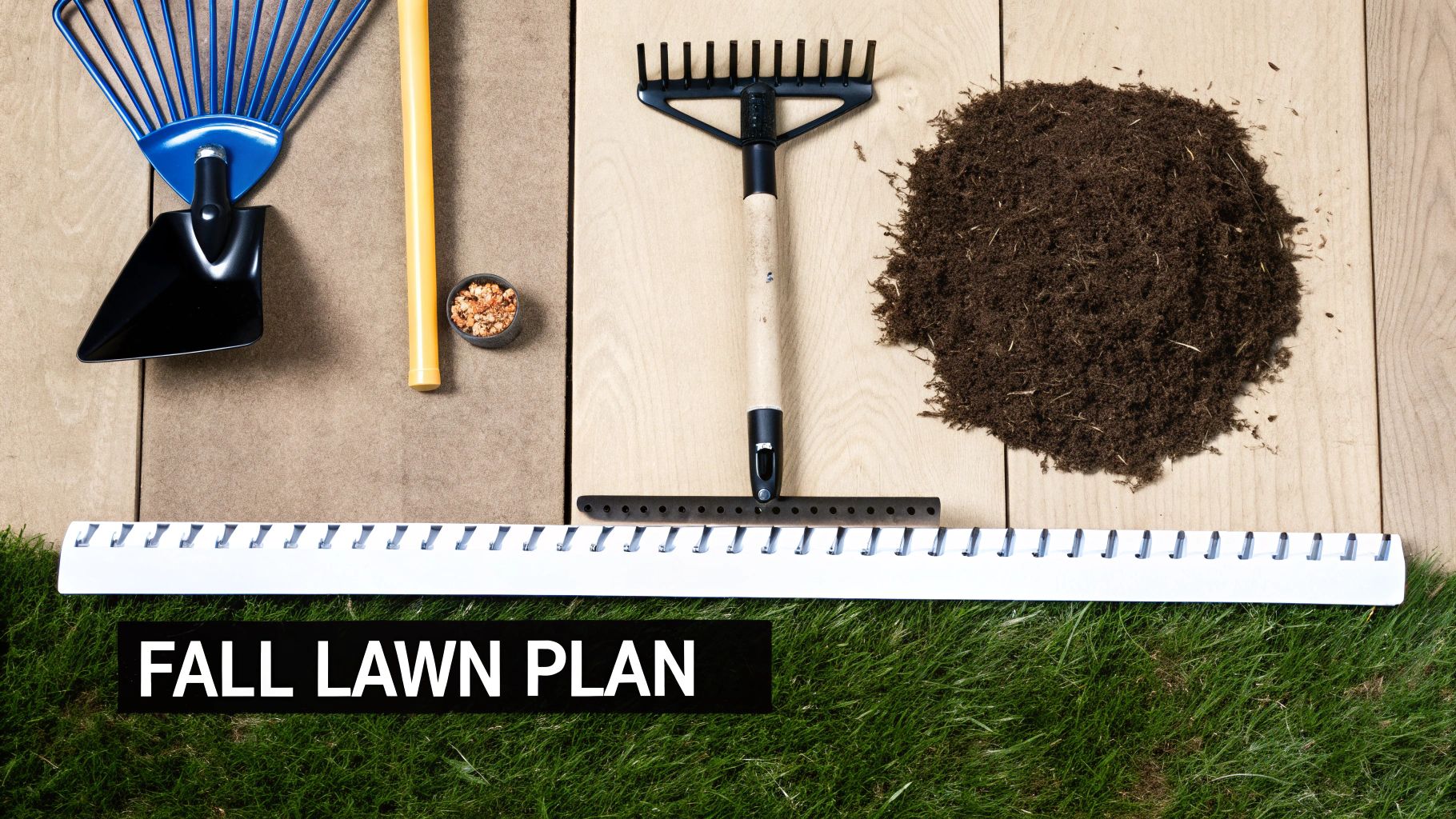
Think of it as a holistic system designed to tackle the unique challenges of our North Georgia soil and climate. Fertilizer is just one piece of the puzzle. Services like aeration and top-dressing actually prepare the ground to make the absolute most of those vital winter nutrients.
The Role of Core Aeration in Fall Prep
If you're battling the dense red clay we have all over Alpharetta and Milton, then core aeration is a game-changer. Throughout the year, all that foot traffic, mowing, and even heavy rain compacts the soil. This squeezes out air and makes it tough for water and nutrients to get down to the roots.
Core aeration fixes this by pulling up small plugs of soil. It creates thousands of little channels for air, water, and fertilizer to reach deep into the root zone. This is especially critical in the fall because it guarantees your winterizer application isn't just sitting on top. It gets the food down where the roots are still working, maximizing absorption before the lawn goes dormant.
Aeration is like opening up windows in a stuffy room for your lawn's root system. Without it, even the best fertilizer can struggle to deliver its full benefits, particularly in our compacted clay soils.
Improving Soil Structure with Fall Top-Dressing
Right after aerating, the perfect next step is top-dressing with high-quality compost. This is simply spreading a thin layer of organic material over the lawn. It falls right into those aeration holes and gets to work improving the soil's structure for the long haul.
As the compost breaks down, it introduces vital organic matter and beneficial microbes. For homeowners here in Forsyth County, this delivers two massive advantages:
- Breaks Up Clay: The organic material physically loosens up dense clay particles, which improves drainage and makes it far easier for roots to spread out.
- Increases Nutrient Retention: Compost acts like a sponge. It holds onto the nutrients from your winterizer and releases them slowly, which means less waste and more benefit for your grass.
This one-two punch of aeration followed by top-dressing creates the perfect environment for your winterizer to do its job. It literally transforms the soil into a healthy, living ecosystem that supports a more resilient lawn.
Creating the Ideal Fall Lawn Care Timeline
Timing is everything. Getting these services done in the right order and at the right time is crucial for success, whether you're in Johns Creek or Dahlonega. A well-structured plan ensures each step builds on the last.
Here’s a sample timeline for a complete fall strategy:
- Late September to Mid-October: This is the prime window for core aeration. The ground still has some moisture, making it easier to pull clean plugs.
- Immediately Following Aeration: Get that layer of top-dressing with compost down. This lets the organic matter settle right into the aeration channels.
- Late October to Mid-November: Now's the ideal time to apply your organic slow-release winterizer. The soil is perfectly prepped to absorb every bit of that high-potassium formula.
By following this sequence, you’re not just feeding your lawn—you’re rebuilding its foundation from the soil up. To see how these steps fit into a full-year plan, you can check out a detailed lawn care schedule template built specifically for North Georgia lawns. This integrated strategy is what produces those truly exceptional results, ensuring your lawn doesn't just survive the winter but comes back thicker, greener, and healthier next spring.
Your Top Winterizing Questions Answered
Even with the best intentions, it's easy to get tripped up by the details of winterizing your lawn. I get a lot of the same questions from homeowners around Cumming and Alpharetta, so let's clear up some of the most common ones.
When Exactly Should I Apply Winterizer in North Georgia?
This is the big one, and the answer comes down to your grass type. If you have a warm-season lawn like Bermuda or Zoysia, you'll want to get it done between late September and mid-October. You're looking for that sweet spot after the aggressive summer growth has tapered off but before the first real frost is on the forecast.
For cool-season grasses like Fescue, which are all over this area, you'll wait a bit longer. Your target window is late October into early November. This timing is crucial because Fescue is putting all its energy into root development then, and a good winterizer gives it the exact nutrients needed to build a strong foundation for the cold months ahead.
Can't I Just Use My Regular Fertilizer as a Winterizer?
That’s a common mistake, and it can do more harm than good. Your spring and summer fertilizers are loaded with nitrogen to push fast, green top growth. If you put that on your lawn in the fall, you’re just encouraging weak, new grass blades that the first hard frost will immediately damage.
A true winterizer is built differently. It has less nitrogen and a whole lot more potassium. This specific NPK ratio is designed to strengthen roots and improve cold hardiness, helping your lawn prepare for dormancy without the risky, vulnerable new growth. It's really the only smart choice for fall.
How Long Until My Kids and Pets Can Play on the Lawn?
For families in Johns Creek and Milton, this is non-negotiable. With most synthetic chemical fertilizers, you're looking at a strict waiting period. You have to keep everyone off the grass for anywhere from 24 to 72 hours, or at least until it’s been thoroughly watered in and has completely dried.
This is where going organic makes a world of difference. Natural winterizers are made from ingredients you don't have to worry about. Because they're non-toxic, they are safe for pets and kids to be on the lawn immediately after application. You get great results without having to lock the backdoor, which offers incredible peace of mind.
Ready to give your lawn the expert, organic care it needs to thrive this winter? Barefoot Organics offers tailored solutions that are safe for your family and perfect for North Georgia's unique soil and climate. Get a free, no-obligation quote and discover the difference a professional, natural approach can make.