

Welcome, North Georgia dog owners! If you live in Cumming, Alpharetta, or the surrounding communities, you understand the constant battle between maintaining a beautiful lawn and accommodating a happy, active dog. Muddy paws tracked through the house, unsightly yellow patches from urine, and compacted, worn-out paths can quickly turn your dream yard into a recurring source of frustration. The unique red clay and variable weather conditions of our region, from Dahlonega's hills to Milton's neighborhoods, only add to the challenge. It often feels like you have to choose between a pristine landscape and your pet’s freedom to play.
But what if you could achieve both? This guide is your definitive local roadmap to finding the best ground cover for dogs, one that is perfectly suited for our specific North Georgia climate and lifestyle. We will move beyond generic advice and focus on practical solutions that work right here in areas like Johns Creek and beyond.
We'll explore eight durable, pet-safe, and aesthetically pleasing options designed to withstand zoomies, digging, and daily use. From robust natural grasses that thrive in our humid summers to innovative synthetic and hardscape solutions, this list provides actionable insights to help you create a resilient, low-maintenance outdoor space. Let's dig into the top choices for building a paw-proof paradise that you, your family, and your furry companions will love for years to come.
1. Artificial Turf (Pet-Specific)
For North Georgia homeowners in areas like Alpharetta and Milton, finding a ground cover that can withstand both enthusiastic dogs and our region's variable climate can be a significant challenge. Pet-specific artificial turf offers a modern, durable solution, moving far beyond the plastic-looking astroturf of the past. This isn't your standard landscape turf; it's an engineered system designed to handle the specific demands of pets.
Modern pet turf features advanced drainage technology, often incorporating a multi-layered sub-base of crushed stone to quickly wick away urine and prevent pooling. The synthetic fibers are infused with antimicrobial agents to inhibit the growth of bacteria and control odors, a common complaint with less advanced turf systems. This makes it an excellent choice for creating a clean, mud-free play area that remains lush and green year-round, regardless of drought or downpour.
Why It's a Top Choice for Dog Owners
This option is one of the best ground covers for dogs because it eliminates common yard problems entirely. Say goodbye to muddy paws tracked through your house after a classic Georgia thunderstorm, frustrating dead patches from urine spots, and the constant battle against fleas and ticks that thrive in natural grass.
High-quality pet turf, like systems from industry leaders K9Grass or ForeverLawn, is designed for high-traffic use. You’ll find these systems installed in professional dog parks, veterinary clinics, and doggy daycare facilities right here in the Cumming area for their resilience and ease of maintenance.
Key Insight: The success of pet-specific artificial turf lies in its integrated system. It’s not just the synthetic grass on top but the carefully prepared sub-base and infill that ensure rapid drainage and long-term odor control, making it a complete solution for pet-related lawn damage.
Implementation and Maintenance Tips
Proper installation is non-negotiable for artificial turf to perform as intended. A poorly installed system can lead to drainage issues, odors, and premature wear.
- System Selection: Always choose a turf system specifically designed for pets. These have superior flow-through backings and often lack the standard infill that can trap odors.
- Sub-Base is Critical: A 4-to-6-inch base of crushed, compacted stone is essential for creating the drainage field necessary to handle pet waste effectively.
- Ensure Proper Slope: For homeowners in the rolling hills around Cumming and Dahlonega, a slight slope of 1-2% is crucial. This grade ensures that water and urine flow away from the surface and into the sub-base, preventing stagnation.
- Regular Cleaning: Solid waste should be removed promptly. A monthly rinse with a professional-grade, enzyme-based cleaner will break down residual urine and keep the area fresh.
While artificial turf eliminates the need for mowing and traditional fertilization, it is not a zero-maintenance product. However, for those seeking an immaculate, always-ready play space for their dogs, the trade-off in upkeep is often well worth it. It’s a significant upfront investment but provides a long-term, durable surface. While this solution bypasses the need for traditional lawn care, understanding what makes a lawn safe for pets is still valuable. For homeowners weighing all their options, you can discover more about pet-safe lawn treatments and their importance for your family's well-being.
2. Pea Gravel
For homeowners in North Georgia, particularly in areas like Cumming and Johns Creek, finding a durable and cost-effective ground cover for a dog run can be challenging. Pea gravel, consisting of small, smooth, rounded stones, offers a practical and aesthetically pleasing solution. These stones are comfortable for most dogs' paws, provide excellent drainage during heavy Georgia downpours, and are significantly more affordable than hardscaping or artificial turf.
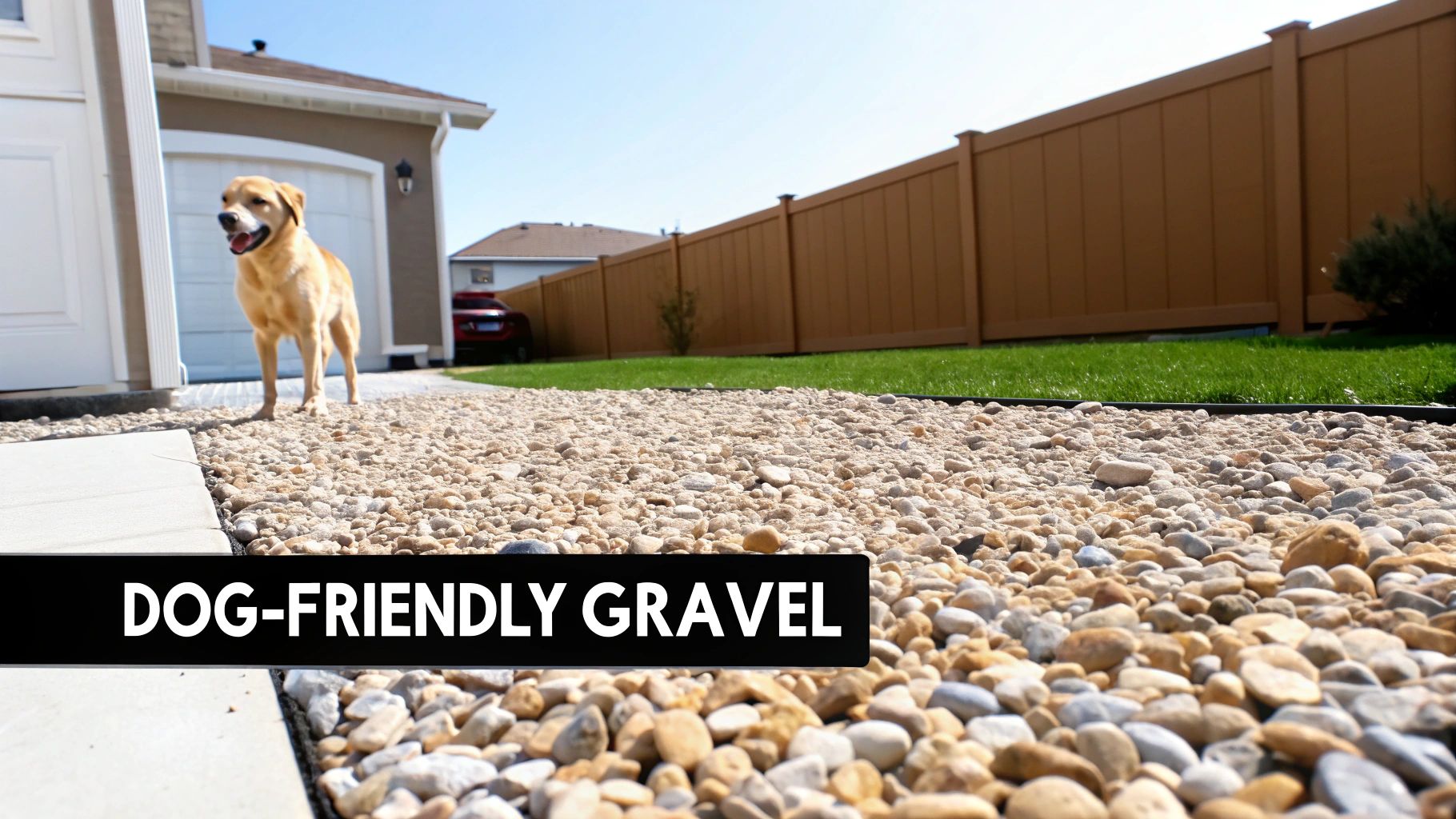
Unlike organic mulches, pea gravel does not decompose, host fleas or ticks, or retain moisture that can lead to fungal growth. It effectively suppresses weeds when installed correctly and creates a clean, low-maintenance zone that prevents dogs from digging and creating mud holes. This makes it an ideal choice for designated potty areas, kennels, or pathways where grass struggles to grow due to high foot traffic and shade.
Why It's a Top Choice for Dog Owners
This natural stone is one of the best ground covers for dogs because it excels at drainage and cleanliness in a specific, contained area. Urine passes straight through the stones into the soil below, minimizing odors and preventing the yellow "urine spots" that plague natural lawns. Solid waste is easy to spot and remove, keeping the surface sanitary.
You’ll see pea gravel used effectively in many professional settings, from local Alpharetta veterinary clinic outdoor spaces to residential dog parks across our area. Its durability means it won't break down under constant use from active dogs, making it a reliable, long-term installation for high-traffic zones.
Key Insight: Pea gravel's primary advantage is its superior drainage and ease of sanitation for a designated dog area. It separates waste from the living surface, preventing the muddy, smelly mess common with soil or grass in a concentrated-use zone.
Implementation and Maintenance Tips
A successful pea gravel dog run depends entirely on proper preparation and installation. Simply dumping gravel on the ground will lead to a messy, ineffective result.
- Proper Depth: Install a layer of pea gravel 4 to 6 inches deep. This provides a comfortable cushion for paws and ensures there's enough material to cover the ground completely.
- Containment is Key: Use a sturdy border made of pressure-treated wood, metal, or stone edging to keep the gravel contained and prevent it from migrating into your lawn or flower beds.
- Use Landscape Fabric: Always lay down a high-quality, permeable landscape fabric before adding the gravel. This critical step prevents weeds from growing through and stops the stones from mixing with the soil below.
- Plan Your Materials: When planning for stone-based ground covers like pea gravel, it's essential to accurately estimate material needs; you can use a tool to help you find out how to calculate coverage for stone aggregates.
- Simple Cleaning: Scoop solid waste promptly. Periodically rinse the area with a hose to wash away urine residue and rake the gravel to keep it level and evenly distributed.
While pea gravel is an excellent choice for dog runs and specific-use areas, it's not a whole-yard replacement for grass. For homeowners wanting to maintain a lush, green lawn alongside a designated pet area, understanding pet-safe lawn care practices is essential for a healthy, cohesive landscape.
3. Clover (White or Microclover)
For homeowners in North Georgia, from Johns Creek to the more rural parts of Dawson County, the quest for a resilient, low-maintenance lawn that can handle dogs is constant. Clover, particularly White Clover and its smaller cousin, Microclover, presents a fantastic, eco-friendly solution. This resilient legume was once a standard component of lawn seed mixes and is now making a comeback for its incredible durability and soil-enhancing properties.
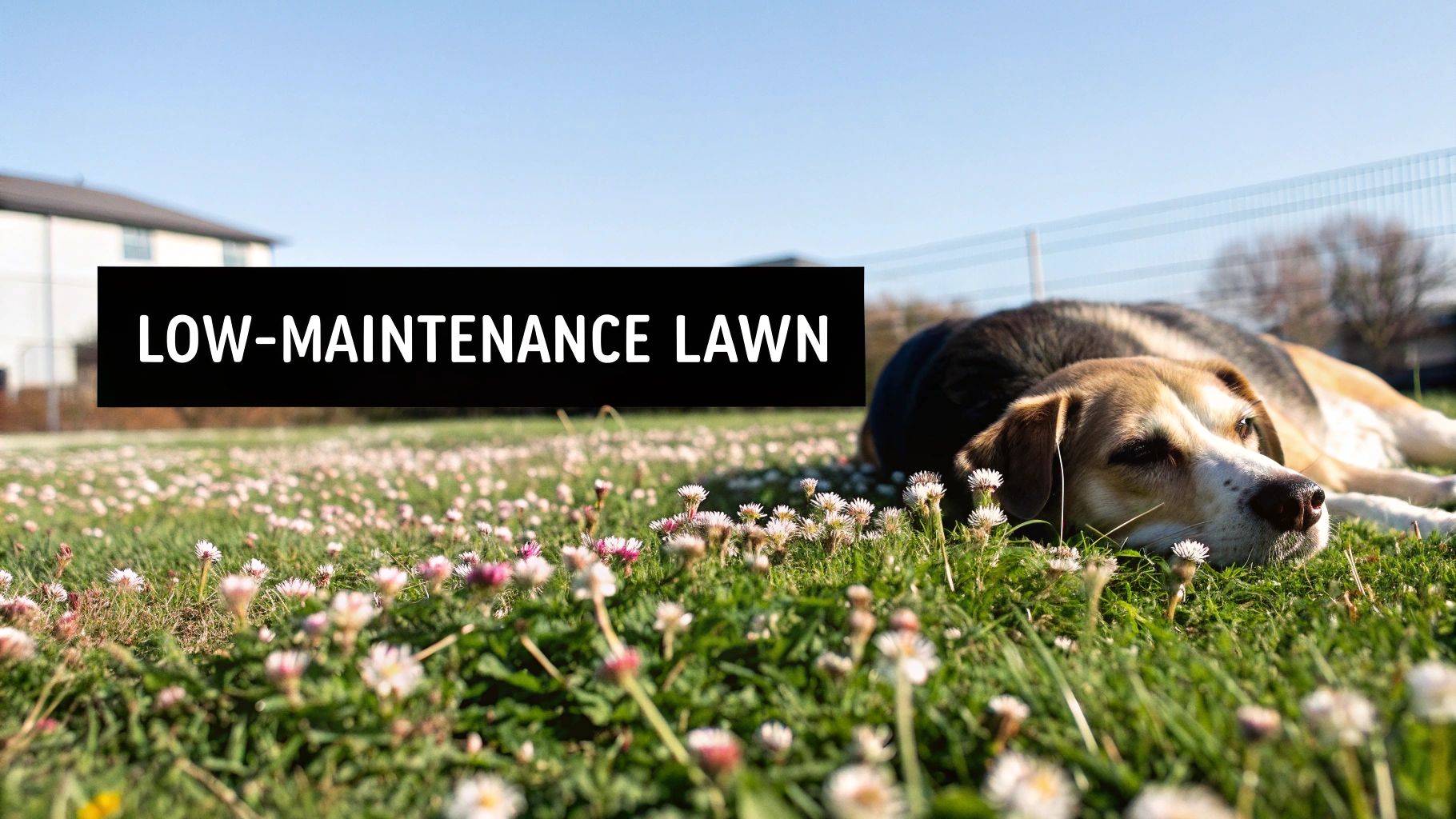
Unlike traditional turfgrasses, clover is highly resistant to the nitrogen in dog urine, which prevents the unsightly yellow "urine burn" spots common on fescue and Bermuda lawns. It stays green throughout the hot Georgia summers with minimal water and naturally enriches the soil by pulling nitrogen from the air, reducing the need for chemical fertilizers. Its dense growth pattern also helps to crowd out common weeds, creating a soft, cool surface perfect for playful paws.
Why It's a Top Choice for Dog Owners
This option stands out as one of the best ground covers for dogs because it offers a living, self-sustaining alternative to grass. Its natural resistance to dog urine means your lawn stays consistently green without constant patching and reseeding. Clover's deep root system makes it drought-tolerant, an essential quality for surviving the unpredictable dry spells we often experience in the Alpharetta area.
Furthermore, clover is soft and comfortable for dogs to run and play on. It attracts beneficial pollinators like bees, contributing to local biodiversity, but a quick mow before letting dogs out can manage the flowers if bee stings are a concern. This makes it a popular choice among eco-conscious pet owners in Milton and beyond who want a functional, beautiful, and environmentally friendly yard.
Key Insight: Clover's primary advantage is its symbiotic relationship with soil. As a nitrogen-fixing plant, it naturally fertilizes itself and any surrounding grass, creating a healthier, more resilient lawn that requires fewer chemical inputs and is inherently better at resisting the wear and tear from pets.
Implementation and Maintenance Tips
Establishing a clover lawn is straightforward, but following a few key steps will ensure a lush, durable ground cover that thrives for years.
- Seeding Time: The best times to seed clover in North Georgia are in the spring or early fall. This timing allows the seeds to germinate and establish strong roots before the stress of summer heat or winter cold.
- Soil Preparation: Loosen the top layer of soil with a rake to ensure good seed-to-soil contact. Clover is not overly picky about soil type, which is ideal for the varied clay soils found around Cumming.
- Blend or Go Solo: You can overseed an existing lawn with microclover to fill in bare spots and improve its overall health, or you can dedicate an area entirely to a full clover lawn for maximum durability.
- Watering is Key: Keep the seeded area consistently moist for the first 6-8 weeks until the clover is well-established. Once mature, it requires significantly less water than traditional turfgrass.
- Mowing: Mow occasionally to maintain your desired height and encourage dense growth. You can mow it high to let it flower or keep it short to minimize blossoms.
While many homeowners embrace clover for its benefits, it can spread and may not fit every aesthetic. For those who find it encroaching into garden beds or other lawn areas, understanding how to manage its growth is important. For more information, you can explore strategies for keeping clover in its designated space.
4. Mulch (Rubber or Wood-Based)
For homeowners in North Georgia looking for a practical and natural-looking ground cover for specific pet areas, mulch offers a versatile and cushioned solution. Whether you opt for organic wood-based mulch or synthetic rubber mulch, both create a surface that is soft on paws and absorbs impact, making it ideal for play zones, dog runs, or pathways. This option is particularly effective in areas where grass struggles to grow, such as heavily shaded spots under our region's dense tree canopies.
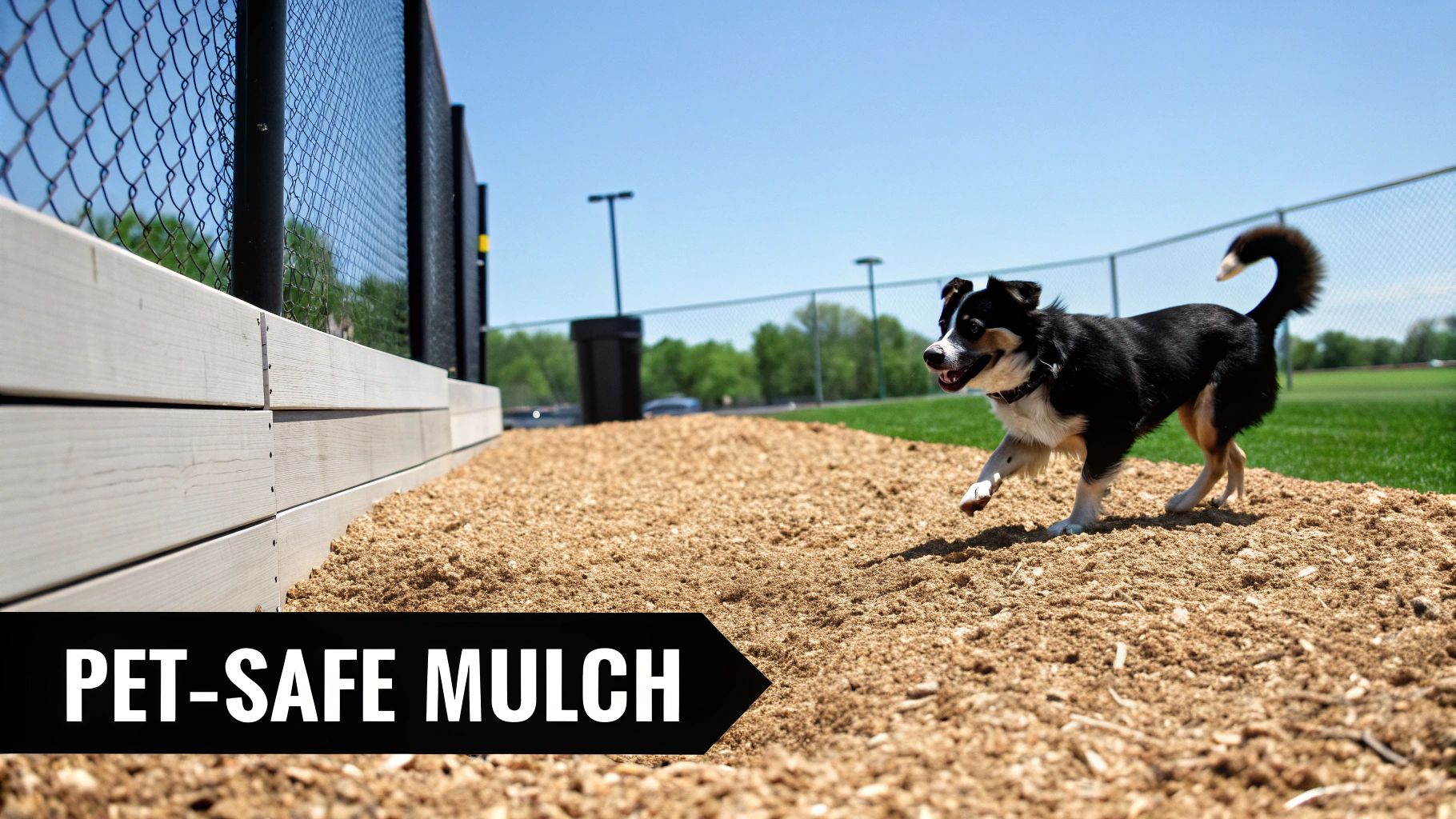
Unlike grass, mulch doesn’t develop urine spots and offers excellent drainage, which helps manage moisture and odors. Wood-based mulch, like pine or cypress, decomposes over time, enriching the soil, while rubber mulch provides an exceptionally durable and long-lasting surface. This makes mulch one of the best ground covers for dogs in designated areas that need a hardy, low-maintenance surface.
Why It's a Top Choice for Dog Owners
Mulch provides a simple, effective solution for creating a mud-free zone that is comfortable for dogs to run and play on. It excels in absorbing moisture, so after a sudden Johns Creek rain shower, the area dries out relatively quickly, preventing messy paws. The cushioning effect is another major benefit, especially for older dogs or breeds prone to joint issues, as it reduces stress on their bodies during activity.
This type of ground cover is frequently seen in local dog parks and agility courses for its durability and safety. Rubber mulch, made from recycled tires, is particularly popular in urban dog runs and commercial pet facilities for its exceptional longevity and shock-absorbent properties.
Key Insight: The primary advantage of mulch lies in its ability to create a defined, functional space for pets. It's not a whole-lawn solution but rather an excellent choice for dedicated dog runs, play areas, and pathways where grass is impractical and a softer surface is desired.
Implementation and Maintenance Tips
Proper selection and installation are key to creating a safe and effective mulched area for your dog. A few careful considerations will ensure the space is both functional and long-lasting.
- Choose Dog-Safe Materials: This is non-negotiable. Never use cocoa mulch, as it is toxic to dogs. Certain wood mulches, like cedar, can cause allergic reactions in some pets. When using wood products, understanding non-toxic wood preservatives can ensure the material is free from harmful chemicals.
- Opt for Proper Sizing: Use finely shredded mulch or smaller chips rather than large, chunky bark pieces that can be uncomfortable to walk on and may cause splinters.
- Install Sufficient Depth: A layer of 3 to 4 inches is ideal for providing adequate cushioning and effective weed suppression. Laying landscape fabric underneath can prevent the mulch from mixing with the soil below.
- Regular Upkeep: Rake the mulch weekly to keep the surface level, break up any clumps, and ensure even distribution. Wood mulch will need to be topped off every year or two as it decomposes, while rubber mulch requires minimal replenishment.
5. Permeable Pavers or Grids
For high-traffic areas, transition zones, or spaces where even the toughest turf struggles, permeable pavers or grid systems offer a robust, hybrid solution. Commonly seen in upscale residential projects and professional dog facilities across the Alpharetta area, this approach uses interconnected plastic or concrete grids that can be filled with materials like grass, pea gravel, or mulch. This system provides structural stability underfoot while allowing excellent drainage, effectively creating a surface that is part hardscape and part natural ground cover.
This innovative solution is perfect for creating dedicated potty areas, stabilizing muddy gate entrances, or designing durable pathways through a yard. The grid contains the filler material, preventing it from washing away during heavy Georgia rains, while the open structure lets urine and water pass through to the soil below. This prevents the mud and standing water issues common in heavily used clay-soil areas around Johns Creek and the rest of North Georgia.
Why It's a Top Choice for Dog Owners
This option stands out as one of the best ground covers for dogs because it combines durability with versatility. It completely eliminates mud in targeted zones, providing a stable, clean surface for paws no matter the weather. Unlike solid concrete or stone patios, the permeability prevents runoff issues and keeps the area cooler, which is a major benefit during hot Georgia summers.
The true advantage is its adaptability. You can fill the grids with grass for a softer, more natural look or with pea gravel for a virtually maintenance-free surface. High-end dog parks and boarding operations utilize these systems to create clean, durable play surfaces that can be easily sanitized. It’s an engineered solution to the problem of concentrated paw traffic.
Key Insight: Permeable grid systems solve the issue of soil compaction and erosion in high-traffic dog runs. The grid distributes the weight of foot and paw traffic, protecting the soil structure and filler material, which prevents muddy ruts from forming over time.
Implementation and Maintenance Tips
Proper base preparation is essential for the long-term success of a permeable paver system. A poorly prepared foundation can lead to an uneven surface and drainage failure.
- Grid Selection: Choose grids with openings between 1/2 to 1 inch. This size is large enough for effective drainage but small enough to prevent gravel from shifting excessively or paws from getting caught.
- Base Preparation: The area must be excavated and leveled. A compacted sub-base of crushed stone topped with a sand layer is crucial for stability and drainage.
- Contain the Infill: Always install a durable edging material around the perimeter of the grid system. This will keep your chosen infill, whether it's gravel or mulch, neatly contained within the designated area.
- Routine Cleaning: Solid waste should be picked up immediately. The area can be easily rinsed with a hose to wash away urine residue and clear out dust or debris, keeping it clean and sanitary.
6. Tall Fescue or Kentucky Bluegrass
For homeowners in North Georgia who prefer the classic look and feel of a natural lawn, selecting the right grass species is paramount. Not all grasses are created equal when it comes to standing up to the wear and tear from our canine companions. Tall Fescue and Kentucky Bluegrass are two cool-season grass varieties specifically bred for their durability, making them an excellent choice for a robust, dog-friendly yard from Johns Creek to Dahlonega.
These grasses are naturally more resilient to the challenges dogs present. Tall Fescue, known for its deep root system, has impressive drought and heat tolerance and can handle significant foot traffic. Kentucky Bluegrass, with its ability to spread via underground rhizomes, can slowly self-repair small patches of damage over time. This combination of traits makes them one of the best ground covers for dogs if a living lawn is your goal.
Why It's a Top Choice for Dog Owners
This natural grass solution directly addresses the main complaints of pet owners: urine spots and damage from play. While no grass is completely immune to high concentrations of nitrogen in dog urine, these tougher varieties are far less susceptible to yellowing and die-off than more delicate grasses like Bermuda or Zoysia. Their vigorous growth helps them recover more quickly from the constant activity of a playful dog.
You’ll find these hardy grasses used not just in residential yards across our area, but also in high-traffic public areas like the dog parks in Cumming and Alpharetta that require a resilient, natural surface. Their ability to stay green and dense under pressure is a testament to their suitability for pet-centric landscapes.
Key Insight: The strength of Tall Fescue and Kentucky Bluegrass lies in their genetic resilience. Tall Fescue’s deep roots help it access water and nutrients more effectively to fight off stress, while Kentucky Bluegrass's rhizomes give it a unique ability to fill in minor damage, reducing the need for constant patching.
Implementation and Maintenance Tips
Maintaining a beautiful lawn with dogs is a balancing act that requires a proactive approach. Proper care is essential to keep these grasses healthy enough to withstand pet-related stress.
- Maintain Height: Keep your lawn mowed at a height of 3 to 4 inches. Taller grass blades encourage deeper root growth, making the lawn more durable and better equipped to handle stress.
- Water Strategically: Water deeply but infrequently to encourage those deep roots. After your dog urinates, flushing the specific spot with a bucket of water or a hose can significantly dilute the nitrogen and prevent burn spots.
- Aerate Annually: For the compacted clay soil common in areas like Cumming and Milton, annual core aeration is crucial. It relieves soil compaction, allowing water, air, and nutrients to reach the root zone.
- Overseed as Needed: Overseeding with a high-quality, pet-tolerant seed blend each fall helps to fill in thin areas and maintain a dense, vigorous turf that can outcompete weeds and stand up to traffic.
While these grasses are tough, they are not invincible. A dedicated care routine is necessary for a thriving pet-friendly lawn. For homeowners looking for more guidance on establishing and maintaining a lawn that can coexist with their furry friends, you can discover more about how to grow grass with dogs and keep it healthy year-round.
7. Decomposed Granite (DG)
For homeowners seeking a more natural, rustic aesthetic in their yards, from the rolling landscapes of Dahlonega to the manicured neighborhoods of Johns Creek, decomposed granite (DG) presents a compelling alternative to traditional ground covers. This material is essentially fine, weathered granite that compacts well to form a stable yet permeable surface. It offers a firm, comfortable ground for dogs to walk and play on, without the mud associated with bare dirt or the high maintenance of grass.
Decomposed granite provides excellent drainage, a crucial feature for handling North Georgia's heavy rainfall and pet urine. Water percolates through the fine aggregate, preventing puddles and soggy spots. Its natural, earthy tones can beautifully complement a variety of landscape styles, from Mediterranean-inspired gardens to more rustic, woodland settings. This makes it a versatile choice for pathways, patios, and dedicated dog runs where a durable, low-water surface is desired.
Why It's a Top Choice for Dog Owners
This option is one of the best ground covers for dogs because it creates a durable, mud-free zone that is gentle on paws once compacted. Unlike sharp gravel, the fine particles of DG lock together to form a relatively smooth surface. It effectively suppresses weed growth when installed correctly over landscape fabric and eliminates the risk of urine burn spots that plague natural lawns.
The firm surface is also less hospitable to fleas, ticks, and other digging pests. Many local dog parks and kennels utilize DG in high-traffic zones because it stands up to constant use and is easy to clean. Solid waste can be scooped up easily, and the area can be rinsed down without creating a muddy mess.
Key Insight: Decomposed granite's biggest advantage for dog owners is its balance of firmness and permeability. It packs down to create a solid, stable play area that won't get muddy but still allows moisture to drain through, effectively managing both rain and pet waste.
Implementation and Maintenance Tips
Achieving a long-lasting, functional DG surface hinges on proper installation and a bit of routine upkeep. A well-laid DG area will provide years of reliable use.
- Proper Depth is Key: Excavate the area to a depth of 3 to 4 inches. This allows for a sufficient layer of DG that will compact properly and remain stable over time.
- Contain the Material: Use a durable landscape edging made of steel, stone, or heavy-duty plastic to keep the DG contained. This prevents it from migrating into surrounding garden beds or lawn areas.
- Compact for Stability: After spreading the DG, it must be thoroughly compacted. Lightly misting the surface with water and using a plate compactor or hand tamper will create a firm, solid base that’s comfortable for paws.
- Minimize Tracking: To reduce the amount of granite dust tracked indoors, consider using a stabilizer product mixed into the top layer. You can also place paver stones or a durable doormat at the entrance to your home.
- Routine Raking: A quick rake once a month helps to level out any low spots that may form from heavy use and ensures the surface remains even for optimal drainage. A light top-dressing of new DG may be needed every few years.
8. Engineered Wood Fiber (EWF) or Engineered Play Fiber (EPF)
For North Georgia homeowners seeking a natural-looking, high-performance ground cover, Engineered Wood Fiber (EWF) offers a professional-grade solution often seen in high-end dog parks and agility courses. Unlike standard landscape mulch, EWF is specifically processed to knit together, creating a stable, cushioned surface. This engineering process removes fines, twigs, and bark, resulting in a soft, splinter-free material that is ideal for dogs' paws and joints.
EWF is designed for safety and impact attenuation, making it an excellent choice for highly active dogs or those prone to rough play. Its fibrous nature allows for exceptional drainage, a critical feature for handling North Georgia's heavy rainfall and preventing muddy messes. The material provides a comfortable, cool surface that remains soft underfoot, perfect for a dedicated dog run or a specialized play zone in a Johns Creek backyard.
Why It's a Top Choice for Dog Owners
This option is one of the best ground covers for dogs because it prioritizes safety and joint health without sacrificing a natural aesthetic. The soft, springy surface absorbs the impact of running and jumping, reducing stress on a dog’s body. This makes it a go-to choice for veterinary rehabilitation centers and professional dog sports facilities where canine well-being is paramount.
Engineered Wood Fiber also helps deter digging more effectively than regular soil or mulch. The interlocking fibers create a more compact and challenging surface for dogs to break through. Furthermore, it's a non-toxic, chemical-free option that provides a clean and safe environment, a significant advantage over many chemically treated ground covers.
Key Insight: The true value of Engineered Wood Fiber is its specific engineering for safety and performance. It's not just wood chips; it's a system designed for impact absorption and stability, providing a level of protection for active dogs that standard mulches cannot match.
Implementation and Maintenance Tips
Proper installation is key to unlocking the full benefits of EWF and ensuring it performs as a long-term, safe surface for your pets.
- Depth is Crucial: Install EWF at a depth of 4 to 6 inches after the ground has been compacted and leveled. This depth is essential for creating the necessary cushioning and impact absorption.
- Use a Barrier: Always lay down a high-quality landscape fabric underneath the EWF. This barrier will prevent weeds from growing through and keep the fiber from mixing with the soil below.
- Create a Border: Use solid edging materials like stone, brick, or heavy-duty plastic to contain the EWF. This prevents it from spreading into other areas of your yard, especially on sloped properties around Dahlonega.
- Regular Raking: The fibers will compact over time with use. Rake the area monthly to fluff the EWF, maintaining its cushioning properties and ensuring even distribution. Top off with a fresh layer annually in high-traffic zones to maintain depth.
While it requires more upkeep than a hardscape solution, EWF offers an unparalleled combination of safety, natural beauty, and joint support for canine companions. It’s an investment in your dog's health and happiness, creating a professional-quality play area right at home.
8-Option Comparison: Best Ground Covers for Dogs
| Option | 🔄 Implementation complexity | ⚡ Resources & maintenance | ⭐ Expected effectiveness / outcomes | 📊 Ideal use cases | 💡 Key advantages / tips |
|---|---|---|---|---|---|
| Artificial Turf (Pet-Specific) | High — professional install, sub-base prep | High upfront cost ($8–15/ft²); minimal ongoing care; occasional enzyme rinse | Very effective: durable, pet-safe, year-round clean surface | Small yards, high-use runs, vet recovery yards, dog parks | No mowing; choose ≥3" blade; ensure 4–6" crushed-stone base; rinse monthly |
| Pea Gravel | Low — DIY-friendly spread and edge | Low material cost ($1–2/ft²); weekly raking; annual top-dress | Good drainage and comfort; stones may scatter; visible waste | Budget runs, pathways, rural/suburban dog areas | Install 4–6" depth; use landscape fabric and edging; rake weekly |
| Clover (White / Microclover) | Moderate — seeding and establishment time (6–8 weeks) | Low ongoing inputs; initial watering; self-fertilizing | Effective: eco-friendly, urine-tolerant, soft cover; slower to establish | Sustainable yards, low-maintenance lawns, eco-conscious owners | Seed in spring/fall; blend with grass; expect bees; microclover for small areas |
| Mulch (Rubber or Wood-Based) | Low–Moderate — spread 3–4" depth; simple prep | Moderate cost ($2–5/ft²); wood needs replacement 1–2 yrs; rubber lasts longer | Effective cushioning and drainage; may track and show waste | Dog parks, senior/joint-protection areas, play zones | Use finely shredded mulch; avoid toxic varieties; rake weekly; consider recycled rubber |
| Permeable Pavers / Grids | Moderate–High — best with professional base prep | Moderate–high cost ($4–10/ft²); durable; occasional cleaning | Very effective: stable, mud-free, long-lasting, permeable | High-traffic zones, pathways, upscale residential and training facilities | Choose ½–1" openings; proper base compaction; install edging; fill per use |
| Tall Fescue / Kentucky Bluegrass | Moderate — seeding/sodding and routine lawn care | Low–moderate cost; regular mowing, watering, overseeding | Natural look; good wear tolerance but can show urine spots | Traditional lawns, play lawns, residential yards | Maintain 3–4" height; overseed annually; water after elimination; mix with clover |
| Decomposed Granite (DG) | Low–Moderate — spread and compact; edge containment | Low cost ($1.50–3/ft²); monthly raking; annual top-dress; may need stabilizer | Effective: firm, natural appearance, excellent drainage; some tracking | Southwestern/mediterranean landscapes, trails, dog runs | Install 3–4" over prepared subgrade; compact; use dust control; rake monthly |
| Engineered Wood Fiber (EWF / EPF) | Moderate — install 4–6" depth; meet safety specs | Moderate cost ($3–6/ft²); annual replacement/top-dress; good drainage | Highly effective for cushioning and safety; may mold in humid climates | Playgrounds, rehab centers, high-safety dog facilities, agility areas | Use ASTM-certified EWF; install landscape fabric; replace annually in high-traffic zones |
Ready for a Pet-Friendly Yard? Let the Pros Handle It.
Creating a yard that both you and your dogs can enjoy is a rewarding endeavor. Throughout this guide, we've explored a wide range of solutions, from the modern convenience of pet-specific artificial turf to the natural, self-fertilizing benefits of a clover lawn. We've weighed the pros and cons of materials like pea gravel and decomposed granite for high-traffic zones and considered the safety and appeal of engineered wood fiber for play areas. Each option presents a unique pathway to transforming your North Georgia backyard from a muddy, patchy problem area into a durable, functional, and beautiful outdoor living space.
The journey to finding the best ground cover for dogs isn't about a single "perfect" solution. Instead, it's about creating a customized landscape that fits your pet's energy levels, your maintenance capacity, and the unique environmental conditions of our region, from the sunny yards of Johns Creek to the shadier properties in Dahlonega.
Key Takeaways for Your Dog-Friendly Landscape
As you move forward, keep these core principles in mind:
- Zone Your Yard: The most successful dog-friendly landscapes often use a combination of materials. Consider using durable pavers for a patio area, a resilient grass like Tall Fescue for lounging, and pea gravel for designated potty spots or kennel runs. This hybrid approach prevents any single ground cover from bearing the full brunt of your dog's activity.
- Prioritize Drainage: Poor drainage is the root cause of many common lawn problems, including mud, urine odor buildup, and plant disease. Whether you're installing artificial turf, permeable pavers, or even grass, ensuring water can drain away effectively is non-negotiable for a healthy, clean yard.
- Safety First, Always: Before introducing any new material into your yard, from mulch to clover, double-check its pet-safety profile. Avoid toxic plants, sharp-edged stones, and mulches containing cocoa bean hulls or other harmful substances. Your dog's well-being is the most important factor.
- Embrace Organic Care: For living ground covers like grass and clover, an organic approach is essential. Traditional chemical fertilizers and pesticides can pose significant health risks to pets who spend their days rolling, digging, and playing in the yard. Organic soil amendments and natural pest control methods build a resilient lawn that is safe from the ground up.
Why Professional Expertise Matters in North Georgia
While a DIY approach can be tempting, achieving a lasting, high-quality result requires a deep understanding of local conditions. The red clay soil common in Forsyth and Cherokee counties, coupled with our specific patterns of rainfall and summer heat, presents unique challenges. Proper soil preparation, grading for drainage, and selecting the right materials for our climate are critical steps that professionals are equipped to handle efficiently and effectively.
Choosing to work with a specialist like Barefoot Organics means you're not just installing a new ground cover; you're investing in the long-term health and usability of your entire property. We understand how to amend heavy clay soil to support robust grass growth and how to properly prepare a base for installations like artificial turf or pavers to prevent future issues. Our focus on natural, minimal-chemical lawn care ensures that your new yard is a sanctuary for your entire family, pets included. Stop the endless cycle of reseeding, patching, and worrying. It’s time to create the outdoor space you and your furry companions truly deserve.
Ready to transform your yard into a safe and beautiful oasis for your pets? The experts at Barefoot Organics specialize in creating and maintaining pet-friendly lawns and landscapes across Cumming, Alpharetta, Milton, and the surrounding North Georgia area. Contact us today for a free consultation and discover how our organic approach can help you achieve the best ground cover for dogs with lasting results. Barefoot Organics