

For homeowners in Cumming, Alpharetta, and the surrounding North Georgia communities, the hunt for the best grass seed for Georgia always starts with a simple truth: there’s no single “best” one. It’s a classic case of “it depends.”
Heat-loving, warm-season grasses like Bermudagrass and Zoysia are the absolute champions for those big, sunny, high-traffic yards common in Johns Creek. But for those shadier, more sheltered spots you find around Milton or Dahlonega, a cool-season grass like Tall Fescue can give you that year-round green. The perfect lawn for your home is all about matching the seed to your specific yard.
Your Guide to North Georgia’s Best Grass Types
Choosing the right grass seed for your North Georgia home can feel like a high-stakes decision, and in many ways, it is. That dream of a lush, durable lawn for your family in Johns Creek or Alpharetta is completely within reach, but it all comes down to picking the right player for your home field. This is so much more than grabbing a popular brand off the shelf; it’s about really understanding the unique challenges and opportunities our local Cumming-area climate throws at us.
Decoding Georgia’s Transition Zone
The real secret to a great lawn in our area is understanding that we live in a “transition zone.” Think of it as a horticultural battleground where the tough, heat-loving grasses from the south clash with the cooler, greener varieties from the north. This unique climate means we can technically grow both types, but each one comes with its own set of pros and cons.
Georgia spans USDA Plant Hardiness Zones 6a to 9a, which puts us squarely in this special zone where both grass families can survive, but they’ll behave very differently throughout the year.
Our summers are no joke. With temperatures regularly soaring past 90°F from May through September in the Milton and Dahlonega areas, warm-season grasses have a clear home-field advantage. That’s why they dominate about 80% of Georgia’s lawns—their incredible heat tolerance makes them the go-to choice for most homeowners. You can find more great insights into Georgia’s turfgrass climate on rootsturfandornamental.com.
Your yard’s specific conditions—how much sun it gets, the type of soil you have, and how much foot traffic it will see—are the most important factors. A successful lawn is simply one where the grass type is perfectly matched to its environment.
This guide is designed to walk you through that decision. We’ll help you look at your property with a critical eye, from the amount of daily sun it gets to the quality of the soil under your feet. By understanding these key elements, you can pick a grass seed that won’t just survive our climate, but will actually thrive in it.
To get started, just ask yourself a few simple questions:
- Sun Exposure: Does your lawn bake in the sun all day, or is it mostly shaded? Sun-worshippers like Bermudagrass need at least eight hours of direct sun, whereas Tall Fescue can get by with partial shade.
- Lawn Use: Is your Alpharetta backyard the neighborhood spot for weekend soccer games and family cookouts, or is it more for looks? High-traffic areas need tough-as-nails grasses like Zoysia or Bermuda.
- Maintenance Commitment: Let’s be honest. Are you looking for a low-maintenance “lazy man’s grass” like Centipede, or are you ready to commit to the frequent mowing and care a pristine hybrid Bermuda demands?
Answering these questions honestly will help you narrow down the choices and find the perfect fit. Our guide on the best lawn grasses can also give you some extra background.
Top Grass Seed Choices for North Georgia At a Glance
To make things a bit easier, here’s a quick-glance table comparing the most popular grass types we see working well in the Cumming area and its surroundings. This should help you see how their key traits stack up against each other.
| Grass Type | Season | Sun Needs | Drought Tolerance | Foot Traffic |
|---|---|---|---|---|
| Bermudagrass | Warm-Season | Full Sun (8+ hrs) | Excellent | Excellent |
| Zoysia | Warm-Season | Full Sun / Lt Shade | Very Good | Excellent |
| Tall Fescue | Cool-Season | Sun / Partial Shade | Good | Good |
| Centipede | Warm-Season | Full Sun / Lt Shade | Good | Poor |
As you can see, the right choice really depends on what you value most. If you have kids and pets tearing up a sunny backyard in Johns Creek, Bermuda or Zoysia is a no-brainer. But for that shadier side yard in Milton that doesn’t see much action, Tall Fescue is probably your best bet.
Why Georgia’s Climate Can Be Tough on Lawns
Ever drive through Johns Creek in July and wonder how your neighbor’s lawn looks so perfect, only to see it struggle come winter? Or maybe you’ve seen a friend’s yard in Dahlonega stay green in December but wilt under the August sun. It’s not just a fluke; it’s the direct result of Georgia’s unique and often challenging climate.
Our state is planted firmly in what lawn care pros call the “transition zone.” You can think of it as a horticultural battleground. This is where the heat-loving, drought-resistant grasses from the deep south meet the lush, cooler-weather types that thrive up north. This creates a constant tug-of-war right in our front yards in places like Cumming and Alpharetta.
The Two Teams: Warm-Season vs. Cool-Season Grasses
Getting a handle on this key difference is the first step to picking the right grass seed for a Georgia lawn. Every type of grass falls into one of two categories, and each one acts like a totally different plant depending on the time of year.
Warm-Season Grasses:
These are the sunbathers of the grass world. Varieties like Bermuda and Zoysia are built to handle the intense summer heat and humidity we get everywhere from Cumming to Alpharetta.
- They grow actively and look their best from late spring through early fall, usually from May to September.
- Their deep root systems are fantastic for drought tolerance, a major advantage during our dry summers.
- The moment we get a real frost, they go dormant and turn a tan or brownish color until things warm up again in the spring.
Cool-Season Grasses:
Think of these as the mountain hikers of the turf world. Tall Fescue is the prime example, preferring the milder temperatures of a North Georgia spring and fall, common in areas from Milton to Dahlonega.
- They stay green throughout our fairly mild winters, which is a nice splash of color when the warm-season lawns are brown.
- Their peak growing seasons are in the spring and fall.
- They often struggle and need a lot of extra water and care just to survive the punishing heat of a summer in Forsyth or Cherokee County.
Grasping this seasonal cycle is non-negotiable for a successful lawn. You’re not just picking a type of grass; you’re choosing a lifestyle for your yard that has to match up with our distinct seasons.
This constant push-and-pull between thriving in summer versus surviving winter is exactly why picking the right seed is so important. Trying to grow a sun-worshipping Bermuda grass in a heavily shaded Milton backyard is a recipe for a thin, patchy mess. On the other hand, expecting a cool-season Tall Fescue to look great without extra attention in an open, sun-baked Alpharetta field is just setting yourself up for disappointment.
Once you understand the core strengths and weaknesses of each grass type, you can make an informed choice that sets your lawn up not just to survive, but to truly thrive in our challenging climate.
Comparing the Most Popular Georgia Grasses
Picking the right grass seed for your Georgia lawn is a bit like casting the lead role in a play. You need to find the perfect fit for the conditions. Let’s walk through the top contenders you’ll see in yards from Cumming to Alpharetta, so you can choose the star performer for your own landscape.
Bermudagrass: The Sun-Loving Athlete
If your yard is where the action is—think weekend cookouts, kids playing, and dogs running—then Bermudagrass is your MVP. This stuff is tough. It thrives in the sun, grows incredibly fast, and bounces back from heavy foot traffic like a champ.
But here’s the catch: its love for the sun is non-negotiable. It needs at least eight hours of direct sunlight a day, period. So, if you’ve got a shady lot in Milton or a yard dotted with those classic Georgia pines near Dahlonega, this isn’t the grass for you.
Bermuda is so at home in our climate that it’s planted on an estimated 50-60% of lawns across the state. That aggressive growth is great for durability, but it also means you’ll be good friends with your mower. Some hybrid types can shoot up 2 inches per week during the summer, so you’ll need to keep it cut low, between 0.5 and 1.5 inches, for that crisp, manicured look. You can find more great info on Georgia’s top turf choices in this helpful guide from LawnLove.com.
Zoysiagrass: The Dense and Durable Carpet
Ever dreamed of a lawn that feels like a plush, green carpet under your feet? Zoysia is how you get there. It grows into a wonderfully thick, dense turf that naturally chokes out weeds and feels amazing to walk on. It handles sun and traffic almost as well as Bermuda but has the added bonus of being a little more tolerant of shade.
The trade-off here is time. Zoysia is a slow starter, so you’ll need some patience while it establishes itself from seed or plugs. Once it’s in, though, it creates a stunning, low-growing lawn that doesn’t need to be mowed as often.
Tall Fescue: The Year-Round Green for Shade
For those challenging, shady spots where other grasses give up, Tall Fescue is the hero. As a cool-season grass, its biggest superpower is staying green all year long. It brings a welcome splash of color to the landscape when Bermuda and Zoysia have gone dormant for the winter.
It truly shines in areas with partial shade (think 4-6 hours of sun) and is the undisputed champion for lawns with mature trees, a common feature in many Cumming neighborhoods. While it holds up pretty well to foot traffic, be prepared to give it extra water and attention to help it push through our brutal Georgia summers.
Here’s a simple way to think about it: Bermudagrass is the star quarterback who needs the spotlight (full sun). Zoysia is the tough, unified defensive line that forms an impenetrable barrier. Tall Fescue is the clutch special teams player who excels in specific, challenging situations (shade).
Centipedegrass: The Low-Maintenance Choice
Often called “the lazy man’s grass,” Centipede is a fantastic option if you want a decent-looking lawn without a ton of work. It grows happily in the acidic clay soil we have all over Forsyth and Cherokee counties and needs far less fertilizer and mowing than its warm-season cousins.
So, what’s the downside? It’s not very durable. Centipede grass just can’t handle a lot of foot traffic. It’s an ideal choice for a front yard that’s mostly for show, but it’s not the right pick for a backyard in a busy Alpharetta subdivision that doubles as a playground.
Before we move on, let’s pull all this information together into a quick-reference table. This makes it easy to see how these top contenders stack up side-by-side.
Comparing Popular Georgia Grass Seeds
| Grass Variety | Maintenance Level | Shade Tolerance | Water Needs | Best For |
|---|---|---|---|---|
| Bermudagrass | High | Low | Moderate | Full sun, high-traffic areas, active families |
| Zoysiagrass | Medium | Medium | Moderate | Sunny areas with some partial shade, luxurious feel |
| Tall Fescue | Medium-High | High | High (in summer) | Shady yards, year-round green color |
| Centipedegrass | Low | Low-Medium | Low | Low-traffic front yards, acidic soil, easy care |
Looking at them this way, you can quickly see the trade-offs. The grass that needs the least work (Centipede) can’t handle traffic, while the one that can (Bermuda) needs a lot of sun and mowing. It’s all about matching the grass’s strengths to your yard’s reality.
Matching Grass Seed to Your Yard’s Conditions
Picking the right grass seed in Georgia isn’t about finding one “best” type for the whole state. It’s a very local decision that starts right in your own backyard. That beautiful, thick lawn you see in Cumming or Alpharetta didn’t get that way by accident. It’s the result of carefully matching the grass to the yard’s specific conditions, from the dirt under your feet to the amount of sun it gets each day.
Before you even browse for seeds, you need to put on your detective hat. Two crucial clues will steer your entire project: the health of your soil and how much sunlight your yard actually gets.
Start with a Soil Test
We all know about that famous Georgia red clay you find all over Forsyth County and North Fulton. But it’s more than just a color—it has a unique chemical signature. This is why a simple soil test is the most important first step you can take. It tells you your soil’s pH level, which controls how easily your grass can soak up nutrients.
Think of it this way: if your soil’s pH is out of whack, fertilizing your lawn is like trying to push food through a locked door. The nutrients are right there, but the grass simply can’t access them.
The choice of grass seed in Georgia is a big deal, with over 60 different soil series mapped across the state. Most of our warm-season grasses thrive in slightly acidic soil (a pH between 5.5 and 6.5), which luckily covers about 70% of the land here. But if your soil is outside that range, you’ll struggle. In fact, research shows that the wrong soil pH can slash your grass’s vigor by up to 50%. You can learn more about this from the experts at the University of Georgia’s turfgrass programs.
Getting a soil test kit from your local UGA Extension office is easy and inexpensive. It’s a small step that prevents big, costly headaches later. For a more detailed walkthrough, check out our guide on how to test soil pH.
Map Your Sunlight
Next up, you need to become a sun-mapper for a day. Watch your yard and take notes on how much direct sunlight different areas get from morning to evening. This might seem simple, but it’s absolutely critical. Planting a sun-loving Bermuda grass in a shady backyard in Milton is a recipe for a thin, patchy mess.
Try to break your yard down into a few basic zones:
- Full Sun: Spots that get 8 or more hours of direct, unfiltered sunlight.
- Partial Shade: Areas that get about 4 to 6 hours of sun, often dappled by trees.
- Deep Shade: Any place that receives less than 4 hours of direct sun.
This little decision tree gives you a quick visual to see how sun and foot traffic influence your choice.

As you can see, those sunny, high-traffic areas are perfect for a tough grass like Bermudagrass. The shadier, quieter spots, on the other hand, are where something like Tall Fescue will feel right at home.
By taking these two simple steps—testing your soil and mapping your sun—you take all the guesswork out of the equation. You’ll be armed with the right information to choose a grass seed that’s practically made for your yard, setting you up for a successful, beautiful lawn for years to come.
A Practical Guide to Seeding Your Georgia Lawn
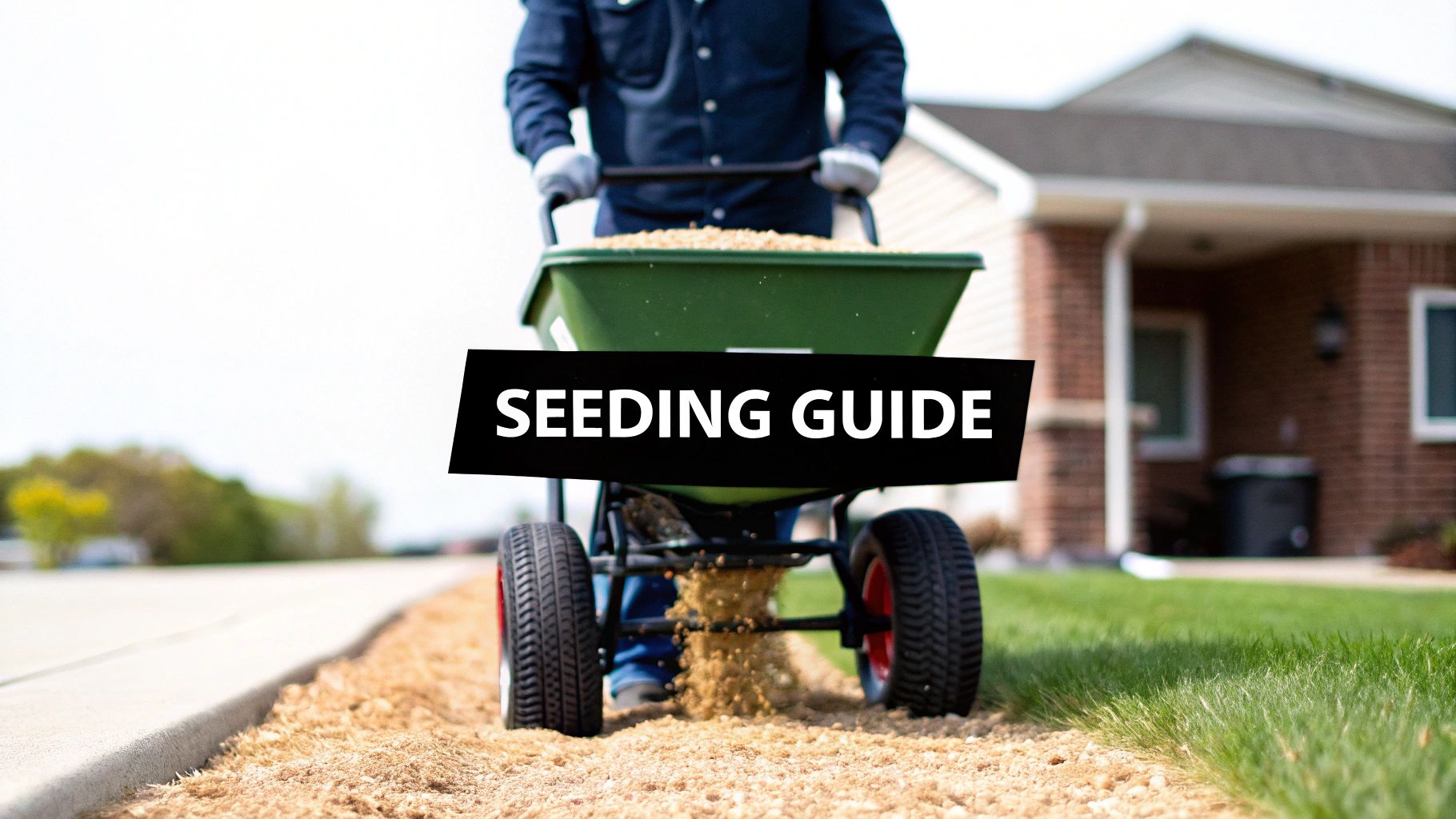
So, you’ve done your homework, analyzed your yard, and picked out the perfect grass seed for your Georgia home. Now for the fun part: getting that seed into the ground. Whether you’re starting from scratch on a new patch of dirt in Cumming or thickening up a thinning lawn in Johns Creek, your technique is what will make or break your success. It all boils down to timing, good prep work, and smart follow-up care.
When to Plant: Timing is Everything
Here in North Georgia, timing your seeding project is critical. You want to work with the grass’s natural growth cycle, not against it.
- Warm-Season Grasses (Bermuda, Zoysia): These types love the heat. The best time to plant them is from late spring to early summer, when the soil is warming up. This gives the seeds the kickstart they need to sprout and get their roots down deep before the real summer scorchers hit.
- Cool-Season Grasses (Tall Fescue): For fescue, you’ll want to aim for early fall. Planting then lets the new grass get established in cooler, less stressful weather. It gives the turf a huge head start to mature before it has to face its first brutal Georgia summer. For a closer look at this strategy, check out our guide on seeding in the fall.
Preparing the Ground for Seeding
You can’t skip this step. Good soil prep is the foundation for a healthy lawn, creating a perfect seedbed where new roots can thrive. The main goal is to loosen the soil and make sure every single seed can make direct contact with it.
First, clear the area of any weeds, rocks, or old debris. If you’re dealing with new construction and that classic compacted Georgia clay we see so often around Milton and Alpharetta, do yourself a favor and rent a tiller. Breaking up the top 4-6 inches of soil will make a world of difference. For overseeding an existing lawn, a good, hard raking or a pass with a dethatcher will pull up thatch and dead grass, exposing the soil so the new seed can take hold.
A common mistake is just tossing seed onto hard, compacted ground. Seeds need to be tucked into the soil to germinate. If they’re just sitting on top, they’ll either dry out, wash away in the first rain, or get eaten by birds.
Sowing the Seed and Ensuring Success
With the ground ready, it’s time to spread the seed. A broadcast or drop spreader is your best friend here—it ensures you get even, consistent coverage. Spreading seed by hand is a recipe for a patchy, uneven mess, so I’d steer clear of that.
Always follow the application rate recommended on the seed bag. After you’ve spread the seed, a very light raking will gently work it into the top quarter-inch of soil. This simple move dramatically improves germination by guaranteeing that all-important seed-to-soil contact.
Finally, consider adding a light layer of wheat straw over the seeded area. This acts like a protective mulch, helping the soil retain moisture, preventing seeds from washing away, and hiding them from hungry birds. The key is to apply it lightly; you should still be able to see about 50% of the soil through the straw. This little bit of extra effort gives your seeds the best possible shot at becoming the beautiful lawn you’re hoping for.
Common Questions About Georgia Lawns
Even with the perfect seed and a solid game plan, you’re bound to run into a few questions along the way. Whether you’re in Cumming or Alpharetta, you’re likely facing the same challenges as your neighbors. Let’s tackle some of the most common questions I hear from homeowners in our area.
Can I Mix Different Grass Seeds?
This one comes up all the time, especially from folks trying to patch a sunny area in an otherwise shady yard. While you can technically mix seeds, it’s rarely a good idea. Combining a warm-season grass like Bermuda with a cool-season one like Tall Fescue creates a real mess visually.
One type will be green and thriving while the other is brown and dormant, leading to a patchy, polka-dotted lawn that most people in Johns Creek and Milton aren’t too fond of. It’s always better to commit to the one grass type that best suits the majority of your yard.
Why Is My Zoysia or Bermuda Lawn Brown in Winter?
It can be jarring to see your beautiful green lawn turn a straw-like tan after the first hard frost, but don’t panic! This is a completely normal process for warm-season grasses called dormancy.
Think of it as their version of hibernation. The grass isn’t dead—it’s just sleeping through the cold to protect itself. As soon as the soil warms back up in the spring, your lawn will wake up and green up right on cue.
What Are These Weeds in My New Lawn?
Weeds are just a fact of life, particularly in a new lawn where the turf hasn’t had a chance to fully mature. Here in North Georgia, the usual suspects are broadleaf weeds like clover and pesky grassy weeds like crabgrass.
A healthy, dense lawn is your best defense against weeds. A thick turf canopy, like the one formed by a mature Zoysia lawn, literally chokes out weeds by blocking the sunlight they need to sprout.
Consistent mowing and focusing on growing a thick, healthy lawn are your best long-term strategies. For stubborn weed problems, a well-timed pre-emergent herbicide application in the spring and fall is the key to stopping them before they even start.
How Do I Get Rid of Brown Patch in My Fescue?
Brown Patch is a nasty fungal disease that loves to attack Tall Fescue lawns during our hot, sticky summers. You’ll recognize it by the ugly circular, brownish-yellow patches that can spread to several feet wide. Here’s how to fight back:
- Water Early: Always water your lawn in the early morning. This gives the grass blades all day to dry out, as wet grass overnight is a perfect breeding ground for fungus.
- Proper Mowing: Don’t scalp your lawn! Keep your Fescue mowed at its ideal height of 2.5 to 3.5 inches. Cutting it too short stresses the grass, making it an easy target for disease.
- Fungicide Application: If you have a severe or recurring problem, you’ll likely need to use a targeted fungicide to get it under control.
Knowing the answers to these common questions gives you a huge advantage in tackling the unique challenges of our region. With a bit of know-how, you can troubleshoot issues confidently and keep your yard looking incredible.
Ready for a healthy, beautiful lawn without all the guesswork? Trust the local experts. Barefoot Organics provides natural, effective lawn care solutions designed specifically for the challenges of North Georgia’s climate. Get your free quote today.