

For homeowners in Cumming, Alpharetta, and across North Georgia, the beauty of mature oak and hickory trees often comes with a frustrating challenge: a thin, patchy lawn that struggles in the shade. Finding a grass that not only survives but thrives in low light is crucial for achieving that picturesque, green landscape. The acidic clay soil common in Forsyth County and the surrounding areas further complicates the issue, making the search for the best grass for shade feel like an impossible task.
This guide is your definitive resource, moving beyond generic advice to provide a detailed roundup of the truly best grass varieties specifically tailored for our local climate. We will explore top-performing cool-season options, explain why certain popular grasses like Zoysia are often a poor choice for our shaded areas, and provide actionable maintenance plans for each type. Our goal is to empower you with the knowledge to select the perfect turf, whether you're seeding a new area under a dense canopy in Milton or overseeding a tired lawn in Johns Creek.
Inside, you will find a comprehensive breakdown of the leading shade-tolerant grasses, including:
- Fine Fescue
- Hard Fescue
- Chewings Fescue
- Shade-Tolerant Perennial Ryegrass
- Specialized Tall Fescue Blends
Each section provides pros and cons, ideal light conditions, and specific maintenance tips for our region's unique soil. This roundup sets the stage for a healthy, organic, and beautiful yard that your family and pets can enjoy.
1. Fine Fescue (Creeping Red Fescue)
When it comes to establishing a lush lawn under the dense tree canopies of North Georgia, Fine Fescue is often the gold standard. Specifically, Creeping Red Fescue, a cool-season variety, is celebrated for its exceptional shade tolerance. It thrives in areas that receive as little as two to four hours of dappled sunlight daily, making it a perfect match for properties in Cumming, Milton, and Dahlonega where mature hardwoods are common. Its fine, almost needle-like blades create a dense, soft, carpet-like turf that is visually appealing and naturally resilient.
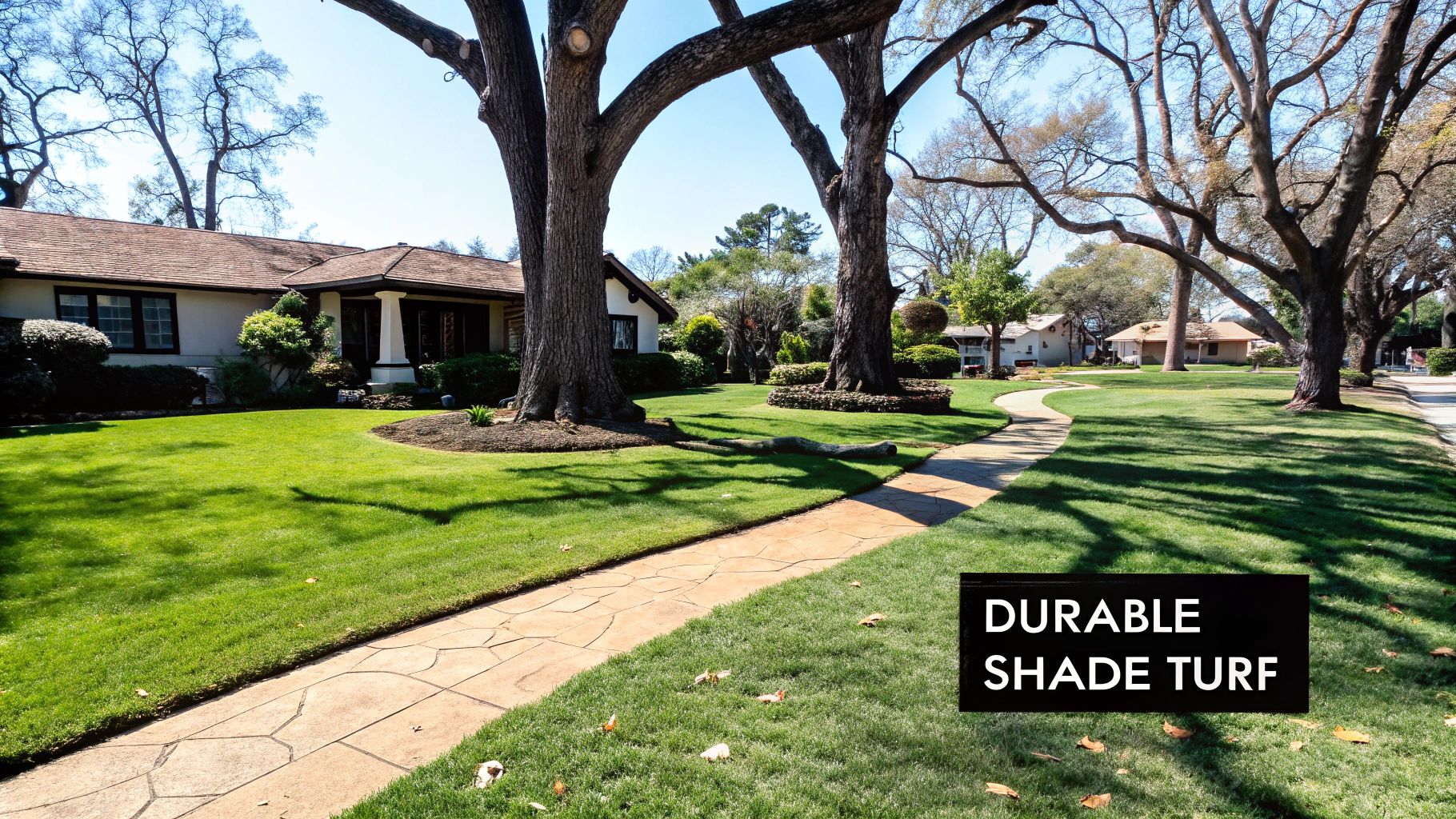
One of the standout benefits of Fine Fescue is its adaptability to the acidic, often compacted clay soils found throughout Alpharetta, Johns Creek, and the greater Forsyth County area. Unlike many other grass types that struggle in these conditions, Fine Fescue can establish strong roots and maintain its color. This low-maintenance grass also has a lower nitrogen requirement, meaning it needs less fertilizer than sun-loving species like Bermuda, aligning perfectly with an organic lawn care approach.
Key Characteristics & Benefits
- Exceptional Shade Tolerance: The primary reason it tops our list. It's the best grass for shade in conditions where other turfgrasses fail.
- Low Water & Fertilizer Needs: It has a deep root system that makes it relatively drought-tolerant once established and requires minimal fertilization.
- Fine Texture: Creates a soft, delicate-looking lawn that is still durable enough for light foot traffic.
- Weed Suppression: Its dense, clumping growth habit helps to naturally crowd out invasive weeds, reducing the need for chemical herbicides.
Maintenance & Seeding Tips for North Georgia
For homeowners in Johns Creek or Cumming looking to establish a Fine Fescue lawn, timing and technique are crucial.
- Best Time to Plant: Seeding is most effective in the fall, from September through October. The cooler air temperatures and warm soil provide ideal conditions for germination without the stress of summer heat.
- Soil Preparation: Success starts with the soil. Core aeration is essential to relieve compaction and ensure good seed-to-soil contact. Following aeration with a quality topdressing of organic compost will dramatically improve your results.
- Mowing Height: Maintain a mowing height of 3 to 4 inches. Taller grass blades have more surface area for photosynthesis, which is critical for energy production in low-light environments.
- Fertilization: Apply a low-nitrogen, organic-based fertilizer in the fall to encourage root development. Avoid heavy spring fertilization, which can promote weak, disease-prone growth.
Pro Tip: Consider blending Creeping Red Fescue with other fine fescues, like Chewings Fescue or Hard Fescue. This creates a more diverse turf that has improved resistance to common Georgia lawn diseases like brown patch, especially during our humid summers. For an in-depth guide on establishing turf in low-light areas, you can learn more about how to grow grass in shade.
2. Hard Fescue (Durum or Festuca longifolia)
For North Georgia homeowners seeking a shade-tolerant lawn that doesn't sacrifice durability, Hard Fescue is an outstanding choice. This cool-season grass, a close cousin to other fine fescues, brings a unique combination of a fine, deep-green blade with enhanced resilience. It's particularly well-suited for properties in Milton, Alpharetta, and Dahlonega where pet activity and family foot traffic are common under the shade of mature oaks and pines. Hard Fescue maintains its vigor in areas with just a few hours of filtered sunlight, offering a robust alternative to more delicate turf types.
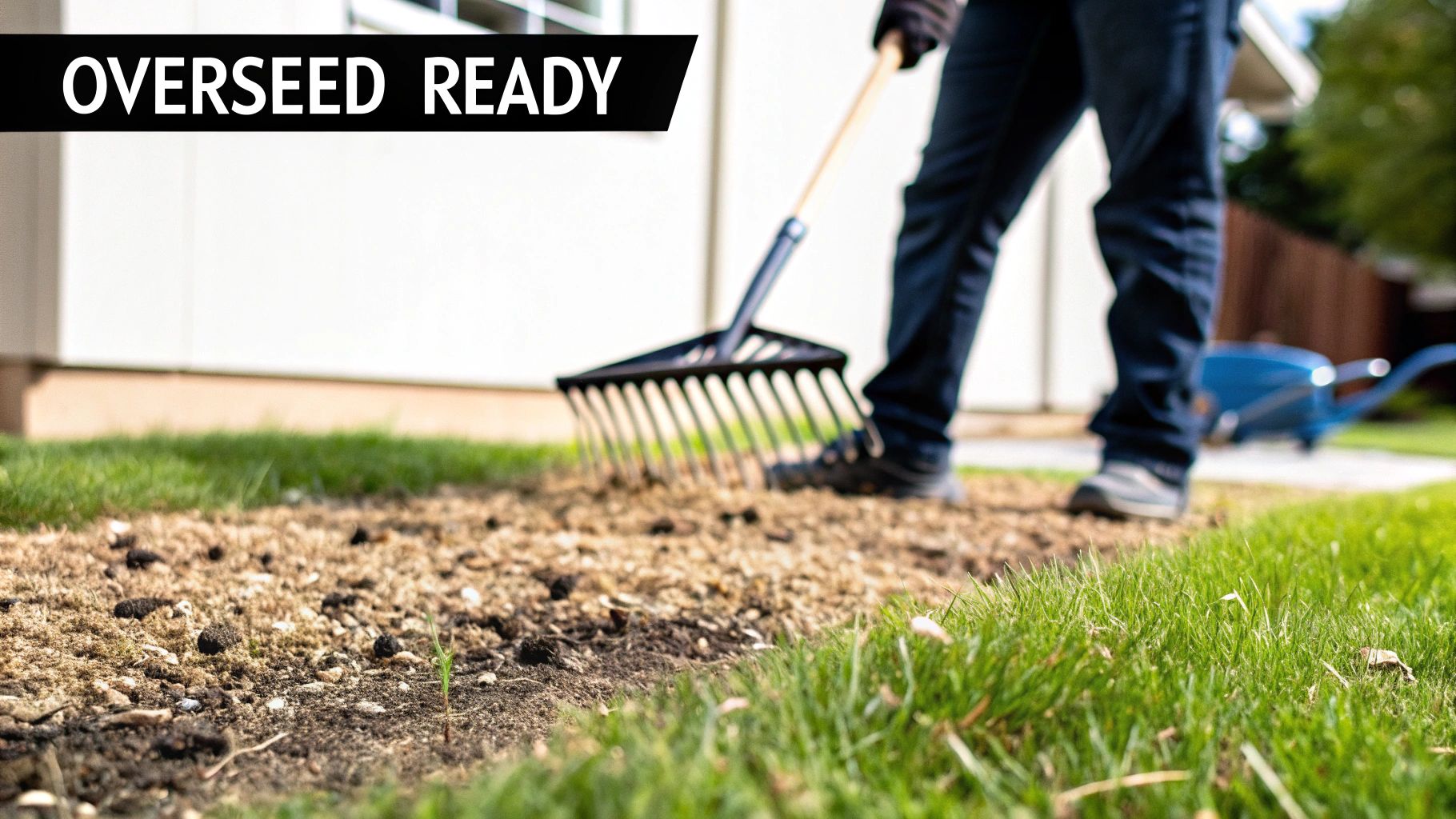
What sets Hard Fescue apart is its superior tolerance for Georgia's challenging climate swings, including periods of drought and heat stress. It is one of the more low-maintenance options, forming dense clumps that naturally resist weed encroachment. This variety has successfully been used to establish lush lawns in Milton residential areas and for commercial properties in Cumming needing attractive, low-input turf in shaded zones. For families in the area, it means children and pets can play in shaded parts of the yard without causing significant turf damage.
Key Characteristics & Benefits
- Improved Durability: Offers better wear tolerance than many other fine fescues, making it ideal for shaded areas with moderate foot traffic.
- Drought and Heat Tolerance: Possesses a deep root system that makes it more resilient during the hot, dry spells common in a Georgia summer.
- Low Maintenance: Requires less water and fertilizer once established, thriving in the less-than-ideal soil conditions often found under large trees.
- Excellent Color: Typically displays a deeper, richer green color that persists even in low-light and low-fertility conditions.
Maintenance & Seeding Tips for North Georgia
To get the most out of a Hard Fescue lawn in areas like Johns Creek or Dahlonega, proper establishment and care are key.
- Best Time to Plant: Fall is the optimal season for seeding, specifically from mid-September to late October. The soil is still warm enough for germination, while the cooler air reduces stress on new seedlings.
- Soil Preparation: Hard Fescue prefers a soil pH between 6.0 and 7.0. Conducting a soil test is crucial. Amending the soil through core aeration and applying an organic topdressing will create the perfect seedbed.
- Mowing Height: Keep the mower blade set to 3 to 4 inches. Maintaining a taller cut allows the grass to maximize photosynthesis, a vital process for the best grass for shade to store energy.
- Watering: Water deeply but infrequently after the lawn is established. This encourages the roots to grow deeper into the soil, searching for moisture and improving drought resistance.
Pro Tip: For the most resilient and adaptable shaded lawn in North Georgia, blend Hard Fescue with Creeping Red Fescue. This combination enhances disease resistance and creates a turf that can handle a wider range of shade and soil conditions. Avoid heavy nitrogen fertilizers; a slow-release organic option applied in the fall will support root health without forcing weak top growth.
3. Chewings Fescue (Festuca rubra commutata)
For homeowners seeking a refined, uniform appearance in their shaded lawn areas, Chewings Fescue offers a superior solution. This fine fescue variety is perfectly suited for the challenging growing conditions across North Georgia, from Cumming to Johns Creek. Unlike its cousin, Creeping Red Fescue, Chewings Fescue is a bunch-type grass that does not spread with rhizomes. This makes it the ideal candidate for overseeding an existing thin lawn, as it fills in gaps without creating the clumpy, uneven patches that spreading grasses sometimes cause. Its fine, upright blades create a dense, elegant turf that maintains a rich green color even in moderate to heavy shade.
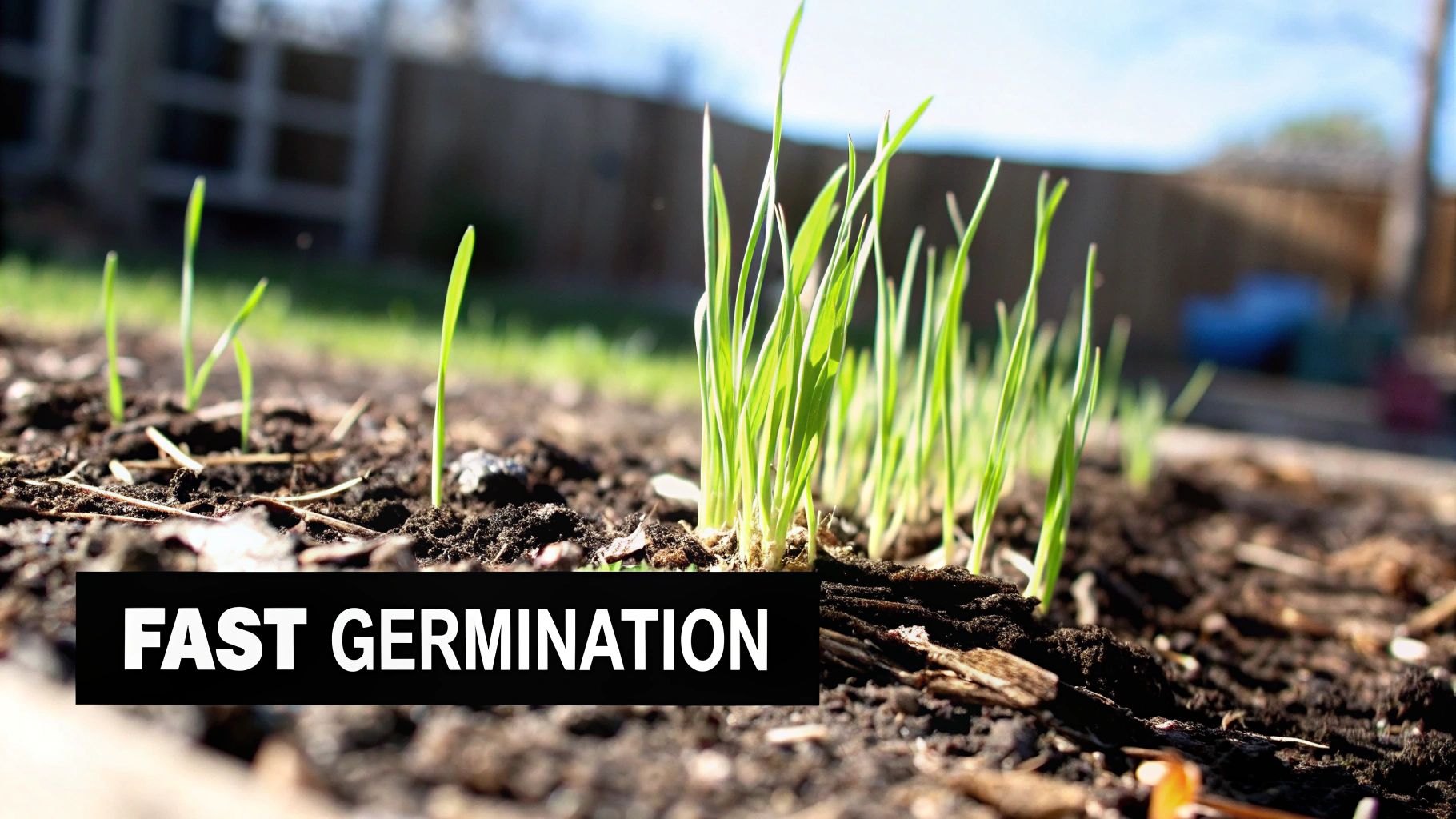
This particular grass is highly valued by our environmentally conscious clients in Alpharetta and Milton who prefer minimal chemical intervention. Chewings Fescue has a lower fertility requirement and can outperform other grasses in the acidic, low-nutrient clay soil common in the region. It exhibits good drought tolerance once established and can handle slightly more foot traffic than other fine fescues, making it a versatile choice for residential properties. Its bunching growth habit allows it to blend seamlessly into existing turf, improving density and shade performance without a complete lawn renovation.
Key Characteristics & Benefits
- Non-Spreading Growth: Its bunch-type habit makes it the best grass for shade when overseeding, ensuring a smooth, consistent look.
- Excellent Low-Light Performance: Thrives in dappled sunlight and areas that receive only a few hours of direct sun, common under North Georgia’s mature oaks and pines.
- Low Maintenance Needs: Requires less water and fertilizer than sun-loving turfgrasses, aligning perfectly with organic lawn care principles.
- Fine, Dense Texture: Produces a visually appealing, upright turf that contributes to a premium, well-manicured lawn aesthetic.
Maintenance & Seeding Tips for North Georgia
For those in Cumming or Milton looking to enhance their shaded lawn with Chewings Fescue, proper technique is key to achieving a dense, healthy stand.
- Best Time to Plant: Overseed in the fall, from late August through September. This timing allows the seed to germinate and establish strong roots before winter dormancy.
- Soil Preparation: Optimal results are achieved when seeding is combined with core aeration. This process relieves soil compaction and creates pockets for the seed to make direct contact with the soil, drastically improving germination rates.
- Mowing Height: Keep the mower set to 3.5 to 4 inches in shaded zones. This taller height gives the grass blades more surface area to capture limited sunlight for photosynthesis.
- Fertilization: Apply an organic, slow-release fertilizer in the fall to support root growth. Avoid excessive nitrogen, especially in the spring, as it can encourage disease and weak top growth.
Pro Tip: Chewings Fescue works exceptionally well as part of a shade-tolerant blend. Mixing it with Creeping Red Fescue and Hard Fescue creates a diverse turf with enhanced resilience against disease, drought, and varying shade conditions. This is a common strategy for establishing durable turf on premium residential properties throughout Forsyth County.
4. Perennial Ryegrass (Lolium perenne) – Shade Varieties
While Perennial Ryegrass has traditionally been known as a sun-loving turf, modern horticultural advancements have produced new cultivars with impressive shade tolerance. These newer varieties, specifically bred for low-light conditions, offer North Georgia homeowners a fast-establishing option for areas with moderate shade. For families in Cumming or Milton needing quick lawn repair before a backyard event, or for property managers in Alpharetta aiming for rapid greening, these specialized ryegrasses provide nearly instant gratification, often germinating in just 5-7 days.
The primary appeal of Perennial Ryegrass is its germination speed and vigor. Unlike fescues that take longer to mature, it can quickly create a green carpet, which is excellent for overseeding patchy areas or establishing new lawns in the fall. This makes it a popular choice for commercial properties in Johns Creek or residential lawns in Forsyth County where rapid visual improvement is a priority. However, its success in our region's clay soil and humid climate hinges on selecting the right cultivars and understanding its specific needs; it performs best in areas receiving at least three to four hours of direct sun.
Key Characteristics & Benefits
- Rapid Germination: Establishes faster than nearly any other cool-season grass, providing quick ground cover and erosion control.
- Good Wear Tolerance: The fine-bladed but durable nature of modern ryegrass holds up well to the foot traffic of active families and pets.
- Vibrant Green Color: Known for its rich, dark green hue that provides excellent curb appeal throughout its growing season.
- Ideal for Overseeding: Its quick growth makes it the best grass for shade when used to quickly fill in thin or bare spots in existing cool-season lawns.
Maintenance & Seeding Tips for North Georgia
To leverage the benefits of shade-tolerant Perennial Ryegrass in communities like Johns Creek and Alpharetta, a specific approach is required.
- Best Time to Plant: Fall is the optimal window for seeding, from late September through November. This timing allows the grass to establish strong roots before the summer heat arrives.
- Cultivar Selection is Key: Do not use older, sun-loving varieties like 'Linn'. Seek out modern, shade-tolerant cultivars developed after 2010, such as 'Chardin' or 'Eventus', for successful application in Georgia.
- Consistent Moisture: Perennial Ryegrass requires consistent moisture during its critical 3-4 week establishment period. Light, frequent watering is essential for the seeds to germinate and thrive.
- Mowing Height: Maintain a mowing height of 2.5 to 3.5 inches. Cutting it too short can stress the plant and reduce its ability to perform photosynthesis in a shaded environment.
Pro Tip: For a more resilient and disease-resistant lawn, blend shade-tolerant Perennial Ryegrass with Hard Fescue at a 60/40 ratio (60% Hard Fescue, 40% Perennial Ryegrass). This combination leverages the fast establishment of ryegrass with the superior drought and shade tolerance of the fescue, creating a robust turf. After four weeks of growth, applying an organic fertilization program will provide the essential nutrients for long-term health.
5. Tall Fescue – Shade Blends
Tall Fescue shade blends represent a tough, often-overlooked solution for North Georgia properties with moderate shade and challenging soil conditions. While many homeowners in Cumming and Alpharetta associate Tall Fescue with full-sun applications, specialized shade-tolerant cultivars offer remarkable resilience for family areas beneath trees. These blends combine the inherent durability of Tall Fescue with improved shade adaptation, creating a wear-resistant lawn perfect for properties with active children and pets.
This grass variety is an excellent choice for family lawns in Alpharetta with moderate tree cover or commercial properties in Milton that need to balance shade with heavy foot traffic. The key is using it strategically. By blending shade-tolerant Tall Fescue with other species, you get the best of both worlds: the broad-bladed, robust nature of Tall Fescue and the superior low-light performance of Fine Fescues. This approach creates a more genetically diverse and resilient turf that can handle the unique pressures of North Georgia’s climate.
Key Characteristics & Benefits
- Superior Wear Tolerance: Stands up exceptionally well to foot traffic from kids and pets, a common challenge for more delicate shade grasses.
- Moderate Shade Performance: Ideal for areas receiving 3 to 5 hours of sunlight, bridging the gap between full sun and deep shade.
- Drought Resistance: Possesses a deep root system that helps it withstand the dry spells common in our summer months.
- Disease Resistance: Modern cultivars offer good resistance to common lawn diseases like brown patch, making it a reliable best grass for shade option.
Maintenance & Seeding Tips for North Georgia
For homeowners in Milton or Johns Creek considering a Tall Fescue blend, proper management is essential to maintain a healthy, dense lawn.
- Best Time to Plant: Plant seed in the fall, ideally between September and October. The cooler temperatures reduce stress on new seedlings and allow strong root establishment before winter.
- Strategic Blending: Don't plant a pure Tall Fescue stand in the shade. For optimal results, use a blend like 40% Hard Fescue, 40% Fine Fescue, and 20% Shade-Tolerant Tall Fescue.
- Mowing Height: Maintain a mowing height of 3.5 to 4 inches. This taller cut allows the wider grass blades to capture more sunlight, maximizing photosynthesis in a low-light environment.
- Soil Health: Tall Fescue thrives in healthy, aerated soil. Annual core aeration is critical to prevent the compaction common in our clay soils and ensure water and nutrients reach the root zone.
Pro Tip: The success of a Tall Fescue shade blend is directly tied to soil quality. Combining annual aeration with an organic topdressing program will build the soil structure needed for this grass to thrive under trees. This approach enhances root development and naturally improves the turf's resilience to stress.
6. Centipede Grass (Eremochloa ophiuroides) – Limited Shade Variety
While primarily known as a full-sun, warm-season grass, Centipede Grass earns a special mention for its unique role in specific North Georgia landscapes. For homeowners in the southernmost parts of our service area, like southern Forsyth County, Centipede offers a low-maintenance option with a surprising degree of shade tolerance for a warm-season variety. It's often called "lazy man's grass" due to its slow growth and minimal fertilizer needs, making it an intriguing choice for property owners seeking a low-input lawn solution.
Centipede can manage in areas receiving four to six hours of direct sunlight, which is more shade than Bermuda or Zoysia can typically handle. This makes it a potential candidate for transition zones on properties in Alpharetta or Milton where a sunny backyard meets a treed border. However, its success is highly dependent on microclimates, as it is not as cold-hardy as the cool-season grasses that dominate North Georgia. Its lime-green color and coarse texture create a distinct look that performs well in acidic clay soils common to the region.
Key Characteristics & Benefits
- Moderate Shade Tolerance: For a warm-season grass, it handles partial shade better than most, surviving where other sun-lovers fail.
- Extremely Low Maintenance: Requires very little fertilizer, especially nitrogen, and its slow growth means less frequent mowing.
- Good in Acidic Soils: Thrives in the low pH soils found throughout the Cumming area without needing frequent lime applications.
- Aggressive Growth: Its stoloniferous nature allows it to spread and fill in bare spots, helping to crowd out some summer weeds.
Maintenance & Seeding Tips for North Georgia
Using Centipede Grass in our region requires careful consideration and a specific management strategy. It is not a one-size-fits-all solution.
- Best Time to Plant: Establish Centipede from sod or plugs from late spring to early summer. This gives it the entire warm season to develop a strong root system before winter.
- Location is Critical: Only consider this grass for the warmest microclimates in the southern portions of our service area. It is not recommended for cooler areas like Dahlonega.
- Mowing Height: Maintain a low mowing height of 1.5 to 2 inches. Mowing too high can lead to thatch buildup and decline.
- Fertilization: Be very cautious with fertilizer. A single, low-nitrogen application in mid-summer is often sufficient. Over-fertilizing can harm the turf and lead to "Centipede decline."
Pro Tip: Because it goes dormant and turns brown in winter, Centipede is best used in a blended strategy. For a year-round green lawn in North Georgia, plan on a complete overseeding with a cool-season grass like turf-type tall fescue in the fall. This approach is complex, so consulting with a specialist is highly recommended before implementation. For more information on grass types suited for our unique climate, explore our guide to the best grass seed for Georgia.
7. Zoysia Grass (Limited Shade Varieties) – Not Recommended for Most North Georgia Shade
Zoysia Grass often enters the conversation for Georgia lawns due to its dense growth and beautiful appearance in full sun. However, it's included in this list primarily as a cautionary tale for homeowners in North Georgia. As a warm-season grass, its tolerance for the deep shade cast by the oaks, maples, and pines common in areas like Milton and Johns Creek is significantly lower than that of cool-season alternatives. While certain cultivars are marketed for some shade, Zoysia fundamentally requires at least five to six hours of direct sunlight to thrive, a benchmark that most shaded North Georgia yards cannot meet.
The primary issue for properties in Forsyth County and the surrounding areas is a combination of insufficient light and a challenging climate. Zoysia’s winter dormancy means it turns a straw-brown color after the first hard frost and remains that way until late spring. In a shaded yard, this dormant period is often prolonged, leaving the area looking barren for nearly half the year. Furthermore, its aggressive, spreading nature via rhizomes and stolons can be difficult to manage, and in the shade, it becomes thin and weak, inviting weed and disease problems.
Key Characteristics & Drawbacks
- Poor Shade Tolerance: Compared to cool-season grasses, Zoysia is not the best grass for shade in our region. It thins out dramatically without adequate direct sun.
- Extended Winter Dormancy: Results in a brown, unattractive lawn from fall through mid-spring, which is especially noticeable in shaded areas that already look bleak in winter.
- Vulnerability in Shade: Weakened, thin Zoysia in low-light conditions is highly susceptible to fungal diseases like large patch, particularly in Georgia’s humid climate.
- Poor Cold Hardiness: While it can survive in the Atlanta metro, it struggles with colder winters further north toward Dahlonega, often suffering from winterkill in shaded microclimates.
Why Cool-Season Grasses are a Better Choice for North Georgia Shade
For homeowners in Alpharetta, Milton, and Cumming battling shady lawns, the evidence overwhelmingly points toward cool-season grasses.
- Year-Round Green: Grasses like Fine Fescue and Tall Fescue blends remain green throughout the winter, providing a much better year-round aesthetic for your property.
- Superior Low-Light Performance: Cool-season varieties are genetically adapted to photosynthesize more efficiently with less light, allowing them to maintain density where Zoysia would fail.
- Soil Adaptability: Fine Fescues, in particular, are better suited to the often acidic and compacted clay soil found under mature trees in our area.
- Maintenance Alignment: The maintenance calendar for cool-season grasses, with its focus on fall aeration and overseeding, is perfectly timed to prepare the lawn for the stresses of the North Georgia climate.
Pro Tip: If you have a property with mixed sun and shade, Zoysia can create an inconsistent look as it thins out dramatically at the tree line. Instead of attempting to force a warm-season grass to work, a better strategy is to establish a high-quality, shade-tolerant cool-season blend across the entire shaded area for a uniform, healthy, and resilient turf.
7-Grass Shade Suitability Comparison
| Grass variety | Implementation complexity (🔄) | Resource requirements (⚡) | Expected outcomes (⭐📊) | Ideal use cases (💡) | Key advantages (⭐) |
|---|---|---|---|---|---|
| Fine Fescue (Creeping Red Fescue) | Moderate — slower establishment, needs seed-to-soil contact 🔄 | Low — minimal fertilizer, consistent moisture during establishment ⚡ | High — dense, carpet-like shade turf; good weed suppression ⭐📊 | Dense to moderate shade (2–4 hrs/ day) under mature trees 💡 | Superior shade tolerance; low-maintenance; thrives in acidic clay soils ⭐ |
| Hard Fescue (Durum / Festuca longifolia) | Moderate — requires good soil prep and occasional overseeding 🔄 | Low–Moderate — low fertilizer; maintain pH 6.0–7.0; occasional aeration ⚡ | Very good — durable, disease-resistant stand that tolerates moderate traffic ⭐📊 | Moderate shade with pet/foot traffic; family lawns under trees 💡 | Combines shade tolerance with wear resistance and disease resilience ⭐ |
| Chewings Fescue (Festuca rubra commutata) | Low–Moderate — ideal for overseeding established lawns 🔄 | Low — compatible with organic programs; needs steady moisture ⚡ | High aesthetic quality but lower wear tolerance than Hard Fescue ⭐📊 | Overseeding shaded lawns; premium aesthetic shade zones 💡 | Fine texture without rhizomes; excellent disease resistance; overseed-friendly ⭐ |
| Perennial Ryegrass (Shade varieties) | Low — fastest germination and quick establishment (7–10 days) 🔄 | Moderate–High — higher fertility and water needs; summer stress management ⚡ | Rapid visual improvement but moderate long-term shade performance ⭐📊 | Quick lawn restoration or where fast results are required (moderate shade) 💡 | Fast germination, strong seedling vigor, better wear than pure fescues ⭐ |
| Tall Fescue – Shade blends | Moderate–High — blend management and precise establishment required 🔄 | Moderate — deeper-rooted but needs planned aeration and care ⚡ | Very good durability in moderate shade; excellent wear resistance ⭐📊 | Moderate shade (3–5 hrs) with heavy traffic or pets; transitional shade-to-sun areas 💡 | Deep roots, superior durability and drought tolerance for active yards ⭐ |
| Centipede Grass (limited shade) | High — warm-season management and microclimate selection 🔄 | Low inputs for maintenance but requires warm microclimate; overseeding with cool-season ⚡ | Variable/limited in North GA — winter dormancy and cold sensitivity reduce year-round impact ⭐📊 | Southern microclimates of service area or combined warm/cool strategies only 💡 | Ultra-low maintenance and low fertilizer needs in suitable warm sites ⭐ |
| Zoysia Grass (limited shade) | High — slow establishment, warm-season practices required 🔄 | Moderate–High — costly establishment, seasonal maintenance, slow recovery ⚡ | Poor for North GA shaded sites — winter dormancy and limited shade tolerance ⭐📊 | Not recommended for most North Georgia shade; suitable for warm sunny lawns only 💡 | Dense, durable turf in warm sun but not suitable for shaded North GA lawns ⭐ |
Your Next Steps for a Thriving Shade Lawn with Barefoot Organics
Navigating the challenge of growing a lush lawn under the beautiful, mature trees of North Georgia can feel like an uphill battle. As we've explored, the solution isn't about fighting nature; it's about working with it. Choosing the best grass for shade in areas like Cumming, Johns Creek, and Milton means embracing species that are naturally adapted to thrive with less sunlight.
The key takeaway is clear: for the specific climate and clay soils of our local communities, cool-season grasses are the undisputed champions of shade. Varieties like Fine Fescue, Hard Fescue, and specialized Tall Fescue blends offer the resilience, fine texture, and deep green color that homeowners desire for their shaded landscapes. Attempting to establish warm-season grasses like Zoysia or Centipede in anything more than light, dappled shade is often a recipe for thinning, disease, and frustration.
Success, however, goes far beyond simply scattering the right seed. It’s a holistic process that begins from the ground up. A thriving, shade-tolerant lawn is the result of a comprehensive strategy that addresses soil health, proper seeding techniques, and a commitment to ongoing, season-specific care.
From Knowledge to Action: Your Shade Lawn Checklist
Transforming this information into a vibrant lawn requires a clear plan. Let's distill the most critical actions you need to take to ensure your shady yard becomes a standout feature of your property.
Assess Your Shade Accurately: Before you purchase a single seed, map your lawn's sunlight. Does the area receive 2-4 hours of direct sun (deep shade) or 4-6 hours of dappled or morning sun (partial shade)? This single data point will guide your selection, steering you towards Fine Fescues for deeper shade or robust Tall Fescue blends for more moderate conditions.
Commit to Soil Preparation: Georgia's heavy clay soil is a major hurdle. It compacts easily, preventing air, water, and nutrients from reaching grass roots. This is why professional core aeration is not a luxury but a necessity. Following aeration with a high-quality organic top dressing introduces vital organic matter, improves drainage, and creates the ideal seedbed for germination.
Time Your Seeding Perfectly: For cool-season grasses in North Georgia, the fall seeding window is golden. Planting in September or October allows the new grass to establish strong roots throughout the fall and winter, preparing it to withstand the heat and drought stress of the following summer. Spring seeding is a distant second-best and requires much more intensive care.
Adopt Shade-Specific Maintenance: A lawn in the shade has different needs.
- Mow Higher: Set your mower to one of the highest settings (3.5 to 4 inches). This gives the grass blades more surface area to capture limited sunlight for photosynthesis.
- Water Deeply, Not Daily: Shady areas retain moisture longer. Water deeply but infrequently, only when the soil begins to dry out. This encourages deep root growth and discourages fungal diseases that thrive in damp conditions.
- Fertilize Mindfully: Shaded grass grows slower and requires less nitrogen than its sun-drenched counterparts. A soil test is your best guide, but a balanced, organic-based fertilizer program is essential for providing sustained nutrients without promoting weak, disease-prone growth.
Ultimately, cultivating a dense, healthy lawn in the shaded corners of your Alpharetta or Milton property is an investment in your home's beauty, your family's enjoyment, and your local ecosystem. It requires the right knowledge, the right materials, and the right long-term strategy. While the journey may seem complex, the reward is a sustainable, green space that enhances your life and property value for years to come.
Ready to transform your shady lawn from a challenge into a showpiece? The experts at Barefoot Organics specialize in creating healthy, resilient turf by focusing on soil biology, using professional aeration and top dressing services to build the perfect foundation for the best grass for shade. Contact Barefoot Organics today for a free online quote and discover how our organic, pet-safe approach can bring your North Georgia landscape to life.