

A lot of North Georgia homeowners start in the same place. The backyard gets baked in one area, shaded by hardwoods in another, the red clay stays hard in summer, and the lawn has to hold up to kids, dogs, and regular use without turning into a chemistry project.
That’s where the bermuda grass vs buffalo grass decision gets real. On paper, both are warm-season options. In practice, they solve very different problems. One thrives in open sun and traffic. The other makes more sense where you want lower input and better performance in partial shade.
Local conditions make the choice harder. A front yard in Alpharetta may have long hours of direct sun and compacted clay from construction. A backyard in Johns Creek may only get filtered light because of mature trees. If you choose the wrong turf for that site, you’ll spend years fighting thin coverage, weeds, stress, and unnecessary inputs.
Good lawn decisions also sit inside a bigger shift happening across the grounds care industry. Homeowners want lawns that look good, recover well, and stay safer for children, pets, and the soil. That means matching turf type to the property instead of forcing a one-size-fits-all answer.
Choosing Your Future Lawn in North Georgia
A homeowner in Cumming with a sunny backyard wants one thing. A lawn that fills in thick, handles play, and doesn’t collapse during summer dry spells.
A homeowner in Johns Creek often wants something slightly different. The yard may have mixed light, more tree cover, and a stronger preference for low mowing and lower fertilizer demand.
Those two properties shouldn’t get the same recommendation.
What North Georgia lawns are really dealing with
North Georgia turf has to work through a few recurring issues:
- Clay-heavy soil: Water can run off fast when soil is compacted, then bake hard later.
- Humidity: Dense turf can be an advantage, but poor airflow can expose weak grass choices.
- Mixed sun patterns: A yard may be full sun by the driveway and part shade behind the house.
- Wear from families and pets: Thin grass doesn’t stay thin for long. It turns into mud, weeds, or both.
Bermuda grass wins the full-sun, high-use fight. Buffalo grass gets attention from homeowners who want less mowing, less feeding, and better odds in partial shade.
The wrong match causes most lawn frustration
Most failed lawns aren’t caused by bad intentions. They come from bad matching.
If you install bermuda under too much tree cover, it thins out. If you expect buffalo to act like an athletic field turf in a high-traffic, sunny backyard, you’ll be disappointed. If you ignore soil condition, both grasses can struggle.
Practical rule: Start with sunlight, then traffic, then maintenance tolerance. Those three factors decide most of the bermuda grass vs buffalo grass question in North Georgia.
The best lawn for your property isn’t the one with the strongest marketing. It’s the one that fits your site, your expectations, and the way your family uses the yard.
Meet the Contenders Bermuda and Buffalo
A backyard in Cumming can have hard sun by the patio, tree shade along the fence, red clay underfoot, and kids or dogs running the same path every day. Bermuda and buffalo respond to those conditions very differently. That matters more than the label on the pallet.
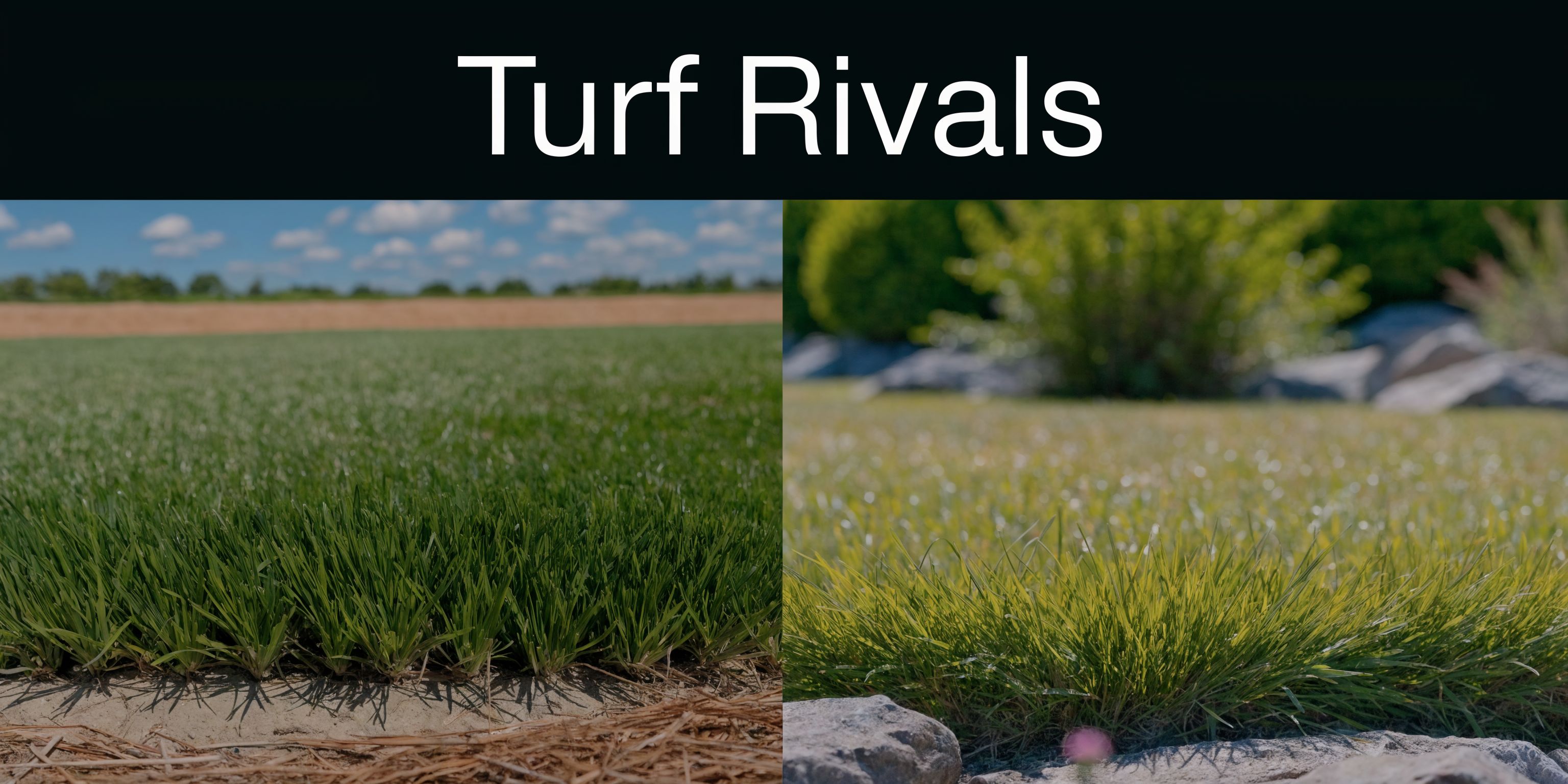
Bermuda grass in plain terms
Bermuda is the high-performance option for North Georgia yards that get strong sun and regular foot traffic. It spreads aggressively, fills bare spots faster than buffalo, and holds up better when children and pets use the lawn hard.
In our area, that aggressive growth is both the benefit and the hassle. Bermuda gives a dense, durable lawn in open front yards, sunny backyards, and play areas. It also wants to creep into mulch beds, along walk edges, and anywhere irrigation and summer heat give it an opening.
Bermuda fits properties with:
- Full sun for most of the day
- Active use from children and pets
- A need for quick recovery after wear
- Homeowners willing to mow often and stay on top of edging
It also responds best when the soil is opened up and managed well. In compacted North Georgia clay, bermuda can still perform, but it improves when drainage, biology, and mowing height are handled correctly.
If you want a broader look at grass types for Georgia lawns, that guide gives useful local context before you choose.
Buffalo grass in plain terms
Buffalo sits on the lower-input side. It has a broader blade, a softer look, and a slower growth habit that appeals to homeowners who do not want to mow as often or push fertilizer through the season.
That slower pace has trade-offs. Buffalo is a better fit where the lawn gets some shade, where the family wants a more relaxed look, or where a lower-maintenance approach matters more than fast self-repair. In neighborhoods like Alpharetta, that can work well in backyards with mixed light and less concentrated traffic.
Buffalo makes more sense for:
- Partial shade or mixed sun conditions
- Homeowners who want fewer mowing demands
- Lower-input lawn programs
- Areas with lighter traffic and less pounding wear
It is not the grass I would choose for a sunny yard that doubles as a practice field. Recovery is slower, and thin areas take longer to close.
The core split between them
Bermuda suits families who need toughness, density, and recovery in full sun. Buffalo suits homeowners who want a softer, more moderate lawn with less push from mowing and feeding.
For North Georgia, the choice comes down to how much sun the yard gets, how your family uses it, and how much maintenance you want to keep up with through a hot, humid summer.
The Ultimate Comparison for Georgia Homeowners
A yard in North Georgia can change from full sun to filtered shade in ten steps. That is why this choice needs to match the property, not the label on the pallet.
For homeowners in Cumming, Alpharetta, and the older tree-lined neighborhoods around Roswell and East Cobb, the deciding factors are sunlight, clay soil, traffic, and how much weekly work the lawn will get. If the goal is a child-safe, pet-friendly lawn with fewer synthetic inputs, those trade-offs matter even more.
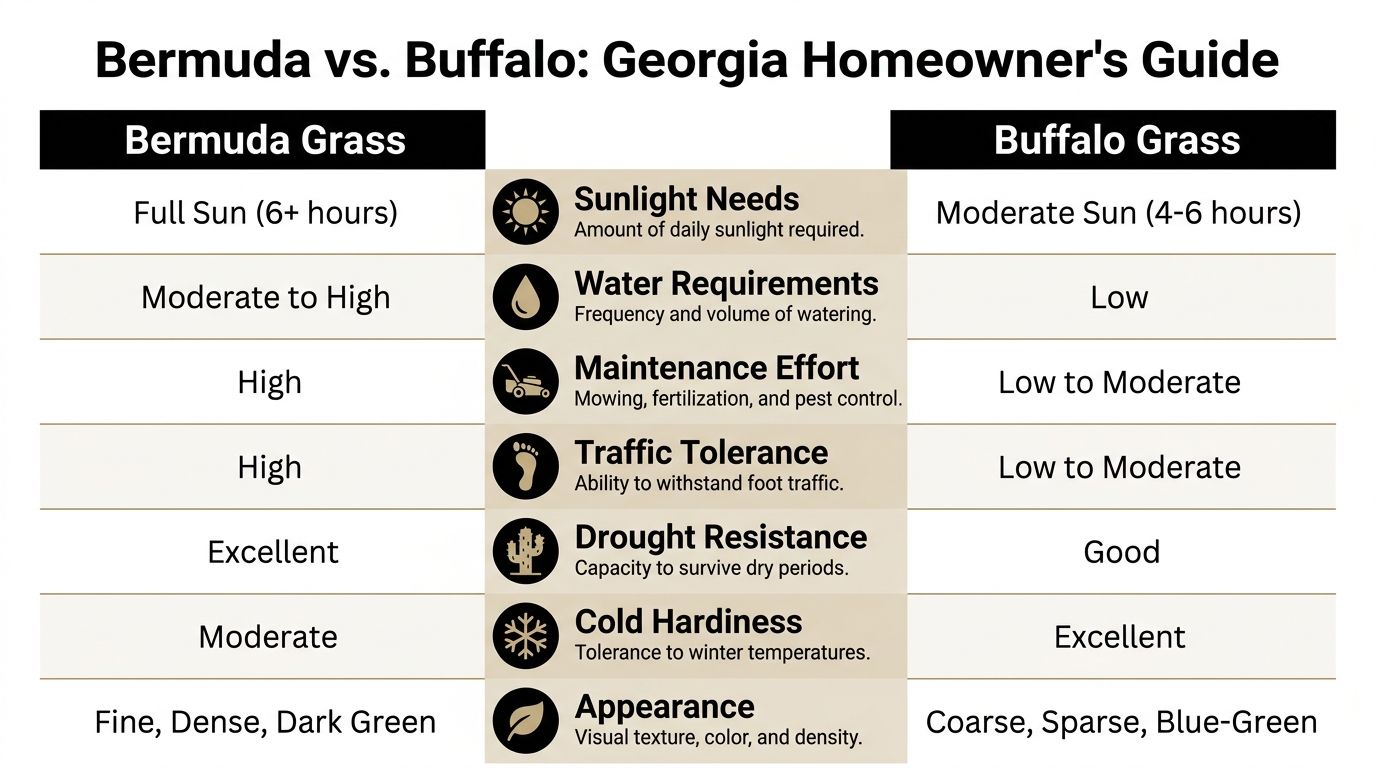
| Attribute | Bermuda Grass | Buffalo Grass (St. Augustine) |
|---|---|---|
| Sun exposure | Best in full sun | Better choice in partial shade |
| Growth habit | Aggressive spread and self-repair | Slower spread and slower recovery |
| Traffic tolerance | Strong for active yards | Better for lighter use |
| Mowing style | Shorter, more frequent cuts | Higher cut, less frequent mowing |
| Fertility demand | Higher | Lower |
| Look and feel | Dense, fine-textured, athletic look | Softer, broader-bladed, more relaxed look |
| Weed pressure response | Dense growth helps compete | Can do well, but slower establishment leaves less margin |
| Best fit in North Georgia | Sunny backyards, open lots, play areas | Shadier spaces, lower-input home lawns |
Sun and shade decide more than anything else
Start with light. In North Georgia, that answers half the question.
Bermuda wants direct sun for most of the day. In open front yards and backyards with little canopy, it gives the best density, the fastest fill-in, and the strongest wear recovery. Buffalo handles mixed light better, which makes it a better fit where pines, oaks, or neighboring houses cut down the afternoon sun.
I see homeowners get in trouble when they choose bermuda for the whole property because the front looks great. Then the side yard and backyard thin out by midsummer because the light is not consistent enough. In those mixed conditions, buffalo is the safer choice.
A sunny lawn gives you options. A shaded lawn narrows them fast.
Heat and dry spells favor bermuda in exposed sites
In a hot North Georgia summer, bermuda holds up better in open, sunny areas with reflected heat and dry soil. That matters in newer subdivisions where trees are young, lots are wide open, and the lawn takes full afternoon sun.
Buffalo can still be a lower-water option in the right setting, but it does not handle heavy use and summer stress the same way on exposed sites. If the yard gets baked from June through August, bermuda keeps a more functional surface.
That does not mean watering should be heavy. In our clay soil, overwatering creates its own problems, especially around roots, weeds, and disease pressure.
Traffic tolerance is a family issue
This category separates appearance from performance.
If kids are cutting across the same path every day, the dog runs the fence line, or the backyard doubles as a play space, bermuda is the stronger pick. It spreads aggressively and repairs worn areas faster. That recovery speed is one reason it works so well for active family lawns.
Buffalo is better where traffic is lighter and more spread out. It can look good and feel comfortable underfoot, but it does not bounce back from concentrated wear as quickly. For a low-use backyard seating area, that may be fine. For a yard that gets pounded every evening, it is not.
Weekly maintenance feels very different
Bermuda asks for consistency. It looks best with regular mowing, timely feeding, and close attention during peak summer growth. Homeowners who want that tight, clean finish like bermuda once they understand the schedule. A local bermuda grass maintenance calendar for Georgia lawns helps with timing because a missed window can show up quickly.
Buffalo fits a slower maintenance rhythm. It grows more moderately, is kept taller, and works better for homeowners trying to reduce inputs and avoid pushing top growth. That lines up well with organic lawn care goals, especially for families who want a safer lawn without treating the yard like a second job.
Texture, appearance, and barefoot comfort
This part is personal, but it still affects the decision.
Buffalo gives a softer, broader-bladed look. Many families prefer that in backyards where children and pets spend time on the lawn. It reads less formal and more relaxed.
Bermuda looks tighter and finer. In the right setting, it gives a cleaner finish and a more uniform surface. For front yards and high-visibility sunny areas, that look is hard to beat. Under bare feet, though, some homeowners still prefer the softer feel of buffalo.
Clay soil changes the outcome
North Georgia clay rewards the grass that matches the site.
Bermuda uses aggressive lateral growth to fill and tighten once it is established. In sunny clay soils, that makes it a strong competitor against weeds. Buffalo can grow in clay too, but site prep matters more because slower establishment leaves less room for mistakes. If the soil stays wet, the area stays shaded, or the lawn is watered excessively, buffalo has a harder time closing gaps.
That is why I recommend bermuda for open, active yards in Forsyth and North Fulton, and buffalo for mixed-light lawns where lower input matters more than fast recovery.
Which one fits your property
- Choose bermuda for sunny lawns in Cumming, Alpharetta, Milton, and open parts of Forsyth County where the yard gets hard use and needs to recover fast.
- Choose buffalo for properties in Roswell, Johns Creek, East Cobb, and similar neighborhoods where mature trees create regular partial shade.
- Choose bermuda for homeowners who want a more polished look and are willing to keep up with mowing.
- Choose buffalo for families who want a softer, lower-input lawn and can accept slower repair.
The practical takeaway
For most full-sun North Georgia yards, bermuda is the stronger performer. For mixed sun and shade, lower traffic, and a more moderate organic program, buffalo is the better long-term fit.
Real-World Maintenance and Upkeep
Saturday morning in Cumming makes the difference clear. One yard already needs its second mow of the week after a hot, rainy stretch. The next yard can wait a few more days and still look respectable. That is the practical split between bermuda and buffalo in North Georgia.
Fertility demand changes the whole program
Bermuda asks for more from the homeowner. To keep it dense, dark, and quick to recover, it needs a steadier mowing and feeding schedule through active growth. In the red clay soils around Alpharetta and Forsyth County, that also means aeration, topdressing, and tighter irrigation control so the lawn can use what you apply.
Buffalo is simpler to run on an organic program. It gets by with less fertility, and that matters for families who want a child-safe, pet-friendly lawn without constant inputs. You still need healthy soil, but the margin for overdoing fertilizer is lower because buffalo does not depend on heavy feeding to stay functional.
That difference shows up fast in both cost and labor.
Mowing is where many homeowners feel it first
Bermuda performs best with frequent mowing and a shorter cut. Skip too many cuts during a warm, wet week and it gets puffy, uneven, and harder to bring back into shape without scalping. For active sunny lawns, that trade-off is worth it because bermuda responds well to discipline.
Buffalo carries a taller, more relaxed canopy. It does not need the same mowing pace, which makes it easier for homeowners who want a lower-pressure routine. The trade-off is appearance and recovery. It will not give the same tight, athletic-field finish, and worn spots do not disappear as quickly.
A simple way to look at it:
- Bermuda: More mowing, more edging, faster visual payoff when managed well
- Buffalo: Less mowing, less feeding, slower repair after traffic
- Family yards with mixed sun and shade: Buffalo is easier to maintain without forcing the site
Organic upkeep in Georgia clay
North Georgia clay can make any lawn harder to maintain if it stays compacted. Water sits near the surface, roots stay shallow, and homeowners start adding products instead of fixing the soil. I see that cycle all the time.
For either grass, the better approach is to improve the soil first. Core aeration, compost topdressing, and sensible watering do more for long-term turf health than chasing quick color. Bermuda especially benefits from that foundation because it grows aggressively when roots can move and oxygen is available. Buffalo benefits too, but its lower input habit makes it a better fit for homeowners who want a steadier, more sustainable routine.
If you are weighing installation methods along with long-term maintenance, our guide to hydroseed vs sod for North Georgia lawns helps set realistic expectations.
Maintenance truth: Pick the lawn you will mow, water, and feed on schedule. That choice works better than picking the grass with the best brochure photo.
Seasonal effort in simple terms
| Season | Bermuda Grass | Buffalo Grass |
|---|---|---|
| Spring | Greens up with warming weather, mowing ramps up quickly | Wakes up more gradually, easier early-season pace |
| Summer | Highest mowing demand, needs close attention in peak growth | Lower input routine, but slower to recover from heavy use |
| Late summer stress | Handles heat well in full sun if soil and watering are right | Holds up with less fuss, but traffic damage lingers longer |
| Fall | Growth slows, cleanup and soil improvement still matter | Similar slowdown, with less intensive finish work |
For many North Georgia homeowners, maintenance decides the winner more than appearance on day one. Bermuda fits households willing to stay on top of mowing and upkeep. Buffalo fits families who want a softer, lower-input lawn that stays usable without as much intervention.
Lawn Establishment Cost and Timeline
Establishment is where expectations need to be realistic. The grass choice matters, but so does the install method, the timing, and how patient you’re willing to be.
Start with cultivar and site, not price alone
Recent sustainability trends have driven a 15% rise in Southeastern U.S. conversions to warm-season grasses due to water restrictions, according to the verified data, but the same source notes that pet safety and organic integration data remains sparse. It also points out that choosing the right cultivar from the start, such as a winter-hardy bermuda or a shade-tolerant buffalo, is critical for long-term success in Georgia’s mixed microclimates (warm-season conversion trend note).
That fits what works in North Georgia. A cheap install with the wrong grass costs more later.
Sod versus seed in practical terms
Bermuda gives homeowners more flexibility. Many bermuda lawns can be established from seed or sod, depending on the variety and the level of finish you want.
Buffalo pushes homeowners toward sod if they want a faster, more dependable result. Seed can work, but it requires more patience and cleaner site control.
A brief overview:
- Sod: Faster visual payoff, better weed competition up front, and easier to judge coverage.
- Seed: More patience required, more vulnerable during establishment, and more dependent on site prep.
- Plugs or sprigs: Sometimes workable, but slower and more management-heavy.
For homeowners comparing installation methods, this local overview of hydroseed vs sod helps frame why sod is often the safer call for warm-season lawns in North Georgia.
Timeline expectations in Georgia
Buffalograss can establish in 1 to 2 years from seed according to the verified data from the buffalo comparison source cited earlier in the article. That slower pace is important. If you want a near-finished look quickly, buffalo may test your patience unless you sod it.
Bermuda feels quicker because of its aggressive spread. That’s especially true in late spring and summer when soil temperatures support active growth.
Best practice in North Georgia is to install warm-season turf from late spring into summer when the grass can root and expand aggressively. Early installs get a longer runway before dormancy, which lowers stress and gives the lawn a better chance to enter fall in decent shape.
Don’t choose a grass based only on installation day. Choose it based on how it will behave in year two.
The Final Verdict for Your North Georgia Yard
For most full-sun North Georgia lawns, bermuda is the stronger recommendation. It handles traffic better, recovers faster, and performs more reliably through hot summer pressure.
That recommendation gets even stronger if the lawn is used hard. Backyards in Milton, Alpharetta, Cumming, and sunny parts of Forsyth County favor bermuda because families want one thing from the turf. They want it to hold together.
Choose bermuda if this sounds like your yard
In rigorous drought benchmarks, TifTuf Bermudagrass maintained an acceptable turf quality score of 6.5 on a 1 to 9 scale at just 30% ET irrigation, and verified data states it may require up to 40% less supplemental water during summer, reducing annual irrigation costs by 25 to 35% for clients in Forsyth and Cobb Counties (USGA warm-season water requirement benchmarks).
That makes bermuda the better fit when:
- Your lawn gets strong sun most of the day
- Kids or dogs use the yard hard
- You want quick recovery from wear
- You prefer a tighter, denser, more manicured look
- You’re willing to mow and manage it regularly
Choose buffalo if this sounds like your yard
Buffalo is the better call when your site limits bermuda before the install even begins.
Use buffalo if:
- The yard has meaningful partial shade
- You want less mowing and less feeding
- The lawn is more for living than for heavy play
- A softer, broader-bladed feel matters more than fast self-repair
- You want a lower-input lawn that fits a more natural maintenance style
The local recommendation that usually holds up
If a homeowner in North Georgia asks for one answer without seeing the property, the safest response is this:
- Full sun and traffic: Bermuda
- Partial shade and lower input: Buffalo
That’s the cleanest version of bermuda grass vs buffalo grass for this region.
Healthy turf starts below the blades. On Georgia clay, soil structure often decides whether either grass succeeds without constant correction.
A family-safe lawn doesn’t come from picking a grass and hoping. It comes from matching the grass to the site, then supporting it with better soil, proper mowing, and restrained inputs.
Frequently Asked Questions
Can I mix bermuda grass and buffalo grass in one lawn
It’s not a good long-term plan.
These grasses don’t grow or recover the same way. One tends to spread aggressively, and the other is slower and more site-sensitive. Mixed lawns end up looking inconsistent, especially where sun changes across the property.
If the yard has very different light zones, it’s better to treat those zones as separate problem areas instead of forcing one blended lawn.
Which grass is better for dogs and kids
It depends on how the yard is used.
Bermuda is better when traffic is the top concern. It repairs faster and handles repeated wear better in sunny areas.
Buffalo is appealing when softness underfoot and lower-input care matter more. For many families, the safer outcome comes less from the species name and more from avoiding unnecessary chemical-heavy correction after choosing the wrong turf.
Will either one grow in Georgia red clay
Both can grow in clay, but neither loves compacted soil.
The primary issue isn’t clay. It’s compaction, poor oxygen movement, and shallow rooting. If the soil is dense and sealed, the turf struggles to use water efficiently and establish evenly.
Core aeration, organic topdressing, and a realistic irrigation plan matter more than the label on the sod pallet.
Which one needs less work over time
Buffalo needs less ongoing effort.
Its lower mowing frequency and lower fertility demand make it easier for homeowners who want a respectable lawn without a tight weekly maintenance cycle. Bermuda can look better in the right setting, but it asks for more attention.
Which one is better for a shady backyard in Johns Creek or Roswell
Buffalo is the better candidate.
If the lawn only gets partial sun, bermuda thins and becomes frustrating to manage. In that situation, the lower-input grass is the smarter grass.
Which one gives the best-looking lawn
That depends on your definition of “best.”
If you want a dense, athletic, highly finished lawn in full sun, bermuda wins. If you want a softer, more relaxed lawn that fits a lower-maintenance property, buffalo may look and feel better in the long run.
What’s the biggest mistake homeowners make
They choose based on appearance at install, not performance at maturity.
A healthy lawn in North Georgia needs the right match for sunlight, traffic, and maintenance style. Most lawn problems show up later, after the wrong grass has had a full season to struggle.
Barefoot Organics helps homeowners across North Georgia build safer, healthier lawns with natural care strategies suited to local conditions. If you’re deciding between bermuda grass and buffalo grass, or you want help improving clay soil, reducing chemical dependence, and creating a lawn that works for kids and pets, get a free quote from Barefoot Organics.