

The dense, red clay soil famous in areas from Cumming to Alpharetta can be a beautiful backdrop, but it's tough on your turf. Over time, foot traffic from kids and pets, frequent mowing, and even heavy Georgia downpours compact this soil, slowly suffocating the grassroots. The result? A lawn that struggles with patchy growth, standing water after a storm, and a constant need for more water and fertilizer to stay green. This is where lawn aeration becomes a game-changer for North Georgia homeowners.
It's not just another task on the yard work checklist; it's a vital process that breathes life back into your soil, creating a healthier foundation for your grass. The benefits of aerating your lawn are substantial, directly countering the effects of compacted clay.
This article will break down the seven most significant advantages of aeration, focusing specifically on how this practice addresses the unique challenges faced by properties in Cumming, Johns Creek, Alpharetta, Milton, and Dahlonega. You will learn how this simple, organic-friendly technique creates a more resilient, beautiful, and sustainable lawn that thrives in our local climate, ultimately reducing your maintenance costs and environmental footprint.
1. Improved Root Growth and Depth
One of the most significant benefits of aerating lawn is the dramatic improvement in root growth and depth. Think of your North Georgia clay soil as a crowded room; when it becomes compacted from heavy foot traffic, summer heat, or even just gravity, there's no space for anything to move or grow. Aeration acts like opening doors and windows in that room, creating channels that allow grass roots to stretch out and dive deeper into the soil.
This deeper root system is the foundation of a truly healthy lawn. Instead of shallow roots struggling for water near the surface, deep roots can access moisture and essential nutrients stored further down. This creates a more self-sufficient and resilient turf that is better equipped to handle the unpredictable summer droughts common in areas like Alpharetta and Cumming.
Real-World Success Stories
The proof is in the professional turf world. The Golf Course Superintendents Association has long advocated for regular aeration to maintain the pristine, deep-rooted greens you see at local courses around the Cumming area. Similarly, sports fields in communities like Johns Creek aerate annually not just for turf health, but to create a safer, more stable playing surface by preventing soil compaction. Landscaping professionals often report a 40-50% improvement in drought resistance for their clients after implementing a consistent aeration program.
Key Insight: A shallow root system leads to a lawn that is highly dependent on frequent watering and is the first to show stress during dry spells. Deep roots, encouraged by aeration, create a drought-tolerant, low-maintenance turf.
Actionable Tips for North Georgia Lawns
To maximize root development after aeration, follow these specific steps tailored for our local climate:
- Timing is Everything: For cool-season grasses like Fescue, common in Dahlonega, aerate in the fall. For warm-season grasses like Bermuda or Zoysia, found throughout Milton, aerate in late spring or early summer when they are actively growing.
- Water Deeply, Not Daily: After aerating, water your lawn thoroughly to encourage roots to follow the moisture down into the newly opened channels.
- Boost with Nutrients: This is the perfect time to apply a root-stimulating fertilizer. The direct access to the root zone makes the application far more effective.
- Patience is a Virtue: While some benefits are immediate, achieving maximum root depth is a long-term process. Expect to see the most significant improvements after 2-3 seasons of consistent annual aeration.
2. Enhanced Water Infiltration and Drainage
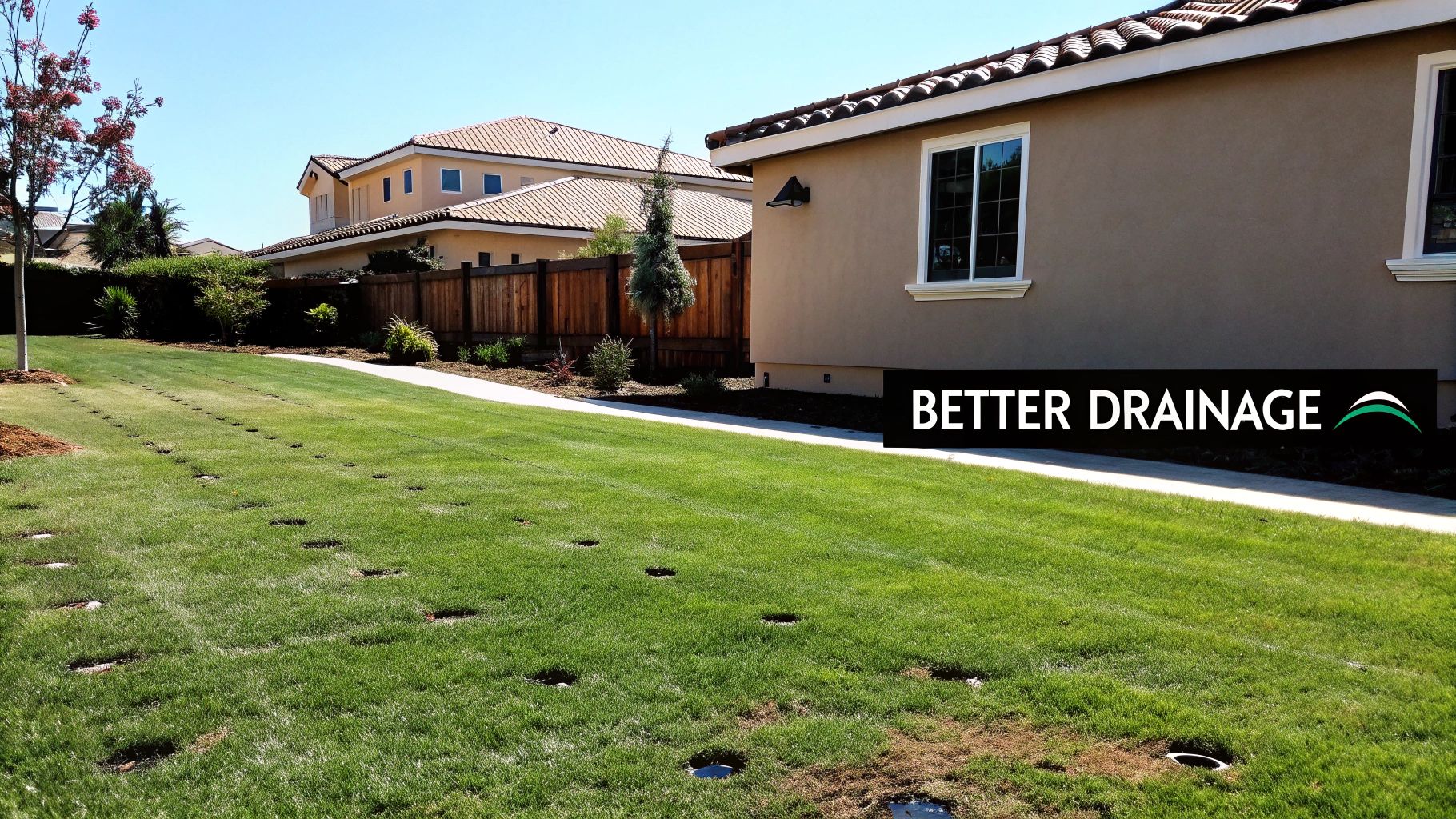
Another of the core benefits of aerating lawn is its ability to significantly improve water infiltration and drainage. When North Georgia’s heavy clay soil becomes compacted, it acts like a layer of concrete, causing rainwater to pool on the surface or run off into the street instead of soaking in. Aeration breaks through this hardpan, creating thousands of small channels for water to move directly into the root zone where it's needed most.
This process drastically reduces puddling and standing water, which can lead to fungal diseases and root rot. By ensuring water penetrates deeply, aeration helps your lawn make the most of every rainfall, a crucial advantage during the sporadic summer downpours in areas like Johns Creek. For homeowners looking for comprehensive strategies, there are many ways for how to improve soil drainage in your garden, with aeration being a primary method for turfgrass.
Real-World Success Stories
The impact of this benefit is clear in public and private spaces. Municipal parks departments in places like Alpharetta have reported a 60% reduction in standing water issues on turf fields after implementing annual aeration programs. Similarly, athletic fields rely on this practice to maintain playability during rainy seasons, preventing muddy, unsafe conditions. Homeowners in clay-heavy neighborhoods around Cumming often report the complete elimination of persistent wet spots after just one season of core aeration. For more details on the process, you can learn more about how to aerate your lawn on barefootorganicsllc.com.
Key Insight: Surface runoff doesn't just waste water; it carries away valuable fertilizers and topsoil. Improved infiltration from aeration keeps water and nutrients on your property, benefiting your lawn and the local environment.
Actionable Tips for North Georgia Lawns
To achieve the best water infiltration results, consider these tailored tips:
- Target Problem Areas: Pay special attention to low-lying areas or spots where you notice water consistently puddles after it rains.
- Use Core Aeration: While spike aeration pokes holes, core aeration is far more effective as it removes plugs of soil, creating larger, more durable channels for water to enter.
- Follow with Topdressing: After aerating, apply a thin layer of organic compost. This material will fall into the aeration holes, keeping them open longer and improving soil structure over time.
- Time It Before Rain: If possible, schedule your aeration service a day or two before a predicted light to moderate rainfall. This allows nature to water deeply into the newly opened soil channels for you.
3. Increased Nutrient Uptake and Availability
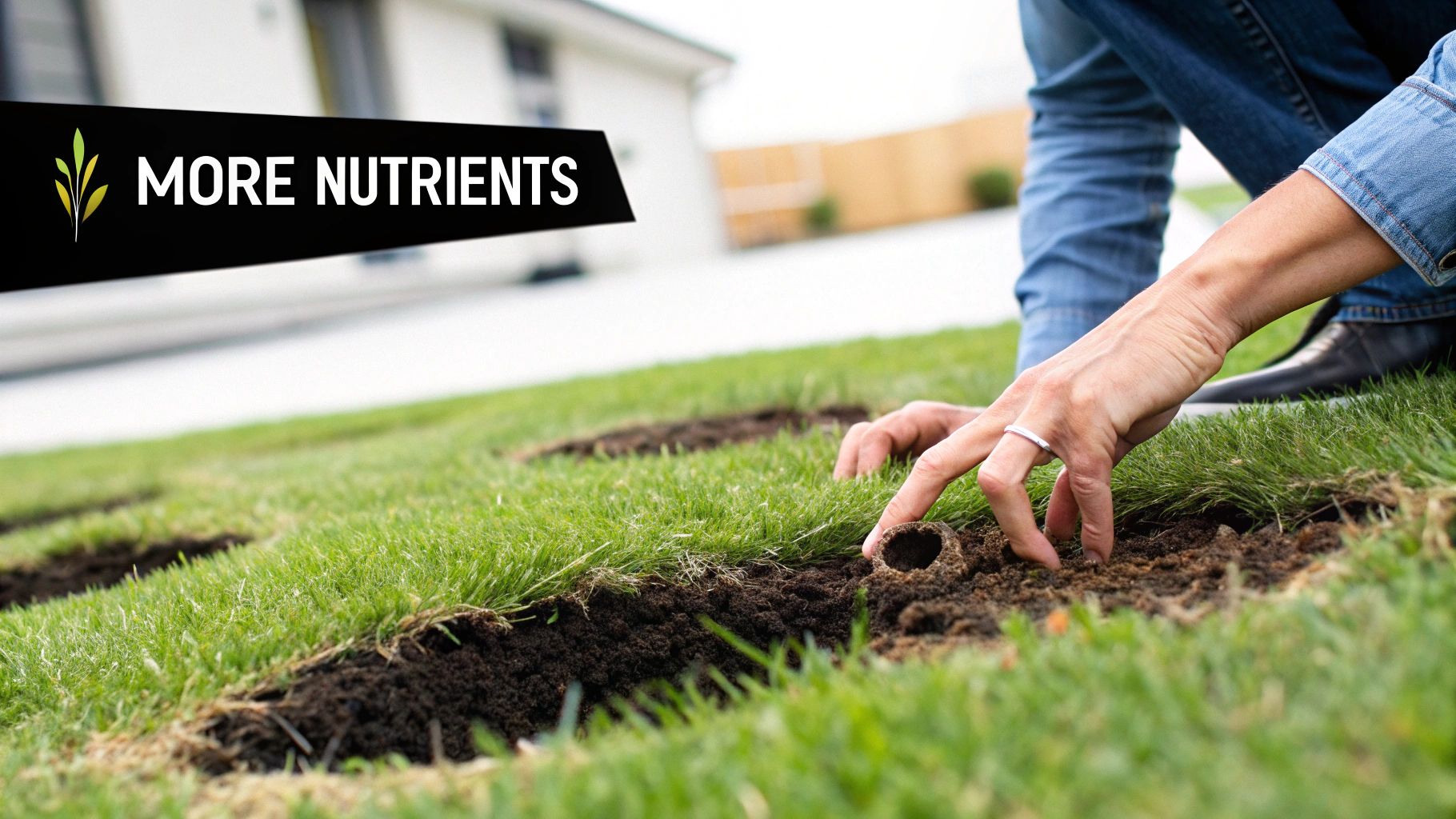
Another critical benefit of aerating lawn is how it unlocks the full nutritional potential of your soil. Compacted North Georgia clay essentially locks away vital nutrients, making it difficult for your grass to access the nitrogen, phosphorus, and potassium it needs to thrive. Aeration breaks up this compacted layer, creating pathways that allow air, water, and, most importantly, nutrients to reach the root zone where they can be absorbed effectively.
This process enhances the efficiency of both existing soil nutrients and any fertilizer you apply. Instead of fertilizer sitting on the hard soil surface, susceptible to runoff during a heavy Cumming rainstorm, it can penetrate deep into the soil. This leads to a healthier lawn that requires less chemical intervention, a major goal for environmentally conscious homeowners.
Real-World Success Stories
The proof of this principle is a cornerstone of sustainable agriculture and organic lawn care. Organic lawn companies in the Alpharetta area prioritize core aeration as a primary tool to maximize the impact of natural fertilizers and compost, minimizing synthetic inputs. The Lawn Institute and various university extension offices, including those serving North Georgia, consistently recommend aeration as a foundational step to improve nutrient cycling. Research from institutions like the University of Georgia has shown that regular aeration can reduce fertilizer needs by as much as 25-30% by making existing nutrients more available to the plant.
Key Insight: Aeration acts like a key, unlocking the nutrients trapped in compacted soil. It makes your lawn and your fertilizer applications more efficient, resulting in a greener lawn with less waste and environmental impact.
Actionable Tips for North Georgia Lawns
To boost nutrient availability in your soil after aerating, consider these targeted strategies:
- Test and Measure: Conduct a soil test before and after aeration to get a clear picture of the changes in nutrient availability. Your local UGA Extension office for Forsyth County can provide guidance on this.
- Topdress with Organics: After aerating, apply a thin layer of high-quality compost. This topdressing falls into the aeration holes, introducing beneficial microbes that enhance nutrient cycling directly at the root level.
- Time Your Fertilization: Wait a week or two after aerating before applying fertilizer. This allows the turf to recover slightly and ensures the new channels are ready to deliver nutrients directly to the roots for maximum uptake during the active growing season.
- Maximize Seasonal Growth: Time your aeration to precede your lawn’s peak growing period. For Bermuda and Zoysia lawns in Milton, this means late spring; for Fescue in the cooler areas near Dahlonega, this means early fall.
4. Reduced Soil Compaction and Improved Soil Structure
A primary reason homeowners see thinning grass and poor water absorption is soil compaction, a very common issue in North Georgia's dense clay. One of the greatest benefits of aerating lawn is its direct mechanical action against this compaction. When soil particles are pressed together by foot traffic, heavy mowers, or even new construction, it eliminates the vital pore spaces needed for air, water, and root movement. Aeration physically breaks apart these dense layers, creating a healthier, more friable soil structure.
This process directly reduces soil bulk density, making it easier for grass roots to penetrate deeply and for beneficial microorganisms to thrive. The result is a soil profile that can breathe and function properly, which is the cornerstone of a sustainable, vibrant lawn in communities from Cumming to Alpharetta.
Real-World Success Stories
The impact of aeration on compaction is well-documented by professionals who manage high-stress turf. Construction site remediation specialists in the growing Cumming and Johns Creek areas, for instance, use heavy aeration as a primary tool to restore the severely compacted ground left behind by equipment. In commercial settings, property managers often see a 50% improvement in soil structure and turf density after 2-3 years of regular aeration, especially along high-traffic pathways and parking lot perimeters.
Key Insight: Compacted soil essentially suffocates your lawn from the roots up. Aeration is the most effective way to mechanically reverse this process, creating a healthy foundation that allows your entire lawn ecosystem to function correctly.
Actionable Tips for North Georgia Lawns
To effectively combat soil compaction on your property, implement these targeted strategies:
- Increase Frequency for Problem Areas: For severely compacted zones, like pet runs or common walkways, consider aerating 2-3 times annually to accelerate soil recovery.
- Manage Traffic Post-Aeration: After aerating, try to reduce foot traffic on the lawn for a week or two. This allows the soil to recover and the new channels to remain open. You can learn more about the best time to aerate your lawn to schedule this recovery period effectively.
- Topdress with Organic Matter: Immediately following aeration is the perfect opportunity to topdress with high-quality compost. This material will fall into the aeration holes, permanently improving the soil structure as it incorporates.
- Consider Your Equipment: While standard core aerators work well for most lawns, areas with extreme compaction from construction may benefit from deep-tine aeration performed by a professional service.
5. Enhanced Microbial Activity and Soil Biology
A crucial, yet often overlooked, benefit of aerating lawn is the revitalization of the soil's microscopic ecosystem. Your lawn's health is deeply connected to the life within the soil, and aeration creates the perfect environment for beneficial microorganisms to thrive. When soil, particularly the dense clay common in North Georgia, becomes compacted, it loses oxygen. This creates an anaerobic environment where beneficial aerobic microbes struggle to survive, while harmful ones can flourish. Core aeration punches holes in this compacted layer, directly injecting oxygen into the root zone.
This influx of oxygen fuels the growth of a powerful workforce of bacteria, fungi, and other microbes. These tiny organisms are essential for breaking down organic matter like thatch and grass clippings, converting them into usable nutrients for your turf. They also help to fix nitrogen, produce plant growth hormones, and actively suppress soil-borne diseases, creating a balanced and self-sustaining ecosystem right beneath your feet.
Real-World Success Stories
The science behind this is well-established. Sustainable turf management programs have demonstrated how aeration can dramatically shift soil biology for the better. University research shows that disease suppression in well-aerated soils can be comparable to that of compost-amended soils. Furthermore, organic lawn care operations in the Cumming area often report a 40-60% reduction in common fungal diseases after implementing a regular aeration and overseeding program, reducing the need for chemical fungicides. Biological soil tests consistently show a two to three-fold increase in microbial biomass just four weeks after aeration.
Key Insight: A healthy lawn is not just about the grass you see, but the living soil beneath it. Aeration is a direct investment in this soil biology, fostering a natural defense system that reduces disease and improves nutrient cycling.
Actionable Tips for North Georgia Lawns
To transform your lawn into a thriving microbial hub after aeration, follow these steps:
- Feed the Microbes: Immediately after aerating, top-dress your lawn with a thin layer of high-quality compost or other organic amendments. This provides a direct food source for the newly energized microbial population.
- Avoid Chemical Disruption: Refrain from applying broad-spectrum fungicides or pesticides right after aeration, as these can harm the very beneficial microbes you're trying to encourage.
- Maintain Proper Moisture: Keep the soil consistently moist but not waterlogged. Microbes need water to live and work effectively, but overly saturated soil can lead to anaerobic conditions again.
- Leave the Clippings: When you mow, let the clippings fall back onto the lawn. This practice, known as grasscycling, provides a continuous source of organic matter to feed the soil biology.
6. Thatch Decomposition and Buildup Prevention
Another of the key benefits of aerating lawn is its power to manage and prevent excessive thatch buildup. Thatch is the dense, spongy layer of dead and living organic matter, including stems, roots, and clippings, that accumulates between the green grass blades and the soil surface. A thin layer is normal and healthy, but when it exceeds half an inch, it acts like a water-repellent mat, suffocating your lawn and blocking essential resources from reaching the soil.
Core aeration is the most effective cultural practice for managing thatch. The process physically punches through this tough layer, pulling up plugs of soil and depositing them on the surface. These soil cores are rich in microorganisms that, once on top of the thatch, begin to break it down and decompose it naturally. This returns valuable nutrients to the soil and restores the critical air, water, and nutrient exchange at the soil level, which is vital for grass health in the dense clay of North Georgia.
Real-World Success Stories
Professional turf management programs, championed by organizations like The Lawn Institute, have demonstrated this effect for decades. Lawns in communities from Johns Creek to Cumming that receive annual core aeration consistently maintain thatch levels well below the problematic half-inch threshold. Conversely, properties that neglect aeration often see thatch accumulate to over an inch within just 3-5 years, leading to a host of problems like shallow roots, disease, and poor drought tolerance. Grass types common in our area, such as certain Bermuda and Zoysia varieties, are particularly prone to thatch and benefit immensely from this practice.
Key Insight: Excessive thatch creates a barrier that chokes your lawn, preventing water and nutrients from ever reaching the soil. Aeration introduces soil microbes that act as a natural cleanup crew, decomposing the thatch layer from the top down.
Actionable Tips for North Georgia Lawns
To effectively manage thatch through aeration, apply these targeted strategies:
- Be Proactive: If thatch is already present, annual aeration is crucial. Don't wait for it to become a major problem.
- Know When to Dethatch: If your thatch layer already exceeds ¾ of an inch, it's best to mechanically dethatch (power rake) the lawn first before starting a regular aeration program.
- Combine with Topdressing: After aerating, apply a thin layer of compost or topdressing. This further accelerates microbial activity and speeds up the decomposition of the thatch layer.
- Adjust Your Fertilizing: Heavy nitrogen fertilizer use can accelerate thatch buildup. Consider reducing nitrogen applications and focusing on a balanced nutrient program alongside your annual aeration schedule.
7. Improved Grass Density, Color, and Stress Tolerance
A primary goal for any North Georgia homeowner is a lawn that is lush, vibrant, and resilient. Another key benefit of aerating lawn is how it directly leads to improved grass density, richer color, and greater tolerance to environmental stress. When the soil is no longer compacted, the cumulative effects of better water, air, and nutrient flow supercharge your turf's health, creating a visibly superior lawn. Aeration essentially gives each blade of grass the resources it needs to thrive, multiply, and fend off common issues.
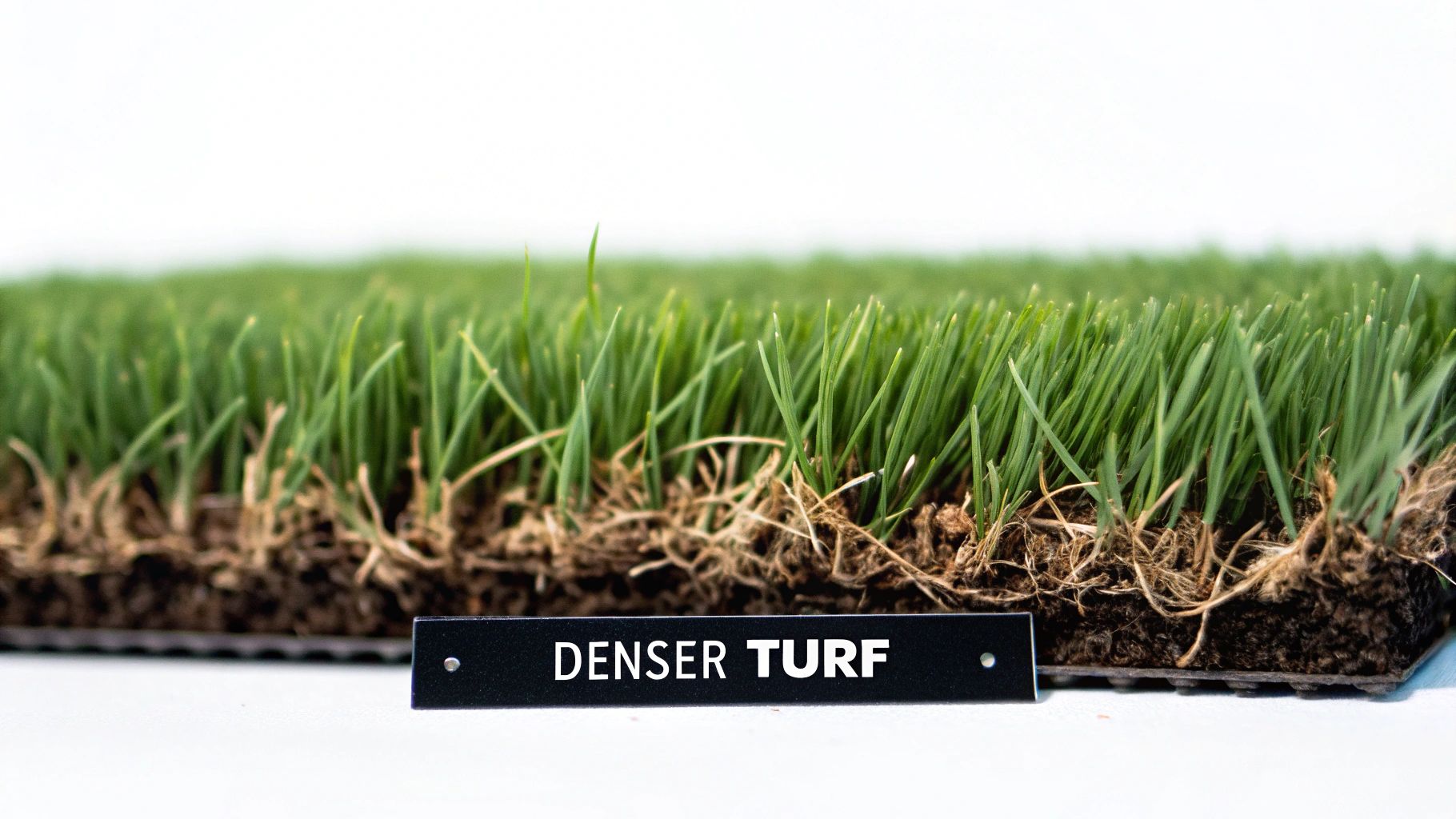
This process transforms a thin, pale lawn into a thick, deep-green carpet. The increased density comes from new shoots (tillers) that the grass plants produce when they are healthy and have room to expand. The enhanced color is a direct result of efficient nutrient uptake, particularly nitrogen, which is responsible for that coveted emerald green hue. A healthier, denser lawn is also naturally more tolerant to the stresses of a Cumming summer, from intense heat to fungal diseases.
Real-World Success Stories
The visual evidence of aeration's impact is undeniable. Before-and-after case studies frequently show a 30-40% increase in grass shoot density within a single growing season post-aeration. Sports turf managers at community fields in Johns Creek and Alpharetta rely on aeration to maintain superior turf quality and reduce injury-causing bare spots. Furthermore, many residential properties in Milton report their lawns greening up two to three weeks earlier in the spring after implementing a consistent aeration and overseeding program.
Key Insight: A thin, discolored lawn is often a symptom of underlying soil compaction. Aeration addresses the root cause, leading to a lawn that not only looks better but is fundamentally healthier and more capable of withstanding stress.
Actionable Tips for North Georgia Lawns
To achieve that picture-perfect density and color after aerating your local lawn, follow these specific steps:
- Capture the Change: Take a photo of your lawn before aeration to track the visible improvements in density and color over the following weeks and months.
- Water for Color: After aeration, maintain a proper watering schedule of 1-1.5 inches per week. This helps transport nutrients efficiently and is crucial for the best color response.
- Double Down on Density: The best way to achieve a thick, dense lawn is to combine aeration with overseeding. This introduces new grass seed directly into the soil. You can learn more about how aeration and overseeding work together for maximum impact.
- Strategic Timing: For warm-season grasses like Zoysia, aerate in late spring for a boost in summer color intensity. For Fescue lawns in areas like Dahlonega, a fall aeration helps prepare the turf for winter and promotes a stronger start the following spring.
7-Point Lawn Aeration Benefits Comparison
| Benefit | 🔄 Implementation Complexity | ⚡ Resources & Efficiency | ⭐ Expected Outcomes | 💡 Ideal Use Cases | 📊 Key Advantages |
|---|---|---|---|---|---|
| Improved Root Growth and Depth | Moderate — core aeration plus follow-up watering; may need repeats for severe compaction | Moderate — aerator (rental/service), water, time; occasional root stimulants | ⭐⭐⭐⭐ — deeper roots in 3–4 weeks; improved drought resilience | Lawns with compacted topsoil; golf greens; sports fields | Deeper roots; enhanced drought tolerance; more stable turf |
| Enhanced Water Infiltration and Drainage | Moderate — core aeration with timing before/after rain; best with topdressing | Moderate — aerator, topdressing material; low ongoing cost | ⭐⭐⭐⭐ — reduces runoff/standing water (reported 30–60% improvements) | Clay soils, soggy yards, athletic fields, municipal parks | Fewer puddles; reduced disease risk; more efficient irrigation |
| Increased Nutrient Uptake and Availability | Low–Moderate — aeration plus compost or timed fertilization; soil testing advised | Low — soil test, compost/topdressing, basic equipment | ⭐⭐⭐⭐ — improves nutrient cycling; can cut fertilizer needs ~20–30% | Low-fertility sites; organic lawns; cost-conscious maintenance | Better nutrient efficiency; greener turf; reduced runoff from fertilizers |
| Reduced Soil Compaction and Improved Structure | Moderate–High — may require heavier equipment and multiple passes for severe compaction | Higher for severe cases — heavy aerator, repeated treatments, traffic control | ⭐⭐⭐⭐ — lowers bulk density ~10–15%; improves root penetration over seasons | High‑traffic areas, construction-impacted soils, parking perimeters | Restored soil aggregation; improved gas/water movement; long-term structure |
| Enhanced Microbial Activity and Soil Biology | Low–Moderate — aeration plus organic amendments; avoid disruptive pesticides | Low — compost/organic inputs, moisture management; minimal equipment | ⭐⭐⭐⭐ — oxygen ↑30–50%; microbial biomass often increases 2–3x in weeks | Organic operations, disease-prone lawns, soil-health programs | Natural disease suppression; sustained nutrient cycling; improved resilience |
| Thatch Decomposition and Buildup Prevention | Low–Moderate — core aeration; severe thatch may need mechanical removal first | Low — aerator, occasional dethatcher, topdressing | ⭐⭐⭐⭐ — prevents excessive thatch (>½") when performed regularly | Lawns prone to thatch (e.g., certain Zoysia); properties avoiding costly dethatching | Reduces thatch removal needs; improves water/nutrient contact with soil |
| Improved Grass Density, Color, and Stress Tolerance | Moderate — aeration combined with overseeding and proper aftercare; yearly maintenance | Moderate — overseeding seed, watering, aerator; recurring investment | ⭐⭐⭐⭐ — visible improvement in 4–6 weeks; shoot density +30–40% within season (cases) | Residential lawns, aesthetic landscapes, athletic fields | Denser, greener turf; better stress and disease tolerance; higher curb appeal |
Your Next Step Toward a Thriving Georgia Lawn
We've explored the foundational reasons why aeration is more than just another chore on your lawn care checklist. It's a strategic intervention that directly addresses the unique challenges of our North Georgia environment. From the dense, compacted red clay common in Cumming and Alpharetta to the summer heat waves that stress our turf, the benefits of aerating your lawn are not just cosmetic, they are transformative.
By mechanically creating space in your soil, you are setting off a powerful chain reaction. You’re giving your grassroots the freedom to grow deeper, making them more resilient to drought. You’re improving water infiltration, which helps prevent runoff and ensures every drop from your sprinkler or a summer shower reaches the root zone. This single act directly enhances nutrient uptake, reduces thatch, and invigorates the very soil biology that sustains a lush, green turf.
From Knowledge to Action: Embracing the Benefits
Understanding these principles is the first step, but applying them is what creates a truly stunning landscape. Let's recap the most critical takeaways for homeowners in areas like Johns Creek, Milton, and Dahlonega:
- Compaction is the Enemy: The primary villain for Georgia lawns is soil compaction. Aeration is your most effective weapon against it, directly improving everything from root depth to microbial health.
- Water Smarter, Not Harder: An aerated lawn absorbs water more efficiently, reducing waste and lowering your water bills during our hot, dry summers. It’s a key step toward a more sustainable and cost-effective lawn care routine.
- A Foundation for Organic Care: For those committed to an organic, family-friendly lawn, aeration is non-negotiable. It amplifies the effects of organic fertilizers and treatments, ensuring your soil can support a vibrant ecosystem without synthetic chemicals.
Ultimately, mastering the practice of lawn aeration means you are shifting from simply maintaining your grass to proactively cultivating a healthy, resilient ecosystem. A well-aerated lawn is not just greener; it's a more robust environment that can better fend for itself against weeds, diseases, and environmental stress. For comprehensive care, maintaining a truly thriving lawn also involves protecting it with sustainable pest solutions for a vibrant garden, creating a holistic system where your turf can flourish.
This investment in your soil’s health pays dividends all year long, resulting in a dense, beautiful lawn that enhances your home’s curb appeal and provides a safer, more enjoyable outdoor space for your family and pets.
Ready to unlock these benefits for your property? The experts at Barefoot Organics specialize in core aeration and organic lawn care tailored specifically for North Georgia’s clay soil and climate. Visit Barefoot Organics to get a free, no-obligation quote and take the first real step toward the healthy, vibrant lawn you’ve always wanted.