

You notice it while walking past the front lawn in late summer. A fist-sized circle has turned brown beside the driveway, even though the grass looked fine in spring. You scatter seed, water the spot harder, and wait. A few weeds appear, but the grass never fills in.
That pattern is common in North Georgia, from fescue lawns in Cumming and Alpharetta to Bermuda and Zoysia in Johns Creek, Suwanee, Duluth, and nearby Forsyth County neighborhoods. Bare patches in lawn areas are usually symptoms of a site problem, not places where grass seed went missing. Turf guidance identifies pests, traffic, difficult growing environments, and water problems among the common causes, while traffic and poor growing conditions are frequent contributors in practice. USGA turf guidance on bare spots
The reliable approach is to reverse-engineer the failure first. Look at the soil, surrounding trees, traffic pattern, pet use, mowing history, irrigation, and the shape of the damage before choosing seed, compost, fertilizer, or sod.
When a Bare Patch Shows Up in Your Yard
A homeowner in Marietta may first notice a small dead circle in a tall fescue lawn after several hot, dry weeks. A family in Gainesville may see a thin section in Bermuda where children cross the yard every afternoon. In both cases, the natural reaction is the same: buy a bag of seed, throw it over the exposed soil, and add more water.
That response makes sense, but it skips the question that determines whether the repair will last. What changed at that exact spot?
A patch beside a walkway may have compacted soil from repeated foot traffic. A circle under a mature oak may be losing light and moisture to the tree. A loose section that lifts like carpet may point toward root damage from insects. A yellow ring around healthy green grass may have a different explanation from a uniformly brown area near a downspout.
Practical rule: Treat the patch as evidence. Don't treat it as the diagnosis.
The shape, location, timing, and texture of the damage all matter. Check whether the soil absorbs water or sheds it, whether a shovel can enter the ground, whether the grass pulls up easily, and whether the same area has failed before. Look for mower scalping along curbs, concentrated pet use, runoff, construction remnants, or shade that has increased as trees matured.
Why more seed often changes nothing
Grass seed needs contact with soil, oxygen, moisture, and a suitable growing environment. If compaction prevents roots from accessing air and water, added seed may germinate and then stall. If a chemical spill or disease killed the original turf, watering harder won't correct the underlying injury.
The repair sequence should therefore run in this order: observe, identify the constraint, correct the site, prepare the seedbed, choose compatible grass, and manage moisture. That sequence saves time because it prevents you from repeating the same reseeding attempt every season.
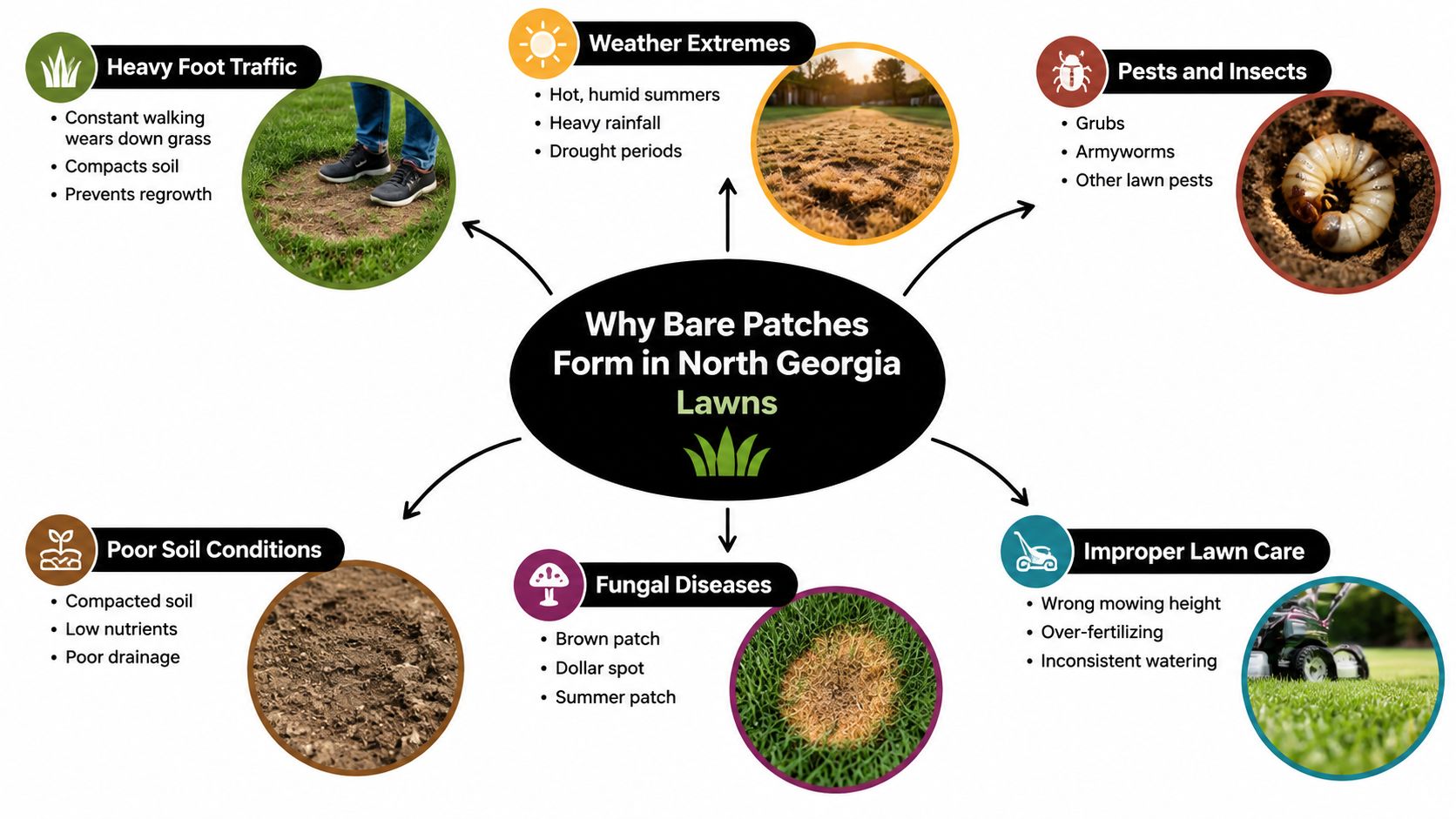
Why Bare Patches Form in North Georgia Lawns
A bare patch beside a driveway may come from compacted red clay. A thin area beneath mature oaks may be losing light and moisture, while turf near a downspout may be suffering from runoff. North Georgia's transition-zone climate adds another complication. Fescue can decline in summer heat, while Bermuda and Zoysia respond differently to shade, irrigation, thatch, and seasonal growth. The same brown area can require a different repair based on its hidden site problem.
Start by separating site pressure from outside damage. Traffic, poor growing environments, pests, and water problems commonly create bare areas. Drought, mower scalping, concentrated pet urine, and excessive fertilizer or weedkiller can also injure turf. Research-based bare-spot diagnosis Brown spots and bare patches often share root causes. Use this guide to what causes brown spots in grass before buying a repair product.
Read the location before buying a product
Compacted clay: A path beside a play area, gate, or driveway receives repeated pressure. Water may pool or shed away, and roots lose access to oxygen. Open the soil and improve its condition before spreading seed.
Heat and disease: Fescue often declines during hot weather. Circular or expanding damage can point to disease. Historical turf research credits Dr. Houston Couch's 1966 work with identifying the fungus associated with necrotic ring spot, supporting pathogen-based diagnosis. History of necrotic ring spot research
Grass mismatch: Bermuda and Zoysia need warmth and sunlight. Beneath oaks or pines, shade may make them poor choices. A compatible turf-type tall fescue blend may perform better in the Atlanta metro.
Pests: Grubs, chinch bugs, and other insects can damage roots or blades. Confirm active pests before treatment, or new grass may be lost again.
Pet urine: Repeated concentration can injure turf and leave space for weeds. Flush the area and change the pet's route.
Construction debris: Buried rubble, builders' waste, old stumps, and compacted subsoil can create a lasting dry or shallow-rooted zone. Seed cannot overcome a physical obstruction.
Disease requires disease management. Compaction requires soil correction. Shade may require different grass or a non-turf planting. Identifying that constraint first prevents another failed reseeding attempt and protects the growing season.
Preparing the Spot and Picking the Right Seed
A bare patch can return even after good seed germinates if the soil beneath it stays compacted, drains poorly, or contains debris. Confirm the site problem first, then prepare the area so seed can contact firm, workable soil. Define the damaged edge with a square spade or half-moon edger. A clean boundary removes ragged thatch and creates a more even repair.
Rake away dead blades, loose thatch, and debris until firm soil appears. Score the surface lightly with a garden rake. Keep red clay intact rather than reducing it to dust, and break any hard crust that sheds water. The seedbed should be shallow and textured, not loose and fluffy.
Build a shallow seedbed
Spread screened compost or quality topsoil as a thin amendment. A quarter-inch layer can improve the immediate seedbed. Cover seed with approximately 1/8 to 1/4 inch of material, enough to retain moisture without burying it. Extension guidance on seed quality and reseeding
Seed needs soil contact, not a deep pocket of loose material. Press the surface gently with the back of a rake or light foot pressure on a board. Stop before the area becomes compacted again.
Match grass and timing to the site
For fall repair and fescue overseeding around Atlanta, choose a turf-type tall fescue blend suited to the local transition-zone climate. Bermuda and Zoysia are generally repaired from late spring through summer, when active growth supports establishment. Warm-season repair timing and hidden subsoil constraints
For variety recommendations suited to Georgia, see our guide to the best grass seed for Georgia. Match the choice to sunlight, soil depth, and the grass already growing nearby. If the hidden constraint remains, changing seed alone will not solve the patch.
Bare spots need the new-lawn seeding rate, rather than the lighter overseeding rate. Illinois Extension recommends 5 to 10 pounds of seed per 1,000 square feet for new lawns, and applies that higher rate to bare spots. Illinois Extension aeration and overseeding guidance
Sod suits a small visible patch, an erosion-prone slope, or a location that must look finished quickly. The trade-off is cost and matching. Choose sod that corresponds to the existing cultivar, and measure the actual area before ordering.
For seed, inspect the label. Extension Milwaukee recommends at least 90% purity and 75% germination success as useful quality benchmarks. Use those figures to screen the seed, then correct the site problem before reseeding.
Watering and Caring for Newly Seeded Patches
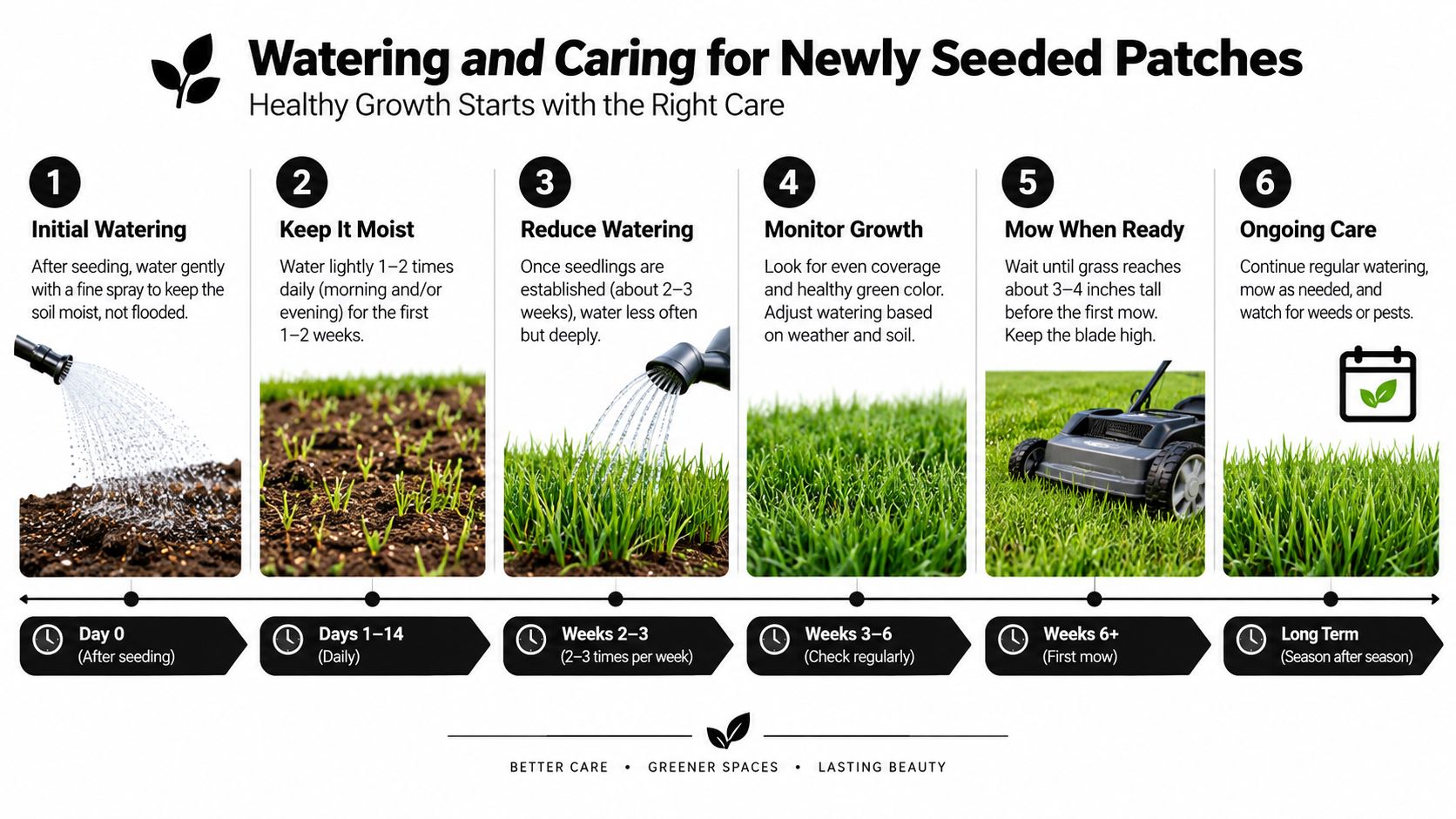
Newly seeded ground fails most often because the surface dries between waterings or because a heavy spray washes seed downhill. In North Georgia heat, keep the top half-inch of soil continuously moist, but never saturated. A gentle nozzle or small sprinkler is safer than a strong jet.
During germination, use 2 to 4 light waterings daily, concentrated from morning through midday. Adjust for rainfall, slope, shade, and soil texture. The goal is a damp seedbed, not standing water.
A thin layer of straw or pine straw can reduce evaporation and discourage birds. Aim for roughly 50% coverage, leaving plenty of soil and seed visible. Heavy mulch blocks light and can hold excessive moisture against tender growth.
Adjust care as seedlings develop
Seedlings should appear in 7 to 14 days in warm soil, according to Illinois Extension guidance. Seedling establishment benchmarks Keep watering lightly and consistently during this stage.
Once the grass reaches mowing height, shift toward one deeper soaking instead of repeated surface watering. Don't mow until the new grass stands about 3.5 to 4 inches tall and has been established for roughly 4 to 6 weeks. Make the first cut with a sharp blade on the highest mower setting so the mower doesn't pull young plants from the soil.
Hold fertilizer until after the second mowing. Pull weeds by hand rather than applying herbicide to tender seedlings. Keep children, pets, and routine foot traffic away from the patch while roots anchor.
For a practical watering guide suited to new turf, use this new-grass watering guidance. It reinforces the central point: frequent moisture supports germination, but deeper watering becomes more appropriate after roots develop.
Choosing Natural Products That Rebuild Soil
A thin lawn over compacted Georgia clay needs more than a quick flush of green. It needs a seedbed that can hold moisture, exchange air, and support roots. That's why compost topdressing is often more useful than relying on a fast-release fertilizer to force leaf growth.
Screened compost adds organic material and gives soil organisms a food source. A light layer over a prepared patch can serve two purposes at once, improving the immediate bedding area while helping the soil retain moisture around emerging roots. The material should be screened and reasonably clean, not a coarse pile full of sticks or unfinished debris.
Choose steady inputs
Organic-friendly options can include compost, alfalfa-based fertilizer, compost teas, and products such as Milorganite. These products differ in analysis, release behavior, and suitability, so read the label and avoid applying more than the grass and soil can use.
Quick-release fertilizer can make thin turf look greener while leaving the underlying compaction or low organic matter untouched. Excess fertilizer or weedkiller can also contribute to bare areas, so product choice and application discipline matter as much as the product category. USGA guidance on chemical injury and site causes
Feed the soil consistently, but don't use fertilizer to disguise a drainage, shade, pest, or compaction problem.
A practical amendment shortlist for homeowners includes:
Screened compost: Use as a light topdressing or seedbed amendment.
Alfalfa-based fertilizer: Consider when a slower nutrient release fits the lawn's needs.
Compost tea: Use as a supplemental soil-health practice, not as a substitute for correcting compacted ground.
Milorganite: Apply according to the product label and local lawn conditions.
If the patch sits in a shaded root zone, no amendment can create sunlight. If rubble blocks root development, compost won't remove it. Natural products work best after the physical cause has been corrected.
Common Repair Mistakes That Keep Patches Coming Back
Scattering more seed over a stubborn patch feels productive, but it often treats the visible gap instead of the reason grass disappeared. A patch that repeatedly germinates and then dies is giving you useful information. The site may be hostile to roots.
Three repeat offenders
Compaction under traffic is common beneath play areas, informal paths, and mower routes. A shovel that stops around 2 inches deep, water that beads instead of soaking in, and turf that thins along a predictable walking line all point toward a soil problem. Core aeration, traffic redirection, and organic matter are more appropriate than another thin layer of seed.
Buried debris creates a different pattern. The patch may dry quickly, remain shallow, or fail over a former landscaping bed or construction route. Probe the area and remove rubble, builders' waste, or old stump material where possible. Replace contaminated or unsuitable soil, then rebuild the seedbed.
Recurring dog spots often appear where a pet uses the same section repeatedly. Concentrated urine can injure turf and leave the surface exposed. Flush the spot thoroughly with water, redirect the pet to another area, remove dead material, and reseed only after the soil condition improves.
| Symptom You See | Actual Cause | Fix Most People Skip |
|---|---|---|
| Seed sprouts, then disappears under a walking route | Compacted soil | Core aeration and traffic redirection |
| A shovel hits a hard obstruction | Buried rubble, stump, or construction waste | Debris removal and soil replacement |
| Brown spots recur where the dog stops | Concentrated pet use | Flushing with water and changing the pet route |
| Water runs off the patch | Crusted or sloped seedbed | Lightly loosen, level, and protect the surface |
| A circular area expands during stressful weather | Possible disease or pest activity | Diagnosis before reseeding |
The same principle applies to insect damage. If roots are being eaten or turf lifts easily, confirm and manage the pest before investing in seed. More seed cannot outgrow an active cause.
Your Seasonal Plan for a Thick, Even Lawn
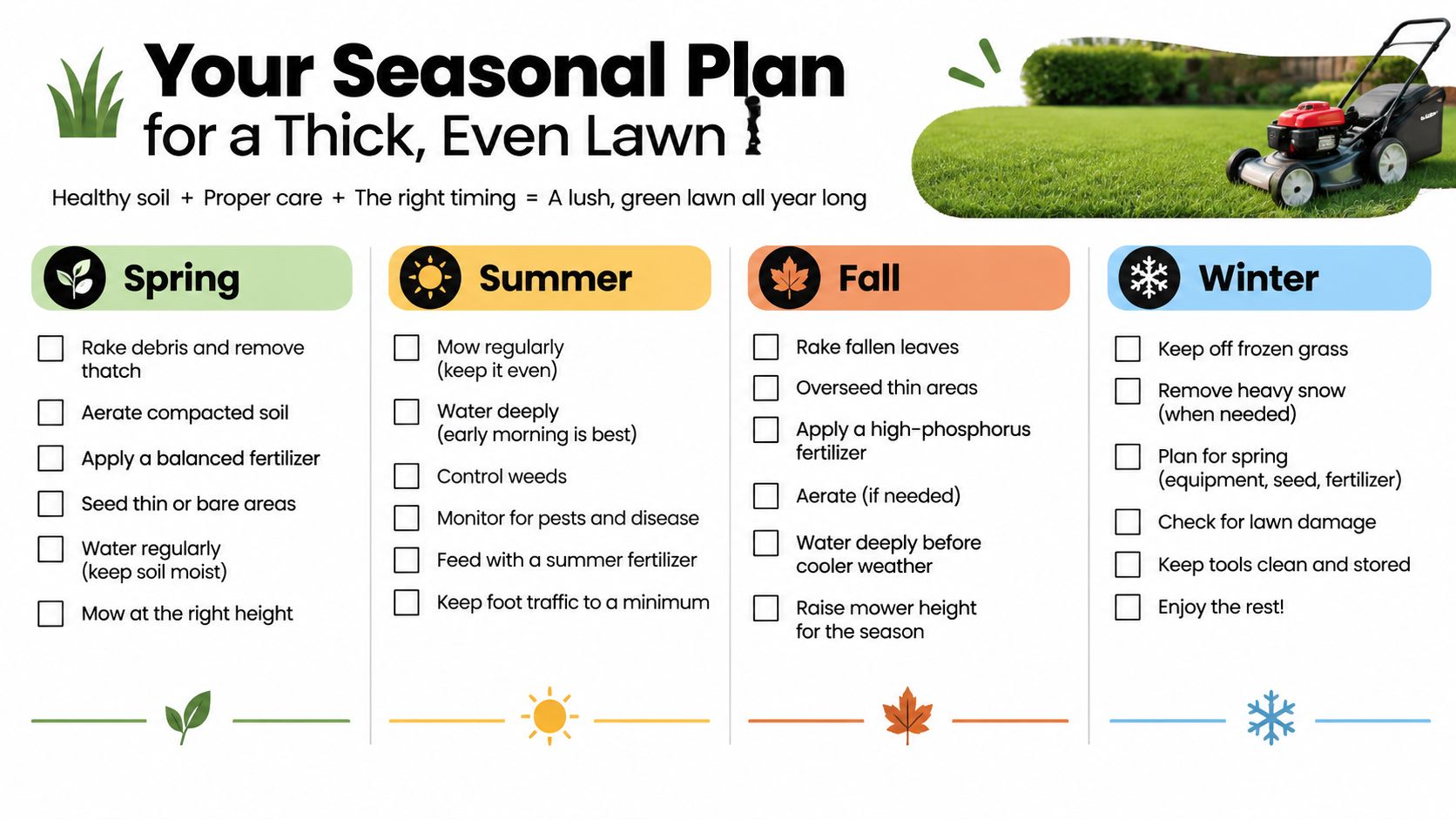
A reliable North Georgia lawn plan begins before the grass turns green. In late winter, from February through early March, inspect recurring bare areas, pull soil cores where possible, and note shade, pet traffic, drainage, and construction history. Early observation gives you time to correct compaction or remove debris before active growth.
During spring, from mid-March through April, reseed fescue and thin areas once soil temperatures hold near 55°F. Keep the seedbed moist, avoid aggressive mowing, and watch whether the patch responds evenly. A failure at this stage often exposes a site constraint rather than a seed shortage.
Let the grass type set the calendar
Summer is a maintenance and diagnosis season. Keep mowing height around 3 to 4 inches where that range suits the lawn, monitor watering depth, and inspect Bermuda and Zoysia for stress associated with chinch bugs, disease, heat, or drought. Warm-season repairs belong in the late-spring-through-summer growth window, while fescue repairs generally benefit from cooler establishment conditions.
The strongest repair window for many fescue lawns is mid-September through mid-October, when warm soil supports germination and cooler nights reduce stress. Illinois Extension notes that larger patches may need a full growing season to close completely, so don't judge a repair too early. Illinois Extension repair expectations
Use this checklist for each repair:
- Inspect: Mark the patch, its shape, nearby traffic, shade, and moisture pattern.
- Diagnose: Check compaction, pests, disease, pet use, chemical injury, and buried material.
- Amend soil: Remove obstructions, loosen the surface, and add screened compost where appropriate.
- Seed correctly: Use compatible grass and the new-lawn rate for the bare area.
- Manage moisture: Keep the seedbed consistently damp during germination, then transition to deeper watering.
- Mow carefully: Wait until seedlings are established and tall enough to cut without pulling.
- Feed thoughtfully: Use compost or an organic-friendly fertilizer at label-directed intervals, including a 6-week interval only where the product and lawn program call for it.
Barefoot Organics provides natural lawn care services for North Georgia properties, including soil improvement, aeration, top dressing, overseeding, and lawn repair designed around the cause of the bare patch. If your lawn serves children, pets, or an environmentally conscious household, visit Barefoot Organics to request a quote and discuss a diagnosis-first plan for your yard.