

We all love a good household hack, especially when it promises a lush, green lawn using something as simple as baking soda. But when it comes to your North Georgia yard, is this pantry staple a secret weapon or a hidden danger?
Frankly, while baking soda might offer a quick, surface-level fix for a specific spot, it's far from the cure-all some online articles make it out to be. For those of us in Cumming, Alpharetta, and across the region dealing with our famous red clay, using baking soda can backfire, leading to salt buildup and long-term soil damage.
The Myth of the Miracle Baking Soda Lawn Treatment
You've probably seen it on social media or a gardening blog: a simple mixture of baking soda and water hailed as a cheap, "all-natural" solution for everything from brown patch fungus to dandelions. The idea is incredibly appealing—why buy expensive treatments when a box from the kitchen might do the trick? It's a question homeowners from Johns Creek to Milton ask all the time, especially when looking for options safe for kids and pets.
The truth, however, is a lot more complicated. Sodium bicarbonate can indeed change the pH on a leaf's surface or dehydrate a small weed, but these effects are temporary and come with some serious strings attached.
Why Do People Believe It Works?
So, why did this myth take root? Its popularity comes down to simplicity and a false sense of security. Because we cook with it, we assume baking soda must be harmless for our lawns and the environment. This common misconception fuels a lot of well-intentioned but ultimately misguided advice that doesn't account for the unique soil conditions here in North Georgia.
What might seem to work on loose, sandy soil in Florida can be a disaster on the dense clay soil found throughout Forsyth and Cherokee counties. Our soil clings to sodium, so when you apply a baking soda solution, it doesn't just rinse away with the next rain. Instead, it accumulates, slowly poisoning your soil.
At its heart, the problem is that baking soda is a blunt instrument. It can’t tell the difference between a fungal spore and a beneficial microbe, or between a tuft of crabgrass and your expensive Zoysia turf. It’s this lack of precision that can turn a small issue into a costly lawn renovation.
Baking Soda on Lawns Quick Facts vs Fiction
Before we get into the nitty-gritty science, let's clear up some of the most common claims. Understanding the difference between what people think baking soda does and what it actually does is key to protecting your lawn's health.
Here’s a quick breakdown of the popular myths versus the scientific facts.
| Common Claim | Scientific Reality | Recommendation for Georgia Lawns |
|---|---|---|
| It kills lawn fungus. | It can temporarily change the surface pH, making it less hospitable to fungal spores, but it does not cure existing disease and washes away easily. | Not Recommended. Proper watering techniques and professional organic treatments are far more effective and safer for your lawn's ecosystem. |
| It’s a natural weed killer. | Baking soda acts as a contact herbicide, drying out the leaves of small, young weeds. It does not kill the root, allowing the weed to grow back. | Not Recommended. It can also burn the surrounding grass, creating patchy, unhealthy areas that require repair. |
| It balances soil pH. | It causes a temporary, localized spike in pH. However, it adds sodium, which damages soil structure and harms beneficial microbes over time. | Strongly Not Recommended. Correcting acidic Georgia clay requires a soil test and a calculated application of lime, not baking soda. |
As you can see, the reality behind these "quick fixes" is that they often create more significant, long-term problems for your turf and soil. True lawn health comes from understanding and working with your local environment, not fighting it with kitchen chemistry.
Why Soil Chemistry is Everything in Georgia
Think of your soil as the foundation of your house. If it's cracked and unstable, it doesn't matter how beautiful the house is—you're going to have problems. For our lawns here in North Georgia, from Dahlonega down to Milton, that foundation is our famous red clay, and its chemistry is the key to everything.
Our soil is naturally acidic. This single fact dictates whether your grass can absorb nutrients, fend off diseases, or even survive a dry spell. So, before you do anything else, you have to understand your soil's pH level, which is just a fancy term for how acidic or alkaline it is.
The pH scale goes from 0 to 14. Seven is neutral, like pure water. Anything below 7 is acidic, and anything above is alkaline. Most of our local soil clocks in somewhere between 5.0 and 5.5, which is far more acidic than what most grasses want.
How pH Locks Up Nutrients in Your Lawn
So what? Why does a number on a scale matter to your lawn in Cumming or Alpharetta? It matters because when the soil is too acidic, it essentially "locks up" vital nutrients.
Imagine you've cooked a feast for your grass—a good dose of high-quality fertilizer. But the acidic soil acts like a locked pantry door. The nitrogen, phosphorus, and potassium are all right there, but your grass roots can't access them. You can fertilize all you want, but your lawn will still look weak and yellowed because it's starving. The problem isn't the food; it's the locked door.
This diagram really gets to the heart of the matter, showing the gap between popular DIY "hacks" and the actual science of soil health.
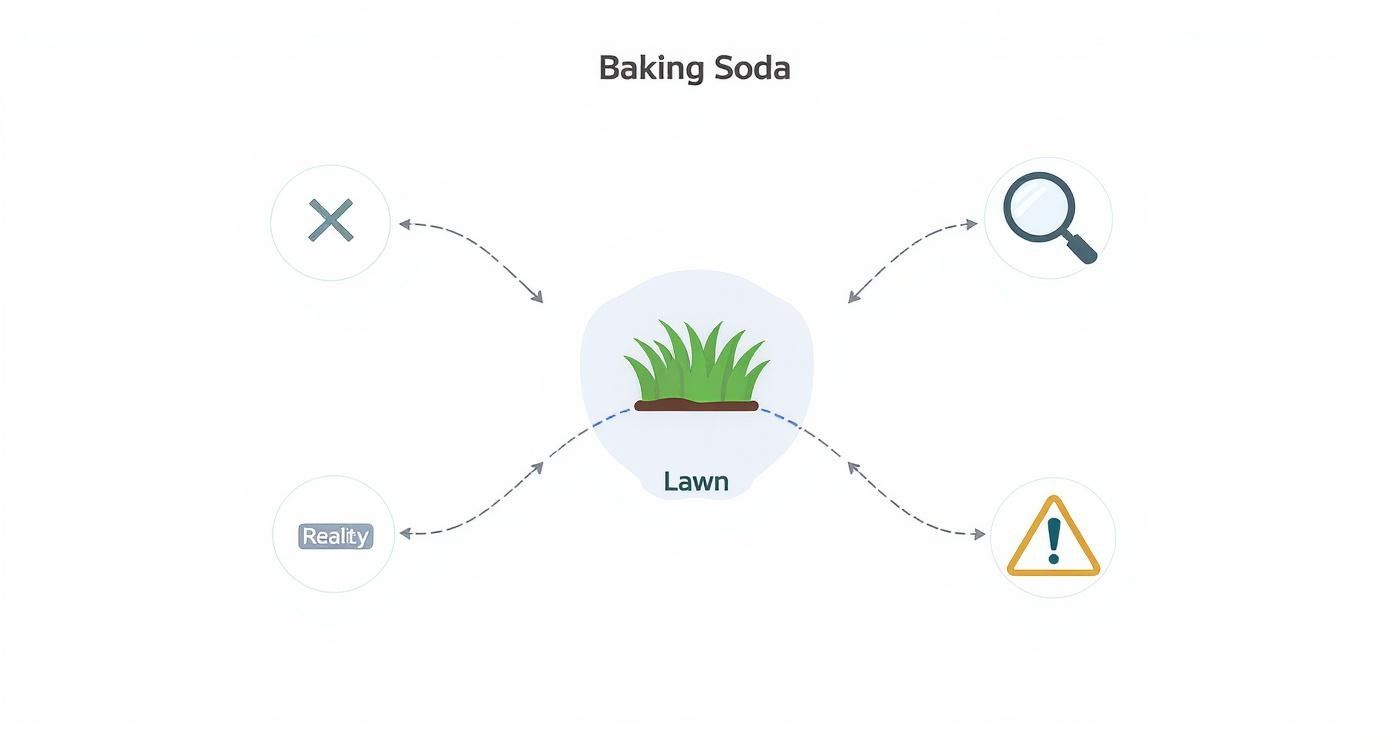
It's a perfect illustration of how a seemingly simple fix can cause deep, long-term damage to the very foundation of your lawn.
The Problem with the Baking Soda "Fix"
This brings us to the myth of baking soda. The logic seems sound at first. Baking soda, or sodium bicarbonate, is alkaline. When you pour it on acidic soil, you get a quick chemical reaction that bumps up the pH in that little spot.
It sounds like a perfect, cheap solution, right? This is exactly why you see it recommended all over the internet. But for our Georgia lawns, this "quick fix" is a trap.
First, the pH change is incredibly temporary. The next good rain will wash it away, and you're right back where you started. What doesn't wash away, however, is the sodium.
The real danger of using baking soda on your lawn isn’t the temporary pH change; it’s the permanent salt buildup it leaves behind. Sodium destroys the structure of our heavy clay soil, making it compacted, hard, and unable to support healthy root growth.
The Ideal pH for Georgia Grasses
For those of us in Johns Creek and the surrounding areas, we're mostly growing tough, warm-season grasses. But even these hardy turf types have a sweet spot when it comes to soil pH.
- Bermuda Grass: Thrives in a slightly acidic range of 6.0 to 6.5.
- Zoysia Grass: Also prefers a pH between 6.0 and 6.5.
- Fescue (in shadier areas): Does best in a similar range, from 6.0 to 6.8.
See the problem? Our native 5.5 pH soil is just too acidic for these grasses to perform their best. The only way to know your starting point for sure is with a proper soil test. You can get a clear picture of your lawn's foundation by learning more about how to test soil pH and what those results truly mean.
Instead of grabbing a box of baking soda from the pantry, a soil test gives you the data for a real, lasting solution. Usually, this means a careful, measured application of lime. This addresses the core chemical imbalance without adding destructive salts, truly setting the stage for a healthy lawn that can finally use the food you give it.
Can Baking Soda Really Kill Weeds and Lawn Fungus?
Let's tackle the two biggest myths you'll see floating around the internet. A quick search will show you countless articles and social media posts hailing baking soda as a miracle cure for two of North Georgia's most frustrating lawn problems: stubborn weeds and ugly fungal diseases. For homeowners in Johns Creek and Alpharetta looking to sidestep harsh chemicals, the idea sounds almost too good to be true.
And most of the time, it is.
The reality is a classic "yes, but…" scenario, with some pretty big "buts." While baking soda can have a minor, fleeting effect, it’s a far cry from a reliable solution. More often than not, it creates a bigger risk of damaging the very lawn you're trying to protect.
A Temporary Shield Against Lawn Fungus
Those hot, humid summers we get in Milton and Roswell? They're practically a breeding ground for lawn fungus. Diseases like brown patch and dollar spot can pop up overnight and turn a beautiful lawn into a patchy mess. The idea behind a baking soda spray is that a solution of sodium bicarbonate and water makes the surface of your grass blades more alkaline.
This high pH environment can, in theory, make it a little tougher for fungal spores to germinate. Think of it like a very weak, temporary shield.
But that shield is incredibly flimsy. The moment your sprinklers kick on or a classic Georgia afternoon storm rolls through, that protective layer washes away completely. Your grass is right back where it started, totally vulnerable. More importantly, it does absolutely nothing to cure an established fungal infection that's already taken hold in your soil and thatch layer.
A baking soda spray is a surface-level treatment that provides, at best, a few hours of very weak fungal prevention. It cannot address the root causes of lawn disease, such as soil compaction, poor drainage, or improper watering habits.
To actually solve the problem for good, you have to get to the root of it. Our guide explains in detail how to treat lawn fungus naturally by focusing on what truly matters: building healthier soil and a more resilient lawn.
A "Contact" Burn for Weeds, Not a Killer
What about weeds? This is the other major claim—that baking soda is a great "natural" weed killer. This is only half true. It can act as a contact herbicide, which means it burns what it touches. When you pour dry baking soda on a weed, its high salt content rapidly sucks the moisture out of the leaves, causing them to shrivel up and die.
This works, sort of, on tiny, young weeds popping up in the cracks of a driveway in Cumming. But the effect is purely cosmetic and doesn't last.
The key word here is 'contact'. Baking soda only kills the green, leafy parts it physically touches. It doesn't travel down into the root system at all. For any perennial weed with an established root—like dandelion or crabgrass—the plant will just push out new growth from the base in a week or two. To make matters worse, baking soda doesn't know the difference between a weed and your prized Bermuda grass. It will just as easily burn and kill your turf, leaving you with ugly brown spots.
The Problem with "Natural" Pest Control Claims
The claims often extend to pest control, but the real-world performance is just as unreliable. For instance, some lab studies showed baking soda could achieve 42-99% mortality rates in fire ants, but only when the ants were trapped on the treated surface for several days straight. Out in your yard, a single rain shower or even morning dew will dissolve it, making it useless. You can read more about these limitations and the specific conditions required for baking soda to affect ants on bettertermite.com.
This highlights a crucial point for Dahlonega homeowners: what works in a controlled lab experiment rarely translates into a practical, effective lawn care strategy. Your yard is a complex, living ecosystem. A "solution" that washes away in a few hours is no solution at all. When it comes to persistent weeds and fungus, using baking soda on your lawn is a gamble that almost never pays off. You're left with the same problems you started with, plus the added risk of a damaged lawn and unbalanced soil.
The Hidden Dangers Lurking in Your Pantry
Beyond being a weak and unreliable fix, the real problem with using baking soda on your lawn is the lasting damage it can cause. It might feel like a safe, everyday kitchen item, but applying sodium bicarbonate to your grass introduces some serious long-term risks—risks that just aren't worth it, especially here in Cumming, GA, and our neighboring communities.
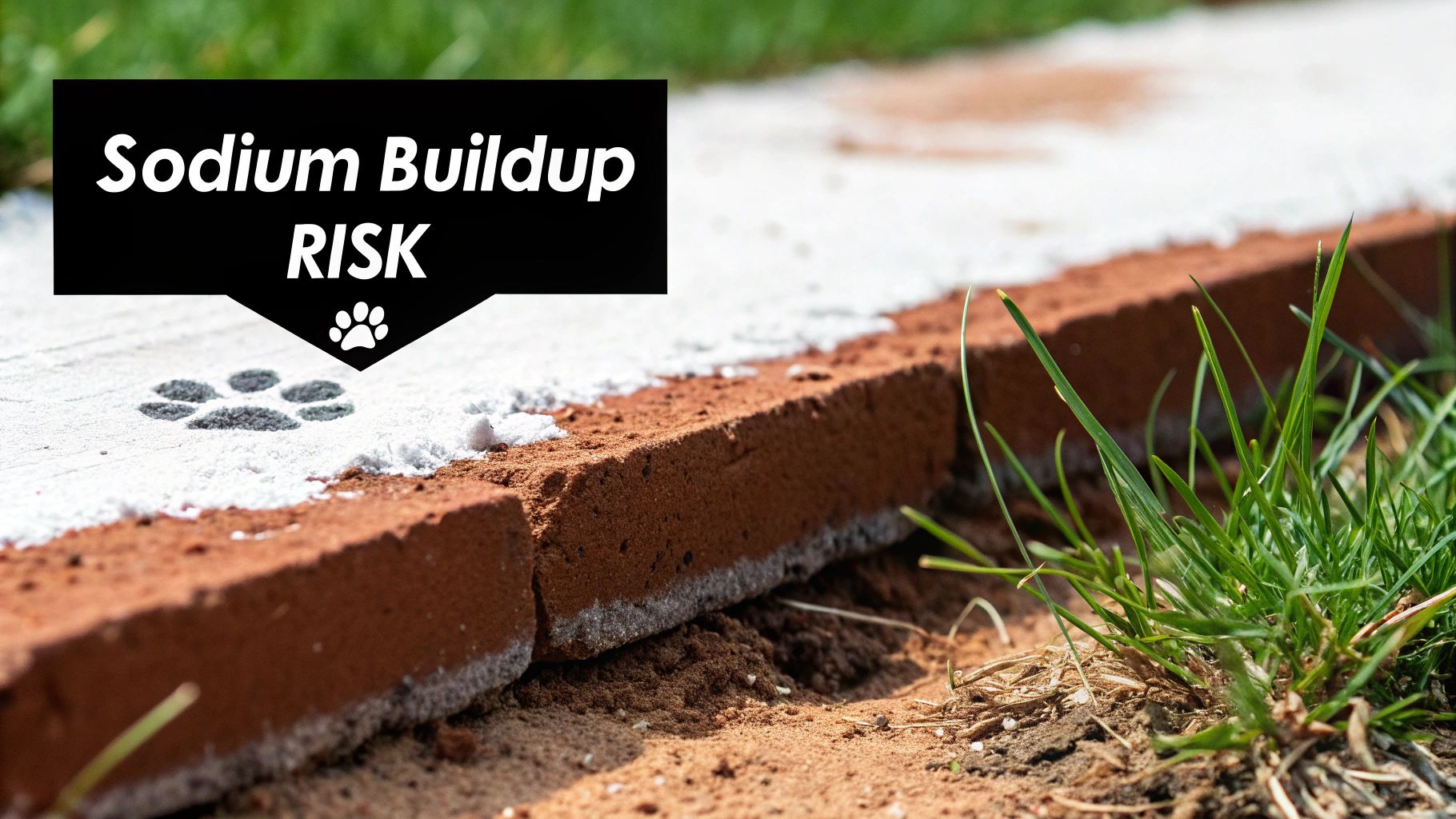
The main culprit here is sodium. When you spread baking soda, you're essentially salting your own yard. Over time, that sodium builds up in the soil, creating a toxic environment known as high soil salinity.
What Sodium Buildup Actually Does to Your Soil
Picture your healthy soil as a fluffy sponge. It’s full of tiny air pockets that let water, nutrients, and roots move around with ease. Sodium acts like a wrecking ball to this delicate structure. It causes the fine clay particles—so common in our North Georgia soil—to stick together and collapse, turning that healthy sponge into a dense, compacted brick.
Once the soil is compacted, a whole chain of problems begins, and your lawn’s health goes into a nosedive.
- It Suffocates the Roots: Grass roots simply can't push through hardpan soil. They end up with a shallow, weak root system that has no chance of surviving a hot Georgia summer or a brief drought.
- It Blocks Off Food and Water: Water and fertilizer just roll off the surface of compacted, salt-damaged soil. You end up wasting money on treatments that can't even reach the roots, leaving your lawn thirsty and underfed.
- It Kills the Good Guys: Healthy soil is alive. It's buzzing with billions of beneficial microbes that are crucial for breaking down organic matter and feeding your grass. High sodium levels poison this underground ecosystem, killing off the very life your lawn depends on.
Think of it this way: repeated baking soda treatments can slowly sterilize your soil. The structure gets destroyed, the helpful microbes die off, and the salt levels become so high that your turfgrass simply can't survive.
Why Our Georgia Clay Is a Game-Changer
This problem is even more pronounced for those of us with lawns in Alpharetta, Milton, or Johns Creek. Our region is famous for its heavy clay soil, which is already prone to poor drainage and compaction. Unlike sandy soil that might let salts wash away, our clay latches onto sodium and refuses to let it go.
Every time you apply baking soda, you're adding another layer of salt that gets trapped. A rain shower or a cycle from your sprinklers won't fix it; it just pushes the sodium deeper into the ground, making the problem worse year after year. Fixing that kind of salt damage is a tough, expensive, and incredibly slow process.
The Risk to Kids and Pets
The danger isn't just to your soil. While a pinch of baking soda is perfectly safe in cookies, spreading large amounts of it across your yard is a different story. Dogs lick their paws, and curious toddlers are known to put grass and dirt in their mouths.
Ingesting too much baking soda can cause some nasty health problems, including:
- Vomiting and an upset stomach
- Serious electrolyte imbalances
- In extreme cases, muscle spasms or even heart problems
At the end of the day, using baking soda for lawns is a huge gamble. You’re trading a tiny, temporary benefit for the very real risk of permanently damaging your soil, killing your grass, and even putting your family at risk. The smartest, safest play is to just leave the baking soda in the kitchen where it belongs.
Smarter Solutions for North Georgia Lawns
Now that we’ve put the baking soda myth to rest, let's talk about what actually works. Instead of grabbing a risky fix from the pantry, homeowners in Cumming, GA, and the surrounding areas need a solid game plan—one built on proven, sustainable solutions that fit our unique landscape. The real goal is to build a lawn that's naturally tough, not one that's constantly needing a temporary, and potentially harmful, patch-up job.

This is all about working with our North Georgia environment, not fighting against it. It means getting to the root cause of the problem, whether that’s our acidic soil, a stubborn fungus, or weeds trying to take over.
Fixing Acidic Georgia Clay the Right Way
Let’s be honest, the biggest hurdle for lawns from Alpharetta to Dahlonega is our native red clay soil, which is almost always acidic. A quick jolt of pH from baking soda does absolutely nothing to fix this underlying issue, and it dumps a load of harmful sodium into the ground. The only reliable, long-term fix is a carefully calculated application of lime.
But this isn’t a guessing game. The whole process has to start with a professional soil test. That test gives you the exact data needed to correct your lawn's specific pH imbalance, acting as a blueprint for what comes next. It tells you precisely how much lime you need to create the perfect growing conditions for your grass.
Applying lime based on a soil test is the most critical investment you can make in your lawn's health. It’s a slow-release, long-lasting solution that methodically raises soil pH, unlocking essential nutrients and allowing your grass to thrive without the destructive side effects of sodium.
By correcting the pH, you’re not just putting a bandage on a symptom; you’re fixing the very foundation of your lawn’s ecosystem. It’s the first essential step in building turf that can naturally take care of itself. You can dive deeper into creating that perfect foundation by understanding the ideal soil pH for grass and why it’s so critical for nutrient uptake.
Winning the War on Weeds with Thick Turf
Sure, baking soda might scorch the top of a weed, but it does nothing to solve the real problem: a weak, thin lawn that gives weeds plenty of room to sprout. The most powerful, organic weed control strategy is simply to grow a lawn so thick and healthy that weeds get choked out before they even have a chance.
Here’s how you get there:
- Mow High: Set your mower to the highest setting for your grass type, which is usually around 3-4 inches for Fescue or Zoysia. Taller grass blades create shade over the soil, which stops weed seeds from getting the sunlight they need to germinate.
- Proper Fertilization: A steady diet of organic, slow-release fertilizers gives your lawn the consistent nutrition it needs to grow dense and strong. This approach supports sustained, healthy growth, unlike the quick, often damaging, surge from synthetic chemicals.
- Aerate Annually: Aeration is an absolute must for our compacted clay soil in Johns Creek and Milton. It punches holes in the soil, allowing air, water, and nutrients to get deep into the root zone and encourage strong, resilient root growth.
Outsmarting Fungus with Smart Cultural Practices
Instead of a temporary baking soda spray that just washes away, you can prevent most fungal diseases simply by changing your lawn care routine. Fungus loves warm, damp, stagnant conditions. If you disrupt that environment, you make your lawn a much less welcoming place for diseases like brown patch.
It really comes down to a three-pronged attack:
- Water Deeply and Infrequently: Water your lawn early in the morning, between 4 a.m. and 9 a.m. This gives the grass blades the entire day to dry off. It's much better to do one long watering session per week (about 1 inch of water) than several short, shallow ones.
- Improve Air Circulation: Trim back overhanging tree branches and any overgrown shrubs that are blocking the breeze. Good airflow helps moisture evaporate quickly, which is one of the best defenses against fungus.
- Dethatch Regularly: A thick layer of thatch—that spongy mat of dead grass—can trap moisture right against the soil, creating a perfect breeding ground for fungus. If that layer gets thicker than half an inch, it's time to get it out of there.
These proven organic solutions deliver results that last because they focus on building the overall health of your lawn. They are the smart, safe alternatives to taking a gamble with baking soda.
Effective Lawn Treatments vs Baking Soda
To put it all in perspective, here's a direct comparison of how a "quick fix" like baking soda stacks up against proven, professional organic strategies for common North Georgia lawn problems.
| Lawn Problem | Baking Soda Approach | Proven Organic Solution | Long-Term Effectiveness |
|---|---|---|---|
| Acidic Soil | Temporarily raises surface pH; adds harmful sodium. | Professional soil testing followed by a calculated lime application. | Excellent. Corrects the root cause, unlocks nutrients, and improves soil structure for years. |
| Weed Invasion | May burn weed leaves on contact; doesn't kill the root. | Mowing high, aeration, and using organic fertilizers to build dense, thick turf that naturally crowds out weeds. | Excellent. Creates a resilient lawn that suppresses weeds on its own, reducing the need for treatments. |
| Fungal Disease | Minor, temporary surface effect on some fungi. | Deep, infrequent watering, improving air circulation, and regular dethatching. | Very Good. Prevents the conditions fungi need to thrive, stopping diseases before they start. |
As you can see, while baking soda might offer a tempting shortcut, it falls short in every category when it comes to creating a truly healthy lawn. The best approach is always to address the underlying cause of the problem with a strategy designed for long-term success.
When to Call in the Pros
Look, sometimes the best DIY move is knowing when to hang it up and call for backup. After digging into the science behind baking soda, it's pretty clear that these "quick fixes" are a real roll of the dice for your lawn's health. When you're facing down stubborn weeds, a full-blown fungal invasion, or just plain unhealthy soil, a home remedy can backfire in a big way. This is especially true here in Cumming, GA, with our unique climate and soil challenges.
Bringing in a professional lawn service isn't admitting defeat—it's just smart. It's an investment in getting the job done right the first time. Local experts live and breathe North Georgia's lawn care quirks, from our infamous red clay soil to the brutal summer humidity that fungi absolutely love. They offer a level of precision that a box from your pantry just can't compete with, saving you a ton of time, money, and headaches down the road.
The Power of a Professional Eye
One of the biggest perks of working with a pro is getting a real diagnosis. What you see as a patch of brown grass might actually be a symptom of something much bigger, like deeply compacted soil or a serious nutrient imbalance. A trained professional can tell the difference between the symptom and the cause, a crucial step that most of us miss when we're just guessing.
This kind of expertise is a game-changer, especially for homeowners in areas like Alpharetta and Johns Creek who've invested a lot in their landscapes. Guessing wrong and applying the wrong product doesn't just waste money; it can stress your grass, making it even more susceptible to future problems.
A professional assessment isn't just about fixing what's broken. It's about building a strong, resilient lawn from the ground up—moving from a constant guessing game to a smart, strategic plan.
A Lawn Care Plan Built for Your Georgia Yard
There’s no magic bullet for lawn care in North Georgia. A yard tucked away in the shady hills near Dahlonega needs something completely different than a lawn baking in the Milton sun. This is where professional services really prove their worth, building treatment plans based on what your specific lawn actually needs.
Here’s what that usually looks like:
- Real Soil Testing: Pros don't guess. They take soil samples and run a comprehensive analysis to get the hard numbers on your lawn's pH and nutrient levels.
- Targeted Organic Solutions: Armed with that data, they develop a plan using the right organic fertilizers and soil amendments—like lime for our acidic soil—to restore balance safely.
- Season-Long Support: A good lawn care partner doesn't just "spray and pray." They keep an eye on your lawn all season, tweaking the plan as needed to handle whatever our unpredictable weather throws at it.
At the end of the day, it's about shifting your mindset. Instead of reaching for a temporary hack like baking soda, you can build lasting health and beauty for your property. When you team up with a trusted local expert like Barefoot Organics, you're getting the knowledge, the tools, and the customized strategy your lawn needs to do more than just survive in North Georgia—it'll thrive.
Frequently Asked Questions About Lawn Treatments
After digging into the science behind baking soda and lawn care, it's natural to still have a few questions. We hear them all the time from homeowners across North Georgia. Let's tackle some of the most common ones to clear things up and help you make the best choice for your yard.
How Much Baking Soda Is Too Much for a Lawn?
Frankly, any amount is too much. There’s really no "safe" dose because every time you apply it, you're adding to the sodium buildup in your soil. This is a huge problem here in areas like Cumming and Forsyth County, where our heavy clay soil acts like a sponge for salt, making the damage even worse over time.
Think of it this way: instead of trying to find the "right" amount of the wrong product, it's far more effective to use what your soil actually needs. A proper soil test takes the guesswork out of the equation, telling you the exact amount of lime required to balance your pH safely and correctly.
Will Baking Soda Kill the Moss in My Yard?
Yes, baking soda can temporarily kill moss by drying it out on contact. But it’s a classic case of treating the symptom, not the disease. The moss will be back.
Moss shows up for a reason, and it’s usually a sign of bigger problems that are common in yards from Alpharetta all the way up to Dahlonega. It thrives in conditions where grass struggles:
- Acidic Soil: Our native red clay is naturally acidic, which moss loves.
- Too Much Shade: If an area is too shady for grass to grow thick, moss will happily move in.
- Compacted Soil: When the ground is packed down tight, grass roots can't penetrate, but moss can easily grow on top.
Pouring baking soda on it does nothing to fix the acidic, compacted, or shady soil. Unless you address those core issues—through professional aeration, proper liming, or even trimming some tree limbs—you're just setting the stage for the moss to return.
Is Baking Soda a Safe Fungicide?
The word "natural" can be misleading. While it's a common household item, using baking soda for lawns can cause far more lasting damage to your soil's health than many carefully formulated products. It disrupts the delicate balance of the soil ecosystem.
A truly safe and effective approach focuses on building a resilient lawn from the ground up. This means combining smart practices like deep, infrequent watering with proven organic treatments. When you support your soil's health, you create a lawn that can naturally fight off disease on its own, without resorting to risky home remedies.
Ready to stop gambling with DIY fixes and invest in the long-term health of your property? The experts at Barefoot Organics create customized, science-backed organic lawn care plans designed specifically for North Georgia's unique challenges. Get your free, no-obligation quote today!