

You've probably seen it mentioned online or heard it from a neighbor over the fence in Cumming: baking soda is a cheap, all-in-one miracle cure for lawn problems. But when it comes to baking soda for lawns, the reality is it's a huge gamble, especially with the heavy clay soils we deal with here in North Georgia. It's a tempting idea, for sure, but the risk of long-term damage just isn't worth any short-lived fix.
Is Baking Soda a Secret Weapon for Georgia Lawns?
For homeowners from Alpharetta to Milton, a thick, green lawn is a source of pride. We get it. The constant fight against fungus, weeds, and our stubborn soil can send anyone looking for an easy DIY solution. That's usually when baking soda enters the conversation, praised as a fix for everything from brown patch to crabgrass.
But this kitchen staple, known chemically as sodium bicarbonate, can disrupt the delicate balance of your lawn's ecosystem. A good analogy is using salt to melt ice on a driveway; it gets the job done, but it also corrodes the concrete and kills the grass along the edges. In the same way, the high sodium content in baking soda can be downright toxic to your turf.
Why It's a Bad Mix for North Georgia's Soil
Our entire region, from Dahlonega down to Johns Creek, is famous for its dense, acidic clay soil. This soil type already makes it tough to grow healthy Bermuda or Fescue. When you introduce sodium bicarbonate to the mix, you're not solving a problem—you're creating a whole new set of them.
Here's a quick look at the popular claims about baking soda and how they stack up against the scientific reality for our local lawns.
Baking Soda on Lawns Quick Verdict
| Claimed Benefit | The Reality for Georgia Lawns |
|---|---|
| "It kills fungus like brown patch." | Baking soda can dehydrate and kill fungus on contact, but it also burns your grass blades. It offers zero preventative protection and harms the turf. |
| "It's a natural weed killer." | True, it can kill weeds. But it's non-selective, meaning it will kill your prized Zoysia or Fescue just as easily, leaving ugly brown patches. |
| "It's a safe, chemical-free option." | While it's a common household item, its high sodium content is toxic to grass and degrades soil structure, leading to long-term health problems. |
| "It fixes acidic soil." | It can temporarily raise pH, but the sudden, drastic change shocks the grass, locking out essential nutrients and causing more stress. |
In short, using baking soda often creates more problems than it solves.
Let's break down exactly what happens when you apply it.
- Sodium Overload: The biggest villain here is sodium. It slowly breaks down the structure of our clay soil, making it more compacted. This prevents water and vital nutrients from ever reaching the grass roots.
- pH Shock: While it's true baking soda is alkaline and can raise pH, the change is too fast and too drastic. This "pH shock" can make it impossible for your grass to absorb the nutrients it needs to survive, even if they're present in the soil.
- It Kills Indiscriminately: Baking soda doesn't know the difference between a weed and your expensive turf. It acts as a contact killer, burning any plant it touches.
The bottom line for lawns in Cumming and the surrounding areas is that baking soda is a non-selective agent that causes more harm than good. It might seem like a quick fix, but it sets the stage for long-term soil decline, making your lawn even more vulnerable down the road.
Before you grab that box from the pantry, it's so important to understand the science. It might feel like a cheap shortcut now, but the future cost of repairing damaged soil and reseeding dead patches of grass is much higher. Next, we'll get into how your soil's chemistry actually works and explore safer, truly effective ways to get that healthy lawn you're after.
Why Soil Chemistry is Everything in North Georgia
Before we can really dig into why a simple box of baking soda could be a disaster for your lawn, we have to look underground. Your soil isn't just dirt; it's a complex, living system with a delicate chemical balance. Think of it as the foundation of your house—if that foundation is off-kilter, everything you build on top of it will suffer.
Here in North Georgia, from Cumming to Forsyth County, we’re known for our iconic red clay. While this soil has some benefits, it’s also naturally acidic. This acidity is like a locked gate for your grass, preventing crucial nutrients like nitrogen from getting to the roots, no matter how much fertilizer you throw down.
This is exactly where the baking soda myth gets its power. The logic seems to make sense at first. Since baking soda (sodium bicarbonate) is alkaline, adding it to acidic soil should, in theory, raise the pH. It's an appealing, DIY fix that some people claim can neutralize soil and maybe even help with fungal problems like powdery mildew.
But this is where the simple theory completely breaks down in the real world, especially for our local lawns.
The Problem with pH and a Whole Lot of Salt
While baking soda can technically raise your soil’s pH, it does it with all the grace of a chemical sledgehammer. The change is often way too fast, which shocks the grass and the helpful microorganisms living in the soil. Healthy lawns thrive on gradual, stable changes, not sudden chemical jolts.
But the real dealbreaker—the thing that causes the most damage—is what baking soda leaves behind: sodium.
You can think of sodium as the hidden villain in this story. It systematically ruins the structure of our dense Georgia clay, causing it to harden and compact until it's almost like concrete. This process literally chokes the roots of your grass, cutting off their access to both air and water.
This simple concept map lays out how a seemingly easy fix can lead to a cascade of bigger problems.
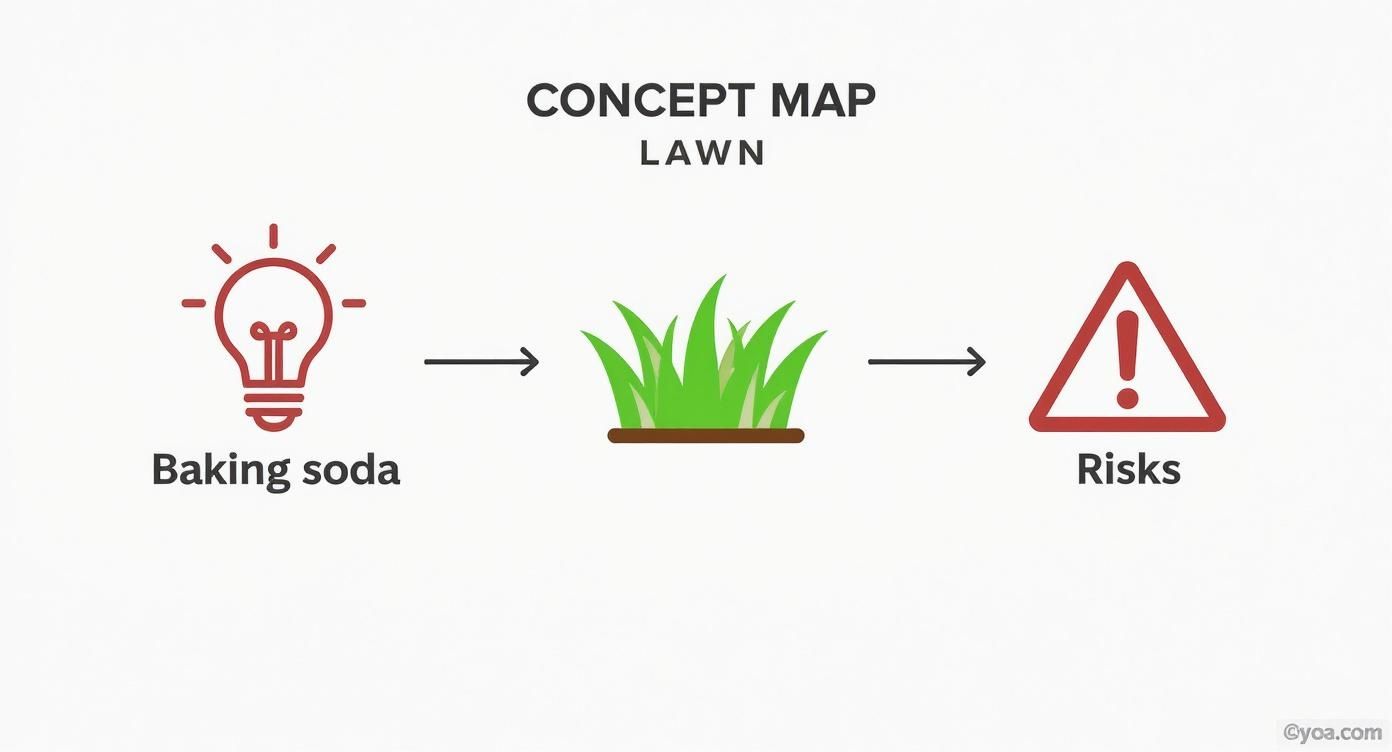
As you can see, you aren't just treating one issue; you're creating a chain reaction of new, more severe ones that are much harder to fix.
Guessing Games Can Cost You Your Lawn
Every single lawn in North Georgia, whether it's in Cumming or Johns Creek, has a completely unique chemical profile. If you don't know your soil’s specific pH and nutrient levels, any "treatment" is just a shot in the dark. Applying an alkaline substance like baking soda to soil that's already balanced—or not very acidic—can be just as destructive as doing nothing at all.
This kind of guesswork leads to some serious issues:
- Nutrient Lockout: A pH level that creeps too high (alkaline) is just as bad as one that's too low. It can "lock up" a whole different set of essential nutrients, leading to weak, yellowing grass that’s a magnet for pests and disease.
- Serious Soil Compaction: As the sodium builds up, it pushes out other critical elements like calcium and magnesium that help keep clay soil particles from sticking together. The end result is rock-hard soil that grass roots simply can't grow through.
- Killing the Good Guys: Healthy soil is absolutely teeming with beneficial microbes, fungi, and earthworms that are essential for breaking down organic matter and feeding your lawn. The harsh, salty environment created by baking soda is toxic to this vital underground ecosystem.
This is exactly why a professional soil test is the only smart place to start. It eliminates the guesswork and gives you a clear, precise roadmap for what your lawn actually needs. Getting a handle on your unique soil profile is the foundation of a healthy lawn, a topic we cover in our guide on soil pH for grass.
At the end of the day, trying to correct a complex chemical imbalance with a blunt instrument like baking soda is just asking for trouble. It offers a fleeting, surface-level change at the expense of the long-term structural health of your soil—and that's the real secret to a beautiful, thriving lawn.
Does Baking Soda Really Control Lawn Fungus and Weeds?
If you live anywhere from Johns Creek to Milton, you know the thick Georgia humidity can turn your lawn into a battleground against fungus. Diseases like dollar spot and brown patch seem to pop up overnight, and that sends a lot of homeowners scrambling for a quick fix. That's usually when the myth of using baking soda for lawns as some kind of miracle fungicide starts making the rounds.
The logic seems sound on the surface. Baking soda is alkaline, so when you spray it on grass blades, it can temporarily shift the pH on the leaf surface. In theory, this makes it harder for fungal spores to germinate and spread, disrupting the fungus just long enough to stop an outbreak.
But let's be clear: this is a temporary, surface-level fix. It’s like putting a small bandage on a much bigger wound. It does absolutely nothing to fix the real problems causing the fungus—things like compacted soil, poor drainage, or bad watering habits, which are all too common in our clay-heavy region.
The Fungus Fallacy
While a baking soda spray might slow down fungal growth for a moment, it brings some serious baggage with it. The sodium in baking soda can actually stress out your Fescue or Bermuda grass. This weakens the turf, making it even more vulnerable to disease once that temporary pH change is gone.
The reality is that baking soda acts more like a symptom suppressor than a true cure. It might slow the fungus for a day or two, but it fails to build your lawn's natural resilience, which is the key to long-term health.
This is especially true for us here in North Georgia. Baking soda's reputation for fungal control often gets hyped in areas with temperate climates, where our humidity and weird winter temperature swings create a perfect storm for fungus. The idea is that applying it sparingly to affected patches raises the pH just enough to inhibit growth. A common recipe you'll see online is one tablespoon of baking soda per liter of water, sprayed directly on symptomatic spots.
Ultimately, a far better approach is to tackle the root cause of the disease. For a deeper look at effective and safe methods, check out our guide on how to treat lawn fungus naturally.
The Problem with Baking Soda as a Weed Killer
The other big claim you'll hear is that baking soda is a fantastic "natural" weed killer. This part is technically true—it can kill weeds. The problem is how it kills them.
Baking soda is a non-selective contact killer. That's a fancy way of saying it burns and dehydrates any plant tissue it touches. It has zero ability to distinguish between a patch of pesky crabgrass and your prized Zoysia.
Picture this very common scenario in an Alpharetta backyard:
- You spot a few clumps of crabgrass popping up in your otherwise gorgeous Fescue lawn.
- You whip up a baking soda paste or a concentrated spray and carefully dab it on the weeds.
- A few days later, the crabgrass is brown and dead. Success! Or is it? You also notice the beautiful green turf around each spot is now a dead, brown circle.
The sodium in the baking soda has scorched everything it came into contact with. You’ve just traded a few weeds for several ugly, bare patches. And what's worse? Those new bare spots are now prime real estate, basically sending an open invitation for more aggressive weeds to move in and take over.
Professional-grade herbicides, on the other hand, are designed to be selective. They target the weeds while leaving your grass unharmed—a critical difference that a household remedy simply can't offer.
The Hidden Damage of Sodium on Georgia Clay Soil
While we’ve touched on how baking soda can burn your grass, the biggest threat is actually lurking beneath the surface. For homeowners from Dahlonega down to Cumming, the real villain in this story is an element you can’t even see at first: sodium. It's the primary reason this kitchen remedy is a disastrous choice for our region's heavy clay soil.
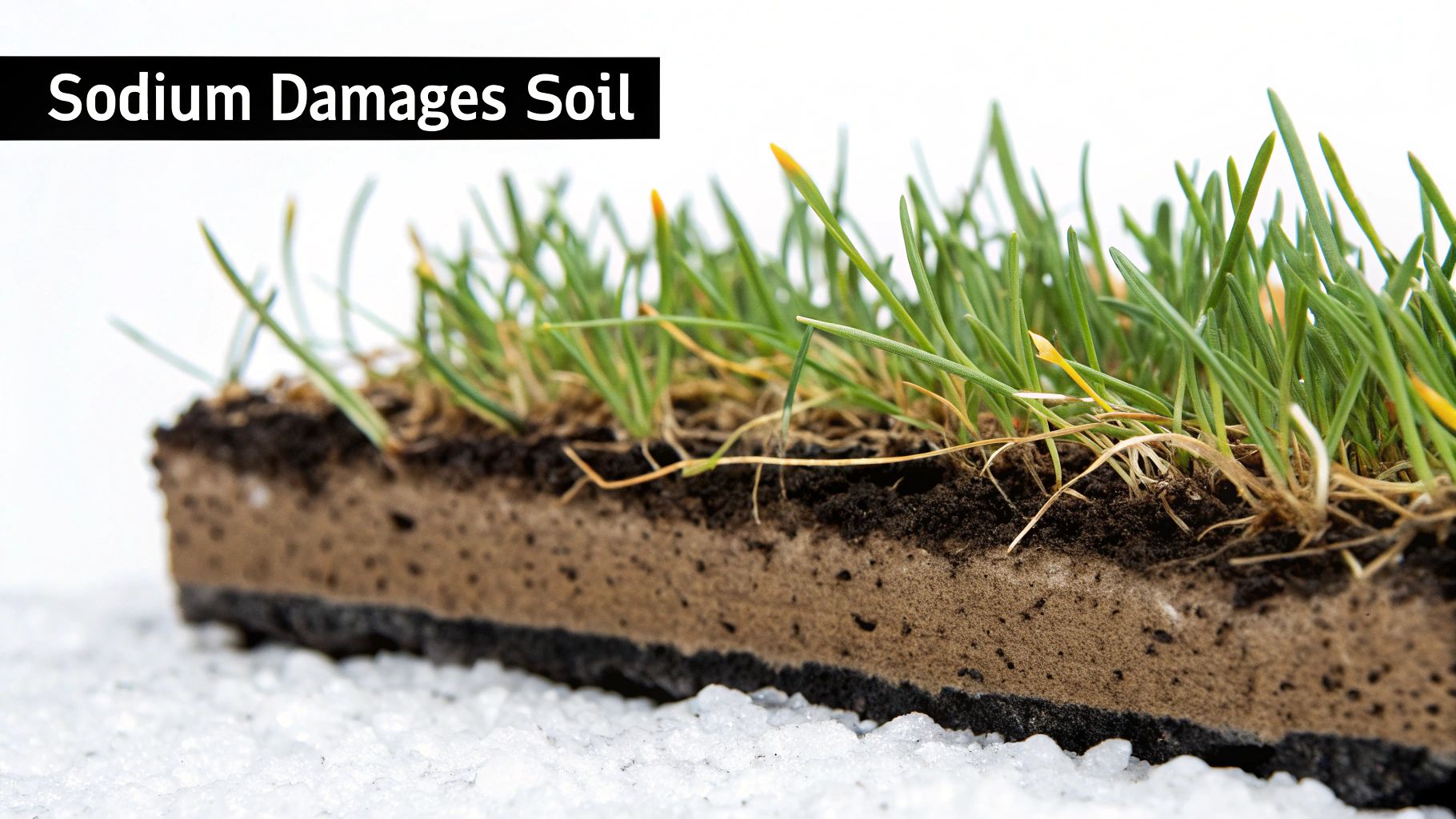
Picture healthy clay soil as a collection of tiny, separate particles with little air pockets between them. These gaps are critical, acting like microscopic tunnels that let water, oxygen, and nutrients travel down to your grass's roots. When you pour a baking soda solution onto your lawn, the sodium acts like a chemical glue, forcing these particles to stick together and collapse.
This process is called soil compaction. The once-porous, crumbly soil turns into a dense, hard-packed layer that’s almost impenetrable. For your lawn, this is a slow-motion death sentence.
How Sodium Chokes Your Lawn From Below
Once your soil gets compacted by sodium, a devastating chain reaction kicks off. Your grass roots, which need loose soil to spread out and find nourishment, are suddenly trapped in a vise. They can no longer get the three things they need to survive:
- Water: Rain and irrigation just can't soak into the hardened surface. Instead, it pools on top or runs off, meaning your lawn can be thirsty even right after a downpour.
- Oxygen: Healthy roots need to breathe, but compacted soil suffocates them. This can lead to root rot and other diseases that thrive in low-oxygen environments.
- Nutrients: Even if you spread fertilizer, the nutrients can't penetrate the dense soil to reach the root zone. Your efforts are wasted, and so is your money.
It's a cruel irony: in an attempt to fix a surface-level issue like a fungus patch, applying baking soda creates a foundational crisis underground. You're systematically dismantling the very structure your lawn depends on.
This slow-motion disaster eventually reveals itself above ground, but by then, the damage is already severe.
The Visible Signs of Sodium Damage in Georgia
If you're a homeowner in Alpharetta or Milton, the signs of sodium-induced soil compaction can be frustratingly similar to other lawn problems. This makes it tough to diagnose unless you know what you’re looking for.
At first, you might just notice your turf is struggling. The most common symptoms include:
- Yellowing Grass: Known as chlorosis, this is a clear sign the roots are starving for nutrients they can't access.
- Thinning Patches: The lawn gets weak and sparse as individual grass plants die off from suffocation and dehydration.
- Poor Drainage: You’ll see standing water or puddles on your lawn long after it rains—a classic sign the soil can no longer absorb moisture.
- Increased Weed Pressure: A weak, thinning lawn is the perfect invitation for aggressive weeds like crabgrass and clover to move in.
The damage isn't just physical. A high-salt environment is toxic to the beneficial microbes, fungi, and earthworms that create a healthy soil ecosystem. These microscopic allies are essential for breaking down organic matter and making nutrients available to your grass. By wiping them out, you destroy your soil's natural ability to sustain itself.
Rebuilding this complex ecosystem can take years of dedicated work, a point we often stress when discussing how to improve clay soil for grass. In the end, the risk of causing long-term, expensive soil damage makes baking soda a gamble that’s just not worth taking for your North Georgia lawn.
Baking Soda vs. Professional Lawn Treatments
To put it all in perspective, here’s a quick comparison of how baking soda stacks up against proven, professional solutions for common lawn issues we see around here.
| Lawn Problem | Baking Soda Approach and Likely Outcome | Safer Professional Alternative |
|---|---|---|
| Brown Patch Fungus | May temporarily suppress surface fungus but won't cure it. The high pH and sodium will weaken the grass, making it more susceptible to future disease. | Application of targeted, lawn-safe fungicides that treat the disease without harming the turf. We also focus on improving soil health and airflow to prevent it. |
| Dollar Spot | Ineffective. The root cause is often nutrient deficiency and moisture stress—problems that sodium compaction makes worse, not better. | A balanced fertilization program to address nutrient deficiencies. We also recommend deep, infrequent watering to promote stronger roots. |
| Moss Growth | Might kill some surface moss due to its salt content, but the underlying cause (compacted, acidic, or shady soil) remains. The sodium will further compact the soil. | Core aeration to relieve compaction, lime applications to balance soil pH, and seeding with shade-tolerant grass varieties. |
| Common Weeds (e.g., Crabgrass) | Very little effect on established weeds. It might burn the leaves of young weeds but won't kill the root. The resulting thin turf just encourages more weeds. | Use of pre-emergent and post-emergent weed controls that selectively target weeds without harming your grass. A thick, healthy lawn is the best defense. |
It's clear that while baking soda might seem like a simple, cheap fix, the long-term consequences far outweigh any potential short-term benefits. Professional treatments are designed not just to solve the immediate problem but to strengthen the entire lawn ecosystem for lasting health.
Smarter Solutions for a Thriving Georgia Lawn
So, now that we’ve pulled back the curtain on the risks of using baking soda, let's talk about what actually works. Building a healthy, resilient lawn isn't about finding a single magic bullet in your kitchen. For homeowners all across North Georgia, from Cumming to Dahlonega, the secret is creating an environment where your grass can truly flourish on its own.
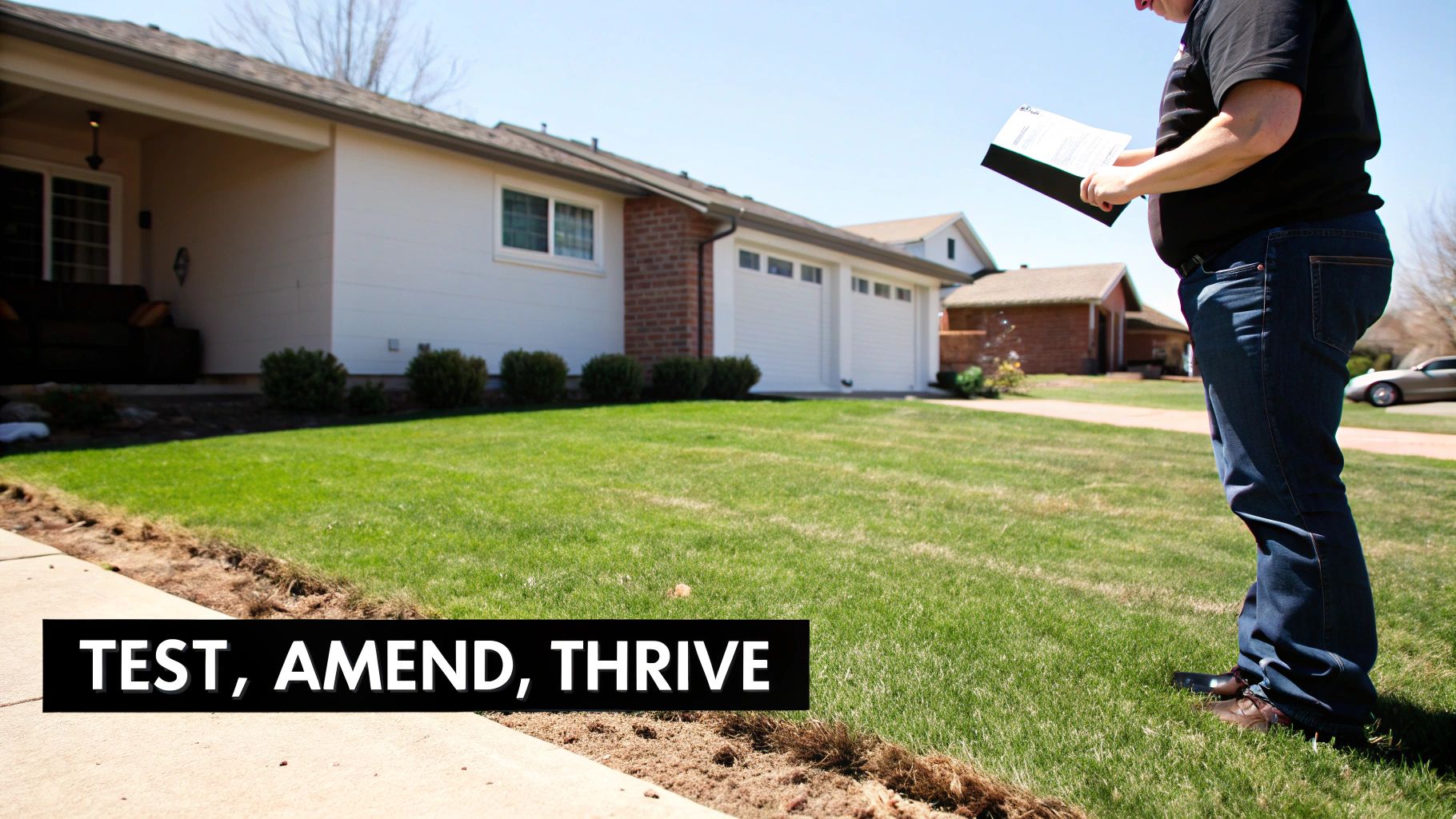
It all starts with understanding your lawn’s unique needs. You have to diagnose the real problem before you can even think about applying a solution.
Start with a Professional Soil Test
Before you add a single thing to your lawn, the most important step you can take is getting a professional soil test. Guessing is a recipe for frustration and wasted money. A soil test gives you a precise blueprint of your lawn’s health, revealing two critical pieces of information:
- Your Exact Soil pH: It tells you if your soil is acidic, alkaline, or right in that sweet spot. This is the key that unlocks nutrients for your grass.
- Nutrient Deficiencies: It pinpoints exactly which nutrients (like nitrogen, phosphorus, or potassium) are running low.
Without this data, you're just flying blind. A soil test replaces guesswork with facts, making sure every treatment is targeted and effective.
The Right Way to Correct Acidic Georgia Clay
If your soil test confirms you have acidic soil—a very common issue in areas like Alpharetta and Johns Creek—the answer is absolutely not baking soda. The correct, safe, and time-tested way to raise soil pH is with a calculated application of lime.
Lime, typically made from ground limestone, is packed with calcium and magnesium. Unlike the sodium in baking soda, it provides essential benefits your lawn craves:
- Gradual pH Adjustment: Lime works slowly and gently, raising the pH without shocking your turf. This steady change gives the grass and soil microbes time to adapt, preventing nutrient lockout.
- Improves Soil Structure: The calcium in lime helps bind tiny clay particles together. This process improves soil structure, cuts down on compaction, and allows water and air to penetrate—the exact opposite of what destructive sodium does.
- Adds Essential Nutrients: Calcium and magnesium are vital micronutrients that strengthen the cell walls of your grass and support photosynthesis.
Applying the right amount of lime based on your soil test is the professional standard. It’s how you build a strong foundation for a beautiful lawn.
The key takeaway is this: Lime nourishes and builds your soil's structure, while the sodium in baking soda contaminates and destroys it. For long-term lawn health, the choice is clear.
Build Your Lawn’s Natural Defenses Against Weeds and Fungus
A healthy, dense lawn is its own best defense. Instead of reacting to problems with harsh chemicals or ineffective remedies, shift your focus to proactive habits that build resilience. These fundamental strategies are the backbone of any successful lawn care program in Milton, Cumming, or anywhere in our region.
Here are the pillars of a strong lawn:
-
Proper Mowing: Mow high and often. Keeping your grass blades taller encourages deeper root systems, which in turn shades the soil to stop weed seeds from sprouting. Hacking off more than one-third of the blade at once stresses the grass, leaving it vulnerable.
-
Deep and Infrequent Watering: Water your lawn deeply, but less often. This simple practice trains the roots to grow down deep in search of moisture, making your turf far more resilient during our hot, dry spells. Watering lightly every day just creates a weak, shallow root system.
-
Core Aeration: This is non-negotiable for our compacted clay soil. Core aeration is the process of pulling small plugs of soil out of the lawn. It instantly relieves compaction and opens up channels for oxygen, water, and nutrients to get right to the root zone. It’s one of the best things you can do for a lawn in Georgia.
By embracing these proven, holistic strategies, you get off the treadmill of constantly chasing symptoms. You start building a truly healthy ecosystem from the ground up, creating a lawn that is naturally equipped to handle fungus, weeds, and our challenging Southern climate.
Time to Call in the Pros for Your North Georgia Lawn?
We’ve all been there. You see a patch of brown grass or a stubborn weed, and the urge to find a quick, cheap fix is overwhelming. Grabbing a box of baking soda from the pantry seems so much easier than trying to figure out what's really going on with your soil.
But as we've seen, that "easy" solution can backfire spectacularly, leading to long-term damage that's expensive to fix. This is especially true here in Cumming, Alpharetta, and across North Georgia, where our heavy clay soil has its own set of rules.
A truly great lawn isn't the result of kitchen chemistry experiments. It comes from a smart, localized approach that works with our region’s unique challenges, not against them. Your lawn is a living, breathing ecosystem, and blindly dumping a high-sodium product on it is a gamble you're likely to lose. Instead of guessing, it's time for a proven strategy.
Why a Local Touch Matters So Much
The single best thing you can do for your lawn is to partner with a local expert who truly gets North Georgia. A professional service isn't just about spraying products—it's about bringing deep, regional knowledge to your yard that no DIY hack can ever replicate. Someone who works on lawns from Johns Creek to Milton and Cumming every day knows exactly how our humid summers and acidic clay affect your grass.
This kind of hands-on experience leads to a much smarter way of caring for your lawn. The focus shifts from frantically reacting to problems like fungus or weeds to building a lawn that’s so healthy and resilient, those issues can't get a foothold in the first place.
The real goal is to break the cycle of temporary fixes. A professional builds a healthy foundation from the soil up, creating a lawn that doesn't just survive our seasons—it actually thrives in them.
The Advantage of a Professional Game Plan
When you invest in professional care, you're trading guesswork for precision. A dedicated lawn care program from a team like Barefoot Organics delivers a comprehensive plan built specifically for your property, leaving one-size-fits-all solutions behind.
The benefits are immediate and obvious:
- Real Soil Data: It all starts with the science. A professional soil test gives us the hard numbers—the exact pH and nutrient levels in your yard. No more risky experiments.
- Customized Organic Treatments: Using that soil data, a plan is built with targeted, lawn-safe organic products. These treatments nourish your soil and grass without the damaging side effects of sodium.
- A Year-Round Strategy: Experts think ahead. They create a proactive, season-long plan that includes proper fertilization, pre-emergent weed control, and disease management before you see trouble.
Stop crossing your fingers and hoping a risky home remedy will solve your lawn frustrations. Partnering with a dedicated local team is an investment in the long-term health and beauty of your property. Let the experts handle the science so you can get back to simply enjoying a lush, green lawn you can be proud of.
Common Questions About Georgia Lawn Treatments
Even with all the science, it's natural to have a few more questions. We get it. Here are some of the things homeowners around Cumming and Alpharetta often ask us about using baking soda and other DIY fixes on their lawns.
Is Baking Soda Safe for Pets on the Lawn?
This is a big one. While a little bit of baking soda won't hurt, the amount you'd need to spread on a lawn is a different story. If your dog or cat ingests that much, it can lead to an upset stomach or even mess with their electrolyte balance.
Frankly, the bigger issue is the unhealthy yard it creates. When the soil and grass are damaged, it's just not a great place for your family and pets to play. For communities like Cumming and Johns Creek, sticking with professionally applied organic treatments is a much safer bet for a vibrant, family-friendly space.
Can I Use Baking Soda to Kill Just a Few Weeds?
I really wouldn't recommend it. Baking soda is what we call a "non-selective" killer. That’s a technical way of saying it doesn't know the difference between a weed and your prized Zoysia—it just burns whatever it touches.
You might kill the weed, but you'll almost certainly kill the grass around it, leaving a glaring brown patch. That bare spot is like putting out a welcome mat for even tougher weeds to move in.
For a couple of random weeds, your best bet is the old-fashioned way: pull them by hand. If you want to use a product, make sure it's a targeted, turf-safe spot treatment designed for your specific grass type.
How Can I Tell if My Soil Is Acidic?
Some signs can give you a hint. If you see a lot of moss taking over or certain types of weeds (like dandelions or plantain) thriving, your soil might be on the acidic side. But these are just clues, not a diagnosis.
Guessing is a dangerous game in lawn care. Throwing down baking soda for lawns or any other amendment without knowing your soil's actual pH can take a small problem and turn it into a big, expensive one. The only way to know for sure is with a professional soil test. It gives you the hard numbers you need to make the right call for a healthy North Georgia lawn.
Ready to stop guessing and start seeing real results? Barefoot Organics uses science-backed, natural lawn care plans built for the unique challenges of Georgia's clay soil. Let us show you what a professional, local approach can do for your yard.