

If you're a homeowner in Cumming, Alpharetta, or Johns Creek, you know the struggle all too well. Our infamous red clay soil and the brutal summer heat can turn any lawn into a battleground. This is where aerating and overseeding your lawn comes in—it’s not just another weekend chore, but the single most important thing you can do for a truly lush, resilient turf. It's a one-two punch that directly solves our region's biggest lawn care headaches.
The Secret to a Perfect North Georgia Lawn
From Forsyth and Gwinnett to Cherokee counties, the story is often the same: thinning grass, relentless weeds, and stubborn bare patches that just won't fill in. The culprit? Almost always, it's our dense, heavy clay soil. Over time, everything from summer rainstorms to kids playing in the yard compacts this soil into a rock-hard layer that literally suffocates your grass roots.
This compaction creates a barrier, blocking the good stuff your lawn needs to survive. Water puddles and runs off instead of soaking in. Fertilizer just sits on top, useless. Oxygen can’t get down to the roots. It’s the perfect storm for a weak, stressed-out lawn where only the toughest weeds seem to flourish.
Why Aerating and Overseeding Is the Answer
The process of aerating and overseeding a lawn is the game-changer because it tackles these problems at their source. It's a straightforward, organic approach that brings your yard back to life from the soil up, without having to douse it in chemicals.
Here's how this duo transforms your lawn:
- It Busts Up Compacted Soil: Core aeration is the key. It pulls out small plugs of soil, creating thousands of tiny channels that let air, water, and nutrients finally reach the root zone where they're needed most.
- It Builds a Stronger Foundation: With access to all those vital resources, your grass roots can grow deeper and stronger. This makes the entire lawn tougher and much better equipped to handle our summer heat and dry spells.
- It Fills in the Gaps: Overseeding immediately follows aeration, blanketing your lawn with high-quality seed that takes root in the freshly opened soil. This is how you fix those thin areas and create a uniformly thick, dense turf.
- It Naturally Chokes Out Weeds: A thick, healthy lawn is its own best defense. When your grass is thriving, it simply crowds out weeds, leaving them no space, sunlight, or nutrients to get established.
For families in Milton or Dahlonega, this translates to a safer, more enjoyable yard for kids and pets. You're left with a beautiful, green carpet of grass that feels great underfoot, all achieved by working with your soil's natural biology, not against it.
The results aren't just cosmetic, either. Think about this: in North Georgia, where a staggering 75% of lawns go unaerated, homeowners who do it see a massive improvement. Aerated lawns show 62% weed resistance compared to just 51% in untreated lawns—a huge difference if you prefer a more natural approach to lawn care. It’s no surprise the global lawn aeration service industry is projected to hit $3.2 billion by 2028. The word is out.
A great lawn is a cornerstone of your home's curb appeal, and it's just one piece of the puzzle when it comes to exterior home repairs. By starting with the health of your soil, you're laying the groundwork for a beautiful outdoor space that adds value and enjoyment for years to come.
When To Aerate And Overseed In Georgia
Timing is everything in lawn care, and that’s especially true for aerating and overseeding here in North Georgia. Our hot summers and mild winters create very specific windows for success. Honestly, getting this timing right is often the biggest difference between a lush, green lawn and a patchy, frustrating mess in Cumming.
The first thing you have to know is what kind of grass you have. Around here, lawns fall into two big camps: cool-season grasses and warm-season grasses. They grow on completely opposite schedules, so your lawn care calendar depends entirely on which one is in your yard.
Cool-Season Grasses: The Fall Advantage
For most of the lawns you see in places like Milton, Roswell, and Forsyth County, you're looking at cool-season grasses, primarily Tall Fescue. For these lawns, early fall is, without a doubt, the prime time for aerating and overseeding. This isn't just a random suggestion; it's a strategy that works with the grass's natural growth cycle.
So, why is that September-to-early-October window so golden for Fescue in Cumming and Alpharetta? A few reasons:
- Warm Soil: The ground is still holding onto summer’s heat, which is exactly what new seeds need to germinate quickly.
- Cooler Air: The milder air temperatures put much less stress on the delicate new grass blades as they start to grow.
- Less Weed Pressure: Pesky summer weeds like crabgrass are on their way out, giving your new grass seed a fighting chance to establish without getting crowded out.
Trying to seed Fescue in the spring is a recipe for disappointment. The young grass just doesn't have the root system it needs to survive the brutal heat and potential drought of a Georgia summer.
By aerating and overseeding in the fall, you’re giving your Fescue lawn two full cool seasons—fall and the following spring—to grow a deep, strong root system. That’s the preparation it needs to handle the heat when it really cranks up in June.
Warm-Season Grasses: A Spring Focus
Now, if your lawn in Alpharetta or Johns Creek is a warm-season variety like Bermuda or Zoysia, you need to flip your calendar. These grasses love the heat and go dormant (turn brown) over the winter. For them, late spring to early summer is the perfect time for aeration.
Aerating right as these grasses are heading into their peak growing season helps them recover fast and spread aggressively into the open soil. One crucial difference, though, is that overseeding is generally not recommended for Bermuda and Zoysia turf. These grasses spread through runners (stolons and rhizomes), and they will naturally fill in thin spots on their own once you've aerated and fertilized them properly.
To make sure you're getting it right, it's always smart to double-check the best time to aerate a lawn for your specific situation.
Finally, a pro tip: always watch the weather and check your soil. You never want to aerate when the ground is rock-hard and dry; the machine just won’t be able to pull good plugs. The sweet spot is a day or two after a nice, soaking rain when the soil is moist but not a muddy swamp. This lets the aerator tines penetrate deeply and pull out clean cores, which is exactly what you want.
To help you visualize the schedule, here's a simple breakdown for our area.
North Georgia Aeration And Seeding Calendar
| Grass Type | Primary Aeration Season | Primary Overseeding Season | Common Areas Found |
|---|---|---|---|
| Tall Fescue | September – October | September – October | Milton, Roswell, Cumming, Dahlonega |
| Bermuda Grass | May – July | Not Recommended (spreads naturally) | Johns Creek, Alpharetta, Suwanee |
| Zoysia Grass | May – July | Not Recommended (spreads naturally) | Alpharetta, Roswell, widespread in newer Cumming communities |
This table is a quick reference, but remember to always consider the specific weather of the current year when planning your project.
A Practical Guide To A Lush Georgia Lawn
Alright, now that you know why and when to aerate and overseed, let's get our hands dirty. This is where the real work begins—the practical steps that will give you the confidence to tackle this project yourself. It’s not rocket science, but paying attention to the details is what separates a decent lawn in Cumming from a truly fantastic one.
Think of your lawn as a canvas. Before you can paint it with the vibrant green of new grass, you have to prep the surface. A little effort upfront goes a long, long way toward a great result, making sure that new seed has every chance to thrive from day one.
Preparing Your Lawn For Success
First things first: give your lawn a good, short haircut. Mow your existing grass down to about 1.5 to 2 inches. I know, it feels a little aggressive, but there are two great reasons for it. A shorter cut allows the aerator to make solid contact with the soil, and it guarantees that precious sunlight can reach the new seedlings instead of being blocked by the old guard.
After you've mowed, it's time to clear the deck. Rake up all the grass clippings, leaves, and any other junk lying around. This part is all about maximizing seed-to-soil contact, which is arguably the single most important factor for getting new grass to grow. You need those seeds nestled right up against the dirt, not sitting on a bed of old clippings.
One last critical prep step: mark your sprinkler heads. Grab some flags and walk your entire property, marking every single head. The tines on a core aerator are heavy-duty and will make short work of a plastic sprinkler head—a frustrating and totally avoidable repair.
Pro Tip: Water your lawn lightly the day before you plan to aerate. You're not aiming for a swamp, just slightly moist soil. This allows the aerator's tines to sink in deeper and pull out cleaner plugs. Trying to aerate our rock-hard, dry Georgia clay is a miserable workout that delivers poor results.
The Power Of Core Aeration
When you're dealing with the dense clay we have here in North Georgia, not all aeration methods are created equal. You absolutely want to use a core aerator, which you might also hear called a plug aerator. This machine pulls out small, finger-sized plugs of soil, creating open channels for air, water, and nutrients to get down where they're needed most—the root zone.
Stay away from spike aerators. While it looks like they’re doing something useful, they just poke holes in the ground and can actually make compaction worse right around the spike marks. For our heavy soils, core aeration is the only way to go.
As you run the machine, aim for a consistent pattern across your entire lawn. Don't be afraid to make a few extra passes over high-traffic spots, like where the kids or dog always run, as those areas are always more compacted. And don't worry about the little dirt plugs left behind! They'll break down and disappear back into the lawn in a week or two, recycling valuable nutrients in the process.
This visual perfectly illustrates the timing for Fescue, the most common cool-season grass in our neck of the woods.
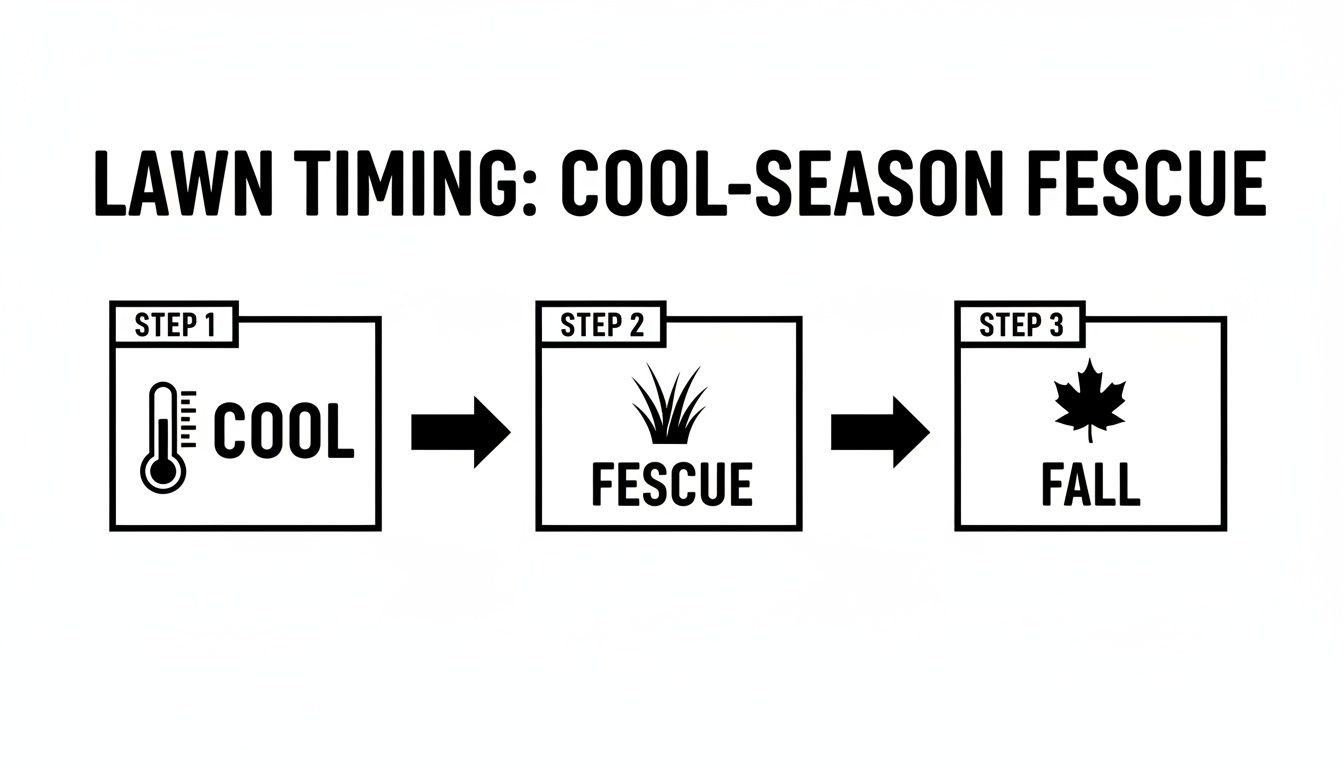
As you can see, hitting that sweet spot of cool temperatures in the fall is the recipe for success with Fescue.
The Art Of Even Overseeding
With your lawn perfectly prepped and aerated, it's time to lay down the seed. The name of the game here is consistency. An even application is what gives you a thick, uniform carpet of green instead of a patchy, uneven mess. A broadcast or rotary spreader is your best friend for this job.
To make sure you get that even coverage, just follow this simple two-pass technique:
- Pour half of your total grass seed into the spreader.
- Set the spreader dial to a lower setting so you don't run out too fast.
- Walk your entire lawn in a north-to-south pattern with the first half of the seed.
- Put the remaining seed in the spreader and walk the whole lawn again, this time in an east-to-west pattern.
This crisscross method is a game-changer. It helps eliminate any thin or bare stripes and gives you a much more professional-looking lawn. For Tall Fescue lawns in places like Alpharetta and Milton, you should be shooting for a rate of 6-8 pounds of seed per 1,000 square feet. Hitting this rate is key for building a dense turf that can naturally choke out weeds.
Post-Application Care Is Everything
Your job isn't over when the seed is down. Actually, the next couple of weeks are the most important part of the whole process. Watering is now your number one priority.
For the first 7-10 days, you need to water lightly but often. The goal is simple: keep the top inch of soil consistently moist, like a wrung-out sponge. This might mean running your sprinklers for short cycles once or even twice a day. If those tiny seeds dry out during germination, they're done for.
Once you start to see a green fuzz of new grass sprouting, you can shift your strategy. Start watering less frequently but for longer periods. This encourages the new roots to dig deeper into the soil searching for water, which builds a stronger, more drought-resistant lawn in the long run.
As a final touch, consider spreading a very thin layer of topdressing, like compost or peat moss, right after you seed. It's not a mandatory step, but it does wonders. It helps protect the seeds from hungry birds, holds in moisture, and adds fantastic organic matter to your soil. It’s that little extra step that really protects your investment and gives your new lawn a powerful head start.
Choosing The Right Grass Seed For Your Yard
You’ve done the hard work of aerating your lawn, and now comes the single most important decision for its future. The grass seed you choose dictates everything—from how green your yard stays through a mild winter in Johns Creek to how much you’ll be watering during a scorching Forsyth County summer. This isn't about grabbing the first bag you see at the store; it's about playing matchmaker between the right seed and your specific patch of Georgia clay.
For most of us here, from the foothills of Dahlonega down to Milton, the choice boils down to three major players: Tall Fescue, Bermuda, and Zoysia. Each one has a distinct personality, and getting this choice right is the secret to a gorgeous lawn that doesn't demand all your free time. Making the wrong call, on the other hand, can set you up for a frustrating, uphill battle with Mother Nature.
The North Georgia Go-To: Tall Fescue
For the vast majority of lawns in our area, especially those blessed with mature trees in places like Milton and Cumming, Tall Fescue is the undisputed champion. It’s a cool-season grass, which is a fancy way of saying it stays green all year long, giving you that classic, lush look even when it’s chilly in December.
Its real superpower, though, is its shade tolerance. It thrives in spots where other grasses give up. If your property has big oaks or pines casting long shadows, Tall Fescue is almost certainly your best bet. It also develops a deep root system, helping it tap into moisture during our inevitable dry spells. When you’re aerating and overseeding your lawn this fall, a top-shelf Tall Fescue blend is what delivers that thick, carpet-like feel everyone wants.
Warm-Season Warriors: Bermuda and Zoysia
On the flip side, you have the sun-worshippers: Bermuda and Zoysia. These are warm-season grasses, built tough for the signature Georgia heat. If your yard in Alpharetta or Johns Creek gets hammered with sun from dawn till dusk, one of these is probably a much better fit for you.
- Bermuda Grass: This is the stuff you see on golf courses and athletic fields for a reason. It's incredibly drought-tolerant and bounces back fast from wear and tear, which is a huge plus for families with active kids and dogs. The catch? It demands at least six hours of direct sun and will go dormant (turn a straw-like brown) after the first frost.
- Zoysia Grass: Often considered the more luxurious option, Zoysia creates an incredibly dense, fine-bladed lawn that feels amazing on bare feet. It handles heat and drought well and can tolerate a bit more shade than Bermuda, but it still needs a solid amount of sun to look its best. Just like Bermuda, it takes a winter nap and goes dormant.
Here’s the critical takeaway: Be honest about what your yard offers. Trying to force Bermuda to grow in a shady Milton yard is a recipe for failure. But if you embrace Tall Fescue in that same yard, you’ll get fantastic results with a fraction of the effort.
How To Read A Grass Seed Label
Once you've landed on a grass type, don't just reach for the cheapest bag. The quality of the seed itself is a huge deal. Learning to decipher the seed label is a skill that will pay you back for years.
On that little analysis tag, you’re looking for a few key numbers:
- Purity: What percentage of the bag is actually the seed you want? You need this to be as high as possible—look for 98% or more.
- Germination Rate: This tells you the percentage of seeds that are expected to sprout. Anything 85% or higher is a good sign.
- Weed Seed: This number needs to be as close to 0% as you can possibly find. A label that says "0.00% weed seed" is the gold standard.
- Other Crop Seed: This is filler—other, less desirable grass types. Again, the lower this number, the better.
Putting your money into certified, high-quality seed means you’re planting a future lawn, not a future weed problem. For a more detailed breakdown, you can learn more about the best grass seed for Georgia and get tips on picking a winner. A few extra minutes of research here ensures all your hard work aerating doesn’t go to waste.
Grass Seed Comparison For North Georgia Lawns
To make this even simpler, here's a quick side-by-side look at the top contenders for lawns across our region. Think of this as a cheat sheet to help you narrow down the best fit for your yard.
| Grass Type | Sunlight Needs | Drought Tolerance | Best For |
|---|---|---|---|
| Tall Fescue | Partial Shade to Full Sun | Good | The classic, year-round green lawn, especially for properties with mature trees in areas like Cumming and Milton. |
| Bermuda Grass | Full Sun (6+ hours) | Excellent | High-traffic, sun-drenched yards where toughness and heat resistance are the top priorities. |
| Zoysia Grass | Full Sun to Light Shade | Very Good | A premium, dense turf for sunny yards in Alpharetta and Johns Creek where aesthetics and feel are important. |
Ultimately, choosing the right seed comes down to knowing your lawn's unique conditions—sunlight, traffic, and your own expectations. Matching the grass to the environment is the first and most important step to building a lawn you'll love.
DIY Vs Hiring A Pro For Your Cumming Lawn

So, you're convinced that aerating and overseeding your lawn is the way to go. Smart move. Now you’ve hit the big fork in the road: do you tackle this yourself over a weekend, or bring in the experts? For homeowners across Cumming and Johns Creek, it's the classic showdown between time, cost, and the final result.
On the surface, going the DIY route can look like a money-saver. You figure you'll just rent the gear, buy some seed, and call it a day. But before you hitch a heavy aerator to your bumper, it’s worth looking at what you’re really getting into.
The Realities Of The DIY Route
Going it alone is a lot more than just a Saturday project. First, you have to track down and rent a core aerator from a local shop in Forsyth County. These machines are no joke—they're incredibly heavy, a pain to get in and out of a vehicle, and even tougher to maneuver around your yard. Then you've got to buy top-notch grass seed, starter fertilizer, and a broadcast spreader if you don't have one.
By the time you add it all up, the DIY costs can creep surprisingly close to what a pro would charge. The real kicker, though, is your time and the high probability of making a few common mistakes that can undo all that hard work.
From our experience, we see well-meaning homeowners in Cumming, Milton, and Alpharetta run into the same issues:
- Wrong Tool for the Job: Grabbing a cheap spike aerator instead of a core aerator is a classic mistake. With our dense Georgia clay, spikes just poke holes; they don't actually relieve compaction.
- Patchy Seed Application: It takes a calibrated spreader and a practiced hand to get even coverage. It's incredibly easy to end up with a striped or splotchy lawn.
- Bad Timing: Being off by just a couple of weeks can mean your brand-new seed is either competing with a new crop of weeds or getting scorched by a late-season heatwave.
If you’re weighing this decision, it can be helpful to understand what to expect from a property management company, as they often handle this exact choice for their properties. Their perspective highlights the true value of professional expertise in maintaining an asset, including the landscape.
The Professional Advantage In North Georgia
Hiring a local lawn care professional is about so much more than just saving yourself the hassle. You're paying for expertise and a guarantee of better results. A technician who services lawns in Cherokee or Gwinnett County every single day just gets our local soil conditions in a way a weekend warrior can't.
Professionals have access to commercial-grade, hydraulic core aerators that are heavier and pull deeper, cleaner plugs than rental units. This deeper penetration is crucial for breaking up our compacted red clay, leading to significantly better air, water, and nutrient flow to the roots.
They also use premium, certified seed blends that you simply won't find at the big-box store. These seeds are specifically selected for our North Georgia climate and are guaranteed to be free of weed contaminants, so you know you're only planting high-quality grass. To get a better handle on the pricing, take a look at our detailed breakdown of the cost to aerate a lawn.
In places like Cumming and Milton, where busy schedules are the norm, pros typically charge between $75-$250 per lawn. The average aeration and overseeding service on a standard lot lands around $175. This investment avoids the common DIY pitfalls and leads to visibly thicker, healthier turf. In fact, our tailored programs result in 62% higher satisfaction rates and a lawn that truly stands out in the neighborhood.
Ultimately, the choice is yours. A DIY project can be satisfying if you have the time and patience, but bringing in a pro is a sure-fire way to get a healthier, more resilient lawn without the guesswork—and you get to keep your weekend.
Answering Your Aeration and Seeding Questions
After running through the whole process, it's completely normal to still have a few questions buzzing around. When you're putting your time, effort, and money into your lawn, you want to get it right. We've heard just about every question in the book from homeowners in Cumming, Alpharetta, and all over North Georgia, so let's clear up some of the most common ones.
Getting these details sorted out can be the difference between a so-so lawn and one that truly stands out.
How Soon Can I Mow After Seeding?
This is probably the number one question we hear. I get it—you're anxious to get back to your regular lawn care routine. But this is where a little patience goes a long way. You need to hold off on mowing until the new grass shoots are at least 3 to 4 inches tall.
For that very first cut, make sure your mower blade is razor-sharp; a dull blade will rip and tear the delicate new grass instead of cutting it cleanly. It’s also smart to raise your mower deck to the highest setting for the first mow or two. Mowing too early is a disaster—it can literally vacuum the young seedlings right out of the ground, wiping out all your hard work in minutes.
What Should I Do With All These Soil Plugs?
After a core aeration job, your lawn in Johns Creek will be dotted with thousands of little soil plugs. It looks a bit messy, I know. But whatever you do, don't rake them up! Those little plugs are like a vitamin boost for your lawn.
Think of those soil cores as little nutrient bombs. They're packed with beneficial microbes from deeper in the soil. As they break down over a week or two, they release those nutrients back to the surface and act as a light topdressing for the new seed. They'll disappear on their own with a few waterings and mows.
Can I Just Spread Seed Without Aerating First?
Technically, you can, but you’d be throwing away a good chunk of your money and effort. For grass seed to germinate, it absolutely needs to make good contact with the soil. If you just scatter seed over a hard, compacted lawn in Milton, most of it will sit on the surface, where it will either dry out in the sun or become a feast for the local birds.
Aerating is what creates the ideal nursery for those seeds. The holes provide a safe haven for the seeds to fall into, protecting them and ensuring the direct soil contact they need to sprout. Skipping this step is a recipe for a low germination rate and a patchy, disappointing lawn.
When Is It Safe For Kids and Pets To Play on the Lawn?
This is a huge one for families in Forsyth County. The short answer is that you'll need to keep all traffic—whether from kids or pets—off the lawn as much as humanly possible for the first two to three weeks.
During this crucial germination window, the new grass sprouts are incredibly fragile. Even a little bit of foot traffic can crush the seedlings or re-compact the soil you just spent all that time loosening up. Once the grass is well-established and you've mowed it a couple of times, it will be much more resilient and ready for normal play.
Ready to get the lush, healthy lawn you've always wanted without the guesswork? Barefoot Organics provides expert aeration and overseeding services tailored to North Georgia's unique soil and climate. Let us handle the hard work so you can enjoy the beautiful results. Get your free quote today!