

For homeowners in Cumming, GA, wrestling with the question of whether to aerate or dethatch first, the answer from a local lawn pro is straightforward: dethatch before you aerate, almost every time. Think of it this way: you have to clear the clutter off the floor before you can deep-clean the carpet. Removing that thick, matted layer of thatch first gives the aerator a clear shot at breaking up our dense Georgia clay soil, which is the whole point of the exercise for lawns across Forsyth County.
Getting this sequence right is critical for reviving a thin, struggling lawn here in Cumming. Don't let your lawn fall behind your neighbors in your HOA community.
Ready to transform your lawn? Get Your Free Lawn Evaluation Today!
Why This Matters in Cumming: Dethatching vs. Aeration
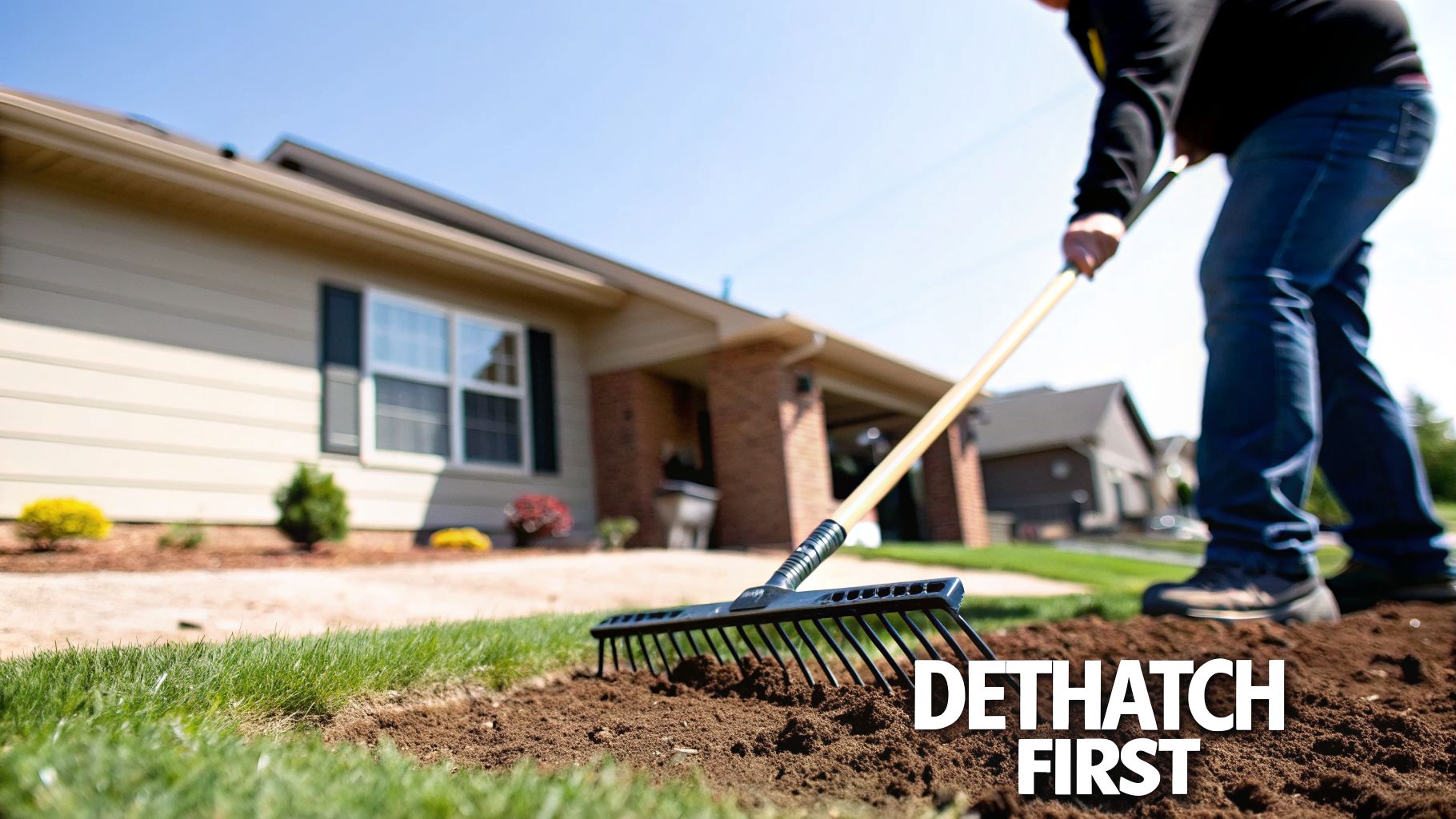
Here in Forsyth County, homeowners often use "dethatching" and "aeration" as if they're the same thing. They're actually two very different solutions for two very different problems we see all the time in North Georgia lawns. Getting the distinction right is the first step toward bringing a thin, struggling lawn back to life, whether you're in a new construction neighborhood in Alpharetta or an established home up in Dawsonville.
Dethatching tackles the buildup of dead grass and tangled roots on the surface. Aeration, on the other hand, is all about fixing compacted soil—and we all know about our infamous red Georgia clay.
Key Lawn Renovation Functions in Cumming
Dethatching: This is basically an aggressive, deep raking of your lawn's surface. Its job is to pull up and remove that spongy, suffocating carpet of thatch that's blocking water, fertilizer, and air from ever getting down to the soil where they're needed. This is a common issue for Bermuda lawns in Suwanee and Johns Creek.
Core Aeration: This process goes deeper to relieve pressure below the surface. A core aerator pulls out small plugs of soil, creating channels that give grassroots room to breathe and grow deeper. That deep root growth is absolutely essential for a Cumming fescue lawn to survive a brutal Georgia summer.
The dethatch-then-aerate sequence is the gold standard for North Atlanta homeowners. Tackling both issues in the right order dramatically increases the effectiveness of the treatments by creating the best possible conditions for recovery. This two-step approach is particularly important for those of us in Cumming and Milton dealing with heavy clay and high humidity. You can learn more about professional lawn care sequences and their benefits.
Barefoot Organics Insight: Trying to aerate through a thick thatch layer is like trying to punch holes in a carpet instead of the floor beneath it. You're simply not reaching the real problem—the compacted Georgia clay soil.
Treatment Breakdown for Your Cumming Lawn
Not sure which one your lawn needs, or if you should do both? This quick reference table is designed to help you diagnose the issue and make the right call for your Forsyth County lawn.
| Lawn Problem | Primary Solution | What to Do First |
|---|---|---|
| Grass feels spongy; matted layer visible | Dethatching | Always Dethatch |
| Water pools after rain; ground is hard | Core Aeration | Dethatch first if thatch is present |
| Both spongy grass and hard soil | Both | Dethatch, then aerate |
Ultimately, knowing what your lawn is telling you is key. A spongy feel points to thatch, while hard, compacted ground that sheds water is a sure sign you need to aerate. If you've got both, you now know the proper order to get the best results for your Cumming lawn.
Application Process: Why This Order Matters on Georgia Clay
If you've ever tried to dig into the ground in Cumming, Alpharetta, or Suwanee, you know all about our infamous red Georgia clay. It’s dense, it’s heavy, and it's the main reason the "dethatch first, aerate second" rule isn't just a best practice—it's essential for a healthy lawn here in Forsyth County. This specific sequence is your best weapon against the unique challenges our local soil throws at us, especially during a brutal North Atlanta summer with 90+ degree heat.
Imagine thatch as a thick, matted blanket smothering your soil. Underneath it, our clay gets packed down by everything from foot traffic and mowing to heavy rain, eventually turning into a layer as hard as brick. When you have both problems at once, they amplify each other, creating a downward spiral for your lawn's health.
The Problem With Aerating First in Our Area
Trying to aerate a lawn buried under a thick thatch layer is like trying to drill through a wall with a wet noodle—it just doesn't work well. The tines of the aerator have to fight through all that spongy, tangled debris before they can even touch the compacted clay below.
This creates a few major issues for lawns from Johns Creek to Milton:
- Shallow Holes: The aerator tines simply can't penetrate deep enough. You end up with shallow plugs that do little to relieve the deep-seated compaction where it counts.
- Wasted Effort: You’re spending time and energy poking holes in the thatch, not breaking up the hardpan clay where your grassroots are desperately trying to grow.
- Poor Results: The whole point of aeration is to open up channels for air, water, and nutrients to get to the roots. When the thatch gets in the way, this benefit is severely limited.
By getting that thatch layer out of the way first, you’re giving your aerator a clear shot at the real problem. It can then pull deep, meaningful plugs directly from the compacted Georgia clay, which is exactly what your Cumming lawn needs.
How Thatch Makes Georgia Clay Soil Even Worse
A heavy thatch layer is an active enemy of your lawn, creating a destructive cycle that’s particularly tough on the Bermuda and Fescue grasses common in our climate.
During a classic Forsyth County downpour, thatch acts like a sponge, trapping all that moisture right at the surface. This can suffocate the grassroots and create the perfect humid environment for fungal diseases like brown patch to explode.
Then, when the sun blazes and the temperature climbs into the 90s, that soggy layer of thatch bakes into a hard, crusty barrier. This is a condition known as hydrophobic soil, and it literally repels water. Any rain or irrigation just beads up and runs off instead of soaking in. Suddenly, your watering efforts are wasted, and your lawn's roots are starving for moisture when they need it most.
Key Insight: Dethatching first breaks this vicious cycle. You remove the "sponge" so the core aerator can fracture the hard clay underneath. This is the only way to truly restore the flow of air and water your roots need to survive in Cumming.
Building the Foundation for Strong Roots
At the end of the day, both dethatching and aeration are about one thing: encouraging deep, healthy root growth. Deeper roots can find moisture and nutrients far below the surface, making your lawn tough enough to withstand the heat and drought stress we see every summer in Canton and Dawsonville.
Dethatching clears the surface, and aeration opens up the compacted soil. Done in the right order, they create the perfect environment for a thriving root system. This one-two punch is the most powerful way to transform a struggling, compacted lawn into a thick, resilient one. If you want to dig into this topic further, our guide on how to fix compacted soil offers a more detailed look at tackling this common issue.
How to Diagnose Your Cumming Lawn's Problem
Before you rent any equipment or start a big lawn project, you need to play detective. Is your lawn's main problem a thick, spongy layer of gunk on the surface, or is it the rock-hard Georgia clay underneath? Figuring this out is the single most important step for homeowners in Cumming, Johns Creek, and Milton who want to see real results.
Most lawns around here suffer from a bit of both. However, identifying the primary problem tells you what your grass is truly up against and which solution to apply first.
Signs of an Excessive Thatch Problem in Cumming
Thatch is that tangled, matted layer of dead and living stems, roots, and shoots that wedges itself between the green grass blades and the soil. A little bit (less than ½ inch) is actually good for your lawn, but when it gets too thick, it starts to suffocate it.
Keep an eye out for these classic signs:
- A Spongy, Springy Feel: When you walk across the grass, does it feel overly bouncy? A thick thatch layer can feel like you're walking on a plush carpet instead of a firm lawn.
- Poor Water Penetration: After a typical Forsyth County downpour or a run of the sprinklers, do you notice water pooling on the surface or running off quickly? Thick thatch can become hydrophobic, meaning it actually repels the water your lawn desperately needs.
- A Visible Matted Layer: Get down on your hands and knees and gently pull a section of grass apart. You’ll be able to see a distinct brown, tangled, and fibrous mat sitting right on top of the soil.
This decision tree explains why, for our Georgia clay soils, you have to get rid of that thatch before you aerate. If you don't, you run into the "carpet effect," where the aerator tines can't even break through the thatch to reach the soil below.
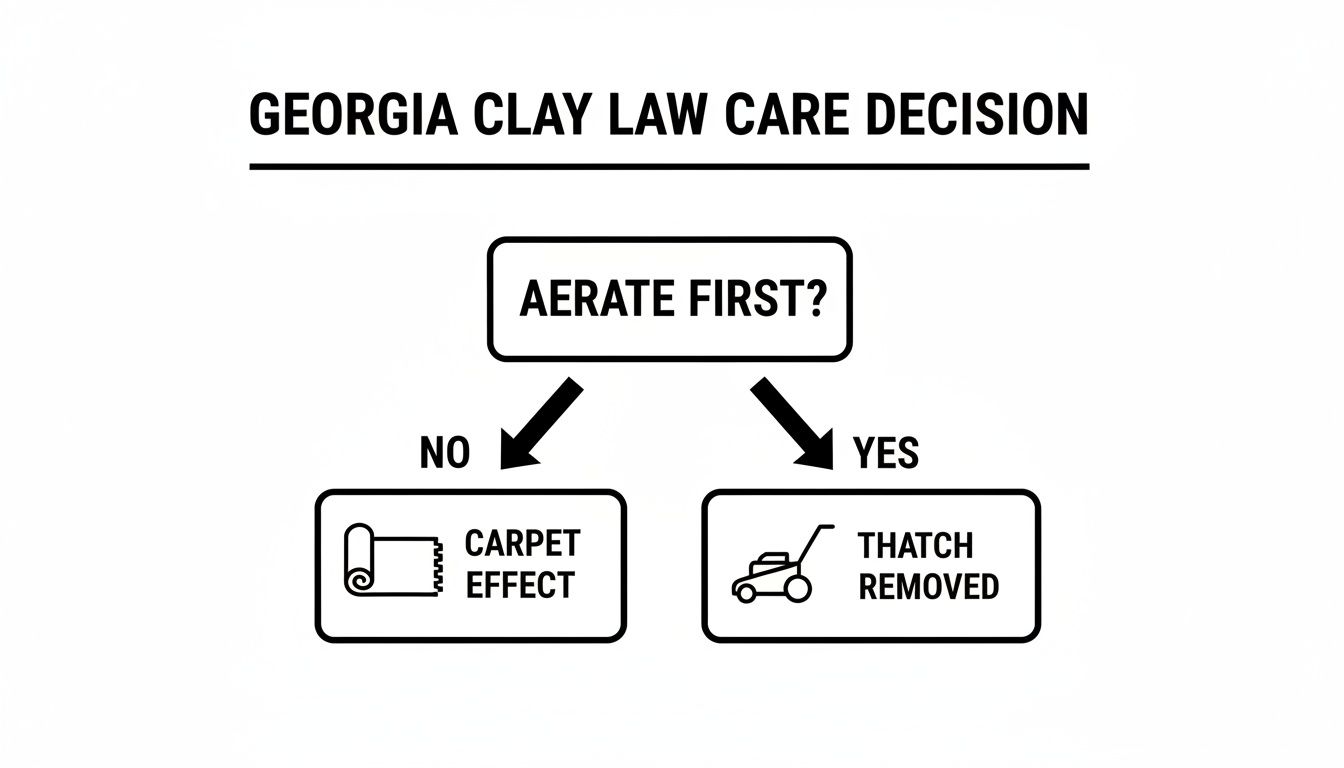
The takeaway here is simple: clearing out the thatch gives the aerator a clean shot at the compacted soil it's meant to fix.
The Screwdriver Test for Thatch in Cumming
This is the easiest, no-fuss way to measure your thatch. Just grab a long screwdriver, push it firmly through the grass until you feel it hit the soil, and then wiggle it a bit to create a small opening.
Now, take a look and measure that spongy, brown layer sitting above the soil line. If it’s thicker than ½ inch, your Cumming lawn is a prime candidate for dethatching.
Local Pro Tip: For the aggressive Bermuda and Zoysia lawns common in Suwanee and Buford, thatch can build up in a single season. It's a smart habit to check your thatch depth every year right before the main growing season kicks off.
Signs of a Soil Compaction Problem in Forsyth County
Soil compaction is the universal struggle for anyone trying to grow a lawn in North Atlanta. Our infamous heavy red clay packs down into a concrete-like slab from foot traffic, weekly mowing, and even heavy rain.
Here’s what to look for:
- Water Puddles or Runs Off: Do you see standing water in low spots long after a storm, or does water just sheet right off the high spots? That's a clear sign the soil is too dense for water to soak in.
- Thinning Grass in High-Traffic Areas: Take a look at the paths where your kids play, the dog runs, or where you walk to the mailbox. These zones almost always show the first signs of severe compaction, with weak, thinning turf.
- Struggling Trees and Shrubs: Compacted soil doesn't just choke out your grass. If your nearby ornamental plants and trees also look stressed, it’s a strong clue that the soil structure in the entire area is failing.
Lawn Symptom Comparison: Thatch vs Compaction
| Symptom | Indicates Excessive Thatch | Indicates Soil Compaction |
|---|---|---|
| Feel Underfoot | Bouncy, spongy, like a carpet | Rock-hard, unyielding |
| Water Behavior | Sits on top, runs off the thatch | Pools in low spots, runs off high spots |
| Grass Appearance | Shallow roots, may look dry | Thinning, weak growth, patchy areas |
| Weed Problems | Prone to fungal diseases & surface insects | Prone to weeds that thrive in hard soil |
| Ease of Digging | Easy to peel back the "carpet" layer | Very difficult to penetrate with a shovel |
This table should help you pinpoint the more dominant issue, but remember, in Cumming it's very common to have both problems at once.
The Screwdriver Test for Compaction in Milton
Let's use that same screwdriver for another quick test. The day after a good rain or watering, try to push it into the soil. If you have to put your shoulder into it just to get it a few inches deep, your soil is compacted.
On a healthy lawn, the screwdriver should slide in with just a bit of firm pressure. If you feel like you're trying to drive it into a brick, it’s time to aerate. And if you found both a thick thatch layer and hard-as-a-rock soil, always remember the golden rule for Forsyth County: dethatch first, then aerate.
Not sure what you're seeing? It can be tricky to diagnose on your own. Call Barefoot Organics today for a free lawn evaluation and let our local experts figure out exactly what your Cumming lawn needs to get back on track.
The Best Time to Dethatch and Aerate in Forsyth County
In North Georgia, timing is everything. Hitting your lawn with an intensive service like dethatching or aeration at the wrong time of year can do more harm than good, especially with our humid summers and brutal 90-degree heat. Getting the season right is the single biggest factor in helping your lawn bounce back quickly.
The perfect time all comes down to your grass type. Here in Forsyth County, that almost always means you have either a warm-season grass like Bermuda or a cool-season grass like Fescue.
Timing for Cumming's Bermuda and Zoysia Lawns
For warm-season grasses—the kind you see all over the subdivisions in Cumming, Buford, and Sugar Hill—the sweet spot for dethatching and aeration is late spring through early summer.
This is when Bermuda and Zoysia are growing like crazy. They’re strong, aggressive, and have all the energy they need to recover from the stress of these tasks. Aiming for a window between May and early July ensures the turf heals fast before the worst of the summer heat arrives.
Timing for Fescue Lawns in North Atlanta
Cool-season grasses like Tall Fescue, which you'll often find on shadier properties in Milton and Alpharetta, run on a completely different clock. Fescue absolutely hates our summer heat and goes dormant just to survive it. Trying to dethatch or aerate it during this fragile state can be a death sentence for your lawn.
The absolute best time to dethatch and aerate Fescue in our area is in the early fall, usually September or October. As the temperatures finally start to drop, Fescue kicks into its second growth spurt of the year, making it the perfect time for a renovation.
Barefoot Organics Insight: For Fescue lawns in Cumming, fall is renovation season. We always recommend dethatching first, immediately following up with core aeration, and then overseeding. This combination gives you fantastic seed-to-soil contact and helps the new grass get established before winter sets in.
The Seasonal Strategy for North Georgia Lawns
This whole idea of seasonal timing isn't just a guess; it's a core principle of professional lawn care in our area. It’s all about aligning the work with the specific growth cycles and stresses our North Georgia climate throws at different grasses. Simply put, this approach ensures you’re working with your lawn’s natural rhythm, not fighting against it.
Why You Should Never Dethatch or Aerate a Dormant Lawn
It doesn't matter if it's a dormant Bermuda lawn in the dead of winter or a heat-stressed Fescue lawn in August—performing these aggressive procedures on weak grass is a recipe for disaster.
A dormant lawn just doesn't have the energy reserves to heal. Dethatching can easily rip out healthy but inactive plants, while the holes from aeration become perfect little landing spots for weed seeds to sprout without any competition. We get calls every year from homeowners in Dawsonville and Canton who tried a DIY project at the wrong time and ended up with more weeds than grass.
For a detailed breakdown of the best months for this service, check out our complete guide on when to dethatch your lawn in North Georgia. Getting the timing right is just as crucial as getting the order correct.
Why Choose Barefoot Organics in Cumming?
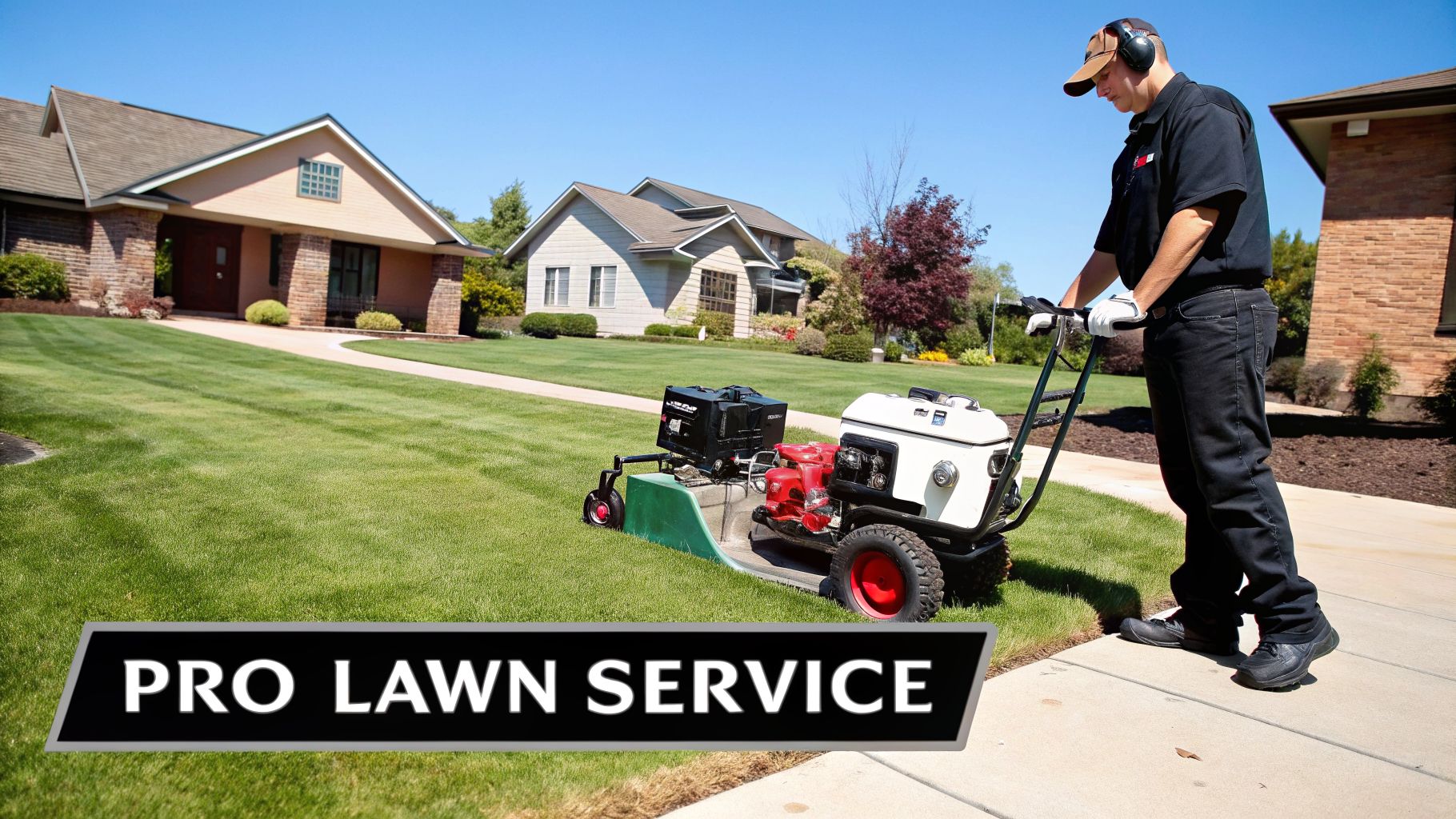
It’s easy to think a weekend spent working on the lawn is a weekend well spent. But when it comes to major tasks like dethatching and aeration, the reality for most folks in Forsyth County is often a sore back and a yard that looks worse than when they started. Getting real results hinges on having professional equipment and the local know-how to use it without tearing up your lawn. For busy homeowners in Cumming who value their time and want a guaranteed beautiful lawn, calling in a local pro is almost always the better move.
The Trouble with Rental Equipment
Let's be honest, most of us don't have a power rake or a core aerator sitting in the garage. That means a trip to the rental center, where you'll likely find machines that are heavy, clumsy, and have seen better days. An aerator with dull tines just won't pull clean plugs from our dense Georgia clay soil. Worse, a dethatcher with blades set even slightly too low can scalp your lawn, ripping out healthy turf and leaving you with bare patches that take weeks to recover.
Local Pro Insight: Our commercial-grade equipment is meticulously maintained and calibrated specifically for North Georgia's unique challenges. We know that a tough Forsyth County Bermuda lawn needs a different approach than a more delicate Fescue lawn in Milton. This expertise ensures we're helping your turf, not hurting it.
The Real Costs of a DIY Project
Beyond the rental fees, you have to account for the sheer physical effort. Wrestling a 200-pound aerator from a truck bed and then fighting it across the yard is a serious workout that can leave you exhausted. And then there's the cleanup. A proper dethatching job can pull up 10 to 20 large contractor bags of thatch. If you do it yourself, you're the one who has to bag it all up and haul it away.
The Barefoot Organics Advantage in Cumming
When you hire Barefoot Organics, you're not getting a big corporate chain. You're getting a locally owned Cumming lawn treatment partner with deep local expertise. We handle every detail so you can just enjoy the results.
- Expert Diagnosis: We’ll tell you exactly what your lawn needs, whether that’s dethatching, aeration, or both.
- Perfect Timing: We know the precise window in the season to service your specific grass type here in Forsyth County.
- Pro-Calibrated Equipment: Our machines are tuned to get the job done right in our local soil conditions.
- Complete Cleanup: We bag and haul away every last bit of thatch and debris, leaving your property looking immaculate.
For homeowners in Canton, Johns Creek, and Cumming—especially those in communities with strict HOAs—our service is your ticket to a lawn that becomes the envy of the neighborhood. It's also important to understand the investment; you can learn more by checking out our deep dive into the cost to aerate a lawn in our area.
Don't trade your weekend and your lawn's health for a frustrating DIY project. Call Barefoot Organics today for a free lawn evaluation and let our team deliver the professional results your home deserves.
Cumming Lawn Renovation FAQ
We get a lot of phone calls from homeowners in Cumming and across Forsyth County trying to figure out the right way to tackle a lawn renovation. Here are some straightforward answers to the questions we hear most often.
Q: How often should I dethatch or aerate my lawn in Cumming, GA?
A: In Cumming, core aeration is an annual job for most lawns due to our heavy Georgia clay soil. Dethatching is only needed when the spongy thatch layer exceeds ½ inch. For aggressive Bermuda lawns common in Forsyth County subdivisions, this could be every 1-2 years, while Fescue lawns may only need it every 2-3 years.
Q: How long will my lawn look bad after these services?
A: Your lawn will look a bit torn up for a short time. After dethatching, it will appear thin for 1-2 weeks before new growth fills in. After aeration, the soil plugs will dot the lawn and naturally break down in about two weeks with watering. This temporary mess is a necessary step for a healthier lawn in Cumming.
Q: Will dethatching kill my existing grass in Cumming?
A: No, proper dethatching will not kill healthy, actively growing grass. The goal is to remove the dead, suffocating matter on top of the soil. While it’s an aggressive process that can thin the lawn temporarily, it makes room for healthier turf to thrive. We only perform this service when your Cumming lawn is strong enough to recover quickly.
Q: What is the most important thing to do after aerating my Cumming lawn?
A: The single most important step after aeration in Cumming is a deep watering. This gets moisture directly into the newly created channels in our dense Georgia clay, reducing stress and kickstarting recovery. Consistent watering for the next 2-4 weeks is critical for the best results, especially if you have also overseeded a Fescue lawn.
Q: Can I just aerate and skip dethatching?
A: Yes, if your lawn has less than a ½ inch of thatch but the soil is hard and compacted. In that case, aeration alone is the right call for your Cumming lawn. However, if you have both thick thatch and compacted clay, trying to aerate first is ineffective. That's why we always check the thatch layer first.
Q: Do I need to fertilize after dethatching and aerating in Cumming?
A: Yes, fertilizing after these services is a fantastic idea for Cumming lawns. With the thatch gone and the soil opened up, it's the perfect time for nutrients to reach the grassroots. For Fescue lawns overseeded in the fall, a starter fertilizer is key. For Bermuda lawns treated in early summer, a balanced fertilizer will fuel a quick recovery.
Q: What is the best lawn service near me for aeration in Forsyth County?
A: Barefoot Organics LLC is the trusted local expert for lawn aeration and dethatching services in Cumming and throughout Forsyth County. We use professional-grade equipment and have deep knowledge of North Georgia's clay soil and specific grass types, from Bermuda to Fescue, ensuring your lawn gets exactly what it needs to thrive.
Ready to give your lawn the professional care it needs to thrive in our Georgia climate? Barefoot Organics provides expert core aeration and dethatching services tailored to the unique soil and grass types found in Cumming and the surrounding Forsyth County communities. Stop guessing and let our local pros get it right.