

Ever wondered how your neighbors in Cumming or Alpharetta get that carpet-like, deep green lawn? It’s rarely a single trick. More often than not, the secret is a powerful one-two punch: core aeration and overseeding. This annual routine is a total game-changer for anyone in North Georgia wrestling with our infamous hard red clay.
Your Guide to a Thriving North Georgia Lawn

If your lawn in Johns Creek or Milton is looking thin, patchy, or just plain exhausted after a long, hot summer, you're in good company. Many of us assume that just watering and fertilizing is enough, but our region's dense, clay-heavy soil is a unique beast. It gets packed down over time from everything—kids playing, mowing, even heavy downpours common from Cumming to Dahlonega.
This compaction slowly suffocates your lawn's root system. Imagine trying to grow a plant in a solid brick. There's just no room for the roots to breathe, stretch out, or find the water and nutrients they desperately need. What you end up with is a stressed, weak lawn that's an easy target for drought, disease, and a full-scale weed invasion.
The Power Duo: Aeration and Seeding
This is where aeration and overseeding come in to save the day. It’s not a quick, superficial fix; it’s the foundational work for building a truly resilient and beautiful lawn that can handle Georgia's tough climate. By doing these two things together, you’re tackling the root causes (pun intended) of what’s holding your turf back.
First, core aeration pulls up small plugs of soil, instantly relieving that compaction. This creates thousands of little channels for air, water, and fertilizer to get deep into the root zone where they matter most. Then, overseeding comes right after, spreading high-quality fescue seed—the kind that thrives from Milton all the way to Dahlonega. These new seeds fall into the aeration holes, giving them a perfectly protected spot with fantastic seed-to-soil contact for germination.
Aeration and overseeding is the single best investment you can make in your lawn's long-term health. It’s the most effective way to repair summer damage and build a thick turf that naturally chokes out weeds next spring in your Cumming-area lawn.
A Growing Trend in Lawn Care
It’s no surprise that this approach has become so popular in places like Alpharetta and Johns Creek. The rising demand for professional lawn aeration services says it all. The global industry was valued at around $2 billion a year in the early 2020s and is on track to hit $2.5 billion by 2025.
What’s driving this? Mostly, it's homeowners in residential areas just like ours who want to maintain a healthy, vibrant green space. You can read the full research on lawn aeration service market growth to see the data for yourself. This guide is your playbook for turning that struggling North Georgia lawn into the one everyone else in the neighborhood envies.
Why Aeration Is a Game-Changer for Georgia Clay Soil
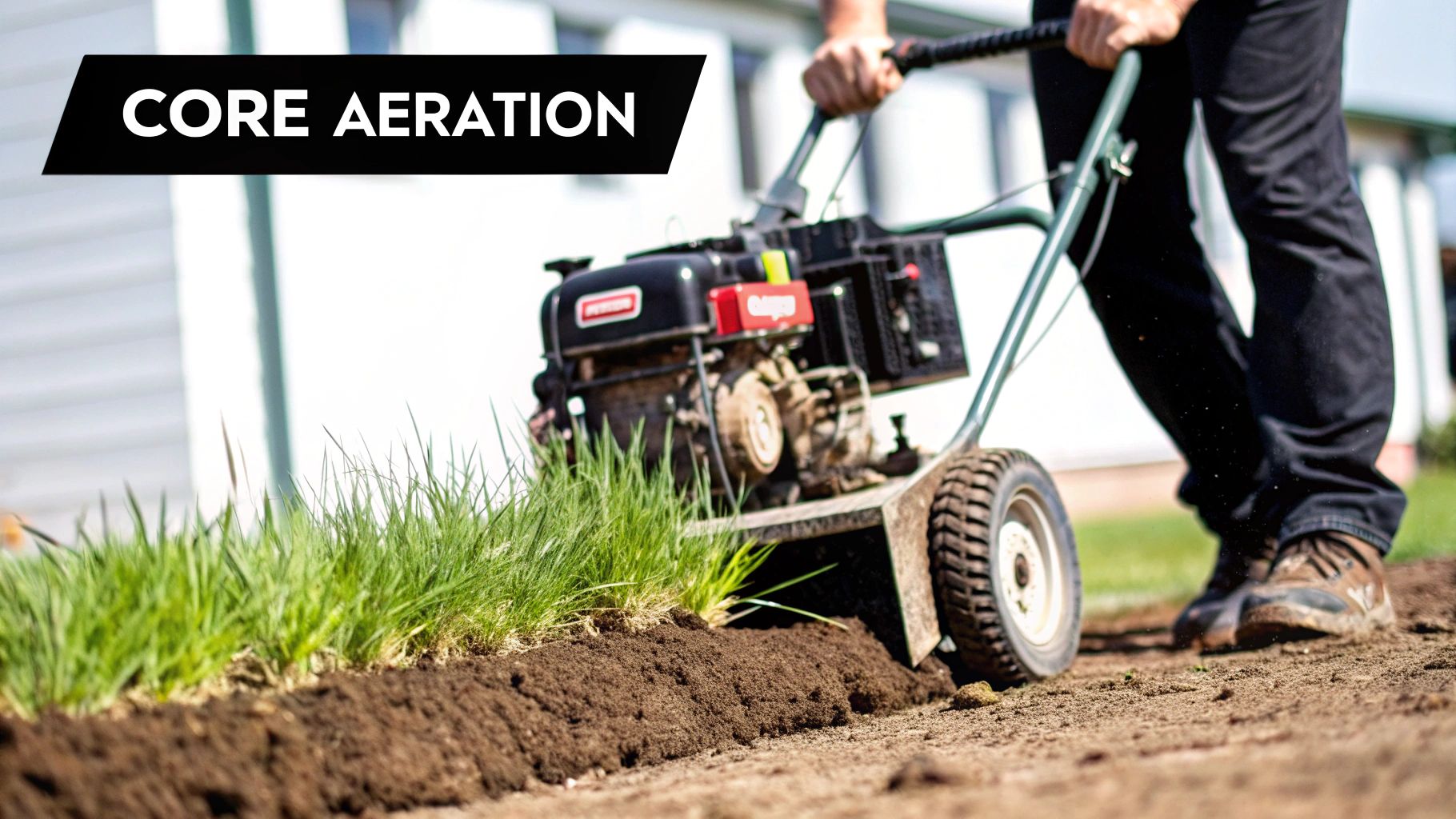
If you live anywhere from Johns Creek to Milton, you know our lawns go through a lot. They face scorching summer heat, endless foot traffic from the kids and dogs, and the biggest challenge of all: our native Georgia clay soil. Over time, this heavy, dense soil gets packed down until it’s more like concrete than a healthy place for grass to grow.
When soil gets that compacted, it literally suffocates your lawn. The tiny air pockets that grassroots need to breathe get squeezed shut. Water can't soak in, so it either pools on top or just runs off. And any fertilizer you apply gets stuck on the surface, never reaching the roots that desperately need it.
That’s where core aeration comes in. It’s the essential reset button for your lawn’s foundation, and for our local Cumming and Alpharetta soil, it's not just a helpful treatment—it's a must-do for a truly healthy lawn.
Breaking Up That Brick-Hard Ground
Think of your lawn's soil as a tightly packed brick. A core aerator is a machine that pulls out thousands of small, finger-sized plugs of this compacted earth. The process instantly creates a network of channels, allowing the good stuff to finally get down deep where it matters.
These new pathways are crucial for a few big reasons:
- Oxygen to the Roots: Grassroots need to breathe, and aeration reintroduces air into the soil. This stops the roots from suffocating and encourages them to grow strong.
- Better Water Penetration: The holes act like tiny reservoirs, catching rain and irrigation water and funneling it directly to the roots instead of letting it evaporate on the surface.
- Deeper Nutrient Delivery: Fertilizer and soil amendments can now travel down into the root zone, making sure your lawn gets every ounce of benefit from your applications.
By relieving all that pressure, you’re giving the grassroots room to stretch out, grow deeper, and become stronger. A deep, healthy root system is the secret to a lawn that can handle the drought, heat, and disease we see all the time in the Alpharetta and Dahlonega areas.
Want to dive deeper into soil health? Check out our guide on how to improve soil in your lawn.
Creating the Perfect Bed for New Seed
Aeration doesn't just help the grass you already have; it sets the stage perfectly for new growth. This is exactly why we always recommend pairing it with overseeding in our North Georgia climate. After a lawn is aerated, it's covered in these perfect little pockets for new grass seed to settle into.
When you spread high-quality fescue seed over a freshly aerated lawn, the seeds don't just sit on top of hard-packed dirt. They fall right into those holes, which guarantees excellent seed-to-soil contact. This direct contact is the single most important factor for good germination.
The holes also protect the seeds from getting washed away by a heavy Georgia rain or eaten by birds, giving them a safe, moist environment to sprout.
This one-two punch is hands-down the most effective way to build a thick, resilient turf that naturally chokes out weeds. A dense lawn is its own best defense.
It's surprising, but many homeowners skip this critical step. In fact, a recent survey showed that 75% of homeowners don’t aerate their lawns, often seeing it as an optional chore. But here's the kicker: the same data revealed that 62% of people who do aerate are satisfied with their lawn’s ability to resist weeds, compared to only 51% of those who don’t. That 11-percentage-point difference really shows how powerful this practice is for natural weed control—a huge win for any lawn in the Cumming area.
When to Aerate and Overseed in Cumming, GA
In lawn care, timing is everything. This is especially true when you’re combining aeration with overseeding. Getting the schedule right is probably the single biggest factor for success, and getting it wrong means you’ve just wasted a perfectly good weekend, not to mention your money.
For those of us with lawns in Cumming, Alpharetta, and around North Georgia, there’s a definite "golden window" for this project. You’ll want to get this done in the early fall.
Specifically, we always recommend you aerate and overseed between late September and the end of October. This timeframe gives cool-season grasses, like the Turf-Type Tall Fescue so common here, the absolute best shot at success.
Why Early Fall Is the Magic Window for North Georgia
It all comes down to the soil temperature. In late September and October, the ground in the Cumming area is still warm enough from the summer to get seeds sprouting quickly. At the same time, the brutal, stressful summer heat has finally broken.
We get those milder daytime temperatures and cooler nights, which is the perfect combination for new grass seedlings to really take off.
Trying to do this in the summer? That's a classic mistake in our region. The Georgia heat is just too much for new grass, and it often dies before its roots can get established. On the flip side, waiting until November is risky. An early frost can easily wipe out all those vulnerable new seedlings before they have a chance to mature.
Another huge benefit of fall seeding is that you’re dealing with a lot less competition. Most of the aggressive summer weeds, like crabgrass, are at the end of their life cycle. This gives your new fescue seed a clean slate to grow without getting choked out.
Key Takeaway: The goal is to give your new grass seed at least 4 to 6 weeks of solid growing time before the first hard frost rolls into North Georgia. If you aim for early to mid-October in our local climate, you've almost guaranteed yourself that window.
To help you plan, we've put together a simple calendar that breaks down the key steps for our specific region.
North Georgia Aeration and Overseeding Calendar
Here's a seasonal checklist to guide your lawn preparation and project execution for optimal results in the Cumming, GA area.
| Timeframe | Key Task | Local Tip for Georgia Lawns |
|---|---|---|
| Early September | Assess the Lawn & Prep | Start lowering your mowing height gradually. This is also the time to test your soil's moisture. |
| Mid-September | Finalize Prep Work | Water the lawn 1-2 days before aerating if it's dry. Mark all sprinkler heads with flags. |
| Late Sept – Mid-Oct | Aerate & Overseed | This is the sweet spot for Cumming, Alpharetta, and Milton. The soil is warm, air is cool, and weed competition is low. |
| Late Oct – Early Nov | Water & First Mow | Water lightly and frequently. Mow the new grass for the first time when it reaches 3-4 inches. |
| Late November | Final Mow & Winter Prep | Give the lawn one last mow before it goes dormant. Don't cut it too short! |
This schedule helps ensure that your hard work pays off with a thick, healthy lawn come springtime.
Your Pre-Project Checklist for Success
Don't just rent an aerator on a whim and hope for the best. A little prep work in the weeks leading up to the main event makes all the difference.
Here’s what you need to do:
-
Drop Your Mowing Height. About a week or two before you plan to aerate, start mowing your lawn a bit shorter. I’m not talking about scalping it, but bringing it down to around 2.5 inches helps the aerator tines get a good bite and ensures the new seed makes direct contact with the soil.
-
Check Your Soil Moisture. An aerator won’t do much on our hard, baked Georgia clay. If we haven't had some decent rain, you'll need to water the lawn deeply a day or two beforehand. The soil should be moist, but not a muddy swamp. An easy trick is to try pushing a screwdriver into the ground—if it goes in a few inches without a fight, you're good to go.
-
Flag Your Obstacles. Before that heavy machine shows up, take a walk and flag every single irrigation head, valve box, or shallow utility line. Trust me, hitting a sprinkler head with a core aerator can turn a weekend project into an expensive headache.
Following these steps will make the whole process smoother and ensure you get the most out of your efforts. For a deeper dive into the "why" behind the timing, check out these extra resources on the best time to aerate a lawn. This prep work is what turns a tired, compacted yard into a resilient lawn that can handle our winters and burst back to life in the spring.
Picking Your Gear and Grass Seed for a Cumming-Area Lawn
Let’s get down to the brass tacks. A great-looking lawn doesn't just happen; it starts with having the right equipment and the best possible seed for the job. This is where your entire project's success begins. For those of us with lawns in Alpharetta, Cumming, and across North Georgia, this is absolutely not the place to skimp.
Our soil is famously dense, heavy clay, and our summers are no joke. That means we need a specific kind of tool to break up that soil and a specific type of grass that can handle the heat.
How to Rent the Right Aerator
First things first: when you start looking for aerators, you’ll see two main types—spike aerators and core aerators. Let me be blunt: for the hard-packed clay we have from Milton to Dahlonega, a spike aerator is a complete waste of your time and money. All it does is poke holes, which can actually make the soil more compacted around the hole.
You absolutely need a core aerator, which you might also hear called a plug aerator. This is the machine you want. It's designed to pull up small plugs (or "cores") of soil, which truly relieves compaction and opens up the lawn for air, water, and that new seed to get down where it needs to be. You can rent one from just about any local equipment rental shop in the Cumming area.
When you're at the rental counter, here’s what to ask for:
- Heavier is Better: Don't be shy about asking for the heaviest walk-behind model they’ve got. That extra weight is crucial for getting the tines to dig deep into our stubborn soil.
- Check the Tines: Take a quick look to make sure the tines are hollow. You want tubes that pull plugs out, not solid spikes that just poke holes.
- A Self-Propelled Model Will Save Your Back: These machines are beasts. A self-propelled aerator makes the job infinitely easier, especially if you’re dealing with any slopes or have a larger yard in Johns Creek.
Here’s a pro tip that makes a huge difference: a good aeration job pulls 15-20 plugs per square foot. You won't get this with a single pass. Plan on making multiple passes over your entire lawn, so make sure your rental window is long enough to do the job right.
Finding the Best Fescue Seed for North Georgia
Staring at an aisle full of grass seed can be intimidating, but for our area, the choice is actually pretty simple. You're looking for a top-quality Turf-Type Tall Fescue (TTTF) blend. These aren't your grandpa's fescues; modern TTTF varieties have been bred specifically to stand up to Georgia's heat while offering much better resistance to drought and disease than old-school types like Kentucky 31.
My advice is to always grab a blend that contains several different fescue cultivars. Think of it as diversifying your portfolio. This genetic variety is a massive advantage for lawns in Cumming and Alpharetta because some cultivars will do better in sun, others in shade, and some will handle a dry spell better than others. It all adds up to a more resilient lawn.
Before you buy, look for one thing on the bag: the "blue tag" certification. This tag is your guarantee from the state's crop improvement association that the seed inside has been tested for purity and a high germination rate. It’s your best defense against buying a bag full of filler and unwanted weed seeds.
Nailing the Right Amount of Seed
Alright, the final piece of prep work is figuring out how much seed you actually need. Too little, and you'll end up with a thin, patchy lawn. Too much, and you're just throwing money away while causing the new seedlings to choke each other out.
First, you need the square footage of your lawn. You might find this on a property survey, but you can also use a free online mapping tool to get a pretty accurate measurement.
Once you have your number, it's time for some simple math. For overseeding, a rate of 5 to 10 pounds of seed per 1,000 square feet is the general rule. If you're aiming for a thick, lush lawn by the end of fall, lean toward the 10-pound rate. A 5-pound rate might look a little thin initially and not really fill in until spring.
For most lawns around here in Cumming and Milton, a target of 6 to 8 pounds per 1,000 square feet is the sweet spot. This is usually plenty to repair summer damage and build up great density for the following year. For more on this, check out UGA's overseeding rate recommendations on fieldreport.caes.uga.edu.
Your Step-By-Step Guide to Aerating and Overseeding
Alright, you've done the planning, and now it's time for the fun part—transforming your lawn. This is where your prep work really pays off. From the moment you fire up the aerator to when you lay down that last bit of seed, following the right sequence is everything.
We're not just trying to get the job done; we're aiming to do it right. The goal is to create the perfect environment for new grass to sprout while giving your existing turf a solid foundation to thrive. Let's walk through how to pull off a professional-level aerate and overseed project yourself.
Last-Minute Lawn Prep
Right before you get started, there are two final things to tick off the list. First, give the lawn one last cut. As we talked about, taking it down to about 2.5 inches helps the aerator dig in properly and ensures the new seedlings get plenty of sunlight later on.
Next, do one final walkthrough and mark every single sprinkler head or other hidden hazard with bright flags. Trust me on this one—this simple five-minute task can save you from a major headache and an expensive repair bill.
Having all your tools and supplies ready to go is crucial. This infographic gives a great overview of the essentials you'll need.
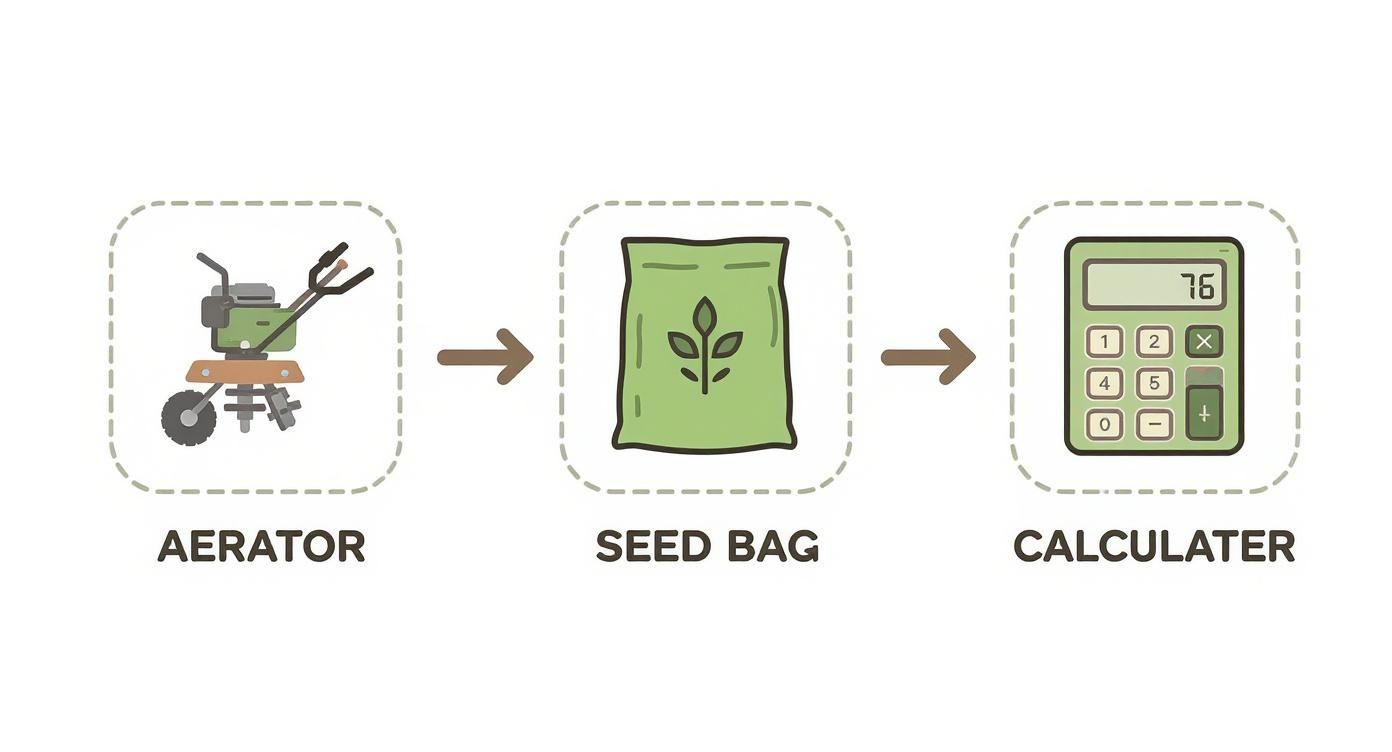
This visual breaks down the key decisions: picking the right machine, choosing quality seed, and getting your application rates just right for the best results.
How to Run the Core Aerator
Wrestling a core aerator can feel like a workout, but the technique itself is pretty simple. Your goal is to make several passes over the entire lawn to get a good density of holes. Here in Georgia, with our heavy clay, a single pass just won't cut it.
You should plan on covering your lawn at least twice. A fantastic method is to run the machine over the whole area in one direction (say, north to south), then make a second pass perpendicular to the first (east to west). This crisscross pattern gives you that even, thorough coverage you’re looking for.
Don't stress about the thousands of little soil plugs the machine pulls up. Just leave them on the lawn! These cores are packed with good microbes and will break down in a few weeks, feeding valuable nutrients right back into your soil.
Spreading Your Seed and Starter Fertilizer
As soon as you finish aerating, it's time to get the seed down. Your lawn is now perfectly prepped, with thousands of little holes acting as perfect pockets to catch and protect the grass seed. This gives you the direct seed-to-soil contact that is absolutely essential for a high germination rate.
Use a broadcast spreader for an even application. One of the most common mistakes I see is putting down way too much seed, which just creates a crowded, weak stand of grass. A better approach is to set your spreader to half the recommended rate and make two passes in that same crisscross pattern you used with the aerator.
Right after the seed goes down, put out your starter fertilizer. This step is non-negotiable. Starter fertilizers are specifically designed with high levels of phosphorus, which is the nutrient that drives strong root development in new grass. Applying it now means that phosphorus gets delivered directly into the root zone through the fresh aeration holes.
Dealing with Slopes and Tricky Spots
Got any steep hills or sloped areas on your North Georgia property? These spots need a little extra care to prevent all that new seed and fertilizer from washing away with the first good rain.
After seeding a slope, you can lightly topdress it with a very thin layer of peat moss or compost. This helps hold the seed in place and keeps the soil moist. For really steep inclines, a pelletized mulch product can be a lifesaver—it expands when it gets wet and creates a protective blanket over the seed. It's these small details that truly set your lawn up for a dramatic and lasting comeback.
New Seed Aftercare: Watering and Mowing
You’ve done the heavy lifting—the aerator is back at the rental shop, and the seed is down. It's tempting to kick back and call it a day, but what you do in the next few weeks is honestly the most important part of the whole project. This is where you protect that investment of time and money to guarantee a thick, beautiful lawn in communities like Cumming and Johns Creek.
Proper aftercare, especially watering and that first crucial mow, is what separates a fantastic result from a frustrating one. Let's walk through exactly how to baby those new seedlings so they grow into a tough, resilient lawn.
Your New Seed Watering Schedule
First things first: forget everything you know about watering your established lawn. New grass seed plays by a completely different set of rules.
For the first 7-10 days, your only goal is to keep the very top inch of soil consistently damp. Think of a wrung-out sponge—that’s the moisture level you're aiming for. This means you’ll be watering lightly but very frequently.
For a typical yard in Alpharetta or Milton during a Georgia fall, that usually means running your sprinklers for just 5-10 minutes per zone, but doing it two or even three times a day. You want to keep the seeds moist without creating puddles or washing them away.
This "light and frequent" method is non-negotiable. Deep, infrequent watering is great for mature grass, but it does absolutely nothing for seeds sitting on the soil's surface. If they dry out, even for a few hours, the germination process can stop in its tracks.
A Little Patience Goes a Long Way: The germination window for a quality Turf-Type Tall Fescue is anywhere from 7 to 21 days. Don't panic if you don't see a green carpet after a week. Just stay consistent with the watering, and you'll see those little green shoots start to pop up.
Shifting to a Mature Watering Plan
Once you see a nice green haze across the lawn and the new grass is about an inch tall, it's time to start shifting your strategy. The seeds have sprouted, so now the focus turns to encouraging those new roots to grow deep into the soil.
You'll want to gradually cut back on how often you water while increasing how long you run the sprinklers each time. For instance, you might move from watering twice a day for 10 minutes to just once a day for 20 minutes.
Over the next two to three weeks, keep making this adjustment until you land on a schedule of deep watering 2-3 times per week. This process "trains" the roots to dig deeper for moisture, which is the secret to building a lawn that can handle the stress of a hot Georgia summer.
The All-Important First Mow
That first mow is a huge milestone for your new lawn. Cutting the grass actually stimulates the young plants to "tiller," which is a fancy way of saying they start sending out new shoots from their base. This is what creates that thick, dense turf we're all after.
Hold off until most of the new grass blades are 3.5 to 4 inches tall. I know it might look a little shaggy, but this height ensures the seedlings have developed enough of a root system to not get ripped out by the mower. If you mow too soon, you can literally pull the new grass right out of the ground.
When it's time for that first cut, stick to these rules:
- Sharp Blades are a Must: Dull blades will tear the tender new grass, causing damage and making it vulnerable to disease.
- Mow When It's Dry: Wait for a dry day. Mowing wet grass will leave ruts and compact the soil you just worked so hard to aerate.
- Set the Deck High: The golden rule is to never remove more than one-third of the blade at once. Set your mower to a cutting height of 3 to 3.5 inches.
- Go Slow and Steady: Be gentle, especially on your turns, to avoid scuffing up the new turf.
Nailing this first mow sets your lawn up for a strong start before winter arrives. For a deeper dive, our guide covers everything you need to know about how long after overseeding you can mow. Following through with this aftercare ensures all the effort you put into your aerate and overseed project truly pays off.
Ready to skip the guesswork and get a lawn that's the envy of your Cumming neighborhood? At Barefoot Organics, we provide expert, environmentally friendly lawn care solutions designed specifically for North Georgia's unique challenges. Let us handle the hard work so you can enjoy a beautiful, healthy lawn.