

Before you even think about renting equipment or calling a pro, you need to play detective with your lawn. Is the problem compacted soil that’s suffocating your grassroots, or is it a thick blanket of thatch that’s blocking water and nutrients? Figuring this out is the single most important step to getting that lush, green lawn that can handle a hot North Georgia summer.
How to Read Your North Georgia Lawn
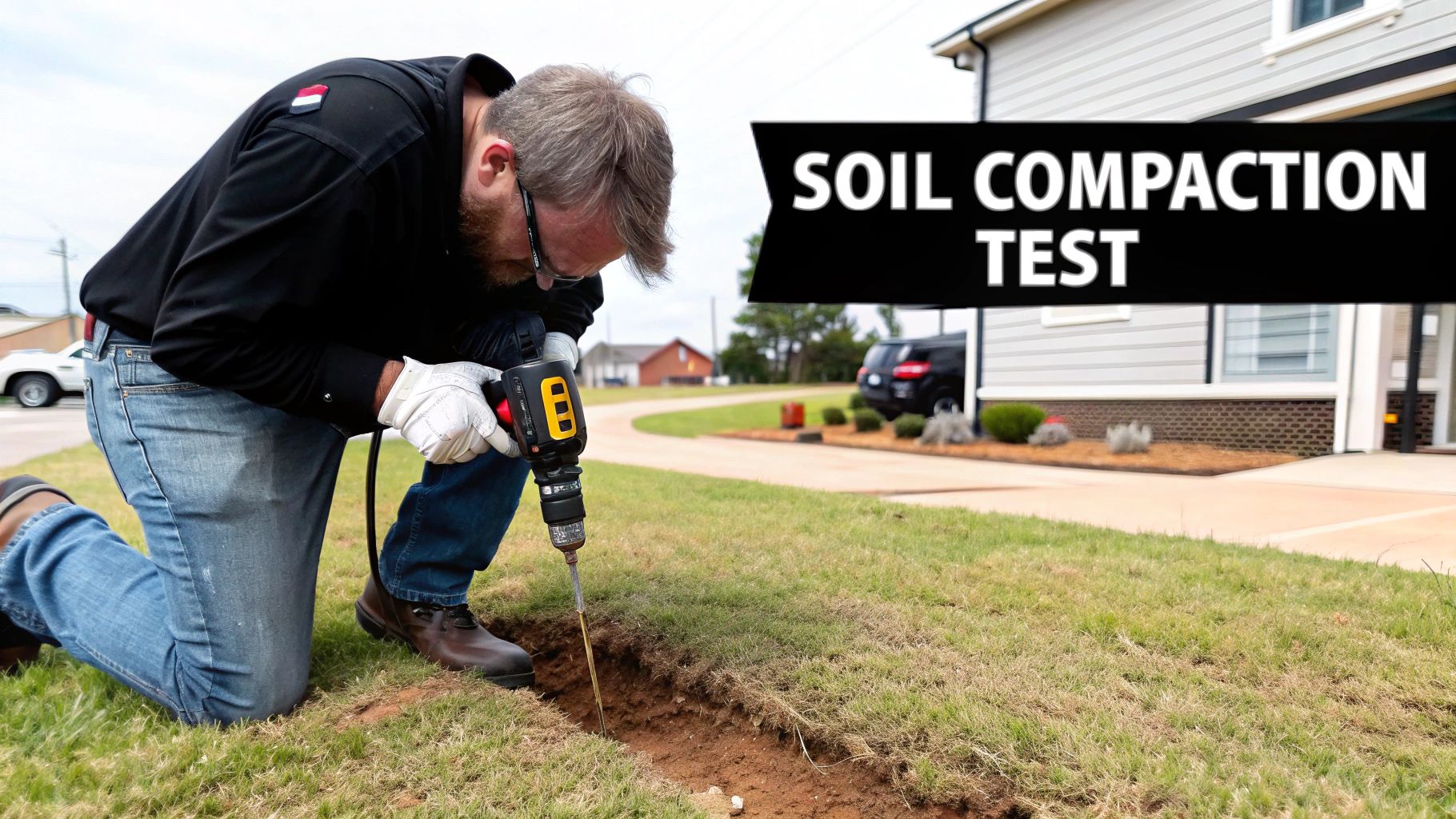
If you live anywhere around Cumming, Alpharetta, or Johns Creek, you know all about our famous red clay. It’s dense, heavy, and gets packed down incredibly easily. This is what we call soil compaction—the soil particles are squeezed so tight that there’s no room for air, water, or nutrients to get down to the roots.
When soil gets compacted, your grass is basically fighting for its life. You might see thinning, weak-looking turf in your Milton yard. Or maybe after a good rain in Dahlonega, you notice water just sitting on the surface instead of soaking in. These are classic red flags that your lawn is suffocating and needs to be opened up.
The Screwdriver Test: A Quick Check for Compaction
Here’s an easy, old-school trick to see how bad the compaction is: the screwdriver test. No special tools needed.
Just take a regular long-bladed screwdriver out to your lawn and try pushing it into the ground. If it slides in easily, great! Your soil is probably in decent shape. But if you have to fight to get it in even an inch or two, you’ve got compacted soil. It’s a dead giveaway that your lawn is begging for aeration.
Finding and Measuring Your Thatch Layer
Now, let's talk about thatch. This is the tangled mat of dead grass, stems, and roots that builds up between the green blades and the soil. A little bit is fine—it acts like a natural mulch. But too much is a real problem.
To see what you’re dealing with, go out with a small trowel or a sturdy knife and cut out a small wedge of turf, about three inches deep. Pull it up and look at the cross-section. You'll see the green grass, the dark soil, and sandwiched in between, a spongy, brown layer. That's your thatch.
For warm-season grasses like Bermuda and Zoysia, which are all over our area, anything more than half an inch of thatch is trouble. It becomes a barrier that stops water and fertilizer in their tracks and can even become a breeding ground for pests and diseases.
A thick thatch layer forces grass roots to stay shallow, making them incredibly vulnerable to drought and heat stress—a recipe for disaster in July and August here.
If you find both hard, compacted soil and a thatch layer over half an inch thick, you’ve hit the double-whammy. Your lawn needs both aeration and dethatching to really thrive. Understanding these two issues is key, but it's just as important to know how to work with our local soil. For more on that, check out our detailed guide on how to improve clay soil for grass.
To make it even simpler, here's a quick cheat sheet to help you diagnose the problem.
North Georgia Lawn Health Checkup
This table helps you match common lawn symptoms to their likely cause, so you can choose the right course of action.
| Symptom | Potential Problem | Recommended Action |
|---|---|---|
| Water puddles after rain; lawn feels hard | Soil Compaction | Core Aeration |
| Spongy, bouncy feel when you walk | Excessive Thatch Buildup | Dethatching |
| Thinning grass, poor color, weak growth | Soil Compaction & Thatch | Aerate & Dethatch |
| Fertilizer or water seems ineffective | Thatch Buildup | Dethatching |
| Grass roots are very shallow | Both are likely culprits | Aerate & Dethatch |
Use this as a starting point. By correctly identifying whether your lawn is compacted, choked by thatch, or both, you're setting yourself up for a successful season and a much healthier yard.
When Should You Revitalize Your North Georgia Lawn?
When it comes to lawn care in North Georgia, timing is everything. It's not just about what you do, but when you do it. Aerating and dethatching at the wrong time of year can seriously stress your grass, making it a prime target for weeds and disease. But get the timing right, and you're setting the stage for a season of lush, healthy growth.
The whole secret is to sync up these big jobs with your specific grass type's peak growing season. This ensures your lawn has the energy to bounce back quickly. For those of us in Forsyth and the surrounding counties, that means you’re working on one of two very different schedules, depending on whether you have a fescue lawn or a Bermuda/Zoysia lawn.
The Golden Window for Fescue Lawns
For all the beautiful Tall Fescue lawns you see in Milton, Dahlonega, and the surrounding areas, fall is the absolute best time to aerate and dethatch. I'm talking about the sweet spot between September and October.
At this point, the brutal summer heat has finally backed off, but the ground is still warm enough to get those grassroots growing. Aerating now gives your fescue plenty of time to heal and push down deeper, stronger roots before the first frost hits.
Here’s the breakdown on why fall is perfect for Fescue:
- Active Growth: Fescue is a cool-season grass. It’s happiest and grows most vigorously when temperatures are mild in the fall and spring.
- Less Weed Pressure: Most of the aggressive summer weeds are on their way out, which gives any new grass seed you put down a much better shot at sprouting and taking hold.
- Winter Preparation: A strong root system, established in the fall, is the key to your lawn surviving the cold and potential freezes of a Georgia winter.
A mistake I see all the time is people aerating their fescue in the spring. It feels like the right thing to do, but it just opens up bare soil for aggressive summer weeds like crabgrass to move in, creating a huge headache later.
Prime Time for Bermuda and Zoysia Grass
Now, if your yard in Alpharetta or Johns Creek is covered in sun-loving Bermuda or Zoysia, you need to flip your calendar. The best time to aerate and dethatch these warm-season grasses is late spring or early summer—think May through June.
These grasses absolutely thrive in the heat. As the temperatures climb, they kick into their most aggressive growth phase. Hitting them with aeration right then means they’ll bounce back in just a few weeks, rapidly filling in any thin spots and immediately capitalizing on the newfound access to air, water, and nutrients.
Tackling this during their peak season gives you a few key advantages:
- Super-Fast Recovery: The grass is actively sending out runners (called stolons and rhizomes), so it heals over the aeration holes incredibly quickly.
- Maximum Summer Performance: Aerating just before summer's peak helps the lawn handle the intense heat and potential drought stress much more effectively.
- Busting Through Compaction: Bermuda and Zoysia are notorious for developing heavy thatch and compacted soil. This is the perfect time to relieve that pressure. You can get more details in our guide on the best time to aerate a lawn.
Critical Timing Mistakes to Avoid in North Georgia
No matter what kind of grass you have, there are a couple of times you should absolutely not aerate or dethatch. The biggest no-go is the peak of summer, especially July and August. The combination of punishing heat and potential drought in places like Cumming puts incredible stress on the turf. Aerating then is like kicking your lawn when it's down; you risk baking the already struggling roots.
You should also avoid these jobs when your lawn is dormant. A sleeping lawn doesn't have the energy reserves to recover from the stress, leaving it vulnerable.
A Practical Guide to Lawn Aeration and Dethatching
Okay, you've figured out what your lawn needs and when to do it. Now for the fun part: getting your hands dirty. Let's walk through how to actually aerate and dethatch your lawn, turning all that knowledge into a healthier, greener yard. Getting this right comes down to three things: good prep, using the right technique with the machine, and smart follow-up care.
Prepping Your Lawn for Success
Before you even pull the starter cord on a machine, a little prep work goes a long way. This is especially true for the dense red clay soil we have all over Cumming and Forsyth County. Skip these steps, and you're just making the job harder on yourself.
First, give your lawn a slightly shorter haircut than usual. Just drop your mower blade down one notch. This gets the excess grass out of the way, so the aerator or dethatcher can make clean contact with the soil and thatch.
Next, and this is a big one for our area, you've got to water the lawn. Plan on giving it a good soak about one to two days before you plan to get to work. You're not trying to make a mud pit, just soften up that top layer of soil. This makes it a whole lot easier for an aerator to pull out those nice, deep plugs instead of just bouncing off the hard ground.
Finally, and please don't skip this: mark your sprinkler heads. Seriously. Grab a handful of those little brightly colored flags from a hardware store in Alpharetta or Milton and stick one in the ground at every single sprinkler head, valve box, or any other hidden surprises in your yard. A heavy core aerator will demolish a sprinkler head without even slowing down, and that's a repair you don't want to deal with.
Operating a Core Aerator Like a Pro
If you're going the DIY route, renting a core aerator is the way to go. You can find them at rental shops and big-box stores all around North Georgia. Be warned, these things are heavy and can be a real workout to handle, but they do a fantastic job when you use them correctly.
The infographic below is a great visual for nailing the timing based on your grass type.
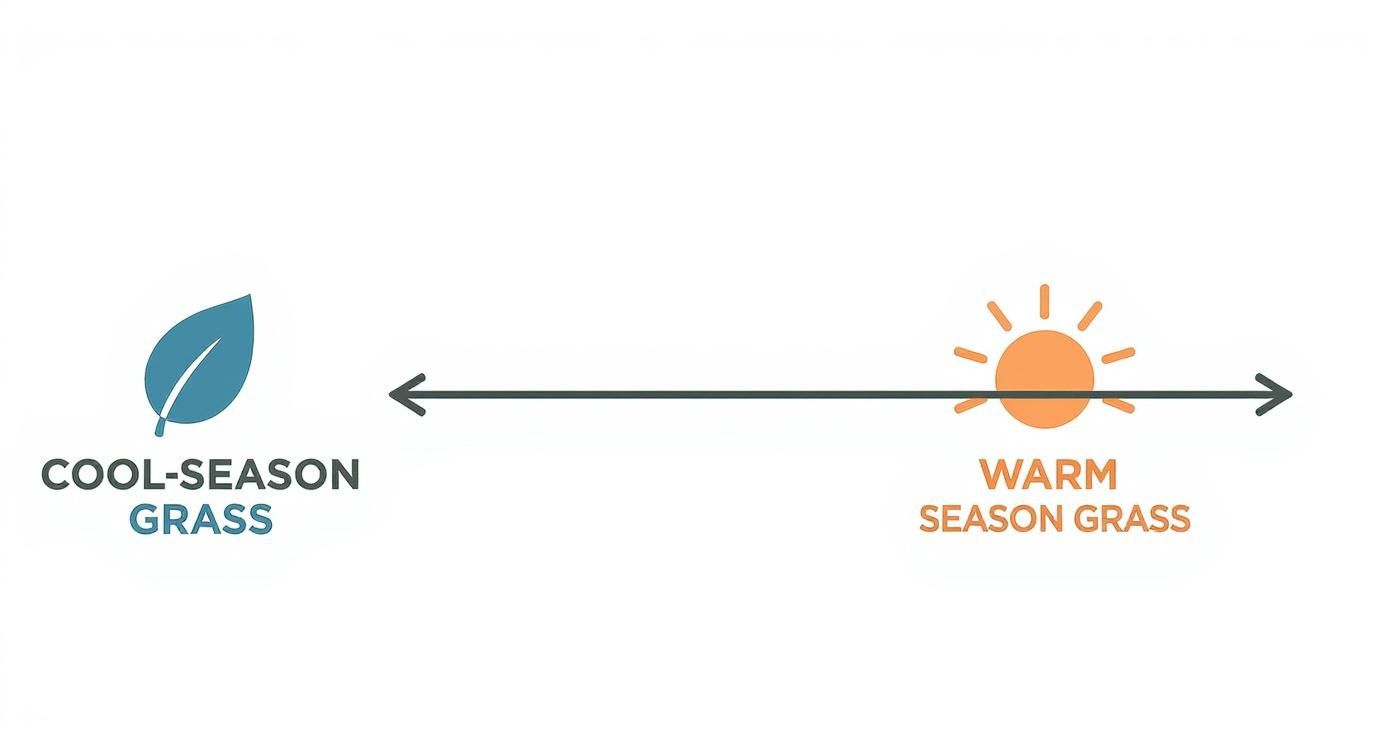
As you can see, for cool-season grasses like Fescue, fall is the sweet spot. For warm-season lawns like Bermuda and Zoysia, you'll want to wait until late spring or early summer when they're growing like crazy.
When you start aerating, don't just do one quick pass and call it a day. For a moderately compacted lawn in Johns Creek, I'd recommend at least two passes. Run the second one perpendicular to the first, creating a kind of crosshatch pattern. If you have areas that are rock-hard from foot traffic—like the path to the gate—hit it three or even four times.
A Quick Tip: Leave the soil plugs on the lawn! I know, it looks messy for a week or two, but those little cores are packed with beneficial microorganisms. As they break down, they feed nutrients back into the soil and help break down the thatch layer even more.
Setting the Right Depth for Dethatching
If your lawn's main problem is a thick, choking layer of thatch, you'll be using a machine often called a power rake or vertical mower. The single biggest mistake I see homeowners make here is setting the blades way too deep. The goal is to pull up the dead thatch, not to scalp your lawn and rip out the healthy grass.
Start by setting the blades so they are just barely touching the soil. Find an out-of-the-way spot to test it. You should see the machine aggressively kicking up the brown, spongy thatch. If it's digging trenches and tearing out chunks of green turf, the blades are set too low—back them off a bit.
Just like with aeration, make slightly overlapping passes to ensure you get every square foot. When you're finished, you're going to be amazed at the mountain of dead material you've pulled up. Use a lightweight leaf rake to gather all that thatch into piles and get it off the lawn. If you leave it there, you'll smother the grass and undo all your hard work.
The demand for these machines isn't just a local thing; it's a sign that people are getting serious about lawn health. The global market for lawn aerators was valued at USD 1.03 billion and is still growing, largely thanks to homeowners and commercial landscapers right here in North America. This shows just how vital these services are for maintaining the beautiful lawns our communities are known for. You can learn more about these market trends and their drivers if you're curious about the industry side of things.
What to Do After You Aerate and Dethatch
It’s a great feeling to get that rental aerator back to the store and see your lawn opened up and ready to breathe. But the real work—the part that turns a good lawn into a great one—starts right now. Think of your lawn as a sponge; it's primed and ready to soak up everything you give it.
This is your golden opportunity to build density, strength, and long-term health. The steps you take next will determine whether your lawn just bounces back or completely transforms into the kind of turf that makes your neighbors jealous.
Capitalize on Perfect Conditions for Overseeding
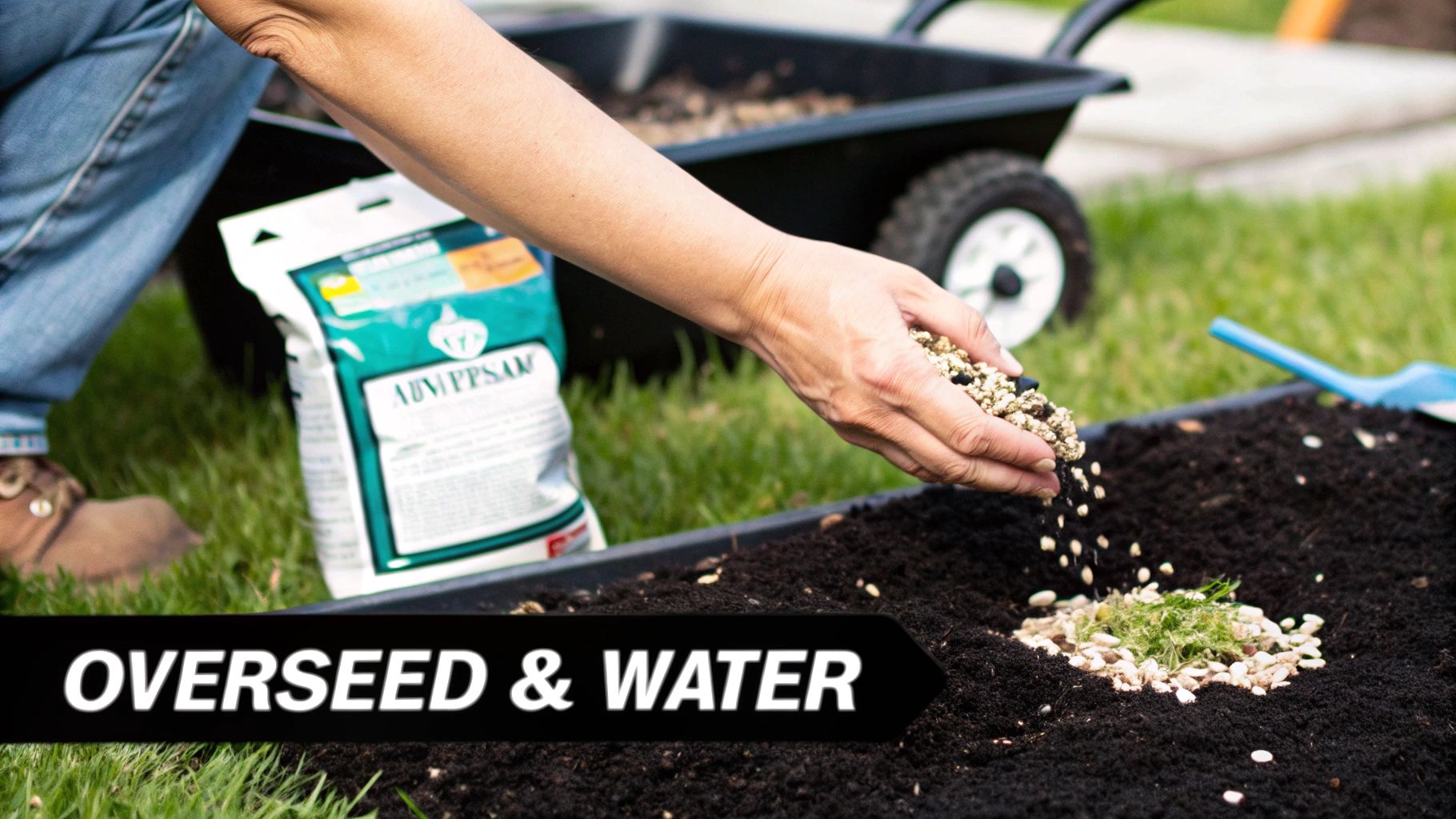
Right after aerating and dethatching, your soil is more receptive than it will be all year. Those thousands of little holes and the freshly raked surface create the perfect environment for seed-to-soil contact, which is the number one key to getting new grass to grow. Spreading seed now means it actually settles into the soil, not just sits on top.
This is your best chance to thicken up thinning areas or introduce better grass varieties. Got a lot of shade on your Milton or Dahlonega property? A quality Tall Fescue blend known for its deeper roots and shade tolerance is a smart move. On the flip side, if your yard in Cumming gets baked by the sun all day, overseeding with a tough Bermuda variety will help it spread and handle the foot traffic.
Make sure you're picking a seed blend designed for the Southeast. It’s a small detail that makes a huge difference in how it handles our sticky summers and unpredictable winters.
Provide a Nutrient Boost with Starter Fertilizer
New grass seed is a lot like a newborn—it needs a very specific diet to get off to a strong start. Applying a starter fertilizer right after you spread your seed gives it the exact nutrients it needs for quick germination and strong root growth.
You’ll want a fertilizer where the middle number (Phosphorus) is higher, as this is the nutrient that powers root development. Giving your new seed this boost helps it establish fast, crowding out weeds before they can even think about moving in. Getting fertilizer application right is its own science, and if you want to dig deeper, our guide on how to fertilize a lawn lays out all the details.
Key Insight: Always spread your seed first, then the starter fertilizer. The weight of the fertilizer granules actually helps push the tiny seeds down into the aeration holes, maximizing that critical seed-to-soil contact.
The Right Way to Water New Seed
How you water over the next few weeks can make or break your entire project. The goal is simple: keep the top inch of soil consistently moist, but never soggy.
- First 1-2 Weeks: Water lightly, but frequently. Think short cycles, maybe 2-3 times a day. You just want to keep the seeds from drying out without washing them away.
- Once Sprouts Appear: You can start backing off the frequency but increasing how long you water. This encourages the new roots to start digging deeper for moisture.
- After 3-4 Weeks: By now, the new grass should be looking more established. You can switch back to your normal watering schedule of giving the lawn a deep, infrequent soaking.
It's a delicate balance, but getting it right ensures those fragile seedlings survive and thrive.
Elevate Your Soil with Organic Topdressing
If you're aiming for truly top-tier results on your Alpharetta or Johns Creek lawn, this is the final, game-changing step. Topdressing is just spreading a very thin layer—about a quarter-inch—of high-quality organic compost over the entire lawn.
The long-term payoff is huge. That compost works its way down into the aeration holes, permanently improving the structure of our heavy Georgia clay. It introduces beneficial microbes, helps the soil hold onto moisture, and acts as a slow-release natural fertilizer. It’s definitely an extra step, but topdressing is a powerful investment in your soil's health, creating a stronger, more resilient lawn for years to come.
Common Lawn Care Mistakes We See All Over North Georgia
Even with the best intentions, a weekend aeration or dethatching project can go sideways pretty fast. Over the years, we've seen the same handful of mistakes trip up homeowners from Cumming to Alpharetta, often turning a simple task into a major headache. Avoiding these common slip-ups is the real secret to getting that lush, healthy lawn you're after.
The single biggest error? Getting the timing all wrong. It's tempting to jump on these tasks whenever you have a free weekend, but your grass has a strict schedule. Running a dethatcher over a Fescue lawn in the spring heat of Milton, or trying to aerate a Bermuda lawn in Dahlonega as the cool October air sets in, puts incredible stress on the turf. You're hitting it hard right when it's most vulnerable, which can weaken it for months or even kill off large patches.
Going Too Deep with the Equipment
Another frequent offender is setting a power rake or dethatcher way too aggressively. Remember, the goal here is to gently lift out the dead stuff, not perform open-heart surgery on your soil.
Here’s what goes wrong: You drop the tines too low, and the machine just shreds everything in its path. Instead of pulling up that spongy brown layer, you're literally ripping out healthy green grass and tearing up the root system. This leaves you with ugly, gouged-out trenches and severely damages the crown of the grass plant, making recovery a long, slow process.
The right way to do it: Always start with the blades set as high as they'll go, just barely tickling the top of the grass. Run a quick test pass in a less visible spot. From there, you can lower the depth a tiny bit at a time until you see the machine pulling up thatch effectively without scalping the lawn. Trust me, it’s far better to make two lighter passes than one destructive one.
Skipping the Prep Work
I get it—you’re eager to get started. But diving in without the proper prep, especially with our notoriously compacted Georgia clay, is a recipe for frustration.
Here’s what goes wrong: You try to run a core aerator over soil that's bone-dry and hard as a rock. The tines just can't dig in. They'll bounce right off the surface, barely scratching it instead of pulling out the deep plugs you need. You'll have wasted a whole afternoon for nothing.
The right way to do it: Give your lawn a good, deep watering a day or two before you plan to aerate. The goal isn't to create a mud pit, but the soil should be moist enough that you can easily push a screwdriver a few inches into it. This one simple step makes all the difference, allowing the aerator to pull out full, two-to-three-inch plugs that actually relieve compaction.
Crucial Takeaway: Don't treat preparation as optional. Watering your lawn beforehand and setting your machine depth correctly are the two most critical factors that separate a successful DIY job from a disaster.
Leaving the Debris Behind
After a good dethatching, you'll probably be shocked by the sheer volume of dead material you pull up. It's often a massive pile. The absolute worst thing you can do is just leave it there.
Here’s what goes wrong: All those piles of raked-up thatch will smother the healthy grass underneath, blocking out critical sunlight and air. You essentially create a brand-new, even worse thatch layer, completely defeating the purpose of the entire project.
The right way to do it: You have to get all of it off the lawn. Rake it up, bag it, or compost it—just get it gone. For those bigger lawns in the Cumming area, a push lawn sweeper can be a real back-saver. Clearing this debris away immediately is what allows your grass to finally breathe and start recovering. This growing understanding of best practices is one reason the dethatcher market is now valued between $350–$365 million globally. You can discover more insights about this growing market and its impact on how we all care for our lawns.
DIY vs. Hiring a Pro in the Cumming Area
So, should you tackle aeration and dethatching yourself or call in the pros? It's a question every homeowner in the Cumming area asks at some point. The DIY route looks like the budget-friendly option on the surface, but it's crucial to weigh the real investment of both your money and your time before you commit.
Going it alone means a trip to a local rental shop in Alpharetta or Johns Creek. Renting a core aerator or power rake will typically set you back $70 to $100 for just a half-day. Then you have to factor in fuel, the struggle of loading and unloading that heavy, awkward machine, and, of course, giving up your entire weekend. This is a tough, physical job that can easily eat up five or six hours of hard work.
The True Cost of a DIY Project
It's not just about the rental fees. There's a steep learning curve here. If you set a power rake too deep, you can literally scalp your lawn and damage healthy grass. On the flip side, if you don't water our dense Georgia clay enough beforehand, a core aerator will just bounce off the surface, doing next to nothing. The goal isn't just to save a few bucks; it's to get the results your lawn desperately needs.
When you think about what a professional charges, it helps to know what goes into their pricing. To get a better sense of this, you can learn how businesses calculate the true cost of labor, which covers a lot more than just an hourly rate.
The Value of Professional Expertise
Hiring a local lawn care service completely changes the game. Yes, the upfront cost is higher, but what you're really paying for is efficiency, deep expertise, and the peace of mind that comes with guaranteed results.
Professionals show up with commercial-grade, perfectly maintained equipment that's worlds away from what you'll find at a rental store. They know how to diagnose underlying problems and get the job done right the first time, helping you avoid mistakes that could cost you more in the long run.
For a standard suburban lawn in Milton or Alpharetta (think 5,000-10,000 sq. ft.), professional dethatching often lands somewhere between $250 and $350. That might seem steep next to a rental fee, but it covers all the labor, know-how, and—best of all—gets you your weekend back.
In the end, it really boils down to your budget, your physical ability, and how much you value your free time. If you have a small, straightforward lawn, a DIY project can be satisfying. But for larger properties or for anyone who wants to ensure the long-term health of their lawn without the headache, hiring a pro is almost always the smarter investment.
Got Questions About Lawn Care in Georgia? We've Got Answers.
When it comes to keeping a lawn looking its best in North Georgia, folks tend to run into the same handful of problems and questions. Let's clear up some of the most common things we hear from homeowners trying to get a handle on aeration and dethatching in our area.
Should I Dethatch or Aerate First?
This one's a classic, and getting the order right makes all the difference. You should always dethatch before you aerate.
Think of it like this: dethatching clears the clutter off the surface. It gets rid of that thick, spongy layer of dead grass and debris, so when you bring in the aerator, its tines can get straight to business and penetrate the soil without any interference. It's all about clearing the deck for the main event.
Spike Aerator vs. Core Aerator: Which is Better for Our Clay Soil?
For the heavy, dense red clay we have everywhere from Cumming to Milton, a spike aerator is pretty much useless. All it does is poke holes, which can actually make the soil more compacted around the edges of those holes.
A core aerator is non-negotiable for Georgia soil. This machine physically pulls out plugs—or "cores"—of soil. Those open channels are exactly what your lawn's roots need to get the air, water, and nutrients that have been locked out by compacted clay.
A core aerator doesn't just poke holes; it removes small columns of compacted earth. That's the secret to revitalizing a struggling lawn built on our stubborn clay soil.
How Often Should I Be Aerating My Lawn in the Cumming Area?
For most lawns around here, especially those with a lot of clay and that get regular use from kids or pets, aerating once a year is the gold standard. It’s the best way to stay ahead of compaction.
If you're lucky enough to have loamier soil or your lawn is more for show than for play, you can probably stretch it to every two years. The best way to know for sure? Grab a screwdriver and try to push it into the soil. If it’s a real struggle, it’s time to aerate.
Tired of wrestling with rental equipment and ready to see real results? The crew at Barefoot Organics has the local knowledge and professional-grade tools to bring your North Georgia lawn back to life. Get your free quote today!